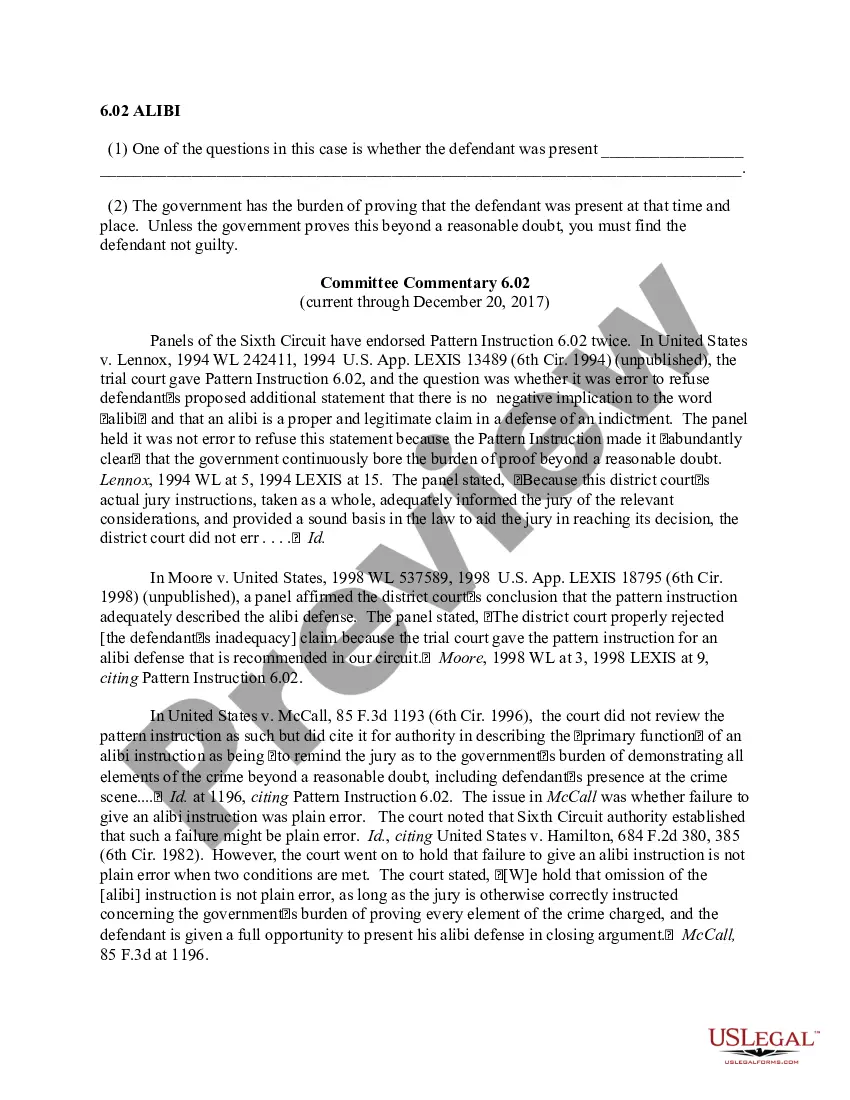
Minnesota Stipulation for Settlement
Understanding this form
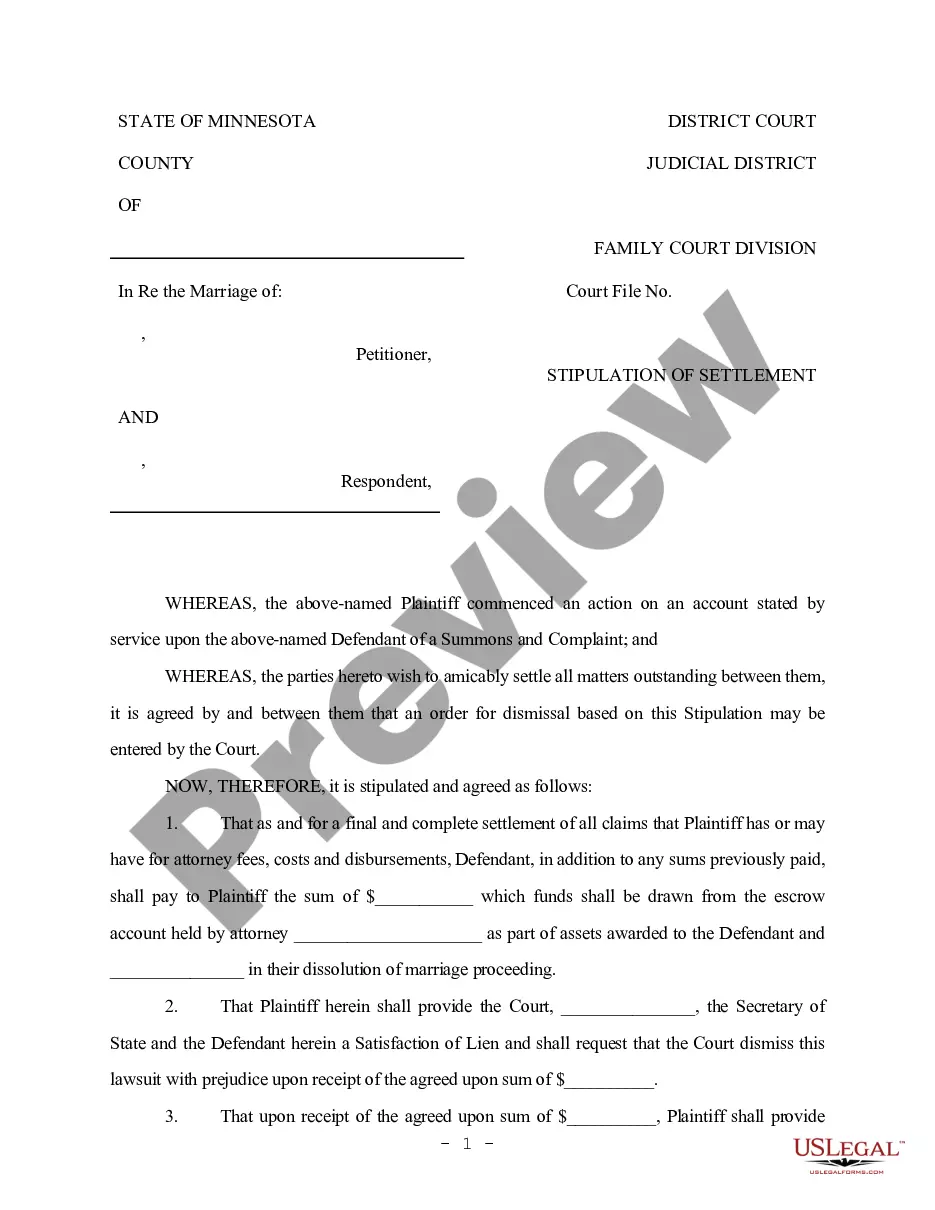
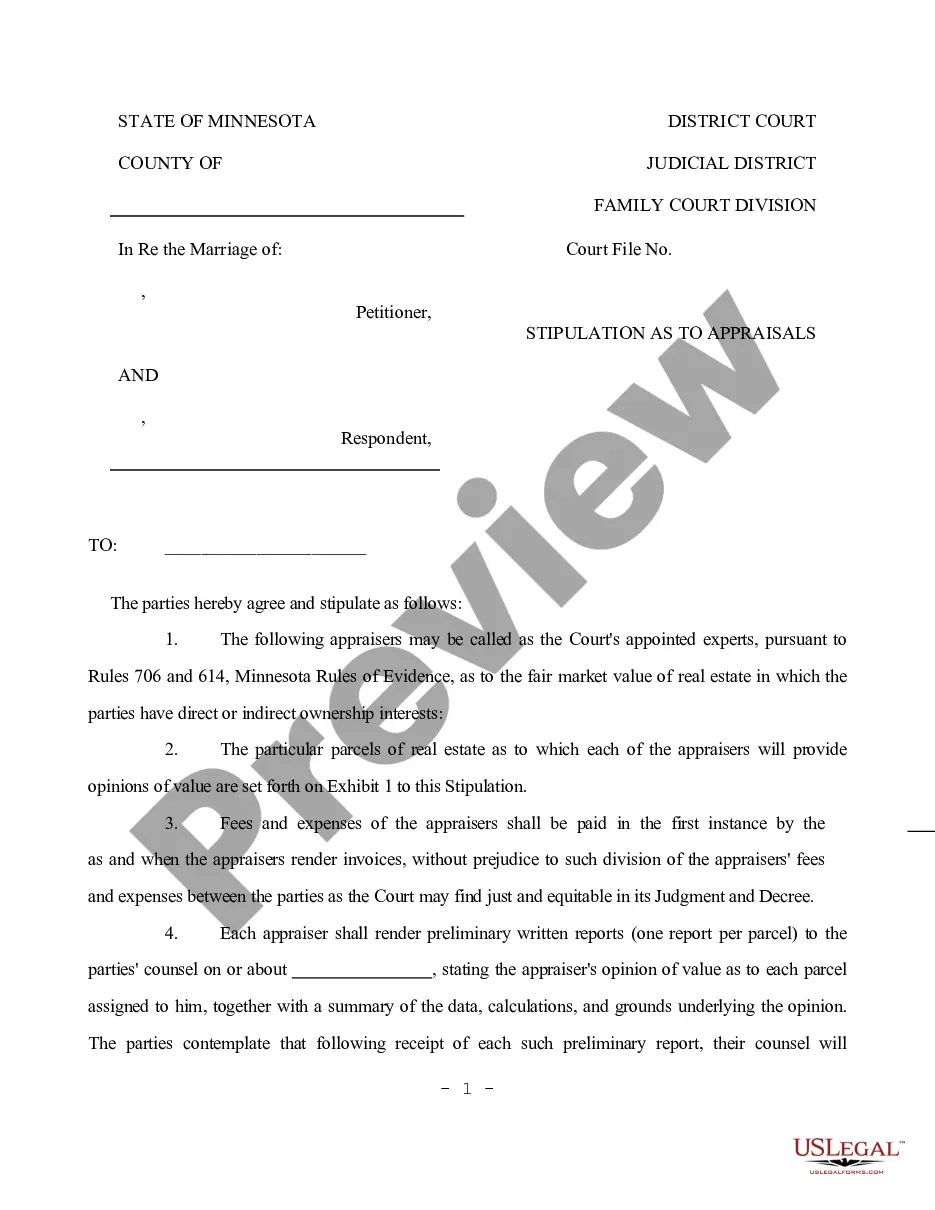
The Stipulation for Settlement is a formal written agreement between parties in a divorce case to resolve outstanding issues for a fixed sum. Unlike other legal forms used in divorce proceedings, this stipulation serves to finalize an agreement and ensure the lawsuit is dismissed. It outlines how financial obligations are to be settled, thus providing both parties with a clear understanding of their commitments.
Form components explained
- Identification of the plaintiff and defendant and the purpose of the agreement.
- A clause detailing the financial settlement amount to be paid by the defendant.
- Provision for the plaintiff to provide a Satisfaction of Lien to the court and other parties.
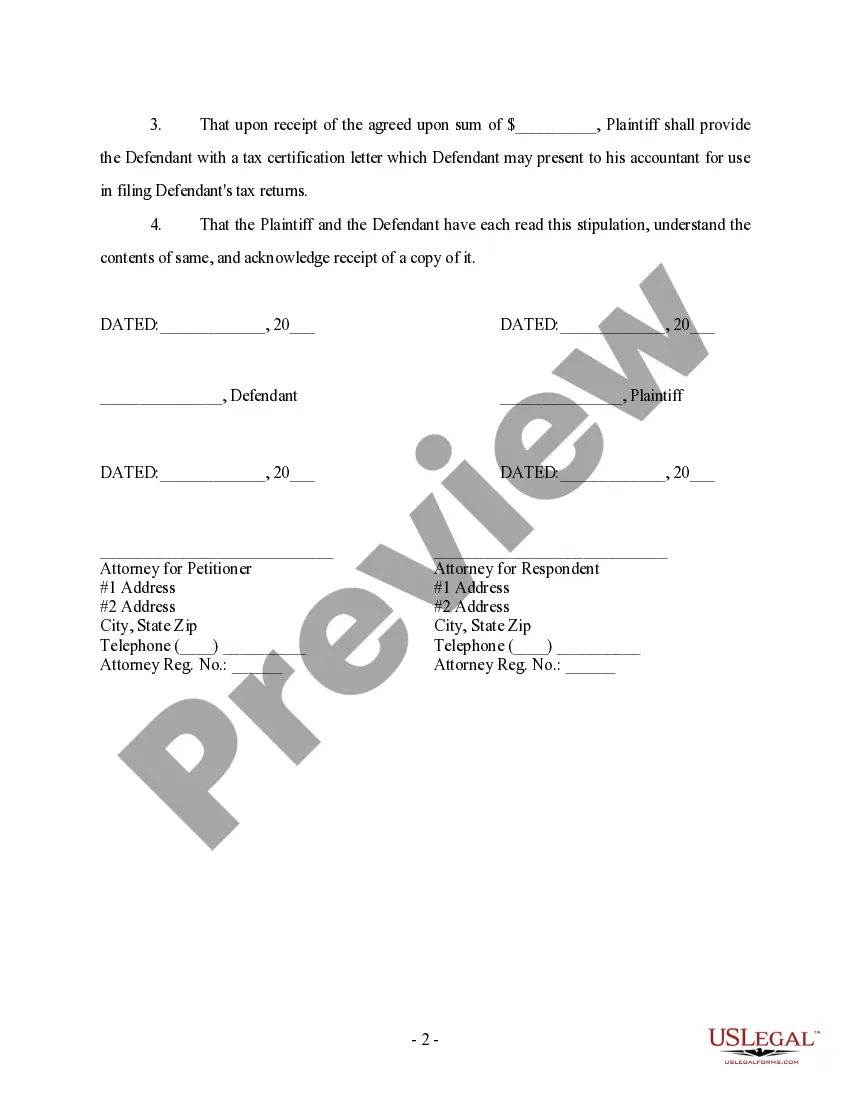
- Information about tax certification letters related to the settlement.
- Signatures of all parties involved, including attorneys.
Situations where this form applies
This form is used when both parties in a divorce want to come to an agreement regarding the settlement of claims, such as attorney fees and costs, without proceeding to a lengthy trial. It is particularly useful when both parties have reached an amicable understanding and wish to formalize their agreement for clarity and legal recognition.
Who can use this document
- Divorcing couples who have reached a financial settlement regarding claims.
- Attorneys representing clients in divorce cases.
- Individuals seeking to finalize the terms of a divorce without court intervention.
Instructions for completing this form
- Identify and input the names of the plaintiff and defendant at the beginning of the form.
- Specify the settlement amount that the defendant agrees to pay.
- Provide details regarding the attorney holding the funds, if applicable.
- Include the date of the agreement and ensure all parties sign and date the document.
- Ensure that tax certification information is stated clearly for the defendant's records.
Is notarization required?
In most cases, this form does not require notarization. However, some jurisdictions or signing circumstances might. US Legal Forms offers online notarization powered by Notarize, accessible 24/7 for a quick, remote process.
Get your form ready online
Our built-in tools help you complete, sign, share, and store your documents in one place.
Make edits, fill in missing information, and update formatting in US Legal Forms—just like you would in MS Word.
Download a copy, print it, send it by email, or mail it via USPS—whatever works best for your next step.
Sign and collect signatures with our SignNow integration. Send to multiple recipients, set reminders, and more. Go Premium to unlock E-Sign.
If this form requires notarization, complete it online through a secure video call—no need to meet a notary in person or wait for an appointment.
We protect your documents and personal data by following strict security and privacy standards.

Make edits, fill in missing information, and update formatting in US Legal Forms—just like you would in MS Word.

Download a copy, print it, send it by email, or mail it via USPS—whatever works best for your next step.

Sign and collect signatures with our SignNow integration. Send to multiple recipients, set reminders, and more. Go Premium to unlock E-Sign.

If this form requires notarization, complete it online through a secure video call—no need to meet a notary in person or wait for an appointment.

We protect your documents and personal data by following strict security and privacy standards.
Avoid these common issues
- Failing to accurately fill in all required fields, especially the settlement amount.
- Not having both parties sign and date the agreement, which can render it invalid.
- Overlooking the need to provide a tax certification letter to the defendant.
Why use this form online
- Convenience of downloading and completing the form at your own pace.
- Editable templates that allow you to customize the agreement to fit your specific situation.
- Reliable format drafted by licensed attorneys to ensure legal soundness.
What to keep in mind
- The Stipulation for Settlement helps both parties finalize their divorce financial commitments.
- It is suitable for amicable divorce situations where an agreement has been reached.
- All necessary parties must sign and date the form for it to be valid.
Looking for another form?

Form popularity
FAQ
While a stipulation and a settlement are related, they are not exactly the same. A stipulation usually refers to an agreement on specific facts or issues, while a settlement encompasses the entire resolution of a dispute. In the context of a Minnesota Stipulation for Settlement, the stipulation serves as part of the broader settlement process, ensuring all parties agree on the terms of resolution.
The 408 rule of evidence in Minnesota prohibits the use of settlement negotiations as evidence in court. This rule encourages open and honest discussions between parties by protecting any statements made during negotiations. Understanding this rule is crucial for anyone involved in a Minnesota Stipulation for Settlement, as it fosters a more cooperative environment for resolving disputes.
To write a simple settlement agreement, start by clearly stating the parties involved and their intent to settle. Include specific terms of the agreement, such as obligations, payment details, and any necessary timelines. It’s essential to ensure that both parties sign the document to make it legally binding. For assistance, consider utilizing resources like US Legal Forms to create a Minnesota Stipulation for Settlement that meets your needs.
A stipulation of dismissal settlement is a legal agreement between parties to resolve a dispute and dismiss the case. In Minnesota, this type of stipulation outlines the terms both parties agree upon, ensuring clarity and mutual consent. This settlement can help avoid lengthy litigation by providing a final resolution. Using a Minnesota Stipulation for Settlement can streamline this process effectively.
What Is Stipulation? Stipulations resolve most workers' compensation cases. A stipulation is an agreement that outlines the important details of your settlement. A stipulation agreement allows you to resolve an individual claim within your workers' compensation case without resolving the entire case.
A status conference is a hearing that assists parties in a workers' compensation case to resolve disputes and narrow issues when the case is not ready to be set for trial. A status conference can help to: obtain medical records.
A meeting of the judge and the lawyers (or unrepresented parties) in a pending legal matter, to determine how the case is progressing. At the status conference, the judge may ask about what discovery has been conducted, whether and how the parties have tried to settle the case, and other pretrial matters.
A California Stipulation with Request for Award is a written agreement between the injured worker and the insurance company as to what benefits are due. The agreement is approved by a judge. The approval is called a Stipulated Award.
Generally, it should take a week or two to get the settlement agreement to your attorney from the other side. When everyone has signed, your settlement must be approved by a Workers' Compensation judge, which can take up to two weeks. Once it is approved, an insurance company has up to 30 days to mail your check.
A Stipulated Award (STIPS): This agreement between the workers' compensation insurance and the employee will specify the maximum amount that will be paid.