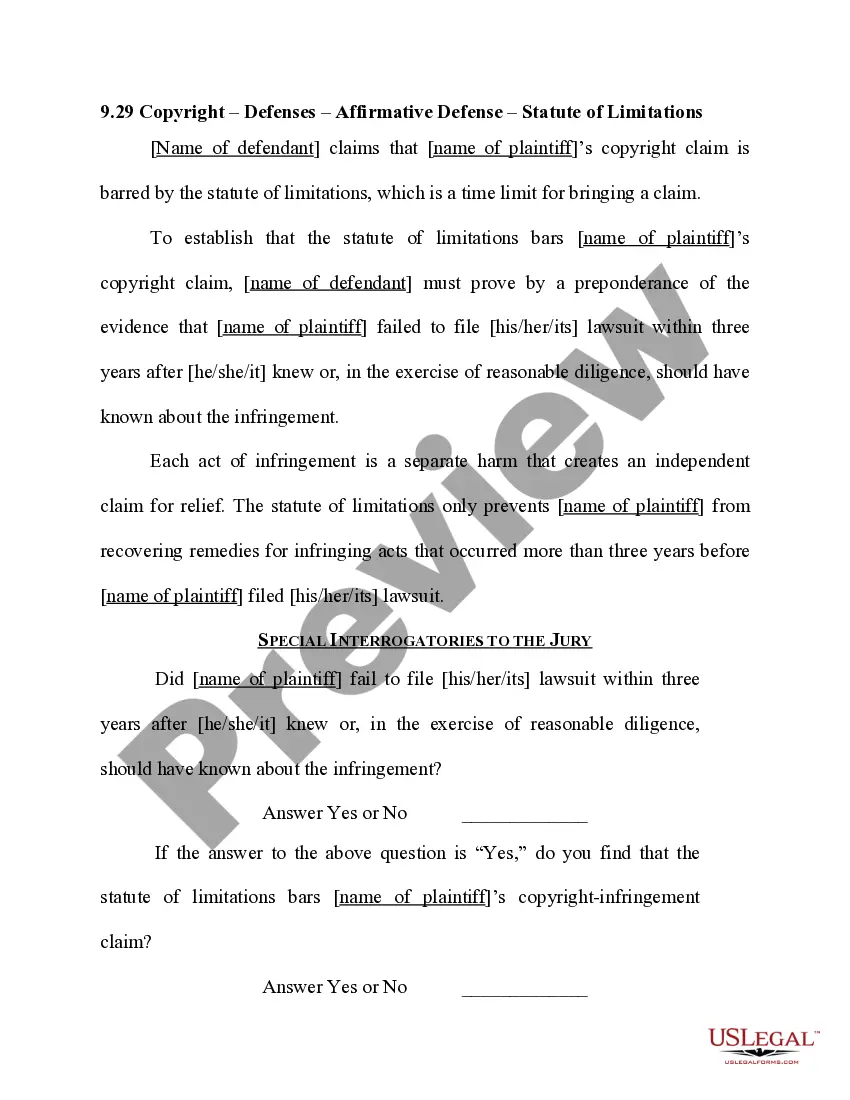
Copyright - Defenses - Affirmative Defense - Statute of Limitations
What this document covers
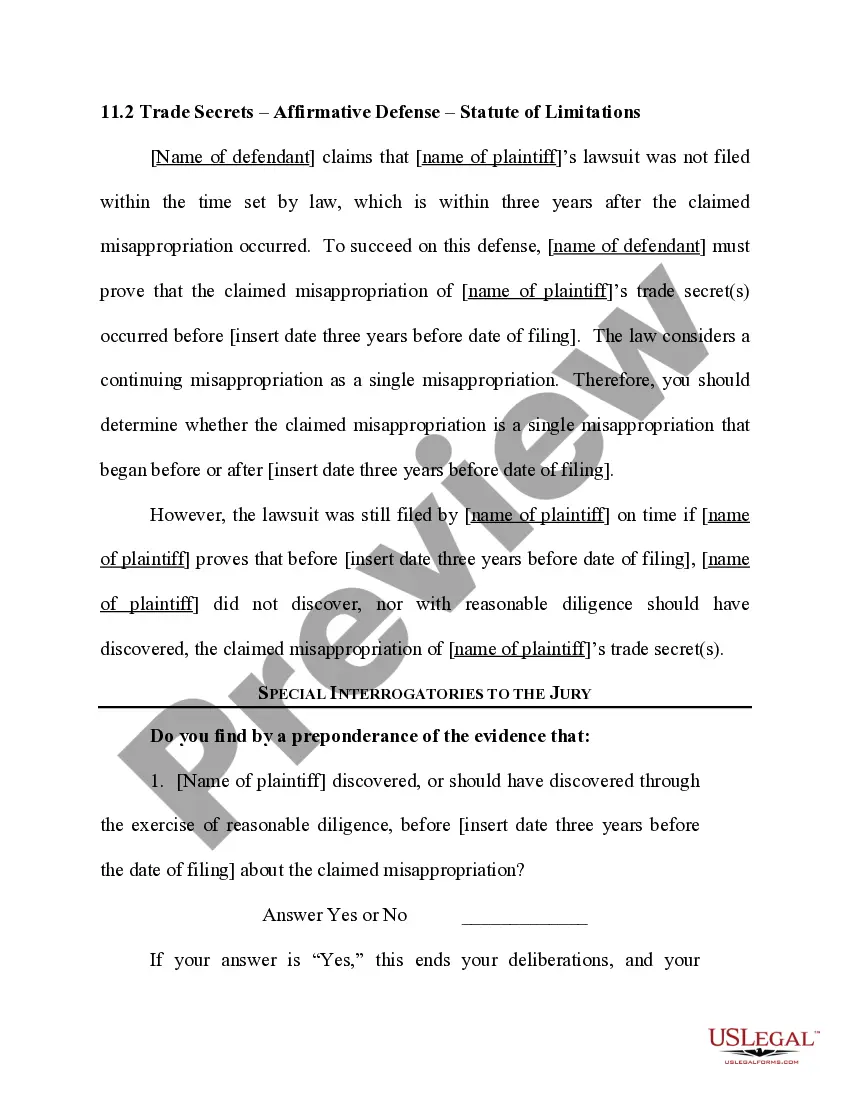
The Copyright - Defenses - Affirmative Defense - Statute of Limitations form helps defendants assert that a copyright claim has not been filed within the legally mandated time frame. This form is used in cases where a defendant claims that the plaintiff's lawsuit is barred because it was not filed within three years of when the infringement was known or should have been known. It is essential for establishing a legal defense against copyright infringement claims.
Form components explained
- Defendant's assertion of the statute of limitations as a defense against copyright claims.
- Requirement for the defendant to prove the plaintiff did not file the lawsuit within three years.
- Special interrogatories directed to the jury regarding the timing of the lawsuit filing.
- Clarification that each act of infringement is treated as a separate claim.
When this form is needed
This form is essential when a defendant believes that a copyright infringement claim has been brought after the statute of limitations has expired. It is commonly used in legal proceedings where the timing of the filing of the claim is in dispute, particularly if the defendant can demonstrate that the plaintiff knew or should have known about the infringement more than three years prior.
Intended users of this form
- Defendants in copyright infringement cases.
- Legal representatives or attorneys acting on behalf of defendants.
- Parties seeking to demonstrate the expiration of a copyright claim's validity due to timing issues.
Steps to complete this form
- Identify the defendant and plaintiff by entering their names in the designated fields.
- State the claim of the statute of limitations as a defense against the copyright claim.
- Provide evidence or context that supports the assertion that the lawsuit was filed past the three-year limit.
- Prepare the special interrogatories for the jury, ensuring they are clear and direct.
- Review the completed form for accuracy and completeness.
Notarization requirements for this form
This form does not typically require notarization unless specified by local law.
Get your form ready online
Our built-in tools help you complete, sign, share, and store your documents in one place.
Make edits, fill in missing information, and update formatting in US Legal Forms—just like you would in MS Word.
Download a copy, print it, send it by email, or mail it via USPS—whatever works best for your next step.
Sign and collect signatures with our SignNow integration. Send to multiple recipients, set reminders, and more. Go Premium to unlock E-Sign.
If this form requires notarization, complete it online through a secure video call—no need to meet a notary in person or wait for an appointment.
We protect your documents and personal data by following strict security and privacy standards.

Make edits, fill in missing information, and update formatting in US Legal Forms—just like you would in MS Word.

Download a copy, print it, send it by email, or mail it via USPS—whatever works best for your next step.

Sign and collect signatures with our SignNow integration. Send to multiple recipients, set reminders, and more. Go Premium to unlock E-Sign.

If this form requires notarization, complete it online through a secure video call—no need to meet a notary in person or wait for an appointment.

We protect your documents and personal data by following strict security and privacy standards.
Avoid these common issues
- Failing to provide sufficient evidence regarding the timeline of awareness of infringement.
- Not including all relevant parties' names, leading to confusion in legal proceedings.
- Overlooking special interrogatories which can significantly impact the jury's understanding.
Benefits of completing this form online
- Easy access to downloadable templates designed by licensed attorneys.
- Ability to quickly customize forms to suit specific cases.
- Cost-effective solution for obtaining legally sound forms without needing an attorney for every step.
Legal use & context
- The statute of limitations for copyright claims is generally three years from the date of knowledge of the infringement.
- Each claim of infringement can be treated as a separate instance for the purposes of limitations.
- Understanding the implications of timing can be crucial in copyright defense strategies.
What to keep in mind
- The form is essential for defendants to assert the statute of limitations as a defense in copyright cases.
- Completing the form accurately can influence the outcome of copyright litigation.
- Relevant parties should be clearly identified to avoid complications in the legal process.
Looking for another form?

Form popularity
FAQ
How Long Does the Statute Of Limitations for Copyright Infringement Last? If you discover that your copyright has been infringed, you have three years from the date of infringement to file a civil claim and five years for a criminal case.
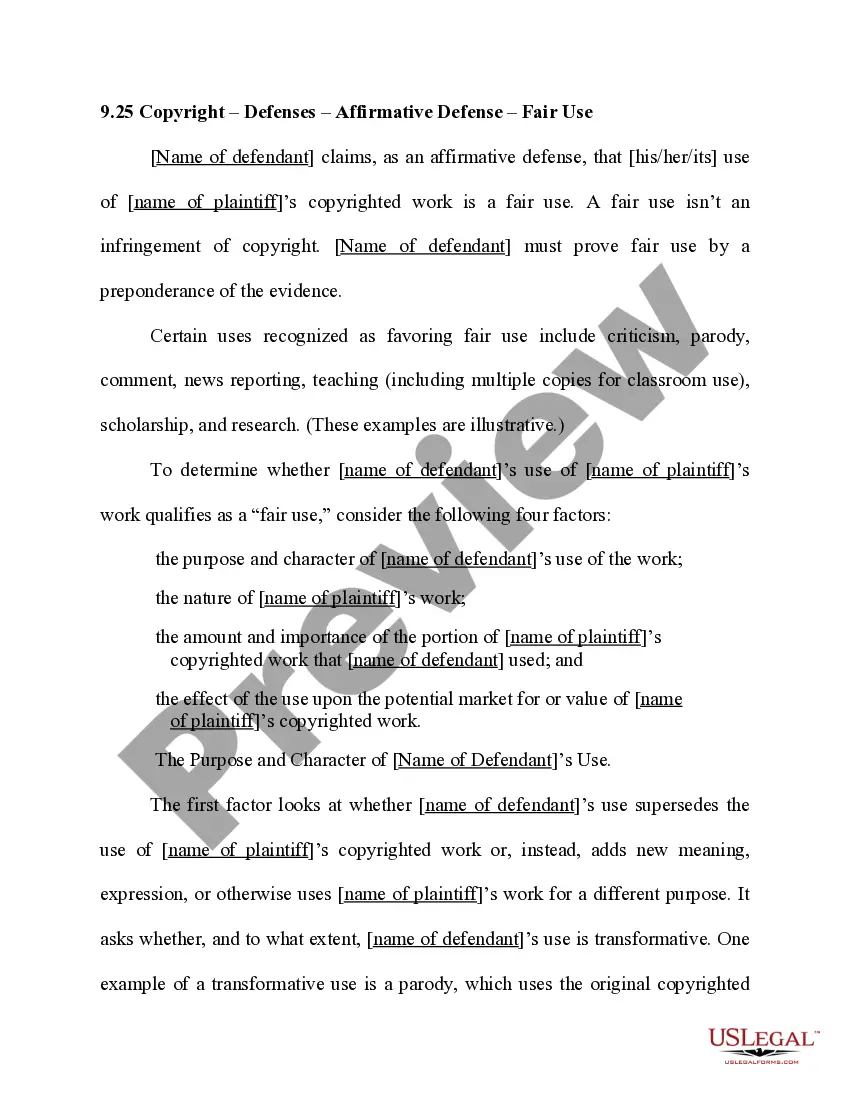
Fair use of copyrighted works, as stated in US copyright law, ?for purposes such as criticism, comment, news reporting, teaching (including multiple copies for classroom use), scholarship, or research, is not an infringement of copyright.?
Three Exceptions There are three major exceptions to this rule: (1) the face-to-face instruction exception, (2) the online instruction exception (also known as the TEACH Act), and (3) the fair use exception. These exceptions are defenses against a claim of copyright infringement.
About Fair Use Section 107 of the Copyright Act provides the statutory framework for determining whether something is a fair use and identifies certain types of uses?such as criticism, comment, news reporting, teaching, scholarship, and research?as examples of activities that may qualify as fair use.
In federal court, a copyright owner may seek a preliminary or permanent injunction to prevent or restrain future or ongoing civil copyright infringement. Courts generally grant permanent injunctions where liability is established and there is a threat of continuing infringement.
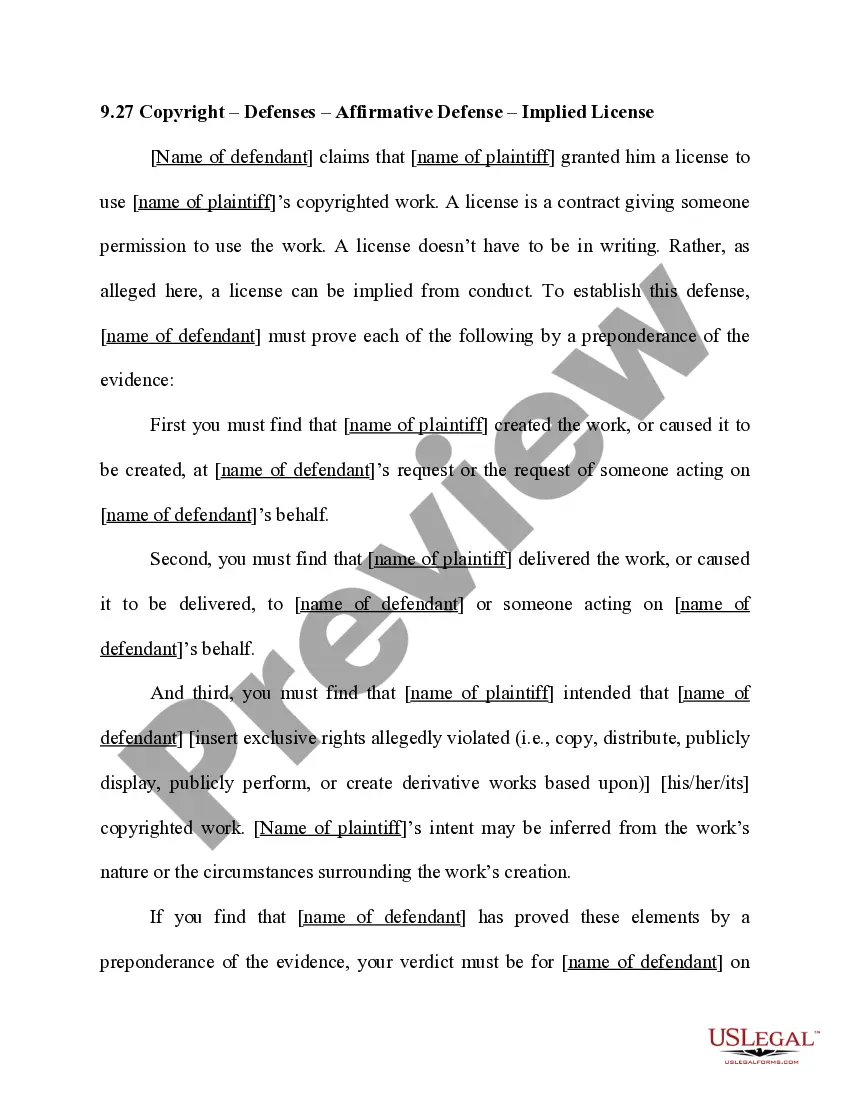
Defenses to Copyright Infringement Claims Fair use doctrine. Proof the work was independently created and not copied. Innocence (proving there was no reason to believe the work was copyrighted) The use is with a license agreement in place (this can shift liability to the licensor)
The U.S. Copyright Act states that the statute of limitations for copyright violation is three years for civil lawsuits. You can only file a lawsuit within three years of discovering the copyright violation.
Generally, there are two main defenses that can be raised against a copyright infringement claim: (1) challenging the alleged copyright owner's claim to ownership; and (2) challenging an alleged violation of a right.