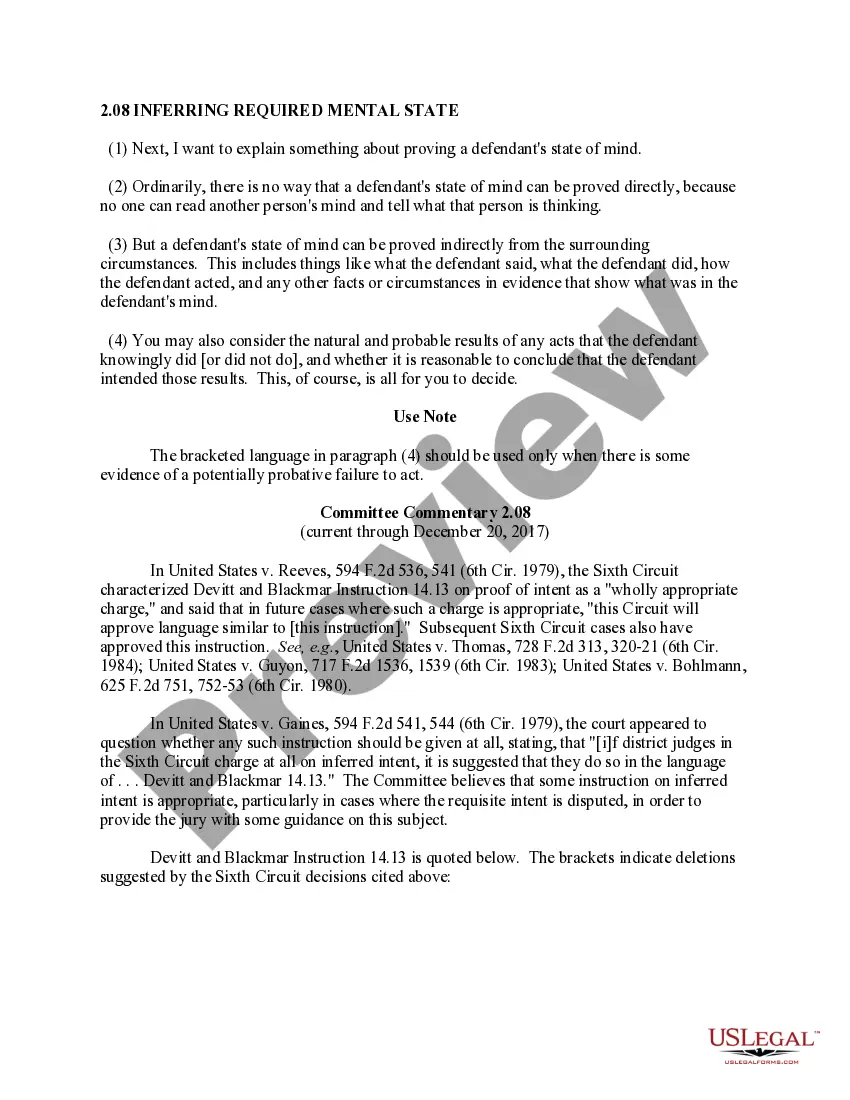
Minnesota Stipulation and Scheduling Order
About this form
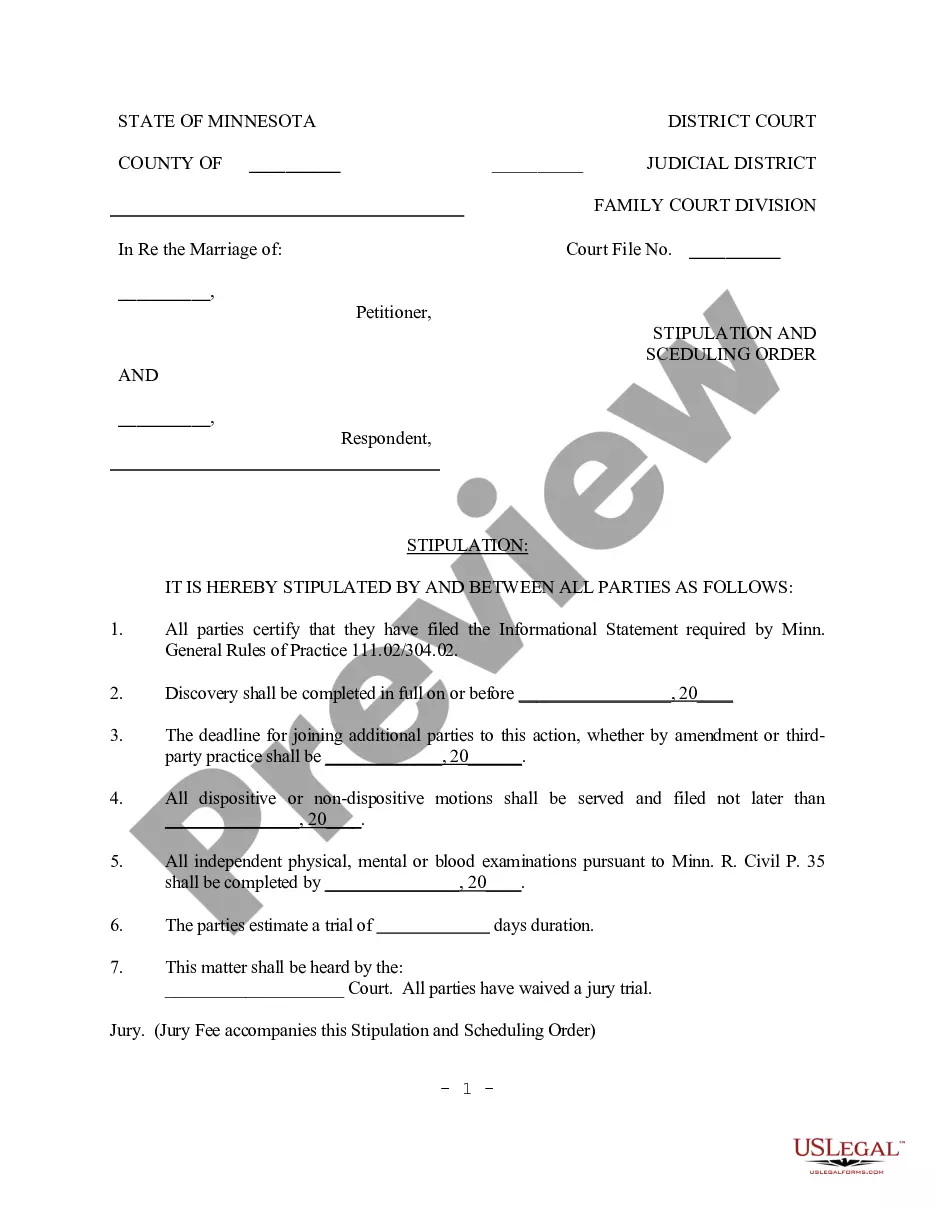
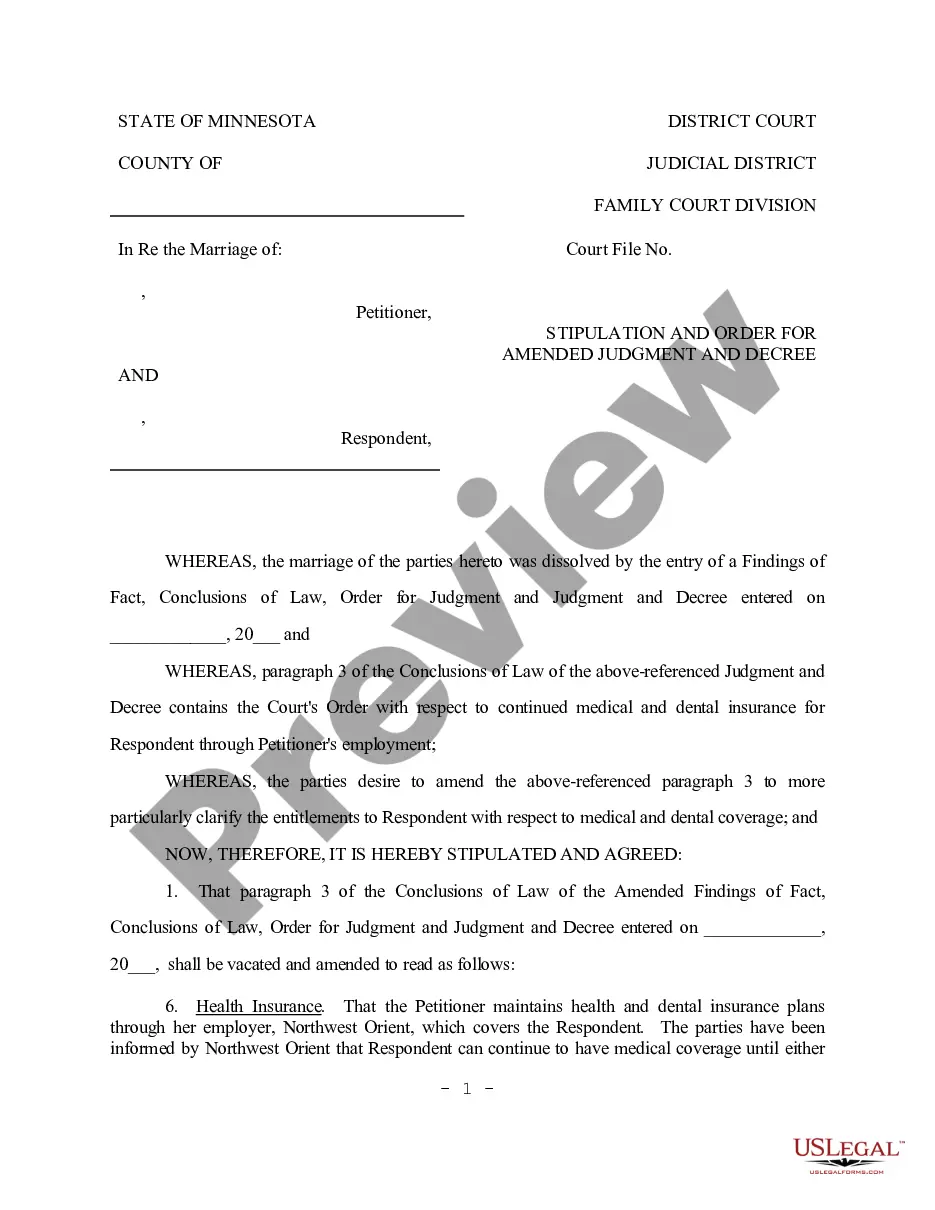
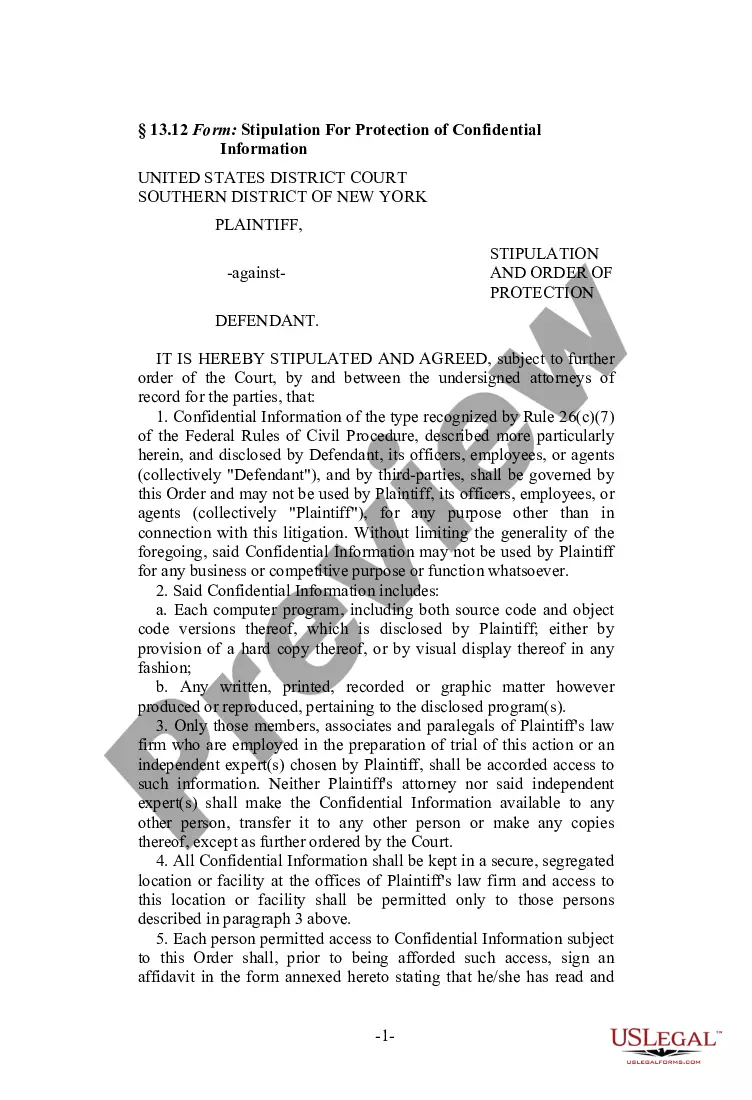
The Stipulation and Scheduling Order is a legal document used in divorce proceedings that outlines all deadlines related to the case leading up to a trial. This form ensures that both parties agree on various aspects of the case, including deadlines for filing motions, completing discovery, and trial dates. It is essential for maintaining order during the legal process and differs from other forms by specifically addressing the scheduling of events in a dissolution of marriage case.
Main sections of this form
- Stipulation: Agreement by the parties on various case deadlines and procedures.
- Discovery Deadline: Date by which all discovery must be completed.
- Motion Deadlines: Timelines for submitting all dispositive or non-dispositive motions.
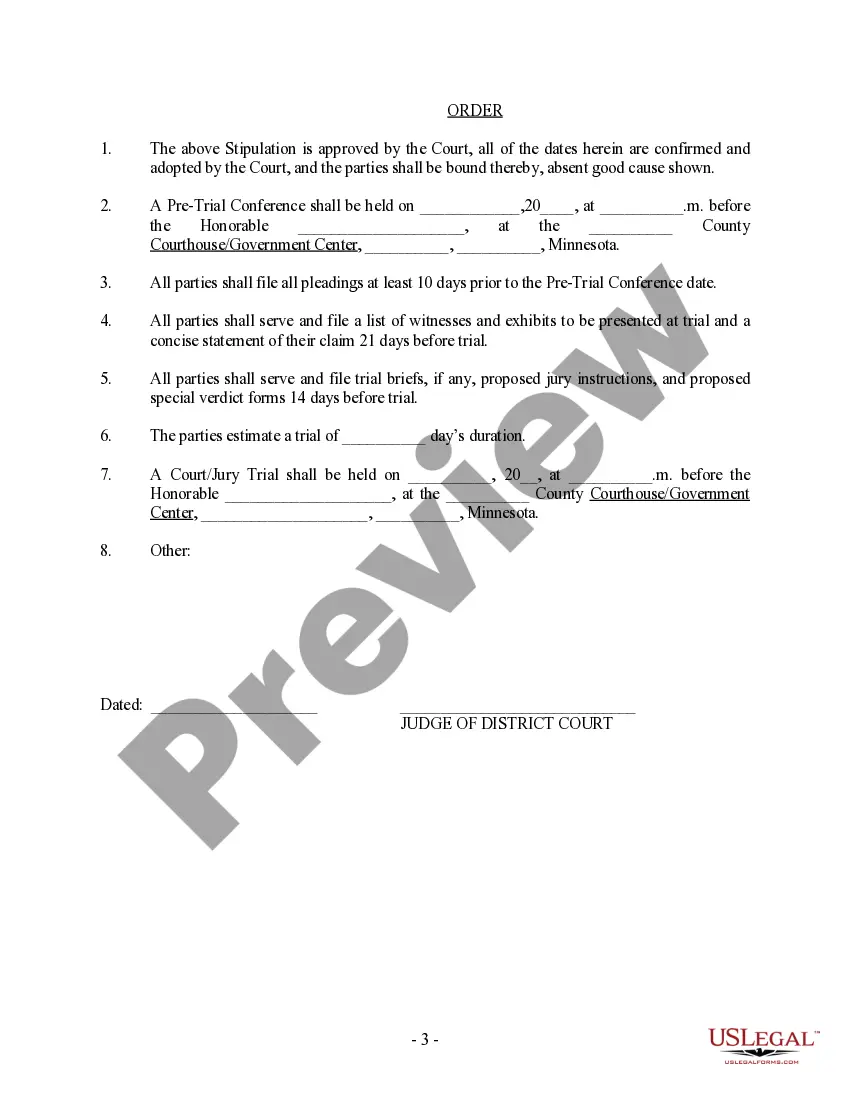
- Trial Details: Information regarding the estimated duration of the trial and the scheduling for pre-trial conferences.
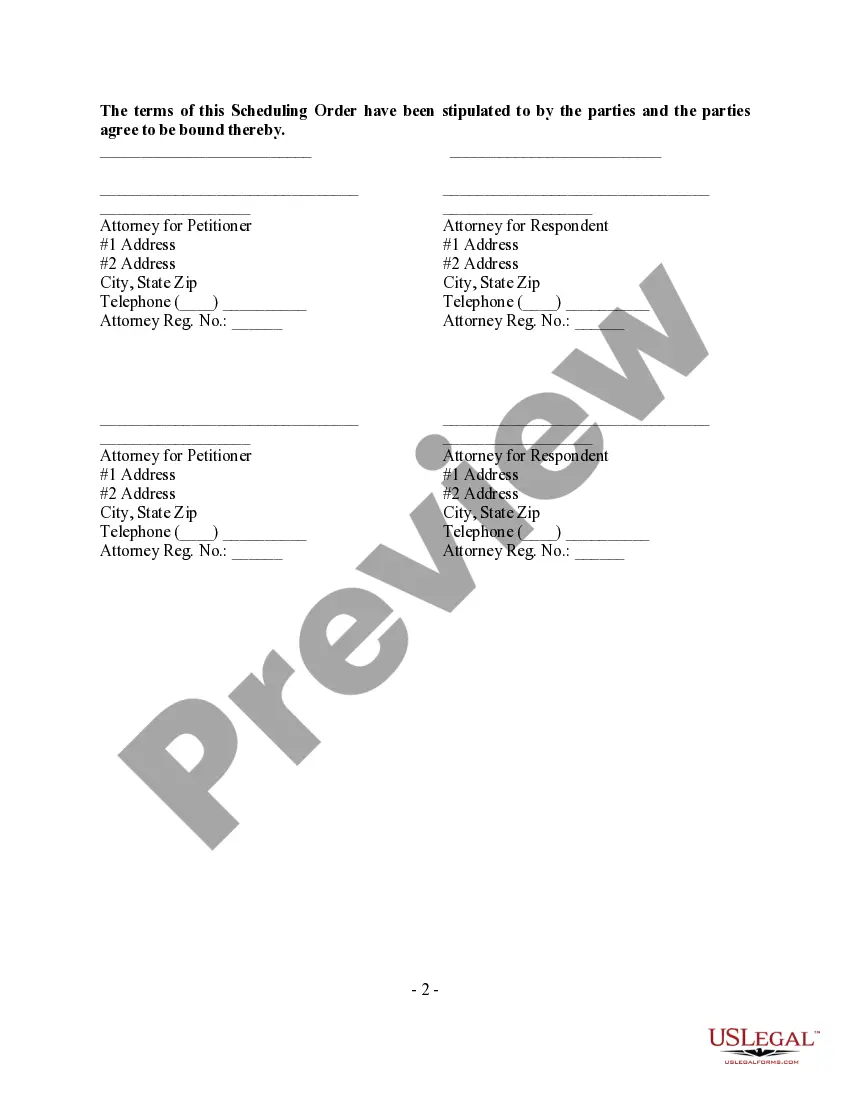
- Approval: Confirmation of the stipulation by the court and terms under which parties are bound.
When this form is needed
This form is typically used in divorce cases to establish a timeline for all relevant activities that need to take place before the trial can occur. It is essential when both parties wish to maintain a clear structure regarding deadlines, ensuring that all necessary disclosures, disclosures of witnesses and evidence, and other procedural elements are completed on time.
Who should use this form
This form is intended for:
- Divorce petitioners and respondents in a dissolution of marriage case.
- Attorneys representing clients in family law matters.
- Parties seeking a clear and enforceable timeline for case proceedings.
Completing this form step by step
- Identify the parties involved in the case and enter their names and addresses.
- Complete the sections detailing deadlines for discovery and motions.
- Specify the estimated duration of the trial and choose the appropriate court.
- Sign the stipulation, ensuring that all parties agree to the terms provided.
- File the completed form with the court, following any additional local filing procedures.
Does this document require notarization?
This form does not typically require notarization to be legally valid. However, some jurisdictions or document types may still require it. US Legal Forms provides secure online notarization powered by Notarize, available 24/7 for added convenience.
Get your form ready online
Our built-in tools help you complete, sign, share, and store your documents in one place.
Make edits, fill in missing information, and update formatting in US Legal Forms—just like you would in MS Word.
Download a copy, print it, send it by email, or mail it via USPS—whatever works best for your next step.
Sign and collect signatures with our SignNow integration. Send to multiple recipients, set reminders, and more. Go Premium to unlock E-Sign.
If this form requires notarization, complete it online through a secure video call—no need to meet a notary in person or wait for an appointment.
We protect your documents and personal data by following strict security and privacy standards.

Make edits, fill in missing information, and update formatting in US Legal Forms—just like you would in MS Word.

Download a copy, print it, send it by email, or mail it via USPS—whatever works best for your next step.

Sign and collect signatures with our SignNow integration. Send to multiple recipients, set reminders, and more. Go Premium to unlock E-Sign.

If this form requires notarization, complete it online through a secure video call—no need to meet a notary in person or wait for an appointment.

We protect your documents and personal data by following strict security and privacy standards.
Common mistakes to avoid
- Failing to agree on deadlines with all parties before filing.
- Not filing the stipulation in a timely manner.
- Leaving sections incomplete, such as trial dates or court information.
- Overlooking the requirement for attorney signatures, if applicable.
Why use this form online
- Immediate access to a professionally drafted Stipulation and Scheduling Order tailored for Minnesota.
- Convenient downloadable format allows for quick use and editability.
- Streamlined completion process reduces the risk of errors.
- Secure data handling and legal compliance ensure peace of mind for users.
Looking for another form?


Form popularity
FAQ
Rule of practice 521 in Minnesota addresses the requirements for case management and scheduling in the court system. It emphasizes the importance of timely resolution of cases and encourages parties to cooperate in developing a Minnesota Stipulation and Scheduling Order. This rule supports a structured approach to litigation, helping to minimize delays and reduce court congestion.
The rule 69 law in Minnesota pertains to the enforcement of civil judgments, detailing how a judgment creditor can pursue collection. This includes procedures for garnishment and execution, which are essential for ensuring that judgments are honored. By incorporating a Minnesota Stipulation and Scheduling Order, parties can facilitate a smoother process for enforcing their rights under this law.
A motion for scheduling order is a request made to the court to set a timeline for the proceedings in a legal case. This motion helps the court establish deadlines for various actions, thus promoting efficiency. Utilizing a Minnesota Stipulation and Scheduling Order can be particularly beneficial, as it clarifies expectations for all parties involved and helps manage the case effectively.
The rule of civil procedure 69 in Minnesota governs the enforcement of judgments. This rule allows a party to seek the aid of the court in collecting a judgment. Specifically, it outlines the procedures for obtaining a Minnesota Stipulation and Scheduling Order, which can help streamline the enforcement process and ensure compliance with court orders.
Rule 69 execution involves the process of enforcing a final judgment in Minnesota. This includes the legal steps taken to ensure compliance with a court's order, allowing the winning party to collect what they are owed. Familiarity with Rule 69 execution is crucial for effectively managing your case and navigating the complexities of Minnesota stipulation and scheduling orders. To simplify this process, consider using resources available on the US Legal Forms platform.
Rule 69 in Minnesota outlines the procedures for enforcing a judgment through execution. This rule allows a party to collect on a judgment by utilizing various methods, such as garnishment or seizure of property. Understanding Rule 69 is essential for anyone involved in a legal dispute, as it directly relates to enforcement of Minnesota stipulation and scheduling orders. You can find helpful templates and guidance on this topic at US Legal Forms.
The 48 hour rule in Minnesota refers to the requirement that a stipulation and scheduling order must be filed within 48 hours of a court's decision. This ensures timely communication and adherence to court timelines. By following this rule, you can protect your rights and ensure that your case proceeds smoothly. For more information, consider exploring resources on the US Legal Forms platform.