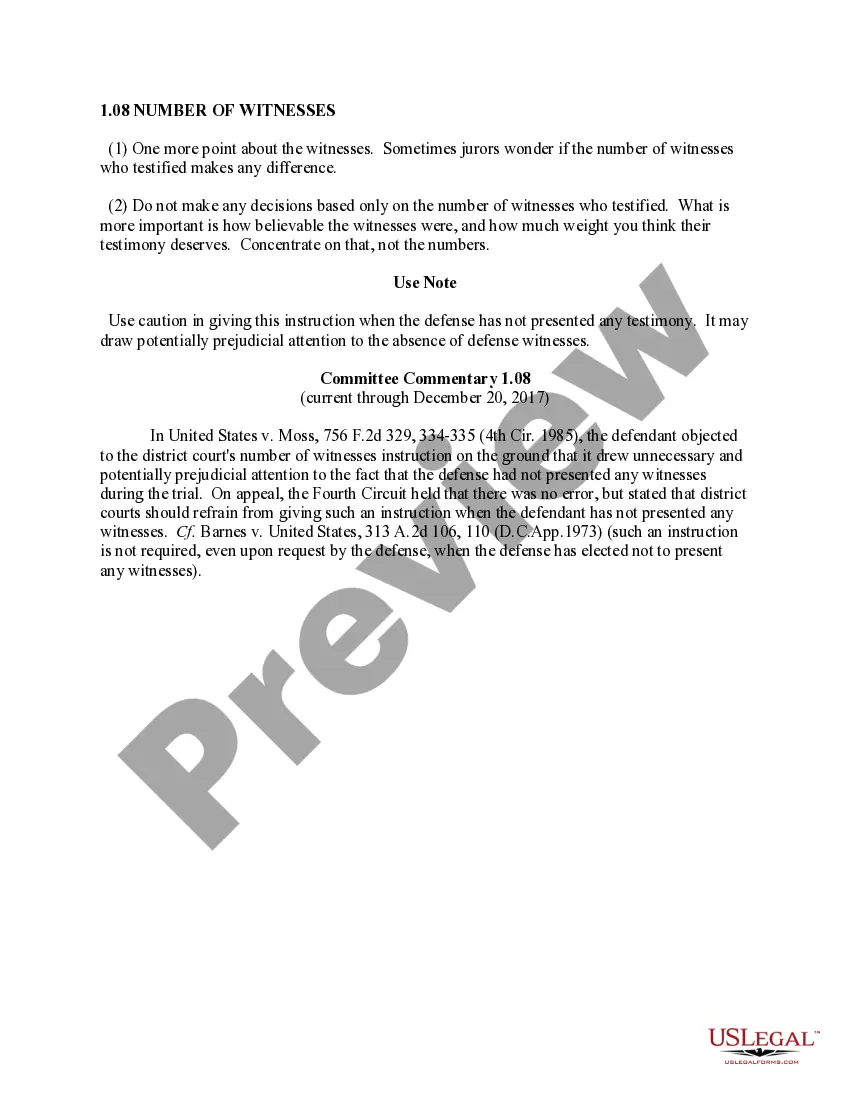
Minnesota Summary Real Estate Disposition Judgment
Overview of this form
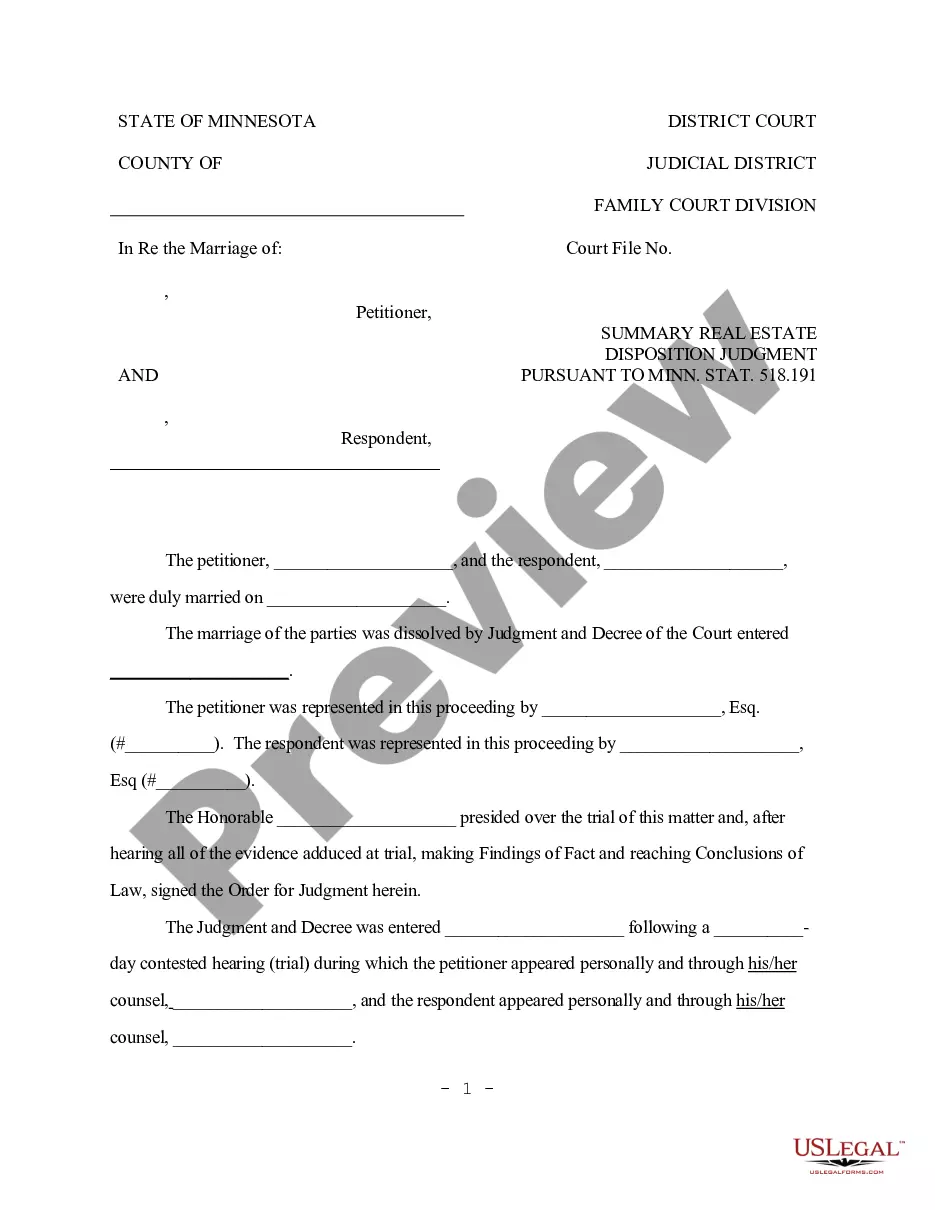
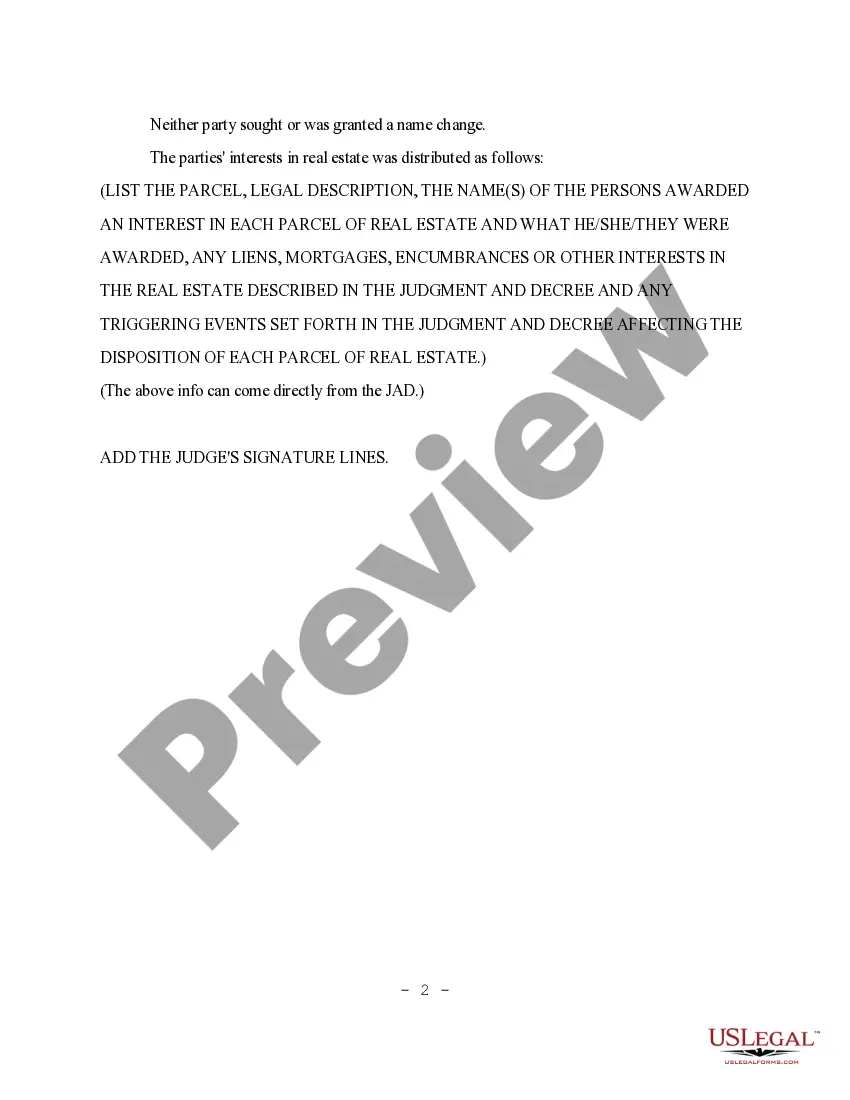
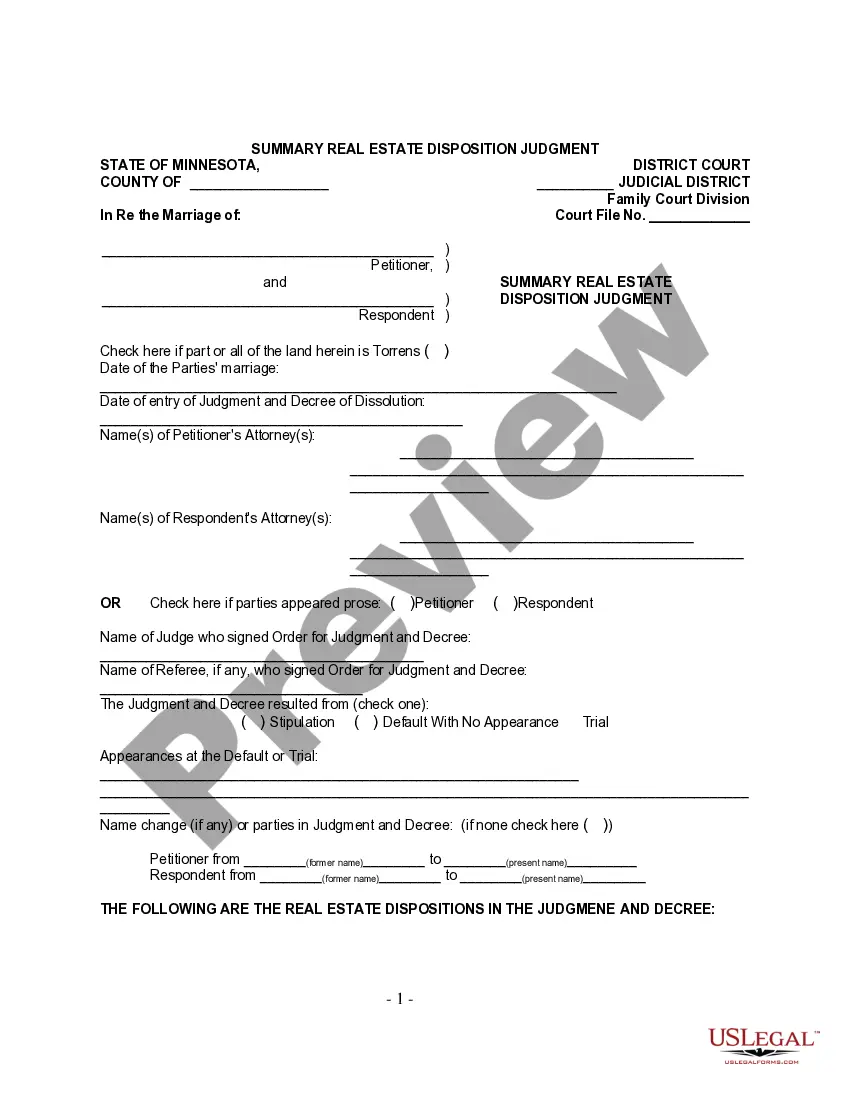
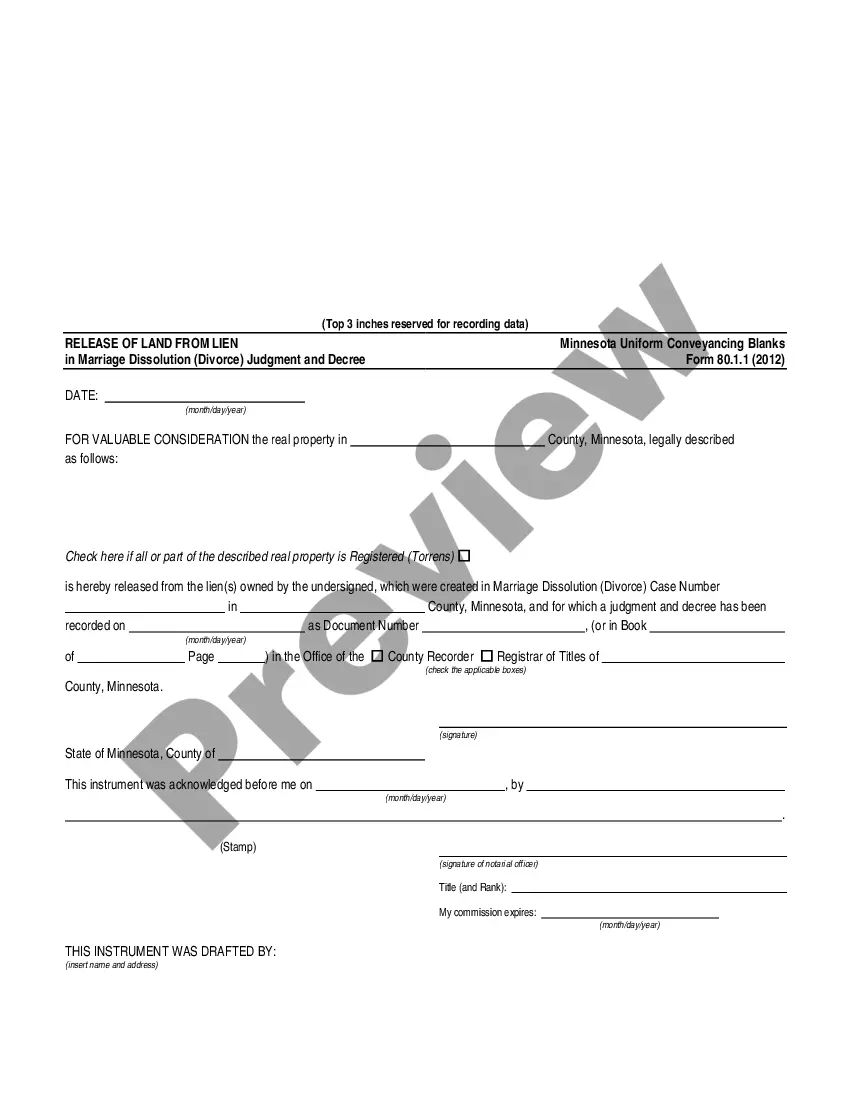
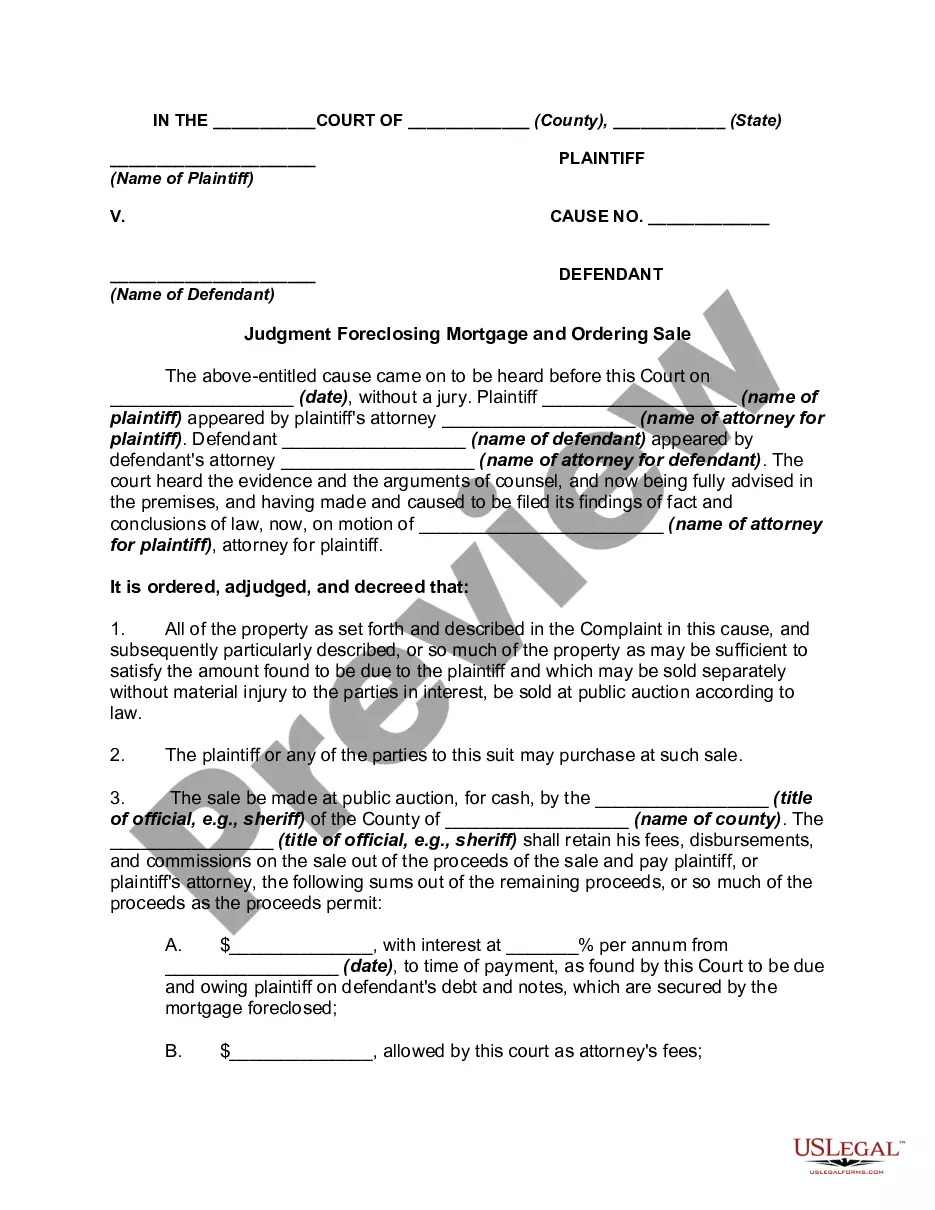
The Summary Real Estate Disposition Judgment is a legal document used in the event of a marriage dissolution to formally specify how real estate assets will be distributed between the parties. This form is essential for ensuring a clear division of property as decided by the court, distinguishing it from other divorce or asset division forms that do not focus specifically on real estate. By outlining each party's interests in real property, it helps prevent future disputes regarding ownership and use of the properties involved.
Form components explained
- Details of the marriage dissolution including the date of Judgment and Decree.
- Names and representation of both petitioner and respondent.
- The presiding judgeâs name and signature line for legal validation.
- A section for the legal description of each real estate parcel involved.
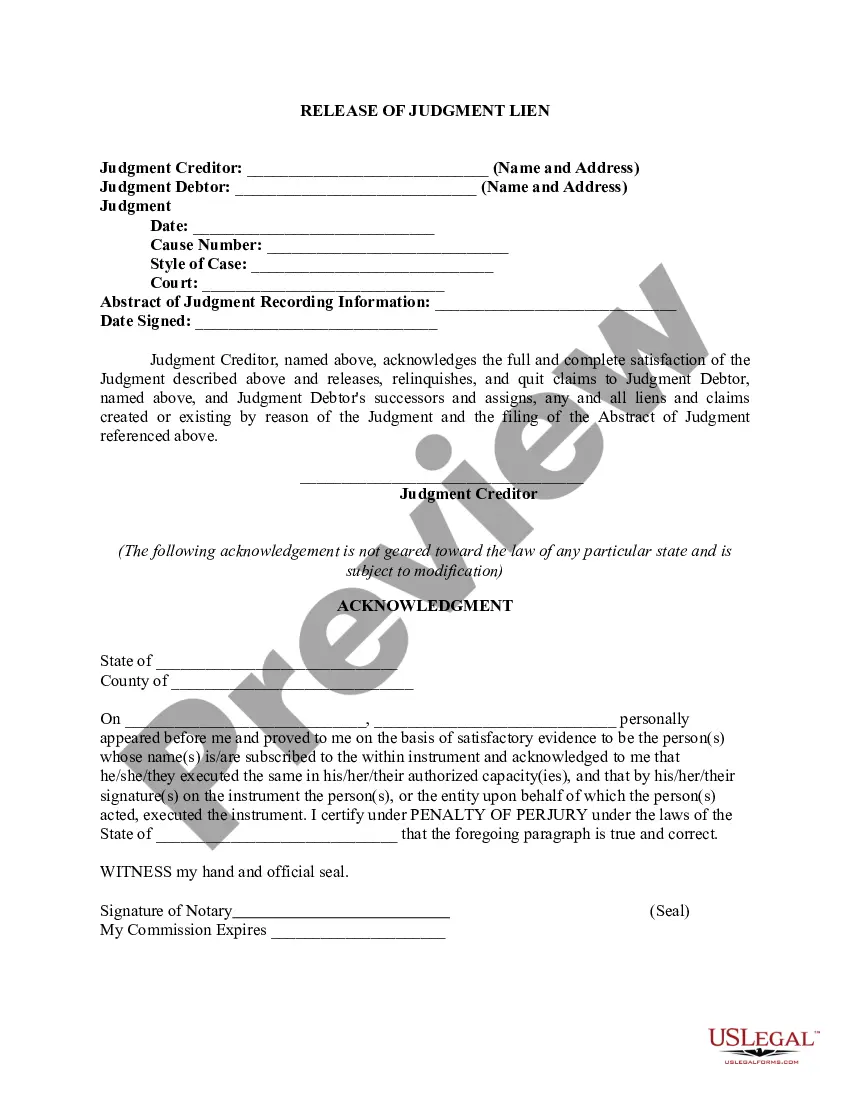
- Information on any liens, mortgages, or encumbrances associated with the properties.
- Specification of what each party is awarded concerning real estate interests.
When to use this form
This form should be used during divorce proceedings when the dissolution of marriage involves the distribution of real estate. It is particularly important after a contested hearing where the court has made determinations regarding property allocation. Use this form to have an official record of the courtâs decisions concerning real estate assets post-divorce.
Who can use this document
- Individuals going through a divorce that includes the division of real estate properties.
- Attorneys representing clients in family law cases involving property disputes.
- Parties who have reached an agreement regarding how to divide real estate in their divorce.
How to complete this form
- Identify and fill in the date when the marriage was dissolved.
- Enter the names of the petitioner and respondent, including their legal representatives.
- Provide details of the court proceedings, including the judge's name and any contested hearing dates.
- List the real estate properties to be divided, along with their legal descriptions and the parties being awarded those properties.
- Include any liens, mortgages, or other interests that may affect each property.
- Obtain the judge's signature to validate the disposition judgment.
Notarization guidance
This form does not typically require notarization unless specified by local law. Always check your local requirements before finalizing the document.
Get your form ready online
Our built-in tools help you complete, sign, share, and store your documents in one place.
Make edits, fill in missing information, and update formatting in US Legal Forms—just like you would in MS Word.
Download a copy, print it, send it by email, or mail it via USPS—whatever works best for your next step.
Sign and collect signatures with our SignNow integration. Send to multiple recipients, set reminders, and more. Go Premium to unlock E-Sign.
If this form requires notarization, complete it online through a secure video call—no need to meet a notary in person or wait for an appointment.
We protect your documents and personal data by following strict security and privacy standards.

Make edits, fill in missing information, and update formatting in US Legal Forms—just like you would in MS Word.

Download a copy, print it, send it by email, or mail it via USPS—whatever works best for your next step.

Sign and collect signatures with our SignNow integration. Send to multiple recipients, set reminders, and more. Go Premium to unlock E-Sign.

If this form requires notarization, complete it online through a secure video call—no need to meet a notary in person or wait for an appointment.

We protect your documents and personal data by following strict security and privacy standards.
Avoid these common issues
- Failing to provide complete legal descriptions for each property.
- Not including critical information such as the date of the court ruling or the judge's name.
- Misunderstanding the implications of liens and encumbrances on property interests.
Why use this form online
- Convenience of accessing and downloading the form from anywhere.
- Editability allows you to personalize the document according to your unique circumstances.
- Reliability of using forms drafted by licensed attorneys ensures legal accuracy.
Looking for another form?
Form popularity
FAQ
In Minnesota, a summary real estate disposition judgment is a legal mechanism that facilitates the expeditious disposition of real estate issues. It serves to clear up disputes over property ownership or rights, allowing parties to resolve their conflicts efficiently. This judgment can help prevent lengthy litigation and reduce costs associated with real estate disputes. For those navigating the complexities of property law, exploring the option of a Minnesota Summary Real Estate Disposition Judgment through platforms like uslegalforms can provide valuable guidance and resources.
A summary real estate disposition judgment is a court ruling that allows for the swift resolution of disputes regarding real estate property. This type of judgment streamlines the legal process, enabling parties to settle matters quickly without going through a lengthy trial. It is particularly beneficial in cases involving property sales, transfers, or disputes over ownership. If you are facing issues related to real estate, considering a Minnesota Summary Real Estate Disposition Judgment could be a wise move.
In Minnesota, the rule for summary judgment allows a party to request the court to decide a case without a full trial. This process is typically used when there are no genuine disputes about the material facts of the case. The court reviews all evidence presented and determines whether the moving party is entitled to judgment as a matter of law. Understanding this rule is crucial for anyone involved in legal proceedings, particularly when dealing with Minnesota Summary Real Estate Disposition Judgment.