Minnesota Protective Order and Stipulation for Protective Order
What this document covers
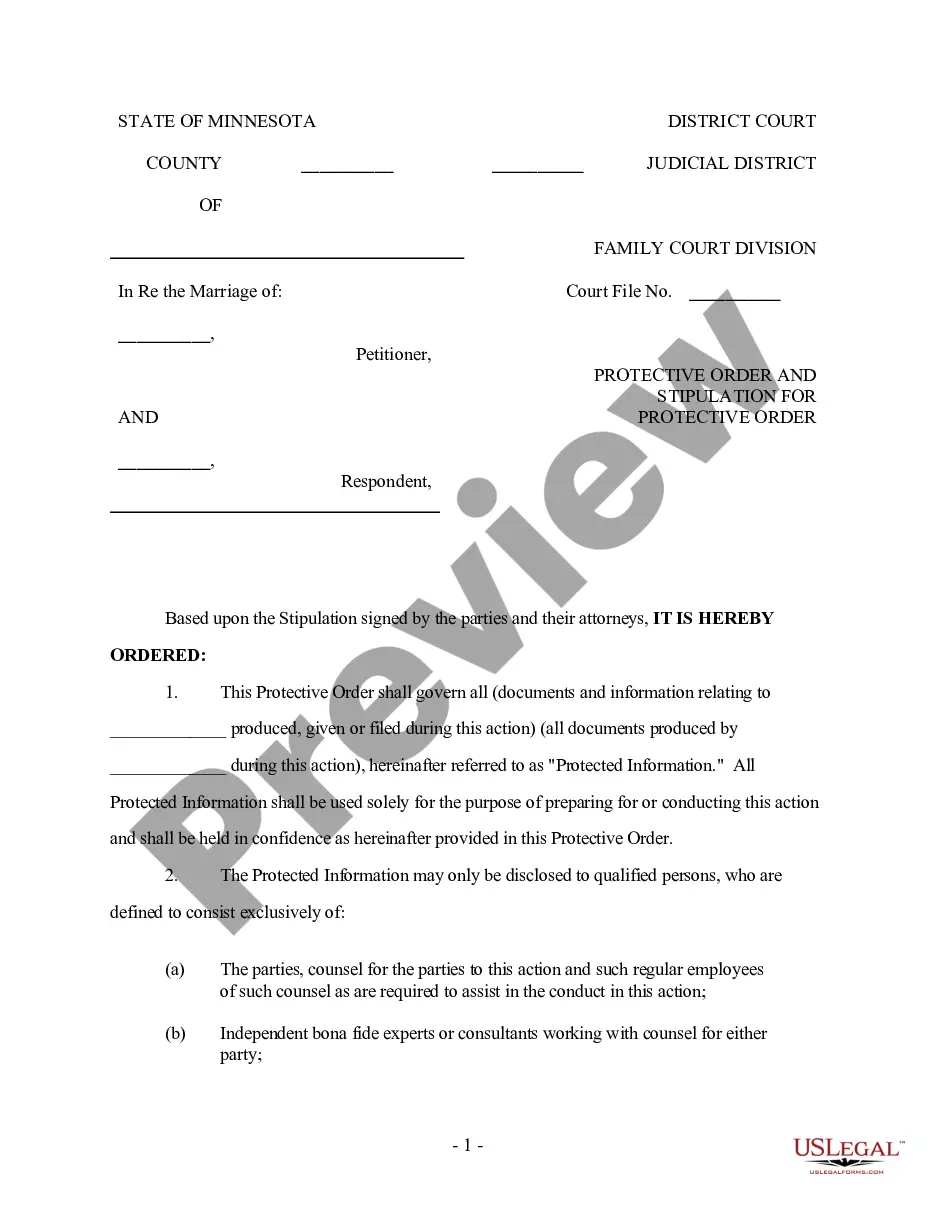
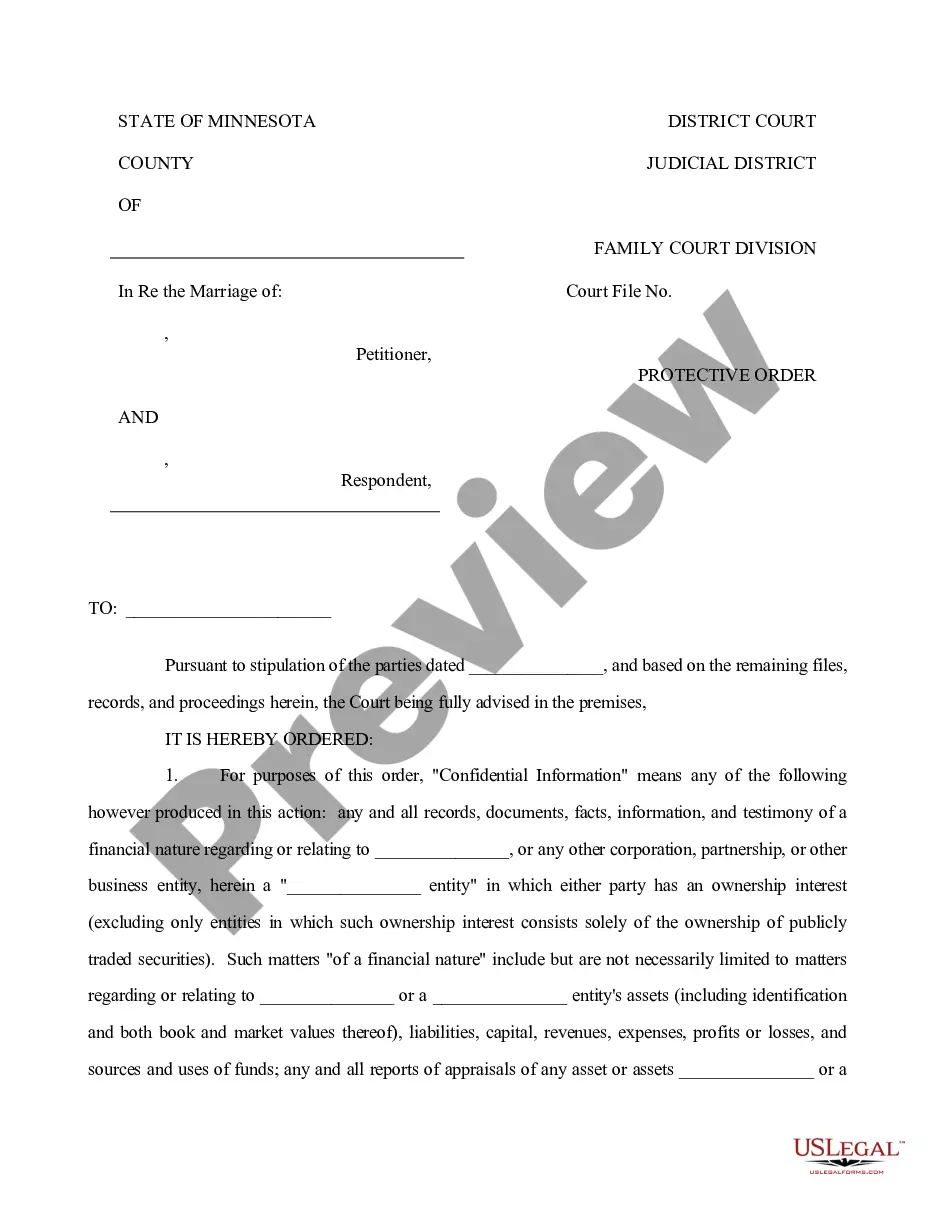
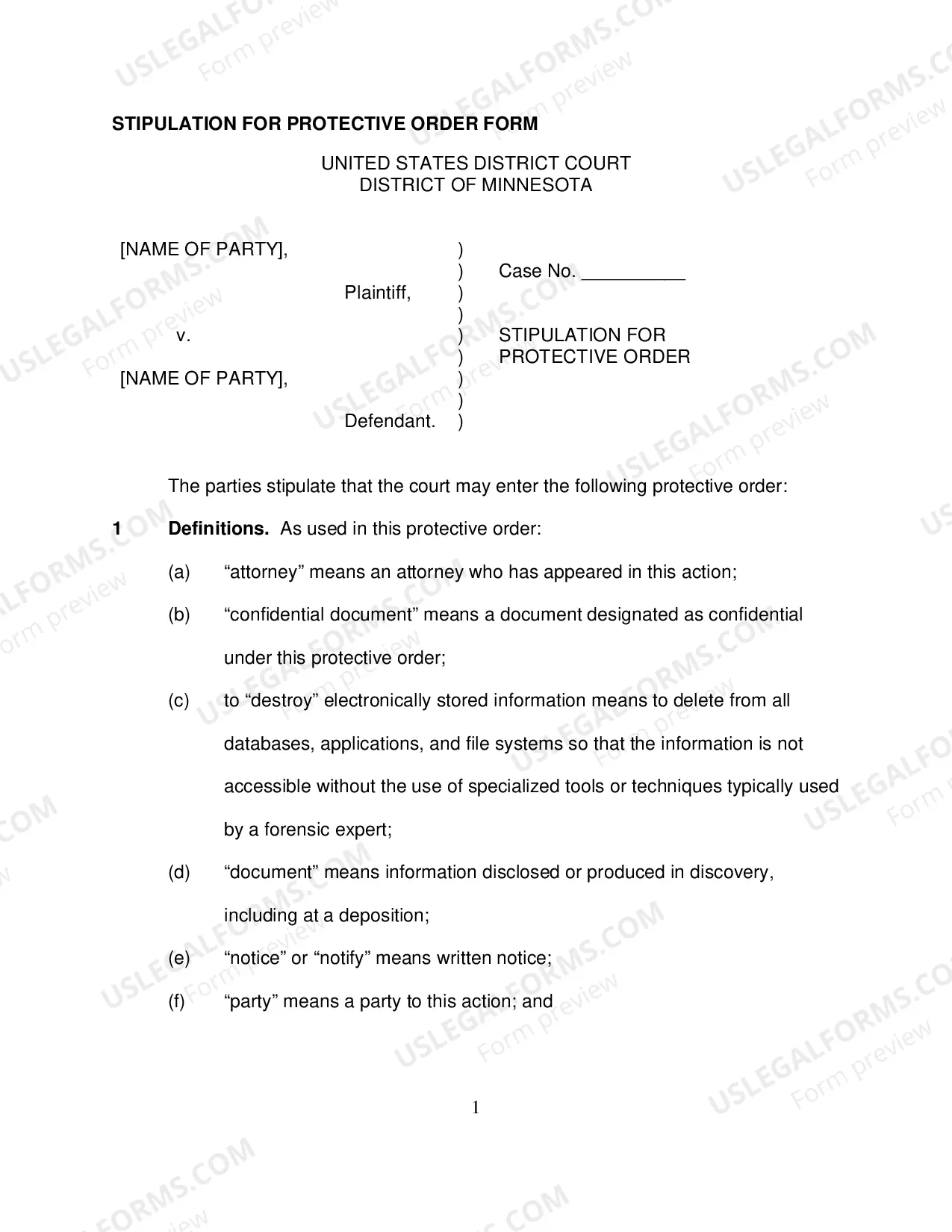
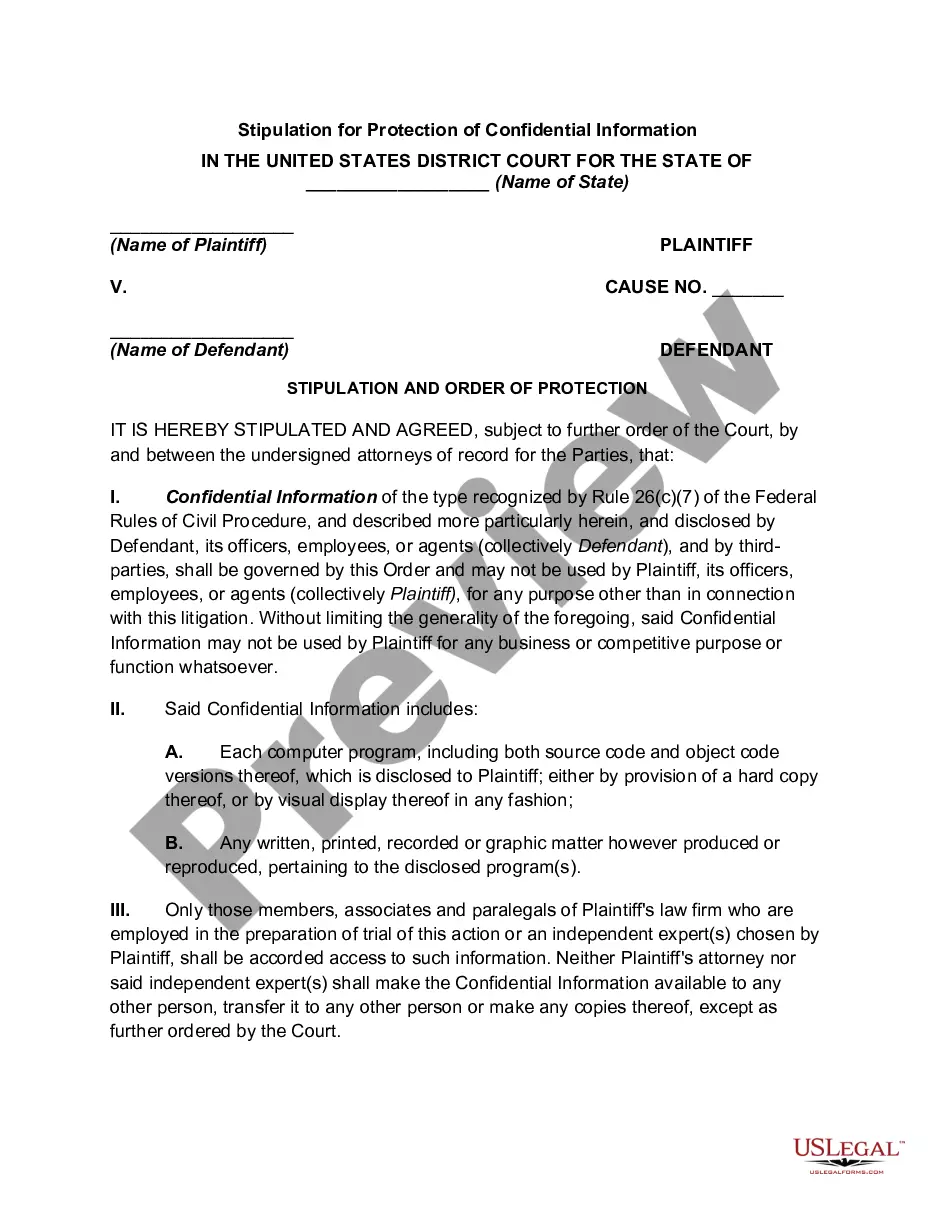
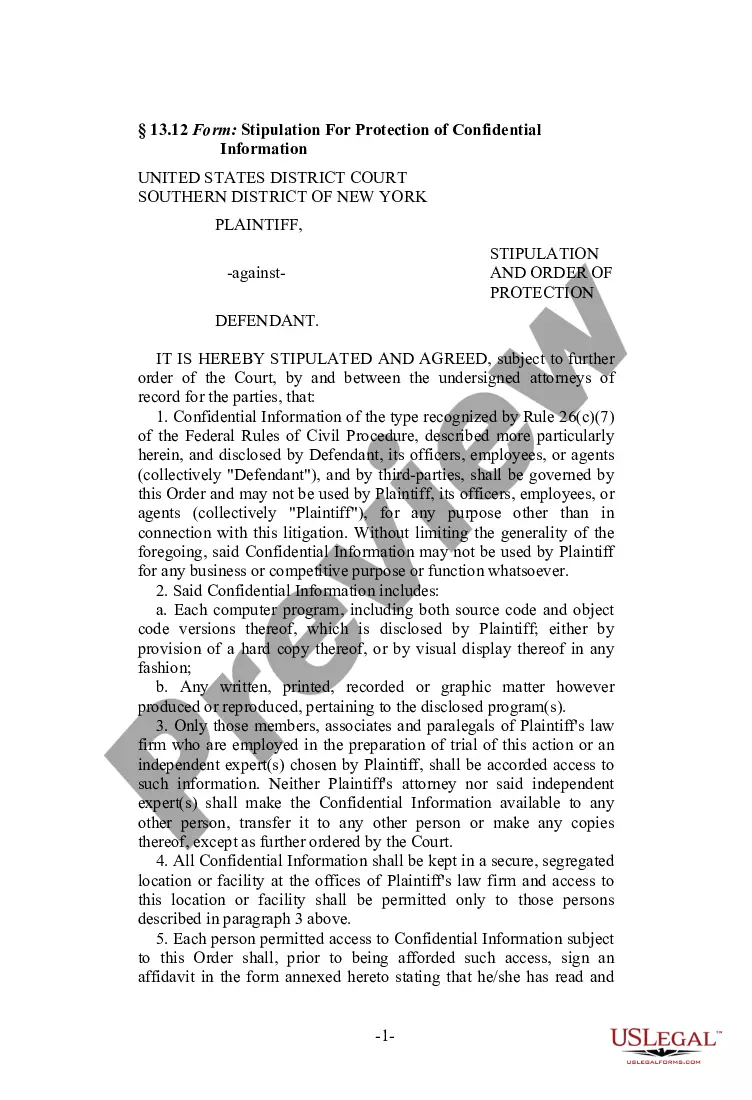
The Protective Order and Stipulation for Protective Order is a legal document designed to prevent the unauthorized disclosure of sensitive information during legal proceedings. This form establishes guidelines on how protected information should be managed, ensuring that it is used solely for the purpose of the legal action and kept confidential. Unlike standard discovery requests, this document specifically addresses the storage and handling of sensitive data, safeguarding parties involved in litigation.
What’s included in this form
- Definition of Protected Information to clarify which documents are covered by the order.
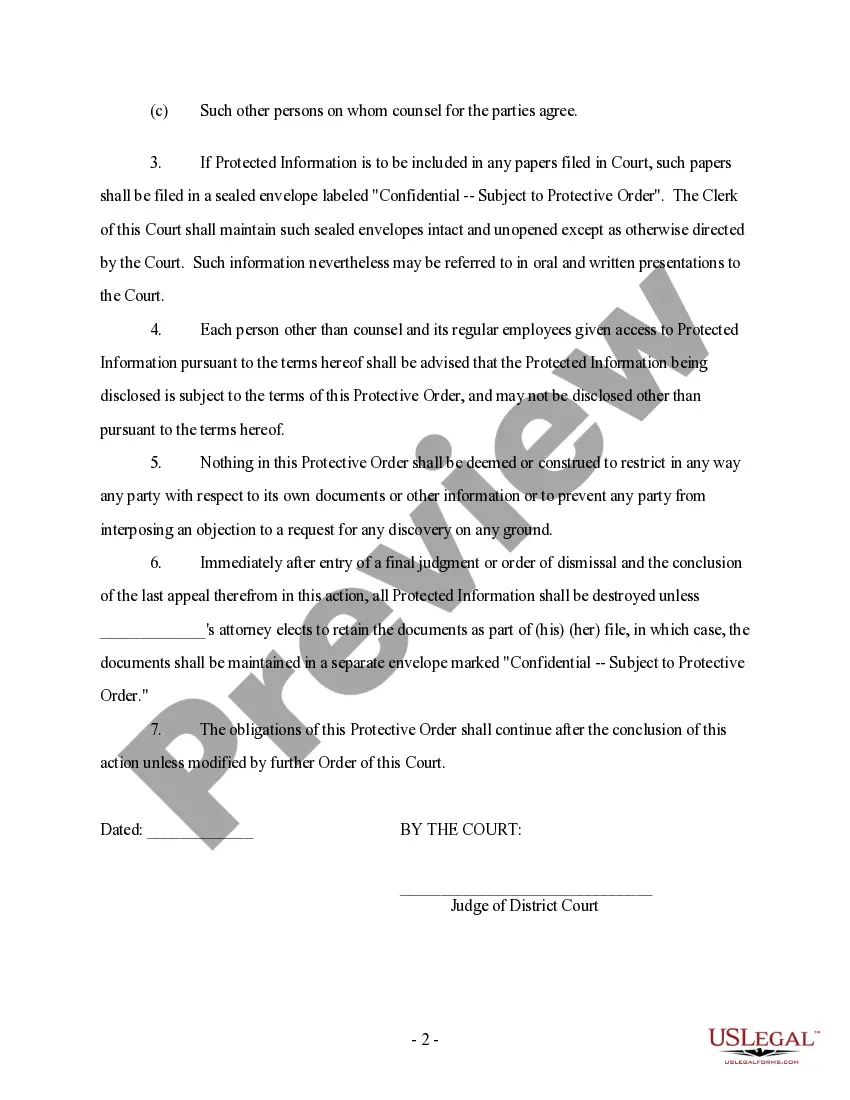
- List of qualified individuals who may access the Protected Information.
- Requirements for filing documents containing Protected Information in a sealed envelope.
- Obligations regarding the destruction or retention of Protected Information after the conclusion of the case.
- Indication that the terms of the order continue even after the case concludes, unless modified by the court.
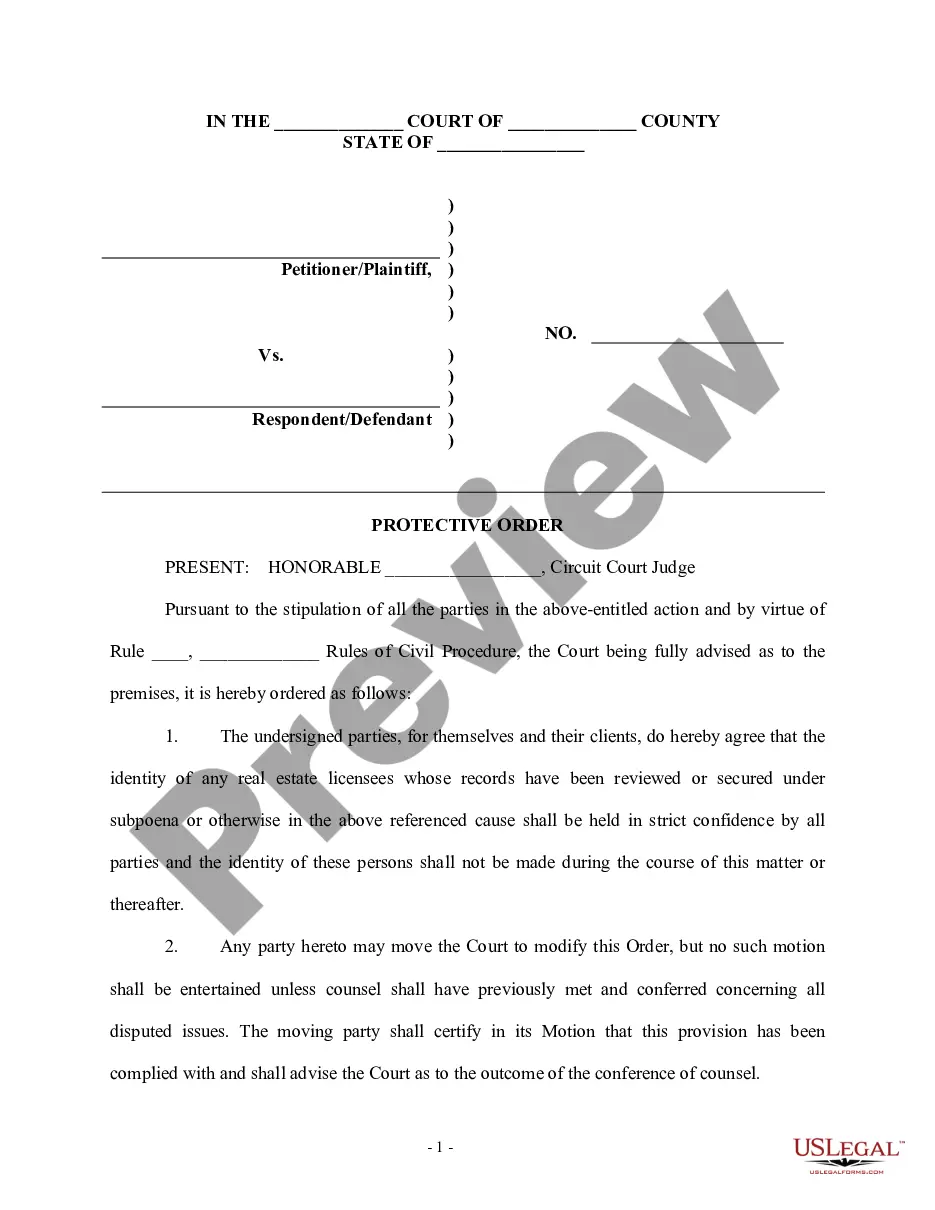
Situations where this form applies
This form should be used when parties involved in a legal action need to protect sensitive information that may be disclosed during the discovery process. It is commonly utilized in cases involving trade secrets, personal data, or proprietary information that must be safeguarded from public disclosure or misuse. If you anticipate that confidential information will be exchanged, it's essential to establish a protective order to ensure that such information remains secure throughout the proceedings.
Who needs this form
- Parties involved in legal disputes where sensitive information may be exchanged.
- Attorneys representing clients in litigation that requires confidentiality over certain documents.
- Experts or consultants who may need access to Protected Information in relation to the case.
Instructions for completing this form
- Identify the parties involved and their legal representatives.
- Specify what information will be classified as Protected Information within the form.
- List all qualified individuals who will have access to the Protected Information.
- Determine the procedure for filing documents containing Protected Information.
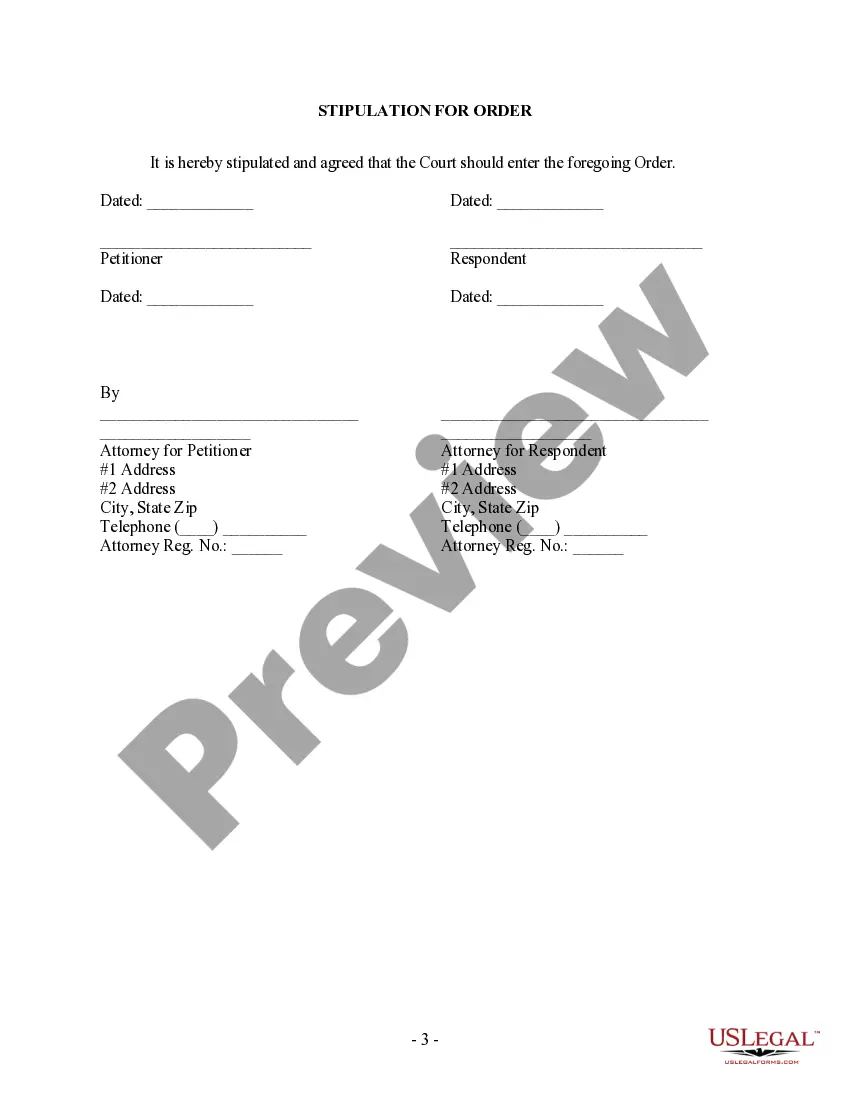
- Ensure all signatures from both parties and their attorneys are completed where indicated.
Is notarization required?
This form usually doesn’t need to be notarized. However, local laws or specific transactions may require it. Our online notarization service, powered by Notarize, lets you complete it remotely through a secure video session, available 24/7.
Get your form ready online
Our built-in tools help you complete, sign, share, and store your documents in one place.
Make edits, fill in missing information, and update formatting in US Legal Forms—just like you would in MS Word.
Download a copy, print it, send it by email, or mail it via USPS—whatever works best for your next step.
Sign and collect signatures with our SignNow integration. Send to multiple recipients, set reminders, and more. Go Premium to unlock E-Sign.
If this form requires notarization, complete it online through a secure video call—no need to meet a notary in person or wait for an appointment.
We protect your documents and personal data by following strict security and privacy standards.

Make edits, fill in missing information, and update formatting in US Legal Forms—just like you would in MS Word.

Download a copy, print it, send it by email, or mail it via USPS—whatever works best for your next step.

Sign and collect signatures with our SignNow integration. Send to multiple recipients, set reminders, and more. Go Premium to unlock E-Sign.

If this form requires notarization, complete it online through a secure video call—no need to meet a notary in person or wait for an appointment.

We protect your documents and personal data by following strict security and privacy standards.
Avoid these common issues
- Failing to specify all individuals who may access the Protected Information.
- Not sealing documents containing sensitive information before filing them in court.
- Overlooking the requirement to advise individuals about the confidentiality obligations.
Advantages of online completion
- Convenience of completing the form at your own pace from any location.
- Immediate access to legal templates drafted by licensed attorneys.
- Editable formats allow you to tailor the document to your specific needs.
Legal use & context
- This protective order provides legal grounds to restrict the dissemination of sensitive information during legal proceedings.
- It ensures that confidentiality is upheld, protecting the interests of the parties involved.
- Enforceability depends on compliance with the court's establishment and stipulations of the order.
Quick recap
- The Protective Order is essential for managing sensitive information in legal cases.
- Understanding who can access Protected Information is crucial for compliance.
- Establishing clear guidelines helps protect all parties involved in litigation.
Looking for another form?
Form popularity
FAQ
To obtain a Minnesota Protective Order and Stipulation for Protective Order, you need to provide evidence of abuse, threats, or harassment. This may include photographs of injuries, messages, or witness statements that support your claim. It's crucial to gather any documentation that demonstrates your situation clearly. Using the US Legal Forms platform can help you find the necessary forms and guidance to prepare your case effectively.
A stipulation and protective order is a legal agreement that combines mutual terms with a protective order to ensure safety and compliance. This document outlines the responsibilities of each party while maintaining legal protection. It is an effective way to formalize agreements and reduce future conflicts. If you need guidance on creating such documents, US Legal Forms can provide the necessary tools and resources.
The three types of protection typically refer to physical protection, emotional support, and legal safeguards. In the context of a Minnesota Protective Order, these protections help individuals secure their safety and well-being. Understanding these types enables you to choose the right legal action for your situation. When exploring options, consider using resources from US Legal Forms to find the best fit for your needs.
A stipulation for a protective order is a mutual agreement between parties that outlines specific terms under which a protective order will be enforced. This may include conditions like maintaining a certain distance or refraining from specific actions. Such stipulations can provide both parties with clarity and security. For those seeking to create a stipulation, US Legal Forms offers templates to aid in this process.
Common examples of stipulations in a Minnesota Protective Order may include agreements on no-contact provisions, temporary custody arrangements, and financial support terms. These stipulations aim to create a clear understanding between the parties involved. By clearly outlining expectations, they can help prevent future conflicts. Utilizing US Legal Forms can simplify the process of drafting these stipulations effectively.
In Minnesota, there are several types of protection orders, including domestic abuse orders, harassment restraining orders, and vulnerable adult protection orders. Each type serves specific needs and offers different levels of protection. A Minnesota Protective Order can help individuals feel safe by legally restricting contact from the abuser. If you need assistance, US Legal Forms provides resources to help you navigate these options.
A sample stipulated protective order (also referred to as a confidentiality agreement and order) that may be used in California state court litigation to protect against the disclosure of documents while a case is pending and after its conclusion.
You can apply for an OFP for a child in your family or household. If you are worried about abuse of an adult in someone else's family or household, call Minnesota Adult Abuse Report Center at (844) 880-1574.
An Order for Protection (OFP) is a restraining Order that is sought where abuse or threats of abuse are alleged. Often, such proceedings are improperly used as a vehicle when divorce is contemplated to have a spouse removed from the family home and/or to seek advantage in a subsequent custody proceeding.
In civil litigation, an order that prevents the disclosure of certain information. A party or person, such as a non-party recipient of a subpoena, may move for a protective order by showing good cause that the court should not permit the requested discovery because the discovery request is: Annoying.