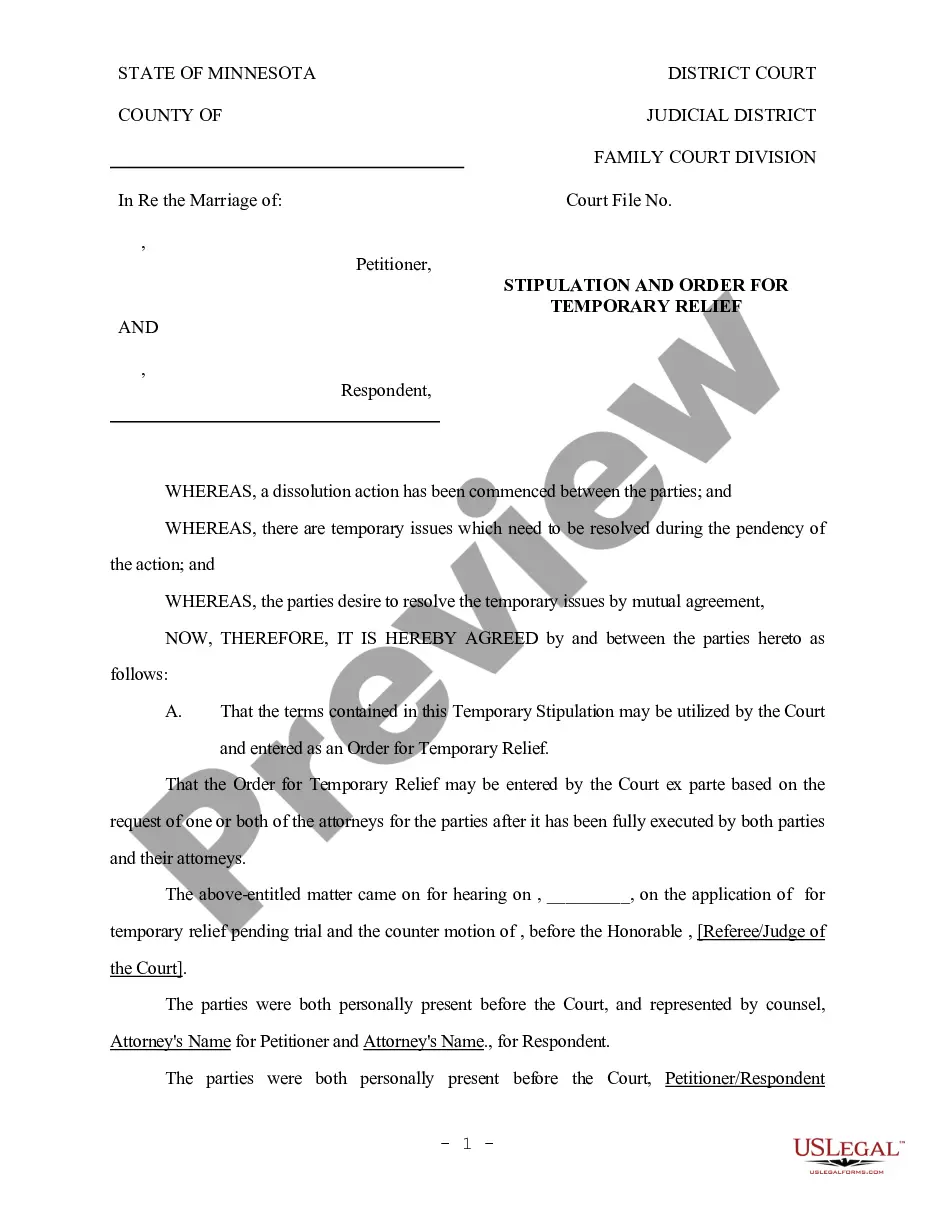
Minnesota Stipulation and Order for Temporary Relief
About this form
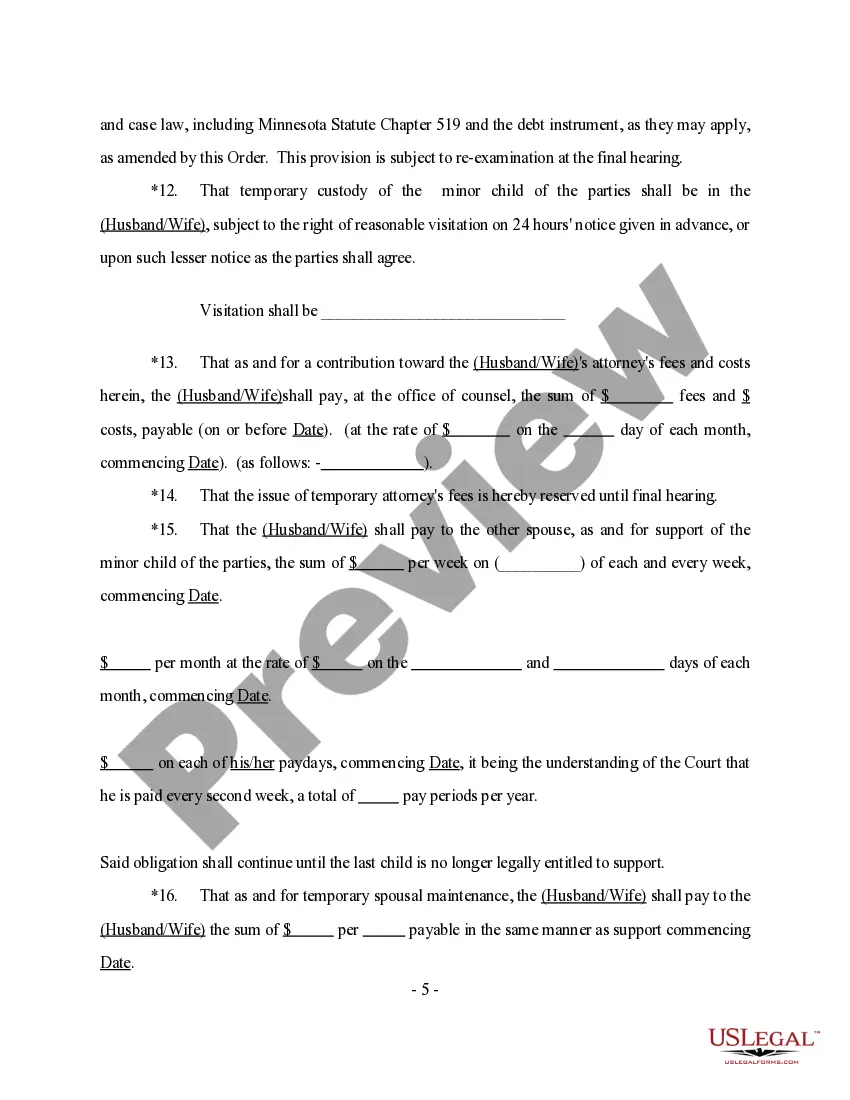
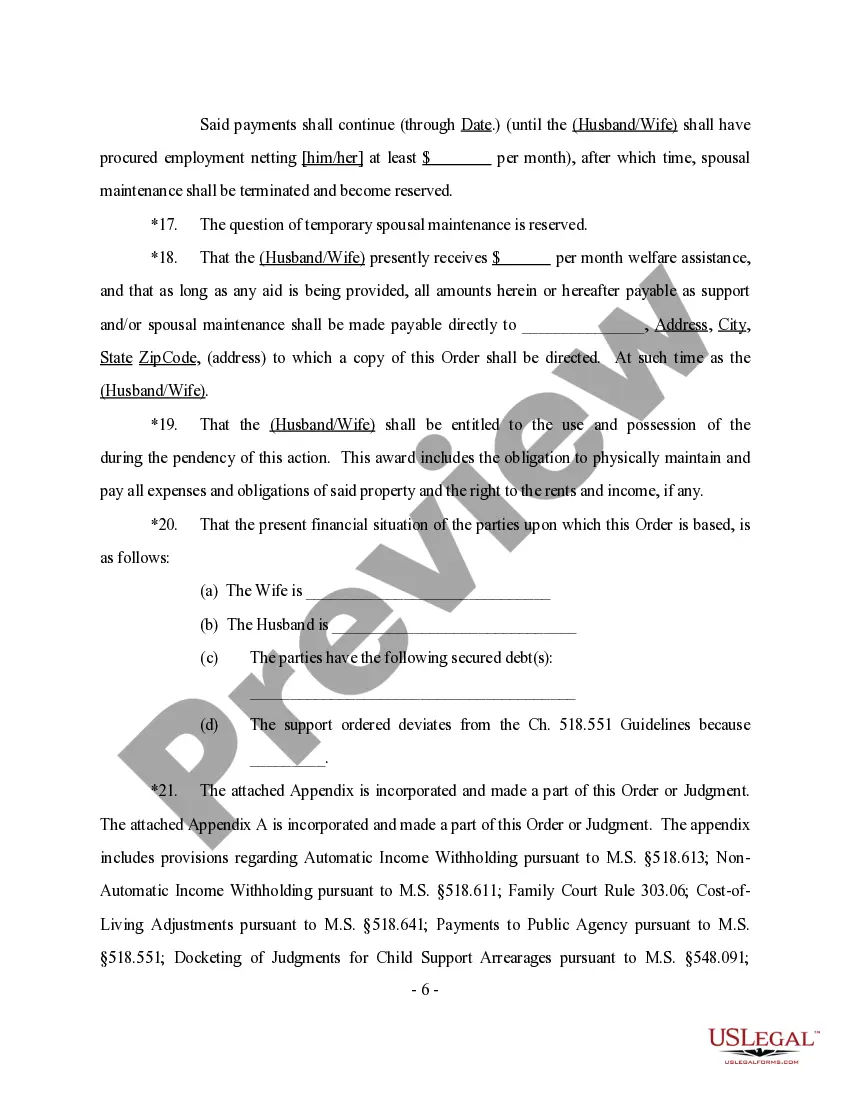
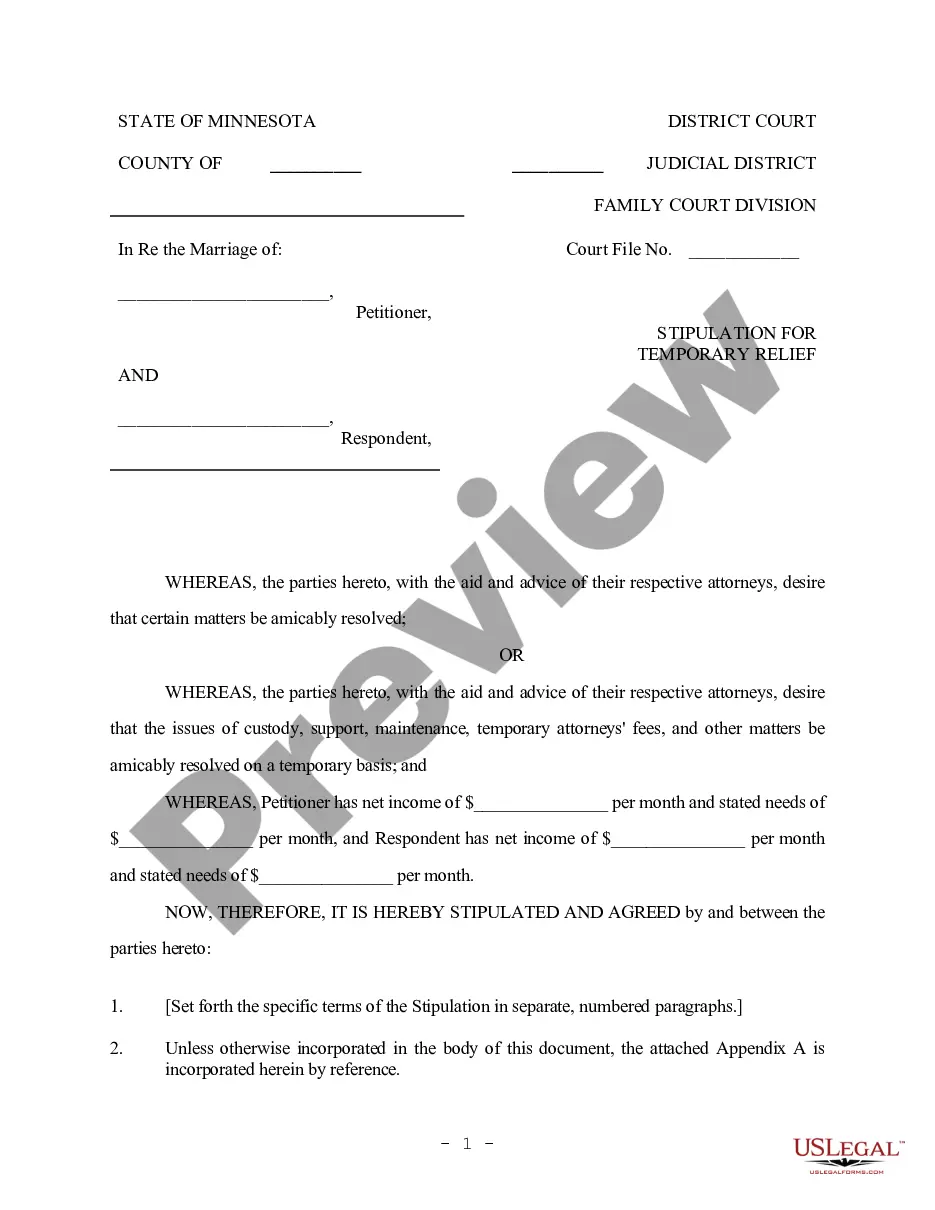
The Stipulation and Order for Temporary Relief is a legally binding document used in divorce or dissolution proceedings to address temporary issues before the trial takes place. This form allows the parties involved to outline and agree upon necessary arrangements related to living situations, financial responsibilities, custody, and other significant matters while the case is pending. It differs from more permanent decrees because it is intended to provide immediate and temporary relief to both parties during the legal proceedings.
Key components of this form
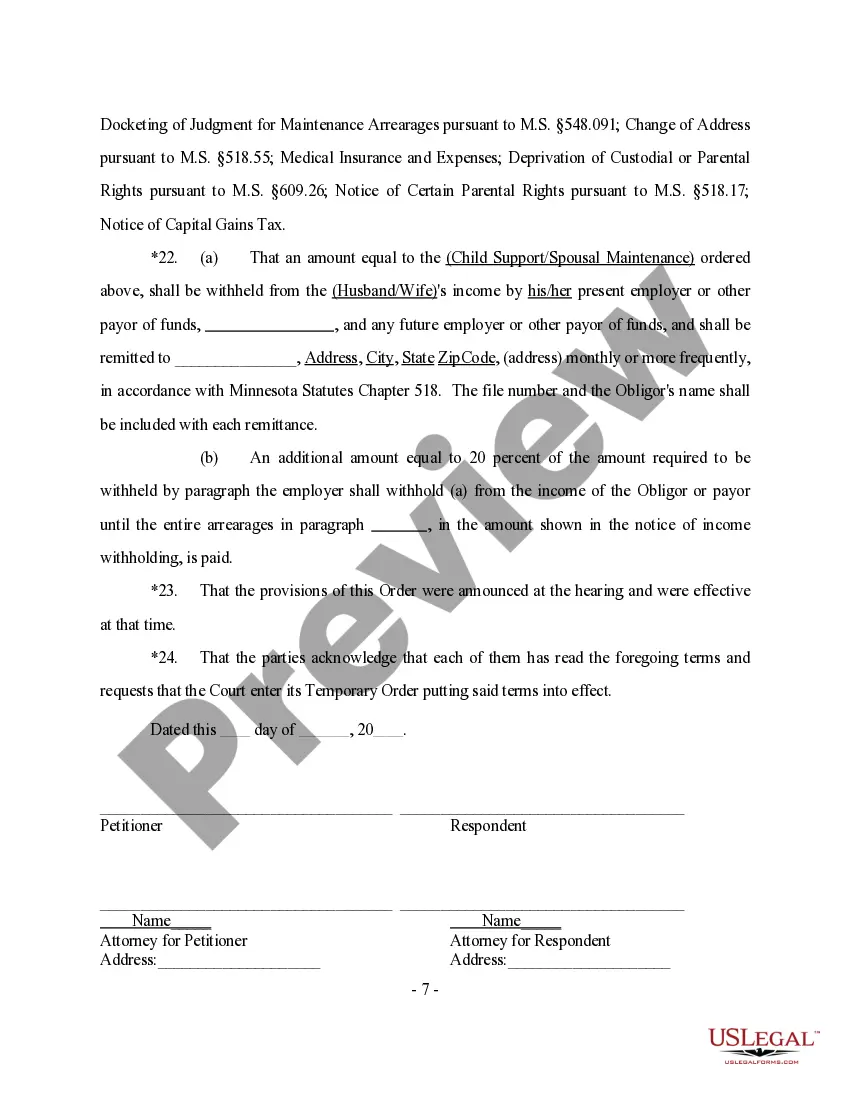
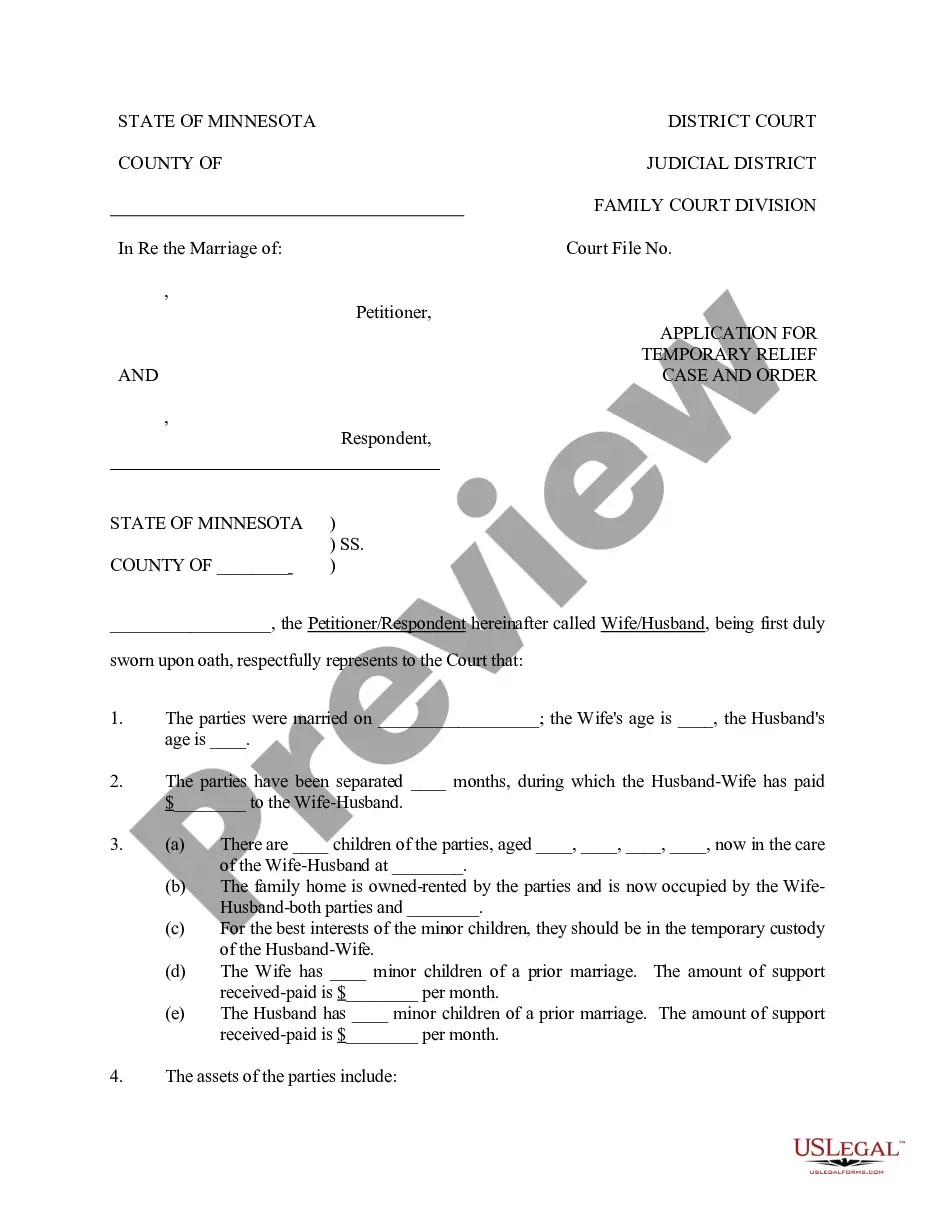
- Identification of the parties involved, typically labeled as Petitioner and Respondent.
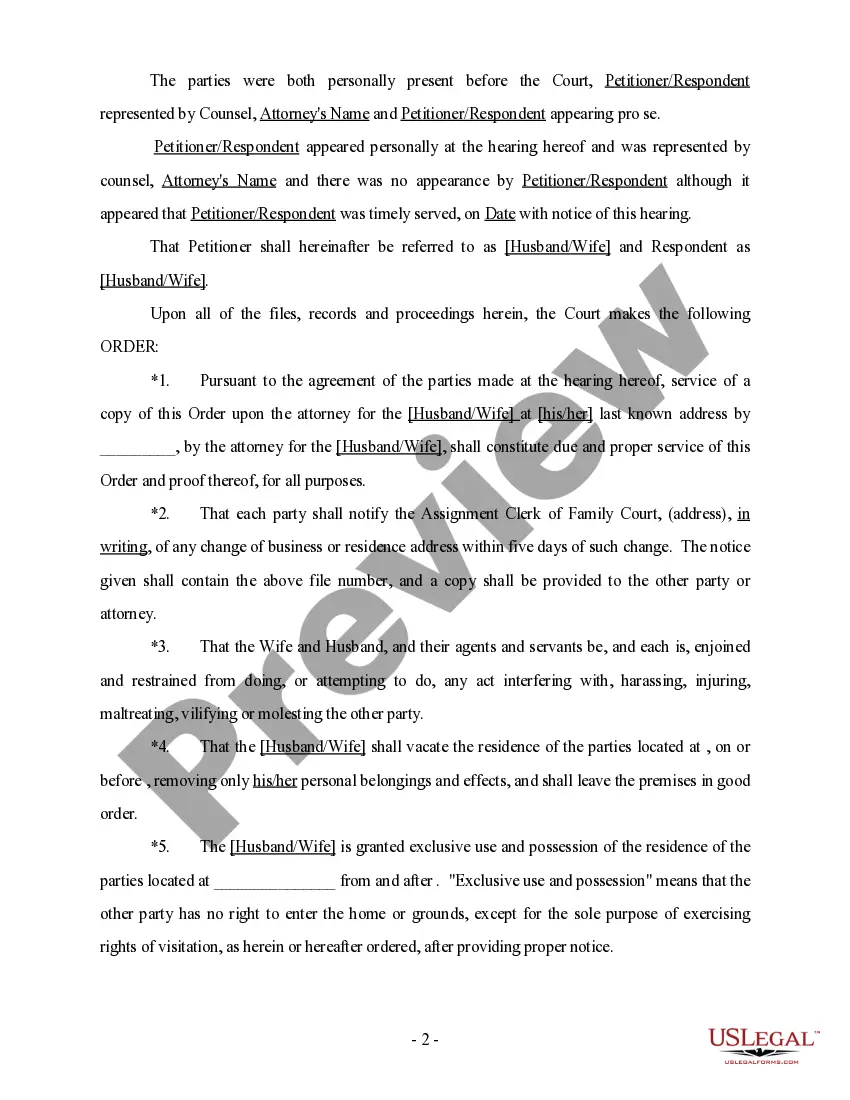
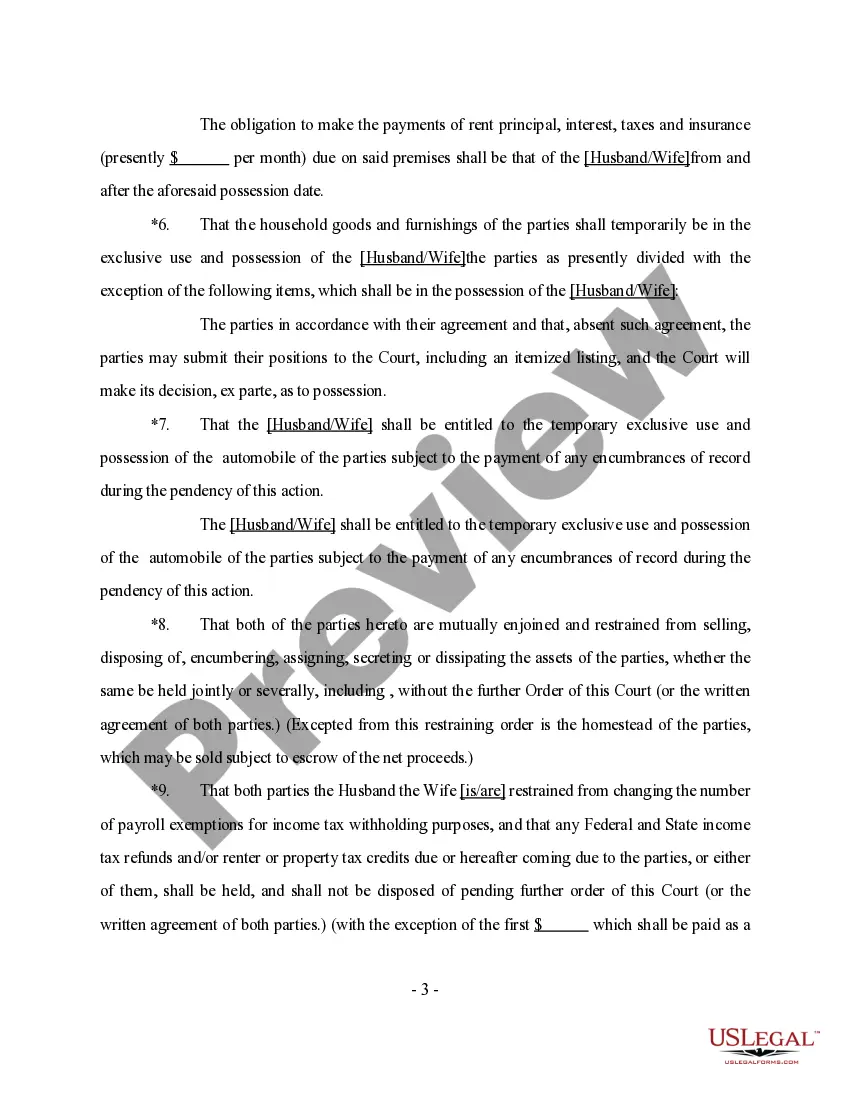
- Provisions for temporary residence and exclusive possession of property.
- Temporary orders regarding child custody and visitation rights.
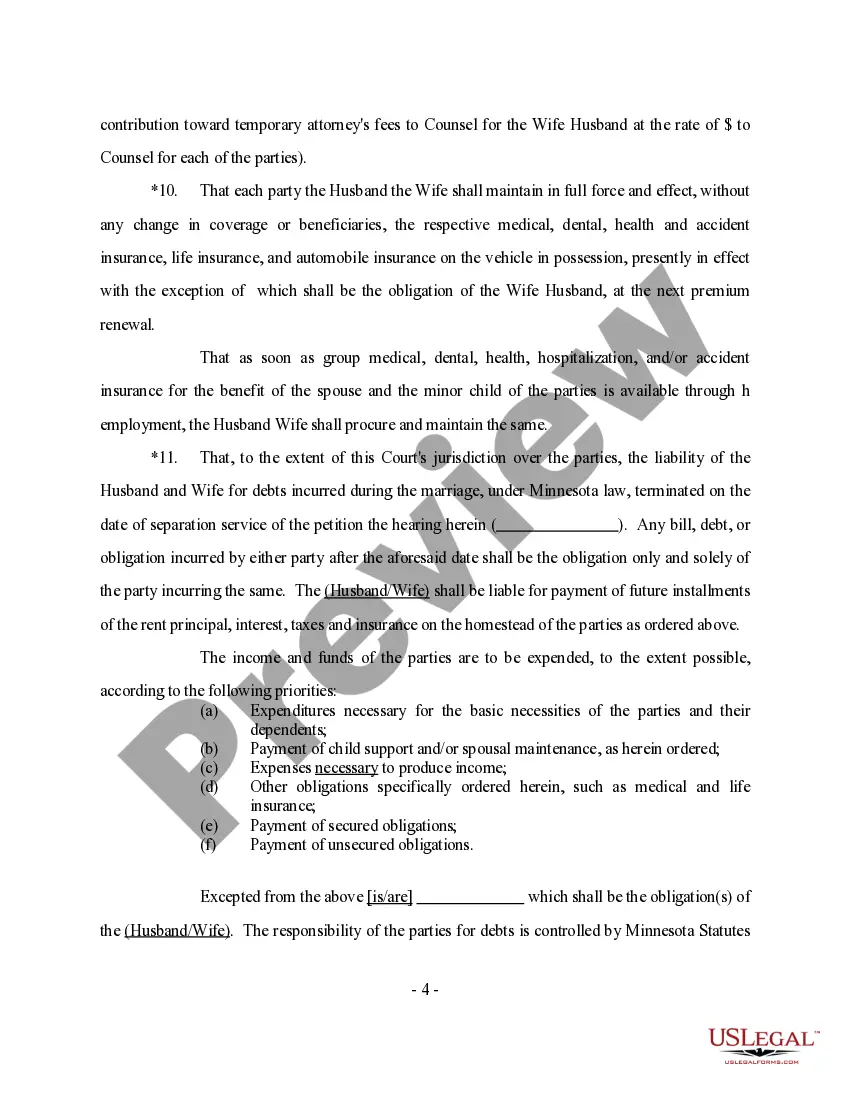
- Financial obligations, such as temporary child support and spousal maintenance.
- Restrictions on selling or encumbering marital assets without mutual agreement.
- Notification requirements for changes in contact information.

Common use cases
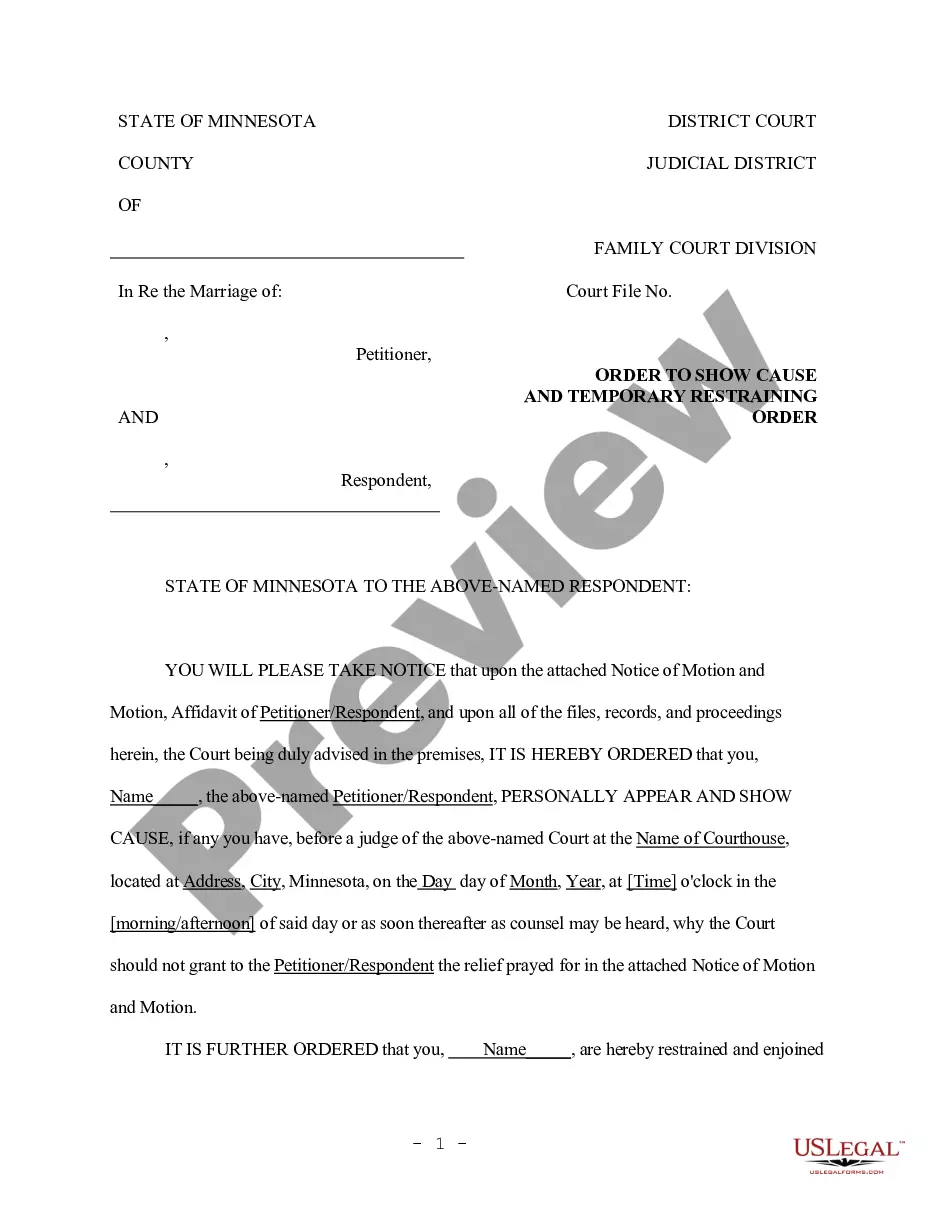
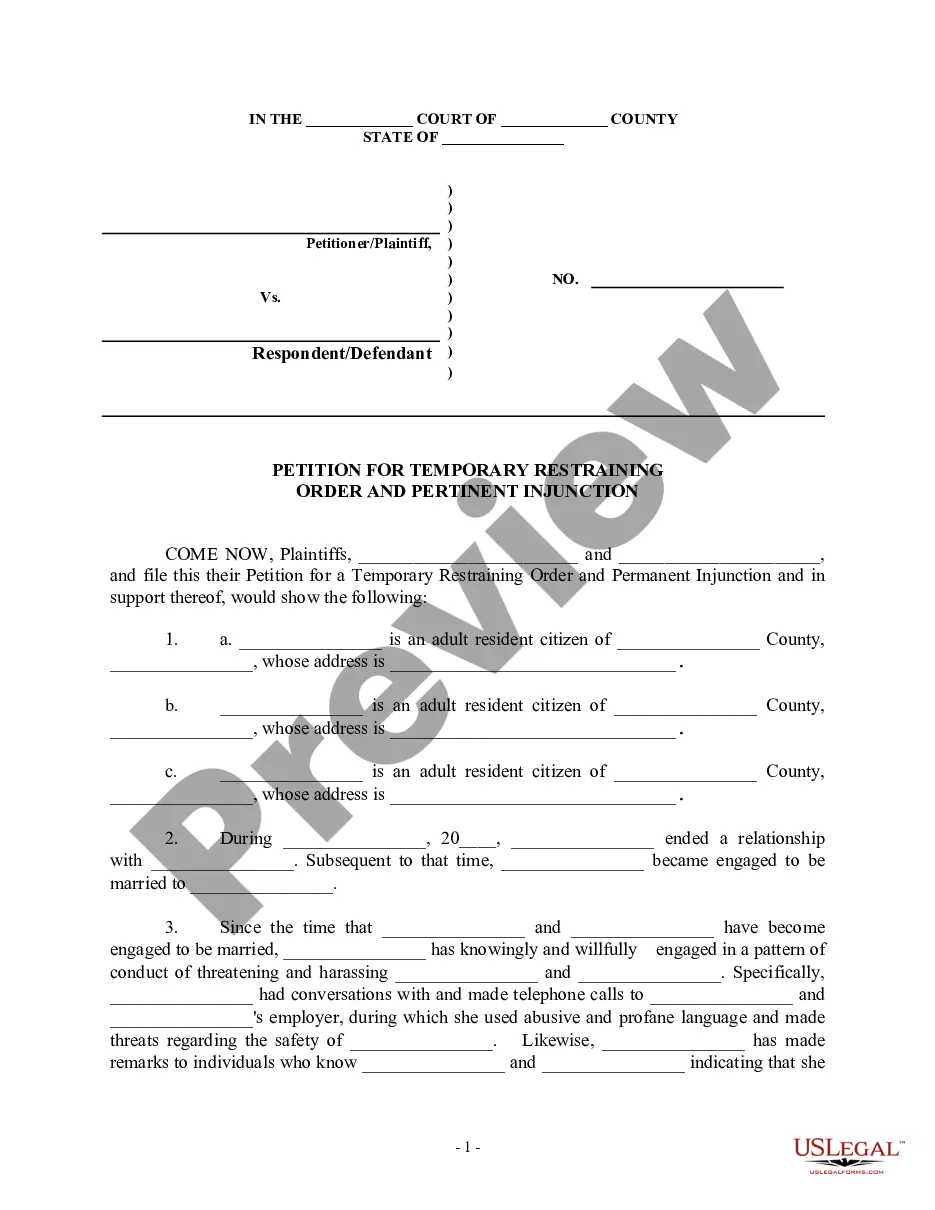
This form is essential when a couple is undergoing a divorce or separation and needs to resolve immediate issues such as who will live in the family home, how finances will be managed, or the custody arrangements for any children involved while waiting for the final dissolution of marriage. It can also be used when one party needs urgent legal assurances or restrictions set forth to prevent harassment or asset dissipation.
Who this form is for
This form is suitable for:
- Individuals involved in a dissolution proceeding who require temporary orders while the case is pending.
- Couples who agree on certain terms and seek to formalize those agreements legally.
- Parents needing immediate custody and visitation arrangements for minor children.
Instructions for completing this form
- Identify the parties: Clearly state the names and roles of the individuals involved as Petitioner and Respondent.
- Specify the terms: Detail the agreement on temporary living arrangements, financial obligations, and custody provisions.
- Include dates and deadlines: Fill in any critical dates for adherence, such as when one party should vacate the residence.
- Signatures: Ensure that both parties and their attorneys sign the document to validate the agreement.
- File the form: Submit the completed form to the appropriate court and serve copies to the other party.
Notarization requirements for this form
Notarization is generally not required for this form. However, certain states or situations might demand it. You can complete notarization online through US Legal Forms, powered by Notarize, using a verified video call available anytime.
Get your form ready online
Our built-in tools help you complete, sign, share, and store your documents in one place.
Make edits, fill in missing information, and update formatting in US Legal Forms—just like you would in MS Word.
Download a copy, print it, send it by email, or mail it via USPS—whatever works best for your next step.
Sign and collect signatures with our SignNow integration. Send to multiple recipients, set reminders, and more. Go Premium to unlock E-Sign.
If this form requires notarization, complete it online through a secure video call—no need to meet a notary in person or wait for an appointment.
We protect your documents and personal data by following strict security and privacy standards.

Make edits, fill in missing information, and update formatting in US Legal Forms—just like you would in MS Word.

Download a copy, print it, send it by email, or mail it via USPS—whatever works best for your next step.

Sign and collect signatures with our SignNow integration. Send to multiple recipients, set reminders, and more. Go Premium to unlock E-Sign.

If this form requires notarization, complete it online through a secure video call—no need to meet a notary in person or wait for an appointment.

We protect your documents and personal data by following strict security and privacy standards.
Mistakes to watch out for
- Failing to clearly define all terms related to property and financial obligations.
- Neglecting to include necessary signatures from both parties and their legal representatives.
- Not providing specific timelines for compliance with the order.
- Omitting information or making vague statements, risking misunderstandings later.
Advantages of online completion
- Convenience: Access the form and complete it at your own pace without the pressure of in-person meetings.
- Editability: Easily make adjustments to the form to fit the unique needs of your case.
- Reliability: Use professionally drafted templates that help ensure compliance with legal standards.
What to keep in mind
- The Stipulation and Order for Temporary Relief addresses immediate issues during a divorce.
- It facilitates mutual agreements and can ease tensions between parties.
- Accurate completion and timely submission to court are critical for effectiveness.
- Stay informed about any state-specific requirements that may affect its usage.
Looking for another form?

Form popularity
FAQ
In Minnesota, a motion for temporary relief is a request for the court to issue immediate orders while a case is still being resolved. This motion can cover various issues, including child support, visitation, and maintenance. Utilizing the Minnesota Stipulation and Order for Temporary Relief can provide clarity and structure during this critical time. For additional assistance, uslegalforms offers valuable resources to help you navigate the process effectively.
A motion for temporary orders is a legal request made to the court for immediate relief during a pending case. This type of motion is often used to establish temporary arrangements for issues such as child custody, support, or possession of property. In Minnesota, the Minnesota Stipulation and Order for Temporary Relief serves as an essential document in this process. Understanding this motion helps you ensure your needs are addressed while the case is ongoing.
To file a motion for a temporary order in Minnesota, begin by completing the necessary forms, including the Minnesota Stipulation and Order for Temporary Relief. Next, submit these forms to the court where your case is filed. Be sure to serve copies to the other party involved. You can find guidance and resources on uslegalforms to streamline this process, making it easier for you to manage your legal needs.
What Is Temporary Relief? After a case is filed, but before it is resolved, sometimes it is necessary to ask the court for an award of temporary relief. This usually happens when the parties have a dispute about payment of ongoing bills, support, or issues involving children.
Write a detailed history about your marital relationship, which should include dates and facts that support your case. Do not forget to pick the pictures, videos and other visual aids that you will present before the court as evidence.
Typically, a temporary orders hearing will be handled in one of two ways, either by calling witnesses (including the parties) to the stand and asking them questions aimed at eliciting direct testimony from them (referred to as an evidentiary hearing) or by your attorney offering summaries of what witnesses would say,
Temporary orders are made by family courts at a hearing when couples separate.Decisions on issues that must be resolved quickly are made, and given temporary effect, until family court decisions can be made in a formal divorce hearing or until the parties agree through mediation or negotiation.
If a family court lawsuit is administratively dismissed, all temporary orders become void and any outstanding obligations under the temporary order also become void. If there is a prior final order between the parties, that final order regains its effect (to the extent a temporary order in the new action modified it).
Relief in a divorce is everything that you request in your divorce complaint. You are permitted to ask the court for a number of different types of relief.This means that your spouse would be required to make you payments in order to assist you in remaining financially stable after the divorce.
Issues: In most states, parties can ask for temporary orders as to child support, parenting time schedules, decision making for the children, use and possession of property, including the marital residence or other properties, use and possession of cars, payment of expenses (including attorney fees) and debt, as well