POSSESSING OR ACCESSING CHILD PORNOGRAPHY
Understanding this form
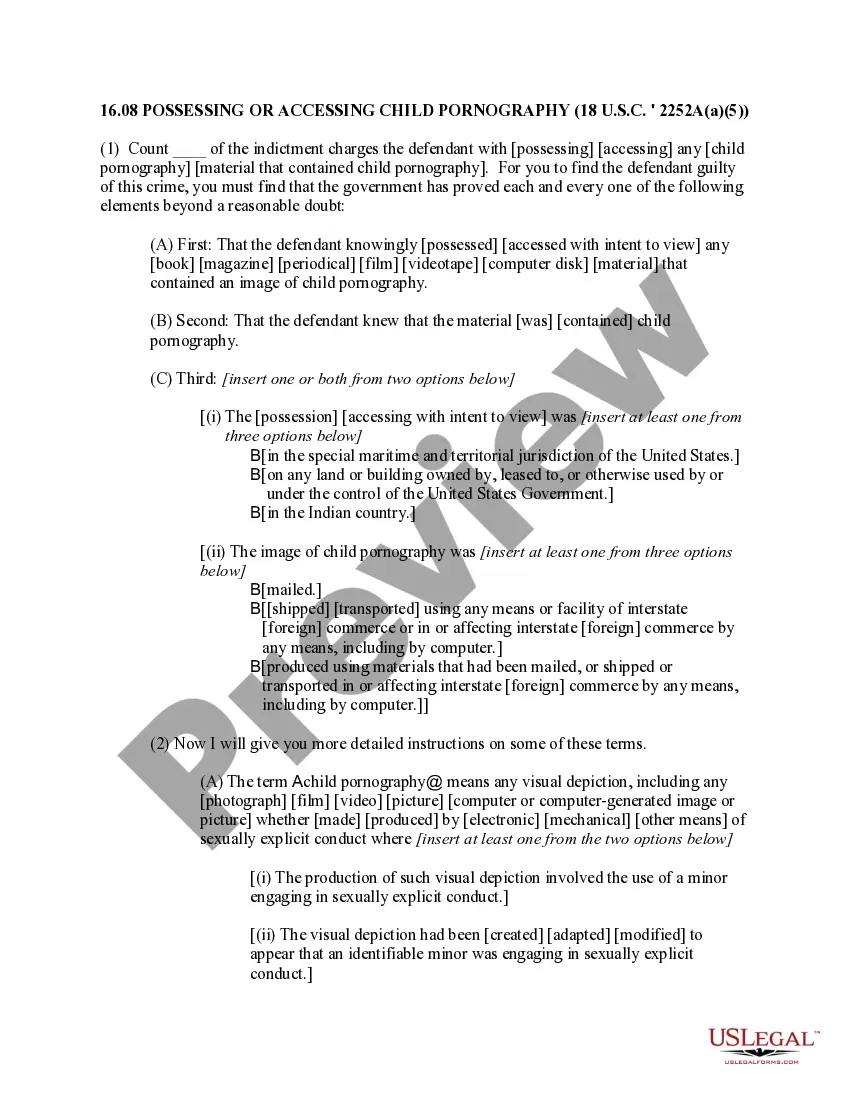
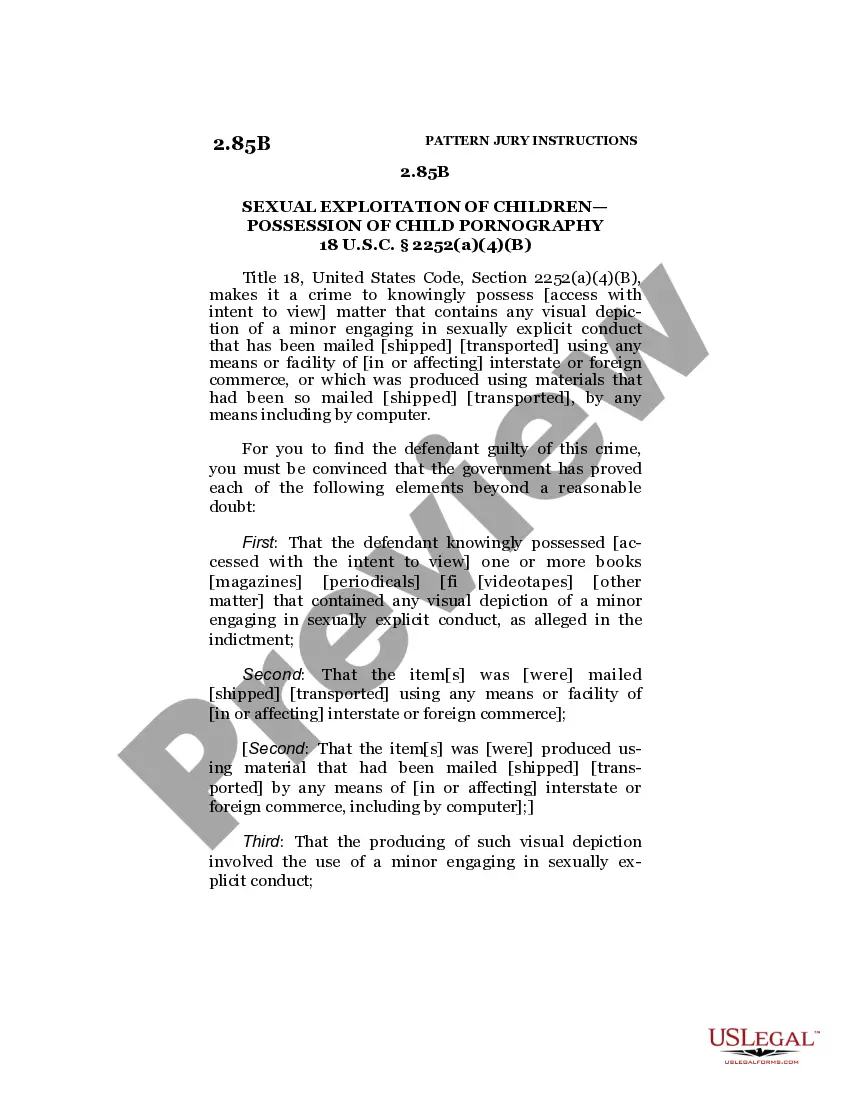
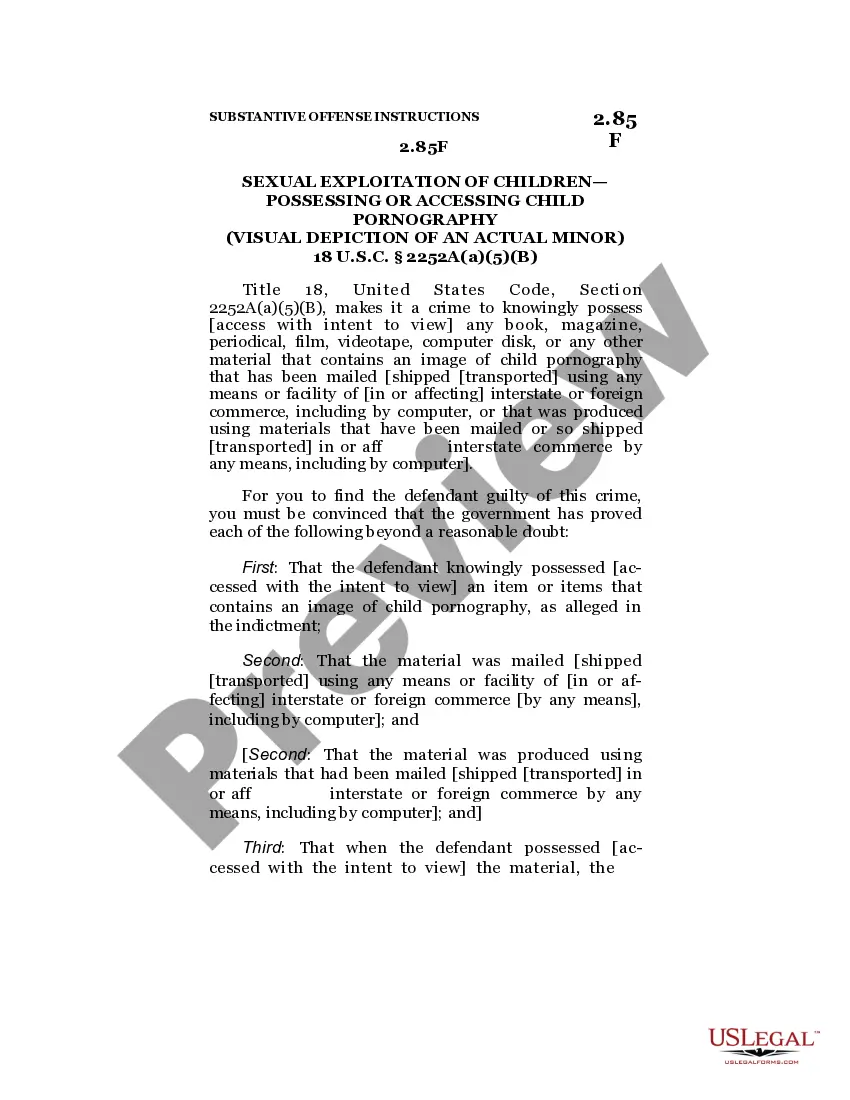
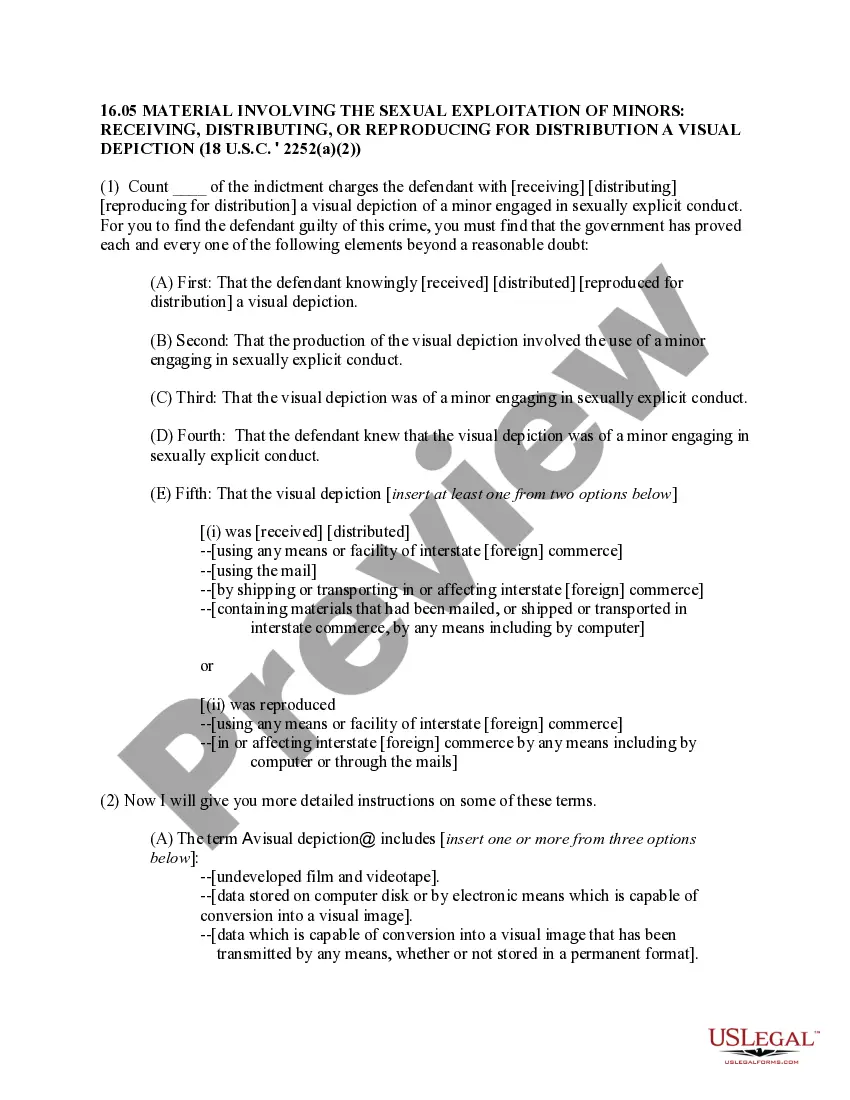
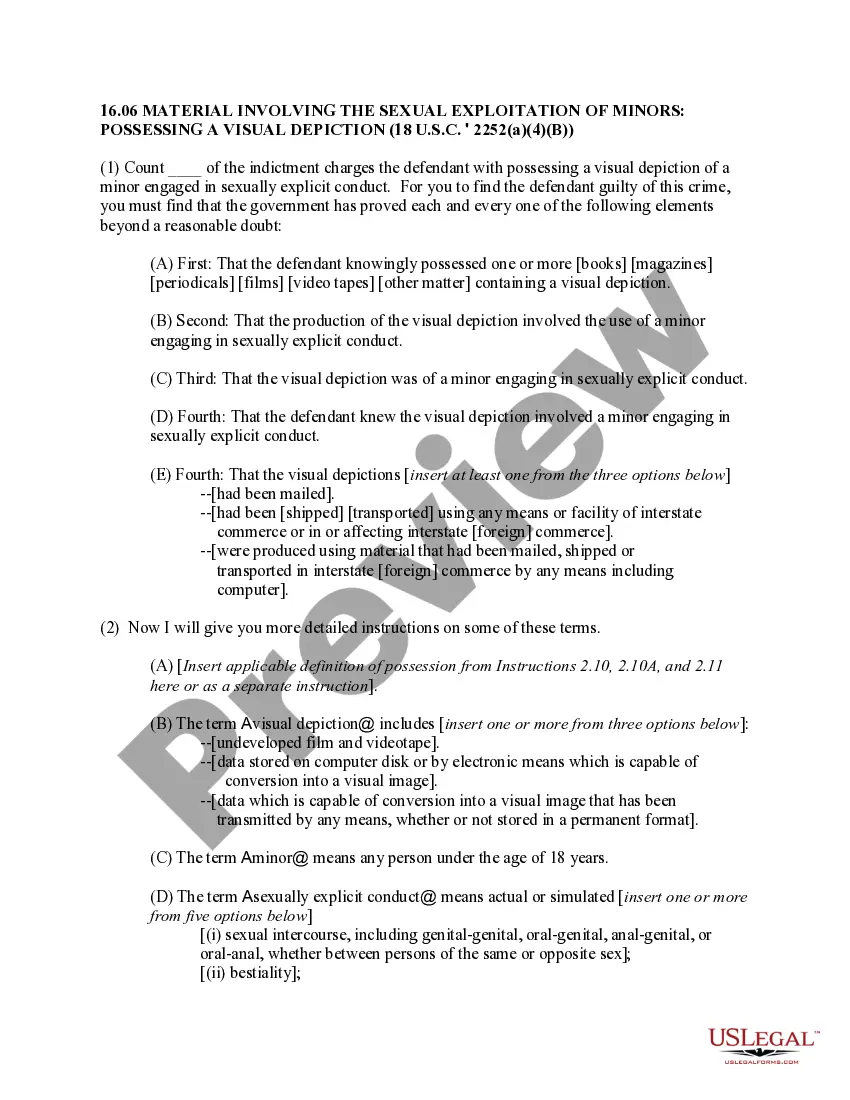
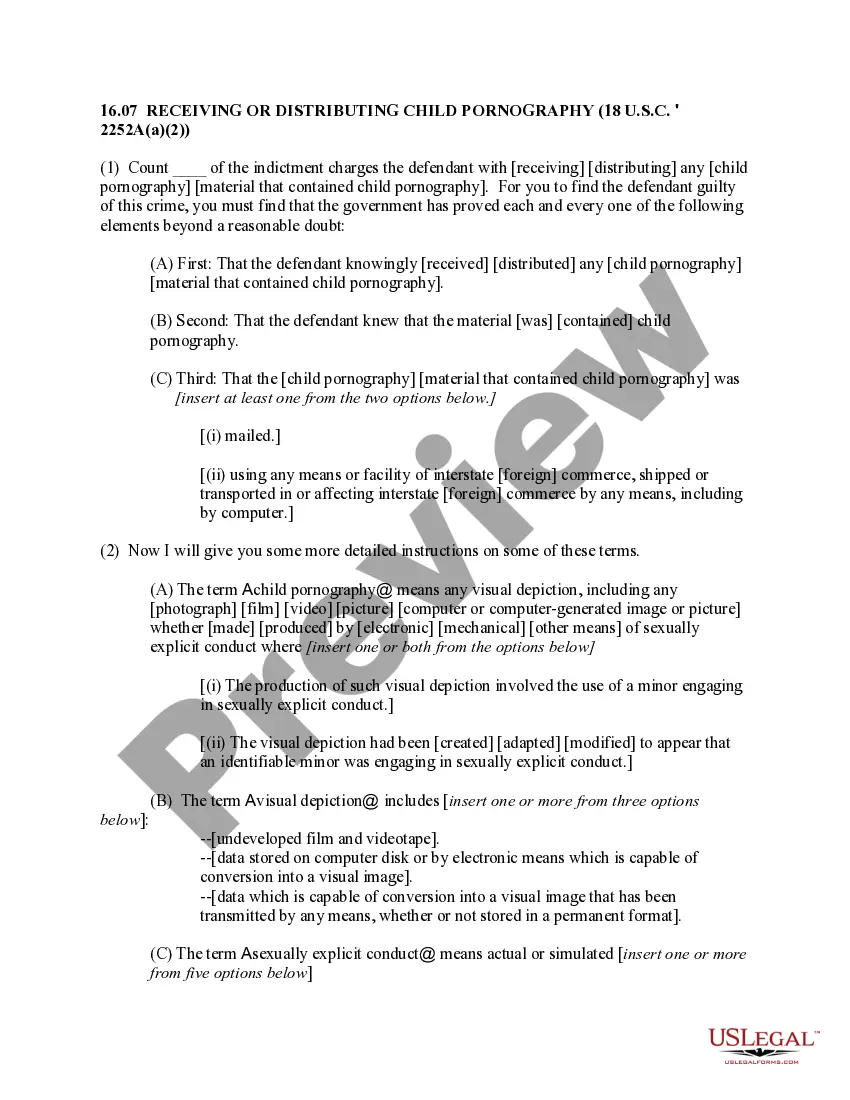
This form relates to the legal charge of possessing or accessing child pornography under federal law. It is used in criminal proceedings where an individual is accused of intentionally viewing or holding materials that depict sexually explicit conduct involving minors. Understanding the precise legal definitions and elements of this crime is crucial, as it differs significantly from related charges such as distribution or production of similar materials.
What’s included in this form
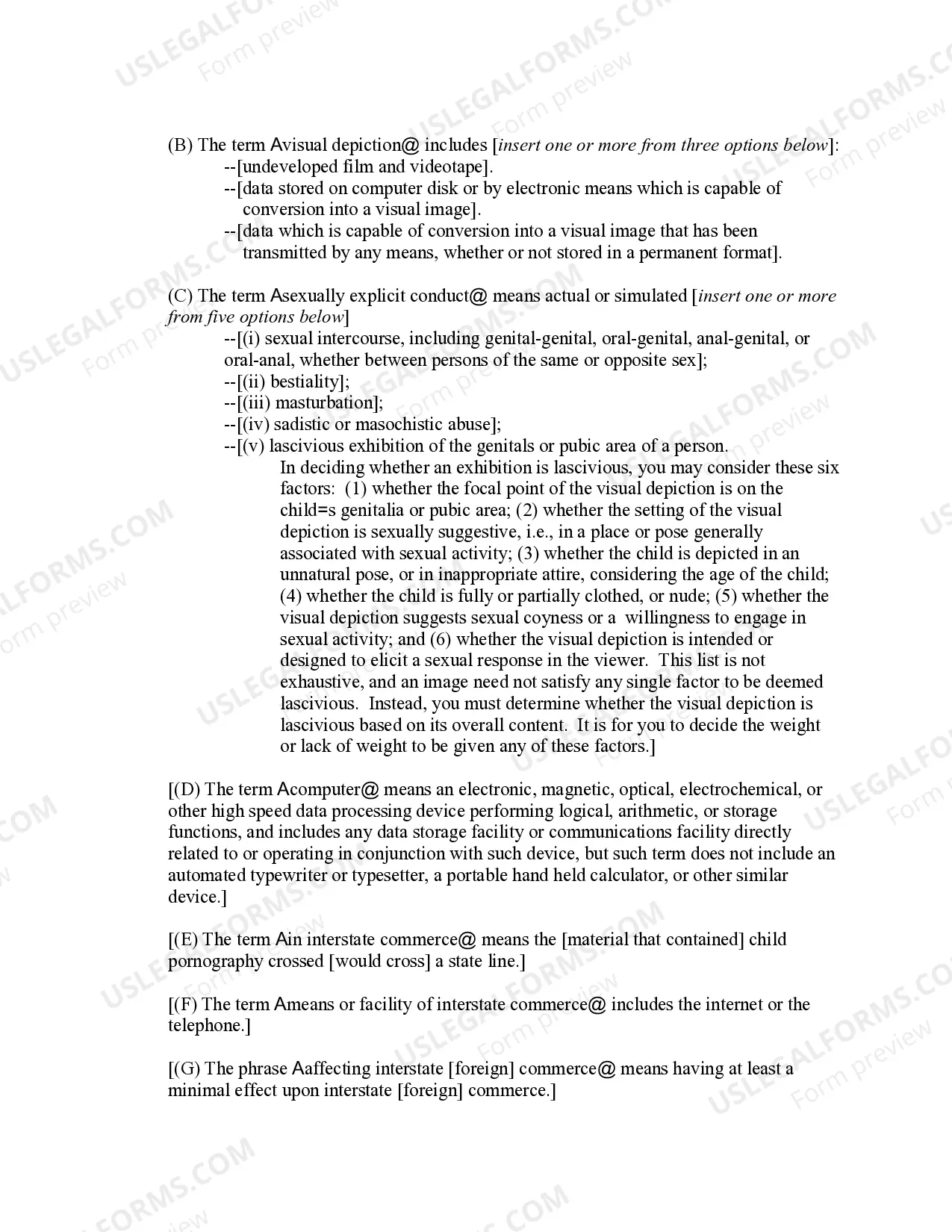
- Definition of child pornography, including visual depictions and sexually explicit conduct.
- Elements that must be proven for a guilty verdict, including knowledge of the material's content.
- Jurisdictional requirements indicating where the offense occurred.
- Potential affirmative defenses available to the defendant.
- Criteria used to evaluate lascivious exhibitions in visual representations.

Common use cases
This form is used in cases where someone is charged with possessing or accessing child pornography. It is relevant during court proceedings, jury instructions, or legal discussions regarding the specifics of the charge. This form helps outline the legal parameters and requirements that must be met for prosecution.
Who needs this form
- Judges and legal professionals presiding over cases involving child pornography charges.
- Prosecutors and defense attorneys preparing for cases related to the possession or access of such materials.
- Individuals accused of possessing or accessing child pornography seeking to understand the charge against them.
How to prepare this document
- Identify the specific charges as listed in the indictment.
- Ensure the evidence supports each element required to prove guilt beyond a reasonable doubt.
- Clarify the definitions of terms such as "child pornography" and "knowingly" based on legal precedents.
- Select jurisdictional options that pertain to the case, such as the relevant geographical scope.
- Prepare potential defenses or mitigating factors that could be presented during the trial.
Notarization requirements for this form
This form does not typically require notarization unless specified by local law. It is essential to consult jurisdiction-specific rules where applicable.
Get your form ready online
Our built-in tools help you complete, sign, share, and store your documents in one place.
Make edits, fill in missing information, and update formatting in US Legal Forms—just like you would in MS Word.
Download a copy, print it, send it by email, or mail it via USPS—whatever works best for your next step.
Sign and collect signatures with our SignNow integration. Send to multiple recipients, set reminders, and more. Go Premium to unlock E-Sign.
If this form requires notarization, complete it online through a secure video call—no need to meet a notary in person or wait for an appointment.
We protect your documents and personal data by following strict security and privacy standards.

Make edits, fill in missing information, and update formatting in US Legal Forms—just like you would in MS Word.

Download a copy, print it, send it by email, or mail it via USPS—whatever works best for your next step.

Sign and collect signatures with our SignNow integration. Send to multiple recipients, set reminders, and more. Go Premium to unlock E-Sign.

If this form requires notarization, complete it online through a secure video call—no need to meet a notary in person or wait for an appointment.

We protect your documents and personal data by following strict security and privacy standards.
Common mistakes
- Failing to understand the specific legal definitions of child pornography.
- Overlooking jurisdictional elements that affect the legality of possession or access.
- Not adequately preparing affirmative defenses within the required timeframe.
Advantages of online completion
- Convenient access to essential legal information tailored to the specific charge.
- Editability allowing customization for specific case details.
- Reliability from a resource that provides forms drafted by licensed attorneys.
Legal use & context
- This form is utilized in criminal trials related to the possession or access of child pornography under federal law.
- Understanding the legal ramifications can aid in the effective presentation of a case.
- It emphasizes the critical aspects of proof required for prosecution.
Quick recap
- The form is essential for addressing cases of child pornography possession or access.
- Clear understanding of the legal definitions and elements is critical for both prosecution and defense.
- Jurisdictional requirements and affirmative defenses must be considered carefully.
Key terms explained
- Child pornography: Any visual depiction involving sexually explicit conduct of a minor.
- Possession: Having control over items or materials, knowingly or otherwise.
- Jurisdiction: The authority granted to a legal body to administer justice within a defined area.
Looking for another form?
Form popularity
FAQ
The maximum penalty for a misdemeanor child ography conviction in California is one year in county jail and a fine of up to $2,000. If tried as a felony, the state prison sentence for a child ography conviction will range between 16 months and 8 years. Fines can go as high as $100,000.
Did you know there is a difference between viewing and possessing child in Texas? Generally speaking, possessing child ography is always illegal, whereas simply viewing it is not necessarily illegal.
'Possession' is defined as the physical or digital possession of an indecent image which is prohibited by law. 'Making' or 'viewing' of indecent images refers to the viewing of an image which in turn results in the image being downloaded to the device.
§ 2252A is identical to 18 U.S.C § 2252, with two exceptions. First, section 2252A expands the definition of the prohibited material by using the more inclusive term "child ography" instead of the words "visual depiction of a minor engaging in sexually explicit conduct" that is utilized in § 2252.