RECEIVING OR DISTRIBUTING CHILD PORNOGRAPHY
About this form
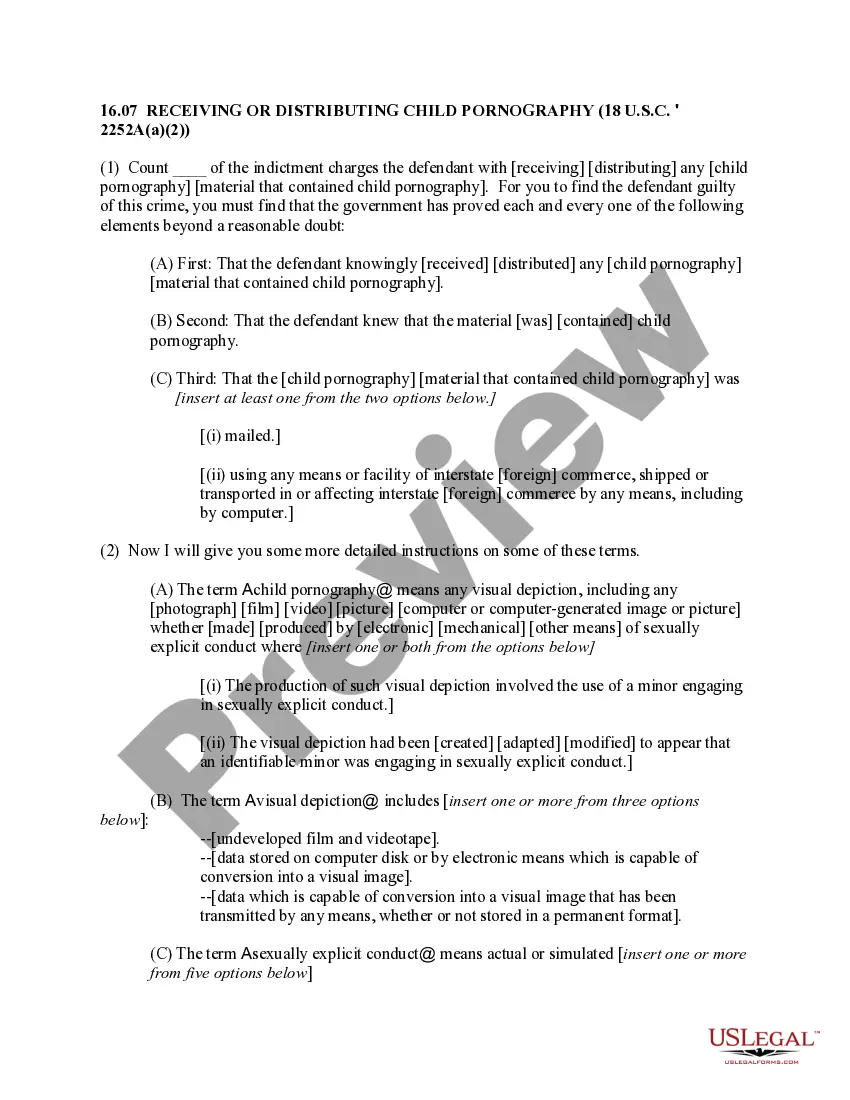
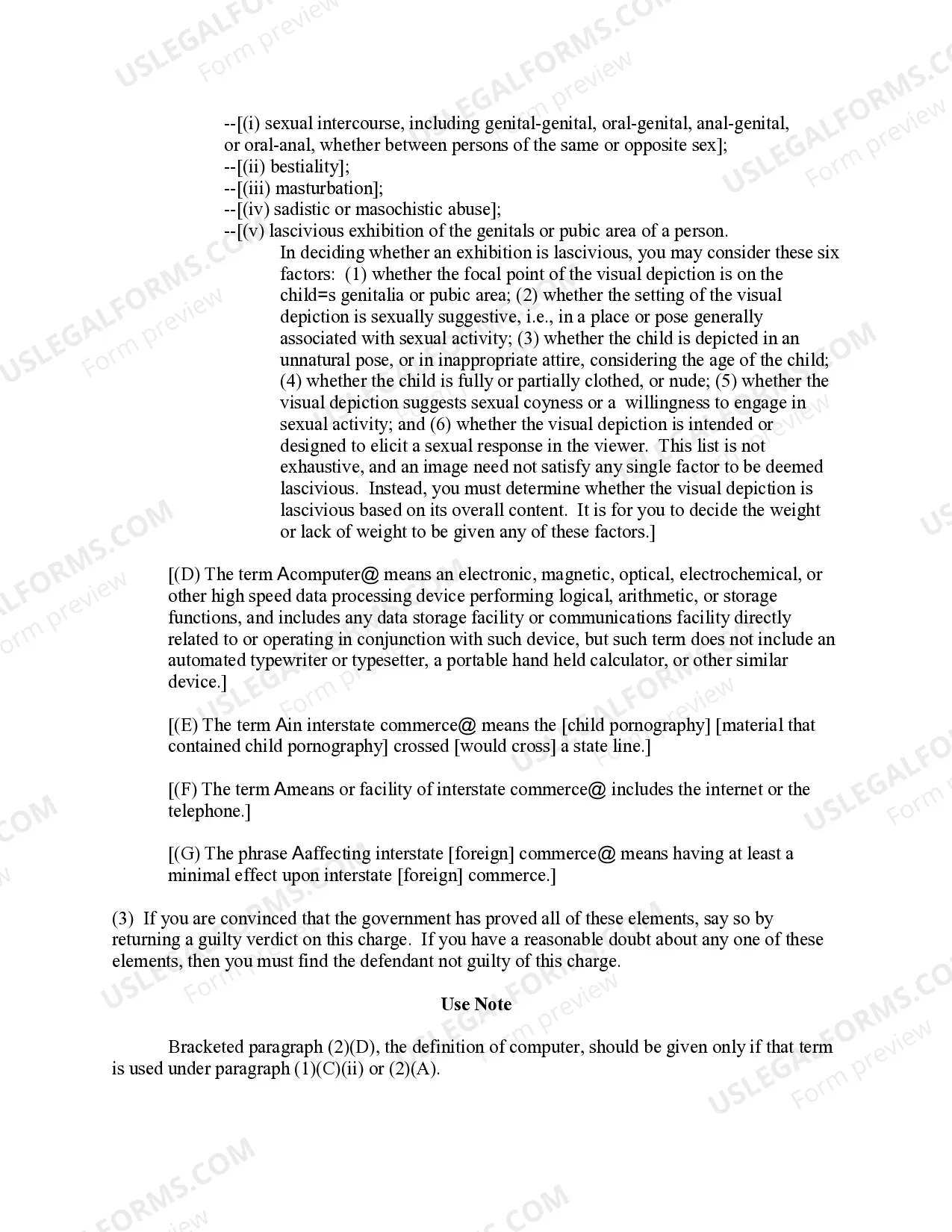
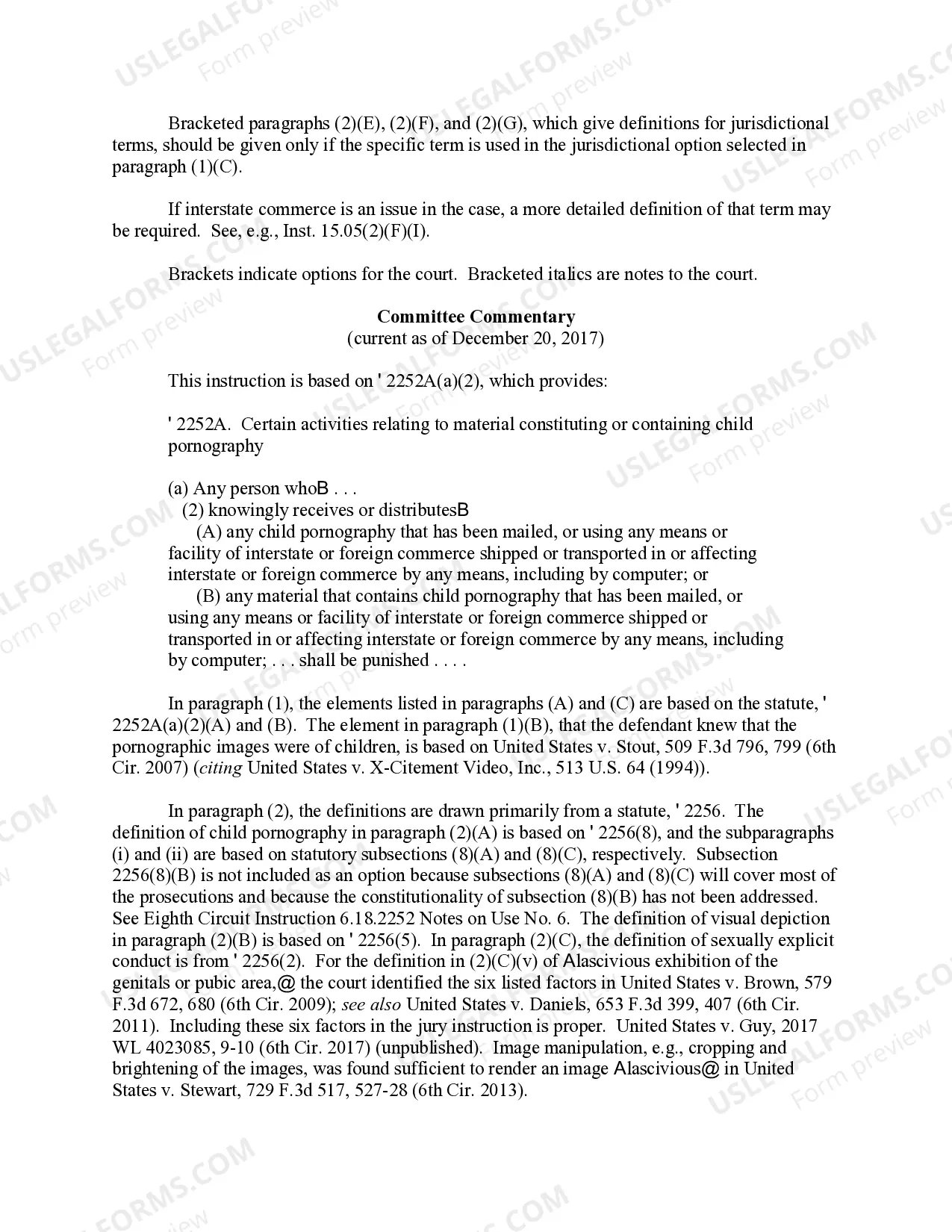
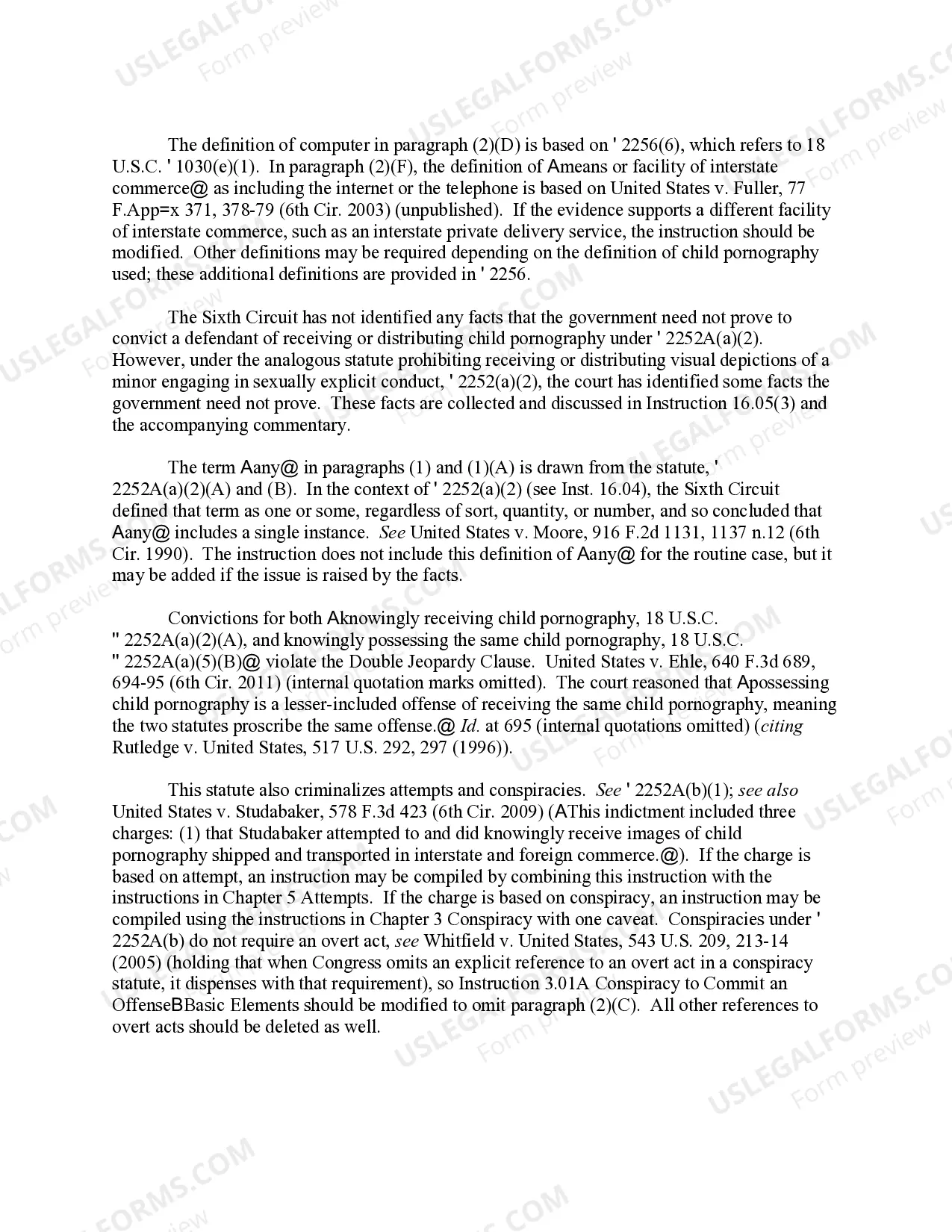
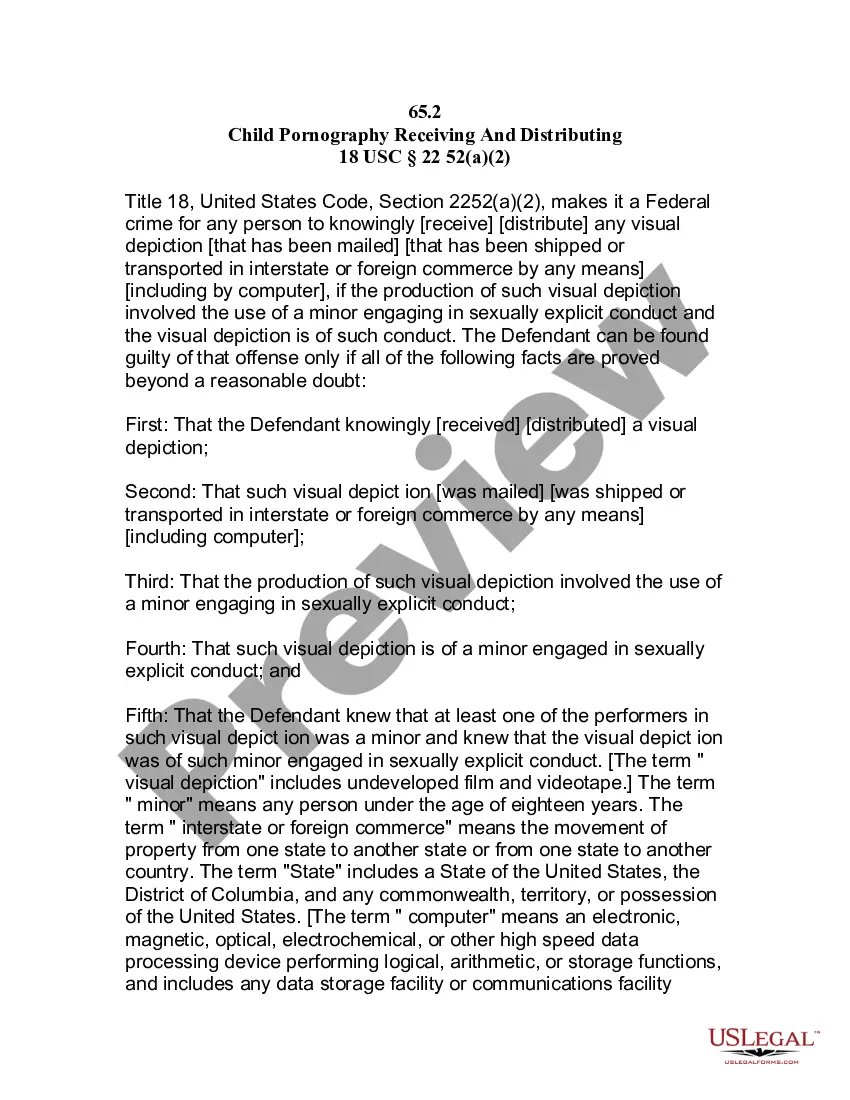
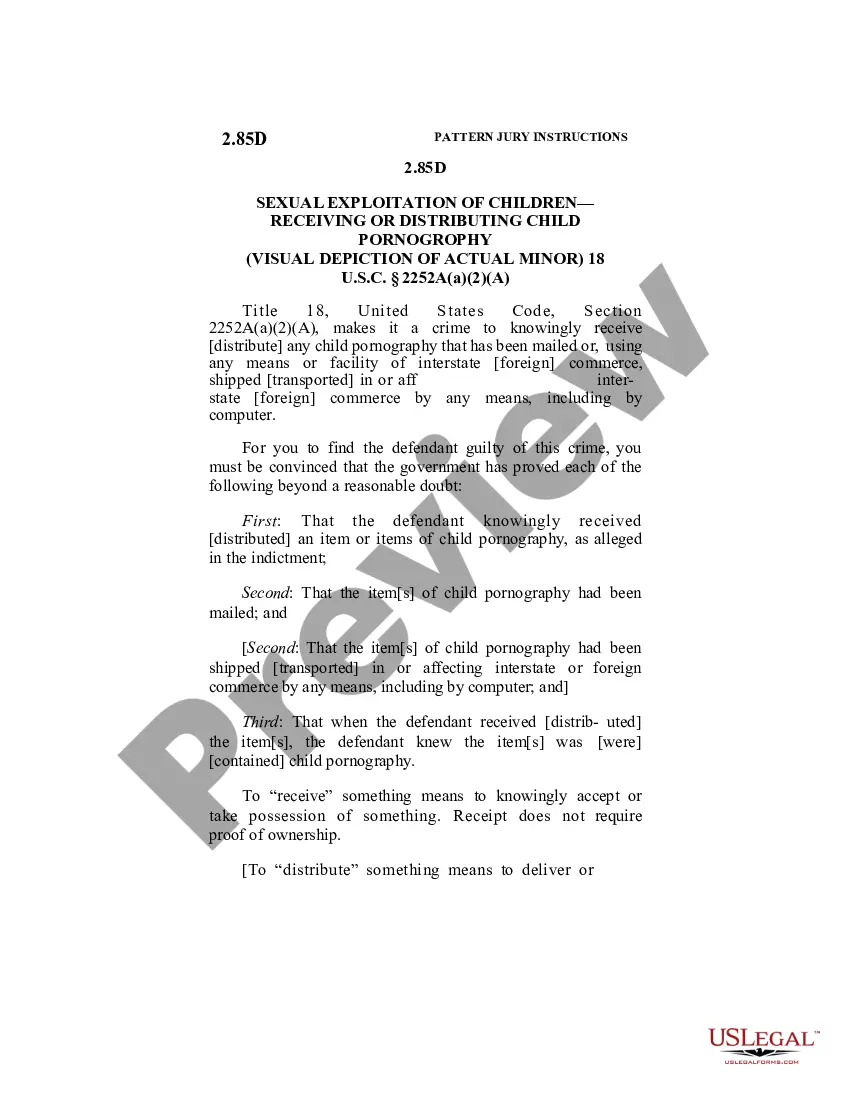
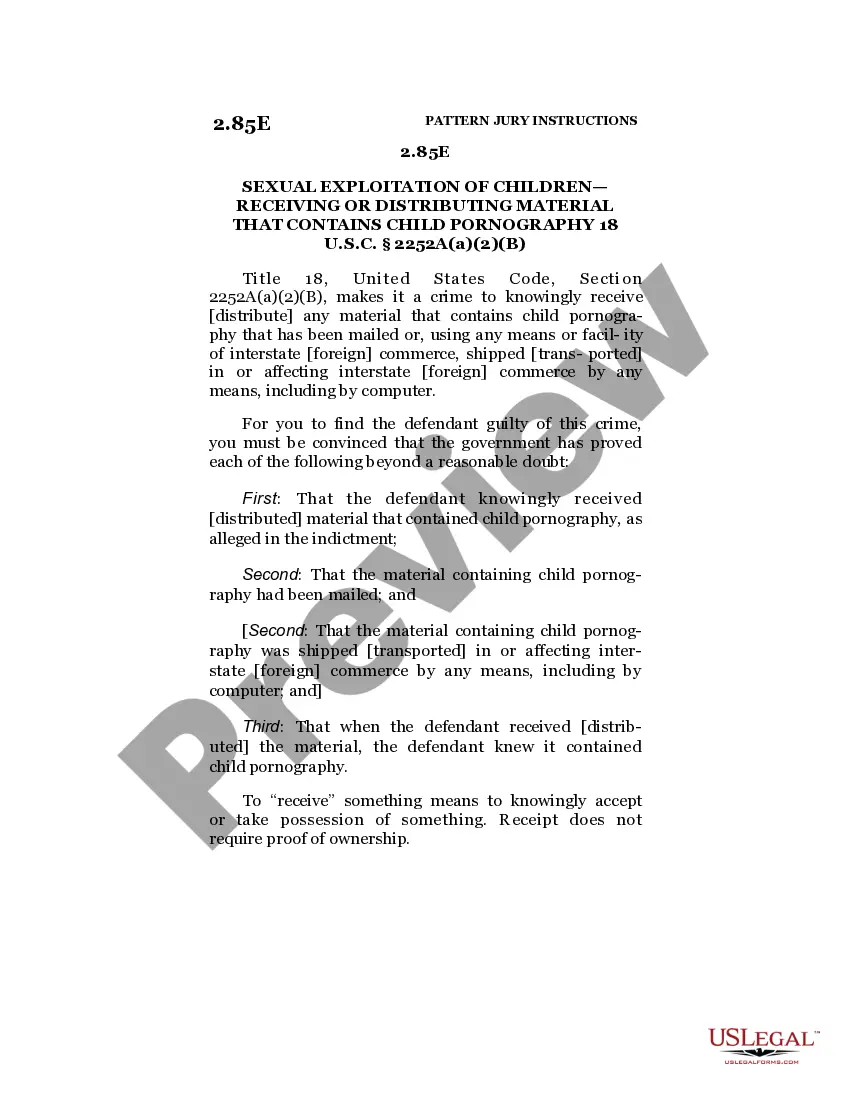
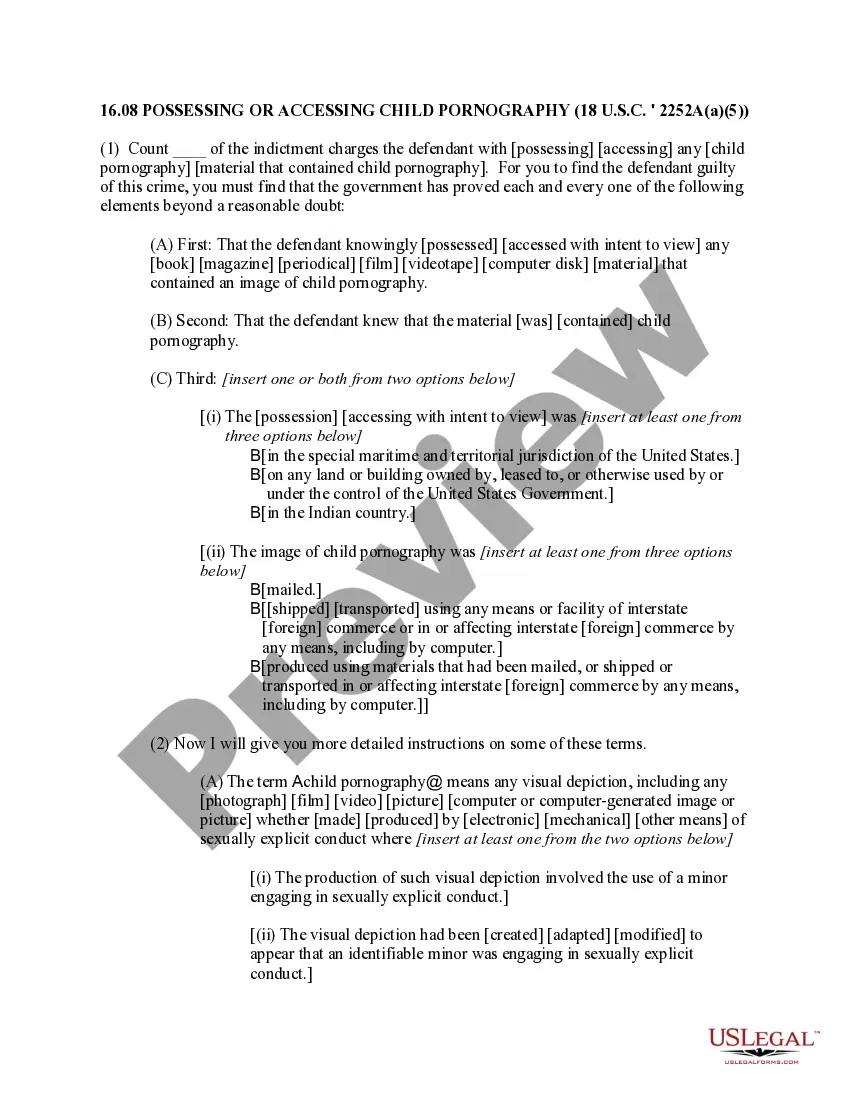
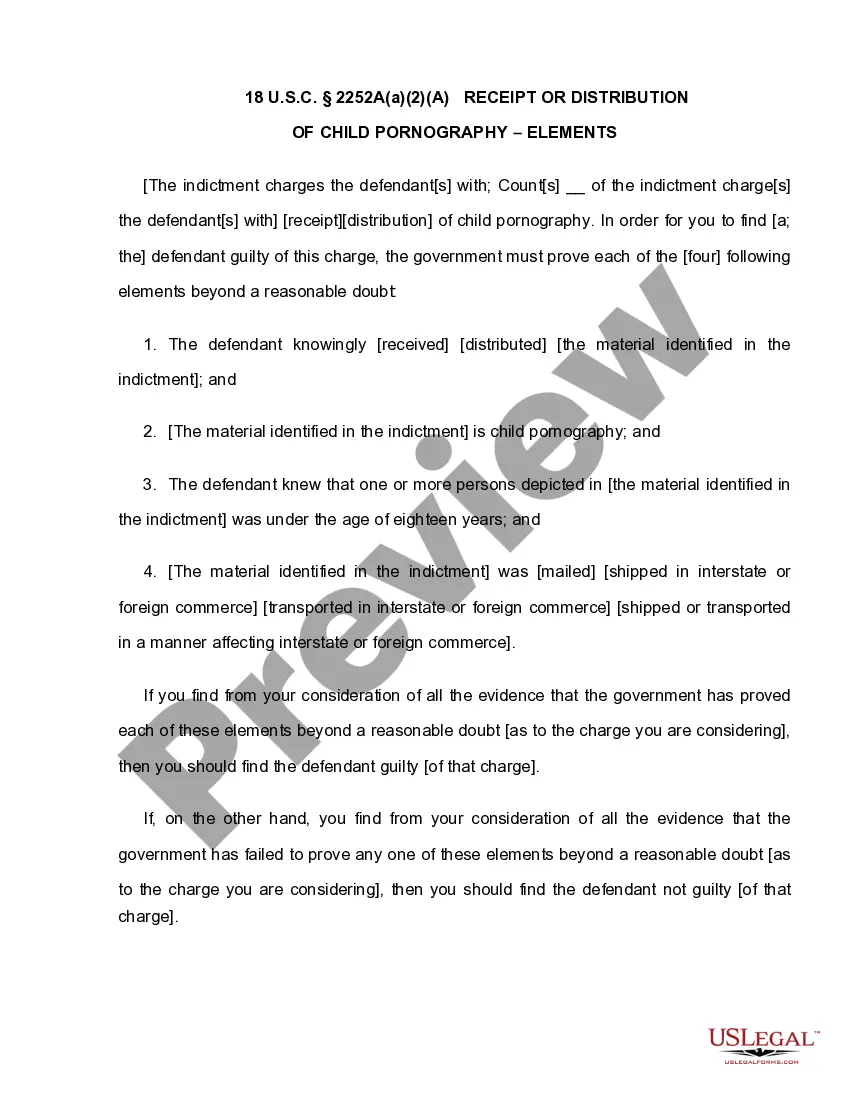
The Receiving or Distributing Child Pornography form addresses serious legal matters surrounding the possession, transmission, and distribution of child pornography as defined by law. This form provides detailed instructions and the elements needed to establish guilt or innocence. It serves a specific purpose in legal cases involving allegations under 18 U.S.C. 2252A(a)(2), differentiating it from other legal forms concerning child exploitation and obscenity.
Form components explained
- Definition of child pornography and its elements, including the requirement of knowing involvement.
- Criteria for proving distribution or receipt, such as interstate commerce implications.
- Detailed explanations of terms like sexually explicit conduct and lascivious exhibition.
- Specifications of the necessary evidence the government must provide to achieve a conviction.
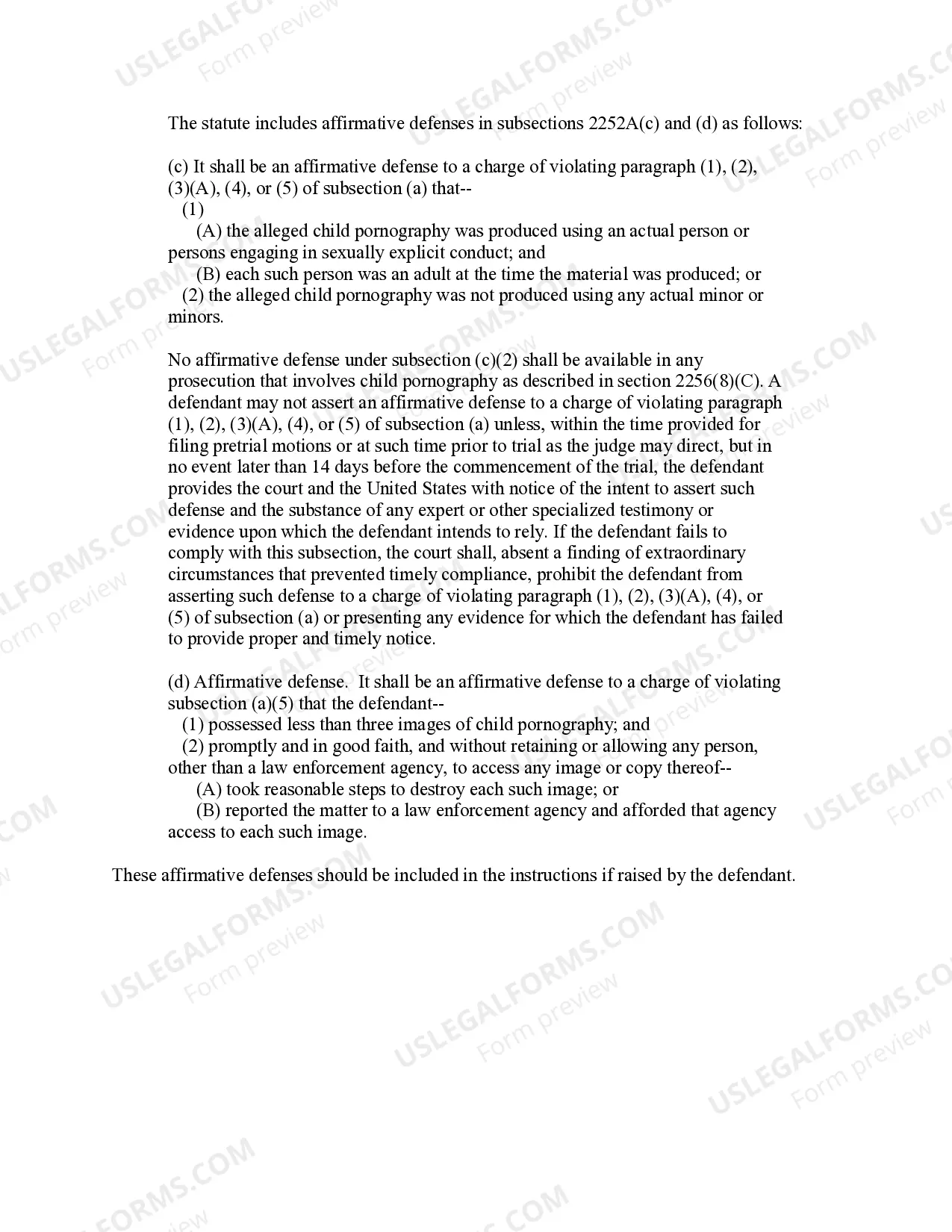
- Affirmative defenses available to defendants under specific circumstances.
When to use this document
This form is used in legal proceedings when a defendant is charged with receiving or distributing child pornography. It helps the court establish the specifics of the case, ensuring that all legal standards are adequately addressed. Use this form when presenting evidence or framing arguments in defense or prosecution related to such serious charges.
Who this form is for
- Legal professionals representing individuals charged under 18 U.S.C. 2252A(a)(2).
- Defendants or those considering defenses against allegations of child pornography offenses.
- Prosecutors preparing to outline charges or present evidence in related cases.
How to complete this form
- Review the charges listed in the indictment and confirm the specific allegations against the defendant.
- Ensure all relevant definitions, such as child pornography and sexually explicit conduct, are clear and accurate.
- Fill in the elements of the crime, ensuring that knowledge of the material's nature is adequately covered.
- Provide a clear outline of the jurisdictional aspects of the case, including any interstate commerce considerations.
- Include any affirmative defenses the defendant may wish to assert, along with necessary evidence and notices for the court.
Notarization requirements for this form
Notarization is generally not required for this form. However, certain states or situations might demand it. You can complete notarization online through US Legal Forms, powered by Notarize, using a verified video call available anytime.
Get your form ready online
Our built-in tools help you complete, sign, share, and store your documents in one place.
Make edits, fill in missing information, and update formatting in US Legal Forms—just like you would in MS Word.
Download a copy, print it, send it by email, or mail it via USPS—whatever works best for your next step.
Sign and collect signatures with our SignNow integration. Send to multiple recipients, set reminders, and more. Go Premium to unlock E-Sign.
If this form requires notarization, complete it online through a secure video call—no need to meet a notary in person or wait for an appointment.
We protect your documents and personal data by following strict security and privacy standards.

Make edits, fill in missing information, and update formatting in US Legal Forms—just like you would in MS Word.

Download a copy, print it, send it by email, or mail it via USPS—whatever works best for your next step.

Sign and collect signatures with our SignNow integration. Send to multiple recipients, set reminders, and more. Go Premium to unlock E-Sign.

If this form requires notarization, complete it online through a secure video call—no need to meet a notary in person or wait for an appointment.

We protect your documents and personal data by following strict security and privacy standards.
Avoid these common issues
- Failing to provide sufficient evidence to support claims of affirmative defenses.
- Neglecting to confirm the definitions of key terms, which can lead to misinterpretation of the law.
- Overlooking jurisdictional requirements that may impact the case.
- Incomplete or inaccurate filling of the form, making it invalid for legal proceedings.
Benefits of completing this form online
- Immediate access to professionally drafted legal forms tailored for serious allegations.
- Easily editable, allowing users to customize the document based on specific case details.
- Secure transmission that maintains confidentiality and compliance with legal standards.
Legal use & context
- This form serves as a crucial legal document in trials involving the distribution or receipt of child pornography.
- Failure to adhere to the specifications detailed in this form can impact the outcome of the case.
- Utilizing this form incorrectly may lead to legal repercussions for defendants and legal professionals alike.
Looking for another form?


Form popularity
FAQ
Ography exposure at these young ages often results in? symptoms of anxiety and depression. Children also report feelings of disgust, shock, embarrassment, anger, fear, and sadness after viewing ography.
'Possession' is defined as the physical or digital possession of an indecent image which is prohibited by law. 'Making' or 'viewing' of indecent images refers to the viewing of an image which in turn results in the image being downloaded to the device.
Did you know there is a difference between viewing and possessing child in Texas? Generally speaking, possessing child ography is always illegal, whereas simply viewing it is not necessarily illegal.
§ 2252A is identical to 18 U.S.C § 2252, with two exceptions. First, section 2252A expands the definition of the prohibited material by using the more inclusive term "child ography" instead of the words "visual depiction of a minor engaging in sexually explicit conduct" that is utilized in § 2252.
Types of Child ography Downloading images; Uploading images; Sharing images online; Possessing image files on a smartphone or computer; Sending image files via email, text messages, or other online messaging; Soliciting minors to participate in making child ography, often online;