Mississippi Domestic Disturbance Order - Bond Conditions
What this document covers
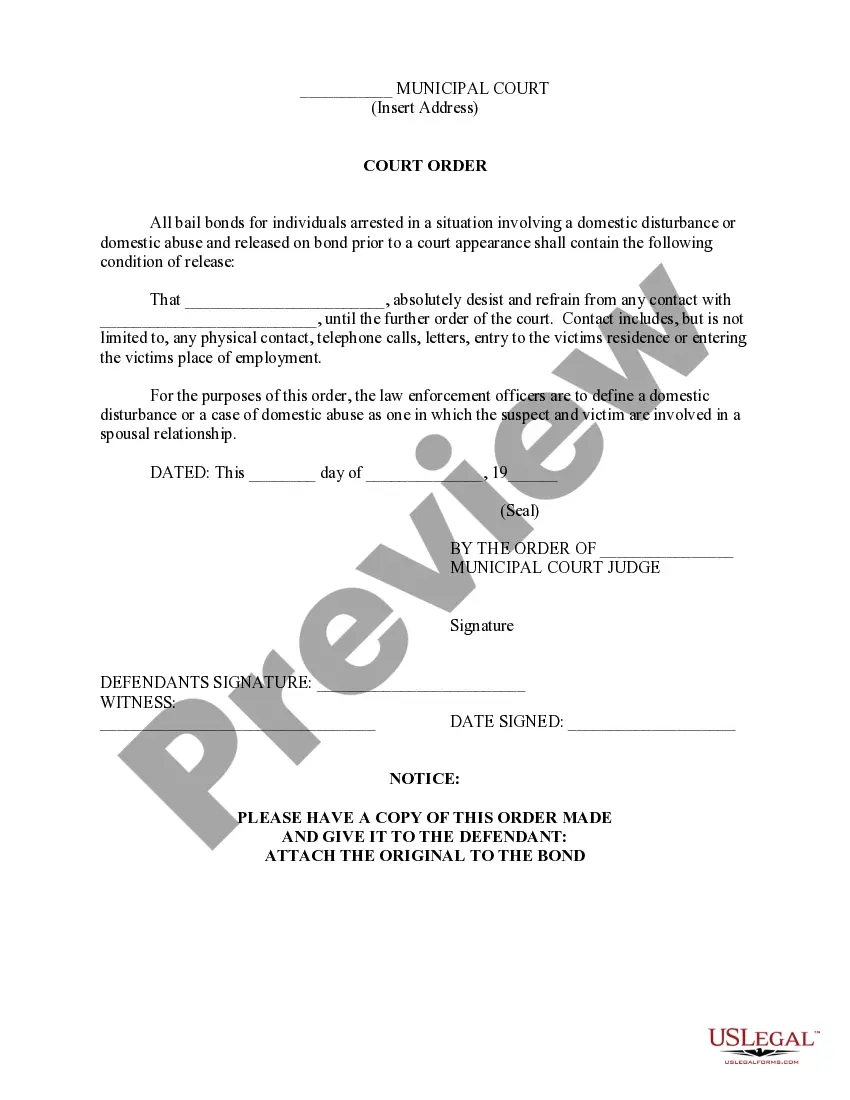
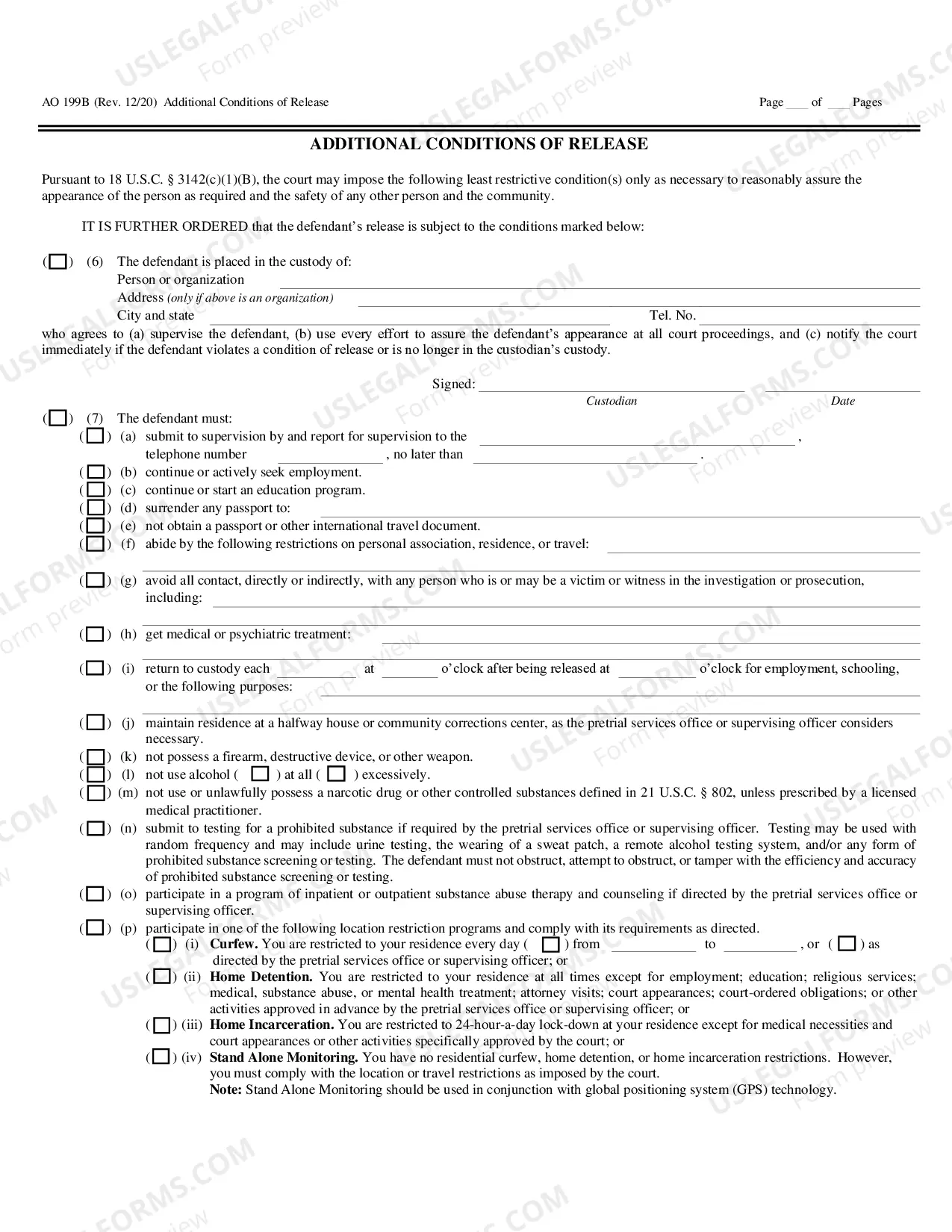
The Domestic Disturbance Order - Bond Conditions form is a legal document that outlines the conditions under which a defendant may be released from custody after an arrest related to domestic disturbance or abuse. This form prohibits the accused from contacting the victim until a court hearing takes place. Unlike other legal documents, this form specifically addresses circumstances surrounding domestic relations and the need for immediate protection of the victim.
Form components explained
- Identification of the parties involved, including the defendant and the victim.
- Clear prohibition of contact, detailing the types of communication that are restricted.
- Definition of a domestic disturbance or domestic abuse, focusing on spousal relationships.
- The court's official seal and signature of the issuing judge.
- Instructions for distributing copies of the order to the defendant.
Situations where this form applies
This form should be used when an individual has been arrested for a domestic disturbance or related offense and is being released on bond. It is essential when the court needs to ensure the safety of the victim by restricting all forms of contact until further legal proceedings can take place. This helps prevent further incidents of domestic abuse and ensures compliance with legal orders.
Who needs this form
This form is intended for:
- Defendants involved in a domestic disturbance case seeking bond release conditions.
- Victims of domestic abuse requiring a formal court order for protection.
- Attorneys representing individuals in domestic violence proceedings.
- Court officials managing bond conditions for domestic disturbance cases.
How to prepare this document
- Identify and fill in the names of both the defendant and the victim in the designated fields.
- Clearly state the terms of contact prohibitions, ensuring all forms of communication are included.
- Specify the date of the order and provide the signature of the municipal court judge.
- Affix the court's official seal to verify the order's authenticity.
- Make copies of the order for the defendant and ensure the original is attached to the bond.
Does this form need to be notarized?
Notarization is generally not required for this form. However, certain states or situations might demand it. You can complete notarization online through US Legal Forms, powered by Notarize, using a verified video call available anytime.
Get your form ready online
Our built-in tools help you complete, sign, share, and store your documents in one place.
Make edits, fill in missing information, and update formatting in US Legal Forms—just like you would in MS Word.
Download a copy, print it, send it by email, or mail it via USPS—whatever works best for your next step.
Sign and collect signatures with our SignNow integration. Send to multiple recipients, set reminders, and more. Go Premium to unlock E-Sign.
If this form requires notarization, complete it online through a secure video call—no need to meet a notary in person or wait for an appointment.
We protect your documents and personal data by following strict security and privacy standards.

Make edits, fill in missing information, and update formatting in US Legal Forms—just like you would in MS Word.

Download a copy, print it, send it by email, or mail it via USPS—whatever works best for your next step.

Sign and collect signatures with our SignNow integration. Send to multiple recipients, set reminders, and more. Go Premium to unlock E-Sign.

If this form requires notarization, complete it online through a secure video call—no need to meet a notary in person or wait for an appointment.

We protect your documents and personal data by following strict security and privacy standards.
Common mistakes
- Failing to properly identify all parties involved.
- Not specifying the forms of contact that are prohibited.
- Omitting dates or signatures, which can render the order invalid.
- Forgetting to provide copies of the order to the defendant.
Why complete this form online
- Convenience of downloading and completing the form at any time.
- Editability allows for quick adjustments to personal or case information.
- Access to templates drafted by licensed attorneys for legal accuracy.
Legal use & context
- The Domestic Disturbance Order is enforceable in court and must be adhered to by both parties.
- Violations of the order can result in criminal charges against the defendant.
- This order is a crucial measure for safeguarding victims during the legal process.
What to keep in mind
- The Domestic Disturbance Order - Bond Conditions form is essential for protecting victims in cases of domestic abuse.
- Proper completion and filing of the form are critical for its validity.
- All parties must understand the terms of the order and the consequences of violation.
Looking for another form?
Form popularity
FAQ
Most domestic violence criminal cases do not go to trial. If the facts are against you the lawyers discuss the facts and make a plea bargain. When the facts are in your favor often your case will need to be ready for trial before the district attorney will dismiss it.
We found 60% of domestic violence cases were dismissed. Even more troubling, we found the percentage and total number of dismissed cases has continued to climb over the three-year time period we reviewed. In 2016, 54% of cases were dismissed. Just two years later, in 2018, 66% of cases were dismissed.
Domestic violence cases can linger on for up to two years if you are participating in the family violence education program so it is important to maintain your vigilance and remain focused on avoiding any new criminal arrests until your domestic violence case has been dismissed.
Penalties for Domestic Violence Crimes Aggravated domestic violence is a felony punishable by a minimum of two years in prison.An aggravating factor is a basis for increasing the sentence and imposing, for instance, three months in jail instead of one month or three years in prison instead of two years.
Domestic Violence Trial Issues. Most domestic violence criminal cases do not go to trial. If the facts are against you the lawyers discuss the facts and make a plea bargain.After most judges hear the evidence in a close case they will have some compassion for you.
The vast majority of domestic violence defendants are first time offenders who have never been arrested before and are facing their first blush with the criminal justice system. Although it may seem very confusing, frustrating and stressful to go through the process most cases end with a dismissal of all charges.
These include jail time, domestic violence counseling, fines, various fees, probation and the issuance of a protective order. Additionally, the defendant will likely lose his or her Second Amendment rights and be required to forfeit all firearms. There may be custody issues involving his or her children.
Most domestic violence criminal cases do not go to trial.When the facts are in your favor often your case will need to be ready for trial before the district attorney will dismiss it. The D.A.'s office is more likely to go to trial on close domestic violence cases.