Minnesota Protective Order
About this form
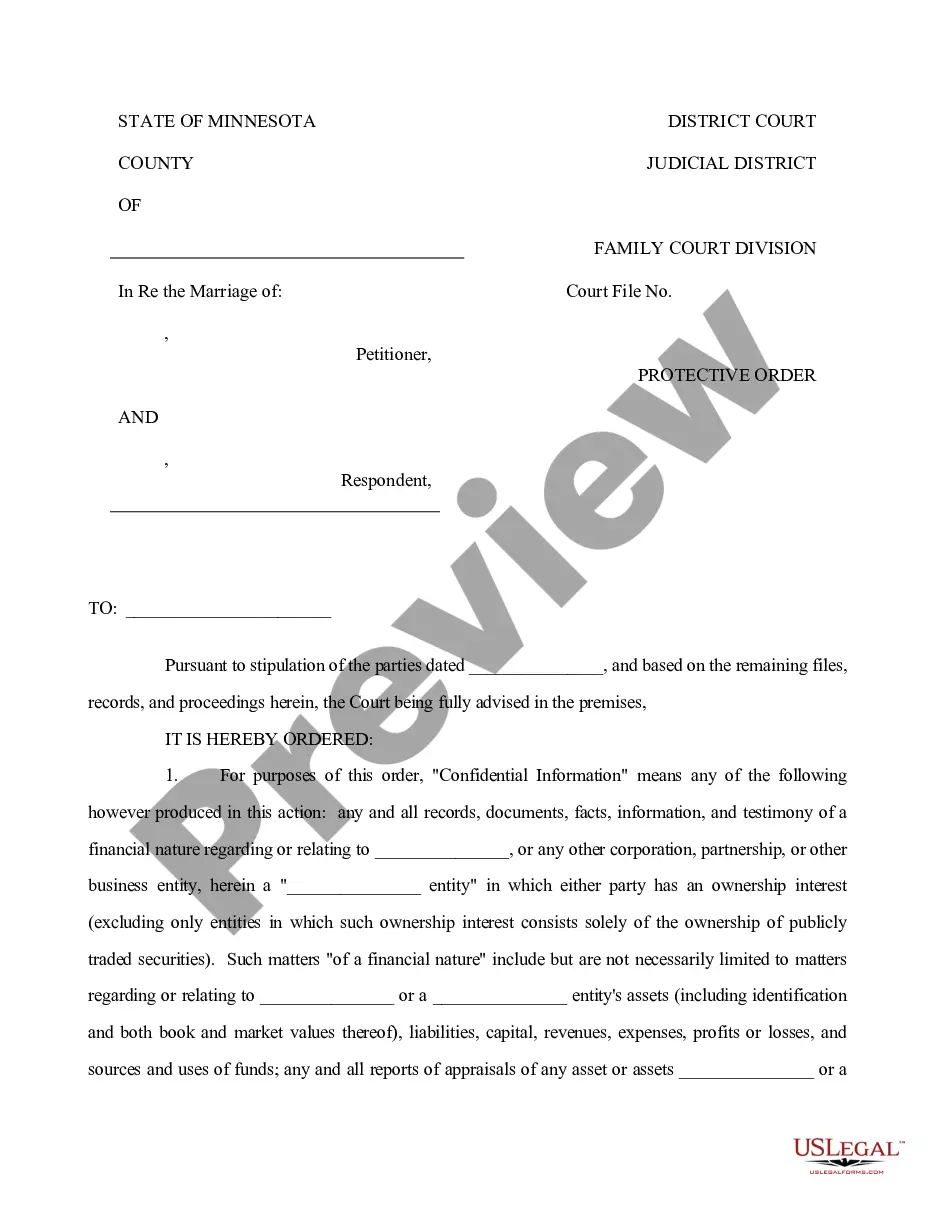
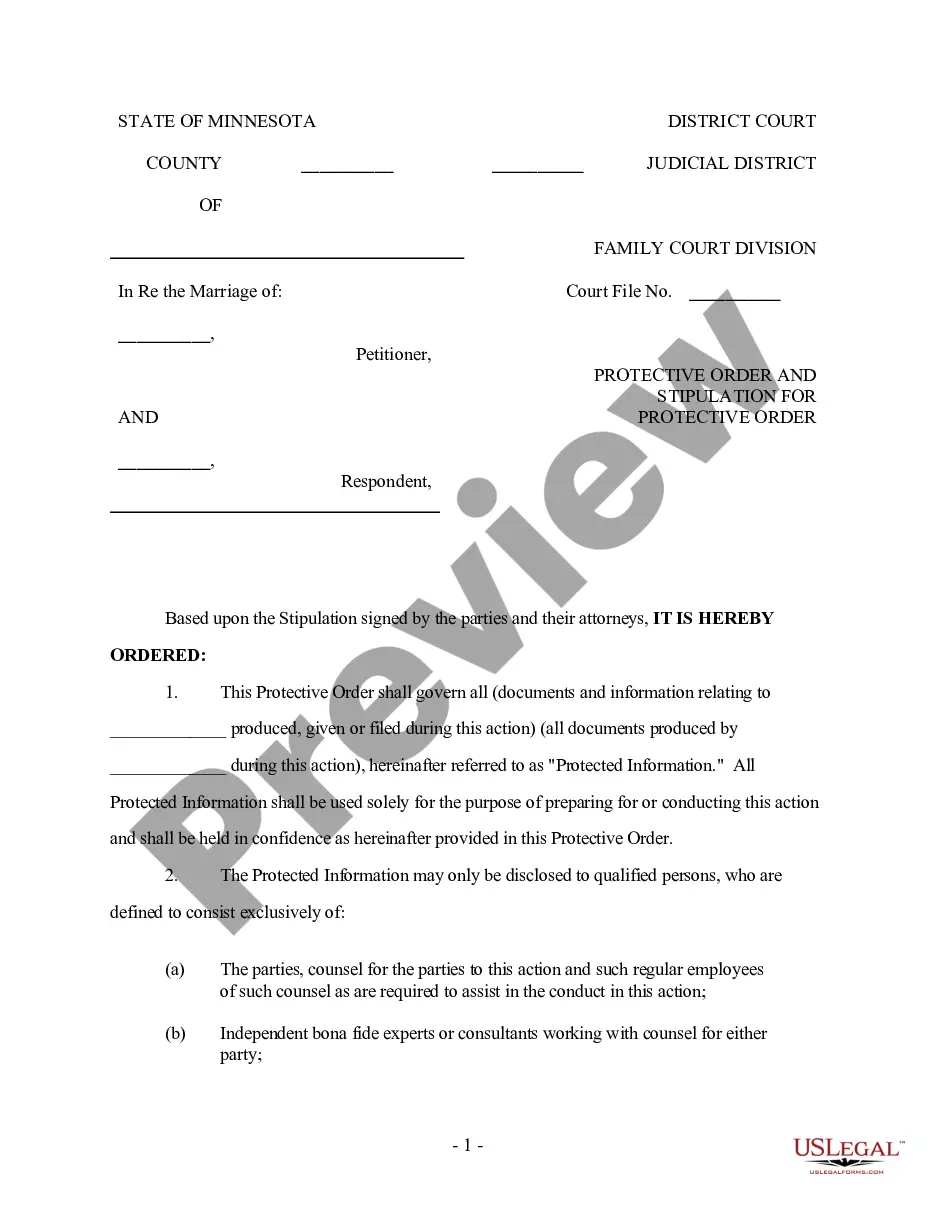
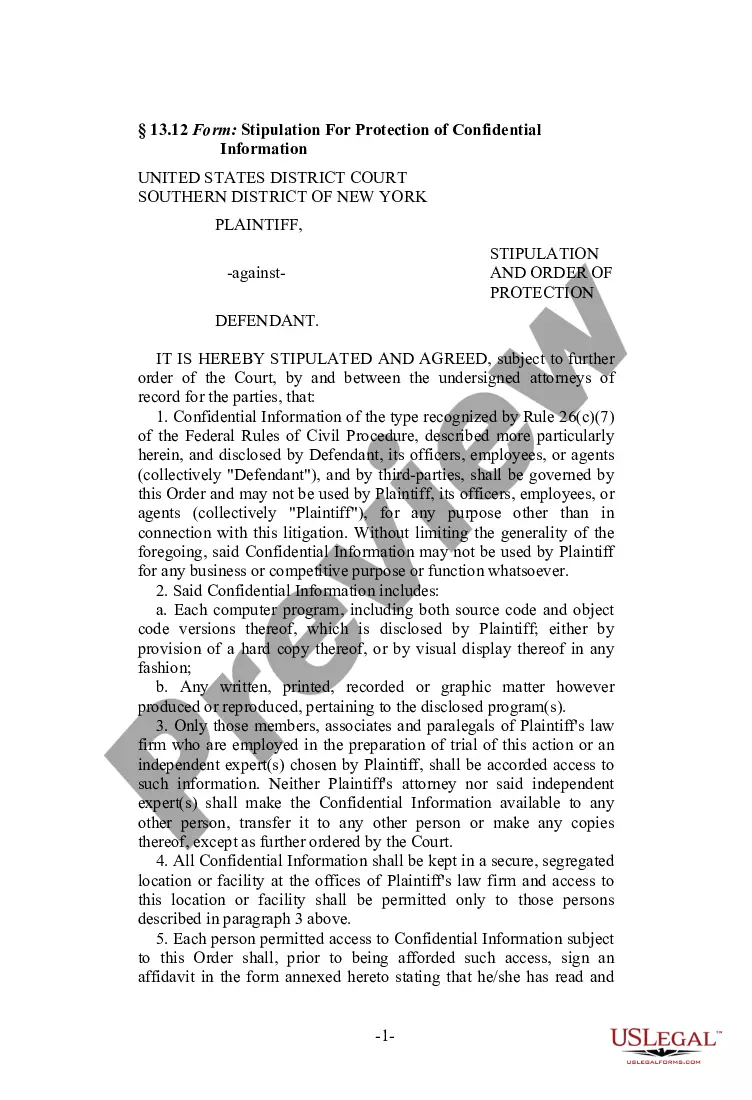
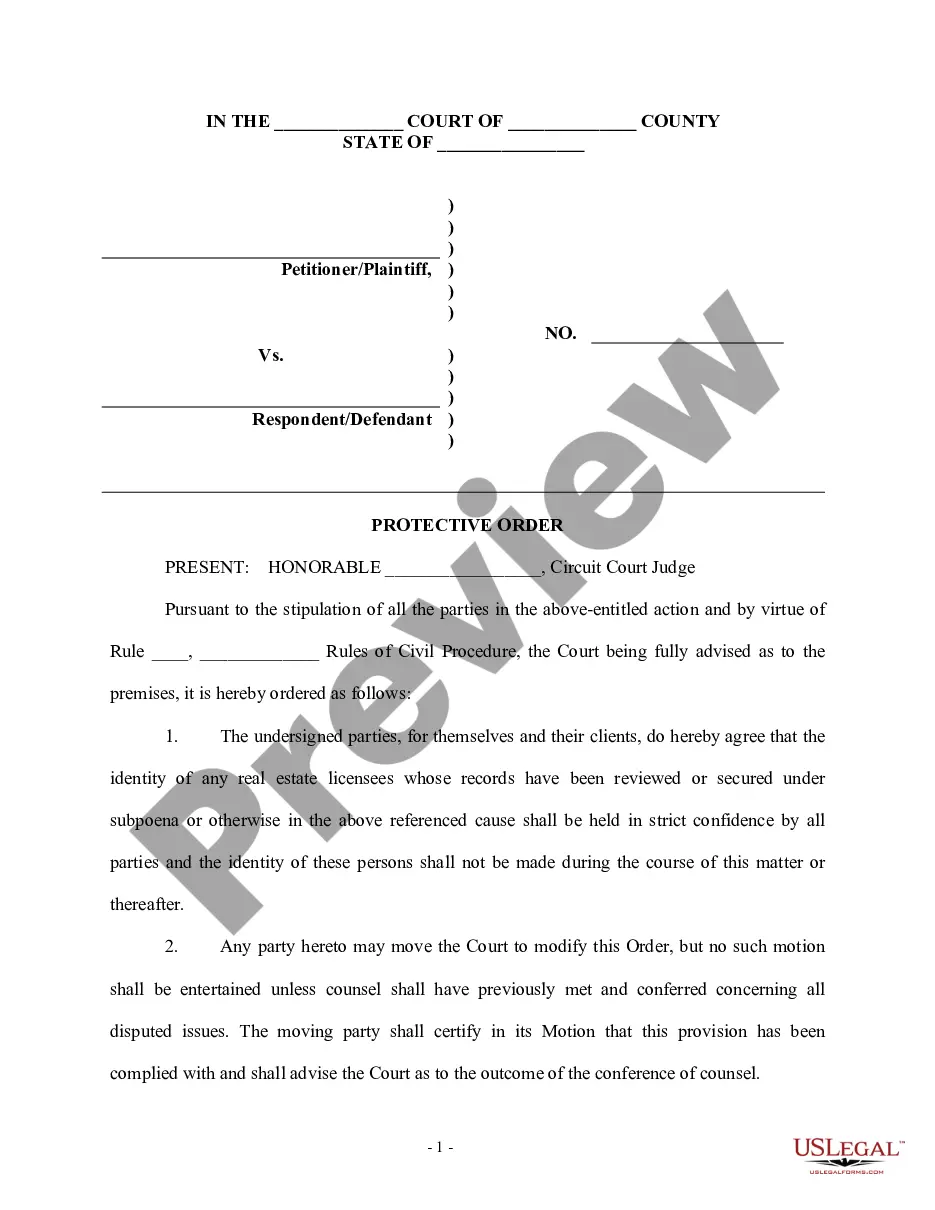
A protective order is a legal document designed to prevent the disclosure of confidential information during legal proceedings, such as a dissolution case. This order is crucial in safeguarding sensitive financial data related to businesses or personal interests during the dissolution process, ensuring that such information is not publicly accessible or misused. Unlike other forms, a protective order specifically addresses the handling of confidential information in litigation, setting clear boundaries on how such data can be shared and utilized.
Form components explained
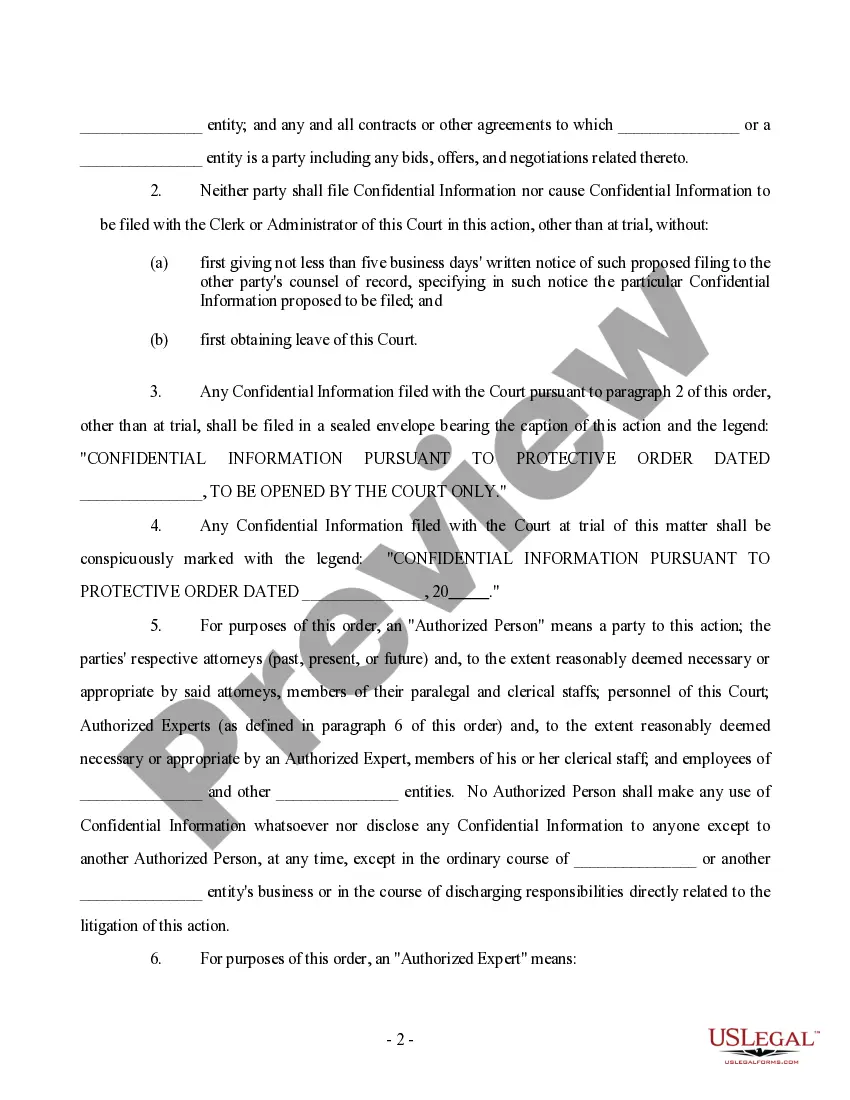
- Definition of Confidential Information: Details the types of information considered confidential, particularly relating to financial matters.
- Filing Restrictions: Outlines procedures for filing confidential information with the court, ensuring proper notice is given.
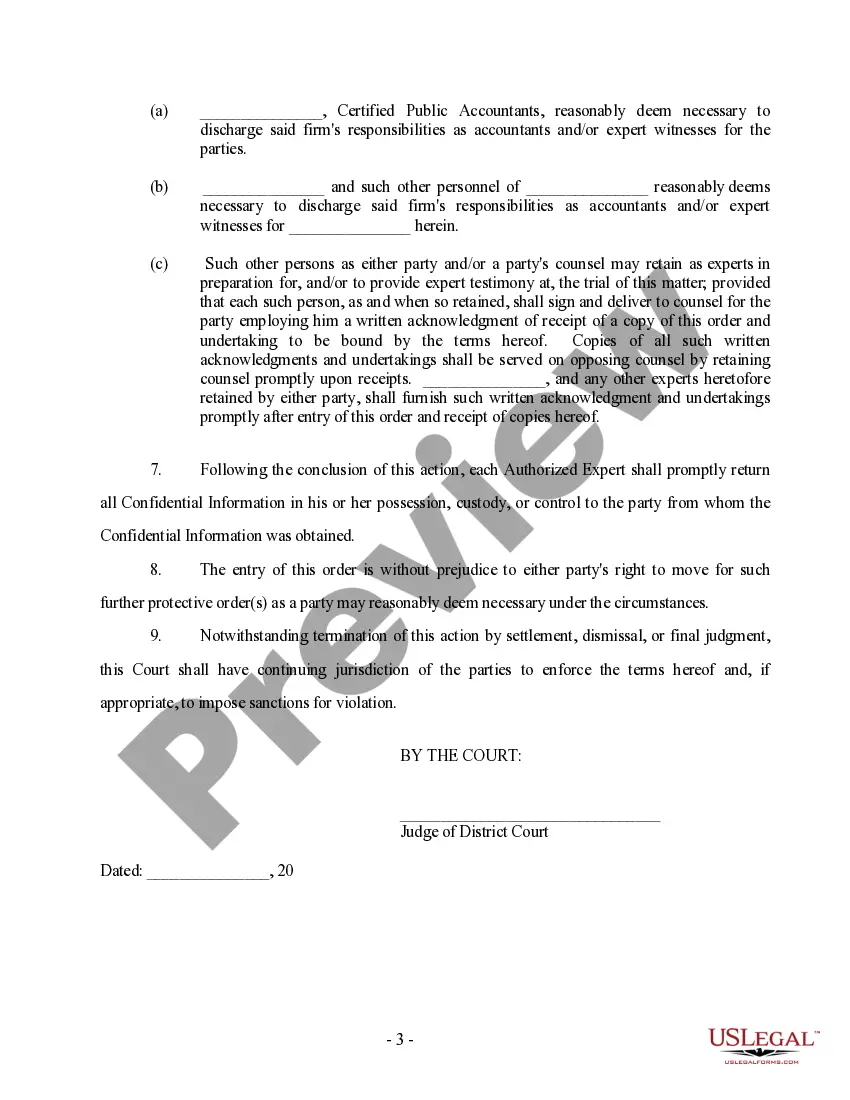
- Authorized Experts: Lists who may access the confidential information and their obligations to maintain confidentiality.
- Return of Confidential Information: Specifies that authorized experts must return all confidential materials once the case concludes.
- Continuing Jurisdiction: States that the court retains authority to enforce the order and impose sanctions for violations.
Situations where this form applies
This form should be used during a dissolution proceeding when parties need to protect sensitive financial information. If either party seeks to disclose confidential data, such as business valuations, income details, or personal financial documents, this form helps regulate how that information is handled during the legal process, ensuring that it is not improperly shared or misused.
Intended users of this form
- Individuals or couples involved in dissolution proceedings who need to protect their financial confidentiality.
- Businesses or partners that possess sensitive information which must be safeguarded during litigation.
- Attorneys representing parties in a dissolution case looking to establish boundaries around the exchange of confidential data.
Instructions for completing this form
- Identify the parties involved in the dissolution proceeding.
- Define what constitutes "Confidential Information" and list examples pertinent to your case.
- Incorporate any specific details of authorized experts who will handle confidential data.
- Fill out the notice requirements for filing confidential information with the court.
- Ensure all parties acknowledge and understand their obligations regarding the confidentiality of the information.
Does this form need to be notarized?
This form does not typically require notarization unless specified by local law. It is essential to check your jurisdiction's requirements to ensure compliance.
Get your form ready online
Our built-in tools help you complete, sign, share, and store your documents in one place.
Make edits, fill in missing information, and update formatting in US Legal Forms—just like you would in MS Word.
Download a copy, print it, send it by email, or mail it via USPS—whatever works best for your next step.
Sign and collect signatures with our SignNow integration. Send to multiple recipients, set reminders, and more. Go Premium to unlock E-Sign.
If this form requires notarization, complete it online through a secure video call—no need to meet a notary in person or wait for an appointment.
We protect your documents and personal data by following strict security and privacy standards.

Make edits, fill in missing information, and update formatting in US Legal Forms—just like you would in MS Word.

Download a copy, print it, send it by email, or mail it via USPS—whatever works best for your next step.

Sign and collect signatures with our SignNow integration. Send to multiple recipients, set reminders, and more. Go Premium to unlock E-Sign.

If this form requires notarization, complete it online through a secure video call—no need to meet a notary in person or wait for an appointment.

We protect your documents and personal data by following strict security and privacy standards.
Common mistakes to avoid
- Failing to properly define what constitutes "Confidential Information," leaving ambiguity.
- Not notifying the opposing party of proposed filings as required by the order.
- Overlooking the need for authorized experts to sign acknowledgments, compromising the order's integrity.
Why complete this form online
- Convenient access to legal documentation from the comfort of your home.
- Editable templates that allow customization to your specific situation.
- Reliable forms drafted by licensed attorneys to ensure legal compliance and validity.
- A protective order is a legally binding document, enforcing the confidentiality of sensitive financial information.
- Violations of the protective order may result in legal penalties, including sanctions imposed by the court.
What to keep in mind
- A protective order helps maintain confidentiality during dissolution proceedings.
- Understanding and following the requirements of the order is crucial for legal compliance.
- This form is vital for parties concerned about protecting their financial privacy.
Looking for another form?

Form popularity
FAQ
To qualify for an Order for Protection (OFP) in Minnesota, you must demonstrate a history of domestic abuse or threats from a partner or household member. You can apply if you have experienced physical harm, fear of imminent harm, or if the abuser has made threats against you. The US Legal Forms platform offers guidance and templates that simplify the application process, ensuring you meet all requirements for a Minnesota Protective Order.
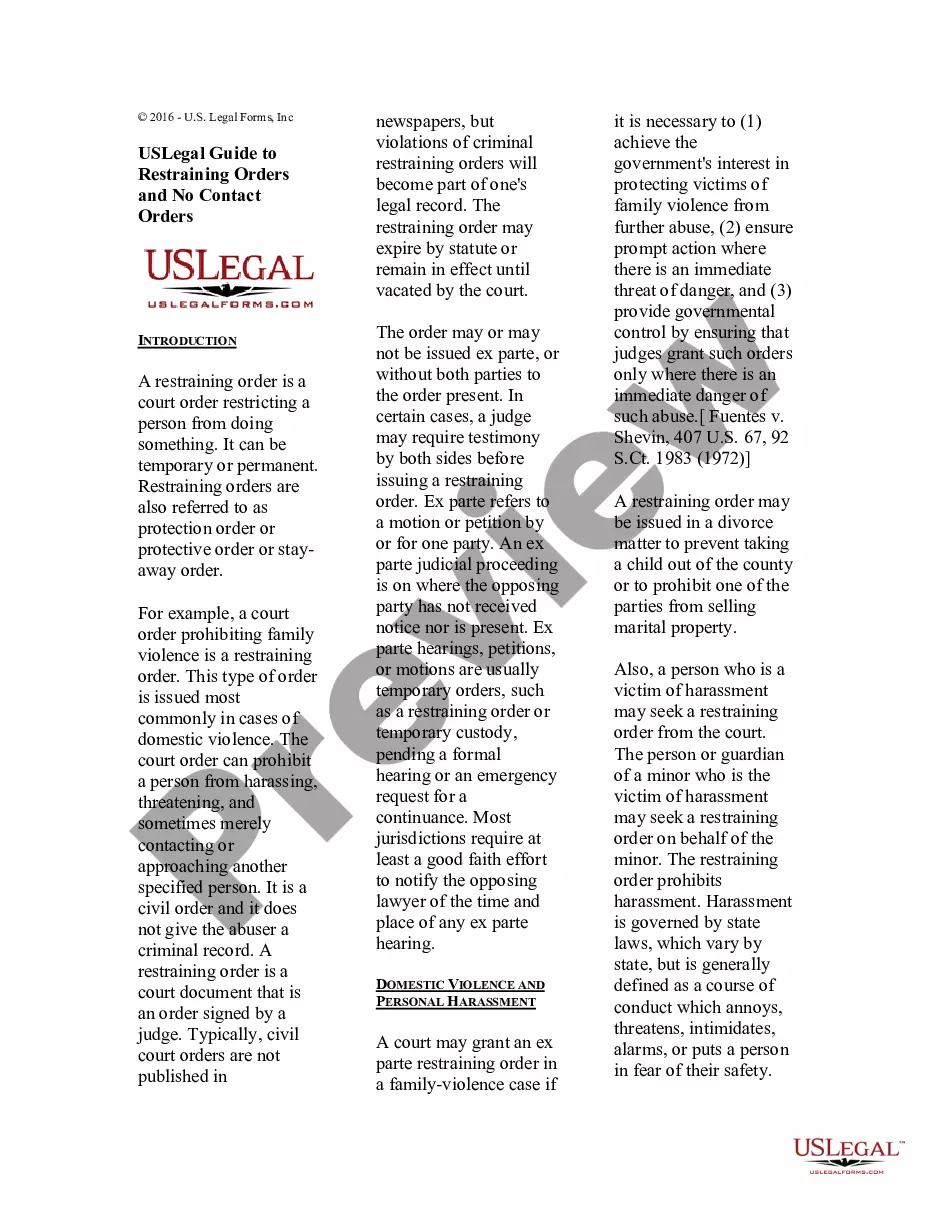
An Order for Protection (OFP) is a restraining Order that is sought where abuse or threats of abuse are alleged. Often, such proceedings are improperly used as a vehicle when divorce is contemplated to have a spouse removed from the family home and/or to seek advantage in a subsequent custody proceeding.
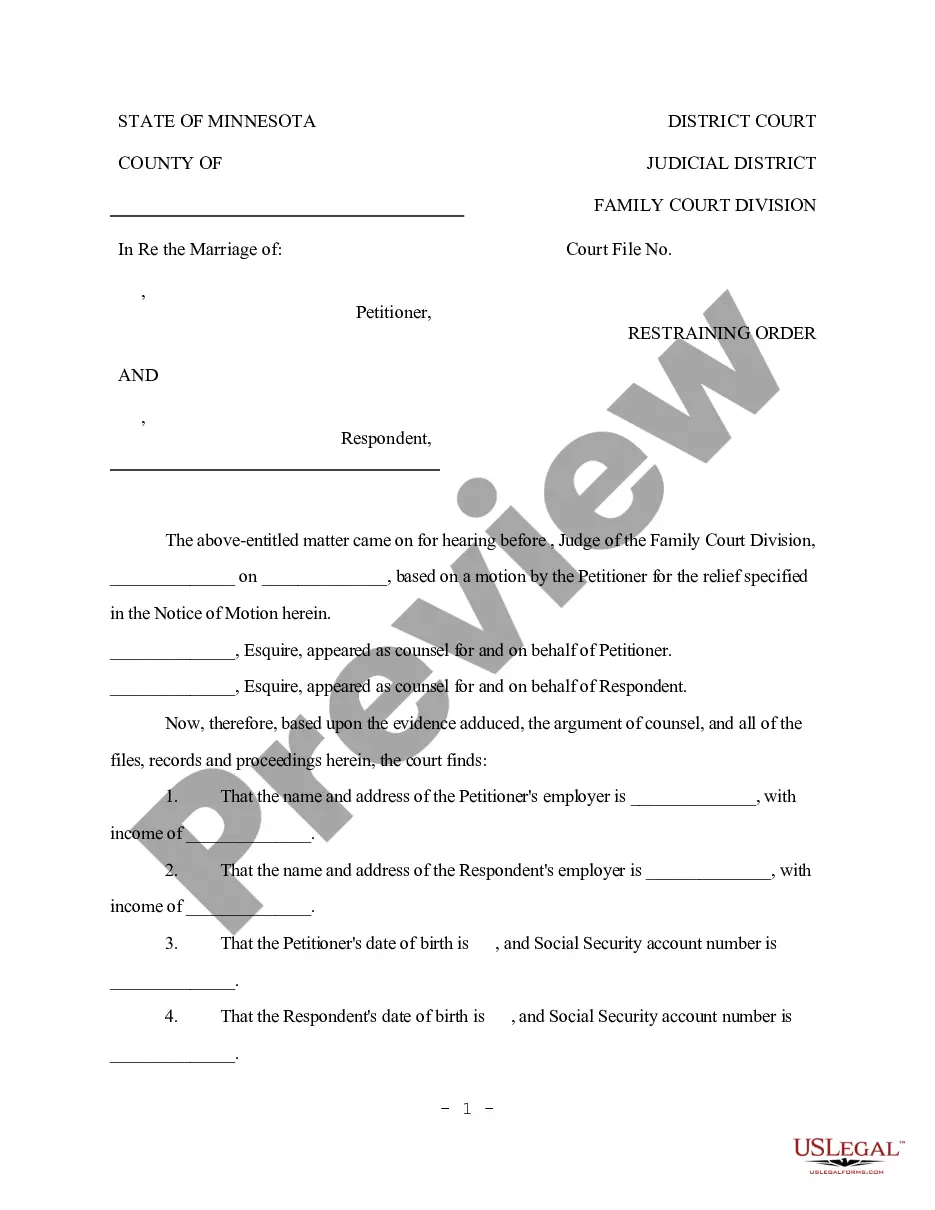
A no contact order is found in criminal court proceedings rather than civil court cases.A restraining order is for civil cases; criminal charges aren't typically involved. Restraining orders are used for protecting the party who filed it from physical, emotional, or material harm.
Usually yes, but sometimes no. Temporary restraining orders will appear so law enforcement officers can see it.But if the hearing results in a permanent restraining order, it goes on your record. But even restraining orders that should be expunged sometimes stay in the system longer.
Minnesota Statutes Section 609.749 prohibits harassing another person by engaging in conduct that causes the victim to feel frightened, threatened, oppressed, persecuted, or intimidated, regardless of the relationship between the harasser and victim.
Orders for Protection may be short term or long term. They can last up to two years. They prohibit contact with the person who filed the order and often also include other people like extended family, children or grandchildren.
You can file for an order of protection in any county where either you or the abuser lives, where the abuse happened, or where there is/was a family court proceeding involving you and the abuser or a child you have with the abuser (for example, a custody/visitation case).
There is no fee to get an Order of Protection and it can last for up to one year and can be renewed. Once an order is issued, only a judge can change it. If the order includes a stay-away provision and your partner comes to your house, he or she is violating the order and can be arrested.
A "no contact order" is a type of order usually issued by a judge in criminal court that orders the criminal defendant not to have contact with someone. There can be both a "no contact order" and a Harassment Restraining Order.
You can file for an order of protection in any county where either you or the abuser lives, where the abuse happened, or where there is/was a family court proceeding involving you and the abuser or a child you have with the abuser (for example, a custody/visitation case).