Michigan N otice of Hearing
What is this form?
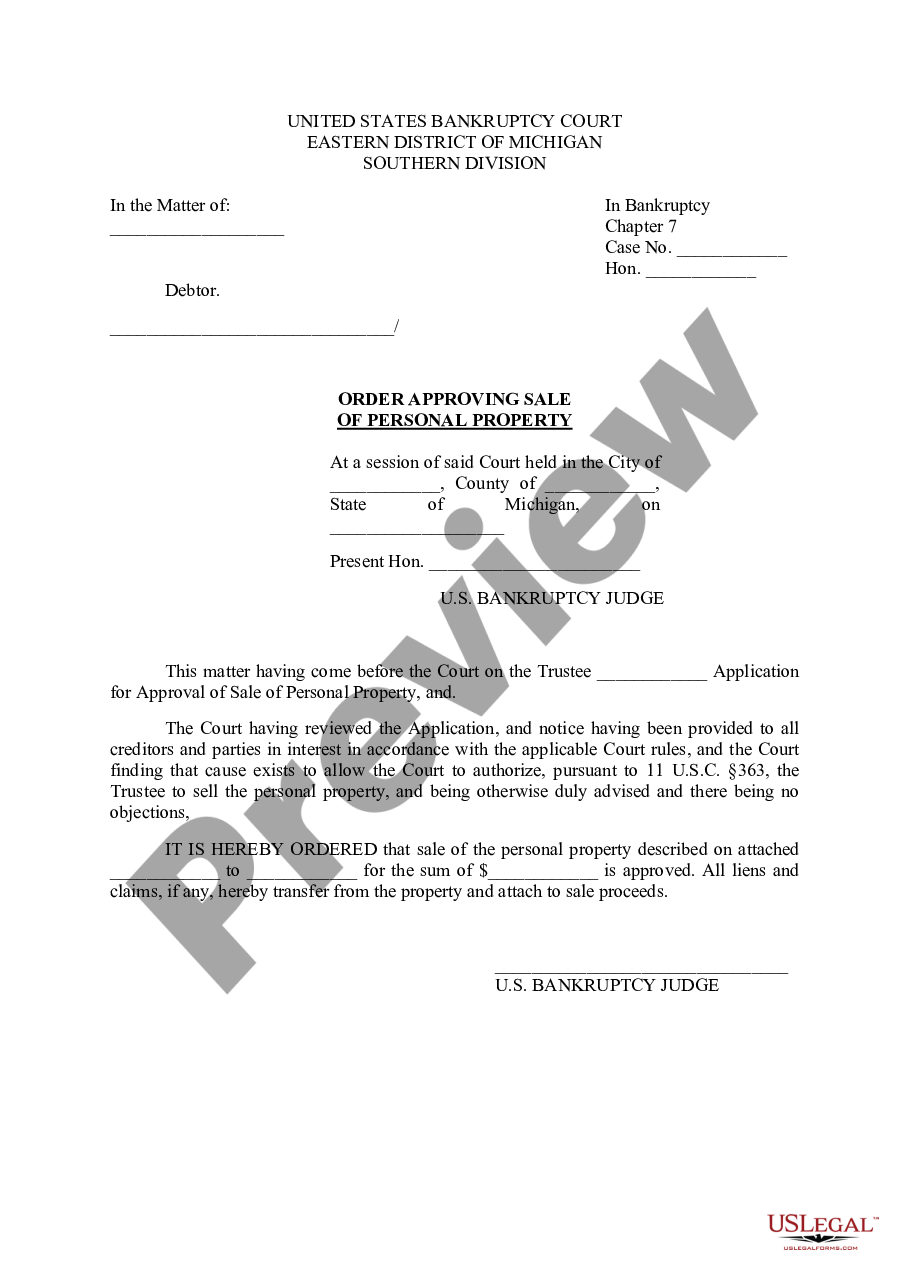
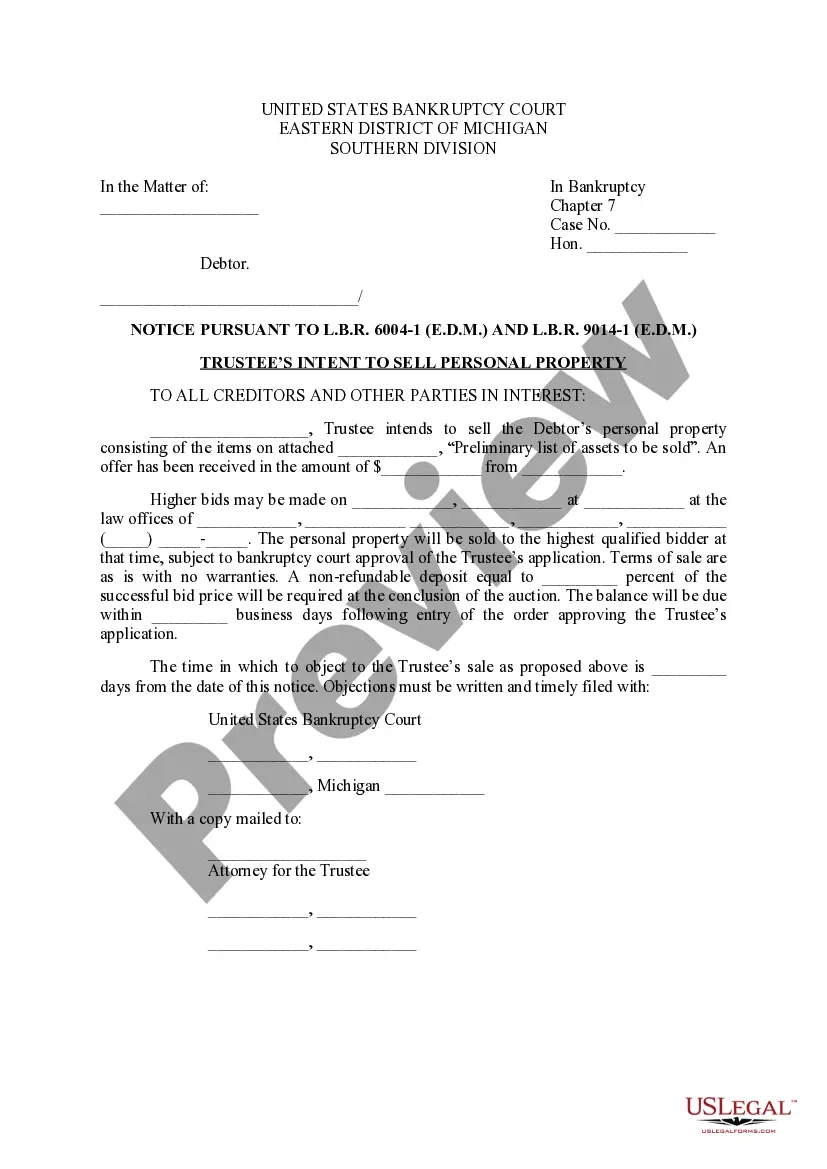
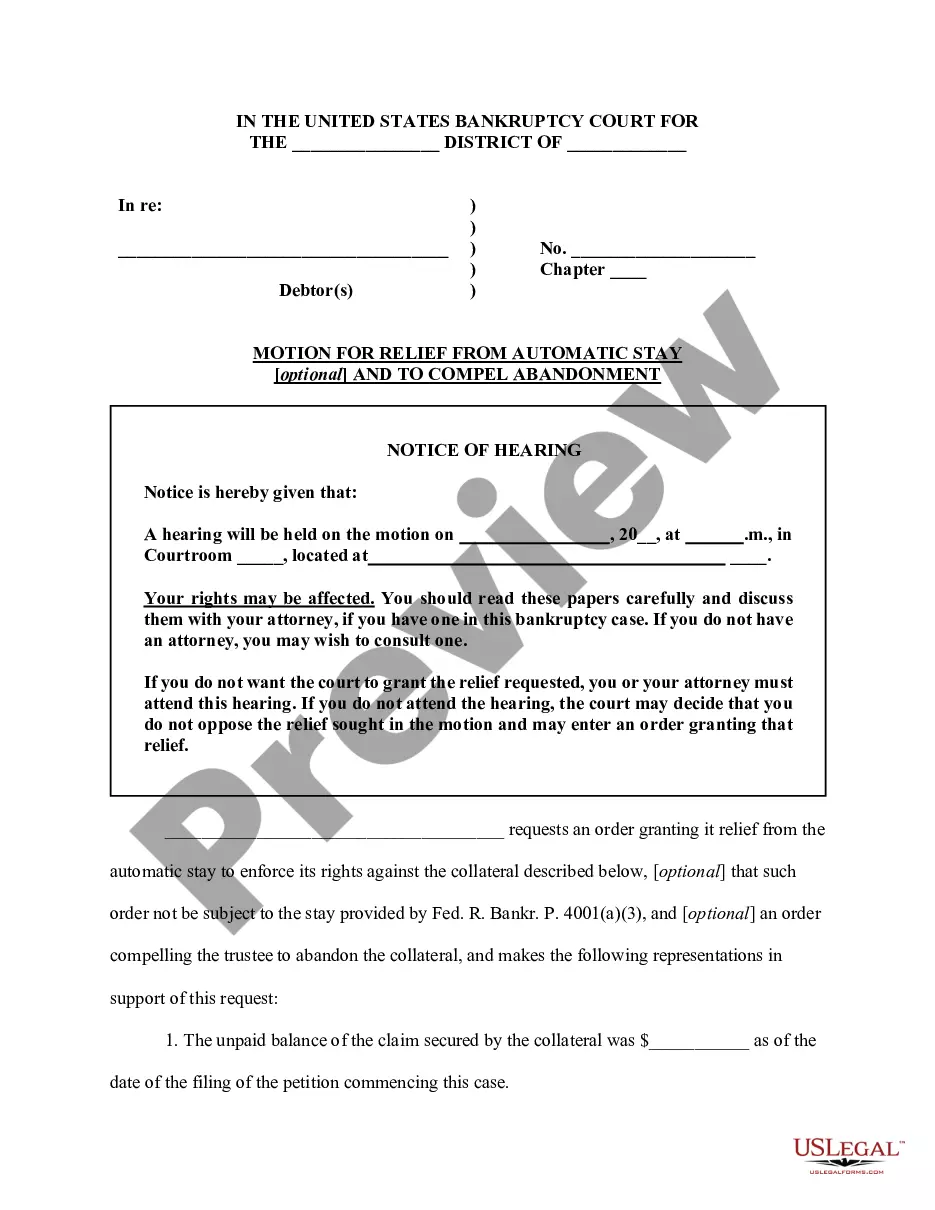
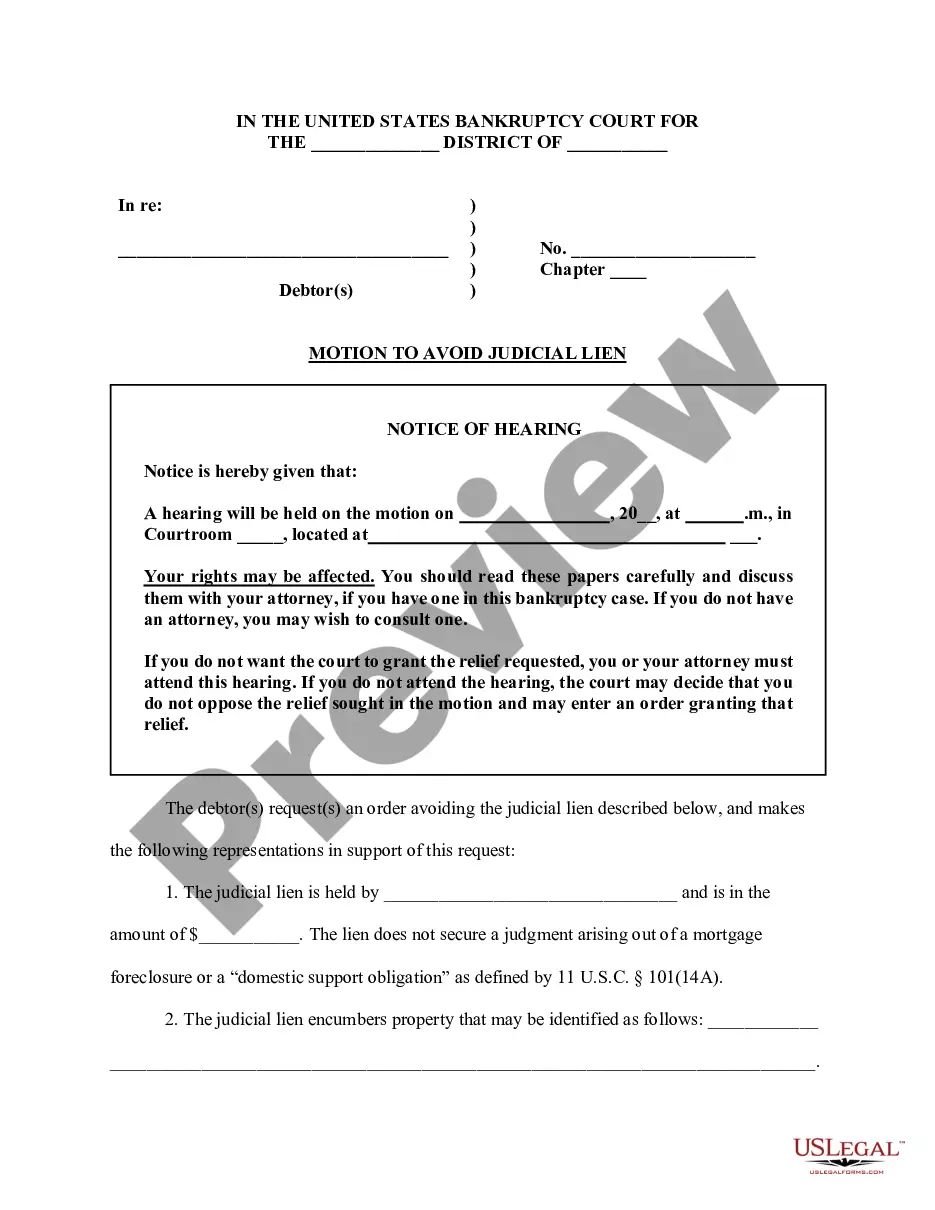
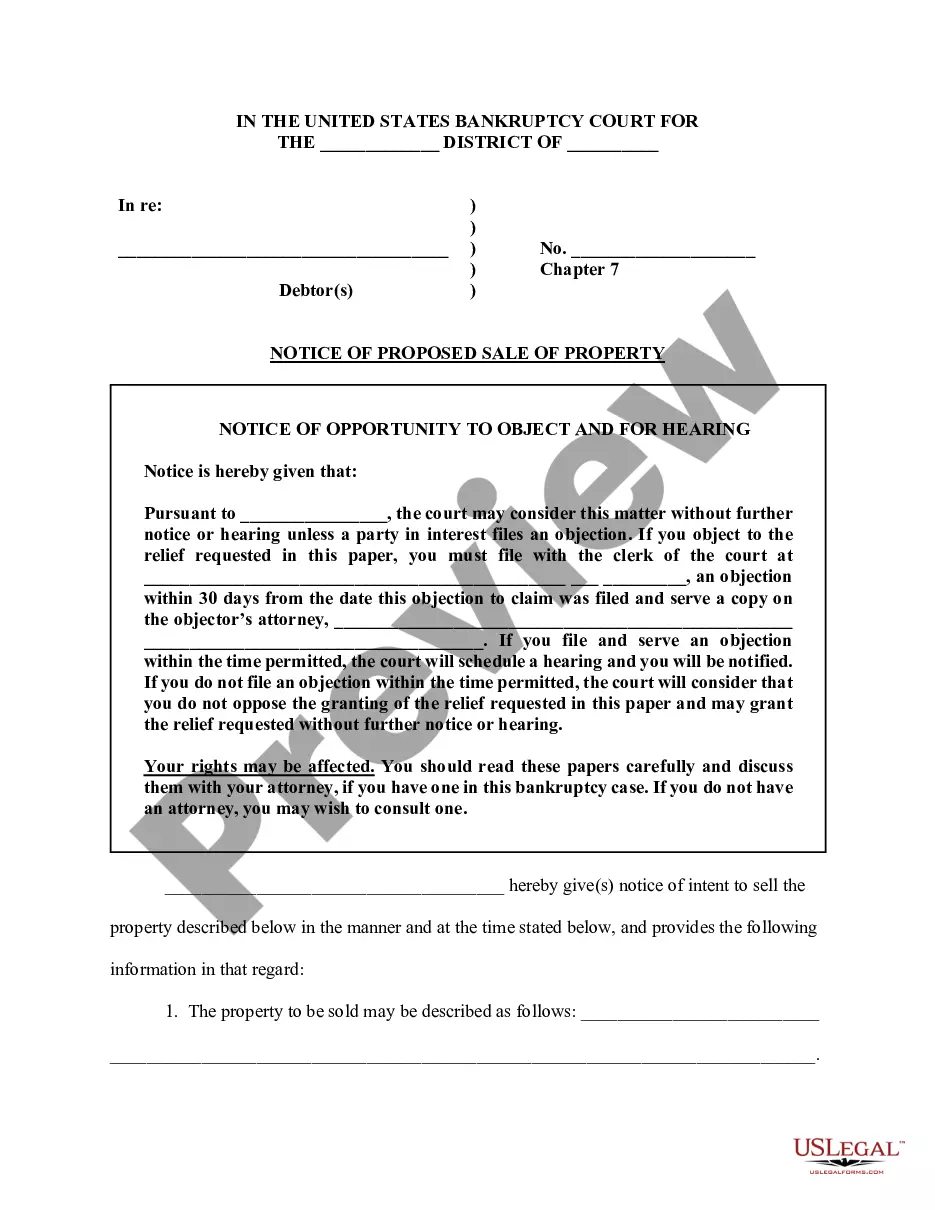
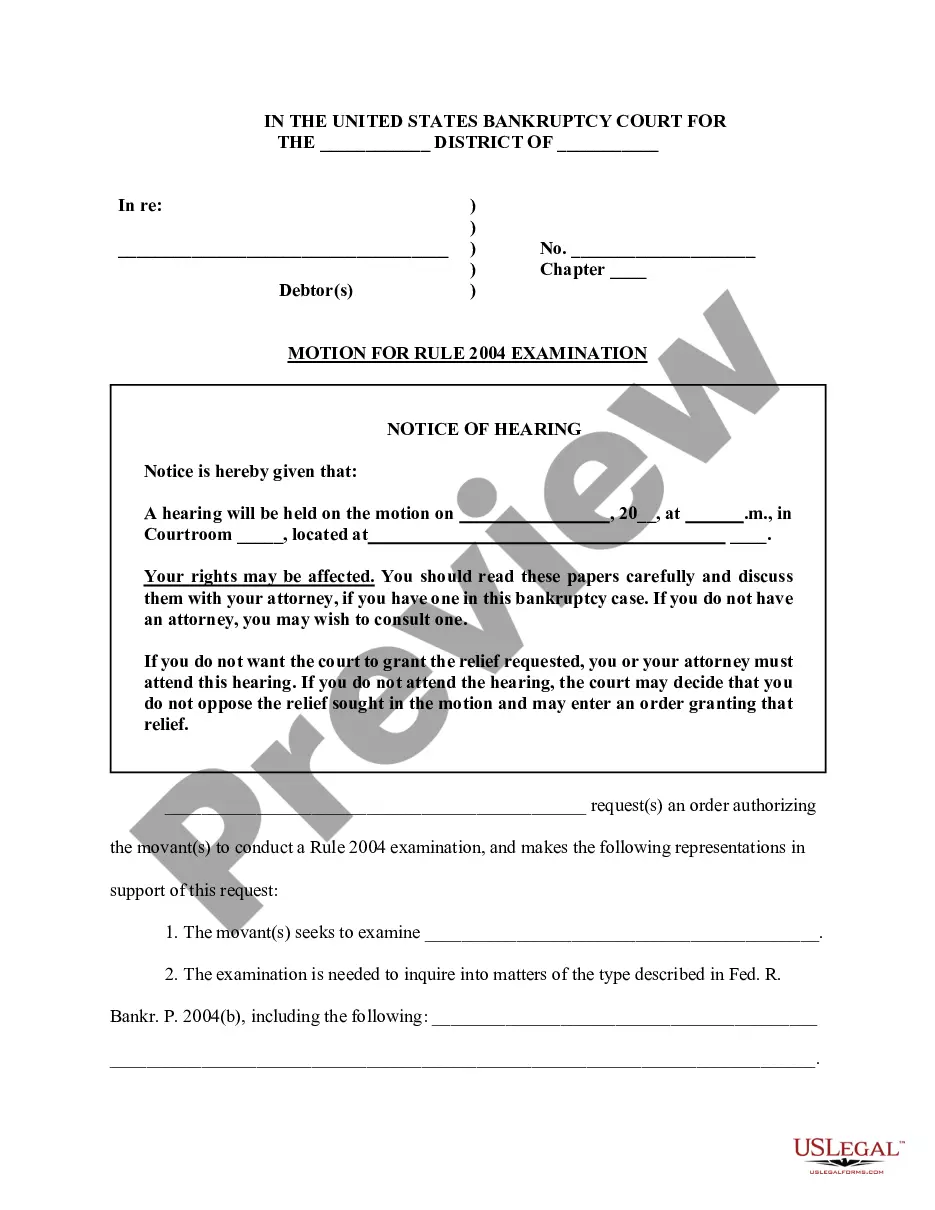
The Notice of Hearing is a legal document used in bankruptcy cases to inform creditors and interested parties of a trustee's intent to sell personal property belonging to the debtor. This form serves as a notification that the sale is subject to bankruptcy court approval. Unlike other forms related to personal property transactions, this notice specifically caters to the procedures established under bankruptcy law, ensuring due process for all parties involved.
Key components of this form
- Case information: Includes details such as the debtor's name, case number, and bankruptcy chapter.
- Order approval: Documented consent from the bankruptcy judge to authorize the sale of personal property.
- Trustee's intent: A clear statement indicating the trustee's intention to sell specific personal property.
- Sale details: Information regarding the sale price, deposit requirements, and terms of sale.
- Objection period: A defined timeframe for creditors to respond or object to the proposed sale.
When to use this form
This form should be used when a bankruptcy trustee seeks to sell the debtor's personal property as part of the bankruptcy process. It is applicable in situations where selling assets is necessary to pay off creditors. Common scenarios include when the debtor lacks sufficient funds to settle debts, and the trustee identifies assets that can be liquidated for the benefit of creditors.
Who should use this form
- Bankruptcy trustees managing cases under the supervision of a court.
- Creditors who wish to stay informed about the proceedings affecting the debtor's personal property.
- Debtors undergoing bankruptcy proceedings looking to comply with court requirements.
Instructions for completing this form
- Identify the parties involved: Enter the debtor's name and case number, as well as the name of the trustee.
- Specify the property for sale: List the items being sold and attach any relevant documents.
- Detail financial aspects: Indicate the sale price and required deposit percentage along with payment terms.
- Set the auction date and place: Provide the time and location where the auction will take place.
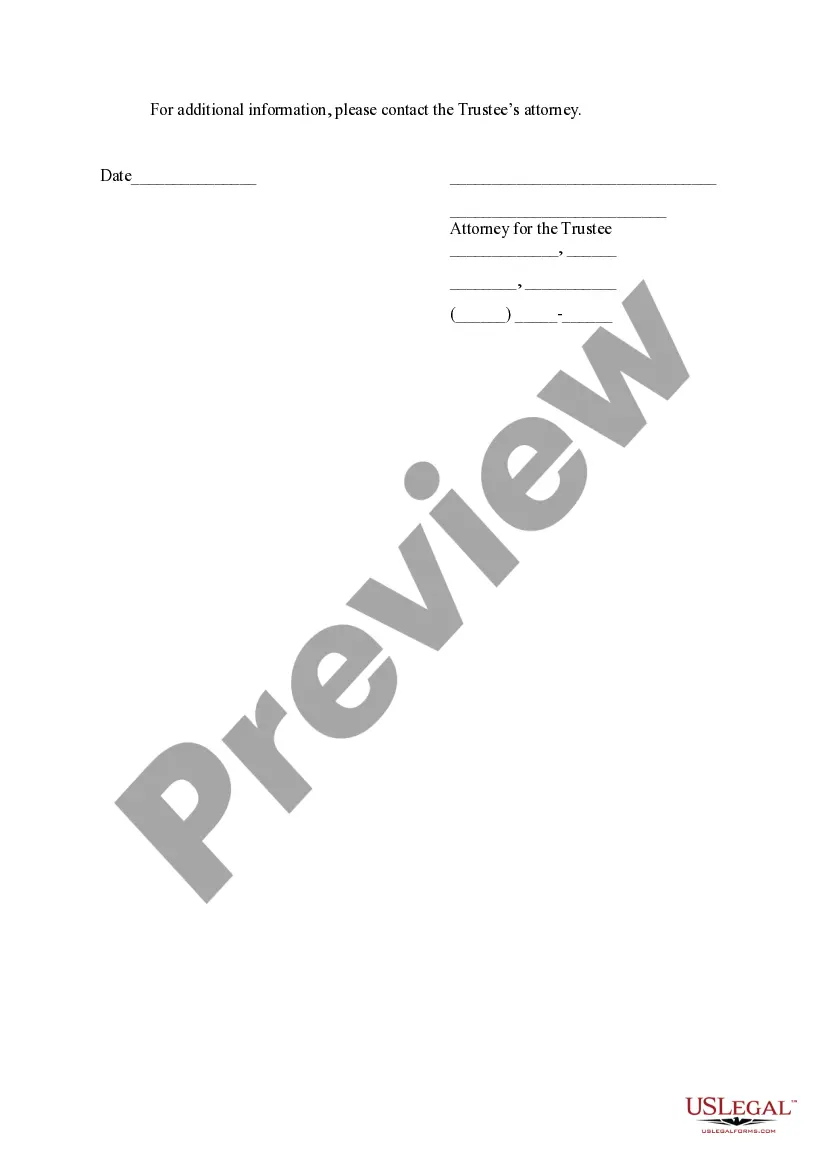
- Include contact information: State the attorney's contact details for inquiries.
Notarization requirements for this form
This form does not typically require notarization unless specified by local law. It is important to ensure compliance with specific court requirements as they vary by jurisdiction.
Get your form ready online
Our built-in tools help you complete, sign, share, and store your documents in one place.
Make edits, fill in missing information, and update formatting in US Legal Forms—just like you would in MS Word.
Download a copy, print it, send it by email, or mail it via USPS—whatever works best for your next step.
Sign and collect signatures with our SignNow integration. Send to multiple recipients, set reminders, and more. Go Premium to unlock E-Sign.
If this form requires notarization, complete it online through a secure video call—no need to meet a notary in person or wait for an appointment.
We protect your documents and personal data by following strict security and privacy standards.

Make edits, fill in missing information, and update formatting in US Legal Forms—just like you would in MS Word.

Download a copy, print it, send it by email, or mail it via USPS—whatever works best for your next step.

Sign and collect signatures with our SignNow integration. Send to multiple recipients, set reminders, and more. Go Premium to unlock E-Sign.

If this form requires notarization, complete it online through a secure video call—no need to meet a notary in person or wait for an appointment.

We protect your documents and personal data by following strict security and privacy standards.
Common mistakes to avoid
- Failing to provide complete property descriptions, leading to confusion.
- Not allowing sufficient time for objections from creditors.
- Omitting necessary signatures from the trustee or attorney.
- Incorrectly calculating the required deposit or payment terms.
Why complete this form online
- Convenience: Complete and file the form from anywhere at any time.
- Editability: Easily modify the form to meet specific needs and updates.
- Reliability: Access forms drafted by licensed attorneys ensuring legal compliance.
Legal use & context
The Notice of Hearing is essential in bankruptcy procedures. It ensures all creditors are properly notified about the sale of personal property, allowing them the opportunity to raise objections if necessary. Failure to properly complete or submit this form can lead to legal challenges regarding the sale, potentially affecting the trustee's ability to manage the debtor's estate.
Quick recap
- The Notice of Hearing is crucial for informing stakeholders about the sale of personal property in bankruptcy.
- It must be completed thoroughly to comply with bankruptcy court rules.
- Creditors have the right to object within a specified timeframe.
Looking for another form?
Form popularity
FAQ
A hearing notice is a formal communication that informs individuals about an upcoming legal proceeding. In Michigan, it sets out essential details such as the hearing type, date, and location, allowing all parties to participate appropriately. Understanding the meaning and importance of a hearing notice ensures compliance with legal protocols.
The 7 day rule in Michigan court refers to the requirement that certain documents, including a Michigan Notice of Hearing, must be served to involved parties at least seven days before the scheduled hearing date. Adhering to this timeframe helps ensure all parties have adequate time to prepare, maintaining fairness throughout the legal process.
During a hearing, parties present their arguments, evidence, and testimonies to the judge or hearing officer. Each party has the opportunity to respond to points raised by opposing parties, fostering an open discussion. The outcome of the hearing then influences the subsequent legal decisions based on the presented information.
In Michigan, a public hearing notice must include specific details such as the date, time, and location of the hearing, as well as a brief description of the subject matter. The notice must be published or distributed in a manner that reaches the public effectively. Following these guidelines can enhance compliance with legal standards and inform those affected.
The primary purpose of a Michigan Notice of Hearing is to notify all interested parties of the legal proceedings that will take place. It ensures transparency in the legal process, allowing everyone involved the chance to respond or participate. This notice upholds the rights of all parties and maintains the integrity of the judicial system.
To prepare a Michigan Notice of Hearing, you must first ensure that you have the correct case details, including the date and time of the hearing. Clearly state the purpose of the hearing and provide adequate notice to all parties. Using USLegalForms can simplify this process, offering templates and guidelines tailored to Michigan's legal requirements.
A Michigan Notice of Hearing serves as an official communication informing parties involved in a legal matter about an upcoming hearing. This notice typically outlines the date, time, and location of the hearing. It ensures all relevant parties have the opportunity to attend and present their case or arguments.
In Michigan, the required notice period for a public hearing can vary, but typically, a minimum of 15 days is needed. This timeframe allows interested parties to prepare adequately and voice their opinions. Receiving a Michigan Notice of Hearing in a timely manner is essential for transparency and community involvement.
The process of a public hearing involves notifying the public about the meeting, allowing input from community members, and discussing relevant issues. In Michigan, notices must be sent out in advance to keep everyone informed and engaged. These hearings often require a Michigan Notice of Hearing to ensure all interested parties have the chance to participate.
The 554.134 law in Michigan pertains to the procedures surrounding notices and hearings related to certain legal matters. This law outlines the requirements for how notices must be delivered, ensuring transparency in legal processes. Familiarity with this law can help you understand your rights regarding Michigan Notices of Hearing.