Maryland General Partnership Package
Overview of this form package
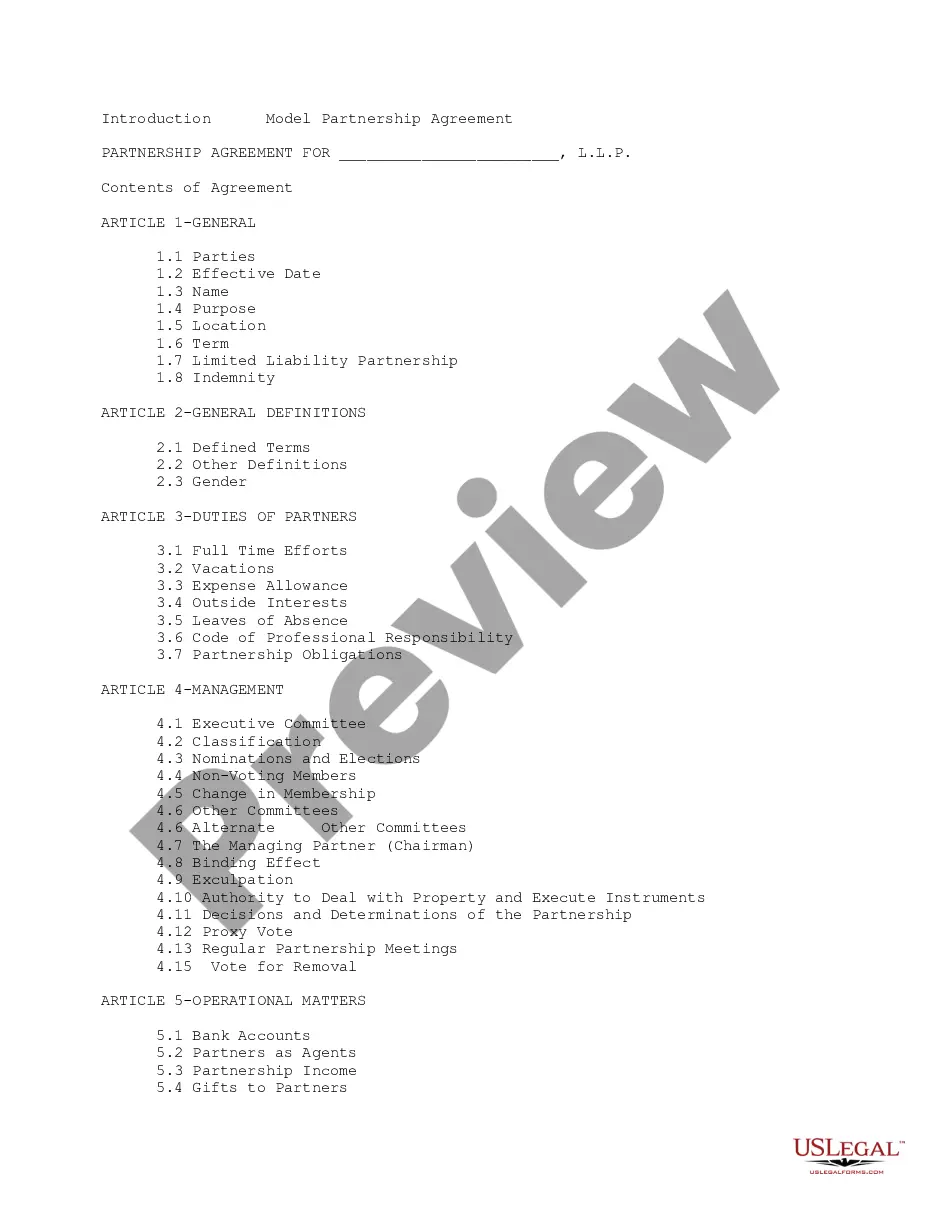
The Maryland General Partnership Package includes essential forms for forming, managing, and dissolving a partnership. This form package is designed to address various partnership needs, allowing you to easily modify the documents to meet your specific requirements.
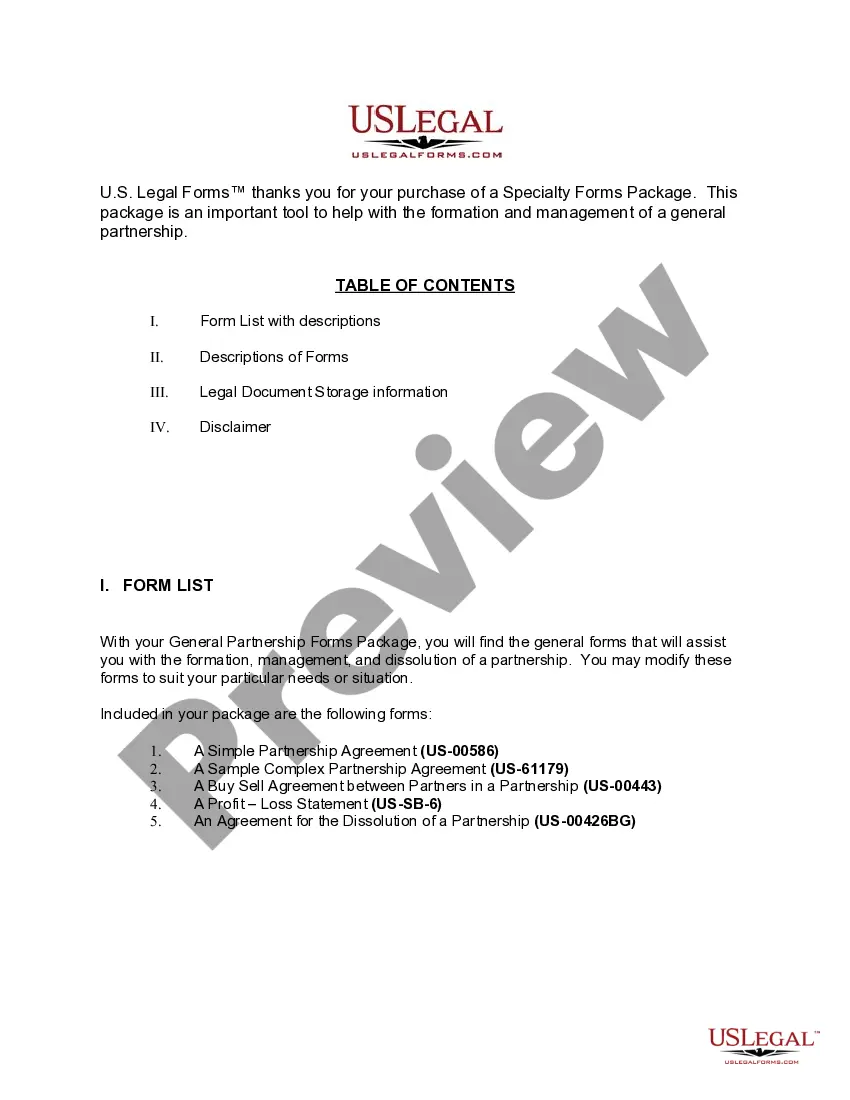
Forms you’ll find in this package
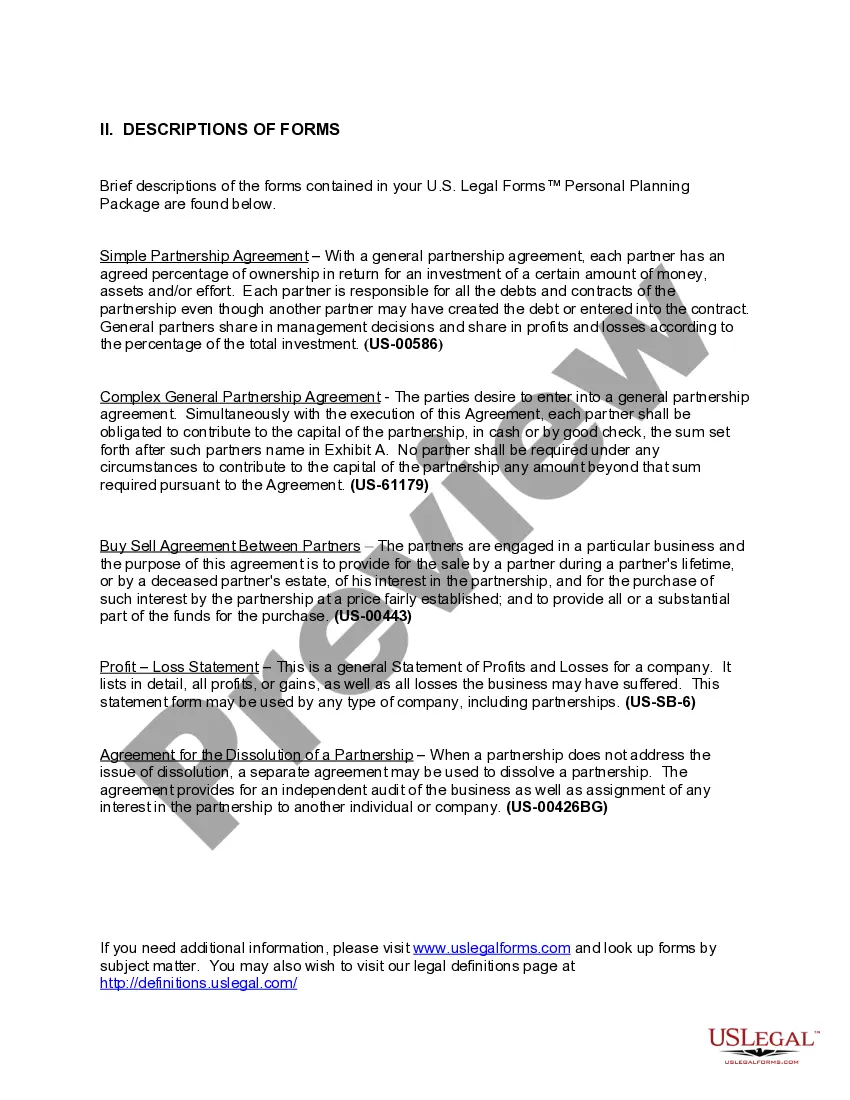
- Agreement for the Dissolution of a Partnership
- Trade Name Application
- Buy Sell Agreement Between Partners of a Partnership
- I.R.S. Form SS-4 (to obtain your federal identification number)
- Simple Partnership Agreement
- Sample Business Plan Template
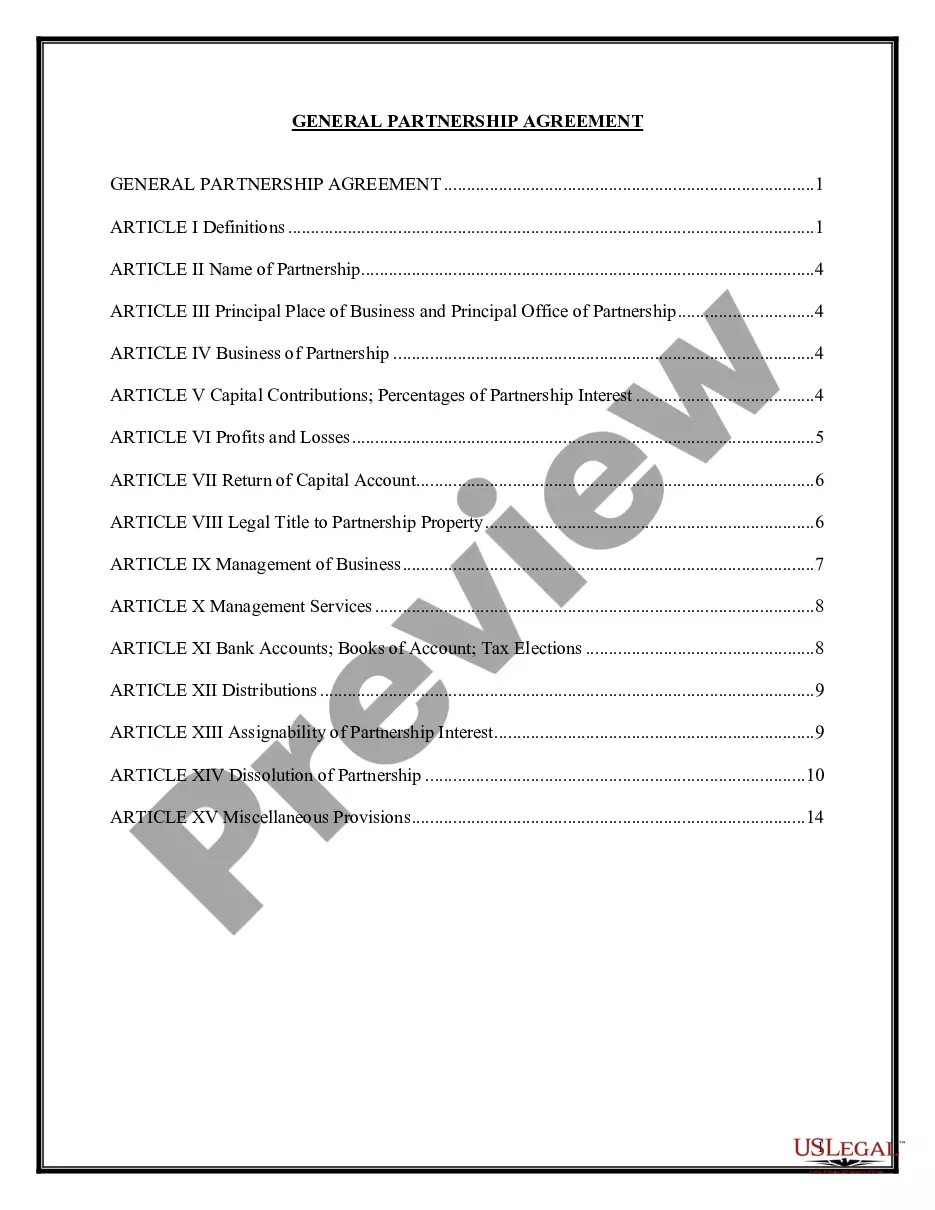
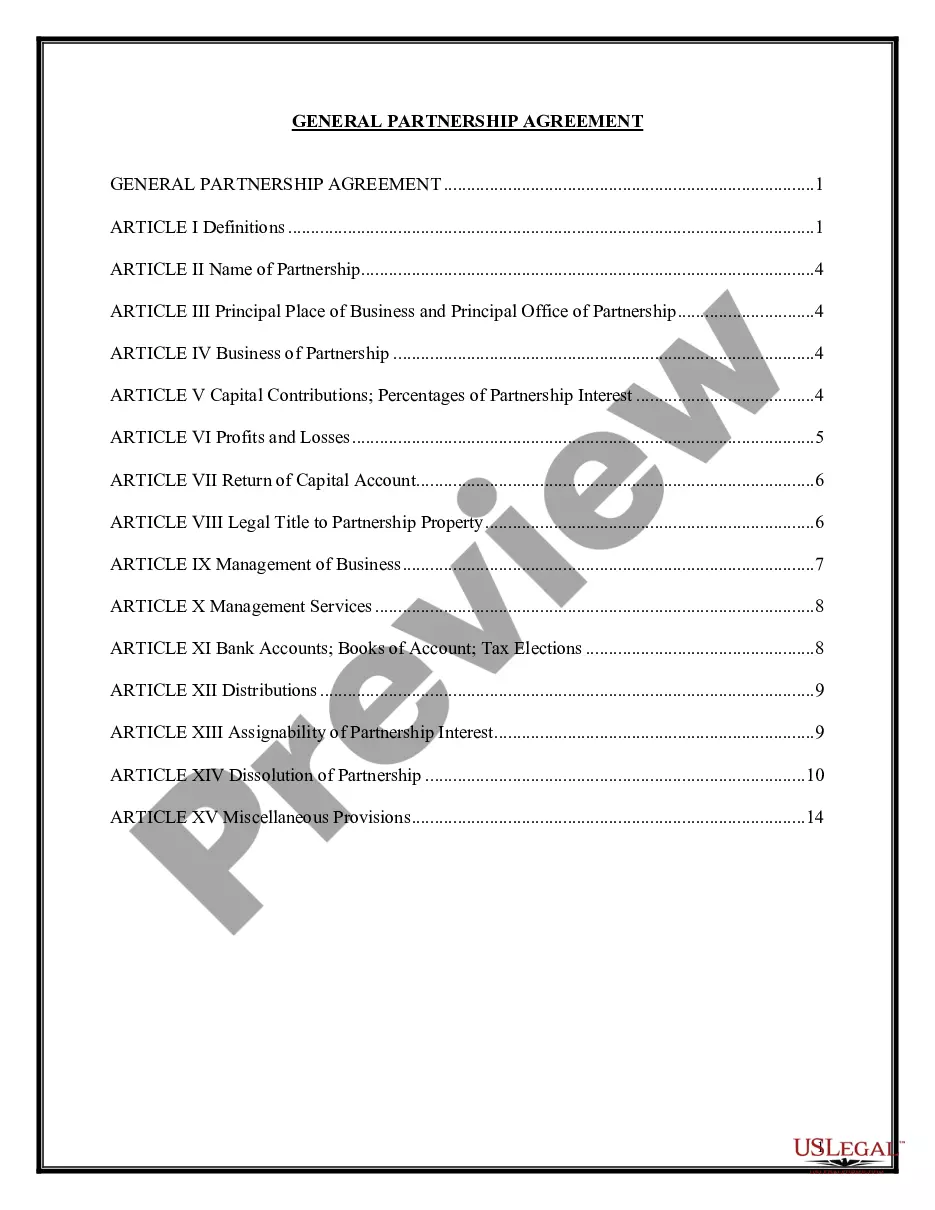
- General Partnership Agreement - Complex
- Checklist for Starting Up a New Business
- Profit and Loss Statement
- Business Startup Costs
- Employment or Work Application - General
- Stand Alone Confidentiality and Noncompetition Agreement with Employee
- Self-Employed Independent Contractor Employment Agreement - General
When to use this document
This package is useful in several scenarios, including:
- Establishing a new general partnership.
- Creating detailed agreements for complex partnerships.
- Facilitating the buy-sell arrangements between partners.
- Tracking profits and losses within the partnership.
- Managing the dissolution process of an existing partnership.
Who should use this form package
- Entrepreneurs looking to start a general partnership.
- Existing partners needing formal agreements for management or dissolution.
- Business owners wanting to document profit and loss accurately.
- Individuals seeking to formalize buy-sell agreements.
Steps to complete these forms
- Review included forms to confirm they meet your partnership needs.
- Identify the partners and enter their details in the agreements.
- Fill in the necessary financial information, such as contributions and profit-sharing arrangements.
- Ensure all partners sign the relevant agreements to validate them.
- Store completed forms securely for future reference.
Notarization guidance for this package
Forms in this package typically do not require notarization unless required by local law. It is advisable to check specific legal obligations in Maryland to ensure compliance.
Get your form ready online
Our built-in tools help you complete, sign, share, and store your documents in one place.
Make edits, fill in missing information, and update formatting in US Legal Forms—just like you would in MS Word.
Download a copy, print it, send it by email, or mail it via USPS—whatever works best for your next step.
Sign and collect signatures with our SignNow integration. Send to multiple recipients, set reminders, and more. Go Premium to unlock E-Sign.
If this form requires notarization, complete it online through a secure video call—no need to meet a notary in person or wait for an appointment.
We protect your documents and personal data by following strict security and privacy standards.

Make edits, fill in missing information, and update formatting in US Legal Forms—just like you would in MS Word.

Download a copy, print it, send it by email, or mail it via USPS—whatever works best for your next step.

Sign and collect signatures with our SignNow integration. Send to multiple recipients, set reminders, and more. Go Premium to unlock E-Sign.

If this form requires notarization, complete it online through a secure video call—no need to meet a notary in person or wait for an appointment.

We protect your documents and personal data by following strict security and privacy standards.
Typical mistakes to avoid
- Failing to detail contributions and ownership stakes in the agreements.
- Not updating partnership agreements to reflect changes in partnership roles.
- Neglecting to have all partners sign the dissolution agreement.
Advantages of online completion
- Convenient access to all necessary forms in one package.
- Editable forms that can be customized to your specific partnership needs.
- Reliability from documents prepared by licensed attorneys.
Legal use & context
- This package provides documents that are enforceable under Maryland law for general partnerships.
- Using properly executed forms can aid in resolving disputes and clarifying partnership agreements.
Quick recap
- The Maryland General Partnership Package includes crucial forms for managing a partnership.
- Forms are tailored to Maryland's legal requirements.
- Correctly completed and signed documents help ensure legal validity and protect your partnership interests.
Looking for another form?
Form popularity
FAQ
A general partnership is a business arrangement by which two or more individuals agree to share in all assets, profits, and financial and legal liabilities of a jointly-owned business.Furthermore, any partner may be sued for the business's debts.
Name of the partnership. Contributions to the partnership. Allocation of profits, losses, and draws. Partners' authority. Partnership decision-making. Management duties. Admitting new partners. Withdrawal or death of a partner.
Name of your partnership. Contributions to the partnership and percentage of ownership. Division of profits, losses and draws. Partners' authority. Withdrawal or death of a partner.
Like any contractual agreement, partnership agreements do not have to be in writing, as verbal agreements are also legally binding.In a partnership, each person is liable for the debts and actions of the other partners, so the contractual relationship and obligations need to be completely transparent.
Step 1: Select a business name. Step 2: File trademark on business name. Step 3: Complete required paperwork. Step 4: Determine if you need an EIN, additional licenses or tax IDs.
For example, let's say that Fred and Melissa decide to open a baking store. The store is named F&M Bakery. By opening a store together, Fred and Melissa are both general partners in the business, F&M Bakery. It is important to note that each general partner must be involved in the business.
Partnership DeedPartnership deeds, in very simple words, are an agreement between partners of a firm. This agreement defines details like the nature of the firm, duties, and rights of partners, their liabilities and the ratio in which they will divide profits or losses of the firm.
A general partner is a part-owner of a business and shares in its profits. A general partner is often a doctor, lawyer, or another professional who has joined a partnership in order to remain independent while being part of a larger business.