Maryland Mutual Wills or Last Will and Testaments for Man and Woman living together, not Married with Minor Children
What this document covers
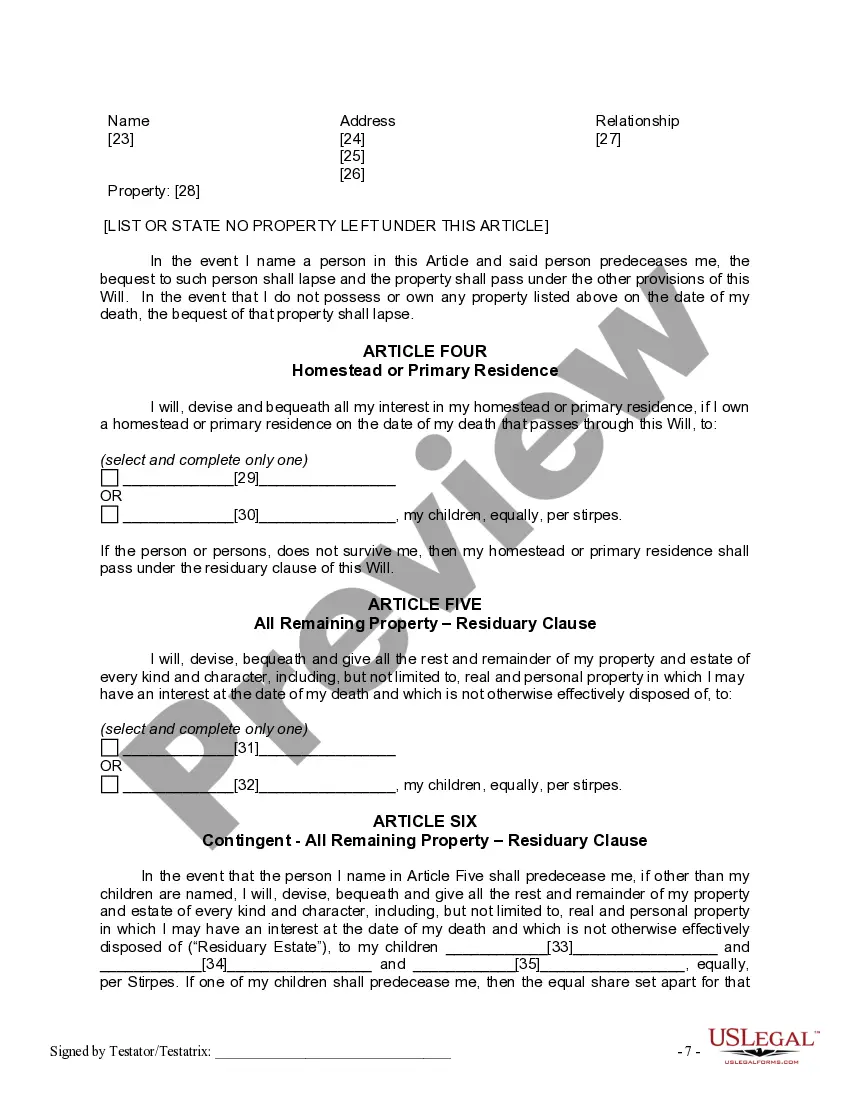
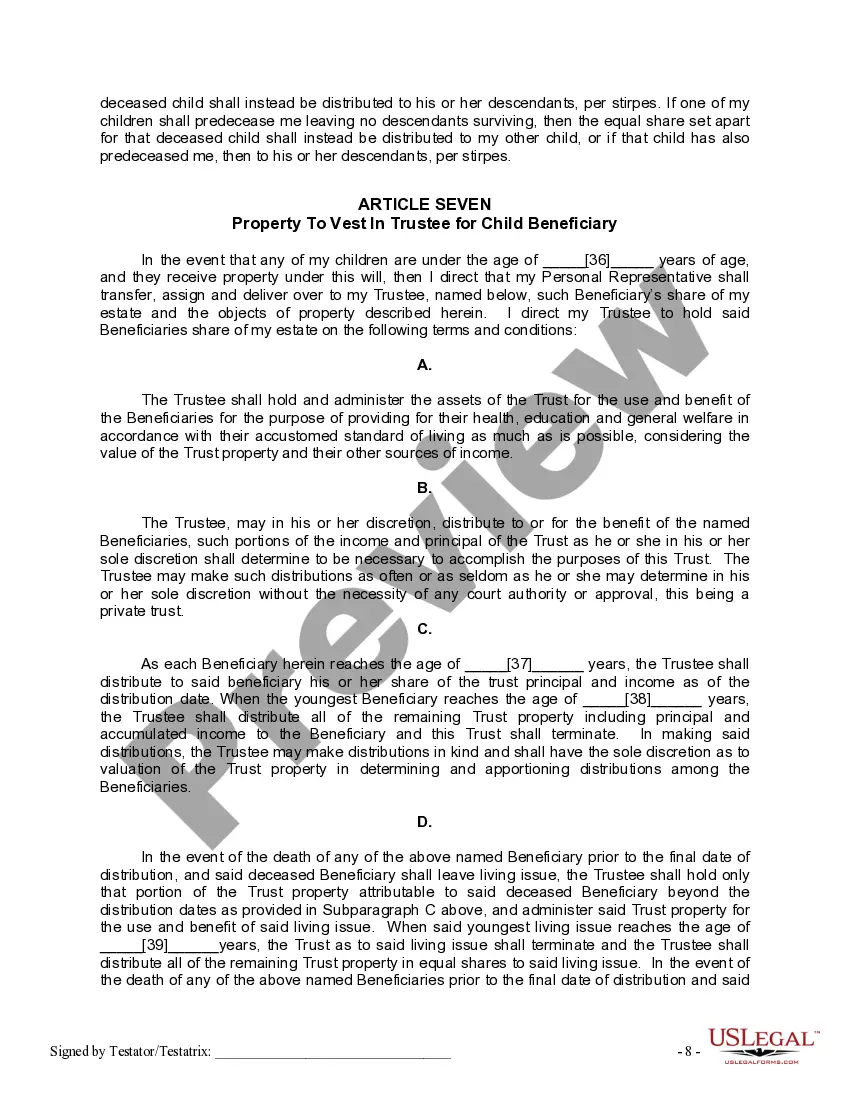
This form package contains two wills specifically designed for a man and woman living together but not married, who have minor children. It allows each partner to make mutual wills, enabling them to leave their property to one another while also ensuring provisions are made for their minor children. This form is particularly useful for couples without legal marriages who still wish to secure their family's future.
Key components of this form
- Identification of the testator and their residence.
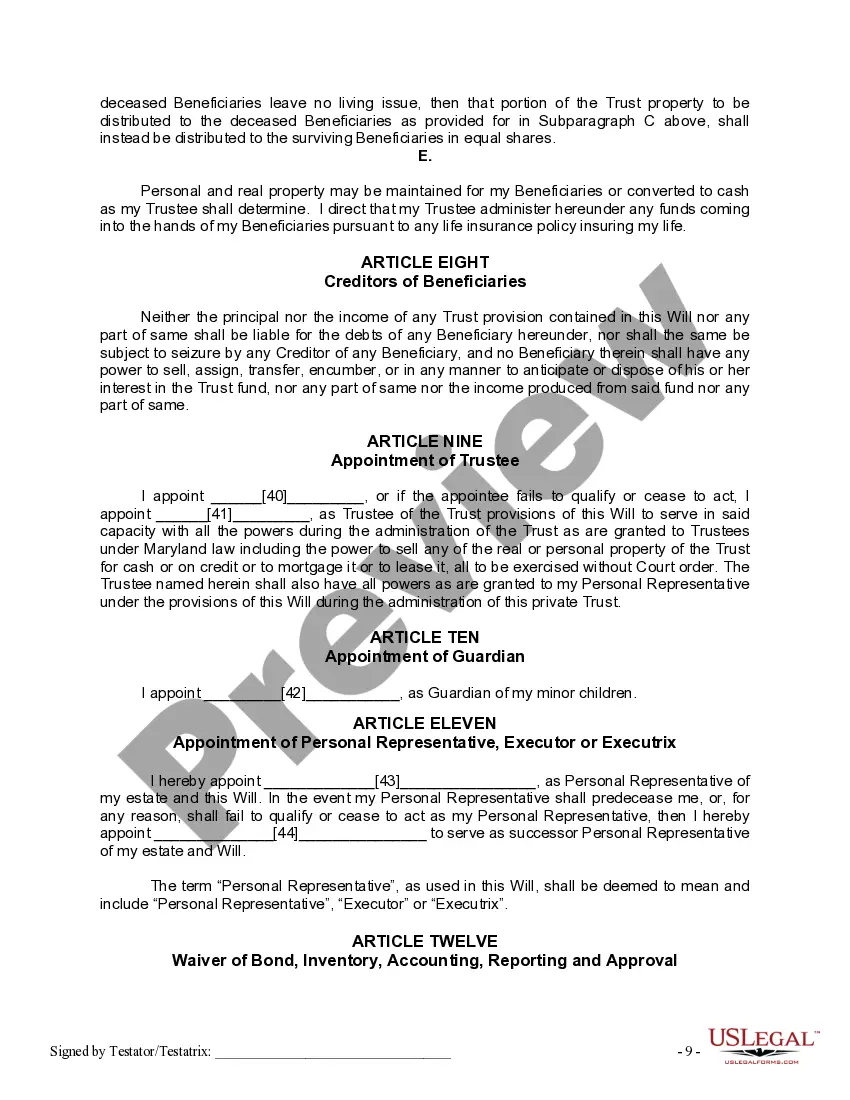
- Appointment of guardians for minor children.
- Specific bequests, including property and belongings.
- Provisions for debts and funeral expenses.
- Instructions for the management of trust for child beneficiaries.
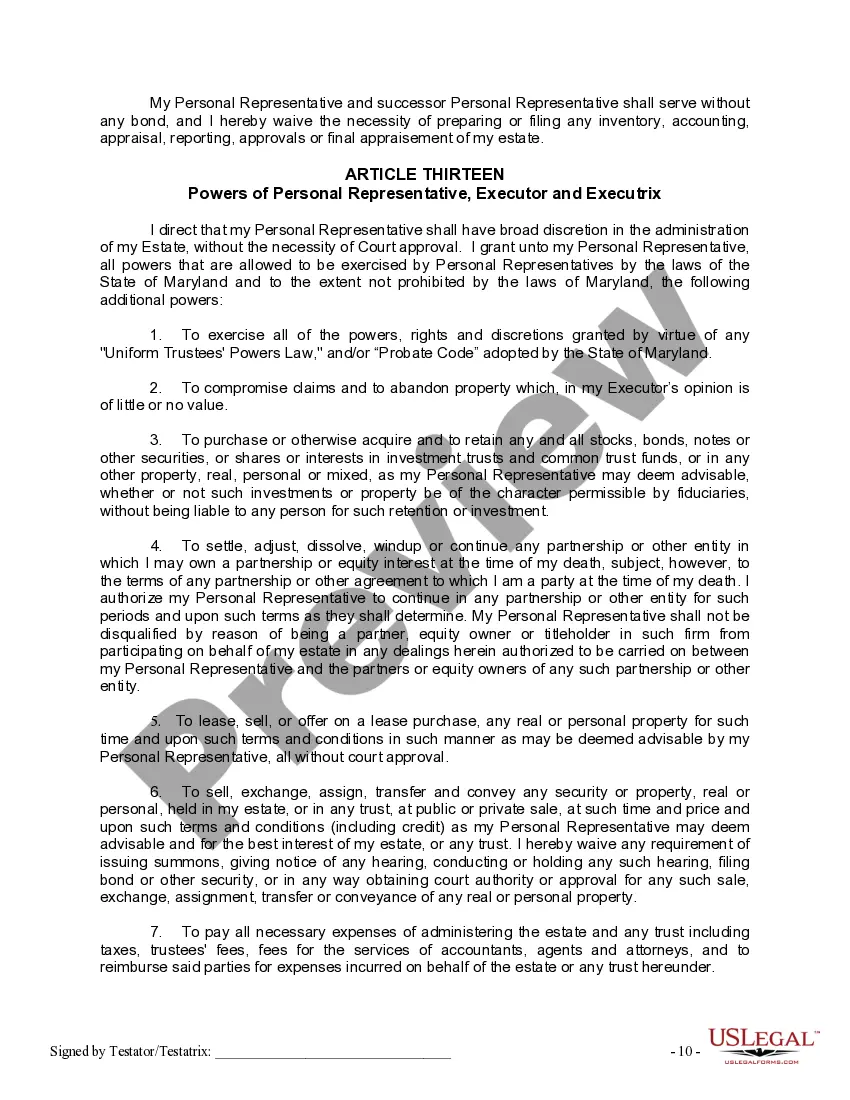
- Eligibility and appointment of a personal representative.



When to use this document
This form should be used when an unmarried couple living together wants to ensure their mutual intentions regarding property distribution upon death, particularly when they have minor children. It's essential when aiming to designate a guardian for those children and manage inheritance clearly and legally.
Who needs this form
- Couples living together and not married.
- Parents with minor children who need to secure their future.
- Individuals looking to clarify property distribution after death.
- Those wanting to designate guardianship for their children without marital status implications.
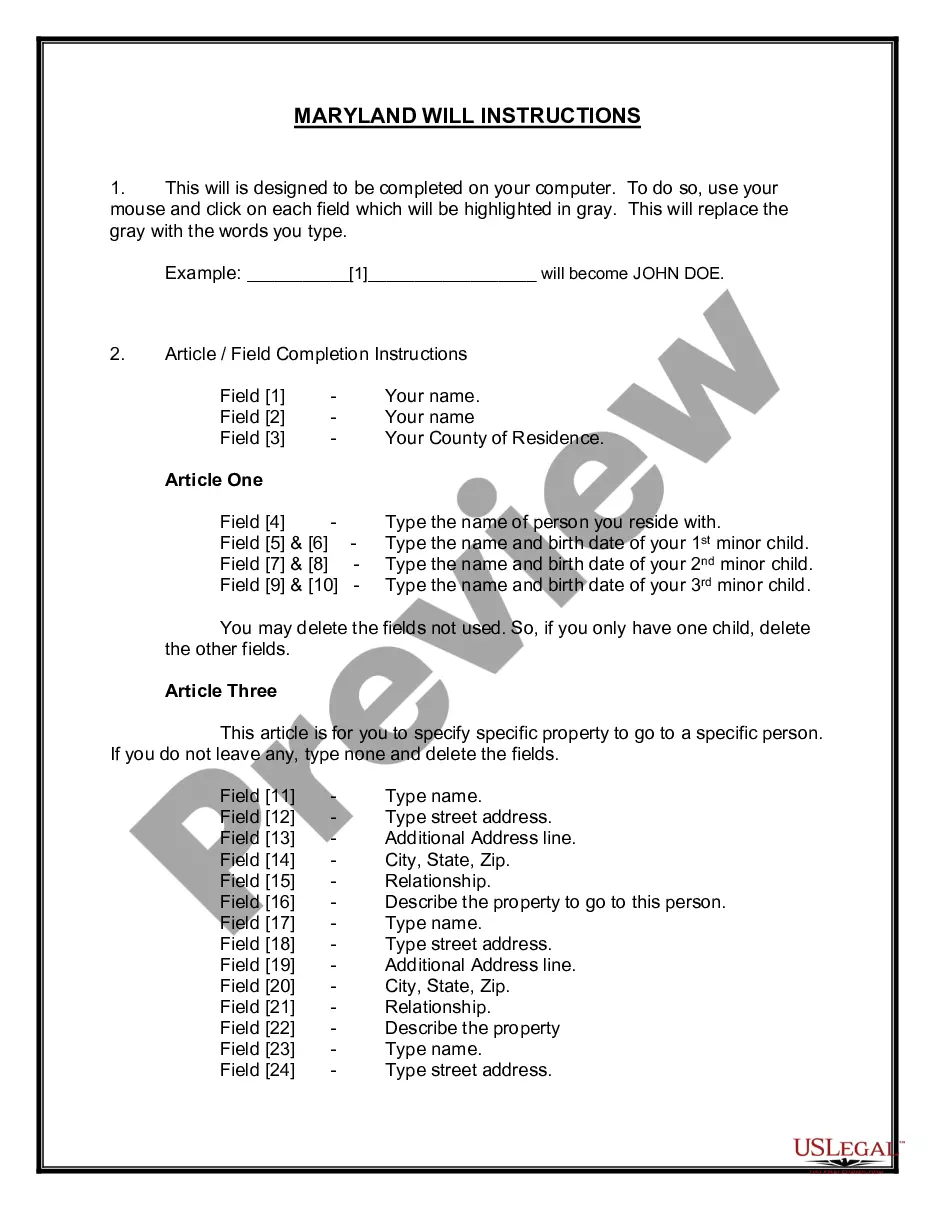
Instructions for completing this form
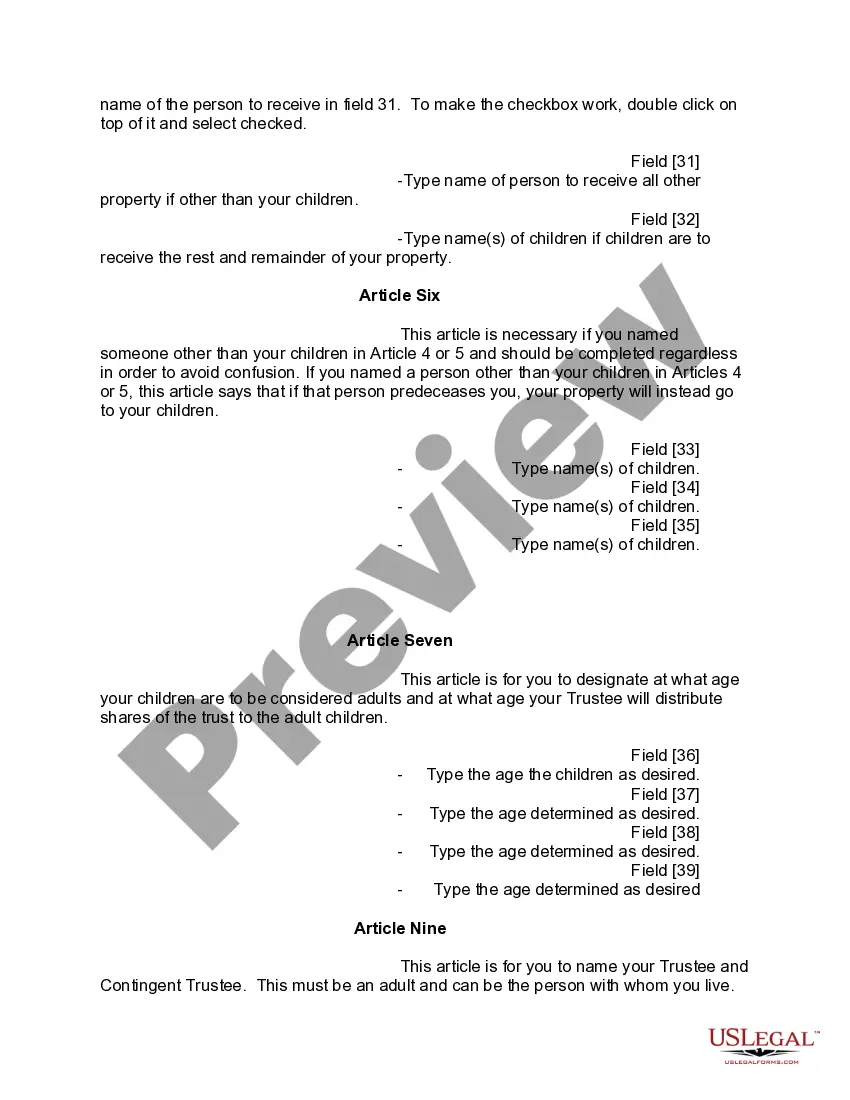
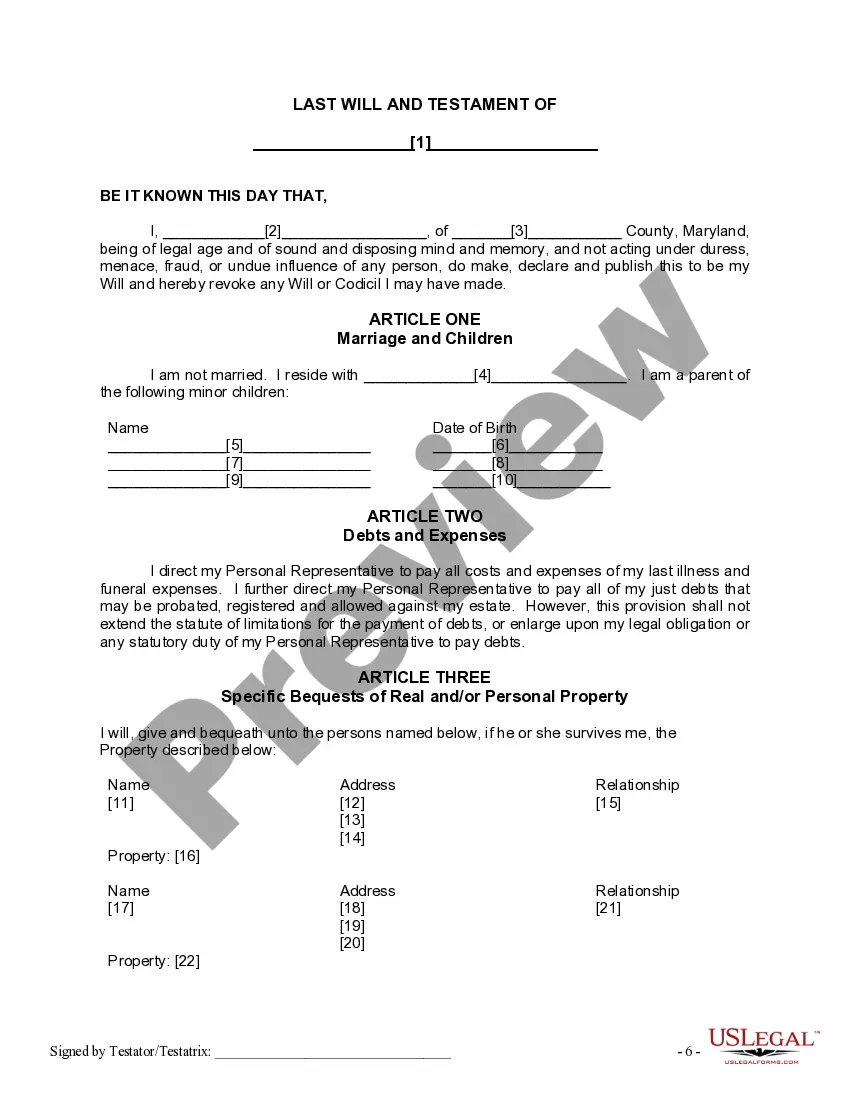
- Identify the parties involved by entering their names and county of residence.
- List the names and dates of birth of any minor children.
- Specify any debts and funeral expenses that should be covered.
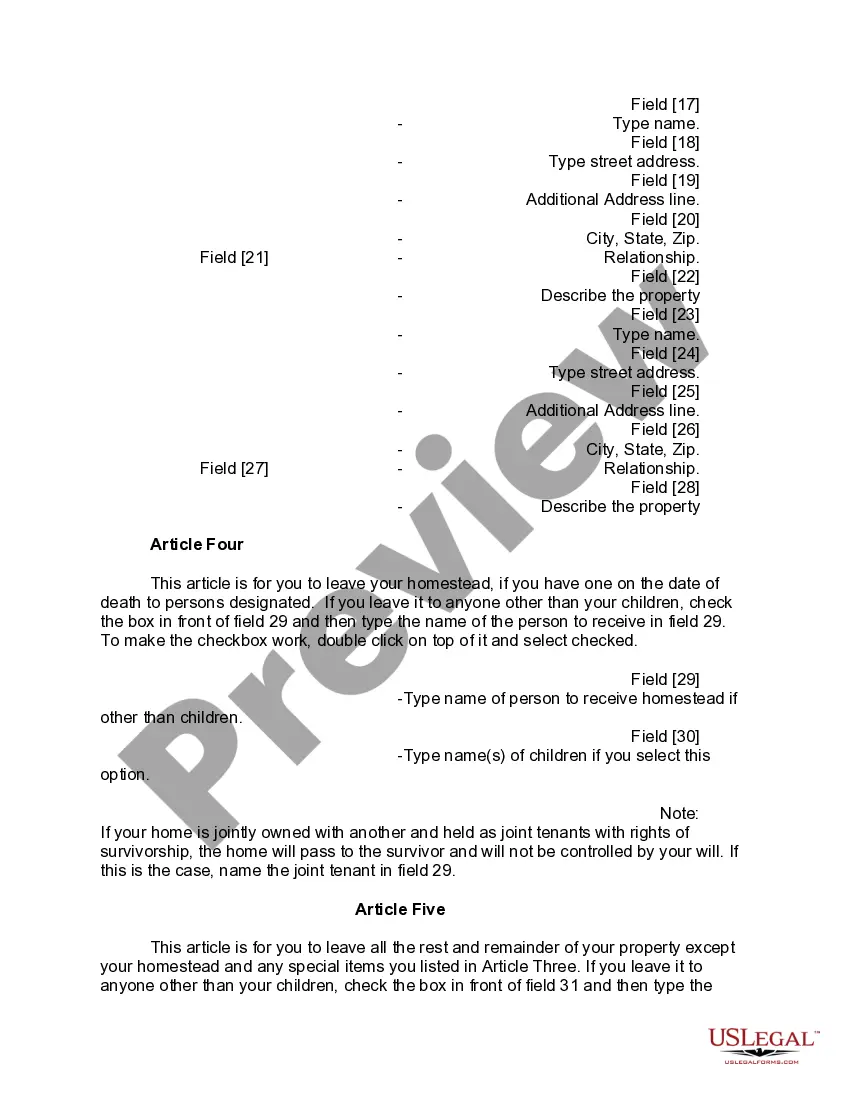
- Detail specific bequests by entering the names, addresses, and relationships of beneficiaries.
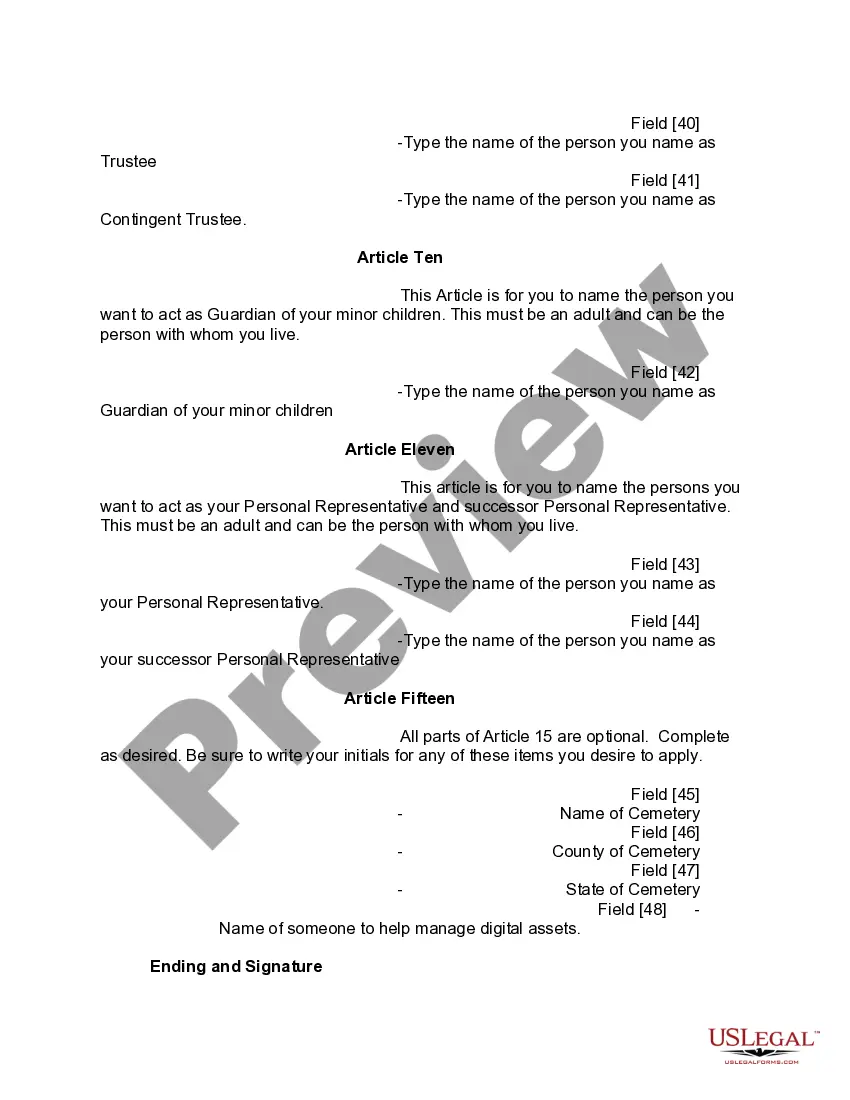
- Designate a personal representative and a guardian for minor children.
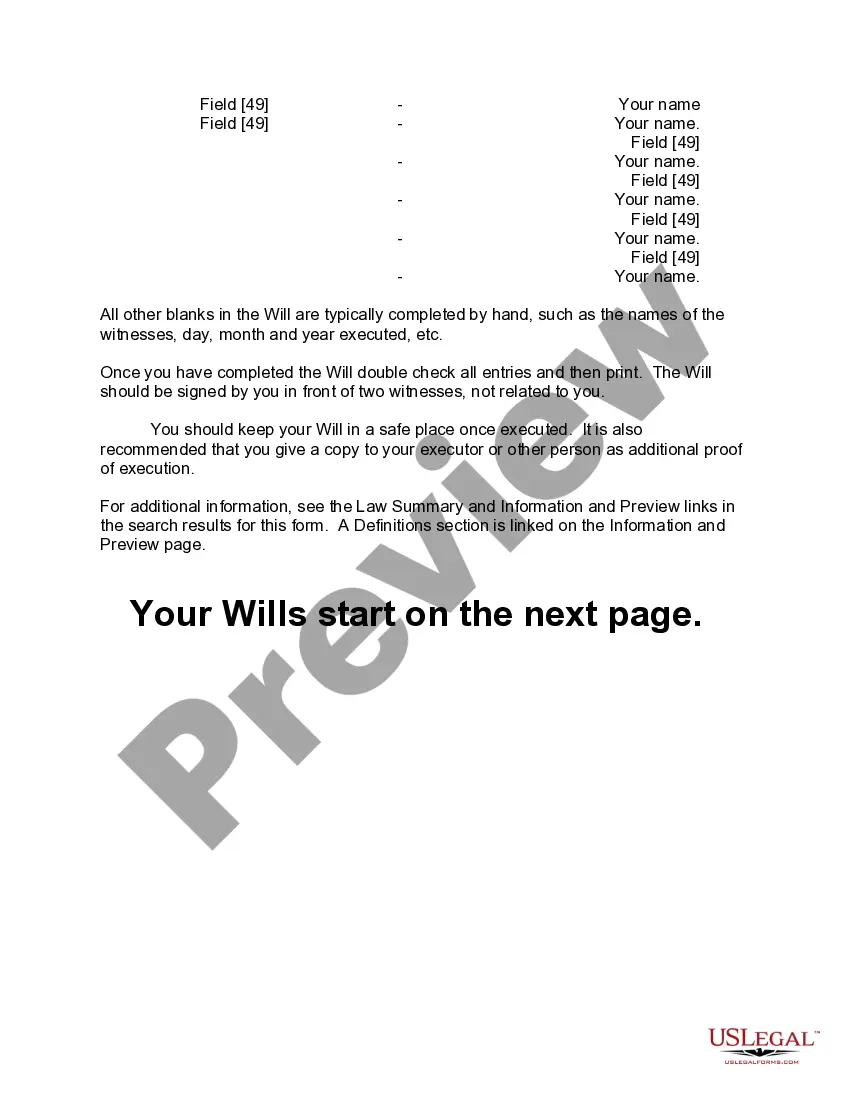
- Sign the document in the presence of two witnesses and complete any notarization required.
Does this form need to be notarized?
Yes, this form must be notarized to be legally valid. This ensures that the wills are recognized by the state and meet legal requirements. US Legal Forms offers integrated online notarization service, making it convenient and secure to complete the process without needing to travel.
Get your form ready online
Our built-in tools help you complete, sign, share, and store your documents in one place.
Make edits, fill in missing information, and update formatting in US Legal Forms—just like you would in MS Word.
Download a copy, print it, send it by email, or mail it via USPS—whatever works best for your next step.
Sign and collect signatures with our SignNow integration. Send to multiple recipients, set reminders, and more. Go Premium to unlock E-Sign.
If this form requires notarization, complete it online through a secure video call—no need to meet a notary in person or wait for an appointment.
We protect your documents and personal data by following strict security and privacy standards.

Make edits, fill in missing information, and update formatting in US Legal Forms—just like you would in MS Word.

Download a copy, print it, send it by email, or mail it via USPS—whatever works best for your next step.

Sign and collect signatures with our SignNow integration. Send to multiple recipients, set reminders, and more. Go Premium to unlock E-Sign.

If this form requires notarization, complete it online through a secure video call—no need to meet a notary in person or wait for an appointment.

We protect your documents and personal data by following strict security and privacy standards.
Common mistakes to avoid
- Failing to have the wills signed in front of two non-related witnesses.
- Neglecting to update the forms if family circumstances change (new children, marriage, etc.).
- Forgetting to specify guardianship for minor children.
- Not adequately identifying all property and beneficiaries.
Why use this form online
- Easy access to professionally drafted legal documents tailored for specific situations.
- Ability to instantly download and edit the forms to suit your needs.
- Clear instructions that simplify the often complex legal process.
Quick recap
- This Mutual Wills package is essential for unmarried couples with minor children wishing to secure their assets.
- Proper execution with witnesses and notarization is crucial for legal validity.
- Customizing the will to reflect individual wishes can help prevent misunderstandings among beneficiaries.
Looking for another form?

Form popularity
FAQ
Maryland law requires that your will be in writing, signed by the testator (you) and witnessed by two individuals in the testator's presence. This is called "executing a will." When you are ready to execute your will, you should have at least two witnesses, although three is better.
Create the initial document. Start by titling the document Last Will and Testament" and including your full legal name and address. Designate an executor. Appoint a guardian. Name the beneficiaries. Designate the assets. Ask witnesses to sign your will. Store your will in a safe place.
Is a holographic (handwritten) Will legal in Maryland ? Yes, if it complies with Maryland Law.
As long as it was properly signed and witnessed by two adult independent witnesses who are present at the time you sign your will, it should be legally binding.Using the wrong wording could mean that your instructions aren't followed, or even that your will isn't valid.
What Makes a Handwritten Will Legally Binding? A written will is valid if it is: (1) in writing; (2) signed by the testator, i.e., the person making the will; and (3) signed by at least two witnesses who saw the testator sign the will or acknowledge the signature on the will.
No, in Maryland, you do not need to notarize your will to make it legal. Maryland does allow you to make your will "self-proving," which speeds up probate because the court can accept the will without contacting the witnesses who signed it.
There are four main requirements to the formation of a valid will: The will must have been executed with testamentary intent;The will must have been executed free of fraud, duress, undue influence or mistake; and. The will must have been duly executed through a proper ceremony.
Do I need an attorney to prepare my will? No, you aren't required to hire a lawyer to prepare your will, though an experienced lawyer can provide useful advice on estate-planning strategies such as living trusts.