Loan Plan for Key Employees
What is this form?
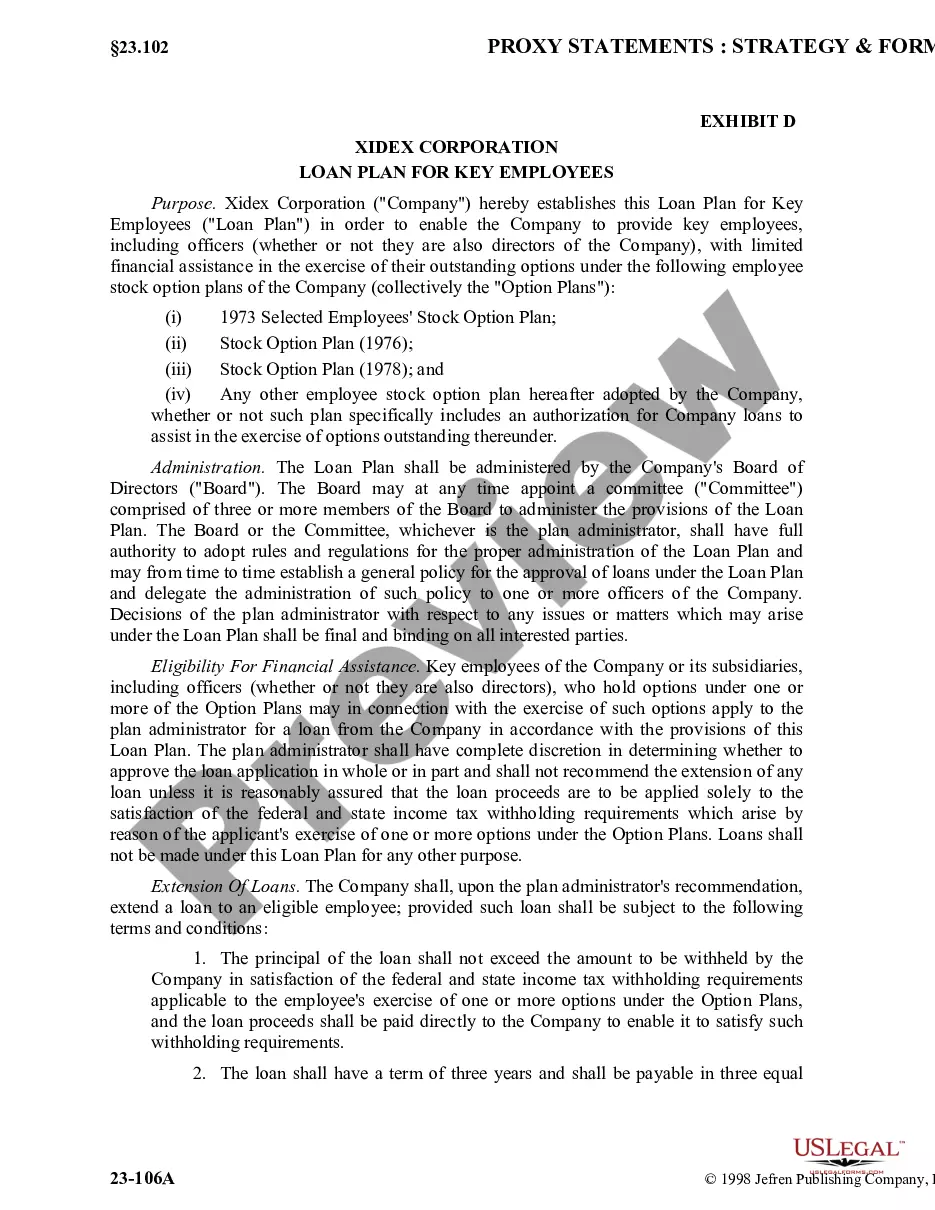
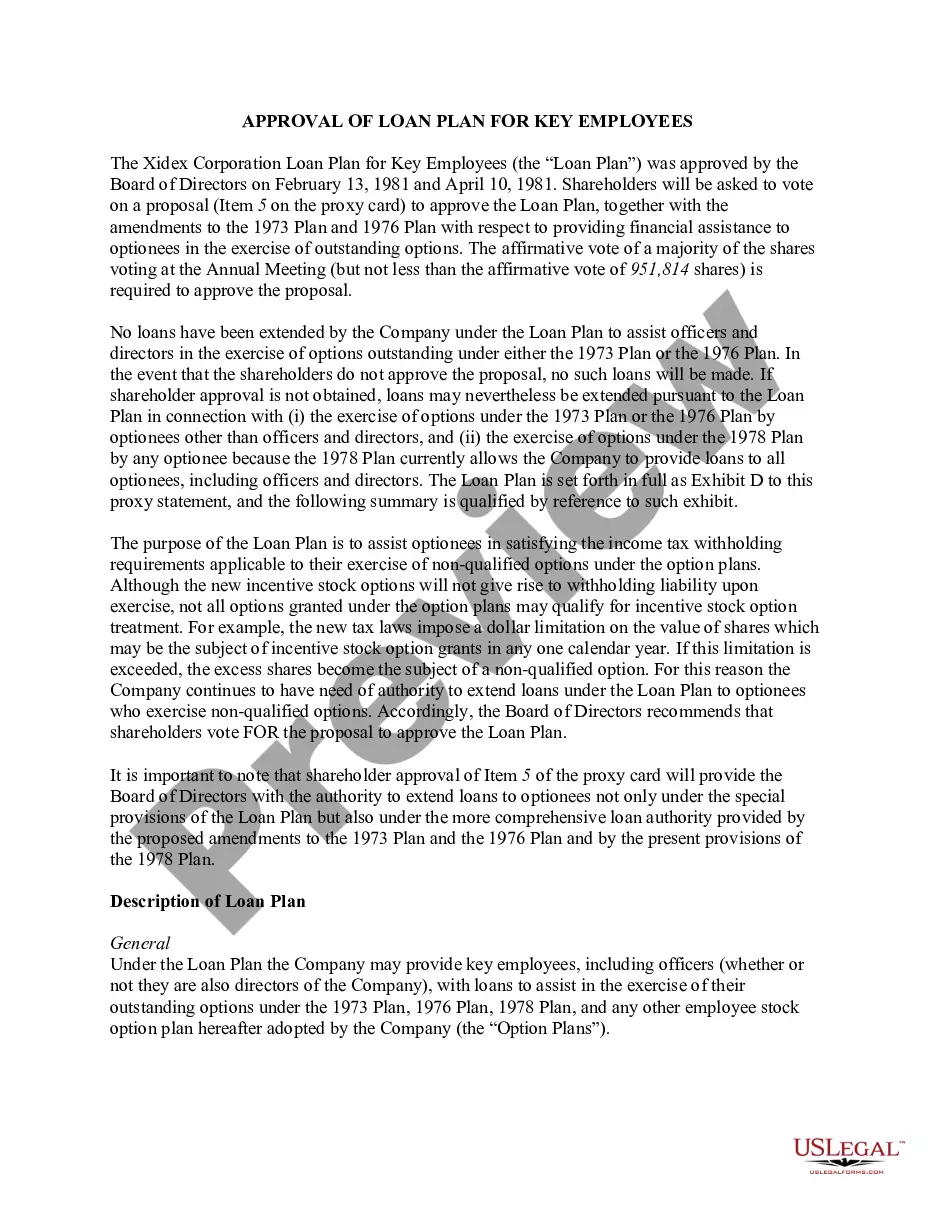
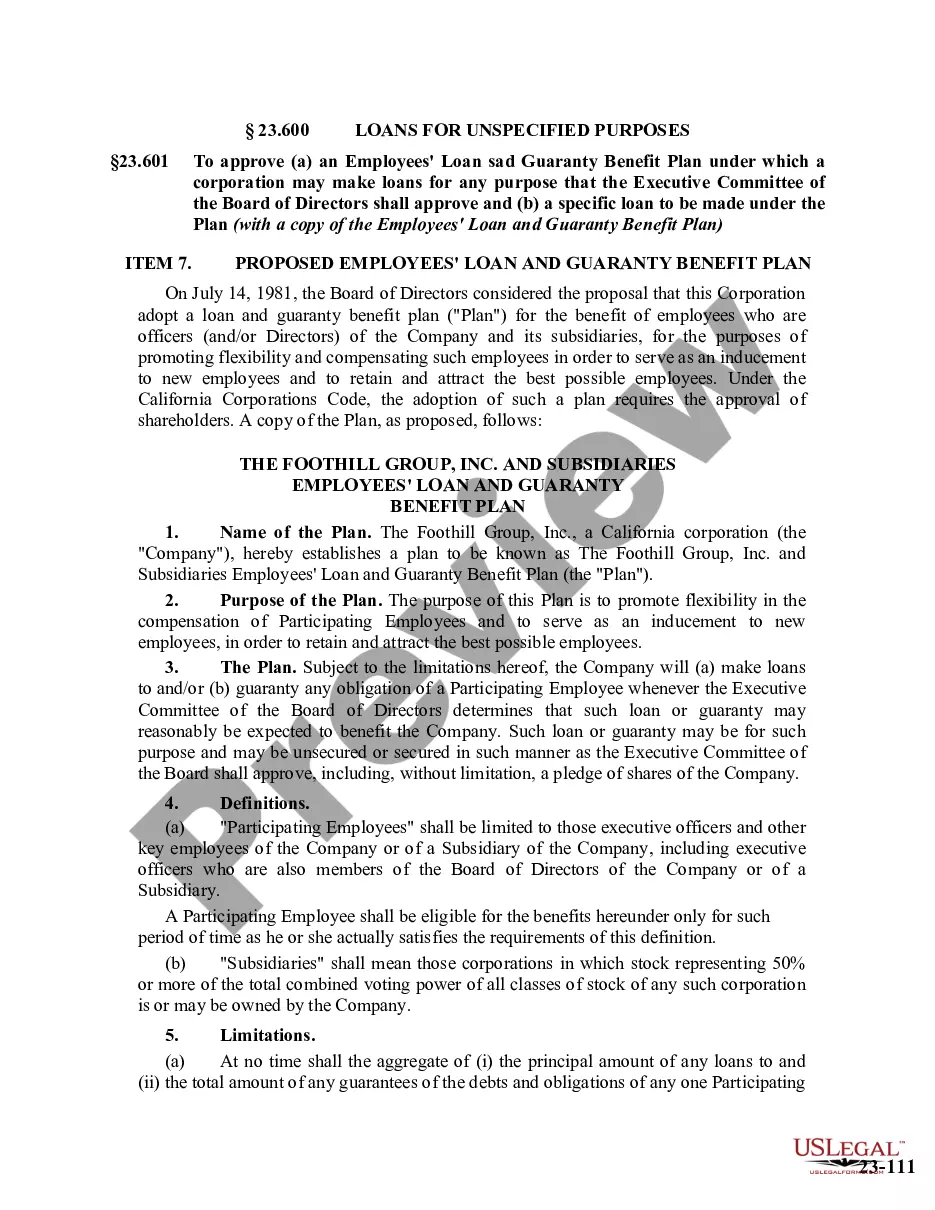
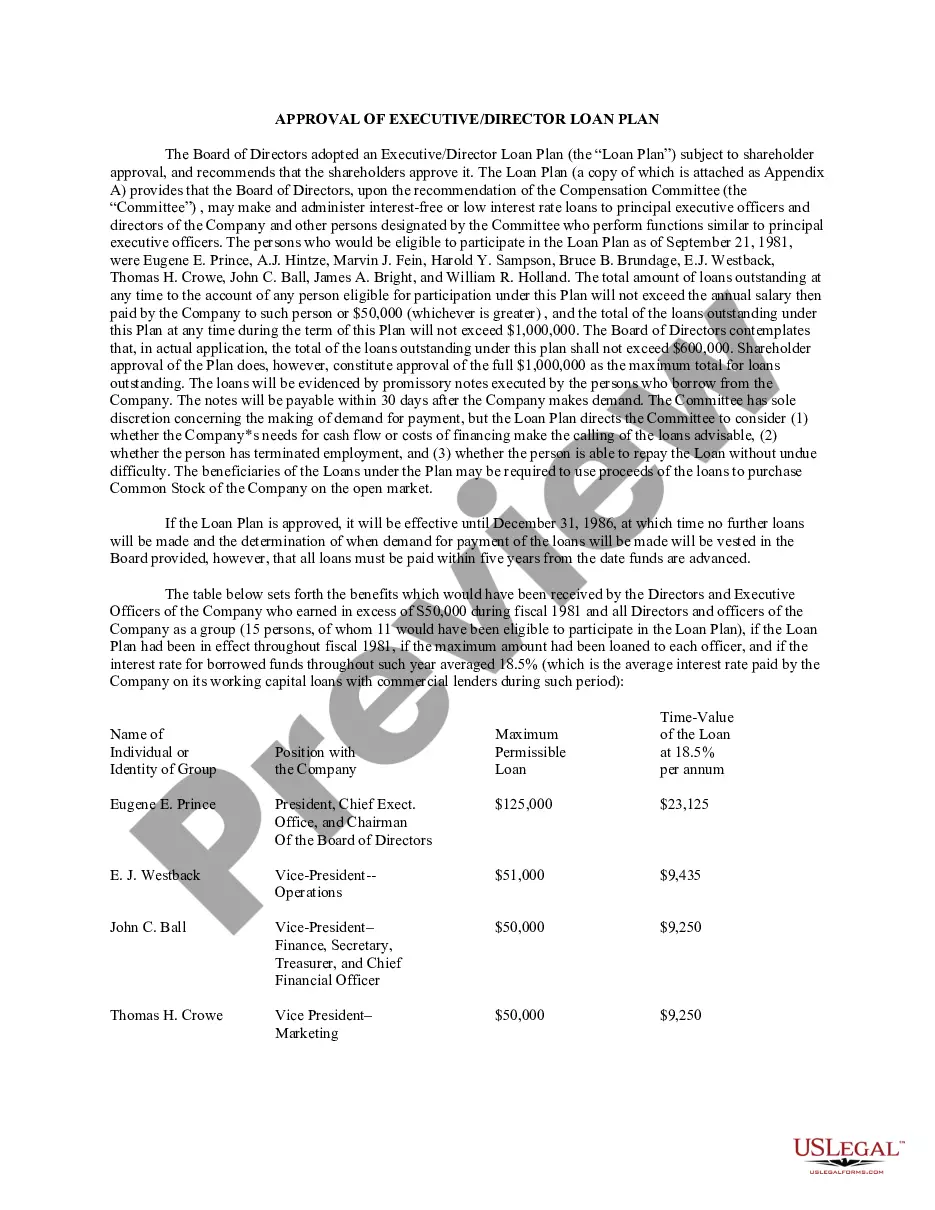
The Loan Plan for Key Employees is a legal document that outlines a structured financing program designed to assist key employees of a corporation in exercising their stock options. Unlike standard loan agreements, this document is specifically tailored for use within corporate contexts, providing detailed terms under which loans can be granted to help employees cover tax withholding requirements associated with their stock options.
Main sections of this form
- Purpose of the loan plan, establishing financial assistance for key employees.
- Administration details, outlining how the plan is managed by the Board of Directors or a designated committee.
- Eligibility criteria for key employees to apply for a loan.
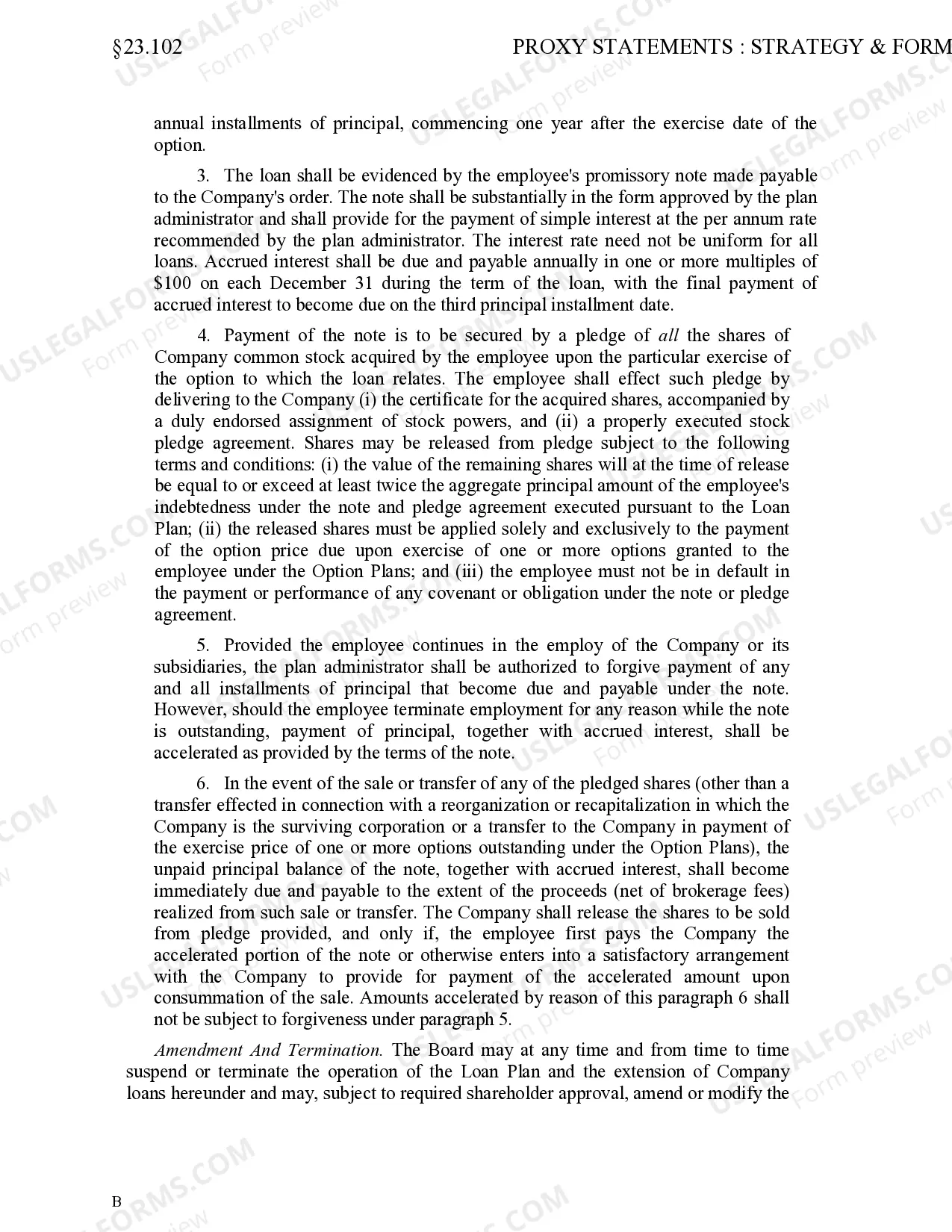
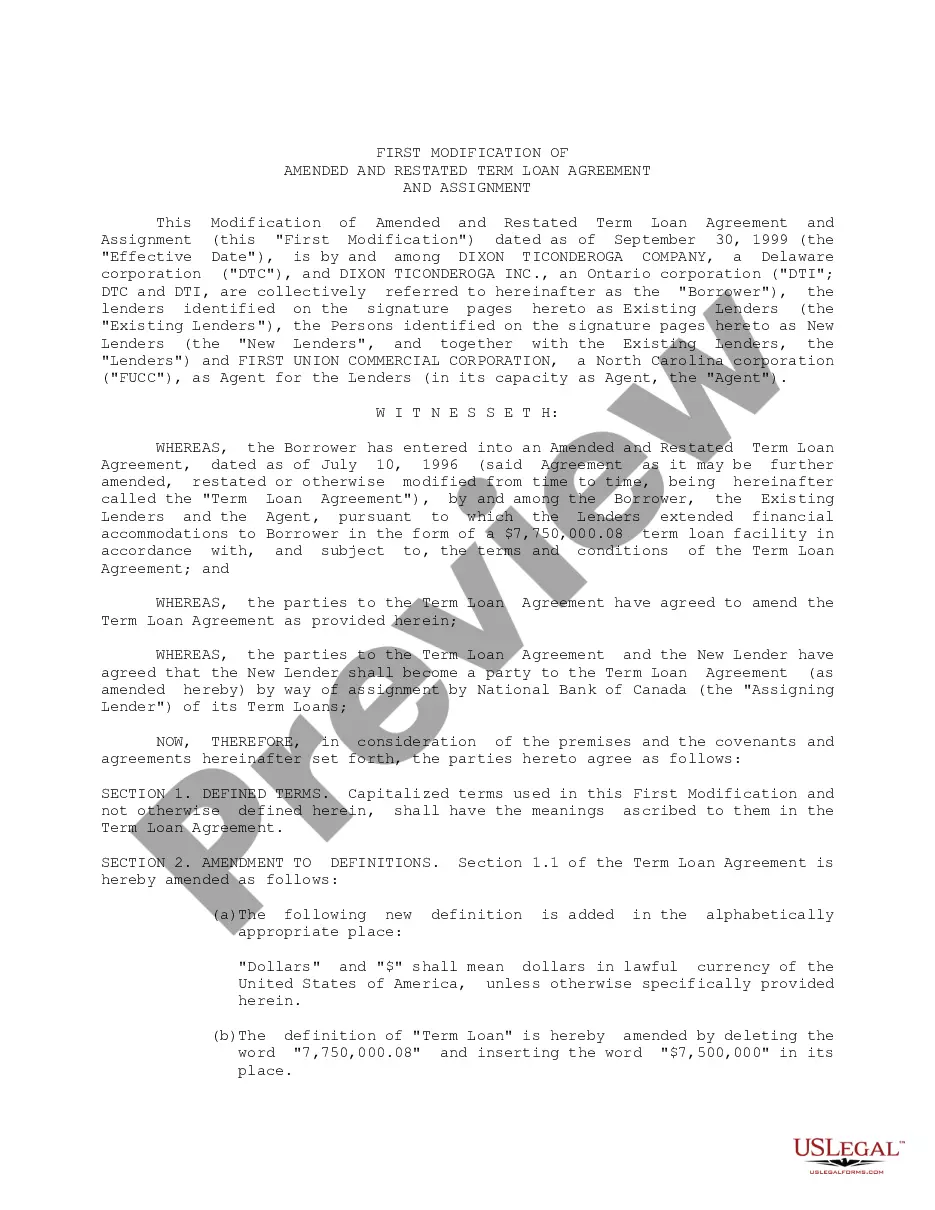
- Terms for loan extension, including principal amount, repayment schedule, and interest rates.
- Conditions for loan forgiveness based on continued employment.
- Amendment and termination provisions allowing changes to the plan by the Board.

When to use this document
This form is needed when a corporation decides to provide financial assistance to its key employees, particularly in relation to exercising stock options. It is particularly useful when employees require funding for tax withholding obligations tied to option exercises, ensuring they can take full advantage of their stock options without unanticipated financial burdens.
Intended users of this form
This form is intended for:
- Key employees of a corporation, including officers and potentially directors.
- Corporations implementing a loan plan to assist key employees with stock option exercises.
- Human resources departments managing employee benefits related to stock options.
- Legal professionals drafting or reviewing corporate loan agreements for employee benefits.
How to prepare this document
- Identify the corporation and key employees eligible for the loan program.
- Specify the loan amount necessary to cover tax withholding for stock options.
- Detail the loan terms, including repayment schedule and interest rates.
- Document the security for the loan through a stock pledge agreement.
- Establish provisions for loan forgiveness based on employment status.
Does this form need to be notarized?
Notarization is generally not required for this form. However, certain states or situations might demand it. You can complete notarization online through US Legal Forms, powered by Notarize, using a verified video call available anytime.
Get your form ready online
Our built-in tools help you complete, sign, share, and store your documents in one place.
Make edits, fill in missing information, and update formatting in US Legal Forms—just like you would in MS Word.
Download a copy, print it, send it by email, or mail it via USPS—whatever works best for your next step.
Sign and collect signatures with our SignNow integration. Send to multiple recipients, set reminders, and more. Go Premium to unlock E-Sign.
If this form requires notarization, complete it online through a secure video call—no need to meet a notary in person or wait for an appointment.
We protect your documents and personal data by following strict security and privacy standards.

Make edits, fill in missing information, and update formatting in US Legal Forms—just like you would in MS Word.

Download a copy, print it, send it by email, or mail it via USPS—whatever works best for your next step.

Sign and collect signatures with our SignNow integration. Send to multiple recipients, set reminders, and more. Go Premium to unlock E-Sign.

If this form requires notarization, complete it online through a secure video call—no need to meet a notary in person or wait for an appointment.

We protect your documents and personal data by following strict security and privacy standards.
Common mistakes to avoid
- Failing to accurately determine loan amounts needed for tax withholding.
- Not clearly defining eligibility requirements for employees seeking loans.
- Omitting details about repayment terms and interest rates.
- Neglecting to include necessary documentation for loan security (e.g., stock pledge agreement).
- Overlooking amendment clauses when changes to the plan are required.
Advantages of online completion
- Easy access to a customizable Loan Plan template drafted by legal professionals.
- Quick downloads facilitate immediate use and implementation in corporate settings.
- Reliable updates ensure compliance with current legal standards.
Legal use & context
- This Loan Plan is legally binding once signed by the authorized parties.
- It provides a framework for financial assistance that must align with corporate governance laws.
- Approved loan applications must only serve the designated tax withholding purposes.
Main things to remember
- The Loan Plan for Key Employees is essential for helping key corporate employees manage their stock option exercise costs.
- Eligibility and detailed terms significantly influence the effectiveness of this financial assistance program.
- Proper completion and adherence to the plan are critical to ensuring compliance and protecting both the employee and the corporation.
Looking for another form?





Form popularity
FAQ
You are a Key employee if you: Are an officer earning over $185,000 in 2020 (or $180,000 in 2019); or. Own more than 5% of the business; or. Own more than 1% of the business and earn over $150,000.
Key employee, in U.S. Internal Revenue Service (IRS) terminology, is an employee classification used when determining if company-sponsored qualified retirement plans, including 401(a) defined benefit plans and 401(k)s, are considered "top-heavy" or, in other words, weighted towards the company's more highly compensated
Under certain circumstances, an employer may deny job restoration to "key employees." A "key employee" is a salaried, FMLA-eligible employee who is among the highest paid 10 percent of all the employees employed by the employer within 75 miles of the employee's worksite.
A key employee is an employee with major ownership and/or decision-making role in the business. Key employees are usually highly compensated either monetarily or with benefits, or both. Key employees may also receive special benefits as an incentive both to join the company and to stay with the company.
A true key employee has three critical qualities. He or she has a direct and significant impact on the value of the business. The employee's role in the company, responsibilities and decisions impact sales, profitability, growth, product development or another critical value driver in the business.
Stock Options. Stock options are a popular way to provide additional compensation for key employees, and you can tie these options to the business's success. Incentive and Deferred Compensation. Arranging Equity Participation. Supplemental Executive Retirement Plans. Golden Parachutes & Golden Parachute Tax.
A key employee is defined by the IRS as an employee, either living or dead, who meets one of the following three criteria: An officer making over $175,000 in 2018 or $180,000 in 2019 (the income threshold is indexed by the IRS and may increase each year);
The IRS defines a key employee as any employee (including former or deceased employees), who at any time during the plan year was: An officer making over $175,000 for 2017 and 2018. A 5% owner of the business (someone who owns more than 5% of the business)