Maryland Warranty Deed from Individual to Corporation
What is this form?
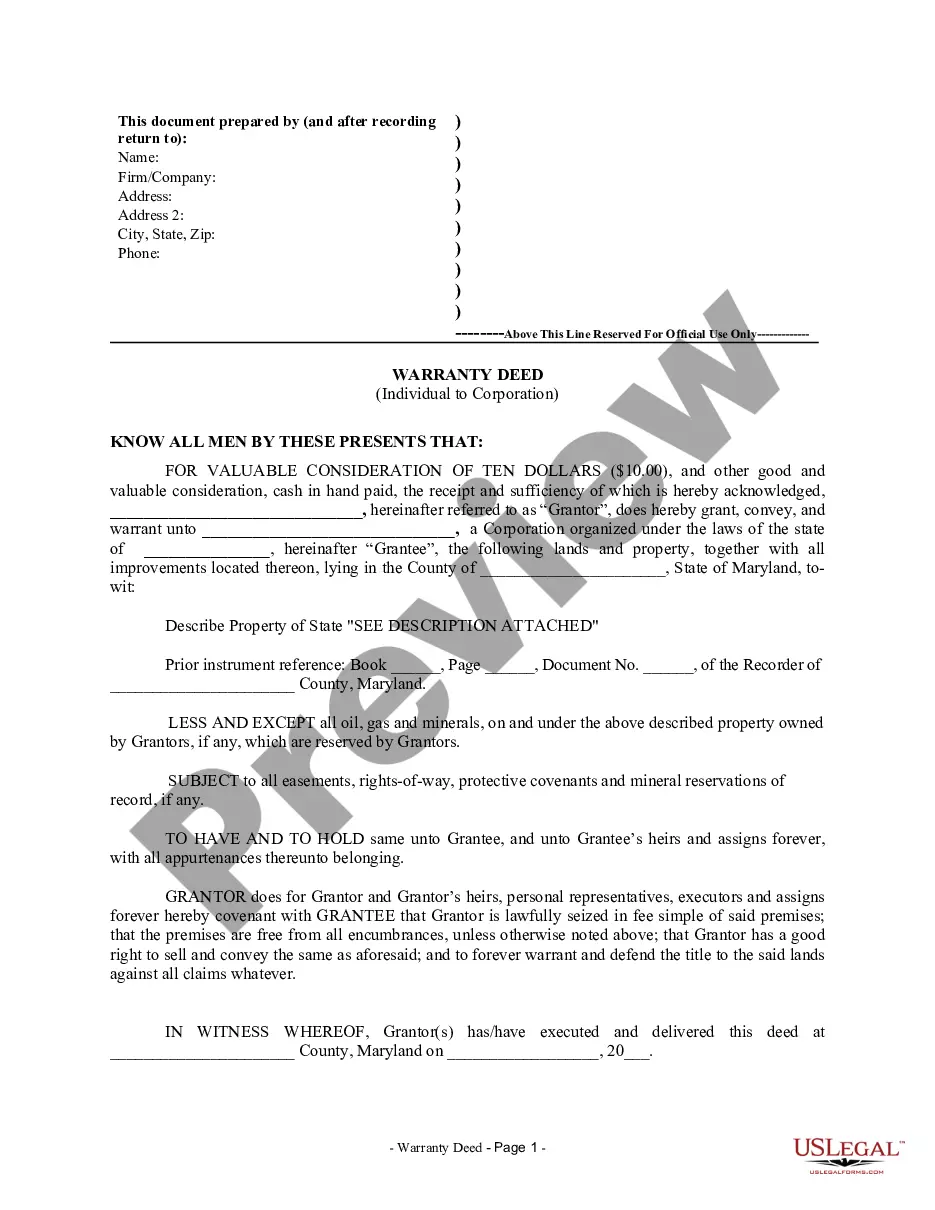
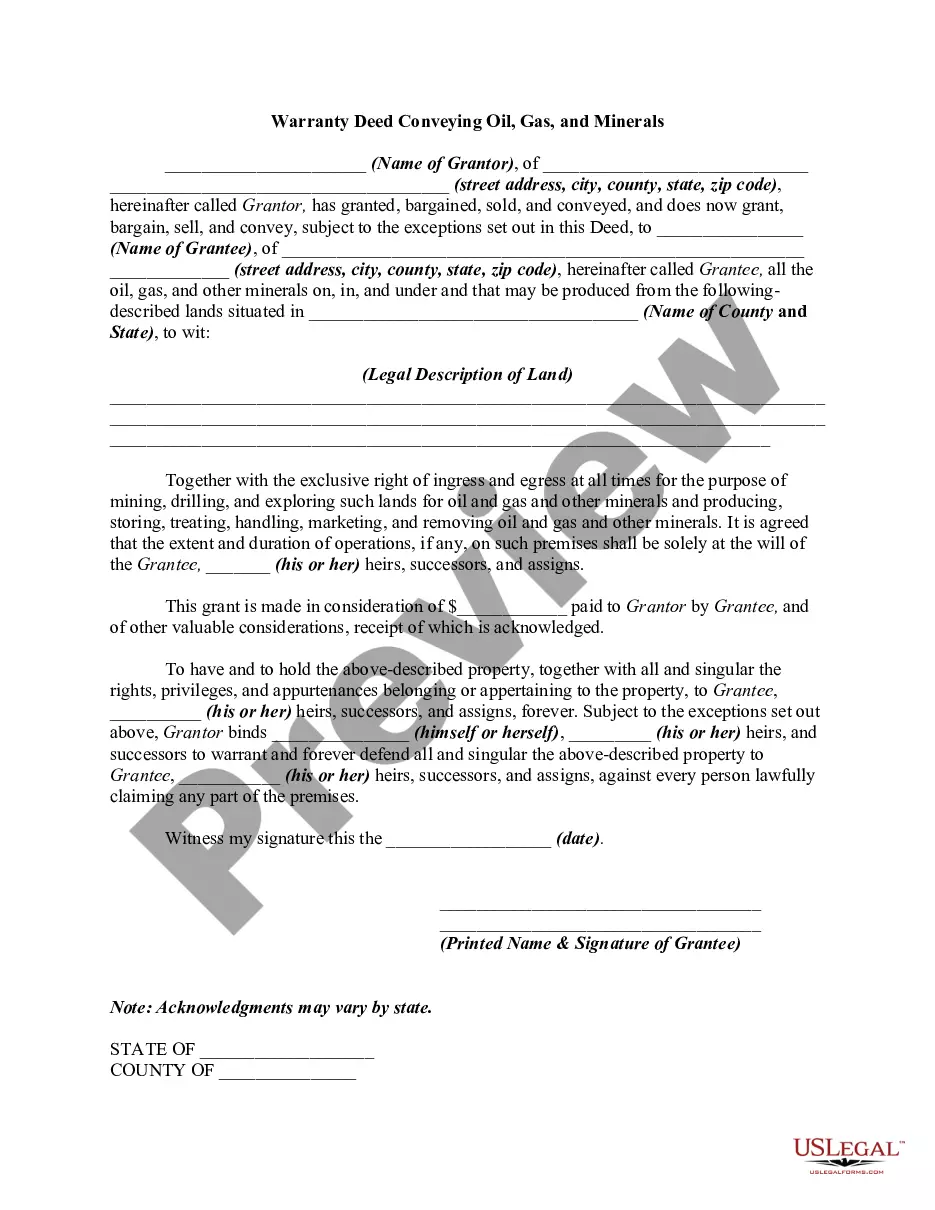
The Warranty Deed from Individual to Corporation is a legal document that facilitates the transfer of property ownership from an individual (grantor) to a corporation (grantee). This form not only conveys the title of the property but also ensures that the property is free from encumbrances, except for those specifically noted. Unlike other deed forms, this document includes explicit provisions regarding the reservation of oil, gas, and mineral rights, highlighting its importance in certain transactions.
Key parts of this document
- Description of the property being transferred.
- Prior instrument reference for record-keeping.
- Reservations of oil, gas, and mineral rights.
- Covenant of clear title from the grantor.
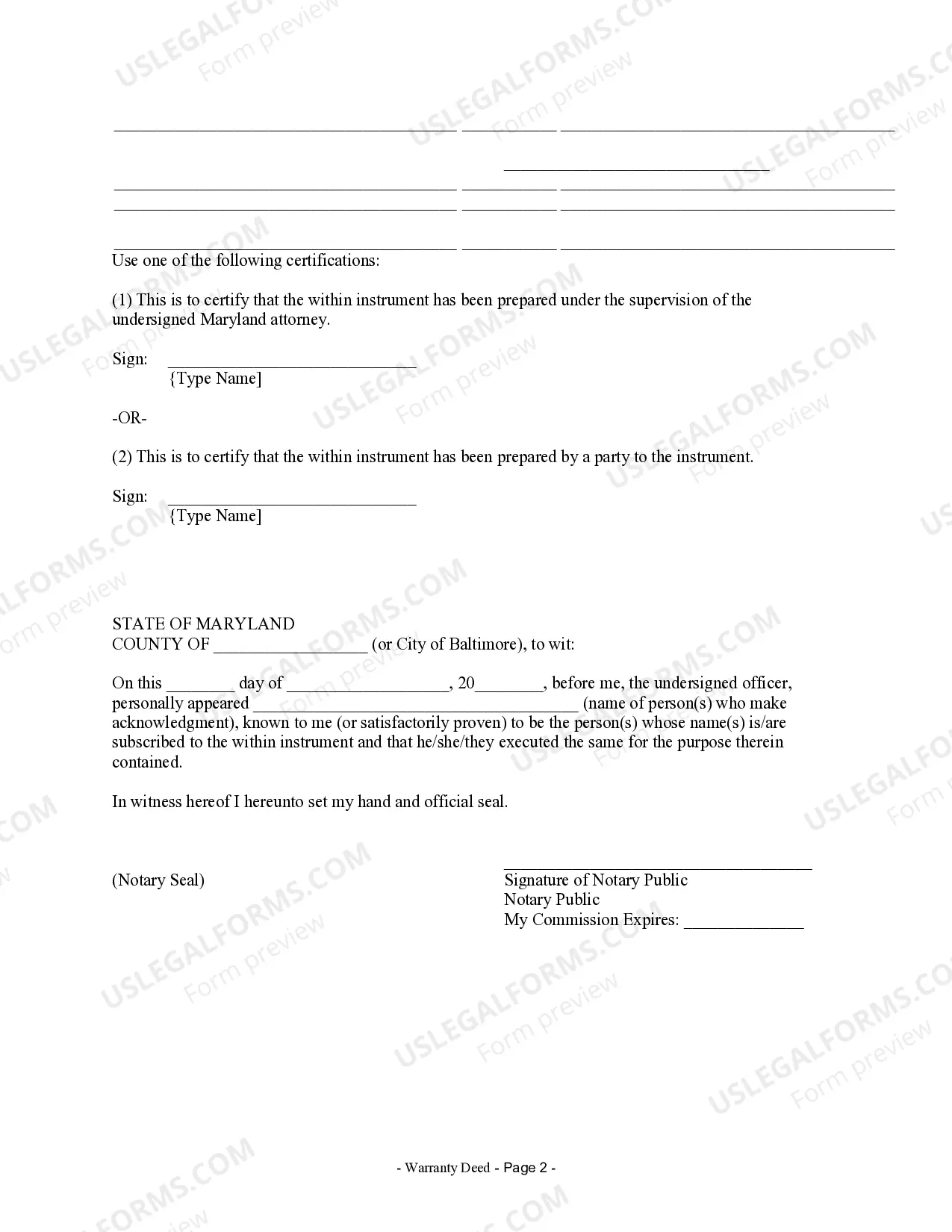
- Signatures of the grantor and notary public.
When this form is needed
This form is typically used when an individual wishes to transfer property ownership to a corporation. This situation may arise during business transactions, such as transferring personal property into a corporate entity for asset protection or operational flexibility. It is also relevant when individuals are forming a corporation and need to ensure proper title transfer for real estate used by the corporation.
Who needs this form
- Individuals looking to transfer property to a corporation.
- Business owners establishing a corporate entity with real estate assets.
- Legal representatives acting on behalf of an individual or corporation in property transactions.
Instructions for completing this form
- Identify the parties involved: the grantor (individual) and the grantee (corporation).
- Provide a detailed description of the property being transferred, including any prior instrument references.
- Include reservations for oil, gas, and mineral rights as applicable.
- Sign the deed in the presence of a notary public.
- Ensure the notary public completes their section to validate the document.
Does this form need to be notarized?
This document requires notarization to meet legal standards. US Legal Forms provides secure online notarization powered by Notarize, allowing you to complete the process through a verified video call, available 24/7.
Get your form ready online
Our built-in tools help you complete, sign, share, and store your documents in one place.
Make edits, fill in missing information, and update formatting in US Legal Forms—just like you would in MS Word.
Download a copy, print it, send it by email, or mail it via USPS—whatever works best for your next step.
Sign and collect signatures with our SignNow integration. Send to multiple recipients, set reminders, and more. Go Premium to unlock E-Sign.
If this form requires notarization, complete it online through a secure video call—no need to meet a notary in person or wait for an appointment.
We protect your documents and personal data by following strict security and privacy standards.

Make edits, fill in missing information, and update formatting in US Legal Forms—just like you would in MS Word.

Download a copy, print it, send it by email, or mail it via USPS—whatever works best for your next step.

Sign and collect signatures with our SignNow integration. Send to multiple recipients, set reminders, and more. Go Premium to unlock E-Sign.

If this form requires notarization, complete it online through a secure video call—no need to meet a notary in person or wait for an appointment.

We protect your documents and personal data by following strict security and privacy standards.
Common mistakes to avoid
- Failing to include the full legal description of the property.
- Not specifying the reservations for oil, gas, and mineral rights correctly.
- Omitting signatures or notary acknowledgment, which can render the deed invalid.
- Not checking for existing encumbrances before signing.
Benefits of using this form online
- Convenient access to the form anytime, allowing for easy completion and submission.
- Editable templates ensure that you can customize the document according to your specific needs.
- Assured reliability, with forms drafted by licensed attorneys.
- Efficient document storage and retrieval without the risk of losing paper copies.
Key takeaways
- The form is essential for transferring property from an individual to a corporation.
- It includes provisions for oil, gas, and mineral rights to protect the grantor's interests.
- Proper execution and notarization are critical to validate the deed.
Looking for another form?
Form popularity
FAQ
Special warranty deed -- warrants that the seller did nothing personally during his ownership of the property that would create a defect in the title to the property. This is the type of deed most often used in Maryland.
Discuss the terms of the deed with the new owners. Hire a real estate attorney to prepare the deed. Review the deed. Sign the deed in front of a notary public, with witnesses present. File the deed on public record.
A warranty deed guarantees that: The grantor is the rightful owner of the property and has the legal right to transfer the title.The title would withstand third-party claims to ownership of the property. The grantor will do anything to ensure the grantee's title to the property.
Retrieve your original deed. Get the appropriate deed form. Draft the deed. Sign the deed before a notary. Record the deed with the county recorder. Obtain the new original deed.
A special warranty deed to real estate offers protection to the buyer through the seller's guarantee that the title has been free and clear of encumbrances during their ownership of the property. It does not guarantee clear title beyond their ownership.
Typically, the only cost is between $25 and $55 to record the new deed and obtain a certificate from the city/county to show that all taxes are current. The deed should be notarized and must be prepared by one of the parties or under the supervision of a Maryland attorney.
To change the names on a real estate deed, you will need to file a new deed with the Division of Land Records in the Circuit Court for the county where the property is located. The clerk will record the new deed.
A consenting individual may be removed from a deed by filing a quitclaim deed. Under Maryland law each county has a separate procedure and requirements for filing a quitclaim deed.
It will not protect against title issues that arose prior to the time the seller took occupancy. Consequently, it offers less protection to buyers, and more protection to sellers, than a general warranty deed, which is the most common option for selling or buying a property.