Massachusetts Site Designation Supplement to Master Lease and Sublease Agreement
What is this form?
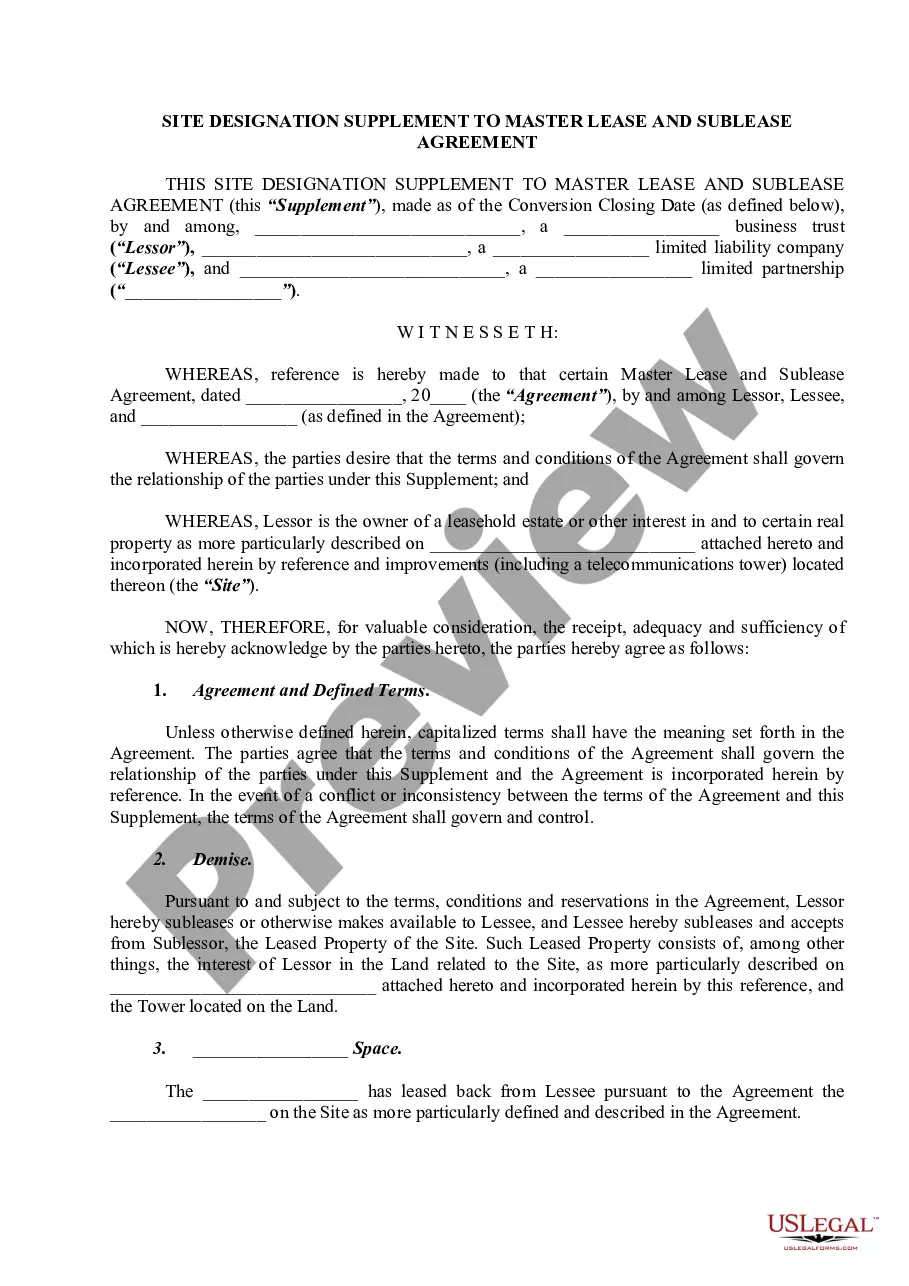
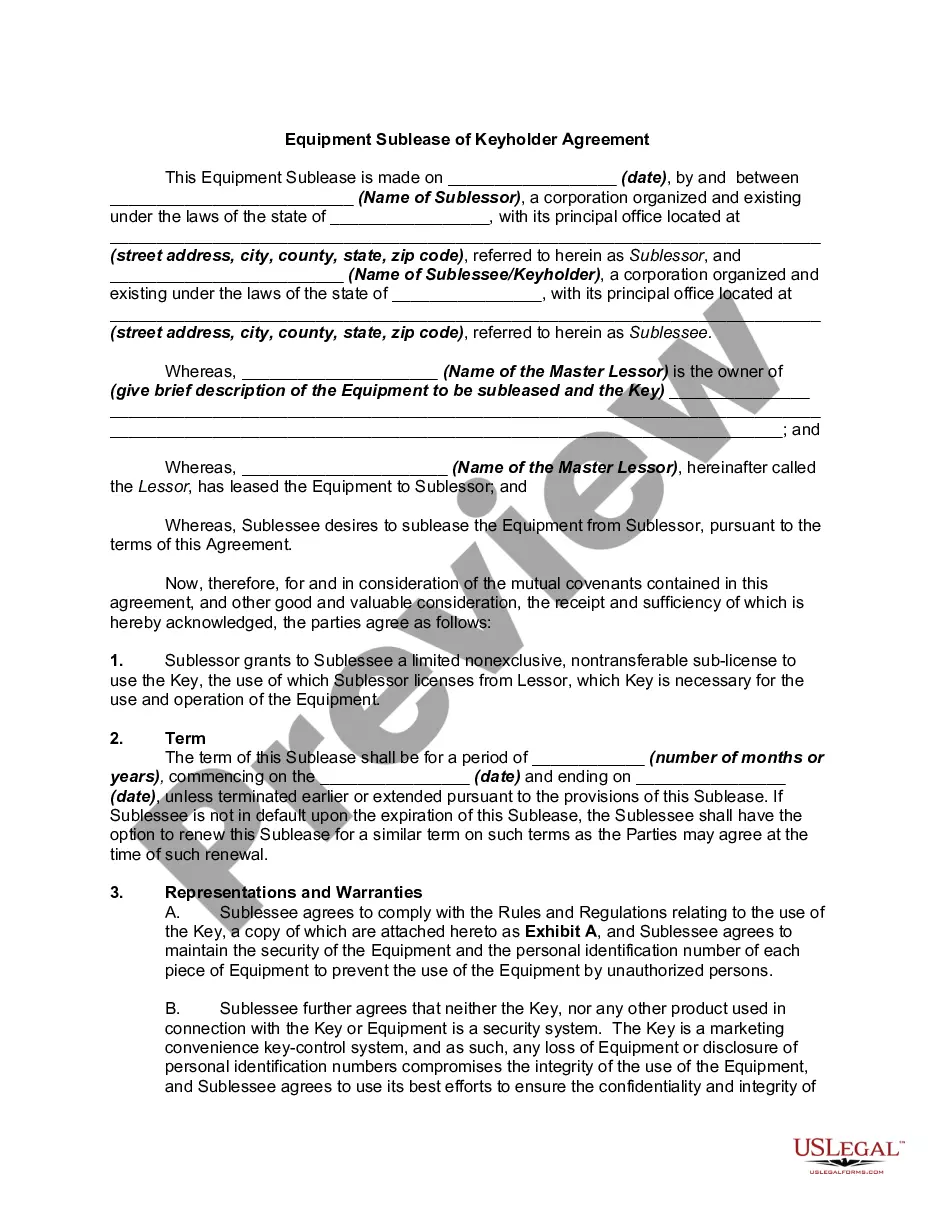
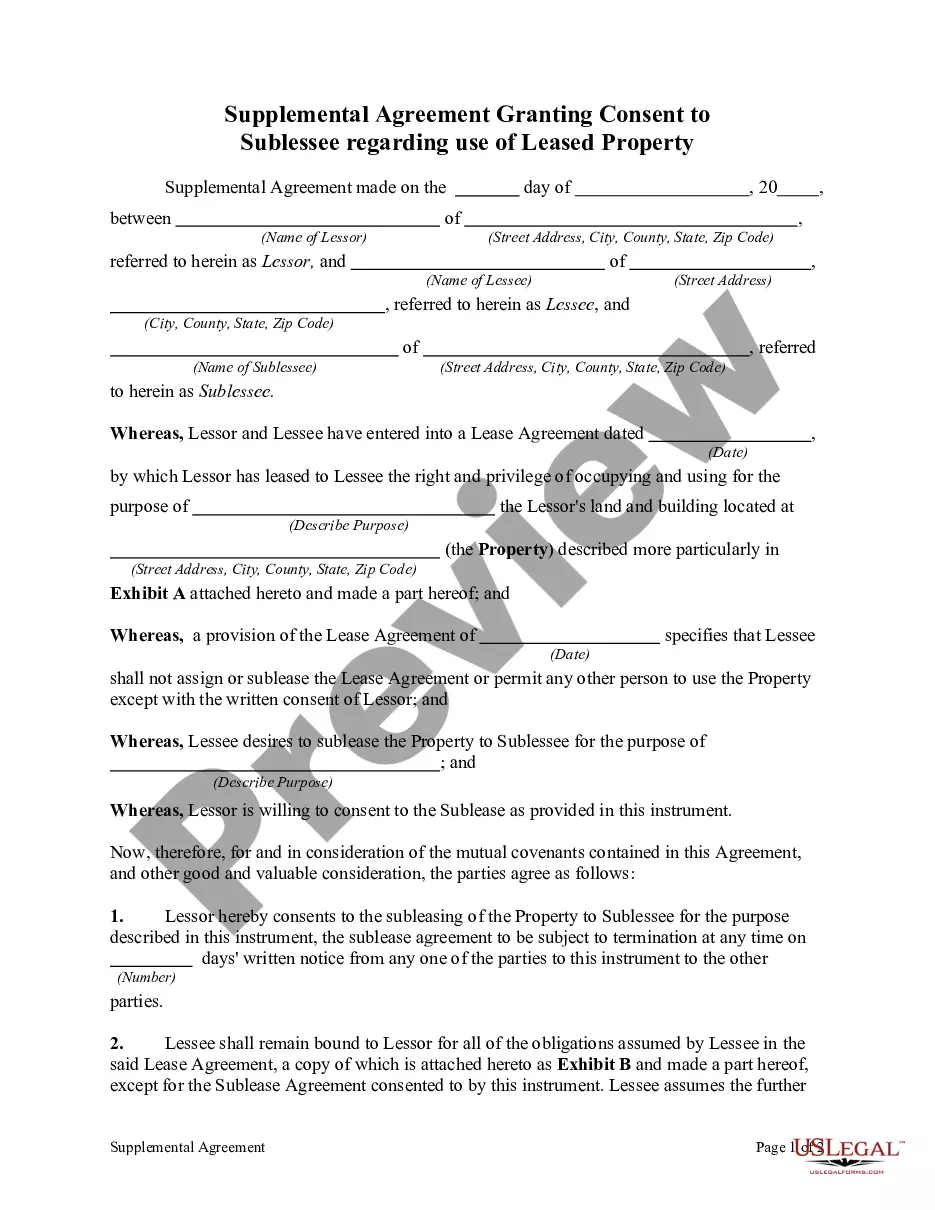
The Site Designation Supplement to Master Lease and Sublease Agreement is a legal document that specifies the terms and conditions related to a sublease agreement, applicable when multiple properties are involved. This supplement operates in conjunction with a master lease, providing clarity on the specific site being leased, while maintaining a single rental payment structure across all properties. Understanding this form is essential for both lessors and lessees in a master lease arrangement to ensure compliance and proper documentation of agreed terms.
What’s included in this form
- Demise: Defines the leased property and its components, such as land and improvements.
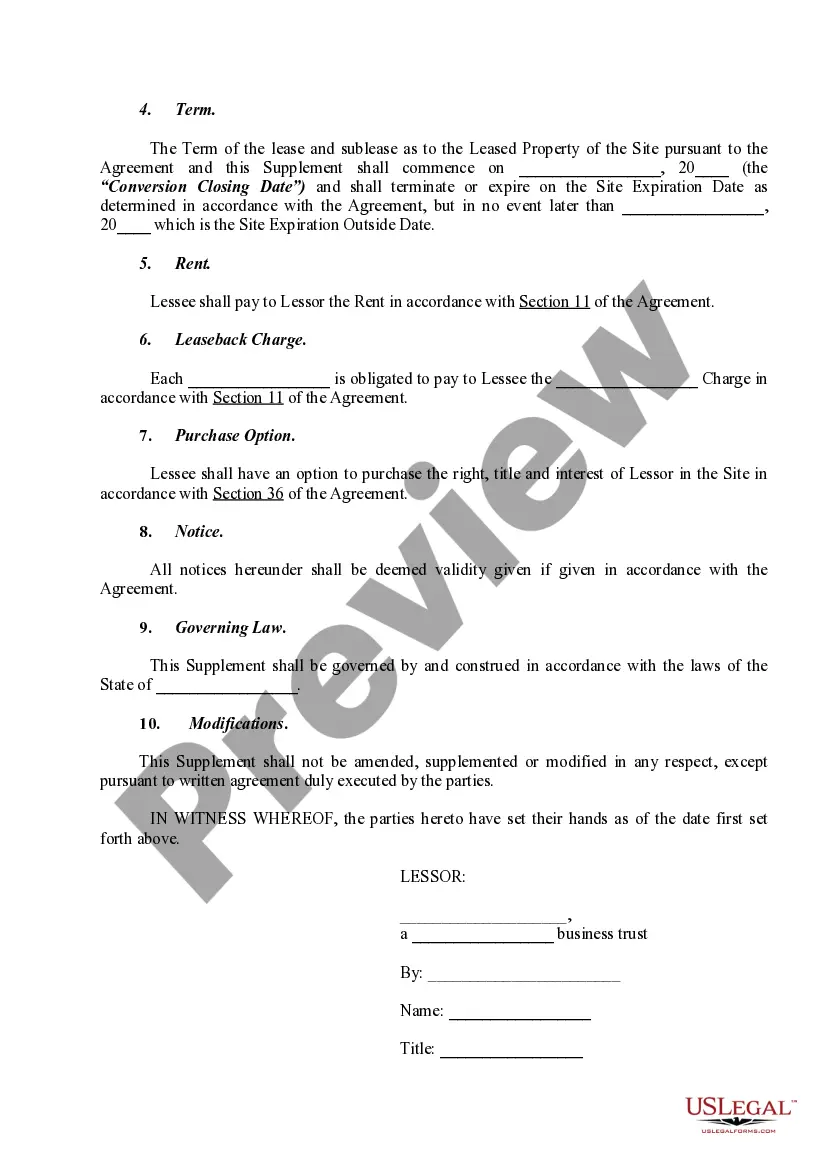
- Term: Specifies the duration of the lease and sublease, including start and expiration dates.
- Rent: Outlines the payment obligations from the lessee to the lessor.
- Leaseback Charge: Details any charges owed by the lessor to the lessee per the agreement.
- Purchase Option: States the conditions under which the lessee may purchase the property.
When to use this form
This form should be used when a lessee and lessor enter into a master lease that includes leasing multiple properties, and a specific site designation supplement is required. It is particularly useful in real estate situations where one party wants to clearly outline the terms related to a particular location, including any improvements on the site like telecommunications towers, while preserving the collective terms laid out in the master lease agreement.
Who should use this form
- Real estate investors engaged in multi-property leases.
- Landlords who lease multiple properties with specific site requirements.
- Tenants seeking to clarify terms of subleasing particular properties under a master lease.
Steps to complete this form
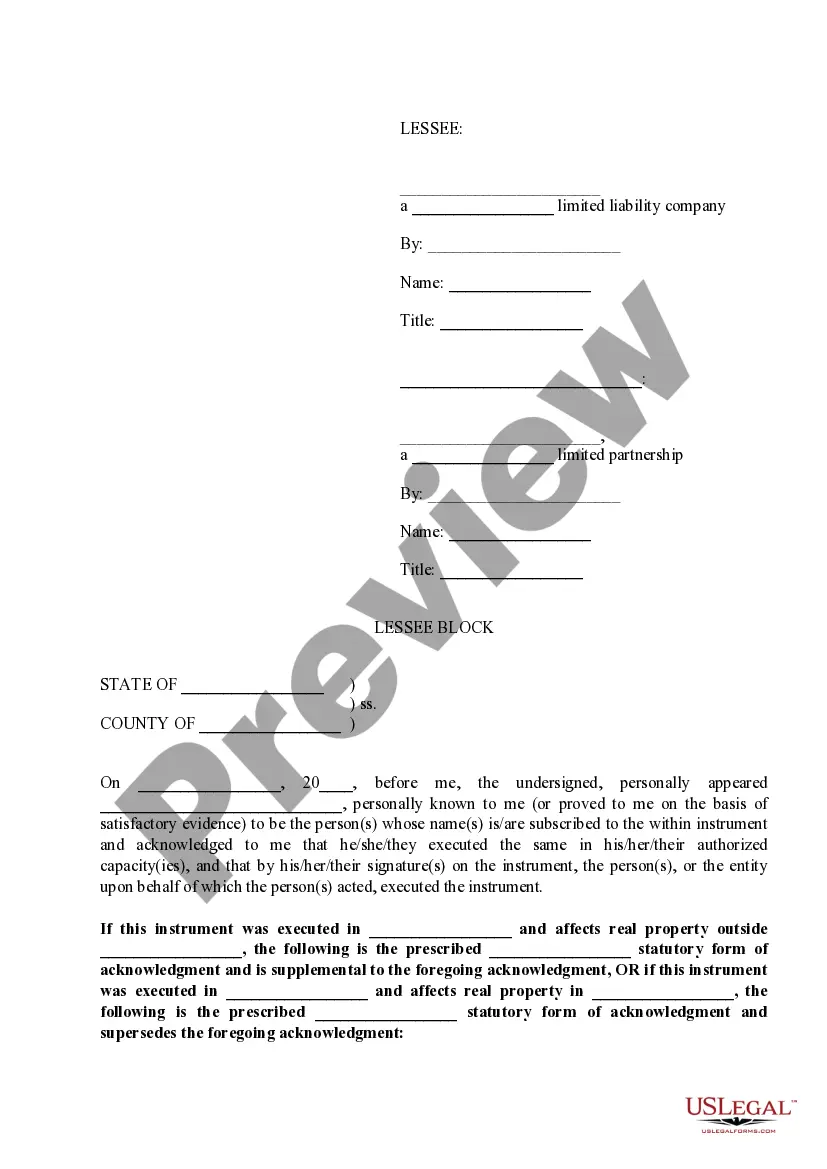
- Identify the parties involved: Enter the names of the lessor, lessee, and any additional partners.
- Specify the site: Describe the leased property by filling out the detailed information required for the site.
- Enter the start and expiration dates: Clearly list the Conversion Closing Date and Site Expiration Date.
- Outline rent obligations: Fill in the amount of rent to be paid by the lessee to the lessor.
- Complete notice and governing law sections: Specify how notices will be given and the state laws governing the agreement.
Notarization requirements for this form
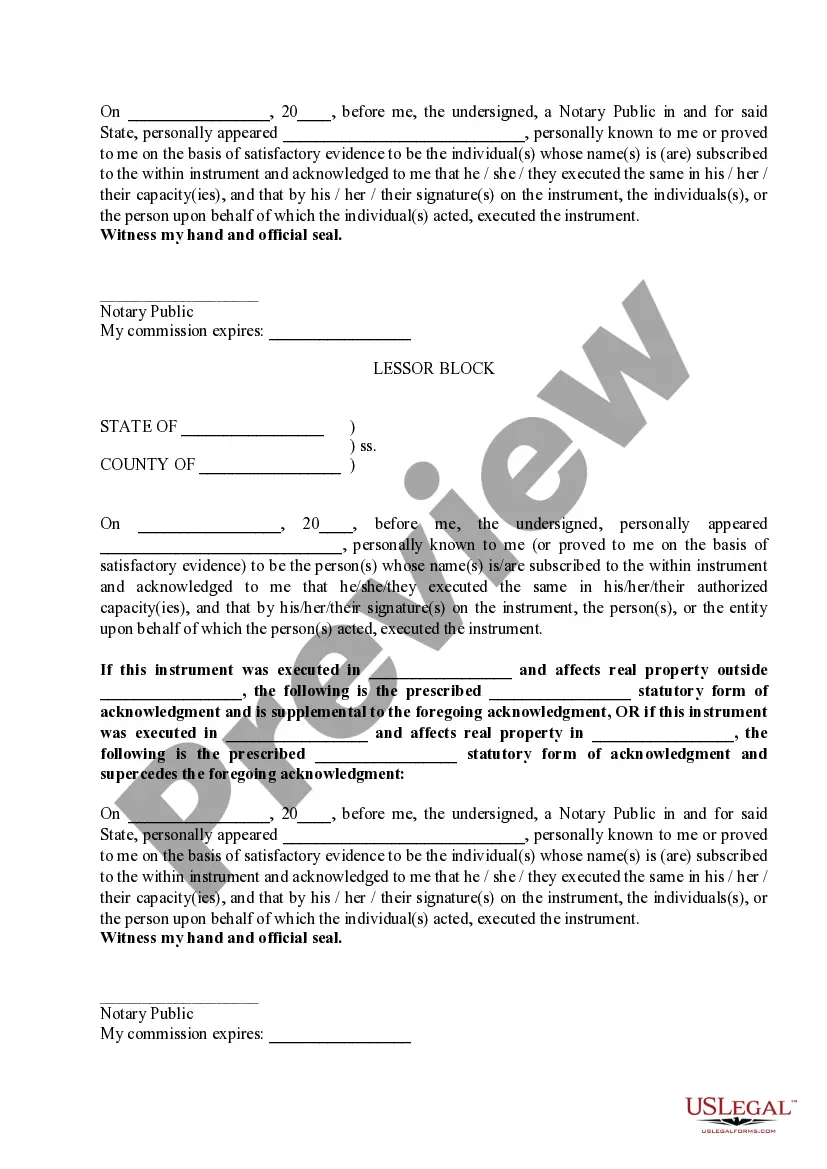
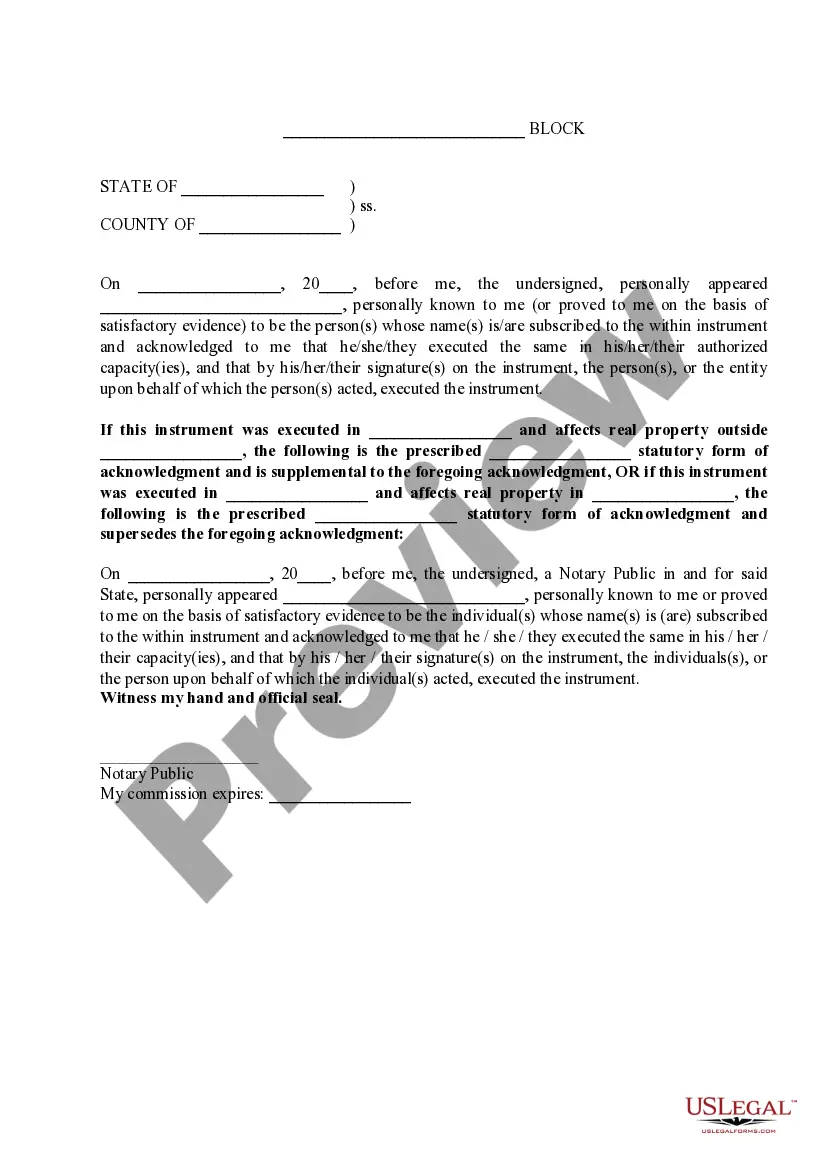
This form does not typically require notarization unless specified by local law. It's recommended to check state requirements or consult legal counsel if you're uncertain about the need for notarization.
Get your form ready online
Our built-in tools help you complete, sign, share, and store your documents in one place.
Make edits, fill in missing information, and update formatting in US Legal Forms—just like you would in MS Word.
Download a copy, print it, send it by email, or mail it via USPS—whatever works best for your next step.
Sign and collect signatures with our SignNow integration. Send to multiple recipients, set reminders, and more. Go Premium to unlock E-Sign.
If this form requires notarization, complete it online through a secure video call—no need to meet a notary in person or wait for an appointment.
We protect your documents and personal data by following strict security and privacy standards.

Make edits, fill in missing information, and update formatting in US Legal Forms—just like you would in MS Word.

Download a copy, print it, send it by email, or mail it via USPS—whatever works best for your next step.

Sign and collect signatures with our SignNow integration. Send to multiple recipients, set reminders, and more. Go Premium to unlock E-Sign.

If this form requires notarization, complete it online through a secure video call—no need to meet a notary in person or wait for an appointment.

We protect your documents and personal data by following strict security and privacy standards.
Typical mistakes to avoid
- Not clearly specifying the site to avoid confusion on what is included in the lease.
- Failing to include all necessary parties involved in the sublease.
- Incorrectly populating the rent payment terms or dates.
- Not reviewing the master lease adequately to ensure no conflicts with this supplement.
Why use this form online
- Ease of access to download and fill out the form at your convenience.
- Editability allows customization to fit specific lease agreements.
- Reliable templates ensure legal compliance and appropriateness of terms.
- Quick turnaround to get legally binding documents prepared and executed.
Looking for another form?
Form popularity
FAQ
A lease is a legally binding contract that outlines the terms under which one party agrees to rent property owned by another party. For example, a residential lease might allow a tenant to live in an apartment for a specified time in exchange for monthly rent payments. The Massachusetts Site Designation Supplement to Master Lease and Sublease Agreement can help clarify leasing details specific to Massachusetts properties.
If you are a leaseholder, you cannot change the lease terms without agreeing such change with your landlord. The reason for this is that as the lease is a contract between two parties, the leaseholder and the landlord, both parties must agree to change (referred to also as variation) of the terms of the lease.
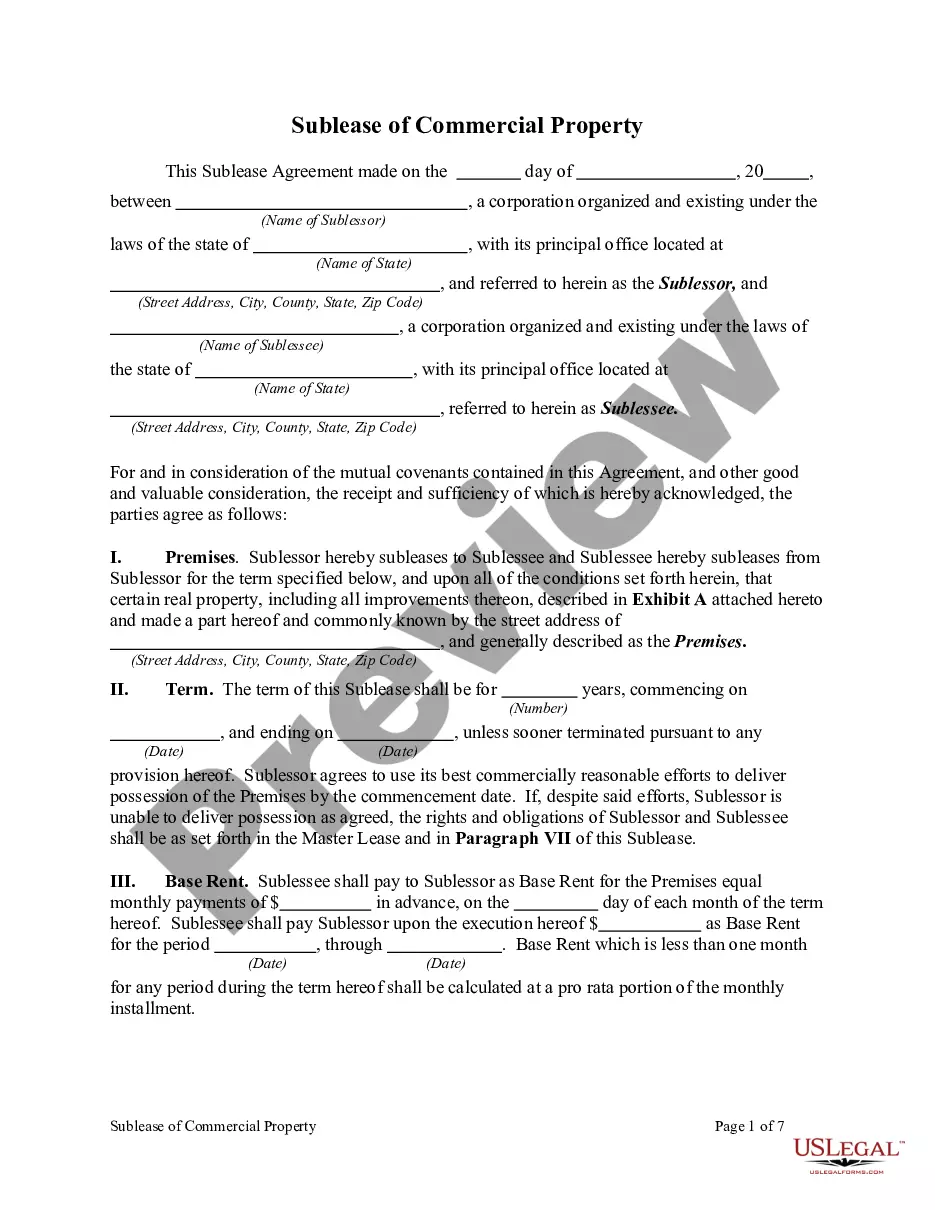
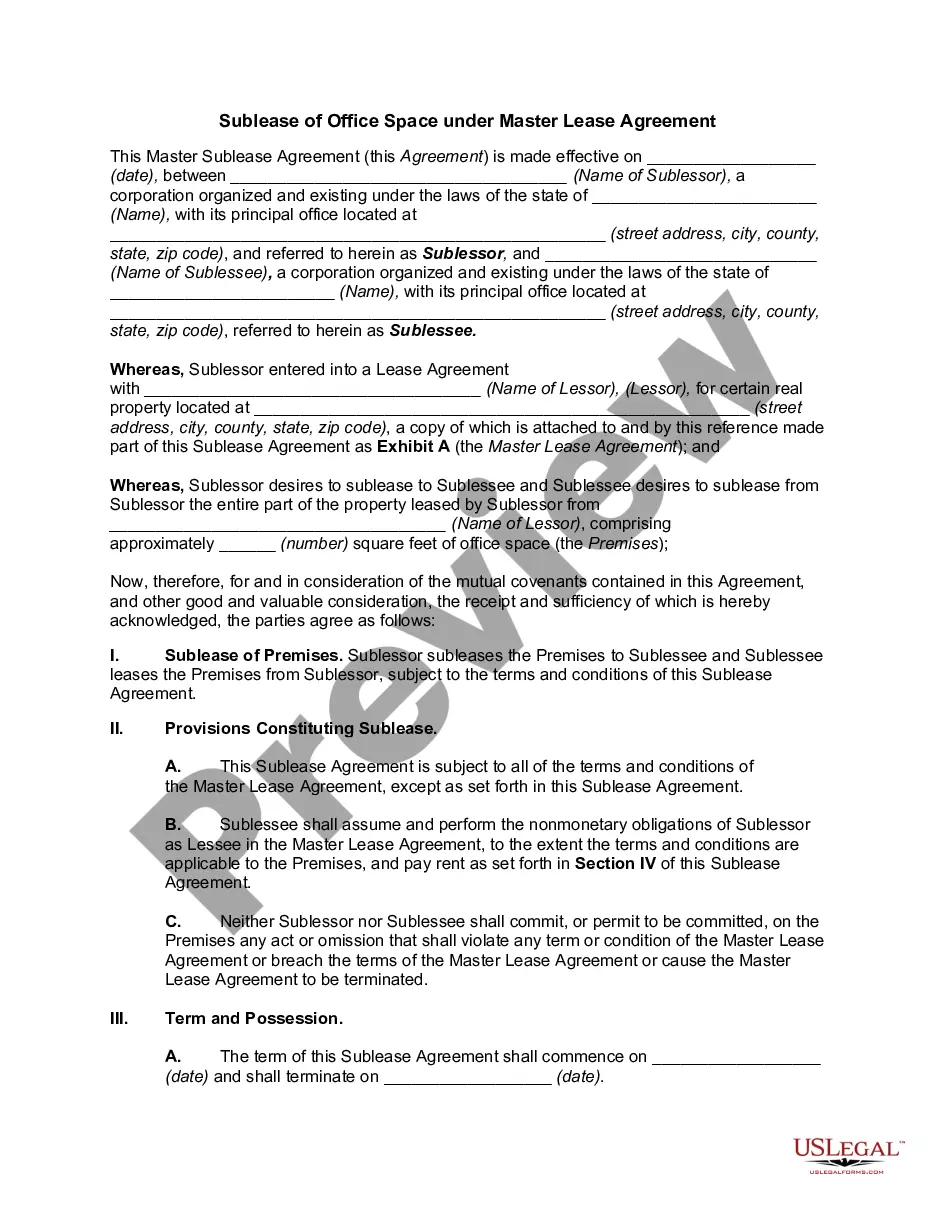
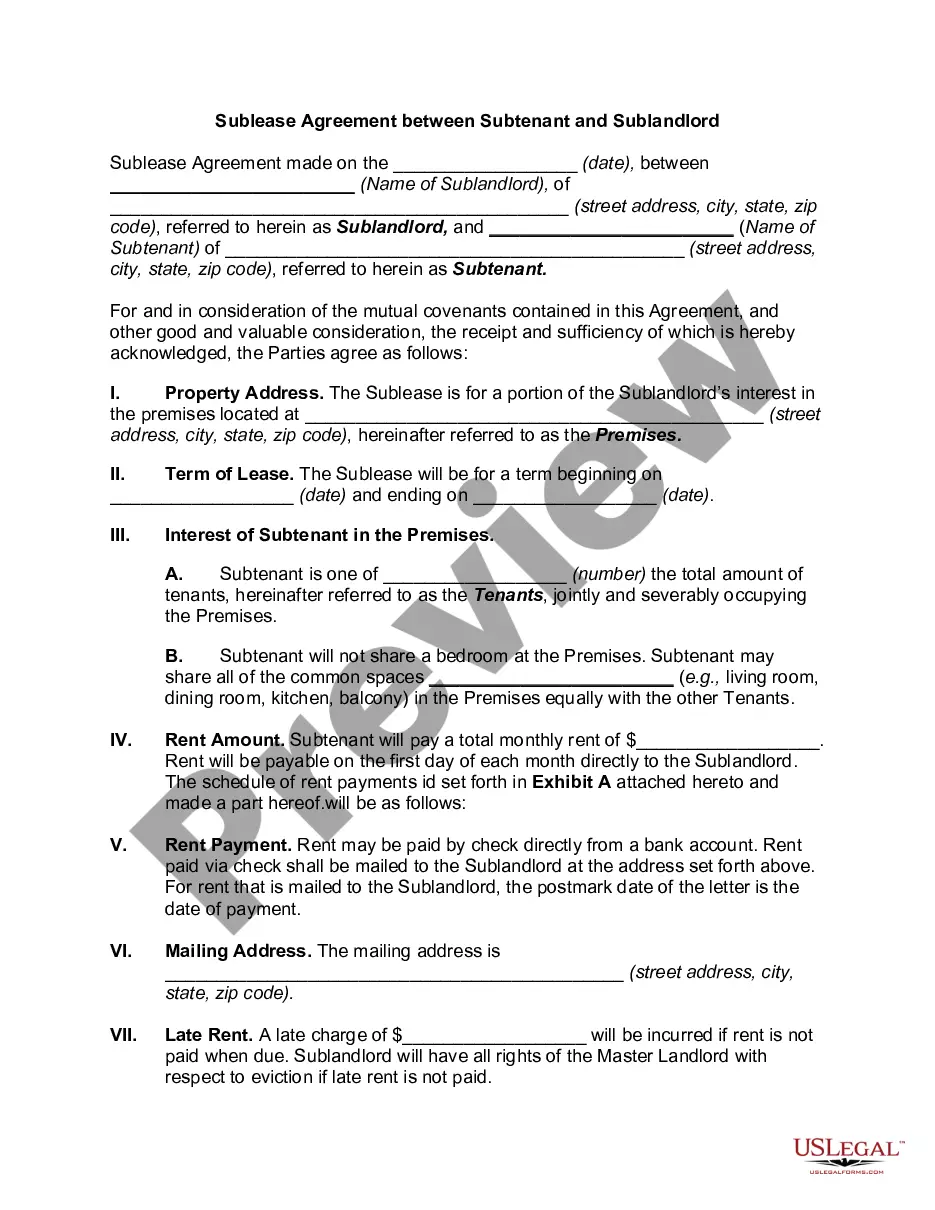
Writing Your Sublease. State the name of the parties and the date of the contract. Identify the full names of each party and what their role is in the contract. The original leaseholder of the property is the Tenant and the person subletting the property is the Subtenant.
Sublease. When a tenant transfers less than the remaining term or less than the tenant's entire estate, thus leaving the original tenant with a reversionary interest in the lease, the transfer is a sublease.However, such a transfer creates a form of assignment.
Who Can Amend the Lease? When a landlord and tenant sign a lease agreement it forms a legally binding contract. The lease cannot be altered except through another written agreement signed by both parties unless the original lease specifically gives a party the power to change something on their own.
Subleasing occurs when the tenant transfers a part of their legal tenancy to a third-party as a new tenant.That means that if a new subtenant does not pay rent for three months, the original tenant that subleased the property is liable to the landlord for the overdue rent amount and any late fees.
Adding an Addendum An addendum must include the basic elements of any landlord/tenant agreement. You should include the date, the address of the rental property and the names of each party just as you would in the original lease.
Writing Your Sublease. State the name of the parties and the date of the contract. Identify the full names of each party and what their role is in the contract. The original leaseholder of the property is the Tenant and the person subletting the property is the Subtenant.
Check the over-lease. This refers to the lease that was signed by the tenant from whom you're sub-leasing. Note the condition of your room. Get in touch with the management company. Make all payments in person. Ask for a deposit receipt. Comments.
A Residential Sublease is a legally binding contract made between the original tenant of a rental property (sublandlord) and a new tenant (also known as a subtenant or a sublessee). The sublease gives the subtenant the right to share or to take over the rented premises from the original tenant.