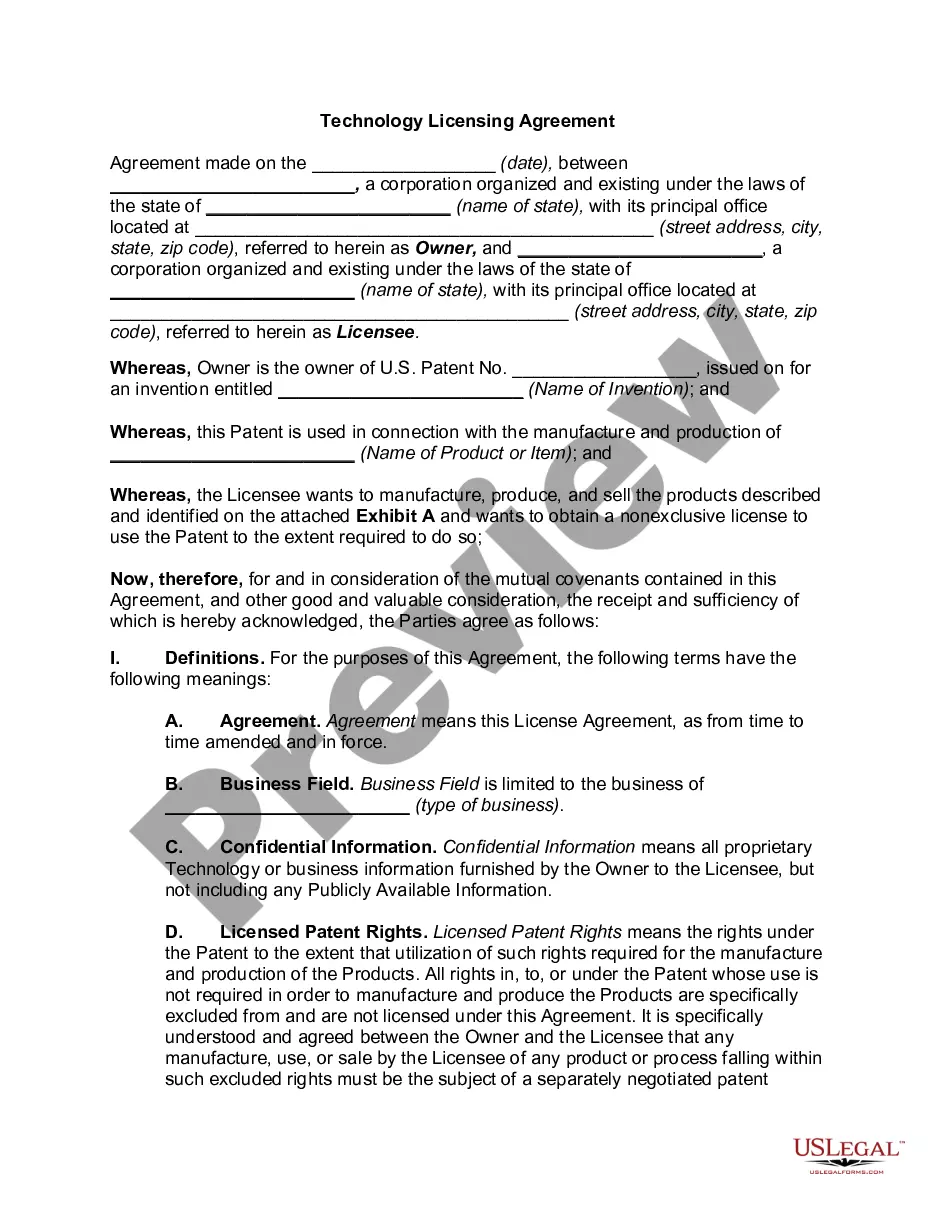
Louisiana Technology Transfer Agreement
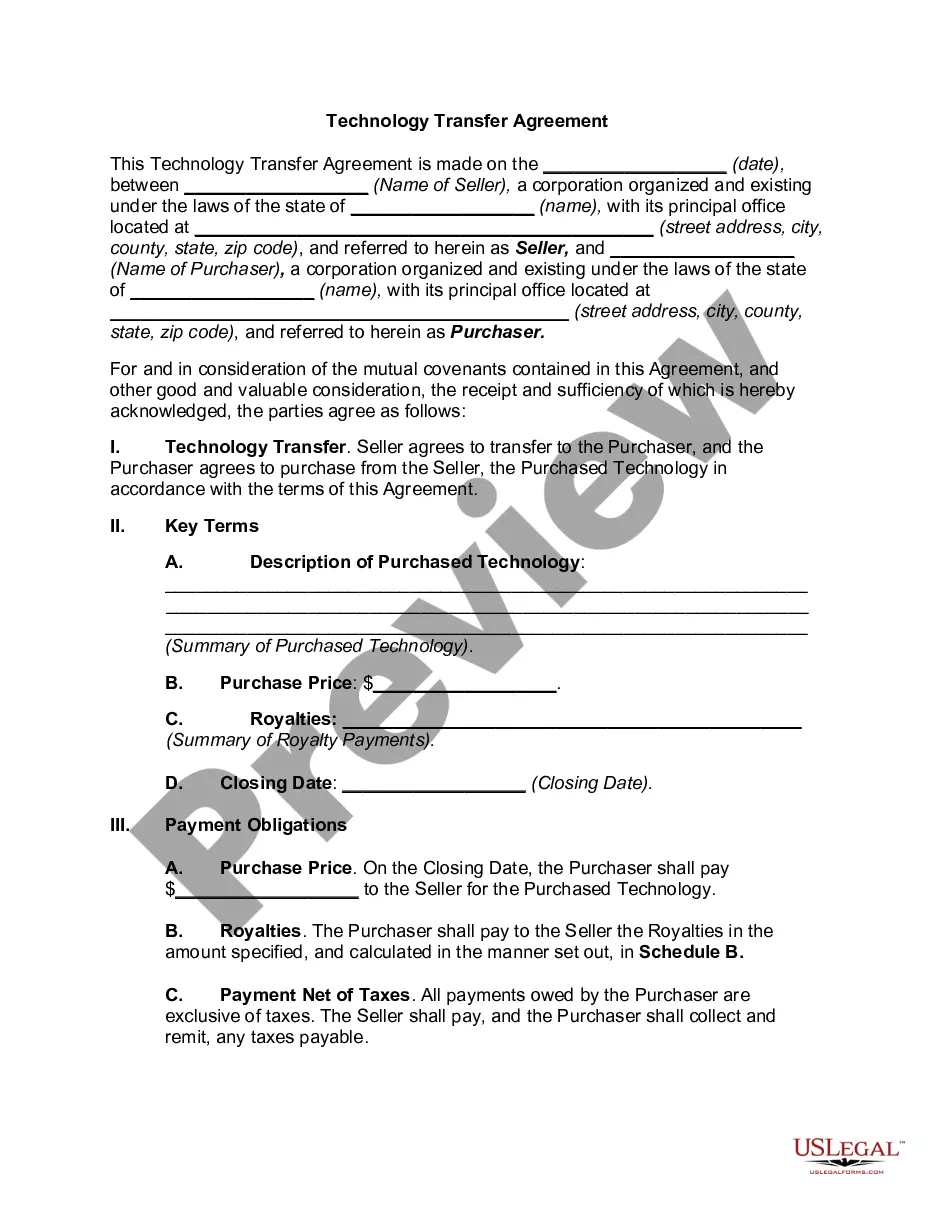
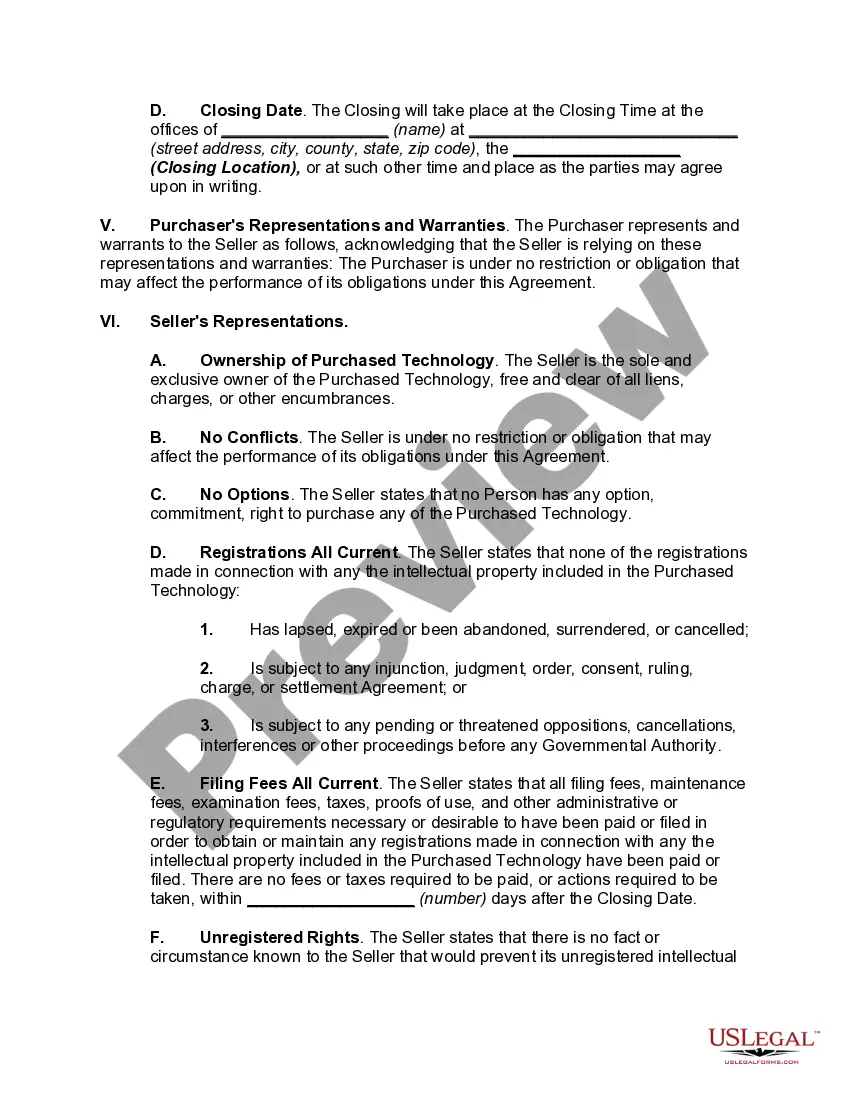
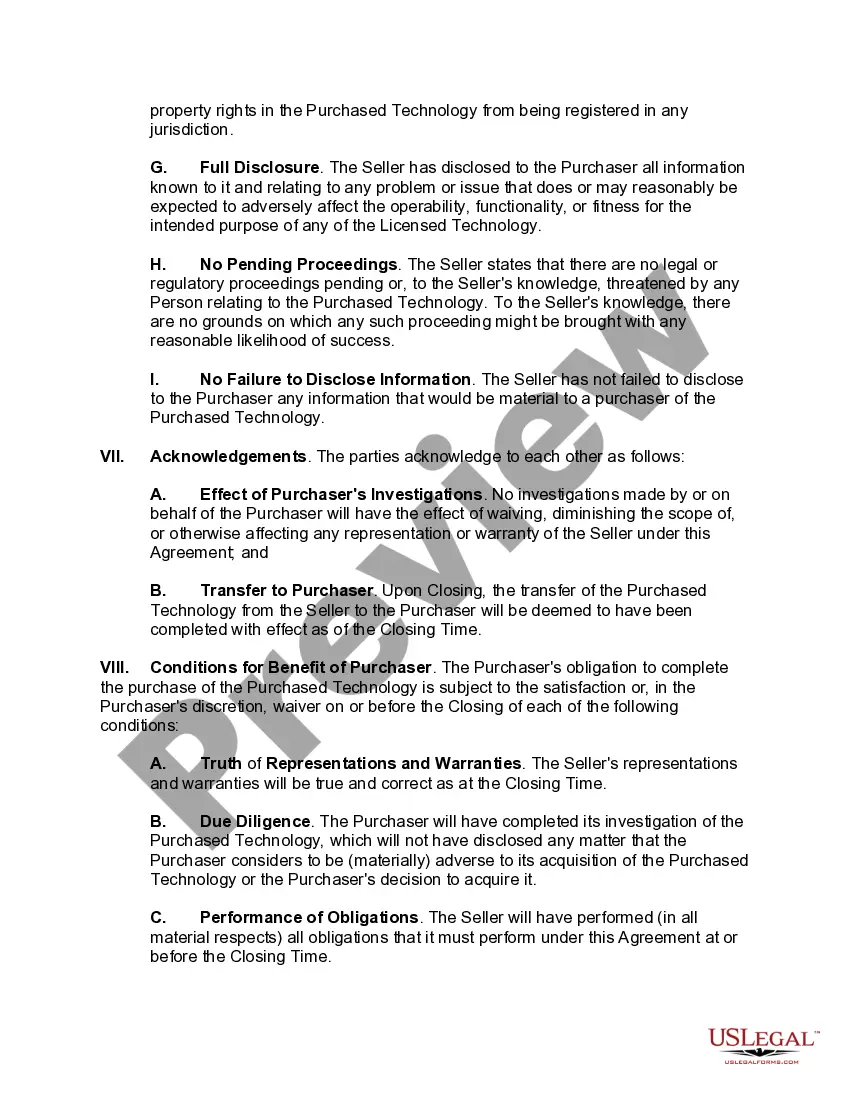
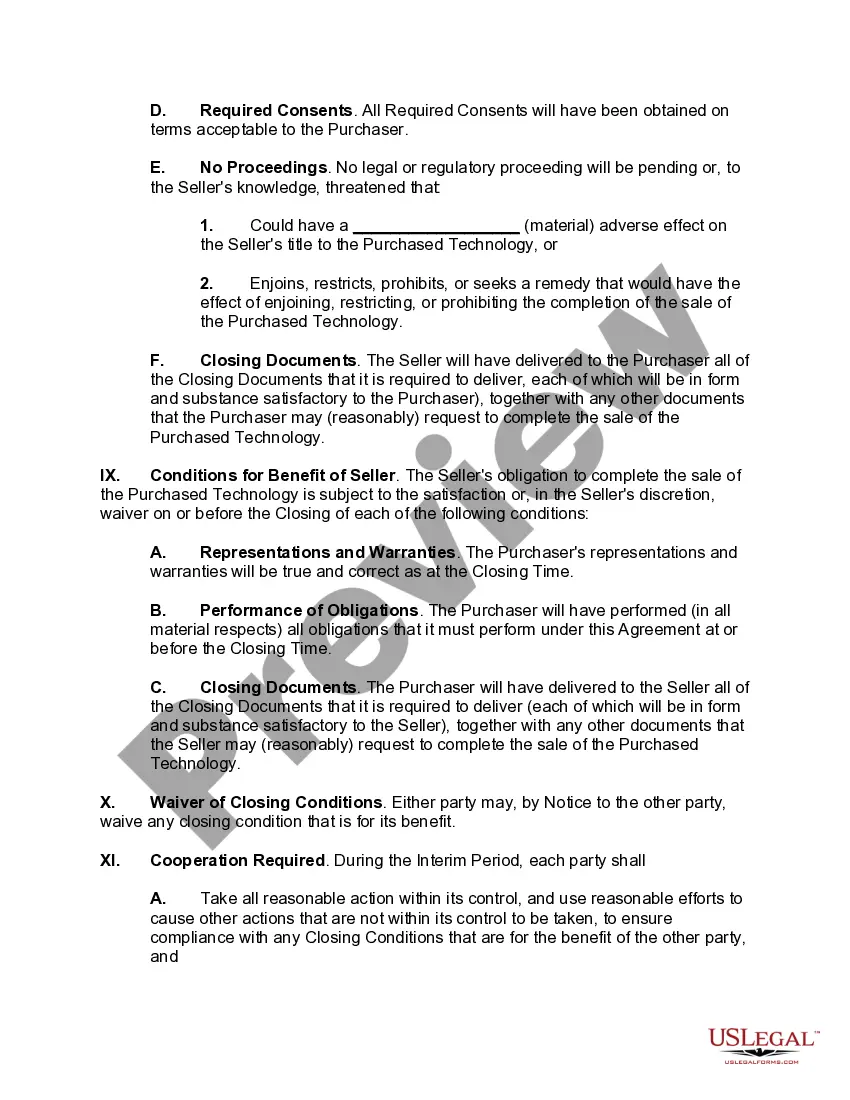
Description

Get your form ready online
Our built-in tools help you complete, sign, share, and store your documents in one place.
Make edits, fill in missing information, and update formatting in US Legal Forms—just like you would in MS Word.
Download a copy, print it, send it by email, or mail it via USPS—whatever works best for your next step.
Sign and collect signatures with our SignNow integration. Send to multiple recipients, set reminders, and more. Go Premium to unlock E-Sign.
If this form requires notarization, complete it online through a secure video call—no need to meet a notary in person or wait for an appointment.
We protect your documents and personal data by following strict security and privacy standards.

Make edits, fill in missing information, and update formatting in US Legal Forms—just like you would in MS Word.

Download a copy, print it, send it by email, or mail it via USPS—whatever works best for your next step.

Sign and collect signatures with our SignNow integration. Send to multiple recipients, set reminders, and more. Go Premium to unlock E-Sign.

If this form requires notarization, complete it online through a secure video call—no need to meet a notary in person or wait for an appointment.

We protect your documents and personal data by following strict security and privacy standards.
Looking for another form?

How to fill out Technology Transfer Agreement?
US Legal Forms - one of the largest collections of legal templates in the US - offers a range of legal document formats that you can download or print.
By using the website, you can access thousands of forms for business and personal purposes, categorized by types, states, or keywords.
You can find the most up-to-date versions of forms like the Louisiana Technology Transfer Agreement in just a few moments.
If the form does not meet your needs, utilize the Search field at the top of the page to find one that does.
Once satisfied with the form, confirm your selection by clicking the Get now button. Then, choose your preferred payment plan and provide your details to sign up for an account.
- If you have an account, Log In and download the Louisiana Technology Transfer Agreement from your US Legal Forms archive.
- The Download button will appear on every form you view.
- You can access all previously downloaded forms in the My documents section of your profile.
- If you're a new user of US Legal Forms, here are simple steps to help you get started.
- Ensure you have selected the correct form for your city/state.
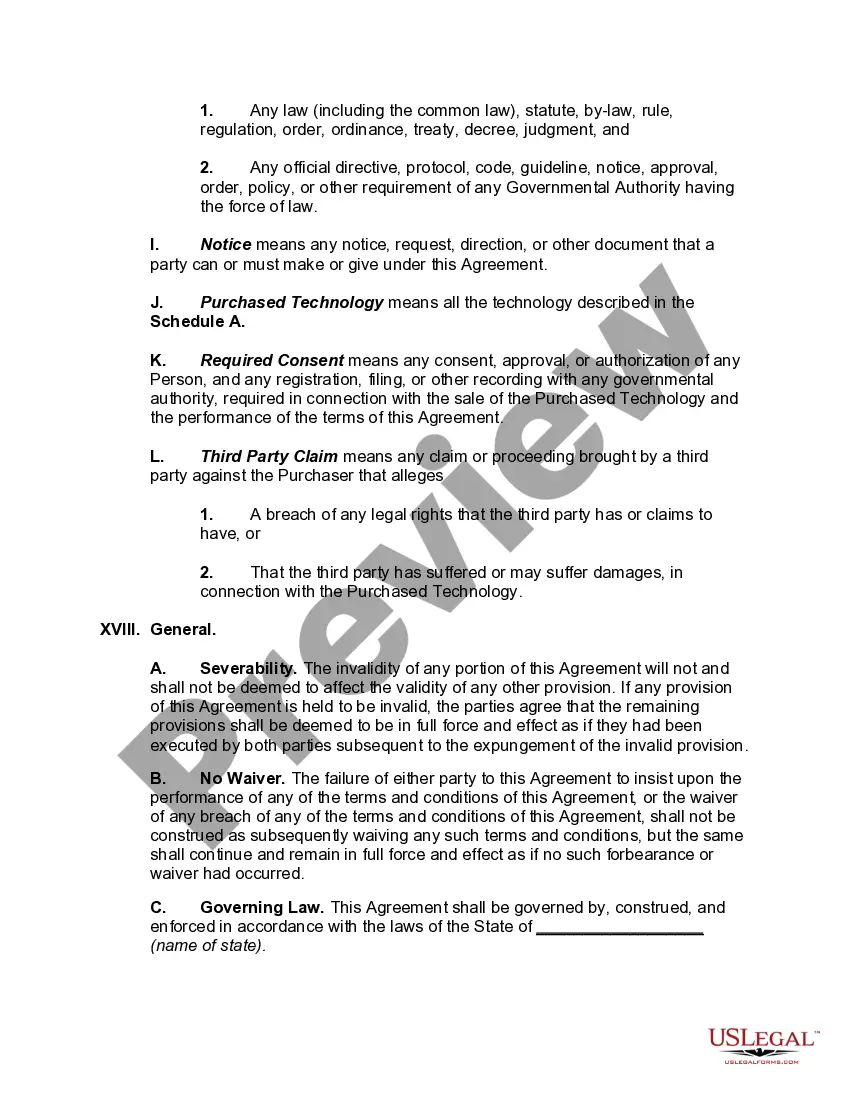
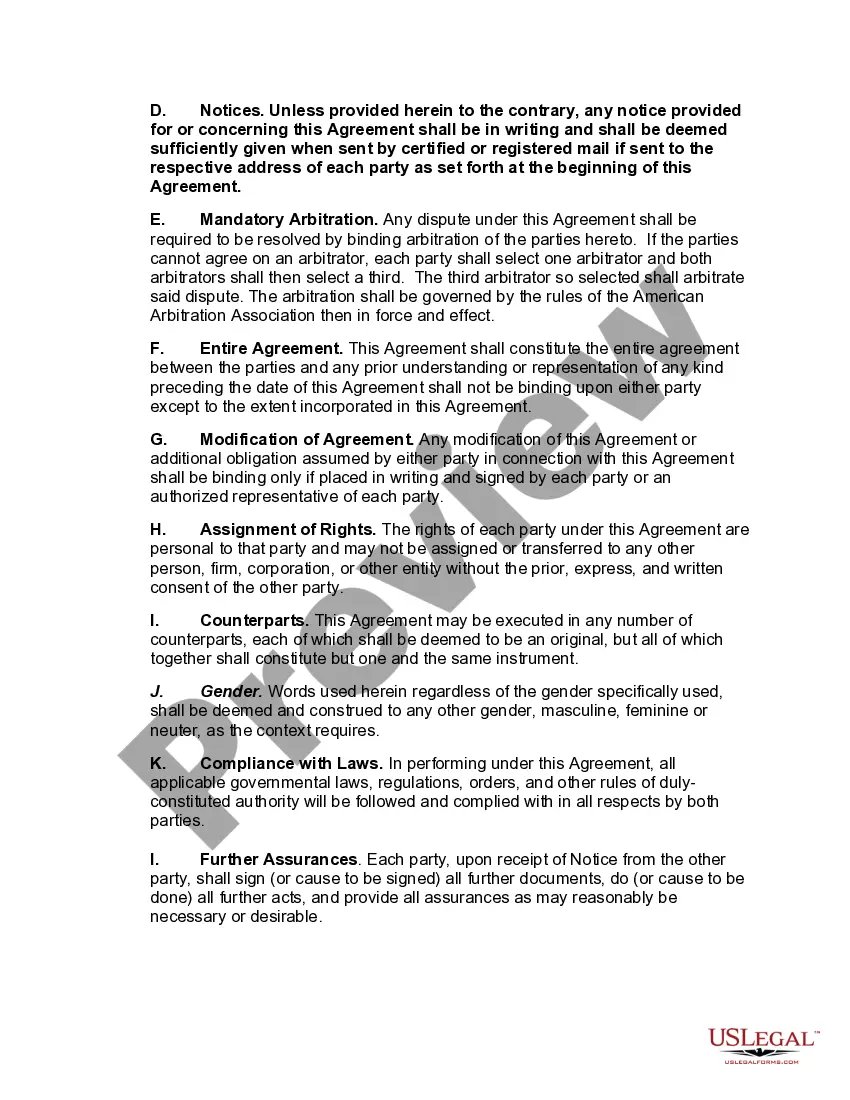
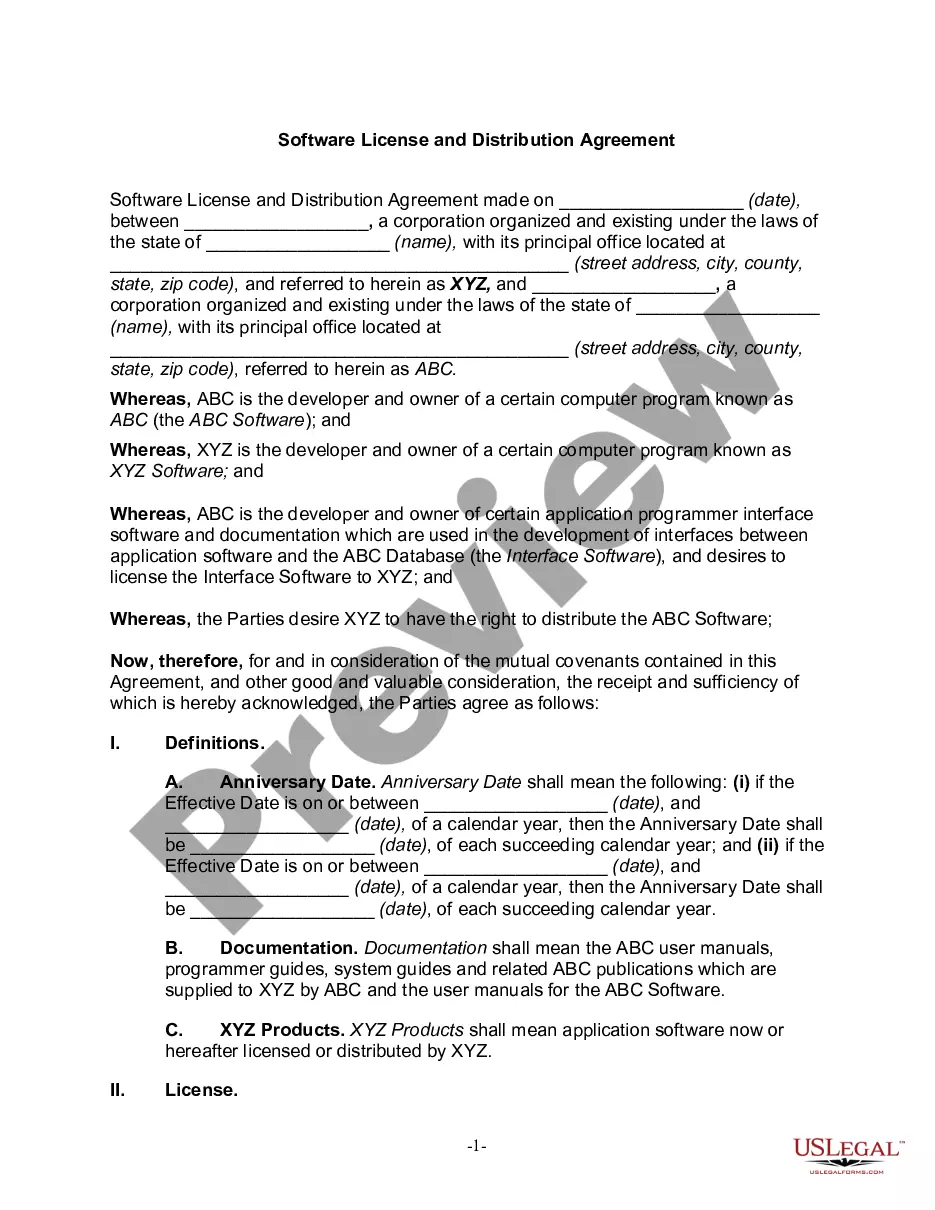
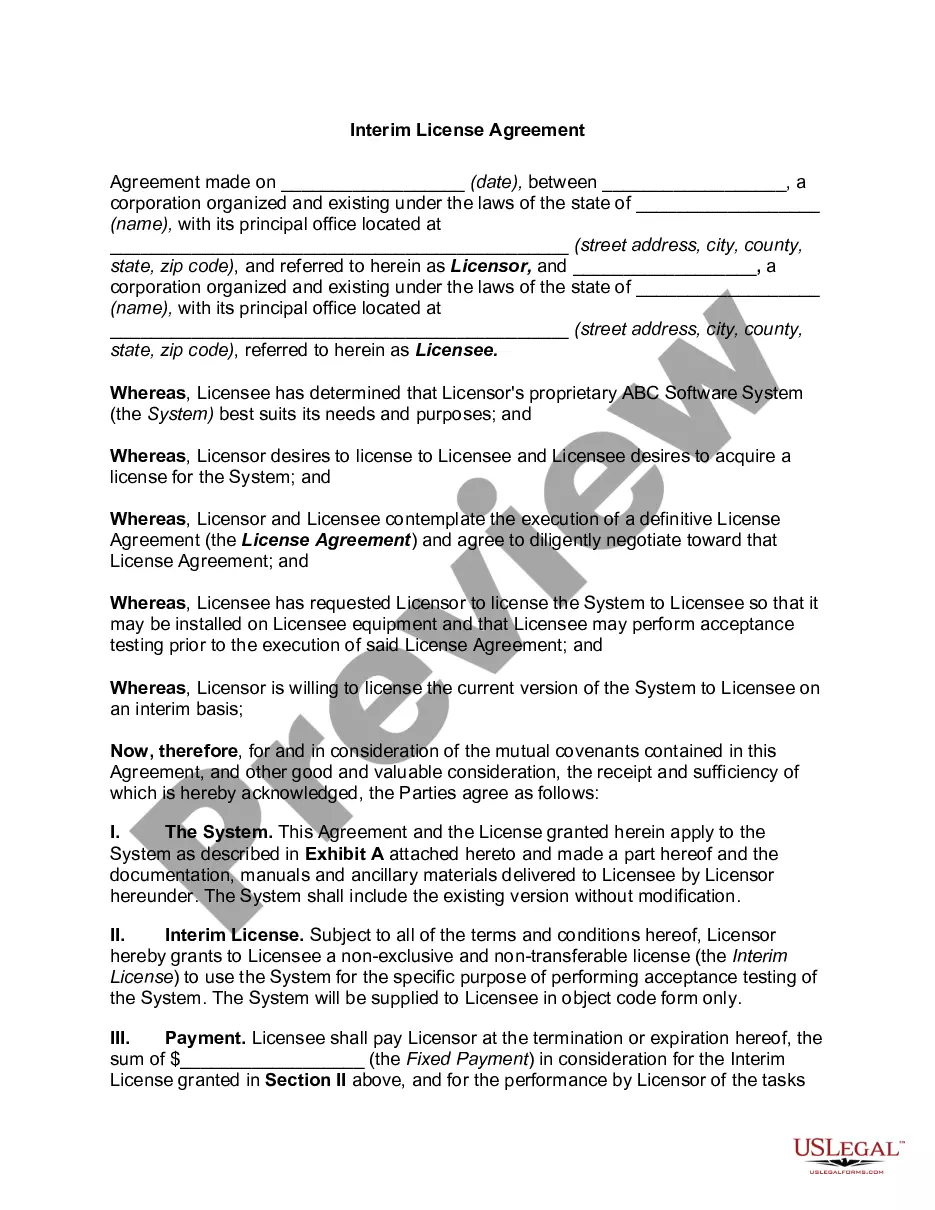
- Click the Preview button to view the content of the form.
Form popularity
FAQ
Technology transfer can be broadly classified into vertical and horizontal technology transfer.
Technology is the way we apply scientific knowledge for practical purposes. It includes machines (like computers) but also techniques and processes (like the way we produce computer chips).
Advantages of Technology TransferDevelops a platform to share ideas. Protects intellectual property. Promotes economic development through commercializing innovative technology. Enhances collaboration between the federal and non-federal science.
Technology transfer activities can be broadly split into three phases; preparation, installation and utilisation. These three phases are, in turn, affected by technological, organisational and environmental factors.
Based on this model the transfer scope consists of four types of technologies: General knowledge, Specific knowledge, Hardware, and Behaviors. This model categorizes the transfer methods in the TT process as 1) Impersonal communication, 2) Personal communication, 3) Group interaction, and 4) Physical relocation.
There are two main types of licenses: 1) one which grants an exclusive right to use the technology; 2) another with non-exclusive right, which implies that the patent owner may transfer the right to use the technology to other companies in the same area.
Technology Transfer ProcessStep 1: Invention Disclosure.Step 2: Evaluation.Step 3: Patent Application.Step 4: Assessment and Marketing.Step 5: Licensing of Patents.Step 6: Commercialization.
Technology Transfer Activities include: processing and evaluating invention disclosures; filing for patents; technology marketing; licensing; protecting intellectual property arising from research activity; and assisting in creating new businesses and promoting the success of existing firms.
Technology transfer process is explained with six phases; technology innovation, technology confirmation, targeting technology consumers, technology marketing, technology application, and technology evaluation.
Technology transfer is the innovation management that takes a novel invention from public laboratorysuch as a university, hospital, or federal research teamto commercialization.