Missouri Cemetery Deed
About this form
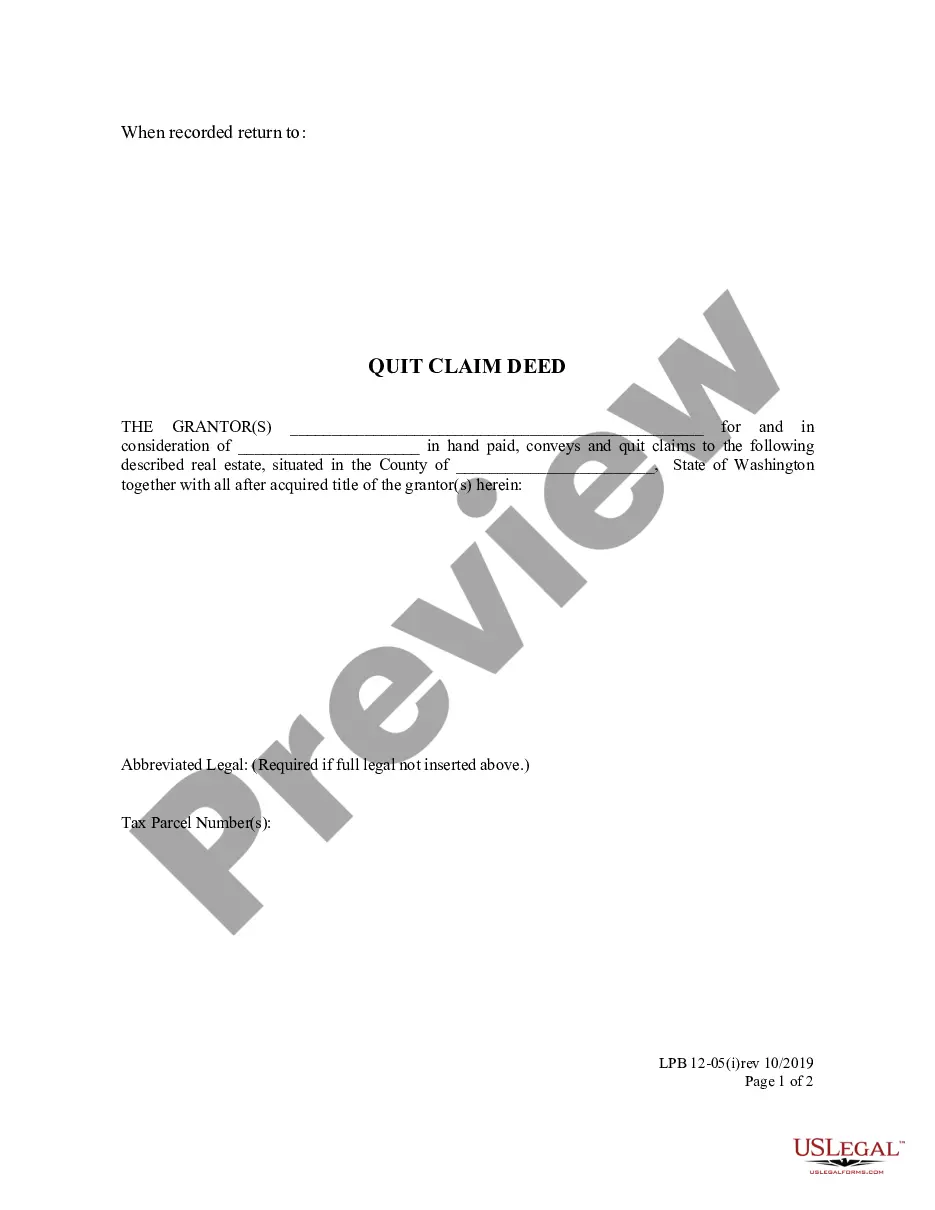
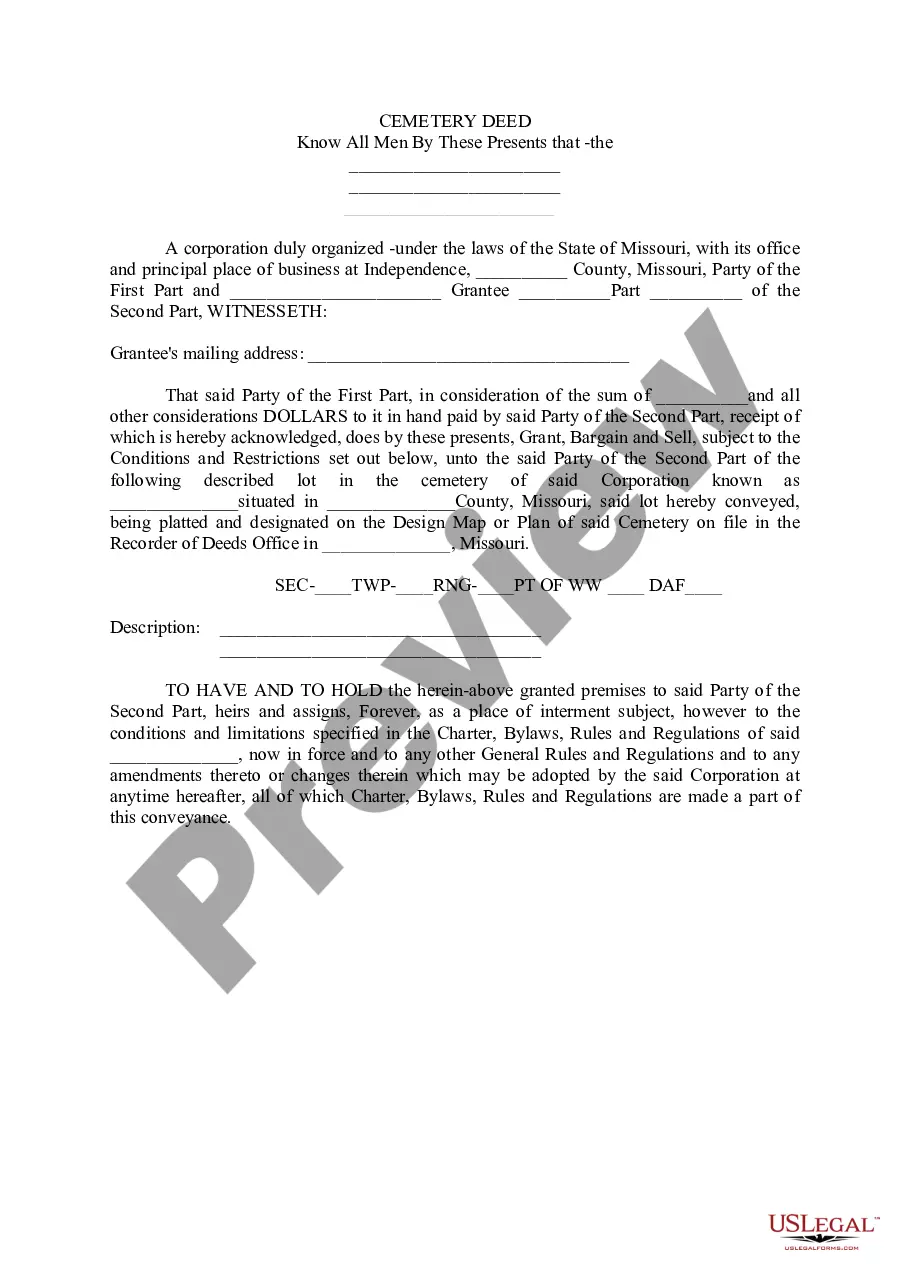
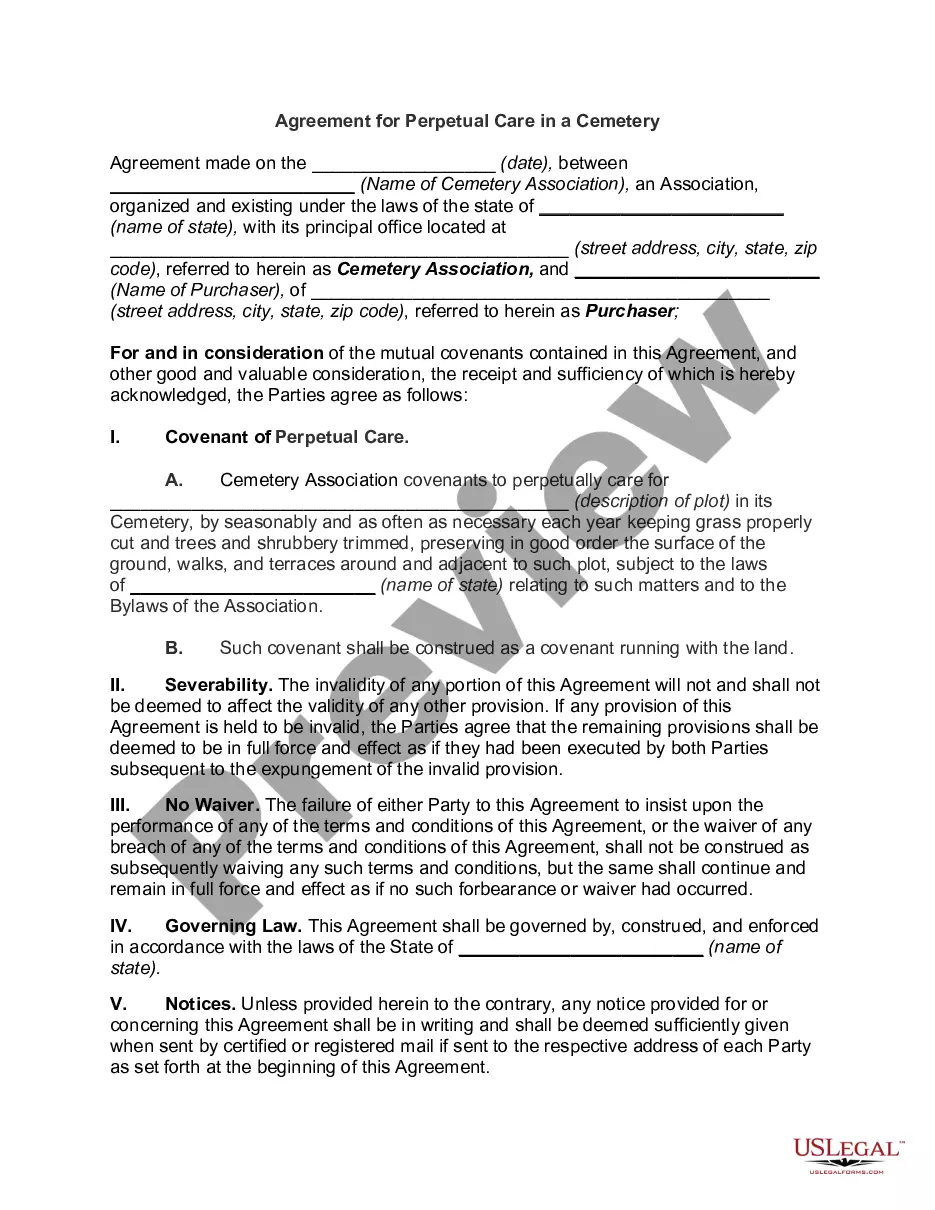
A cemetery deed is a legal document that conveys ownership of a burial lot within a cemetery. This form is crucial for establishing the rights to a specific interment location, which is designated on the cemetery's design map. Unlike a general property deed, a cemetery deed pertains specifically to burial plots and includes particular conditions tied to the use of the cemetery land.
Key components of this form
- Information about the grantor (the corporation) and grantee (the purchaser).
- The specific burial lot being conveyed, including its legal description and location.
- The purchase price involved in the transaction.
- Conditions and restrictions related to the use of the burial lot as per the cemetery's regulations.
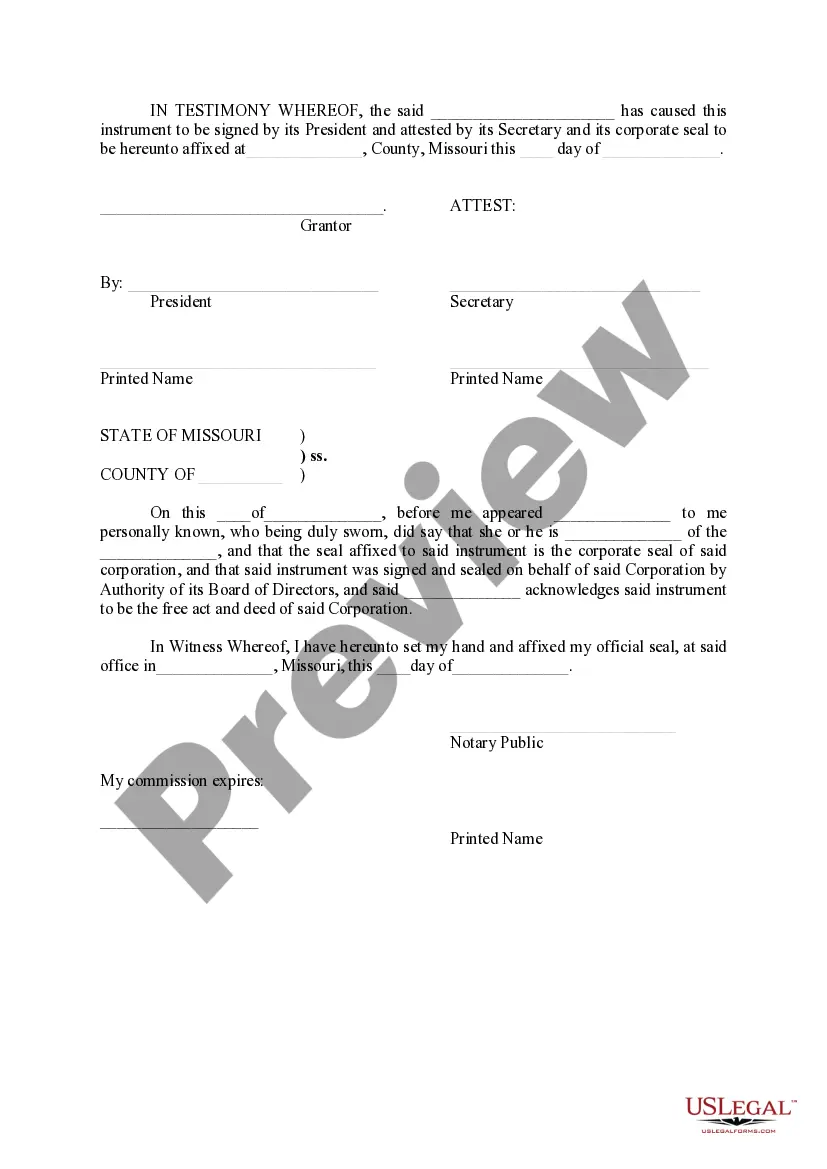
- Signatures of corporate officers and notarization details for legal validity.
Common use cases
You should use a cemetery deed when purchasing a burial lot in a cemetery. This form is essential when you want to formalize the transfer of ownership and establish your right to the lot for future use. It is also needed to clarify any regulations or restrictions that govern the use of the burial plot.
Who this form is for
- Individuals or families purchasing a burial lot.
- Cemeteries or corporations selling burial plots.
- Legal representatives handling estate matters related to burial arrangements.
Steps to complete this form
- Identify the parties involved: the grantor (corporation) and grantee (buyer).
- Specify the burial lot details including its location and description as indicated on the cemetery map.
- Enter the purchase price agreed upon for the lot.
- Ensure the document is signed by the appropriate corporate officers (President and Secretary).
- Have the form notarized by a licensed Notary Public to validate the transaction.
Does this document require notarization?
Yes, this form must be notarized to be legally valid. Notarization authenticates the signatures and confirms that the parties involved acted willingly. US Legal Forms provides integrated online notarization services, allowing you to complete this process securely via video call, available twenty-four hours a day, without needing to travel.
Get your form ready online
Our built-in tools help you complete, sign, share, and store your documents in one place.
Make edits, fill in missing information, and update formatting in US Legal Forms—just like you would in MS Word.
Download a copy, print it, send it by email, or mail it via USPS—whatever works best for your next step.
Sign and collect signatures with our SignNow integration. Send to multiple recipients, set reminders, and more. Go Premium to unlock E-Sign.
If this form requires notarization, complete it online through a secure video call—no need to meet a notary in person or wait for an appointment.
We protect your documents and personal data by following strict security and privacy standards.

Make edits, fill in missing information, and update formatting in US Legal Forms—just like you would in MS Word.

Download a copy, print it, send it by email, or mail it via USPS—whatever works best for your next step.

Sign and collect signatures with our SignNow integration. Send to multiple recipients, set reminders, and more. Go Premium to unlock E-Sign.

If this form requires notarization, complete it online through a secure video call—no need to meet a notary in person or wait for an appointment.

We protect your documents and personal data by following strict security and privacy standards.
Common mistakes to avoid
- Failing to include accurate lot location details may lead to confusion about ownership.
- Not obtaining notarization, which is crucial for legal recognition in many jurisdictions.
- Omitting to review and adhere to specific conditions and restrictions tied to the cemetery's regulations.
Benefits of completing this form online
- Convenience of completing the form at your own pace without the need for in-person meetings.
- Editable templates allow for easy customization to fit your specific situation.
- Access to professionally drafted forms ensures legal reliability and accuracy.
Looking for another form?
Form popularity
FAQ
In Missouri, it is advisable to record your cemetery deed to ensure clear ownership and prevent disputes. While not all cemeteries require recording, having your Missouri Cemetery Deed on file can provide legal protection. You should check with your local cemetery or legal advisor to understand the best practices for recording your deed. Using platforms like US Legal Forms can help you navigate the process efficiently.
Transferring ownership of cemetery plots in Missouri requires a few steps. First, you need to locate the Missouri Cemetery Deed that shows your ownership. Then, you should contact the cemetery office to understand their specific procedures for transferring the deed. Finally, complete any necessary paperwork and submit it to the cemetery, ensuring that all details are accurate to avoid any issues.
Yes, Missouri does allow a transfer on death deed. This type of deed enables property owners to transfer their property to beneficiaries without going through probate. When you use a Missouri Cemetery Deed, you can ensure that your cemetery plot is passed on to your loved ones directly upon your passing. For more information on how to create this deed, consider exploring resources available on the US Legal Forms platform.
Owning the deed to a cemetery plot does not make you the owner. Instead, it simply gives you a right to use the plot.In most states, you can transfer ownership of a cemetery plot to a family member in your will. But if you intend to sell the plot, that may be another matter entirely.
A Cemetery Deed or Deed for Cemetery Lot is a document that conveys burial rights, or the right of Interment. A deed establishes the lot owners and lineage of direct heirs to the lot. The recorded lot owner is determined by the purchaser at the time of the sale.
When a grave is purchased, a Deed of Grant is bestowed on the Registered Grave Owner.Usually only the person named on the Deed of Grant can erect memorials or headstones on a grave.
The plot is personal property and should be included in the Estate if owned by the decedent alone at the time of his death. You should consult with your attorney as to what happens with the asset.
Most bodies are buried in established cemeteries, but burial on private property is possible in Missouri. The burial ground must not exceed one acre, and it must be deeded in trust to the county commission.
Rather, a burial plot deed is recorded with and controlled by the records of the cemetery organization which govern the cemetery where the plot is located.Many times burial plots are not specifically mentioned in a will or other document nor are they transferred during the lifetime of the owner.
The Registered Owner of the Deed of Exclusive Right of Burial has the automatic right to be buried in the grave; they may also allow others to be buried in the grave (space permitting). They do not, however, own the land itself. The ownership of the cemetery land remains with the Council.