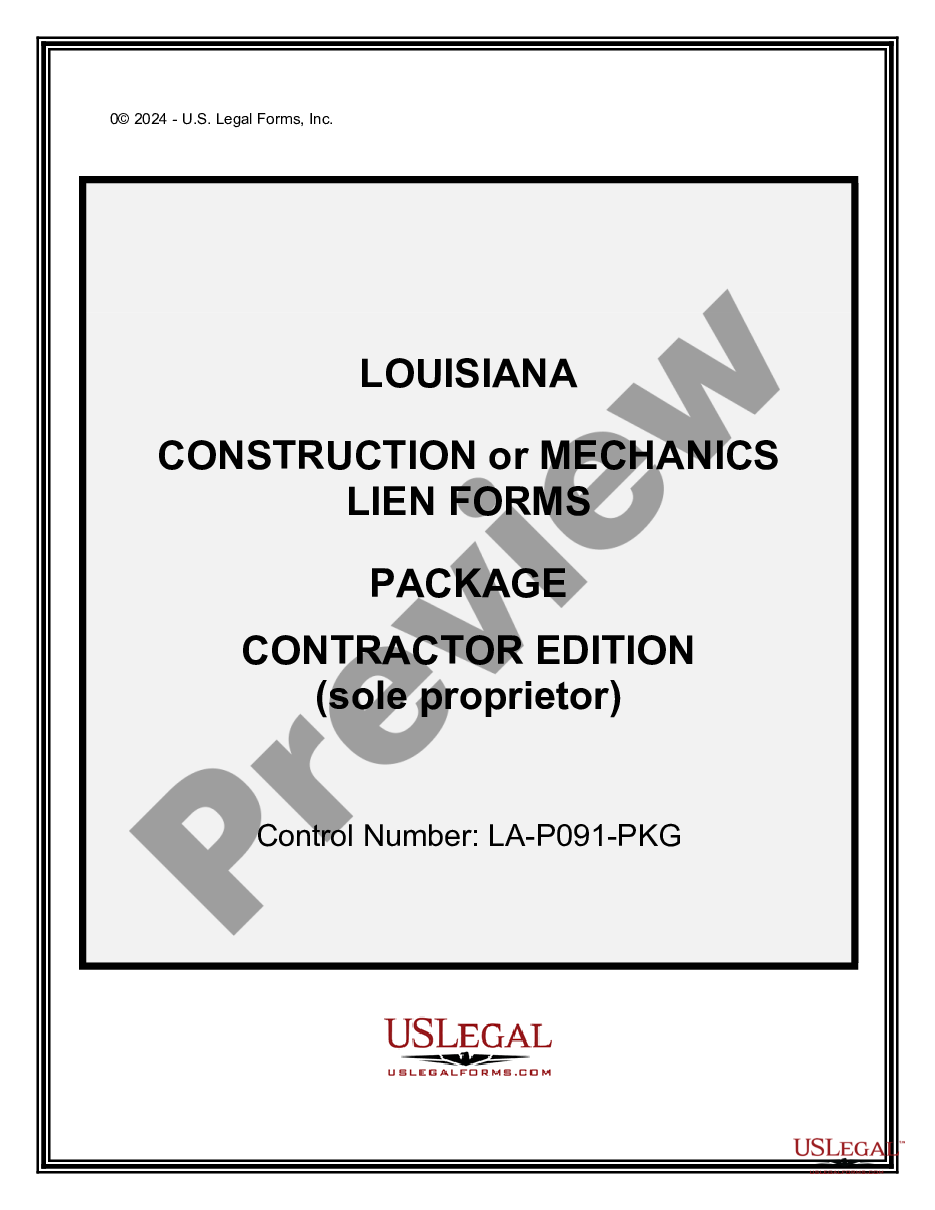
Louisiana Construction or Mechanics Lien Package - Individual

What is this form package?
The Louisiana Construction or Mechanics Lien Package - Individual is designed for sole proprietors who provide labor, materials, or services to improve real property. Its primary purpose is to assist these individuals in recovering money owed for their work through a lien on the improved property. This package includes vital information about the construction lien process, a comprehensive list of necessary forms, detailed descriptions of each form, tips for completing them, and a law summary specific to Louisiana. Notably, this package does not include forms for property owners, distinguishing it from other lien form packages.
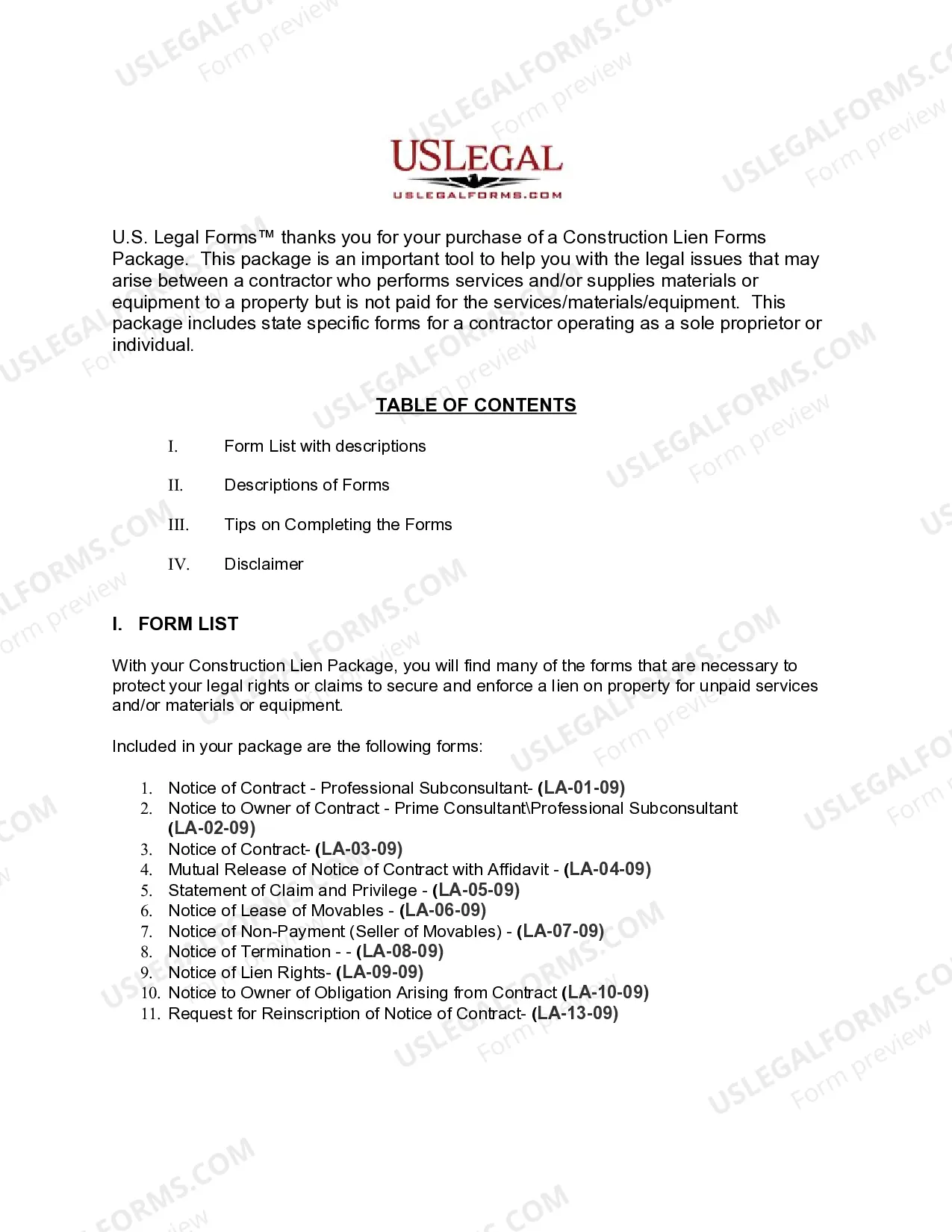
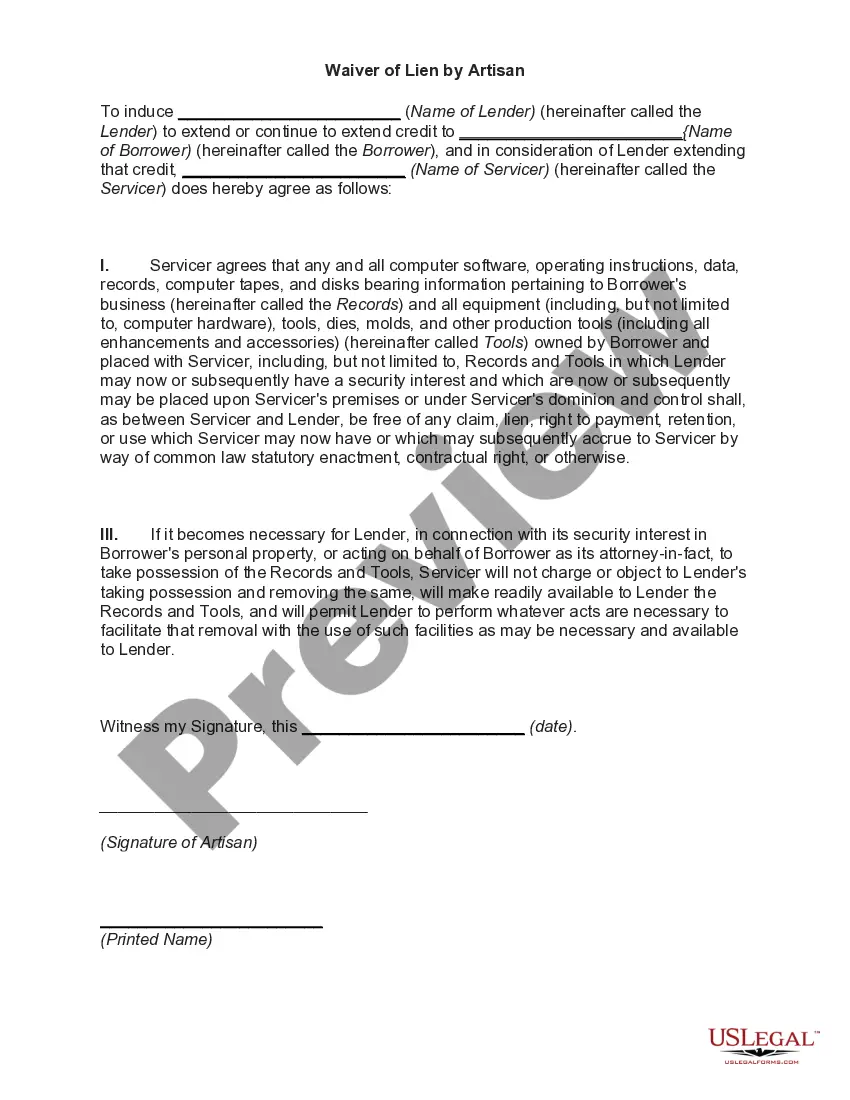
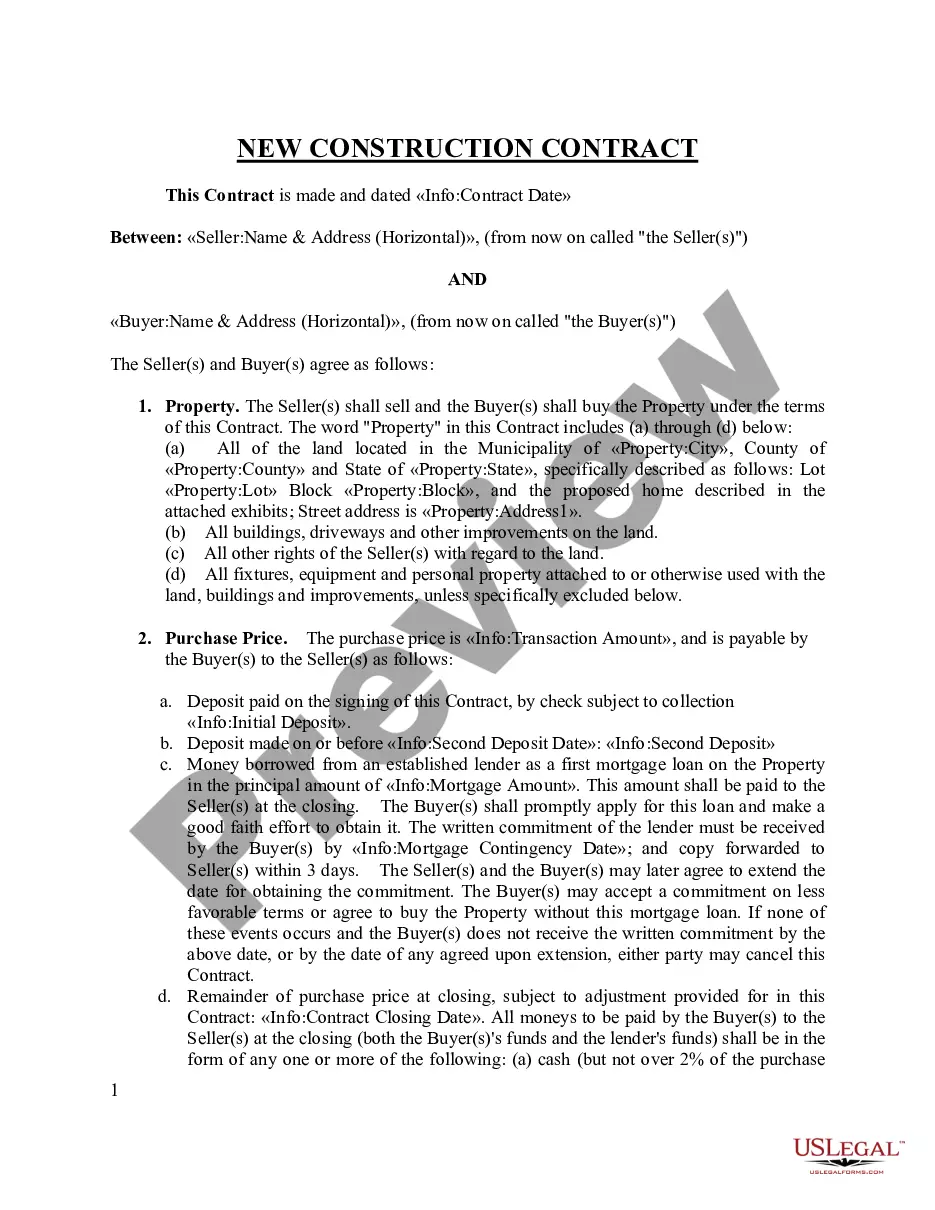
Forms included in this package
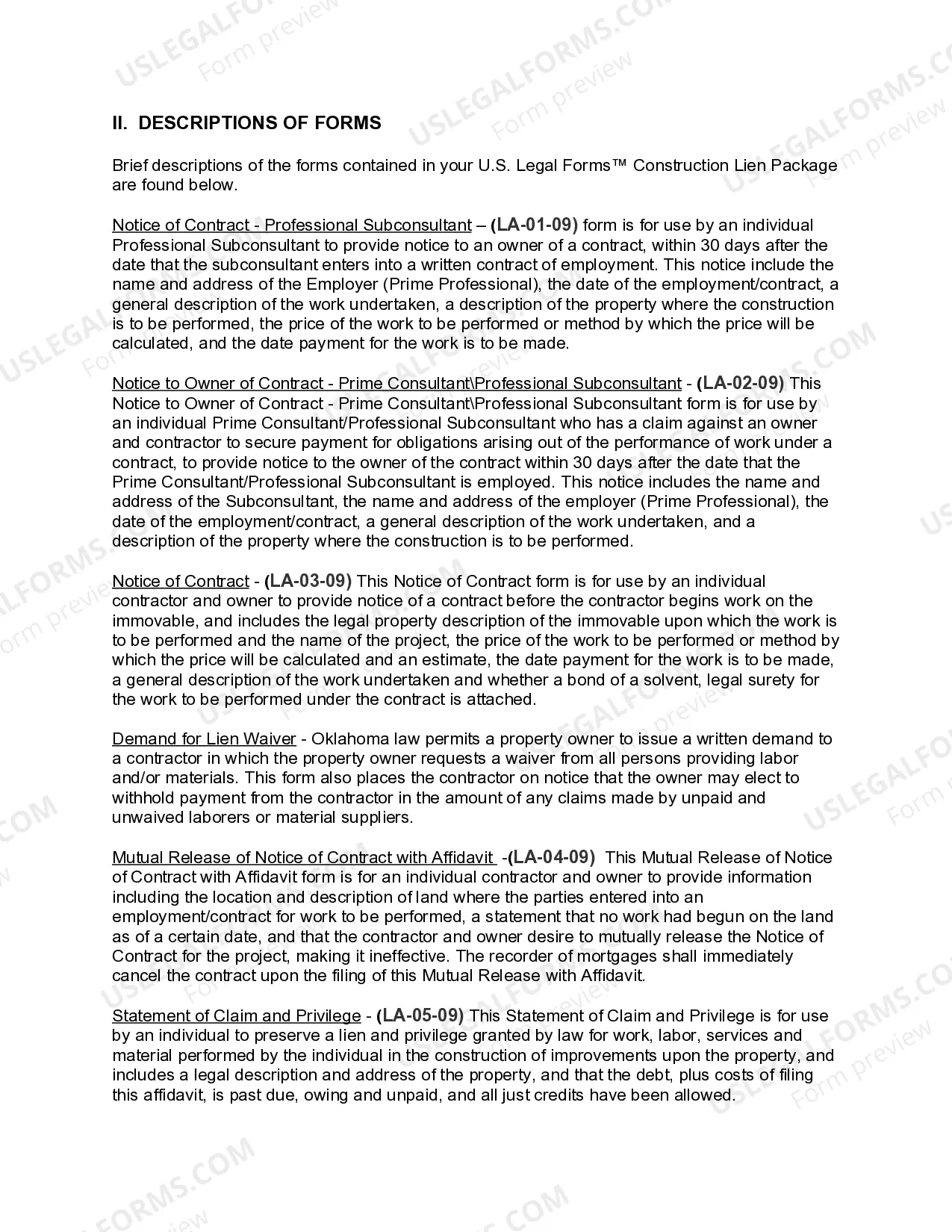
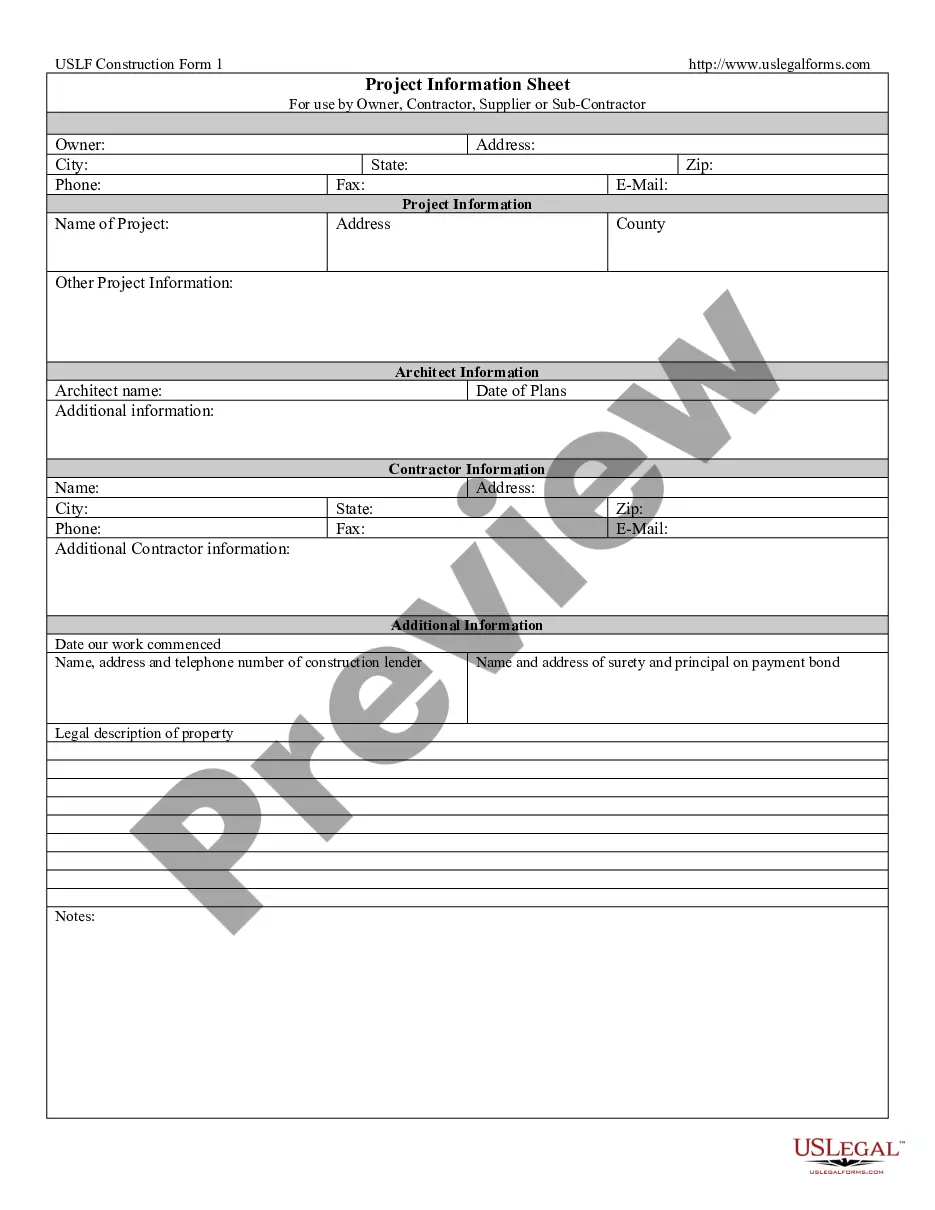
- Notice of Contract - Professional Sub-consultant - Individual
- Notice to Owner of Contract - Prime Consultant\Professional Sub-consultant - Individual
- Notice of Contract - Individual
- Mutual Release of Notice of Contract with Affidavit - Individual
- Statement of Claim and Privilege - Individual
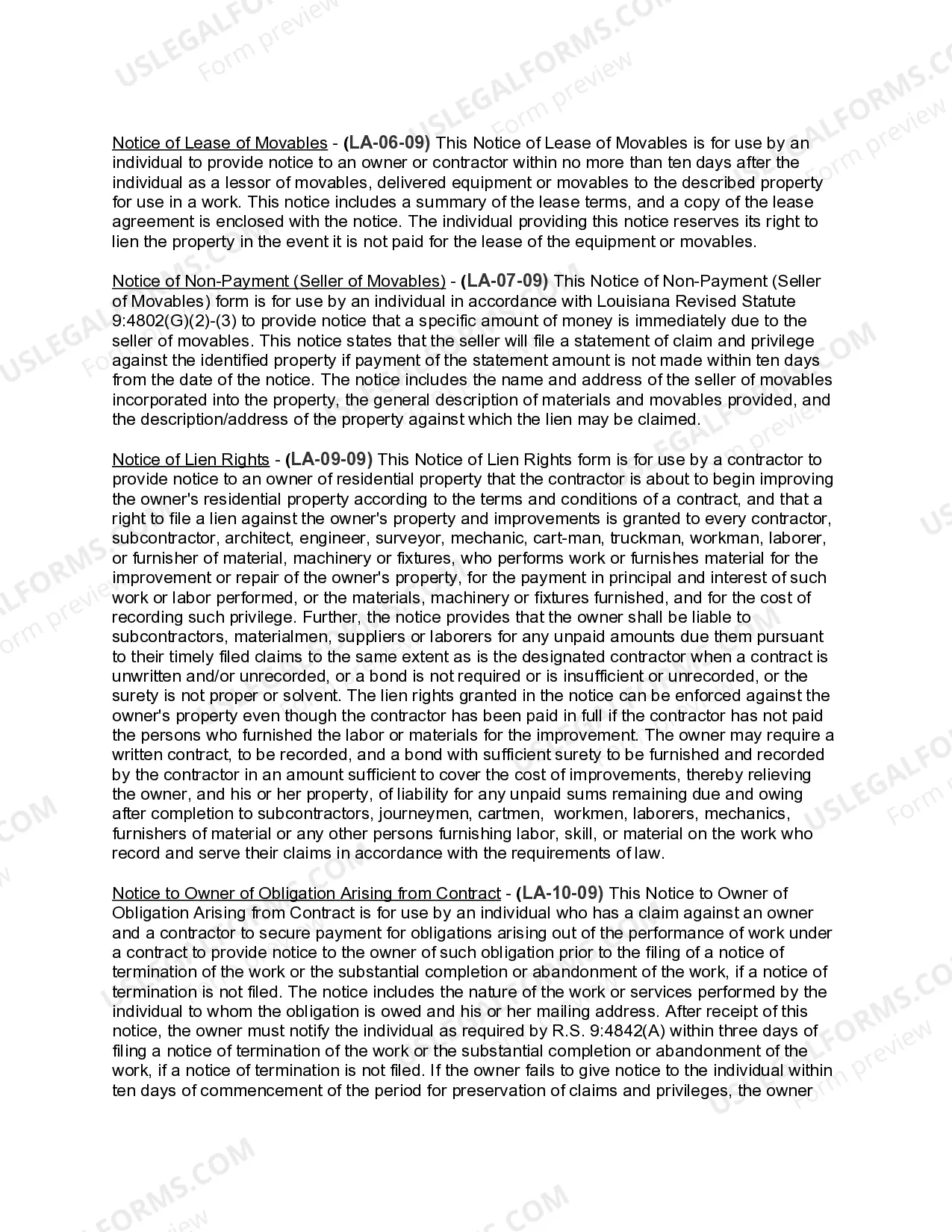
- Notice of Lease of Movables - Individual
- Notice of NonPayment (Seller of Movables) - Individual
- Notice of Termination - Individual
- Notice of Lien Rights - Individual
- Notice to Owner of Obligation Arising from Contract - Individual
- Request for Reinscription of Notice of Contract - Individual

When to use this document
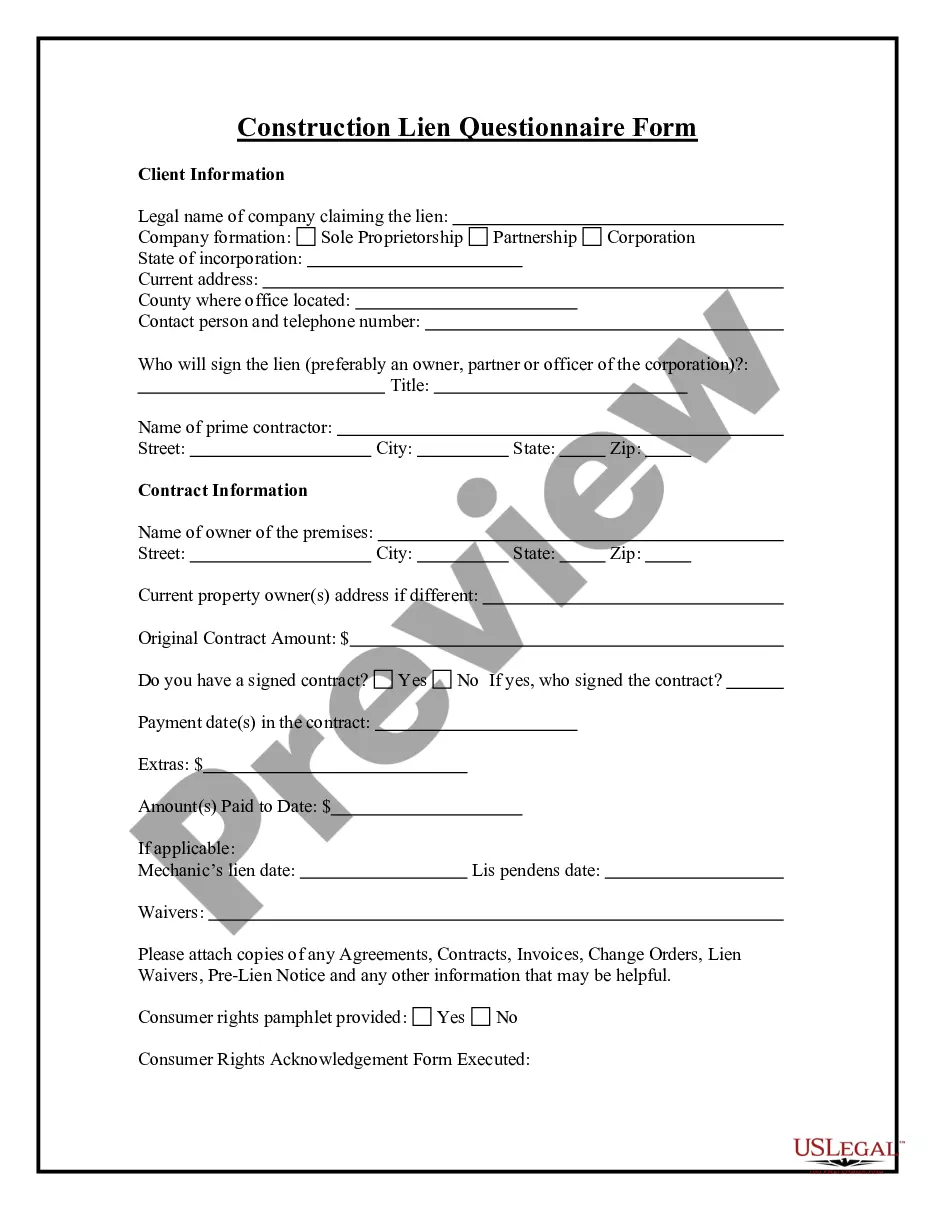
This form package is essential when a sole proprietor has provided labor, materials, or services for construction or improvement work and has not been compensated. It can be used in the following scenarios:
- When a contractor completes work but does not receive payment from the property owner.
- When materials are supplied, but the supplier has not been paid.
- When there is a need to secure payment through a legal claim against the property improved.
Intended users of this form package
- Sole proprietors in the construction industry.
- Individuals providing labor or materials for real estate projects.
- Contractors seeking to secure payment through a mechanics lien.
- Anyone needing to enforce their rights under Louisiana lien laws.
How to prepare this document
- Review the included forms in the package to understand their purposes.
- Identify the parties involved, listing your information as the sole proprietor and relevant property owner details.
- Fill out the required fields in each form electronically or by hand, ensuring all information is accurate and complete.
- Follow the tips provided in the package for effective form completion and submission.
- File the completed forms according to Louisiana's lien filing procedures.
Notarization guidance for this package
Forms in this package typically do not require notarization unless required by local law. However, it is essential to review each form individually for any specific requirements regarding notarization or witness signatures.
Get your form ready online
Our built-in tools help you complete, sign, share, and store your documents in one place.
Make edits, fill in missing information, and update formatting in US Legal Forms—just like you would in MS Word.
Download a copy, print it, send it by email, or mail it via USPS—whatever works best for your next step.
Sign and collect signatures with our SignNow integration. Send to multiple recipients, set reminders, and more. Go Premium to unlock E-Sign.
If this form requires notarization, complete it online through a secure video call—no need to meet a notary in person or wait for an appointment.
We protect your documents and personal data by following strict security and privacy standards.

Make edits, fill in missing information, and update formatting in US Legal Forms—just like you would in MS Word.

Download a copy, print it, send it by email, or mail it via USPS—whatever works best for your next step.

Sign and collect signatures with our SignNow integration. Send to multiple recipients, set reminders, and more. Go Premium to unlock E-Sign.

If this form requires notarization, complete it online through a secure video call—no need to meet a notary in person or wait for an appointment.

We protect your documents and personal data by following strict security and privacy standards.
Mistakes to watch out for
- Failing to provide complete information on the forms.
- Not filing the lien within the statutory time frame.
- Neglecting to send required notices to the property owner.
- Using incorrect or outdated forms for the lien process.
Benefits of using this package online
- Convenience of downloading forms from anywhere at any time.
- Editability allows customization to meet specific needs easily.
- Access to comprehensive legal information and instructions to support completion.
- Reliability in using attorney-drafted forms tailored to Louisiana law.
Main things to remember
- This package is essential for sole proprietors seeking lien rights in Louisiana.
- Completing the forms accurately and timely is critical for enforcement.
- Understanding state-specific requirements is vital for effective use of the forms.
Looking for another form?


Form popularity
FAQ
Filing a construction lien on residential projects requires filing a Notice of Unpaid Balance and Right to File Lien within 90 days of the last day of service. The homeowner must also get a copy of that notice within 10 days of its filing.
Complete the Louisiana Statement of Claim and Privilege form. Record the claim form with the recorder of mortgages office in the parish where the property is located. Serve notice of the lien claim to the property owner.
If the Notice of Contract is filed, a contractor has 60 days from the filing of a Notice of Acceptance to file a Louisiana mechanics lien. If no Notice of Contract has been filed, a contractor has 60 days from completion on the project to file a Louisiana mechanics lien if the contract amount is less than $25,000.
Complete the Louisiana Statement of Claim and Privilege form. Record the claim form with the recorder of mortgages office in the parish where the property is located. Serve notice of the lien claim to the property owner.
Even though these states may permit project participants to secure lien rights and claim a mechanics lien even without a written contract, it is generally best practice to have a signed written contract for work provided.
The simplest way to prevent liens and ensure that subcontractors and suppliers are paid is to pay with joint checks. This is when both parties endorse the check. Compare the contractor's materials or labor bill to the schedule of payments in your contract and the Preliminary Notices.
Who you are. The services or materials you provided. The last date you provided the services or materials. How much payment should be. The date on which you will file a lien if you do not receive payment. How the debtor should pay.
Who you are. The services or materials you provided. The last date you provided the services or materials. How much payment should be. The date on which you will file a lien if you do not receive payment. How the debtor should pay.
While they don't require lien filings to be notarized, they do require a lien filer to jump through various other hoops that, if not done properly, might cause your filing to be rejected or invalidated: Delaware.