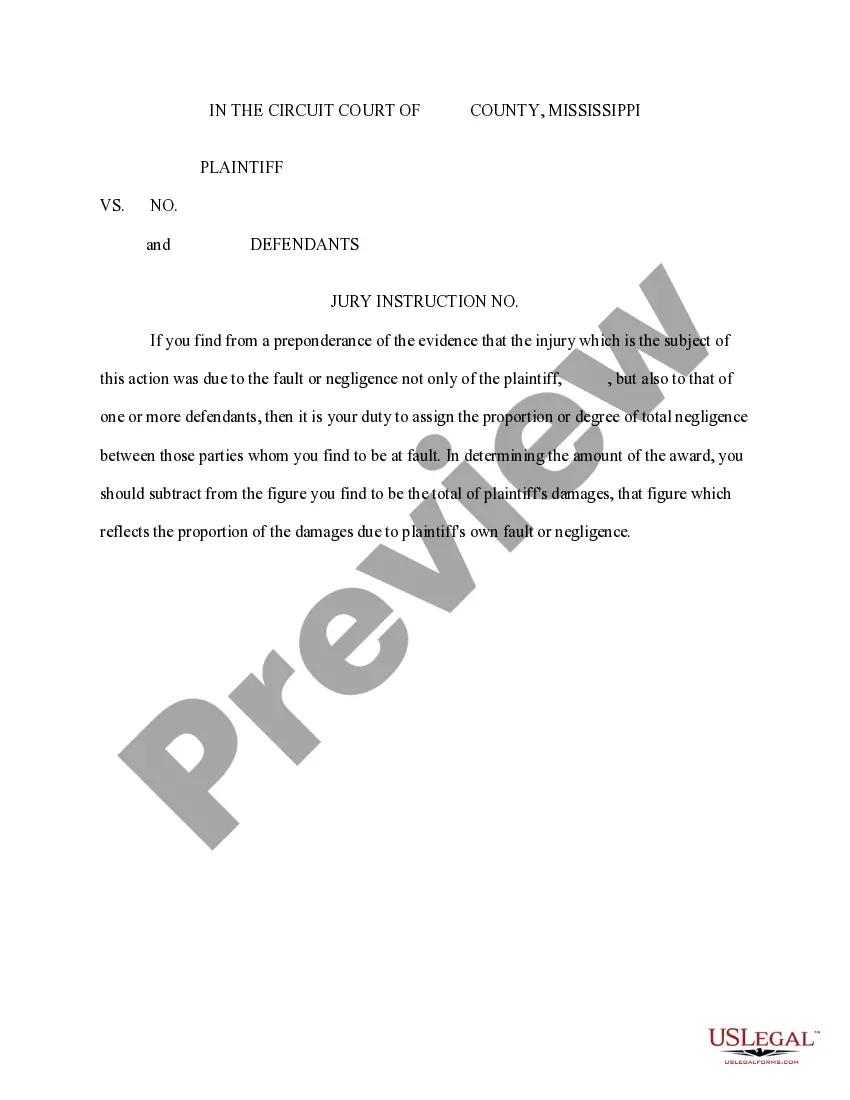
Louisiana Sale and Mortgage
Understanding this form
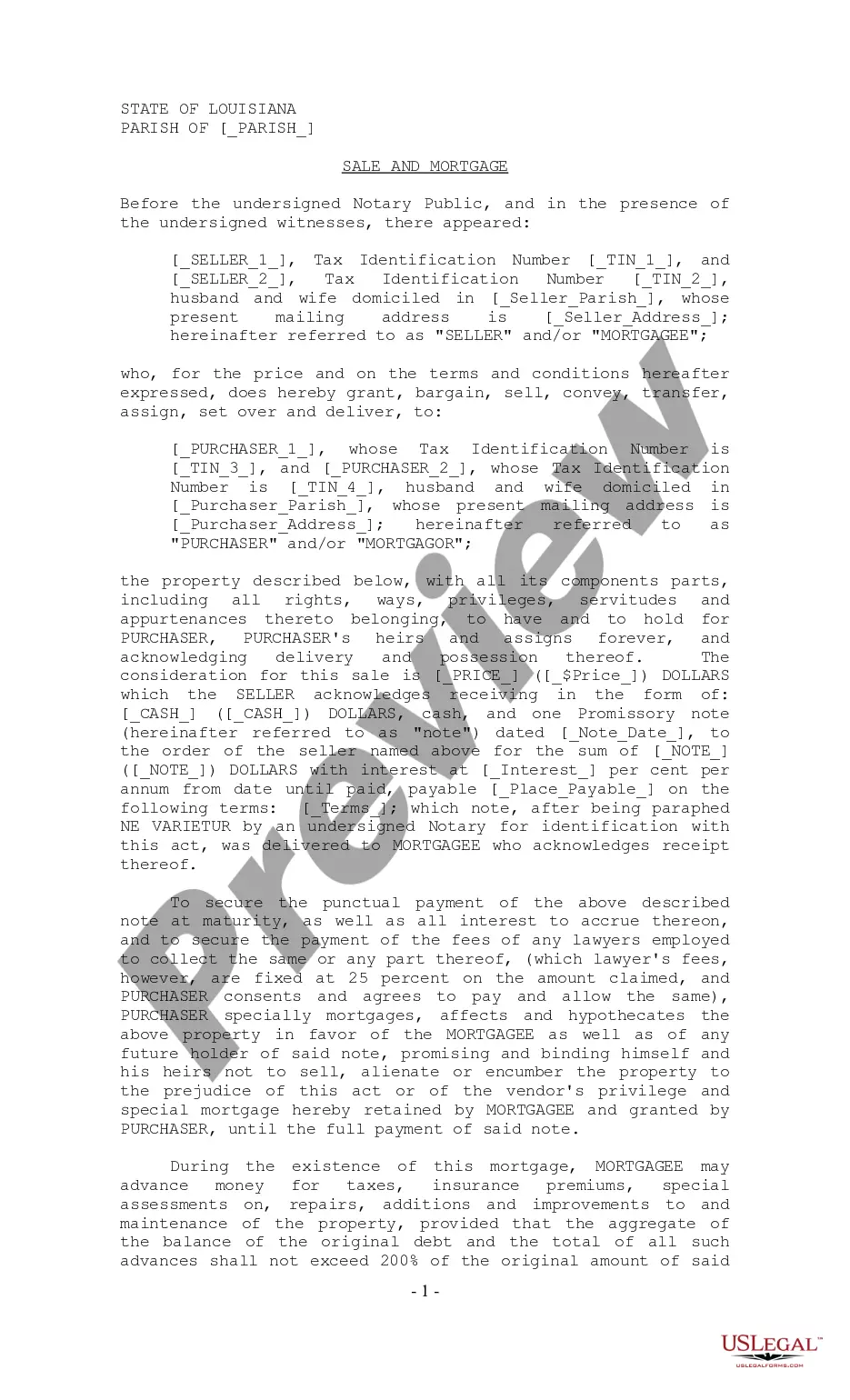
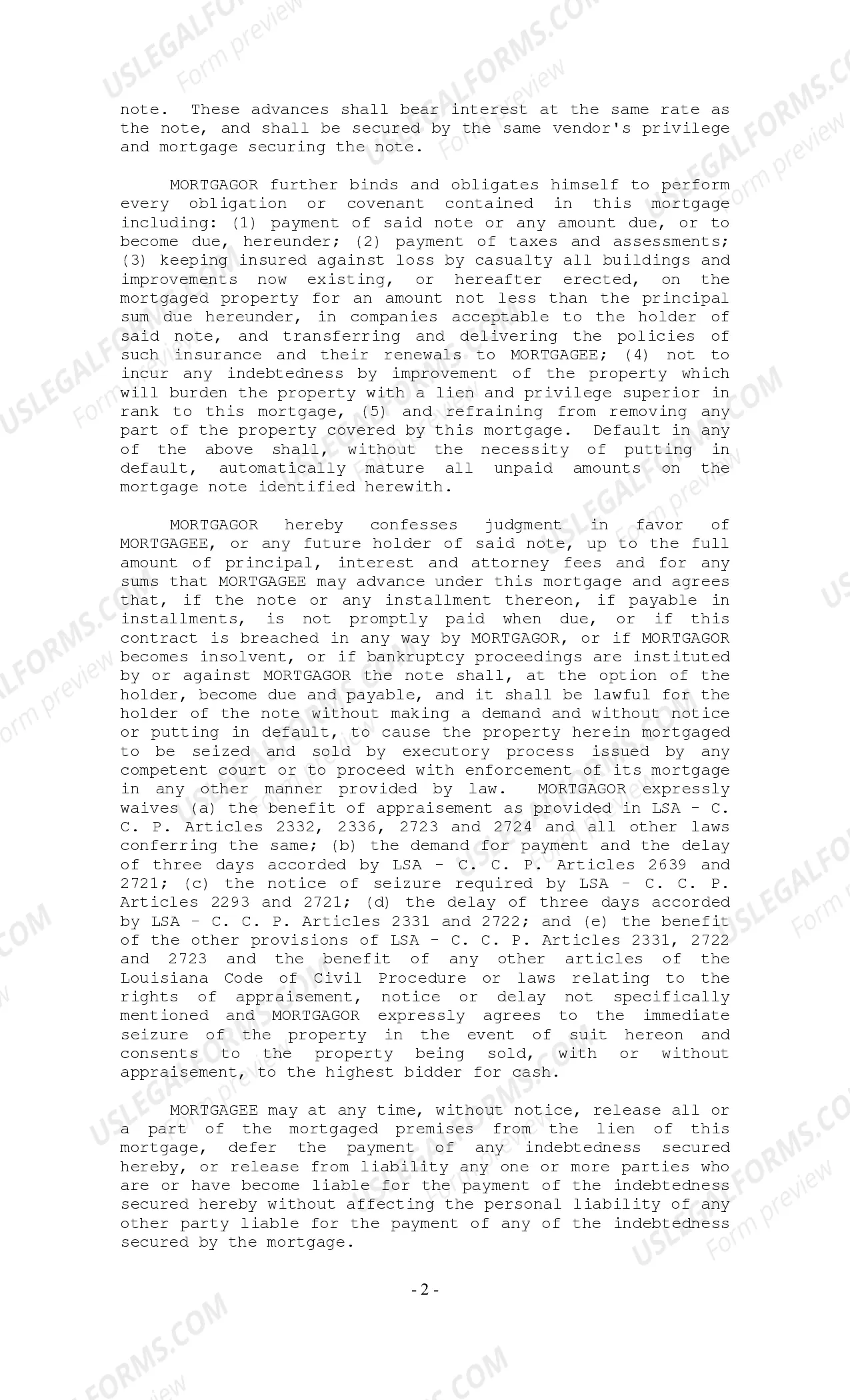
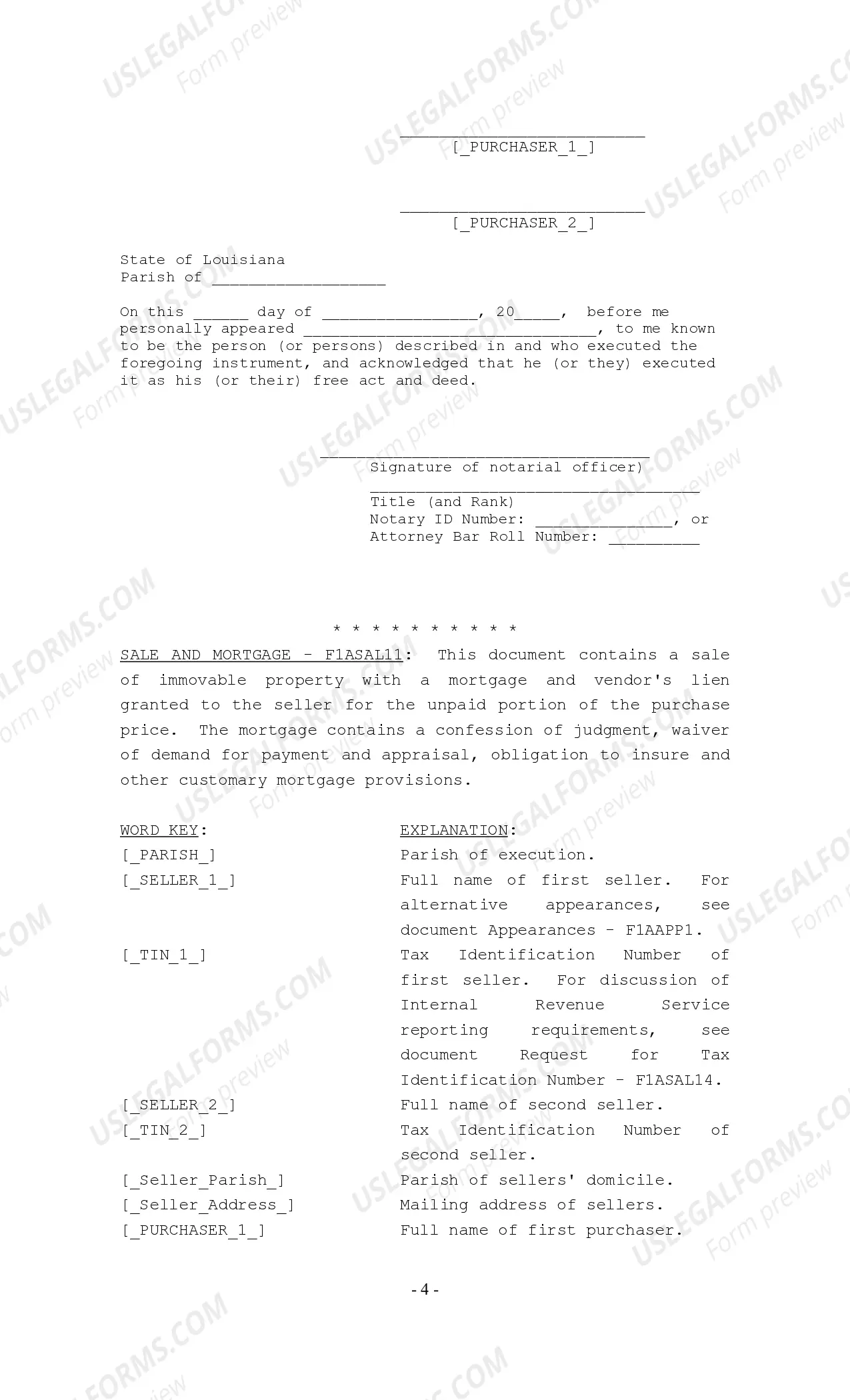
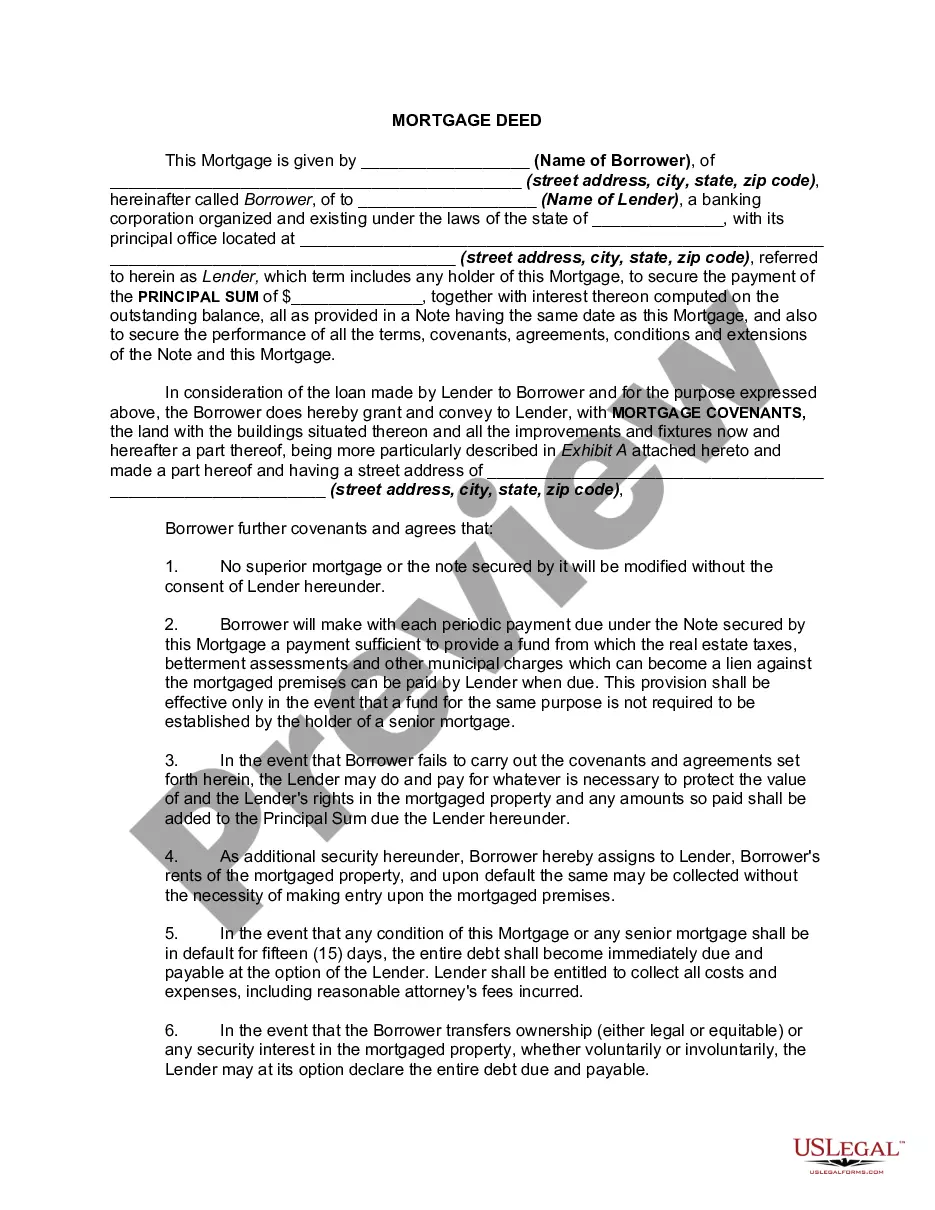
The Sale and Mortgage form is a legal document that formalizes the sale of immovable property while also establishing a mortgage secured by the property for the unpaid portion of the purchase price. This form differs from simple sales agreements by incorporating mortgage terms, including provisions related to judgment confession, waiver of demand for payment, and mandatory insurance obligations. It ensures that both the seller and buyer understand their rights and responsibilities concerning the property transaction and mortgage agreement.
Key components of this form
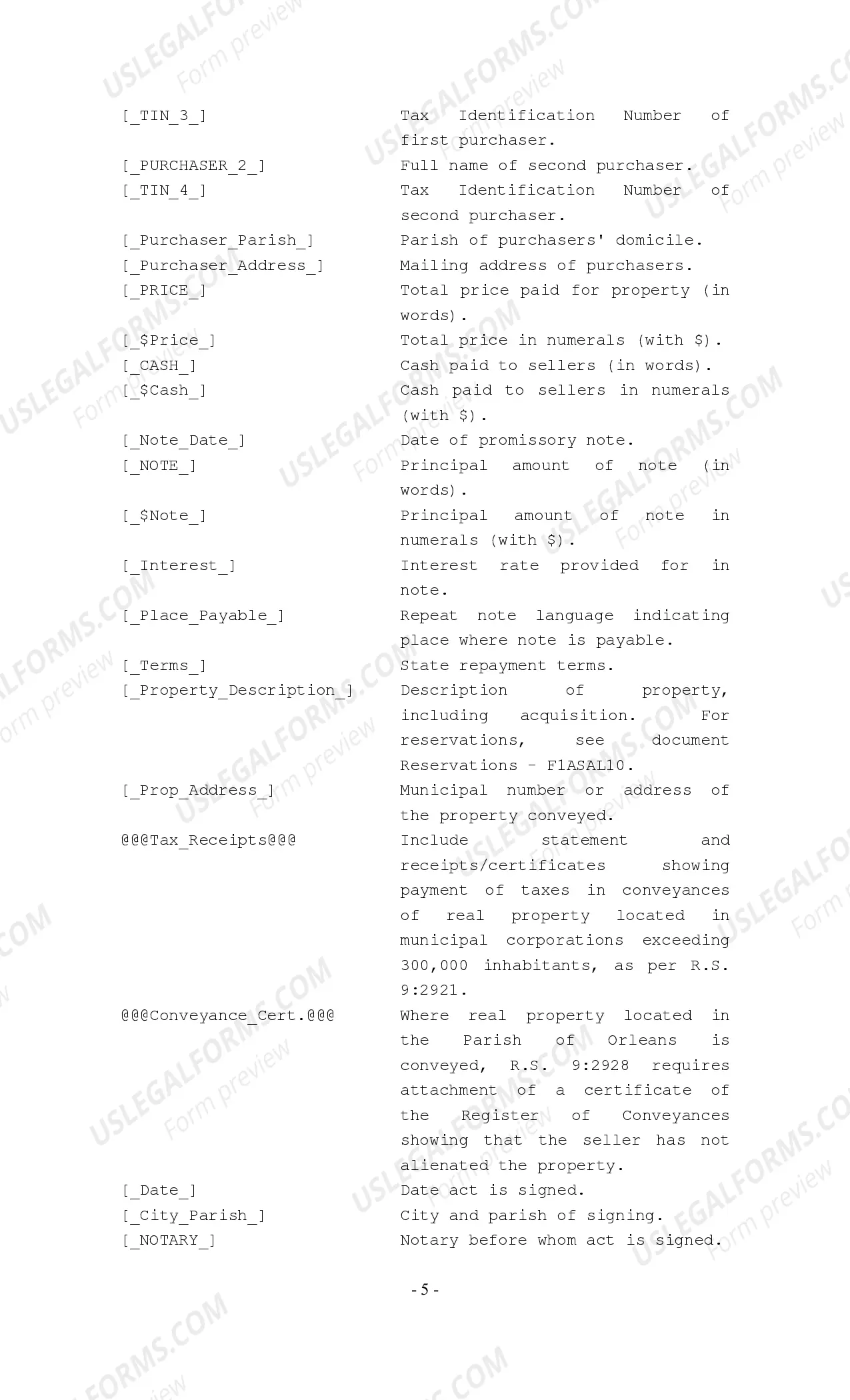
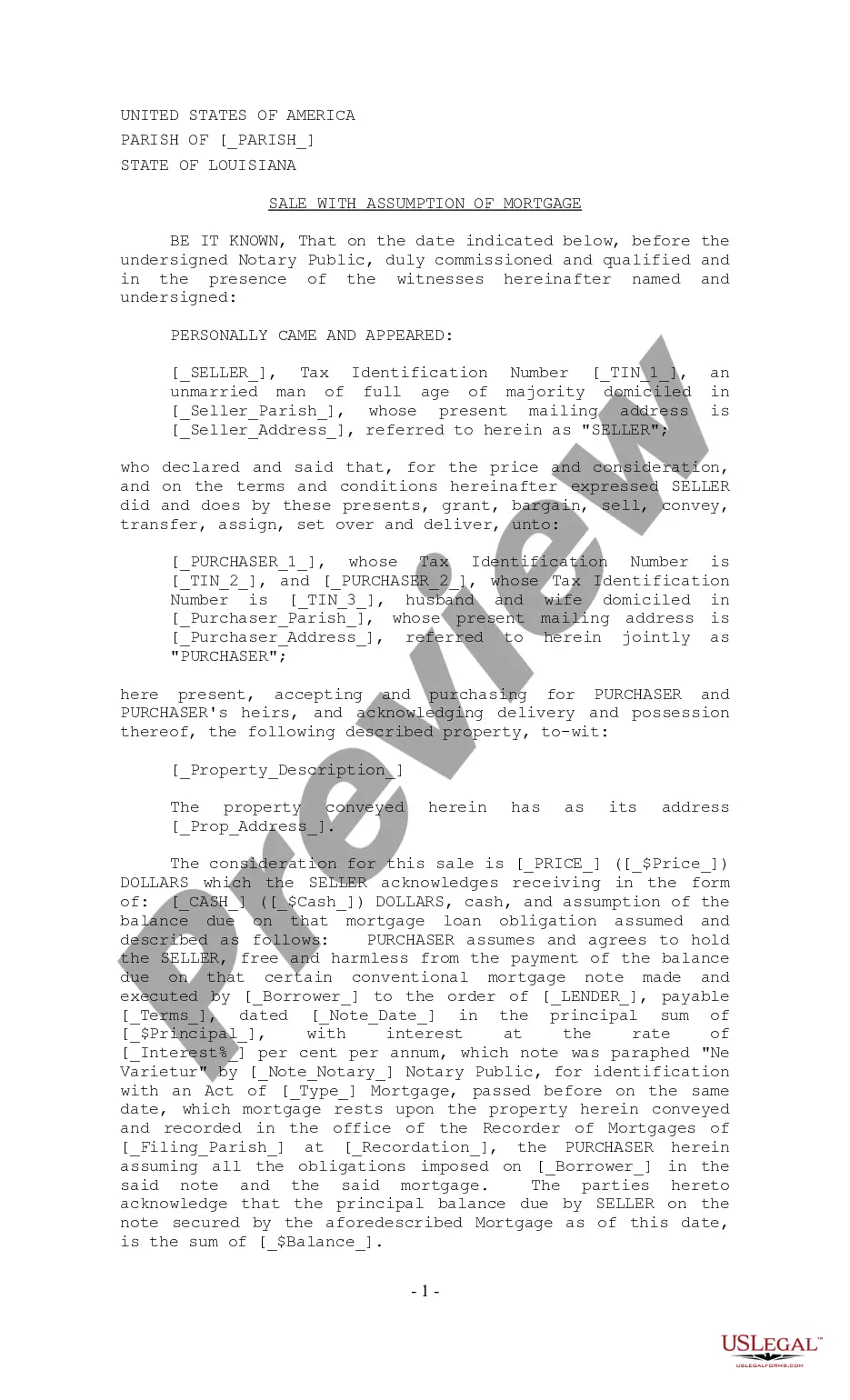
- Identification of the seller(s) and purchaser(s), including their Tax Identification Numbers.
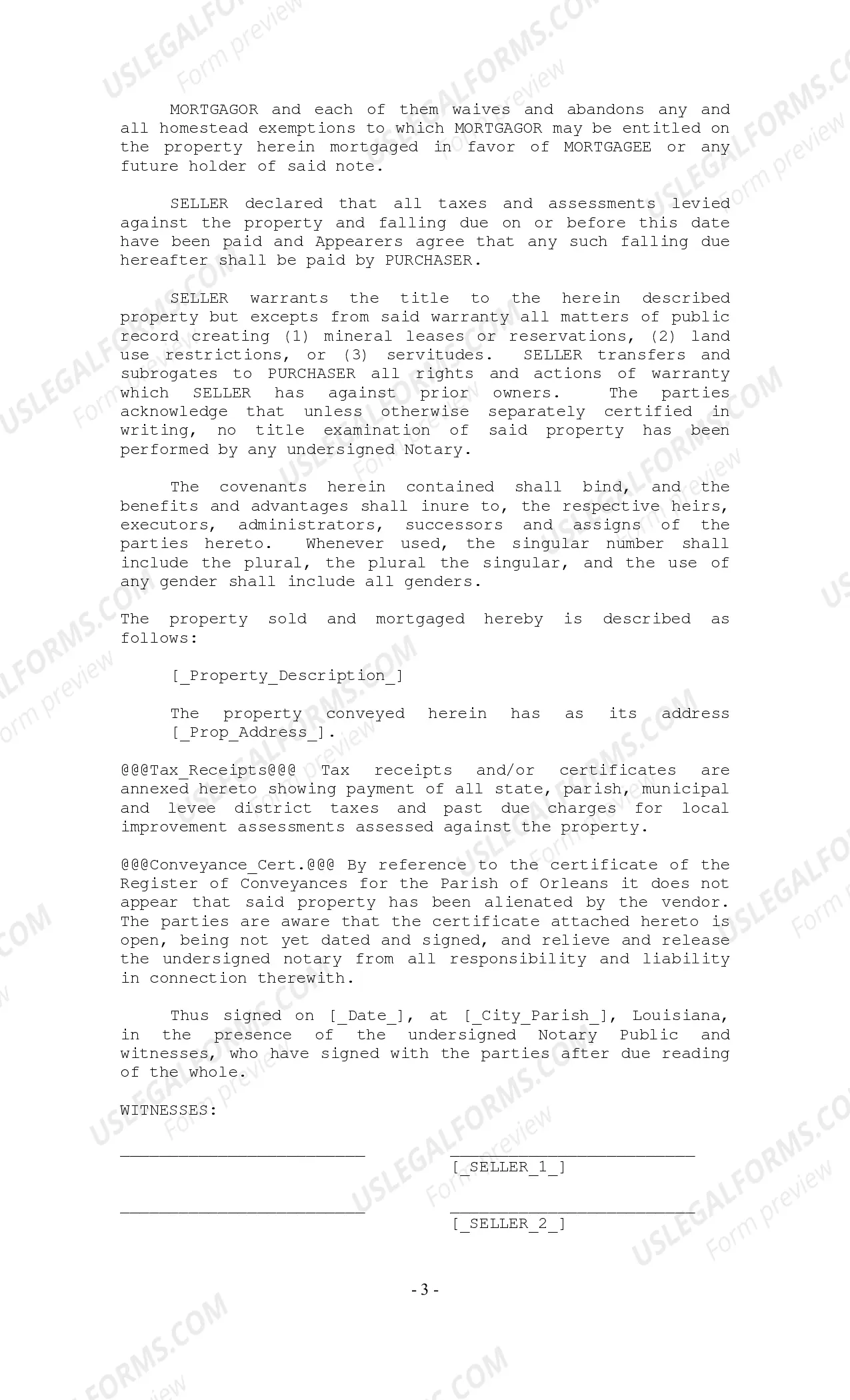
- Detailed description of the property being sold, including its address and components.
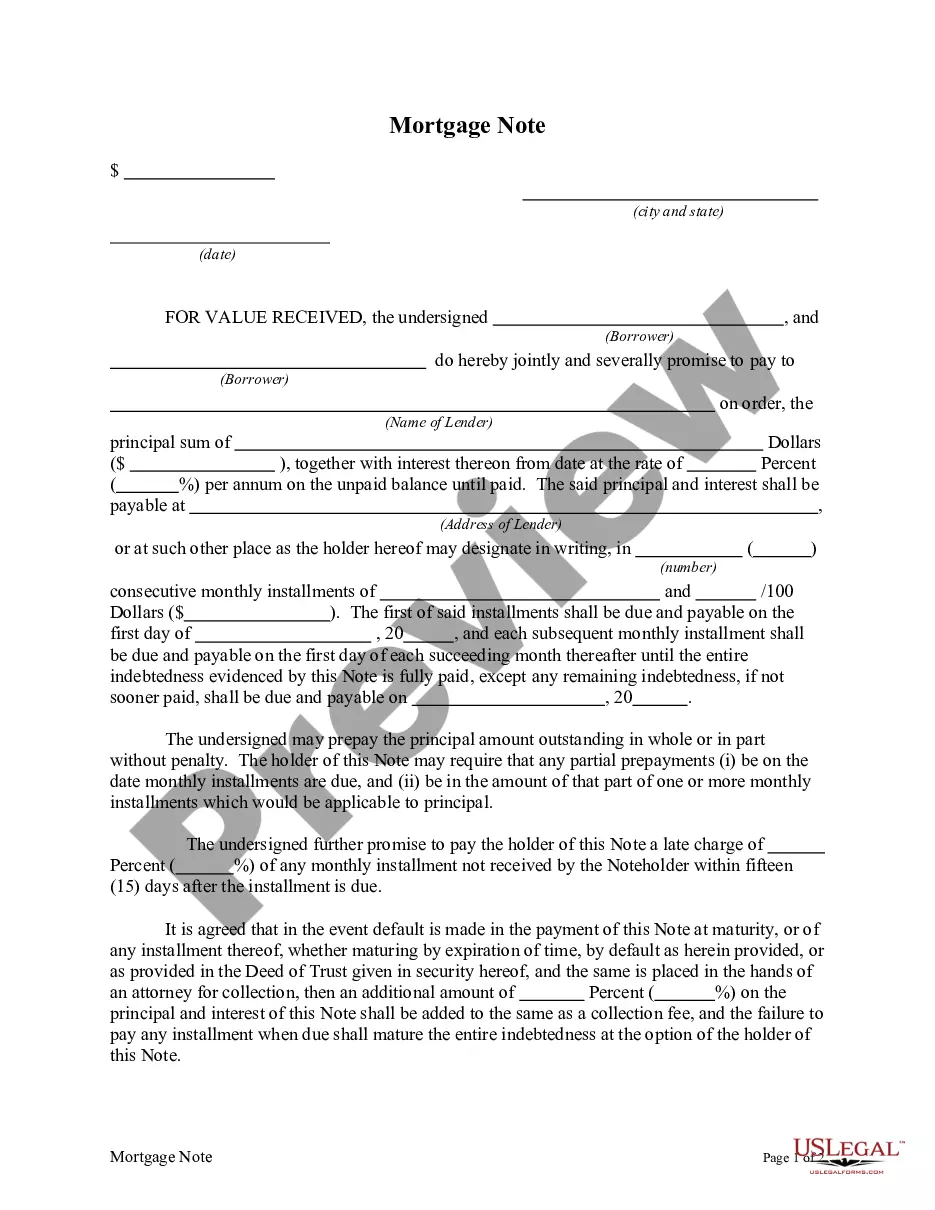
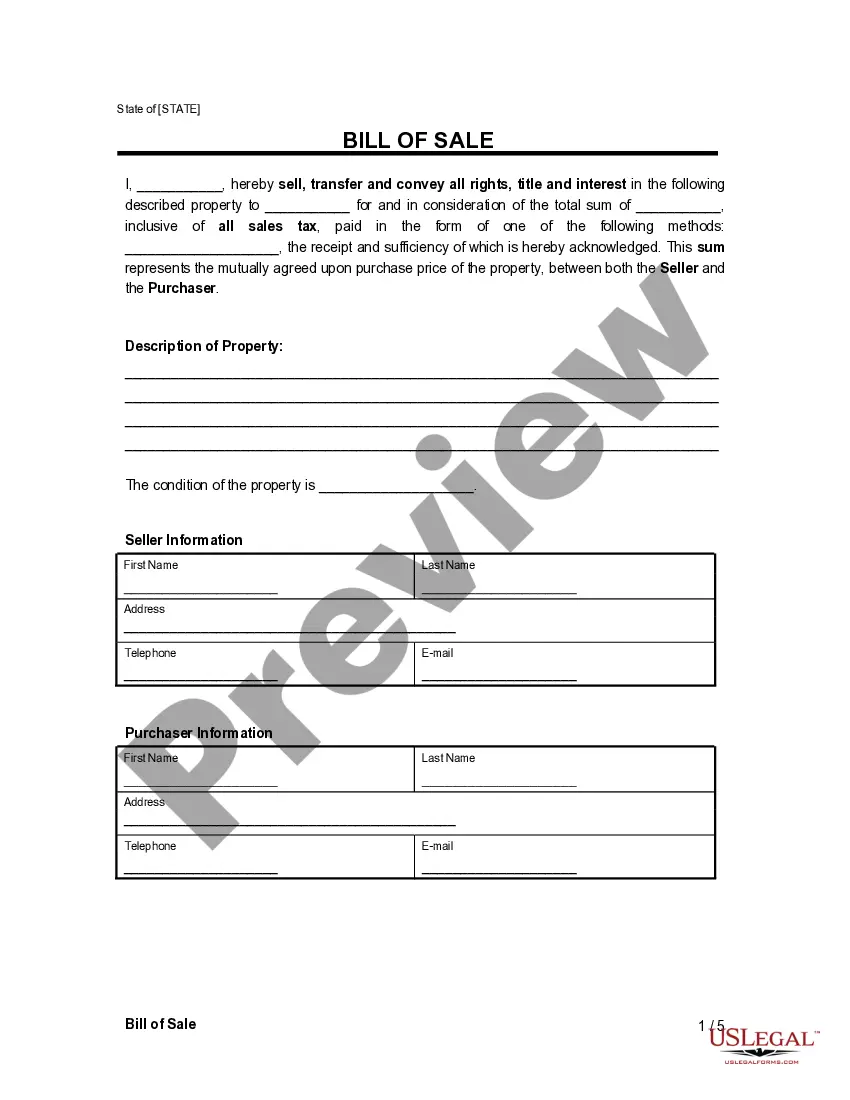
- Purchase price and payment details, including any promissory notes and payment terms.
- Mortgage provisions detailing the responsibilities of the purchaser and protections for the seller.
- Clauses about default and remedies, including confession of judgment and waiver of certain rights.

Common use cases
This form should be used during real estate transactions where the seller not only sells the property but also offers financing to the buyer through a mortgage. It is ideal in situations where the buyer cannot pay the full purchase price upfront and requires a structured payment plan that includes securing the property as collateral. Use this form when both parties agree on the terms of the sale and mortgage and want to legally formalize their agreement to protect their interests.
Who should use this form
This form is suitable for:
- Individuals or couples selling real estate who want to finance part of the sale price.
- Buyers who need to purchase a property but require a loan or mortgage agreement from the seller.
- Real estate agents or attorneys facilitating the sale and mortgage process on behalf of their clients.
Completing this form step by step
- Identify all parties involved: sellers and purchasers, including their full names and Tax Identification Numbers.
- Specify the property details, including precise descriptions and the property address.
- Enter the purchase price and specify how much cash is being paid versus the amount financed through a promissory note.
- Outline the terms of the mortgage, including the interest rate and payment schedule.
- Ensure that the form is signed in front of a notary public and witnessed appropriately.
Does this document require notarization?
To make this form legally binding, it must be notarized. Our online notarization service, powered by Notarize, lets you verify and sign documents remotely through an encrypted video session.
Get your form ready online
Our built-in tools help you complete, sign, share, and store your documents in one place.
Make edits, fill in missing information, and update formatting in US Legal Forms—just like you would in MS Word.
Download a copy, print it, send it by email, or mail it via USPS—whatever works best for your next step.
Sign and collect signatures with our SignNow integration. Send to multiple recipients, set reminders, and more. Go Premium to unlock E-Sign.
If this form requires notarization, complete it online through a secure video call—no need to meet a notary in person or wait for an appointment.
We protect your documents and personal data by following strict security and privacy standards.

Make edits, fill in missing information, and update formatting in US Legal Forms—just like you would in MS Word.

Download a copy, print it, send it by email, or mail it via USPS—whatever works best for your next step.

Sign and collect signatures with our SignNow integration. Send to multiple recipients, set reminders, and more. Go Premium to unlock E-Sign.

If this form requires notarization, complete it online through a secure video call—no need to meet a notary in person or wait for an appointment.

We protect your documents and personal data by following strict security and privacy standards.
Typical mistakes to avoid
- Failing to accurately describe the property, which can lead to legal disputes.
- Not including all required signatures from both parties and witnesses.
- Leaving out the terms of the promissory note or mortgage that can create confusion later.
- Not notarizing the document, which may render it unenforceable.
Benefits of using this form online
- Convenience of downloading the form and filling it out at your own pace.
- Editability allows for adjustments tailored to your specific transaction needs.
- Access to professionally drafted documents ensures legal compliance and accuracy.
- Availability of guidance and support throughout the process.
What to keep in mind
- The Sale and Mortgage form is essential for real estate transactions involving seller financing.
- Accurate completion of the form protects the interests of both the seller and buyer.
- Notarization is required to ensure the document's legal validity.
- Understanding each component of the form is critical to avoid common mistakes.
Looking for another form?
Form popularity
FAQ
Title fees (or attorney fees) Pre-paids and escrow (property taxes and homeowner's insurance) Mortgage insurance. Loan-related fees (lender fees) Property-related fees (may also be found in lender fees)
At the top of the page, you should center the title between the left- and right-hand margins. Title your document something like Purchase and Sale Agreement or Agreement to Purchase Real Estate. Identify the parties to the sale. You need to identify the purchaser and the seller at the start of your agreement.
The real estate commission is usually the biggest fee a seller pays 5 percent to 6 percent of the sale price. If you sell your house for $250,000, say, you could end up paying $15,000 in commissions. The commission is split between the seller's real estate agent and the buyer's agent.
Scope Out the Competition (Be A Nosey Neighbor) Give Louisiana Buyers What They Want. Analyze Louisiana's Real Estate Market Data for a Correct Listing Price. Make Sure Your Real Estate Photographs Don't Suck.
Closing costs: ~1-3% While the buyers will typically be responsible for the lion's share, sellers should expect to pay between 1-3% of the home's final sale price at closing. Based on the average home value in Louisiana of $178,000, that roughly translates to $2,000 to $5,000.
A real estate deal can take a turn for the worst if the contract is not carefully written to include all the legal stipulations for both the buyer and seller.You can write your own real estate purchase agreement without paying any money as long as you include certain specifics about your home.
A seller can often expect to pay some significant closing costs, including real estate agent commissions, transfer taxes and recording fees.But then come all of the closing costs you're responsible for. Unlike buyers, sellers are usually on the hook for real estate agent commissions and title insurance.
According to lines 235 to 237 of the Louisiana Residential Agreement to Buy or Sell, SELLER's title shall be merchantable and free of all liens and encumbrances except those that can be satisfied at Act of Sale. All costs and fees required to make title merchantable shall be paid by SELLER.
Your Buyer pays for your house. The Buyer wires funds for down payment and closing costs to the Escrow Company. Then, if the Buyer is taking out a mortgage, the Buyer's Lender wires loan funds to the Title Company. If you sell your home to a cash buyer, the Buyer wires all the funds to the Escrow Company.