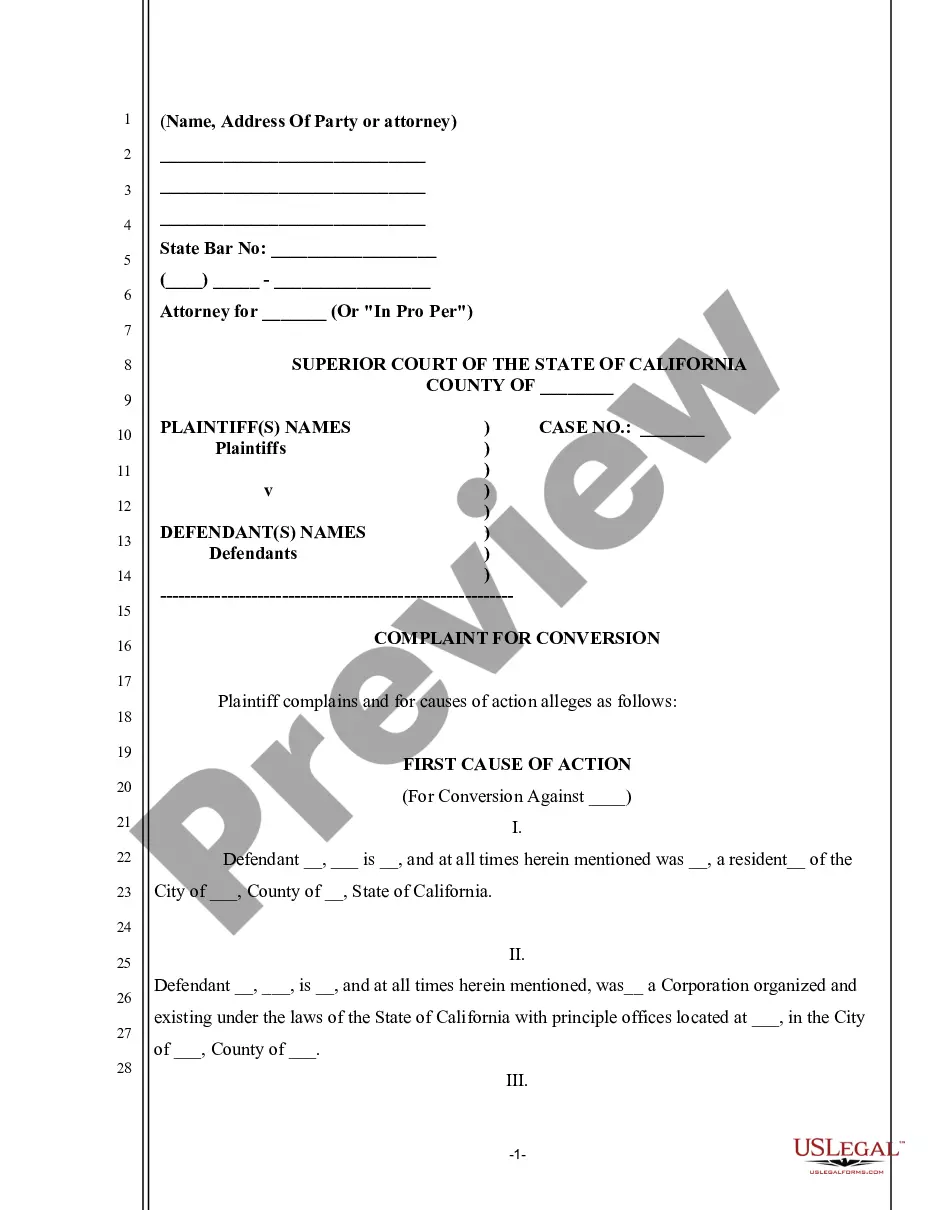
Mississippi Complaint
Understanding this form
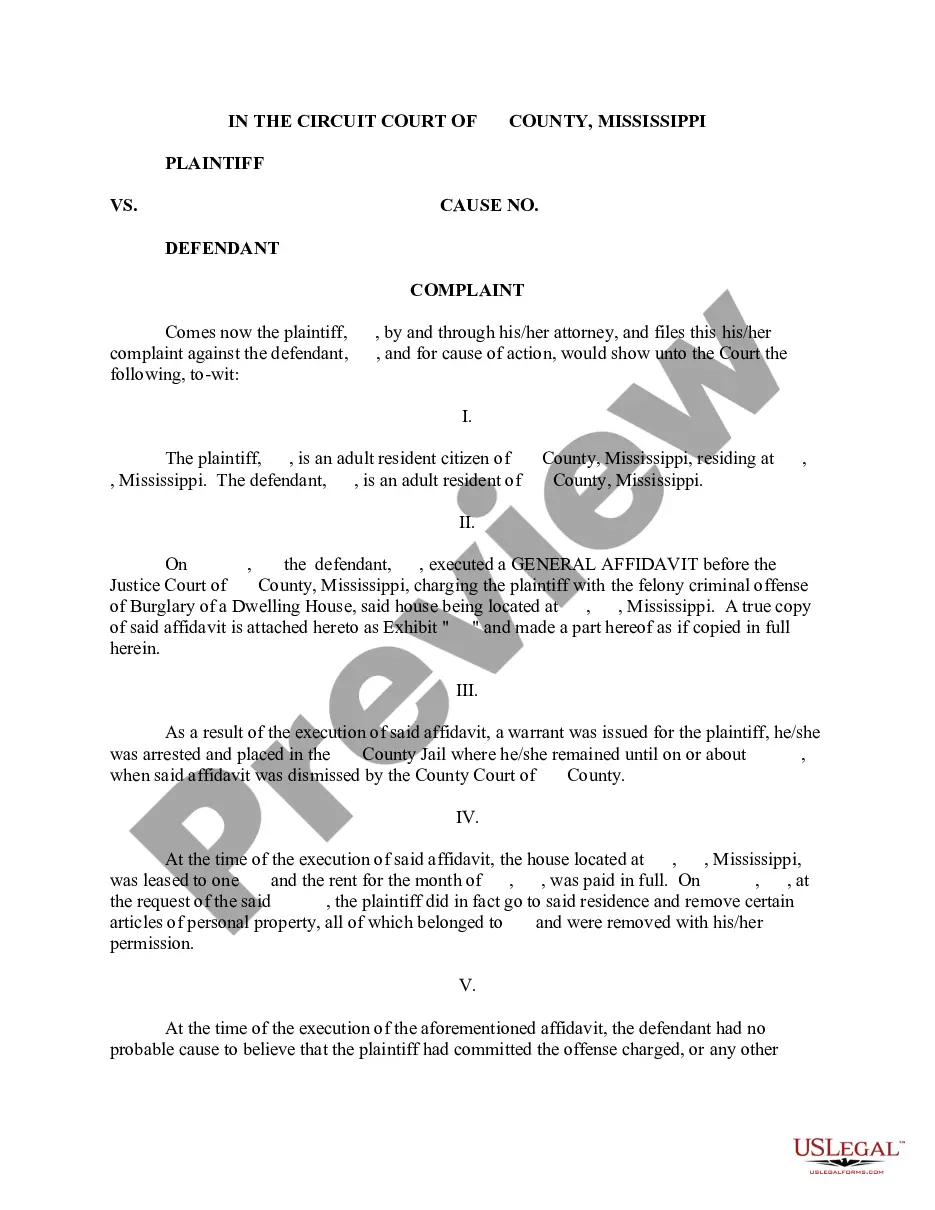
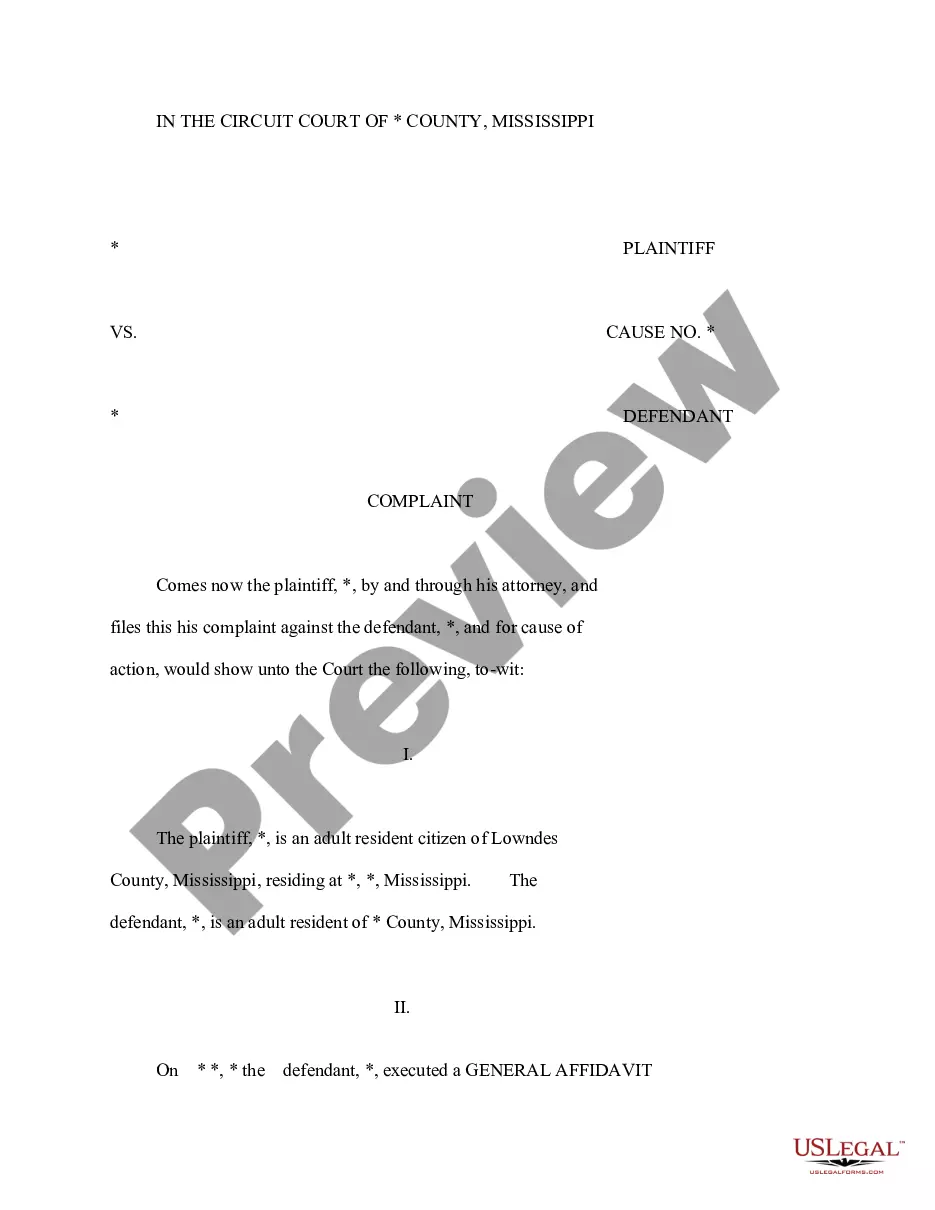
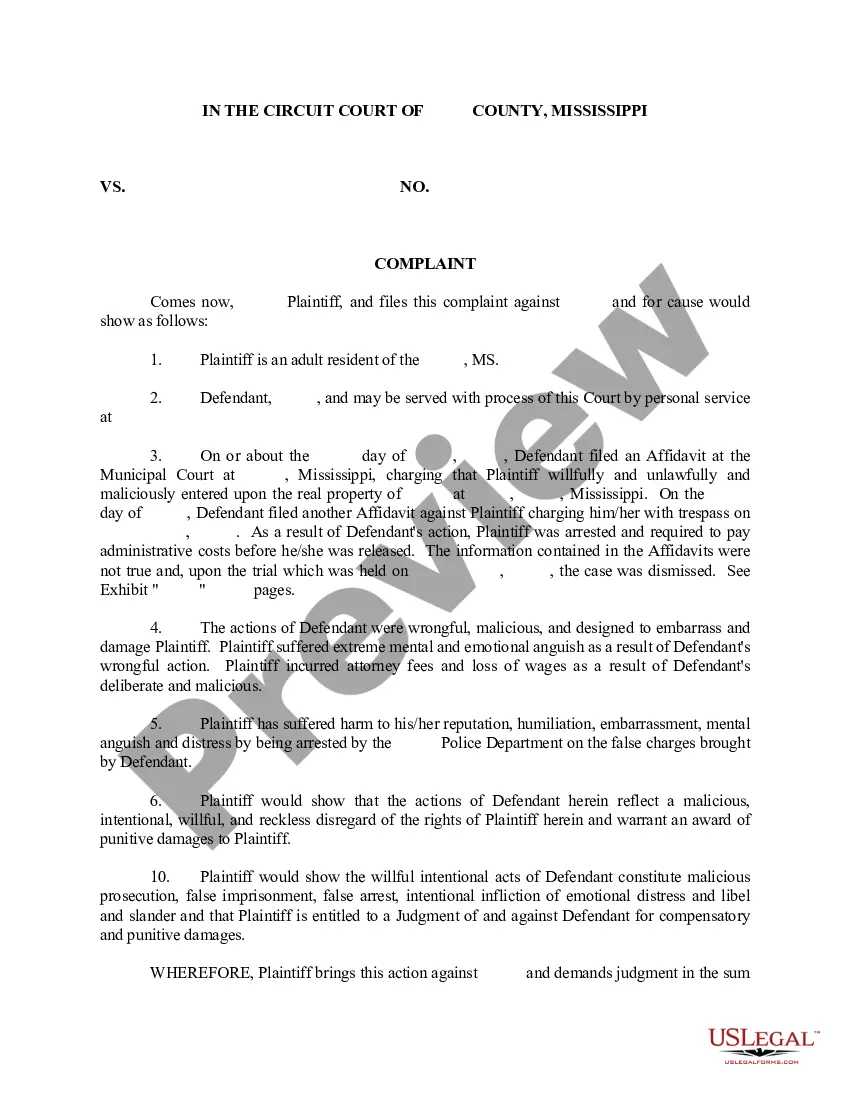
A Complaint serves as the formal legal document that initiates a lawsuit. It outlines the Plaintiff's allegations against the Defendant. This Complaint is specifically designed for use in cases of malicious prosecution, helping to set forth an individual's claims regarding wrongful legal actions taken against them. This form, downloadable in Word and Rich Text formats, ensures a clear structure for presenting your case.
Form components explained
- Case style section for identifying Plaintiff and Defendant.
- Allegations outlining the events leading to the lawsuit.
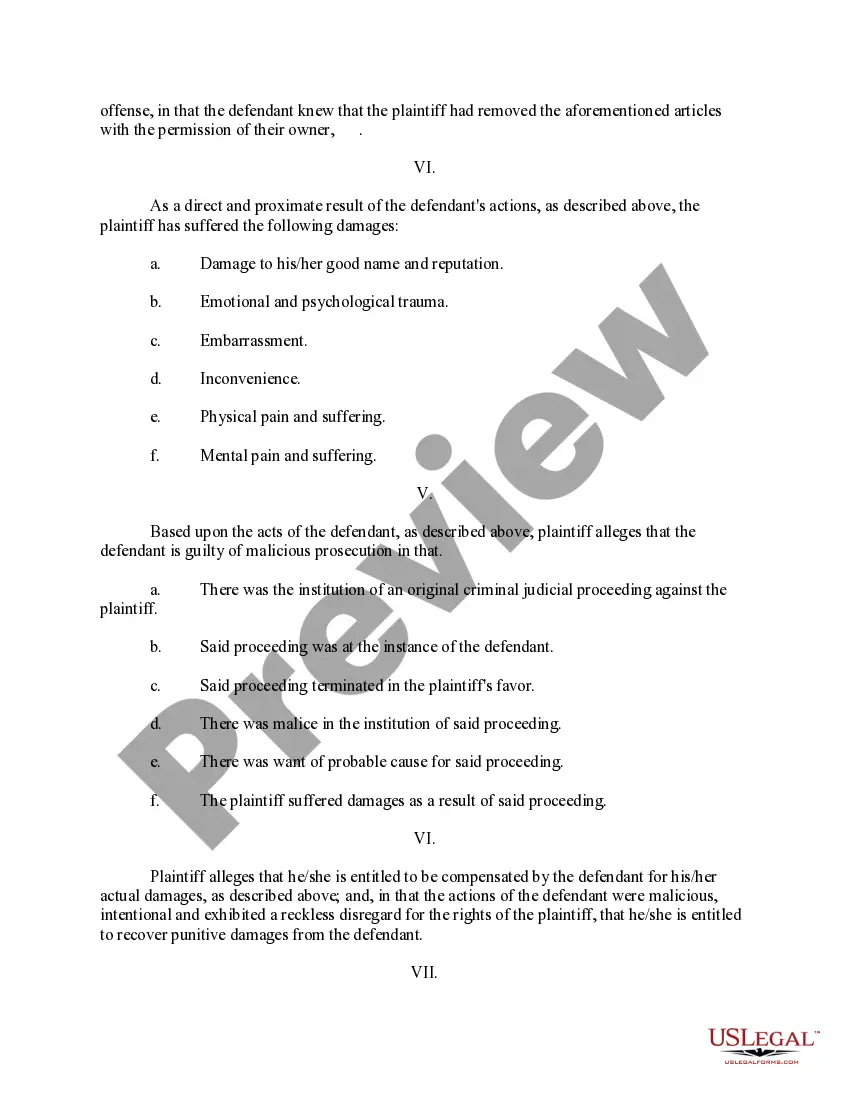
- Details about the specific action that constitutes malicious prosecution.
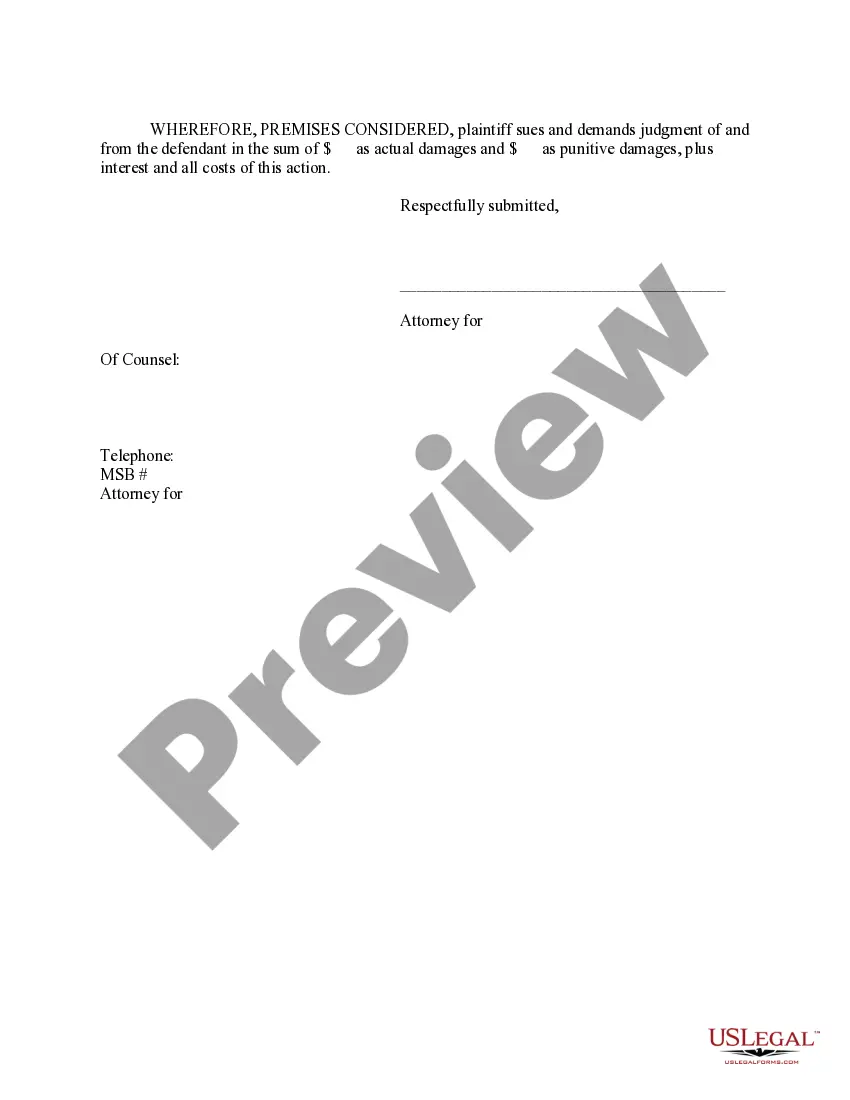
- Claims for actual and punitive damages due to the Defendant's actions.
- Signature block for the Plaintiff and/or their attorney.


When to use this document
This Complaint is used when an individual has been wrongfully prosecuted, resulting in damage to their reputation and emotional well-being. Situations may include wrongful arrest due to false claims by another party or legal actions that should not have been initiated based on lack of probable cause. If you seek to address the harm resulting from malicious prosecution, this form is appropriate.
Who can use this document
- Individuals claiming malicious prosecution against another party.
- People seeking to initiate legal proceedings based on wrongful allegations.
- Anyone who has suffered emotional or reputational harm due to false claims.
Completing this form step by step
- Identify the parties involved: clearly state the Plaintiff and Defendant.
- Detail the allegations: describe the actions taken by the Defendant and provide necessary dates.
- Attach relevant evidence: include copies of affidavits or documents that support your claims.
- Specify the damages: outline the emotional and financial impact of the Defendant's actions.
- Sign and date the form: ensure it is completed accurately by the Plaintiff or their attorney.
Does this document require notarization?
Notarization is not commonly needed for this form. However, certain documents or local rules may make it necessary. Our notarization service, powered by Notarize, allows you to finalize it securely online anytime, day or night.
Get your form ready online
Our built-in tools help you complete, sign, share, and store your documents in one place.
Make edits, fill in missing information, and update formatting in US Legal Forms—just like you would in MS Word.
Download a copy, print it, send it by email, or mail it via USPS—whatever works best for your next step.
Sign and collect signatures with our SignNow integration. Send to multiple recipients, set reminders, and more. Go Premium to unlock E-Sign.
If this form requires notarization, complete it online through a secure video call—no need to meet a notary in person or wait for an appointment.
We protect your documents and personal data by following strict security and privacy standards.

Make edits, fill in missing information, and update formatting in US Legal Forms—just like you would in MS Word.

Download a copy, print it, send it by email, or mail it via USPS—whatever works best for your next step.

Sign and collect signatures with our SignNow integration. Send to multiple recipients, set reminders, and more. Go Premium to unlock E-Sign.

If this form requires notarization, complete it online through a secure video call—no need to meet a notary in person or wait for an appointment.

We protect your documents and personal data by following strict security and privacy standards.
Avoid these common issues
- Failing to provide sufficient details about the alleged malicious prosecution.
- Not including necessary attachments or evidence supporting allegations.
- Omitting specific claims for damages or emotional distress.
- Not signing the form or missing the signature of an attorney if required.
Why complete this form online
- Convenient download options allow for immediate access to the form.
- Editability ensures you can customize to your specific situation.
- Reliable formats (Word and Rich Text) can be used across various devices.
Looking for another form?
Form popularity
FAQ
To win a suit for malicious prosecution, the plaintiff must prove four elements: (1) that the original case was terminated in favor of the plaintiff, (2) that the defendant played an active role in the original case, (3) that the defendant did not have probable cause or reasonable grounds to support the original case,
Abuse of process refers to the improper use of a civil or criminal legal procedure for an unintended, malicious, or perverse reason. It is the malicious and deliberate misuse of regularly issued civil or criminal court process that is not justified by the underlying legal action.
Malicious intent refers to the intent, without just cause or reason, to commit a wrongful act that will result in harm to another. It is the intent to harm or do some evil purpose.
Malicious prosecution and abuse of process are related types of civil lawsuits where one person (the plaintiff) sues another person (the defendant) for, in a prior case, trying to use the legal system against the plaintiff in an inappropriate manner. The prior case can be either criminal or civil in nature.
To win a suit for malicious prosecution, the plaintiff must prove four elements: (1) that the original case was terminated in favor of the plaintiff, (2) that the defendant played an active role in the original case, (3) that the defendant did not have probable cause or reasonable grounds to support the original case,
The primary difference between the two legal actions is that malicious prosecution concerns the malicious or wrongful commencement of an action, while, on the other hand, abuse of process concerns the improper use of the legal process after process has already been issued and a suit has commenced.
ESSENTIAL ELEMENTS OF MALICIOUS PROSECUTION Absence of reasonable and probable cause. Defendant acted maliciously. Termination of proceedings in the favour of the plaintiff. Plaintiff suffered damage as a result of the prosecution.
What is the Statute of Limitations on Malicious Prosecution Actions? California courts generally apply a two-year statute of limitations to malicious prosecution actions; however, claims against attorneys may be governed by the shorter one-year statute of limitations on legal malpractice claims.
A plaintiff can sue for malicious prosecution when a defendant "maliciously" prosecutes a criminal case or uses a civil proceeding against the plaintiff when the defendant knows he or she doesn't have a case.