California Flooring Contract for Contractor
Overview of this form
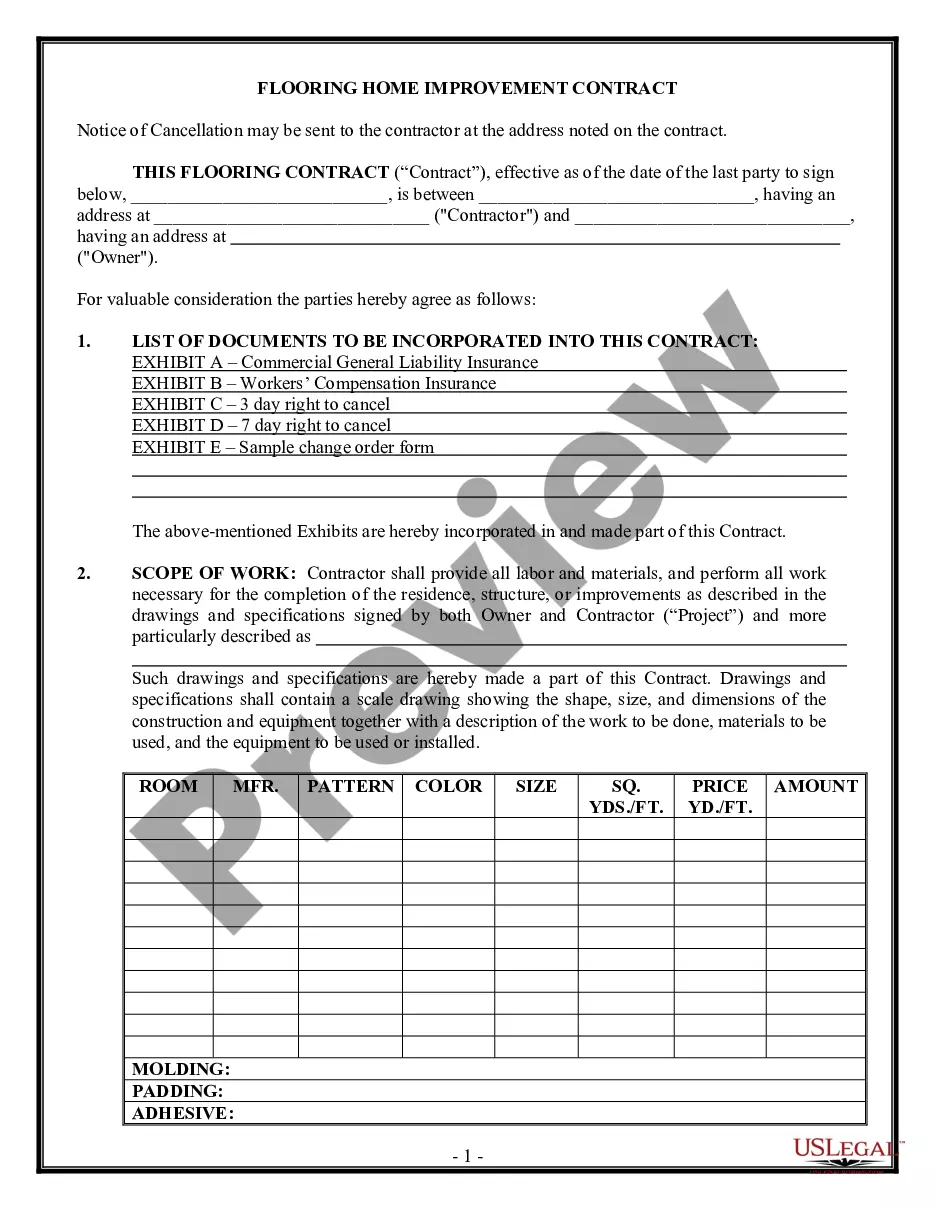
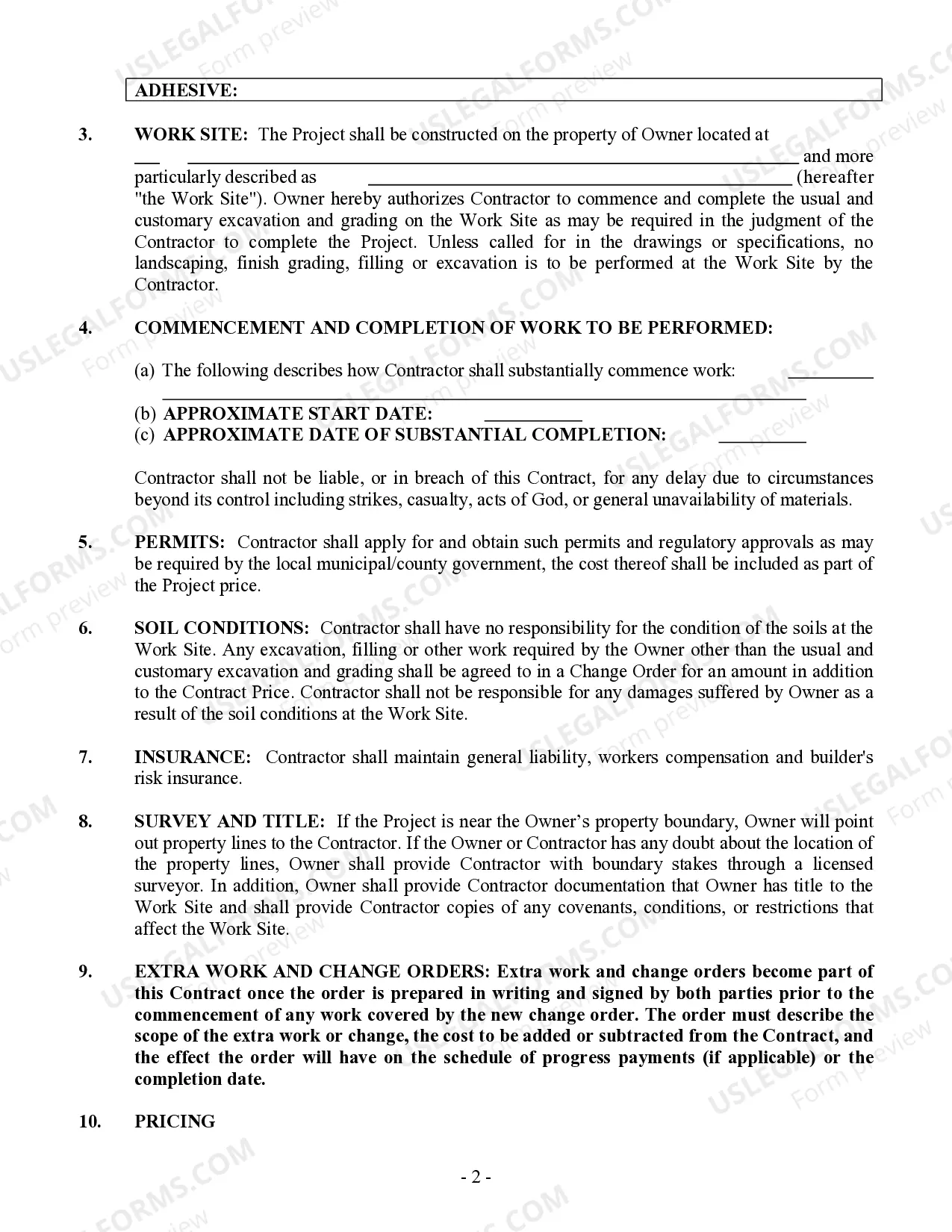
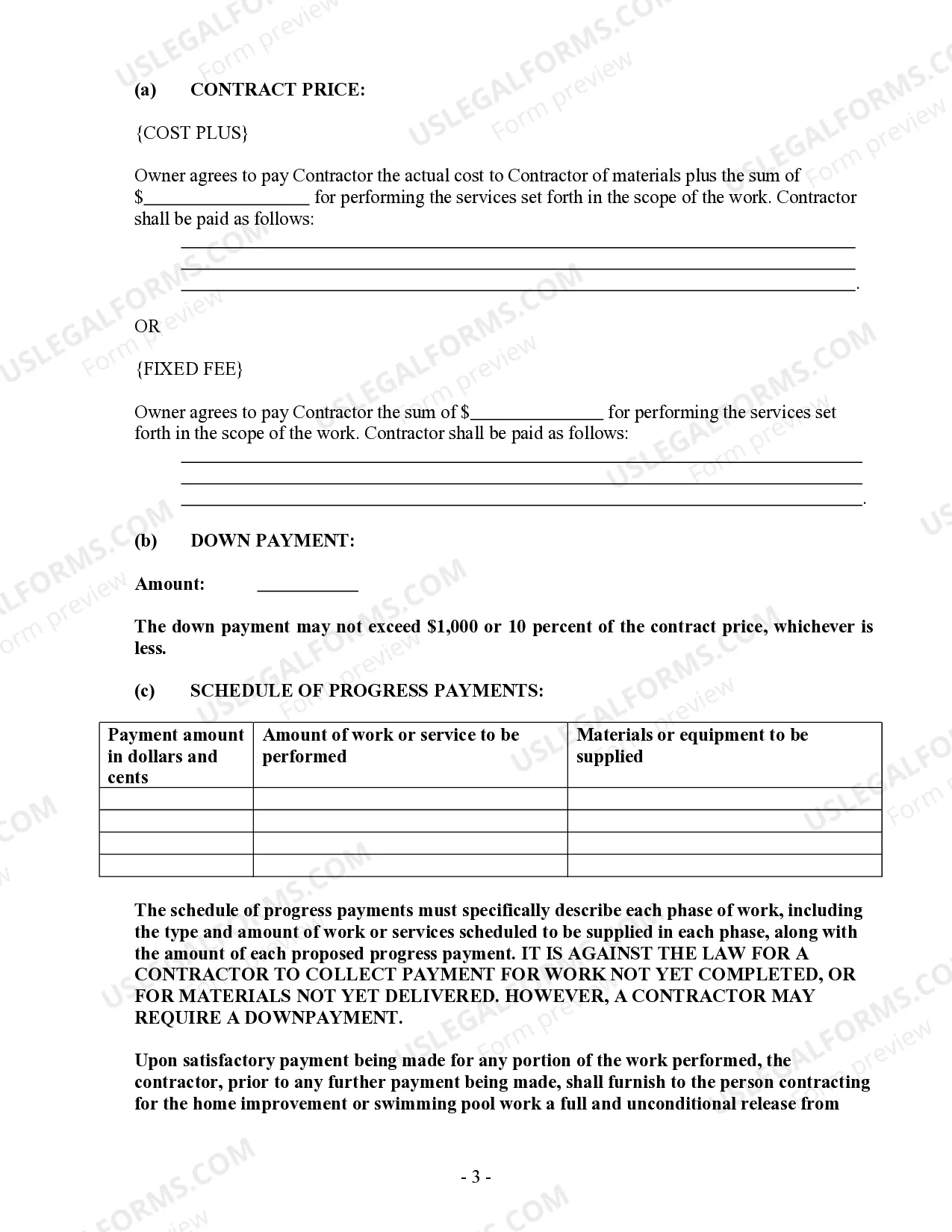
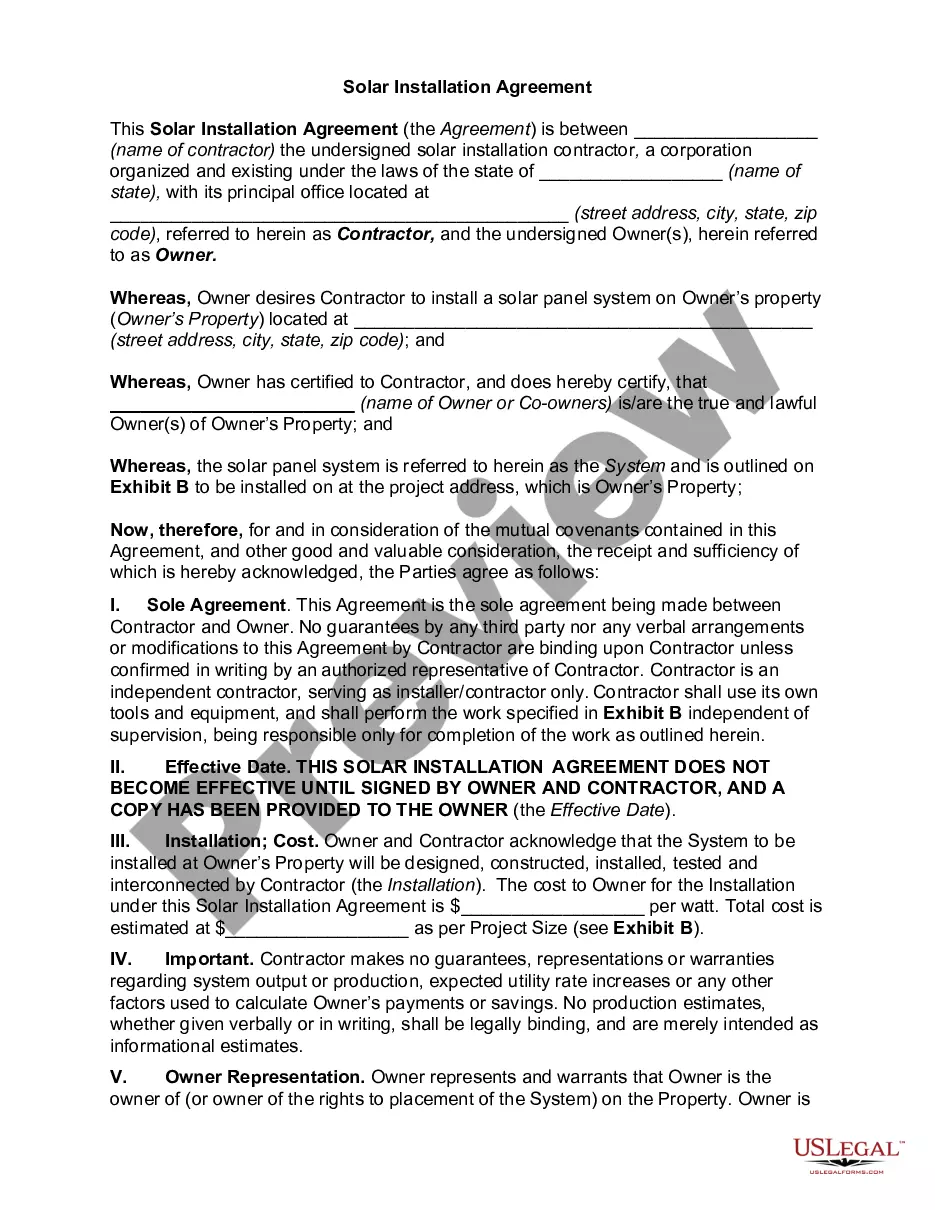
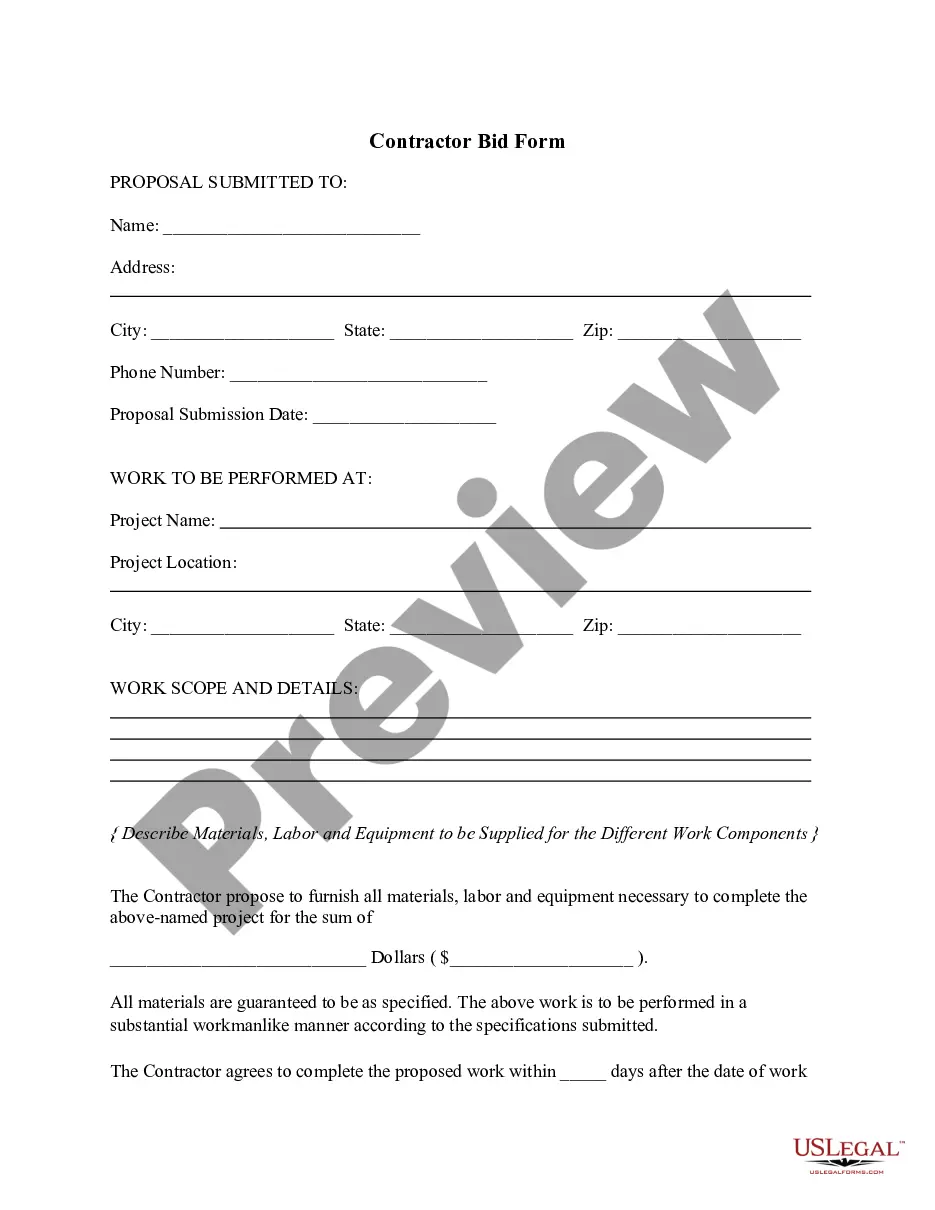
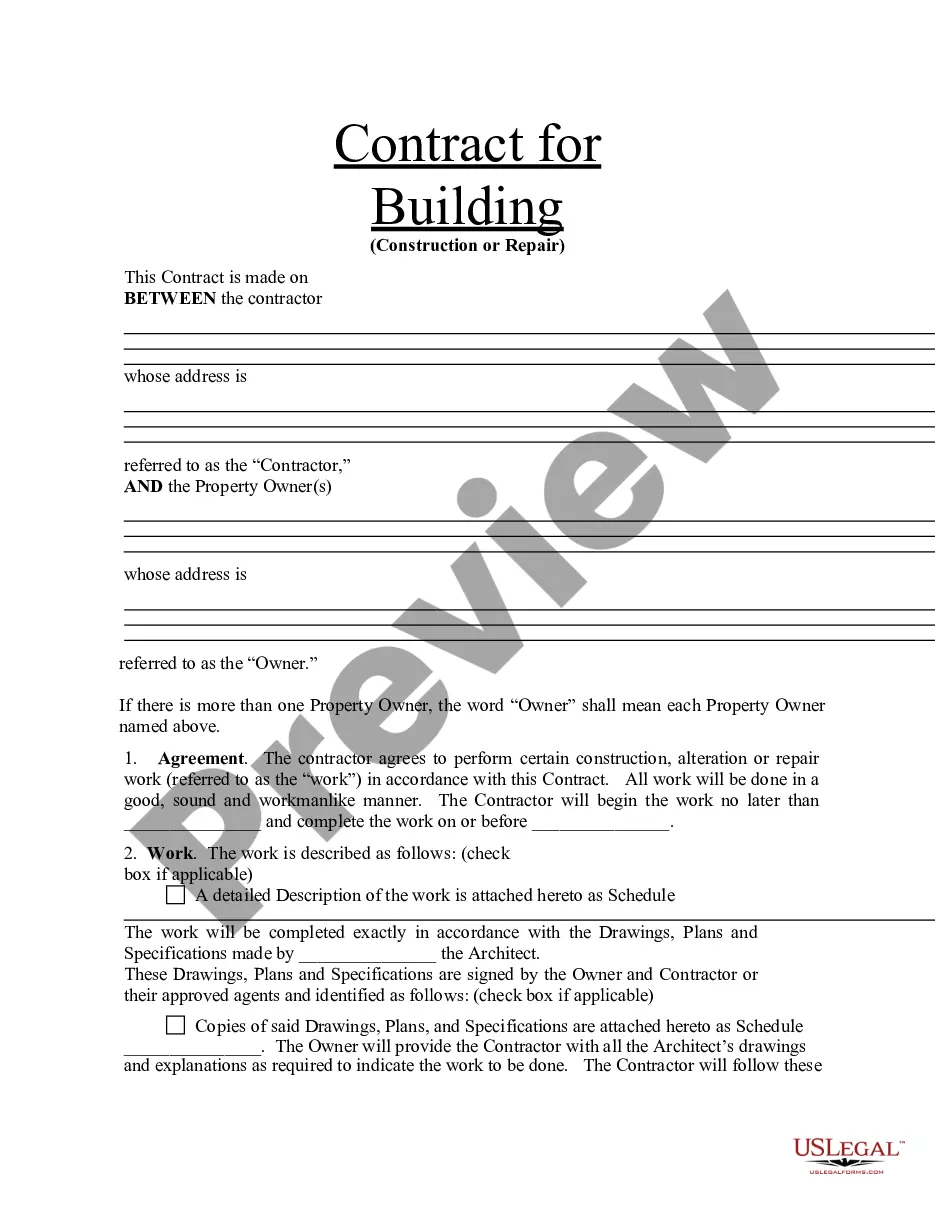
The Flooring Contract for Contractor is a legal document that outlines the agreement between a flooring contractor and a property owner. This contract allows for either a cost-plus or fixed-fee payment arrangement and details essential aspects of the project, including change orders, worksite specifics, warranties, and insurance. This form is specifically tailored to comply with California laws, making it distinct from generic contractor agreements.
Key parts of this document
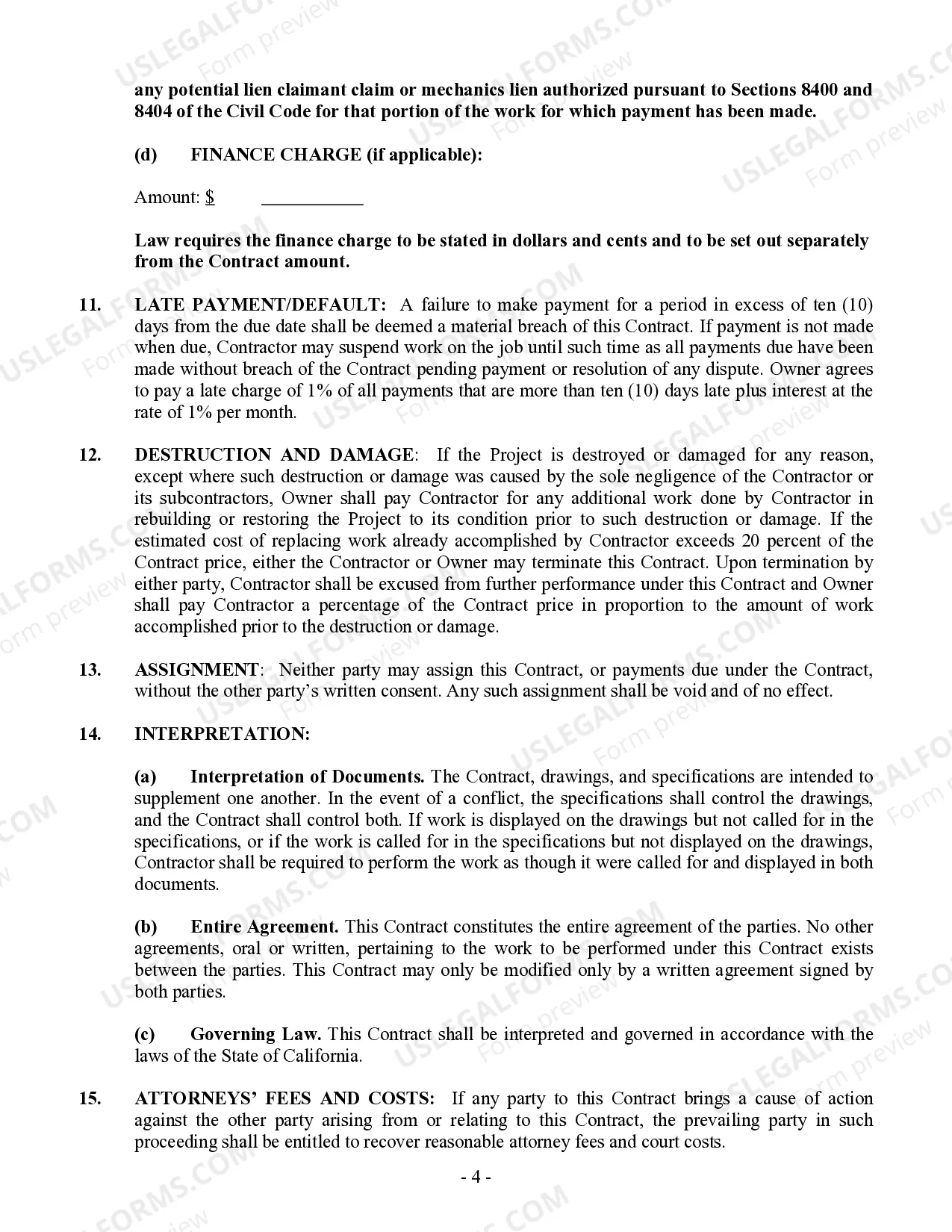
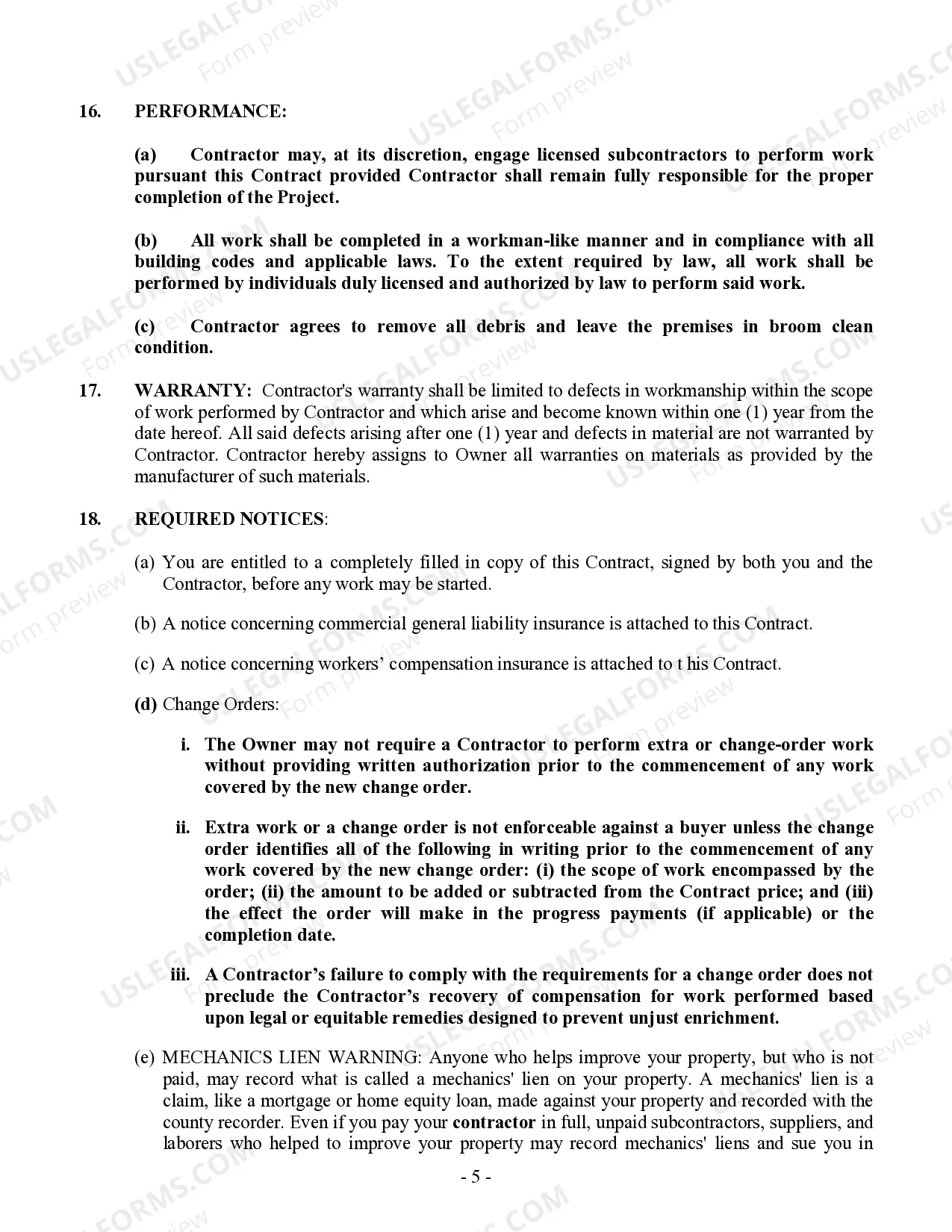
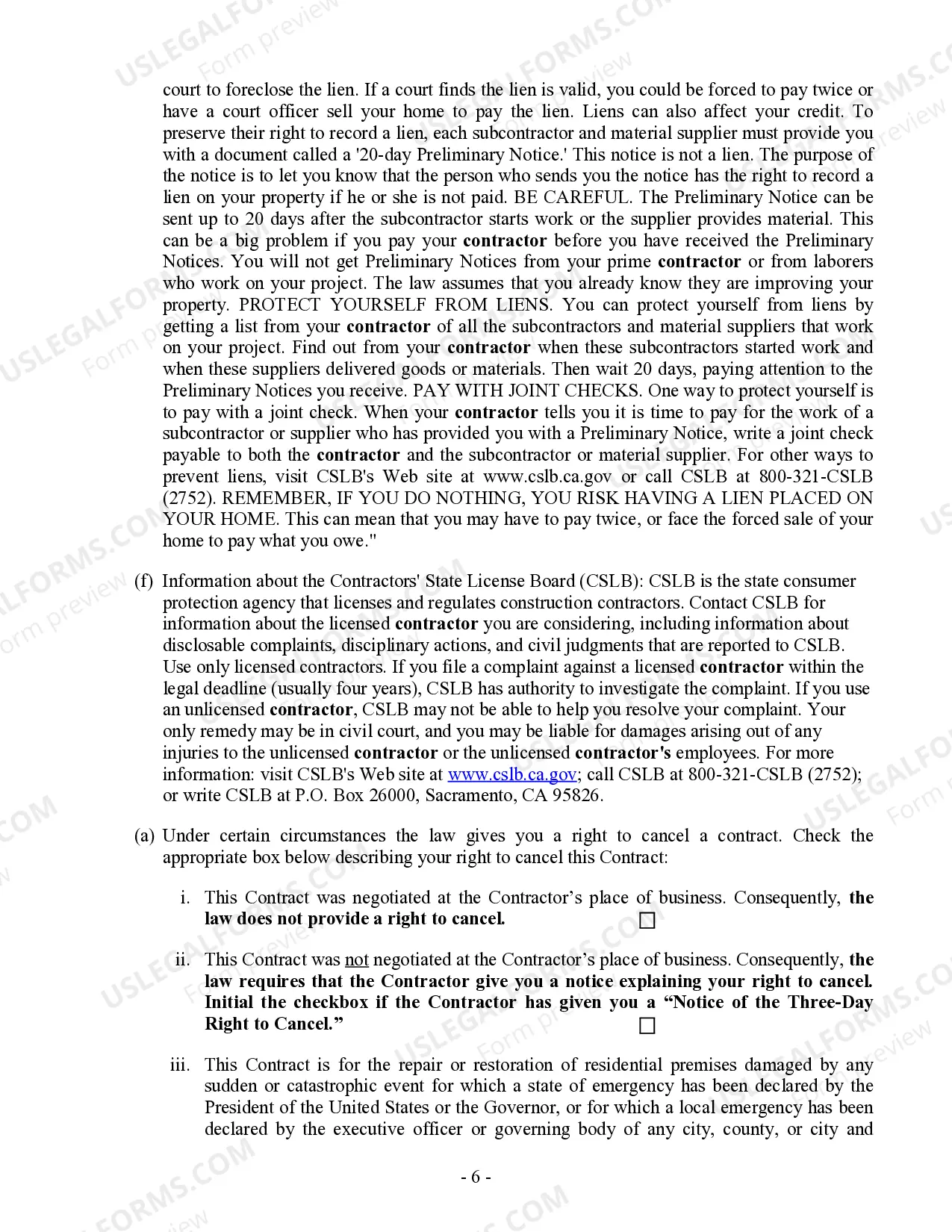
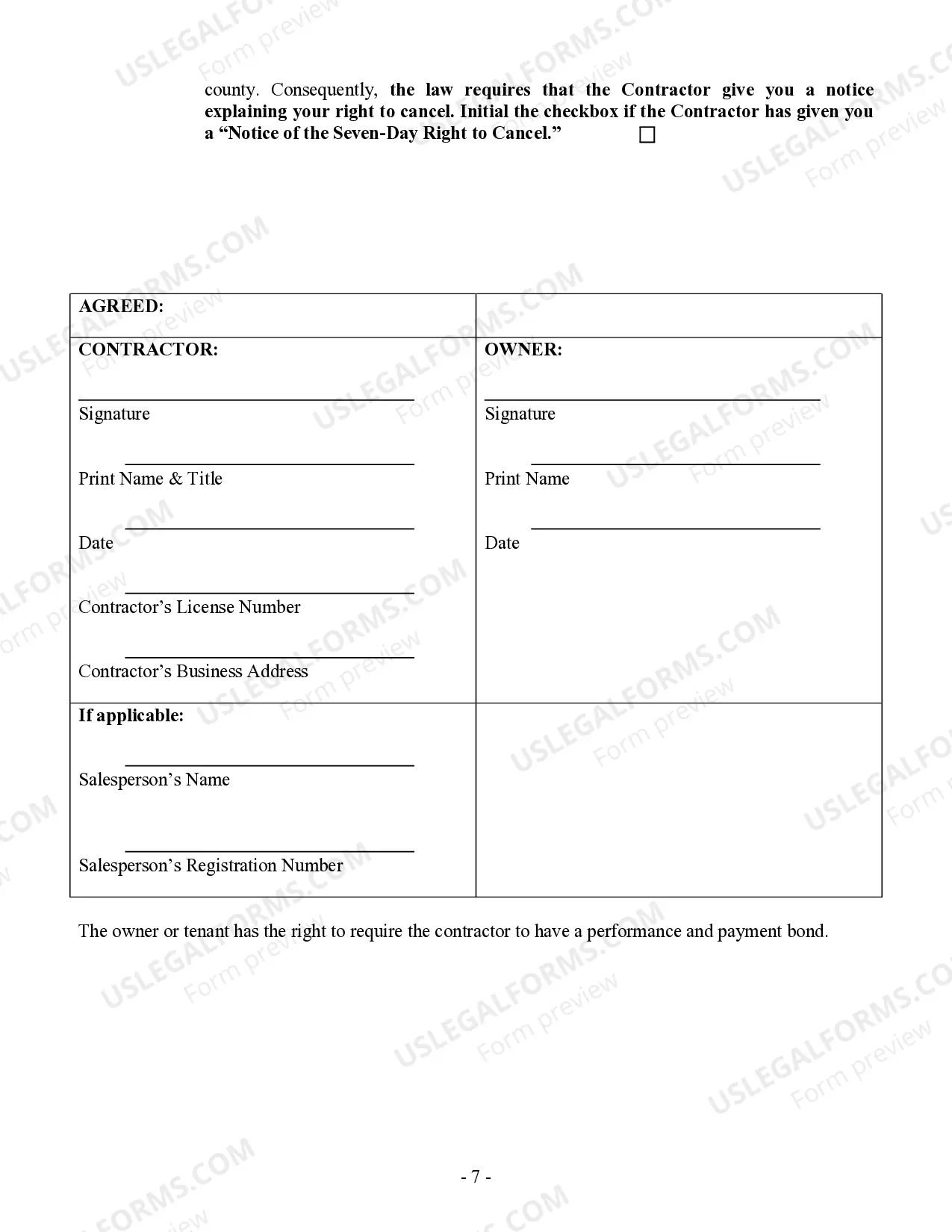
- Project details: Defines work to be performed and its location.
- Payment structure: Includes pricing options and a schedule for progress payments.
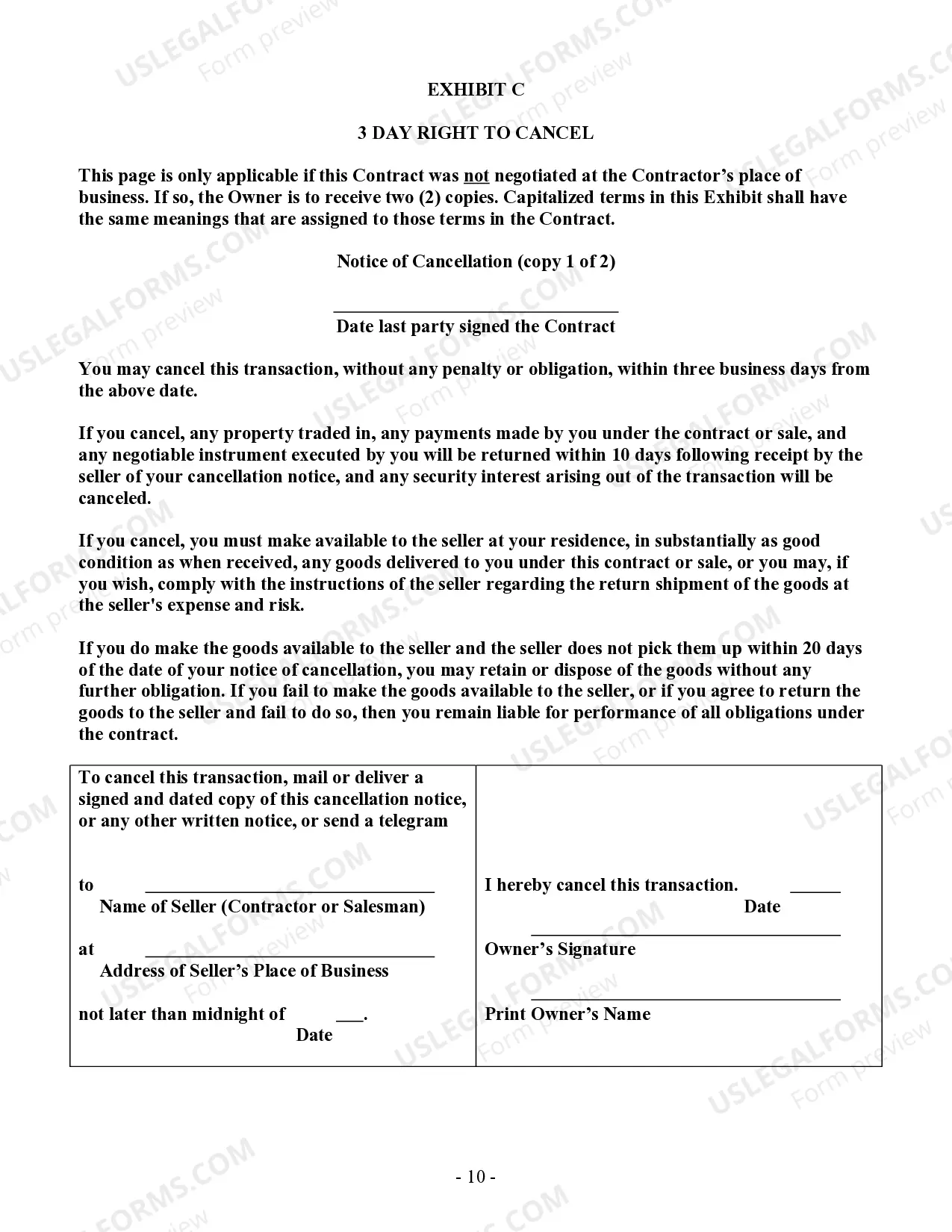
- Change orders: Outlines the process for making adjustments to the contracted work.
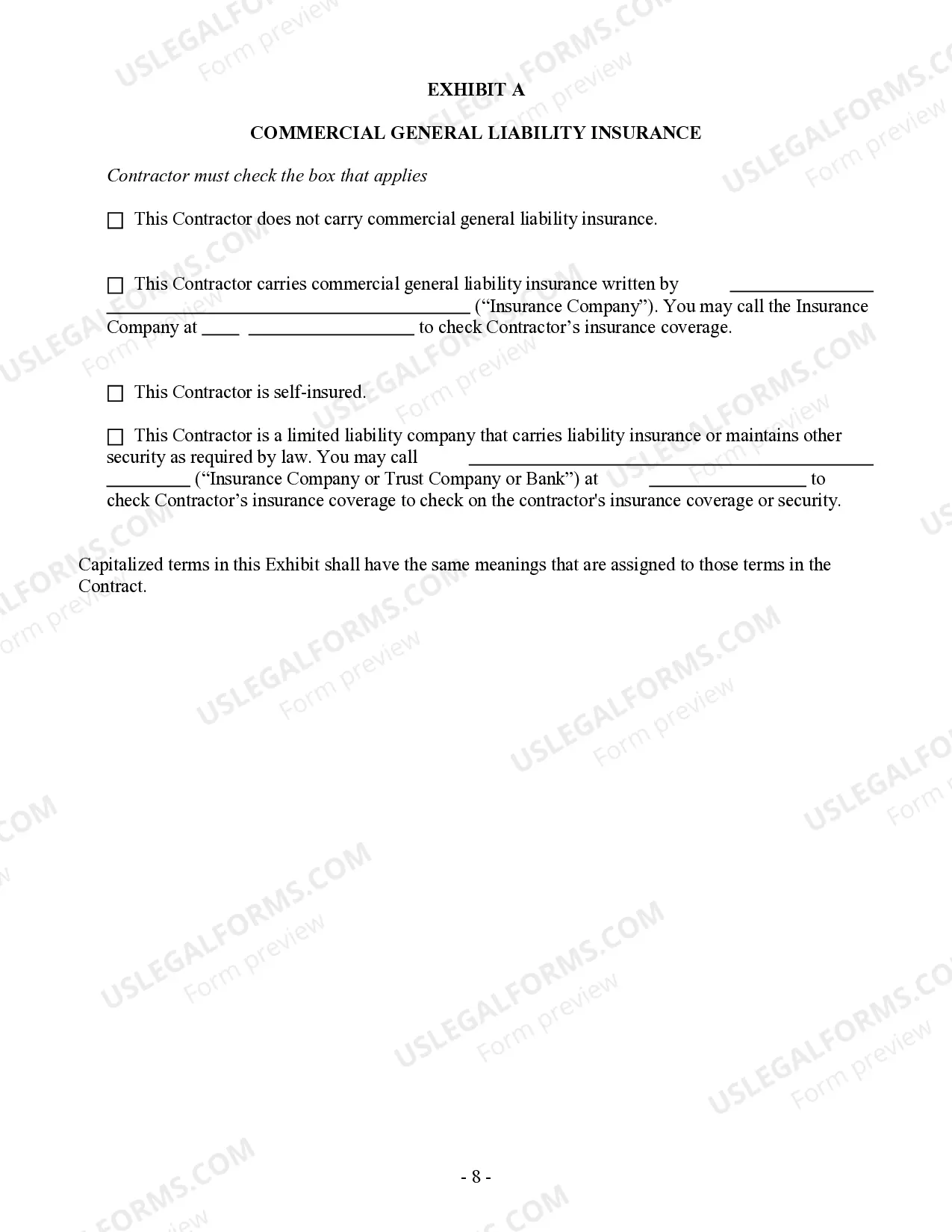
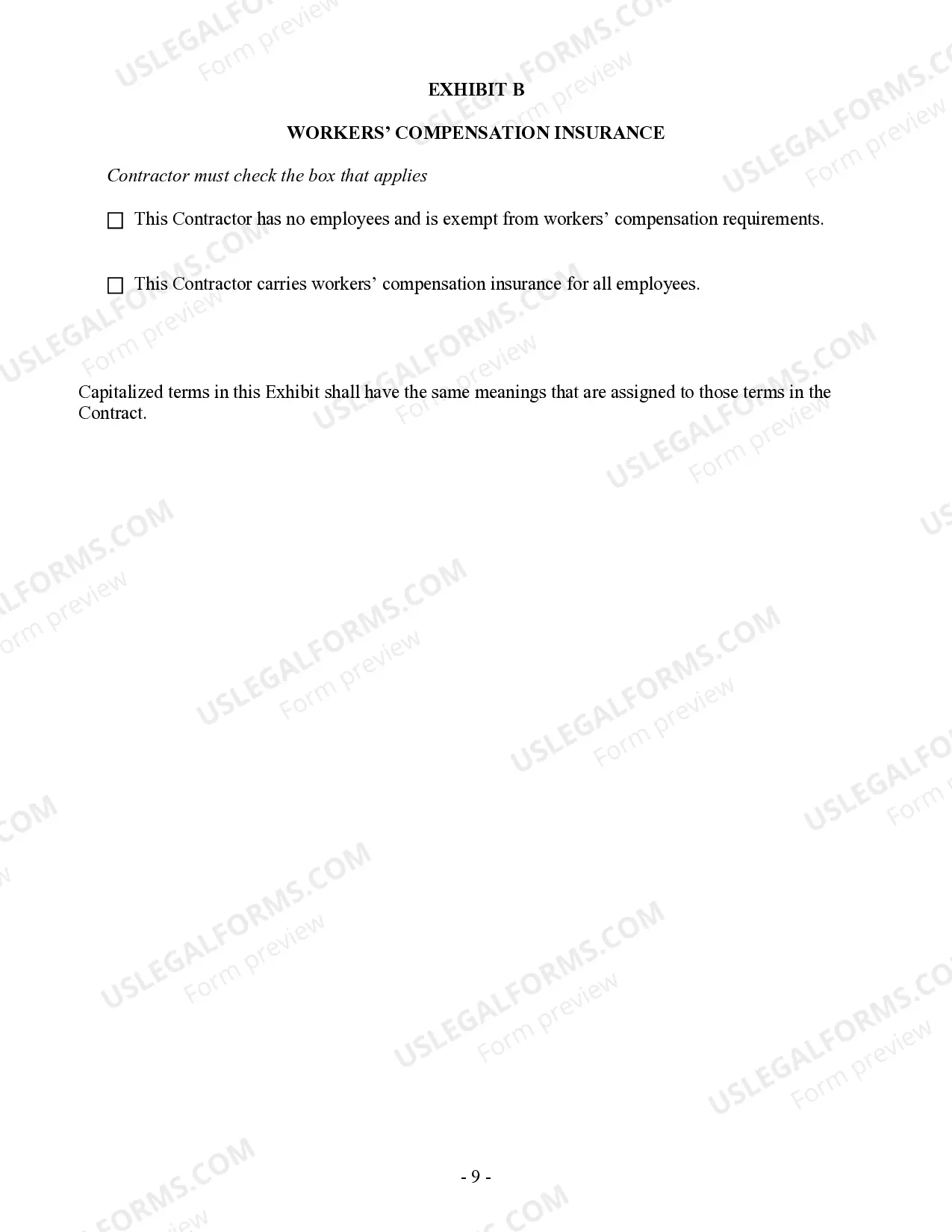
- Insurance requirements: Specifies the necessary types of insurance the contractor must maintain.
- Warranties: Details the warranty periods for workmanship and materials.
- Termination clauses: Describes conditions under which the contract may be terminated.



When to use this document
This form should be used when a property owner plans to hire a flooring contractor to perform installation, repair, or restoration work. It is particularly useful in situations involving detailed specifications about project costs, payment schedules, and changes that may arise during the execution of the contract. Additionally, it serves to protect both parties by clearly defining their rights and responsibilities.
Who can use this document
- Property owners looking to hire a flooring contractor.
- Flooring contractors seeking a structured agreement with clients.
- Individuals or businesses planning renovations that require flooring work.
- Homeowners needing clarity on terms regarding payment and project scope.
Instructions for completing this form
- Identify the parties involved: Enter the names of the contractor and the property owner.
- Specify the work: Describe the flooring project details including materials and methods.
- Detail payment arrangements: Indicate whether the payment will be a fixed fee or cost-plus.
- Include a timeline: Enter the expected start and completion dates of the project.
- Sign and date: Both parties should sign the contract to make it legally binding.
Does this document require notarization?
This form does not typically require notarization unless specified by local law. However, reviewing the requirements in your jurisdiction is advisable to ensure compliance and validity.
Get your form ready online
Our built-in tools help you complete, sign, share, and store your documents in one place.
Make edits, fill in missing information, and update formatting in US Legal Forms—just like you would in MS Word.
Download a copy, print it, send it by email, or mail it via USPS—whatever works best for your next step.
Sign and collect signatures with our SignNow integration. Send to multiple recipients, set reminders, and more. Go Premium to unlock E-Sign.
If this form requires notarization, complete it online through a secure video call—no need to meet a notary in person or wait for an appointment.
We protect your documents and personal data by following strict security and privacy standards.

Make edits, fill in missing information, and update formatting in US Legal Forms—just like you would in MS Word.

Download a copy, print it, send it by email, or mail it via USPS—whatever works best for your next step.

Sign and collect signatures with our SignNow integration. Send to multiple recipients, set reminders, and more. Go Premium to unlock E-Sign.

If this form requires notarization, complete it online through a secure video call—no need to meet a notary in person or wait for an appointment.

We protect your documents and personal data by following strict security and privacy standards.
Typical mistakes to avoid
- Failing to specify the scope of work, which can lead to disputes later.
- Not detailing the payment schedule, causing confusion about when payments are due.
- Missing signatures from both parties, which may invalidate the contract.
- Neglecting to obtain necessary permits, which can result in legal issues.
Why use this form online
- Convenient access: Download and print the form from the comfort of your home.
- Editability: Customize the contract to meet specific project needs before downloading.
- Reliability: Ensures you have a professionally drafted contract that complies with legal standards.
Legal use & context
- This contract serves as a binding agreement that protects the interests of both the flooring contractor and the property owner.
- Properly completed contracts reduce the risk of disputes and ensure clear understanding of obligations.
- Failure to use a contract may result in legal ambiguities and potential financial loss.
Summary of main points
- The Flooring Contract for Contractor is essential for clear communication between property owners and contractors.
- Detailed specifications help prevent misunderstandings and disputes.
- Adhering to California legal standards protects both parties in flooring transactions.
Looking for another form?

Form popularity
FAQ
The California Flooring Contract for Contractor is a California-specific agreement between a flooring contractor and a property owner that formalizes project scope, payment options (cost-plus or fixed-fee), change orders, worksite details, warranties, insurance, and termination terms. Use it when hiring a flooring contractor for installation, repair, or restoration to clarify rights, responsibilities, and payment expectations.
This form lays out core sections such as project details (what work and where it will occur), payment structure (pricing options and a schedule for progress payments), change orders (how adjustments are handled), insurance requirements, warranties, and termination clauses. It provides a complete blueprint for a flooring project under California rules from start to finish.
Licensing requirements are determined by state law and are not created by this contract. The California Flooring Contract for Contractor is designed for use with a properly licensed flooring professional and a property owner to document terms, but it does not grant or enforce licensing. For specifics, consult the appropriate licensing authority or a qualified attorney.
This form includes essential components to memorialize a flooring project: project details, a defined payment structure, a process for change orders, insurance requirements, warranties, and termination provisions. Using it helps align expectations and provide a framework that supports California-based contractor work.
The contract itself does not override licensing laws. In California, hiring an unlicensed contractor can carry legal risks; this form's terms focus on clear project scope, insurance, changes, and payment to protect both parties. Always verify licensing before hiring and consult a licensed attorney for guidance.
It is tailored to California law and practice, with specific emphasis on insurance requirements, warranties, change orders, and termination provisions. This CA-specific design aligns with the form’s description and usage guidance for flooring projects, ensuring the agreement addresses project scope, payment, and protections under California rules.