Mississippi Complaint for Malicious Prosecution
Overview of this form
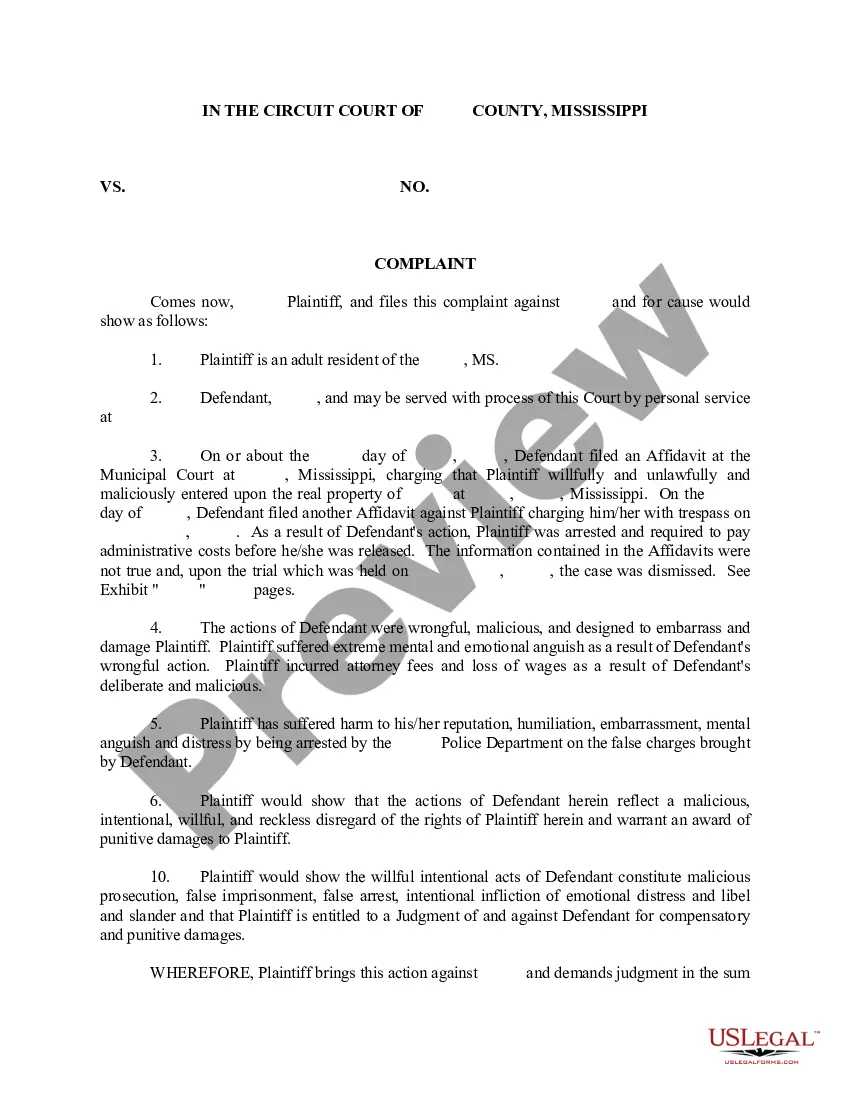
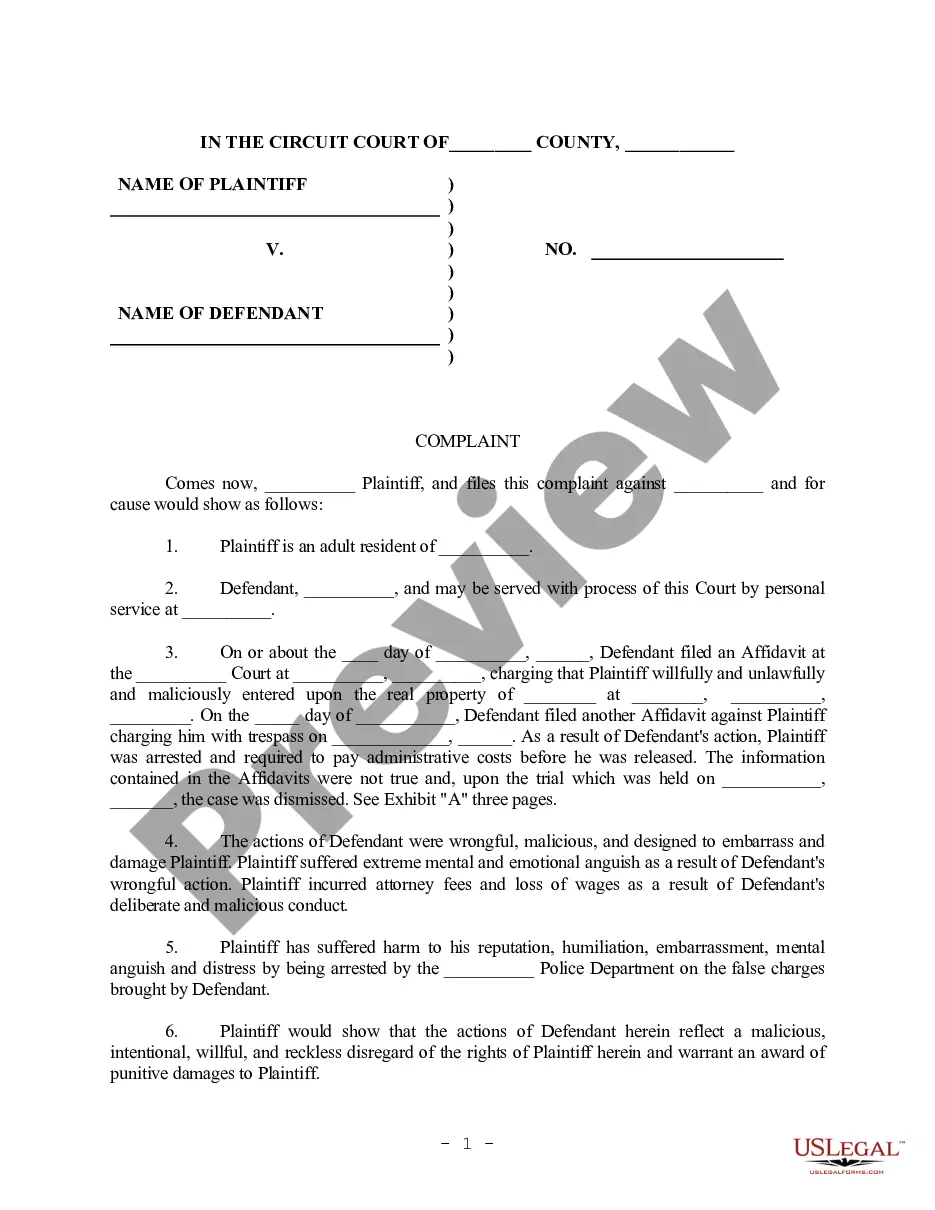
The Complaint for Malicious Prosecution is a legal document used to initiate a lawsuit against an individual who has wrongfully initiated a criminal proceeding against another party. This form is specifically designed for use in Mississippi and provides the framework necessary to plead your case in court effectively. It differs from other forms such as a general complaint as it specifically targets situations involving false accusations and abuse of the legal system.
Key components of this form
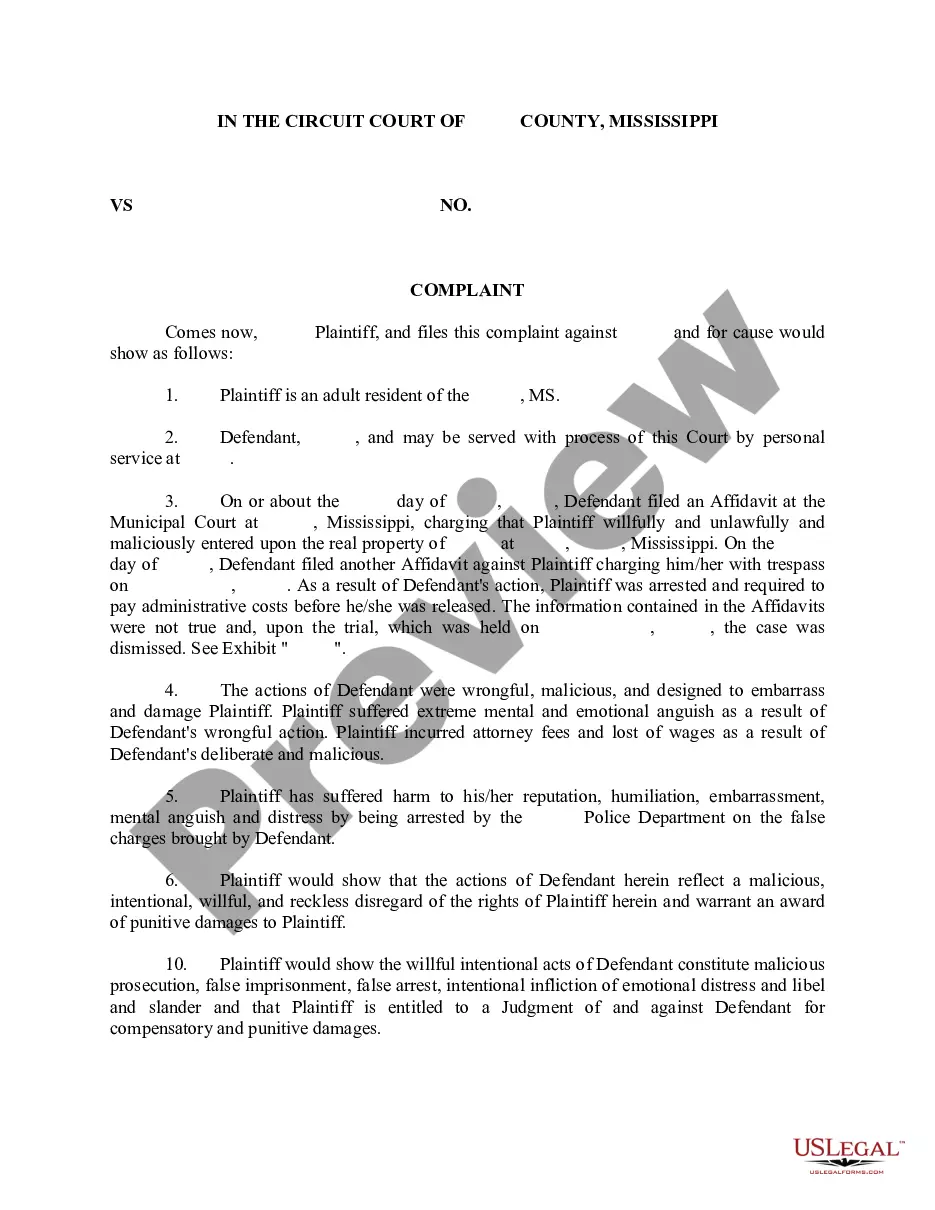
- Identification of the plaintiff and defendant.
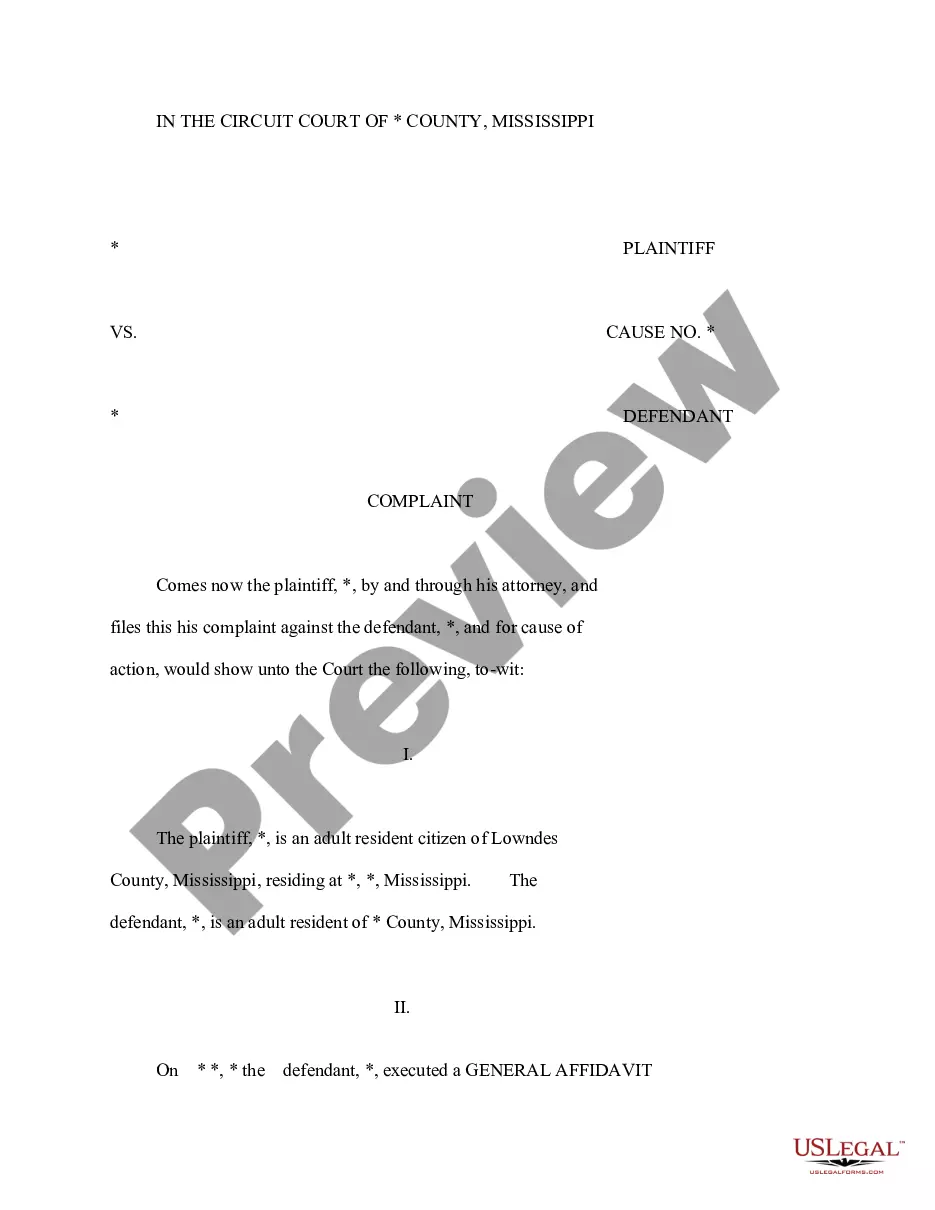
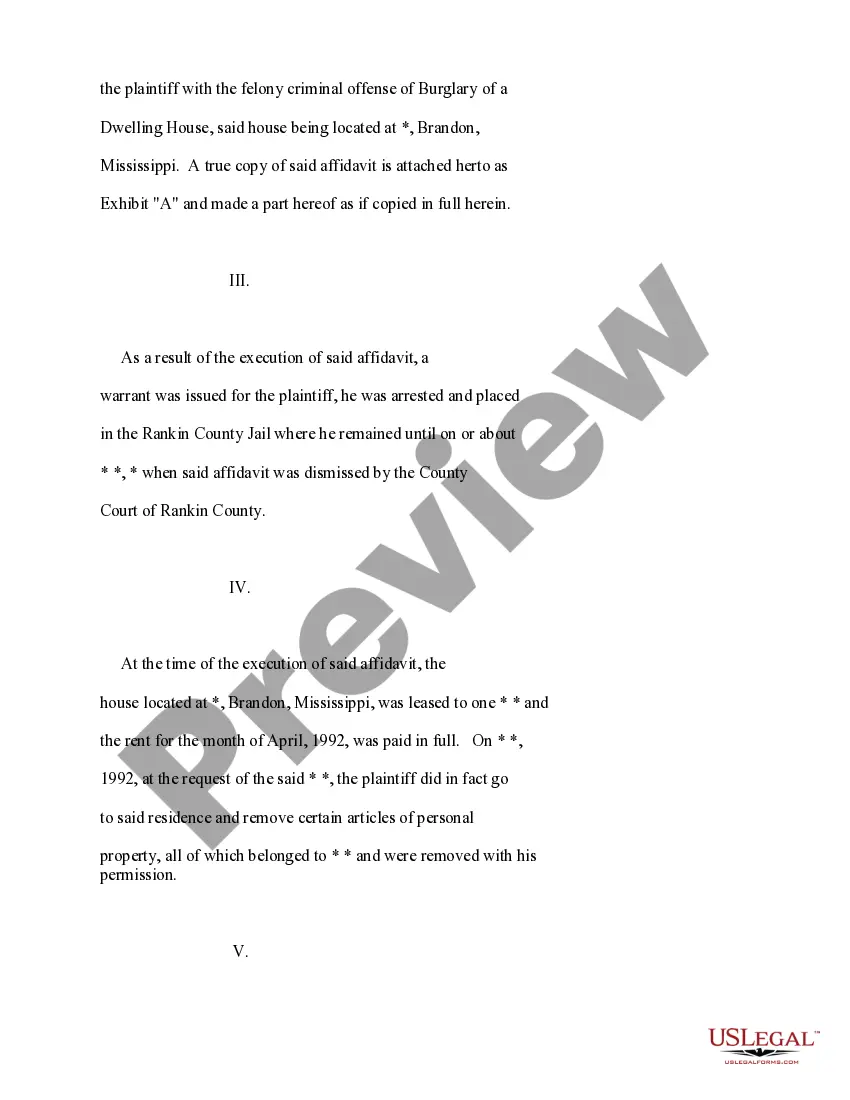
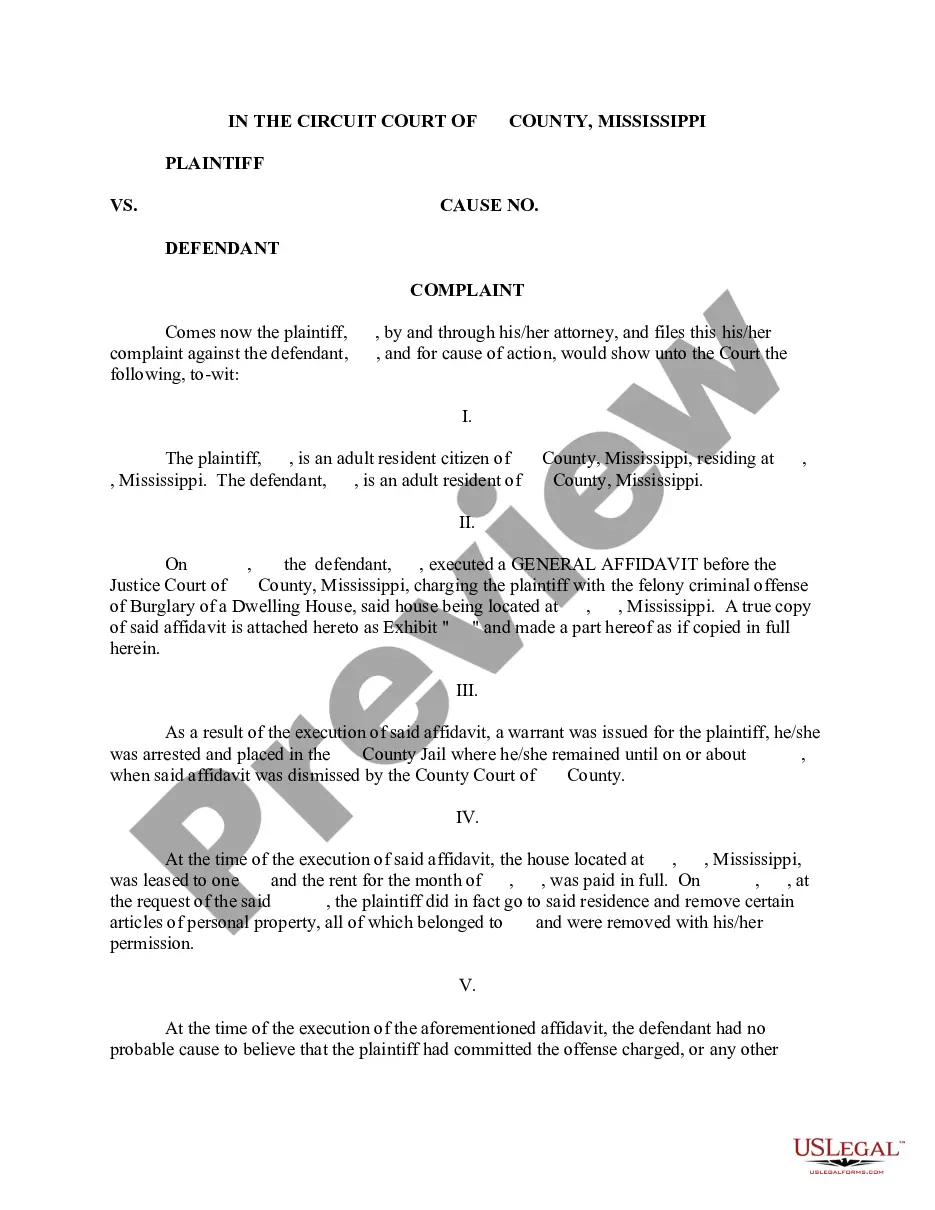
- Details regarding the criminal affidavit that led to the wrongful prosecution.
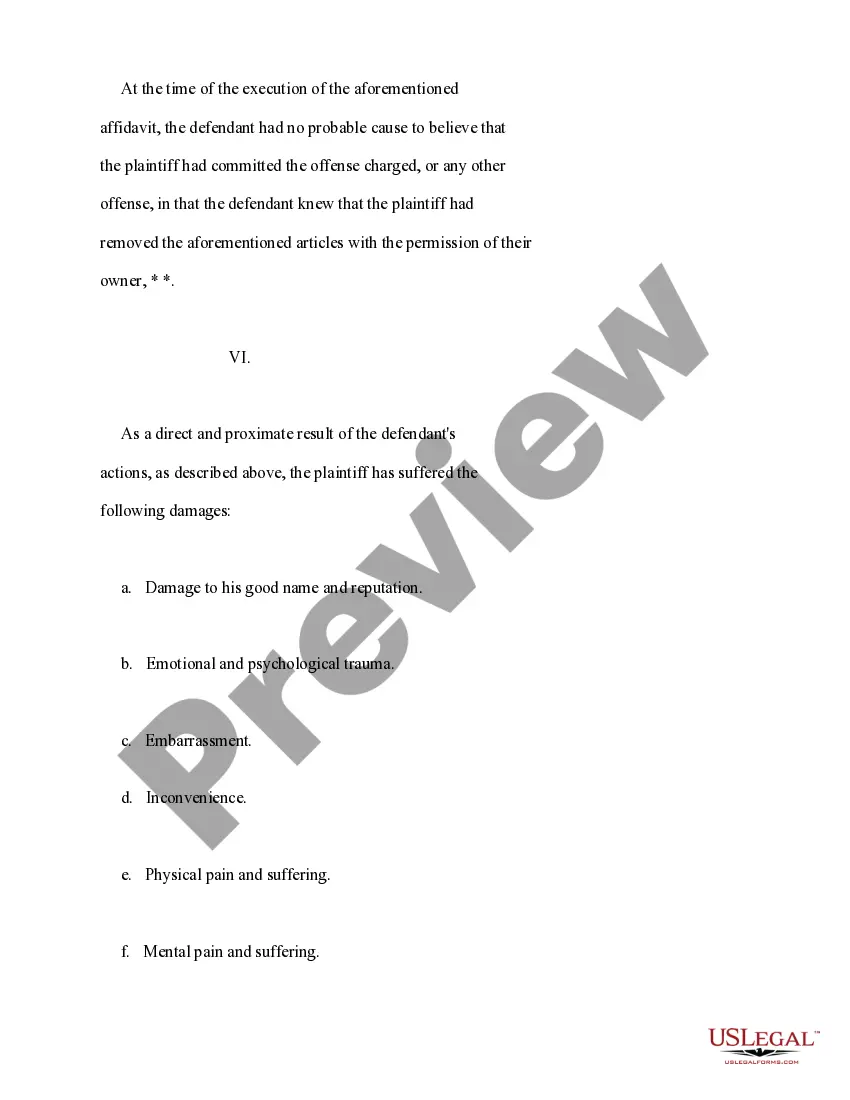
- Statement of the damages the plaintiff has suffered due to the malicious prosecution.
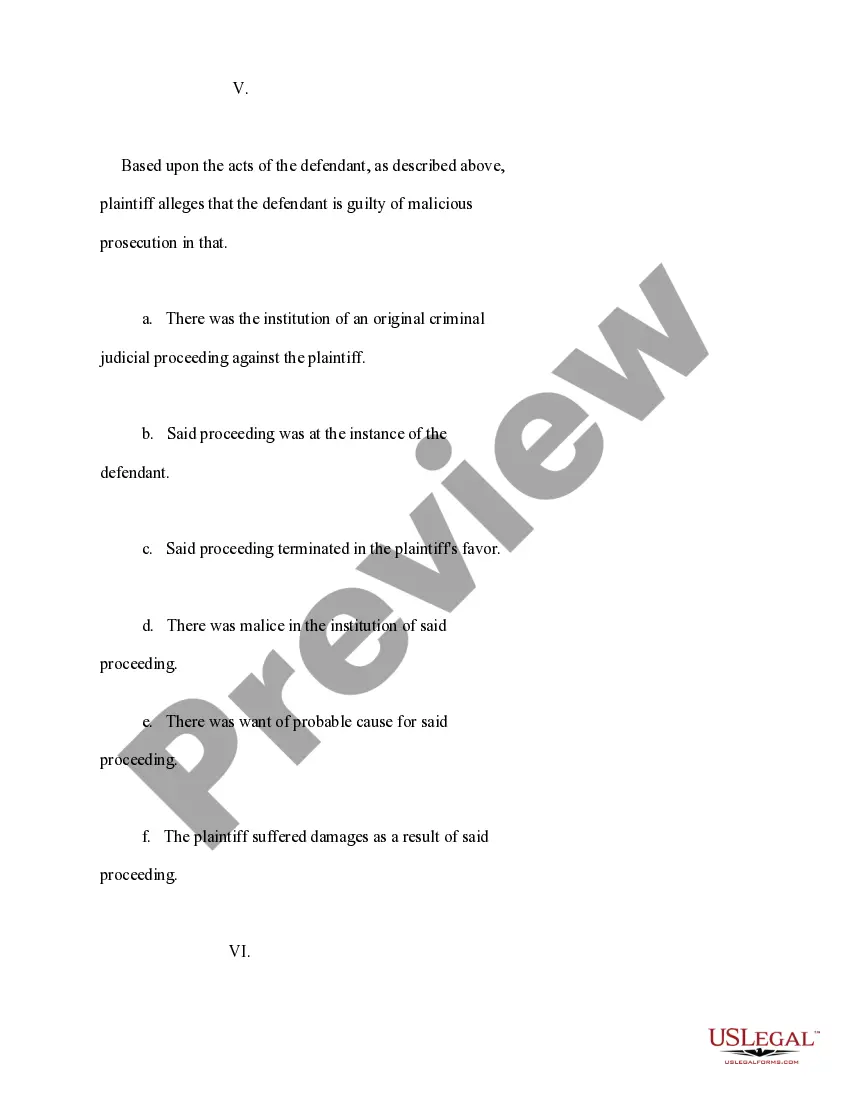
- Legal basis for the claim, outlining necessary elements for malicious prosecution.
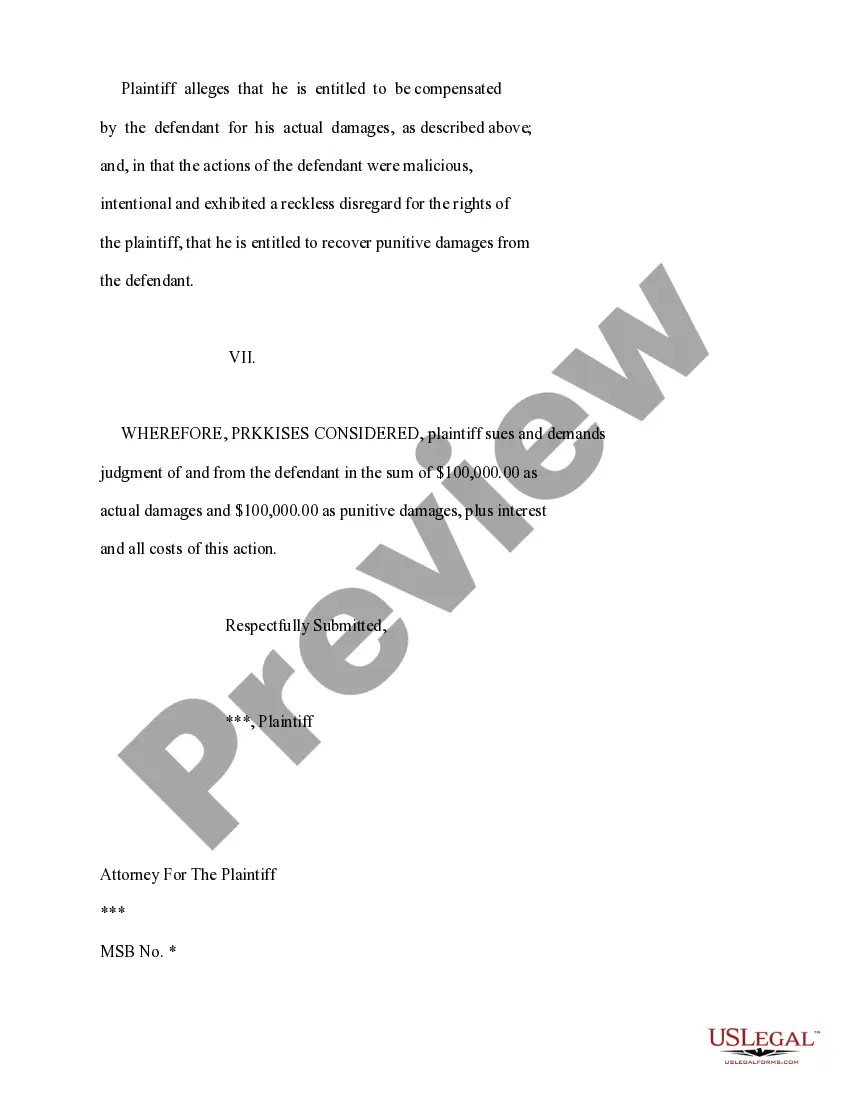
- Demand for actual and punitive damages.
- Signature block for the plaintiff and their attorney.



When this form is needed
This form should be used when an individual believes they have been wrongfully accused of a crime, which led to a formal legal proceeding against them. It is applicable in scenarios where the accusation was made with malice and without probable cause, causing harm to the accused's reputation, emotional well-being, or financial status.
Intended users of this form
- Individuals who have been wrongfully accused of a crime.
- Those seeking to hold another party accountable for initiating a malicious prosecution.
- Persons looking to recover damages from false allegations made against them.
- Individuals with legal representation or those who are familiar with courtroom procedures.
Instructions for completing this form
- Identify the parties involved by entering the names of the plaintiff and defendant.
- Provide specific details regarding the alleged criminal affidavit and the circumstances surrounding the accusation.
- Clearly outline the damages suffered, including emotional and financial impacts.
- Describe the basis for the malicious prosecution claim, citing elements such as malice and lack of probable cause.
- Sign the document, ensuring your attorney's information is included for representation purposes.
Does this form need to be notarized?
This form does not typically require notarization unless specified by local law. It is important to check with local jurisdictional requirements to ensure compliance and validity of your complaint.
Get your form ready online
Our built-in tools help you complete, sign, share, and store your documents in one place.
Make edits, fill in missing information, and update formatting in US Legal Forms—just like you would in MS Word.
Download a copy, print it, send it by email, or mail it via USPS—whatever works best for your next step.
Sign and collect signatures with our SignNow integration. Send to multiple recipients, set reminders, and more. Go Premium to unlock E-Sign.
If this form requires notarization, complete it online through a secure video call—no need to meet a notary in person or wait for an appointment.
We protect your documents and personal data by following strict security and privacy standards.

Make edits, fill in missing information, and update formatting in US Legal Forms—just like you would in MS Word.

Download a copy, print it, send it by email, or mail it via USPS—whatever works best for your next step.

Sign and collect signatures with our SignNow integration. Send to multiple recipients, set reminders, and more. Go Premium to unlock E-Sign.

If this form requires notarization, complete it online through a secure video call—no need to meet a notary in person or wait for an appointment.

We protect your documents and personal data by following strict security and privacy standards.
Common mistakes to avoid
- Failing to clearly establish the lack of probable cause for the initial accusation.
- Not documenting all damages suffered as a result of the malicious prosecution.
- Incorrectly identifying the parties involved or misnaming the defendant.
- Neglecting to include all relevant dates and details associated with the incident.
Benefits of completing this form online
- Convenient access to professionally drafted legal templates.
- Easy customization to fit the specific details of your case.
- Immediate download allows you to start the process without delay.
- Guidance in completing the form ensures accuracy and compliance with legal standards.
Legal use & context
- Malicious prosecution claims are serious legal actions meant to address wrongful accusations.
- Success in proving malicious prosecution relies on demonstrating all key elements, including malice and lack of probable cause.
- Reputational and emotional damages are common forms of recovery sought in such claims.
Key takeaways
- The Complaint for Malicious Prosecution is essential for individuals seeking justice against wrongful criminal accusations.
- Accurate completion of the form is vital to ensure the claims are legally valid.
- Understanding your rights and the legal process can enhance your chances of a successful outcome.
Looking for another form?

Form popularity
FAQ
Prosecution by the defendant. Absence of reasonable and probable cause. Defendant acted maliciously. Termination of proceedings in the favour of the plaintiff. Plaintiff suffered damage as a result of the prosecution.
Malicious prosecution is a civil cause of action in California that you bring when a person files a frivolous claim against you; the lawsuit was filed not to win, but rather for some other purposes; and you suffered damages as a result. A claim of malicious prosecution is a civil case, not a criminal one.
Legal Definition of malicious prosecution : the tort of initiating a criminal prosecution or civil suit against another party with malice and without probable cause also : an action for damages based on this tort brought after termination of the proceedings in favor of the party seeking damages.
The primary difference between the two legal actions is that malicious prosecution concerns the malicious or wrongful commencement of an action, while, on the other hand, abuse of process concerns the improper use of the legal process after process has already been issued and a suit has commenced.
A plaintiff can sue for malicious prosecution when a defendant "maliciously" prosecutes a criminal case or uses a civil proceeding against the plaintiff when the defendant knows he or she doesn't have a case.
Malicious prosecution occurs when one party has knowingly and with malicious intent initiated baseless litigation against another party. This includes both criminal charges and civil claims, for which the cause of action is essentially the same.
To win a suit for malicious prosecution, the plaintiff must prove four elements: (1) that the original case was terminated in favor of the plaintiff, (2) that the defendant played an active role in the original case, (3) that the defendant did not have probable cause or reasonable grounds to support the original case,
A plaintiff can sue for malicious prosecution when a defendant "maliciously" prosecutes a criminal case or uses a civil proceeding against the plaintiff when the defendant knows he or she doesn't have a case.