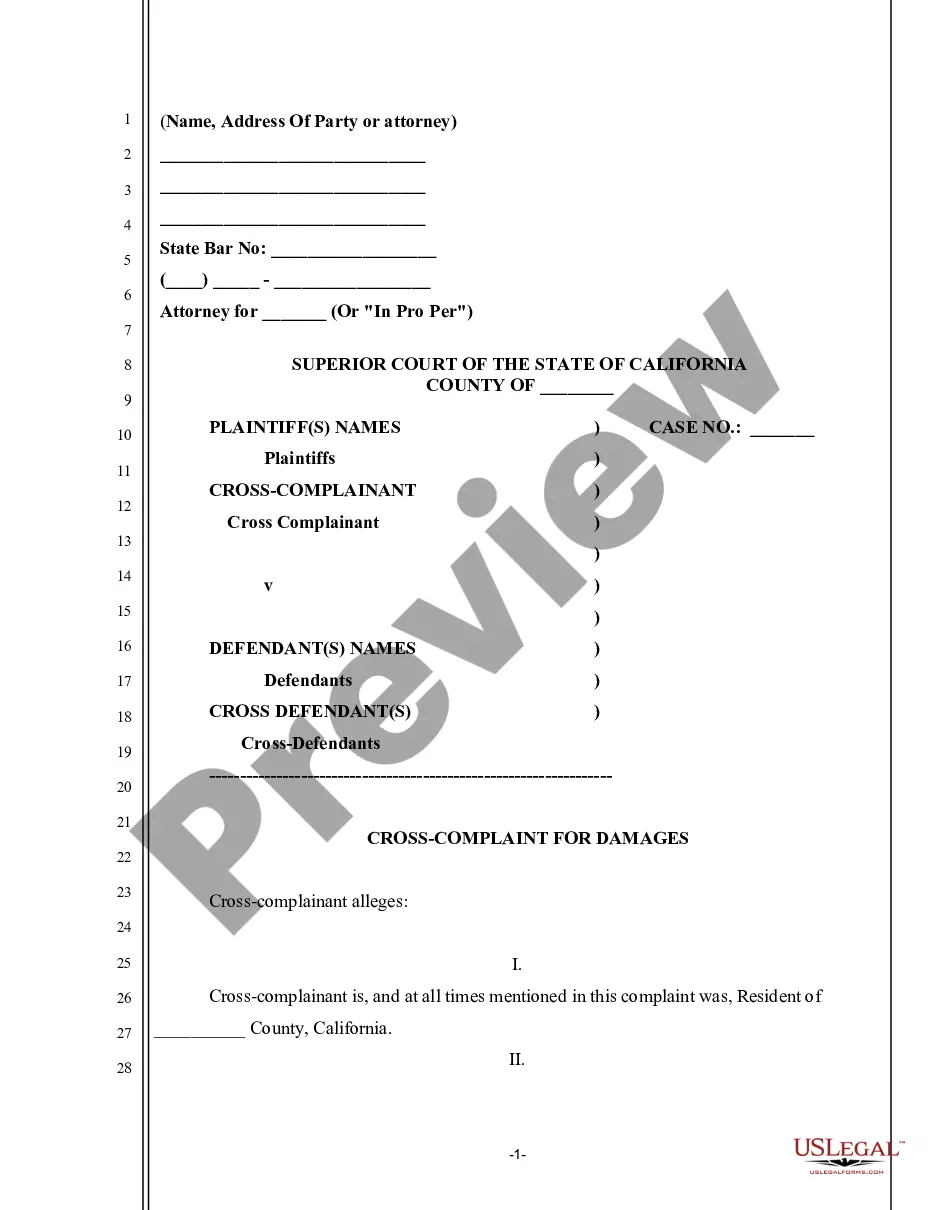
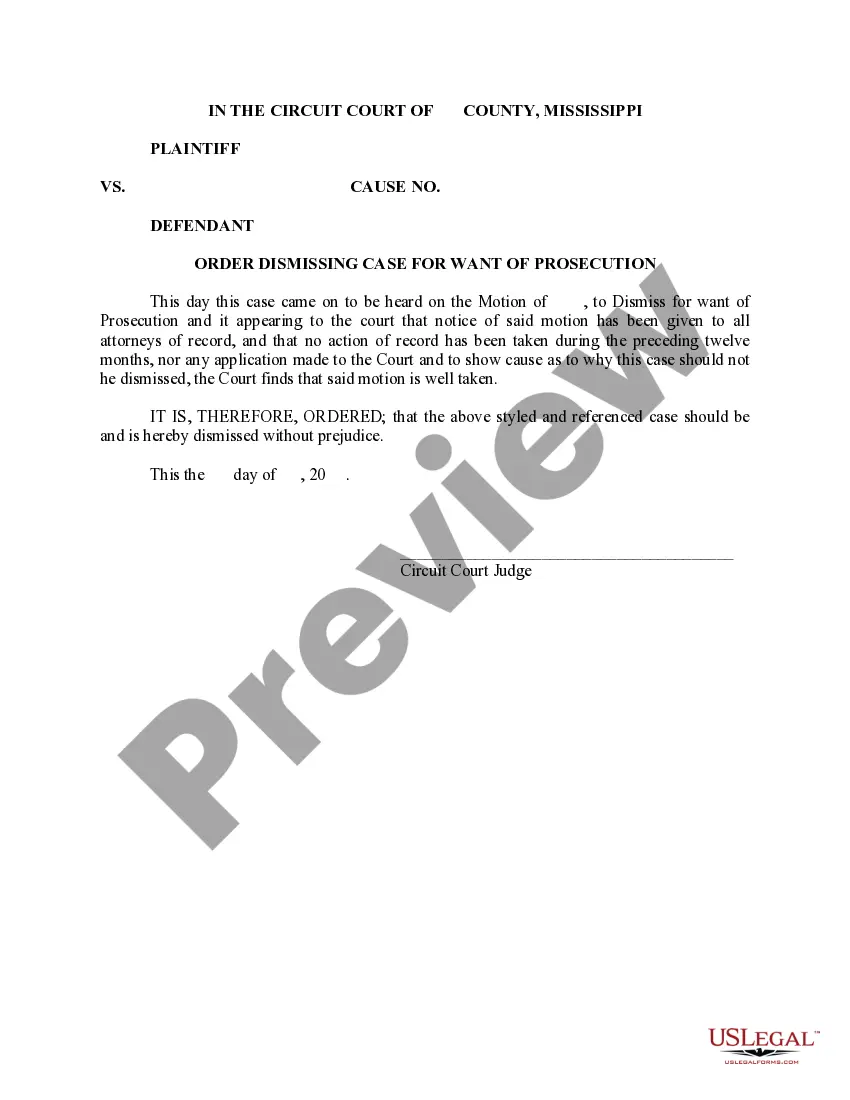
Mississippi Order Dismissing for Want of Prosecution
What this document covers
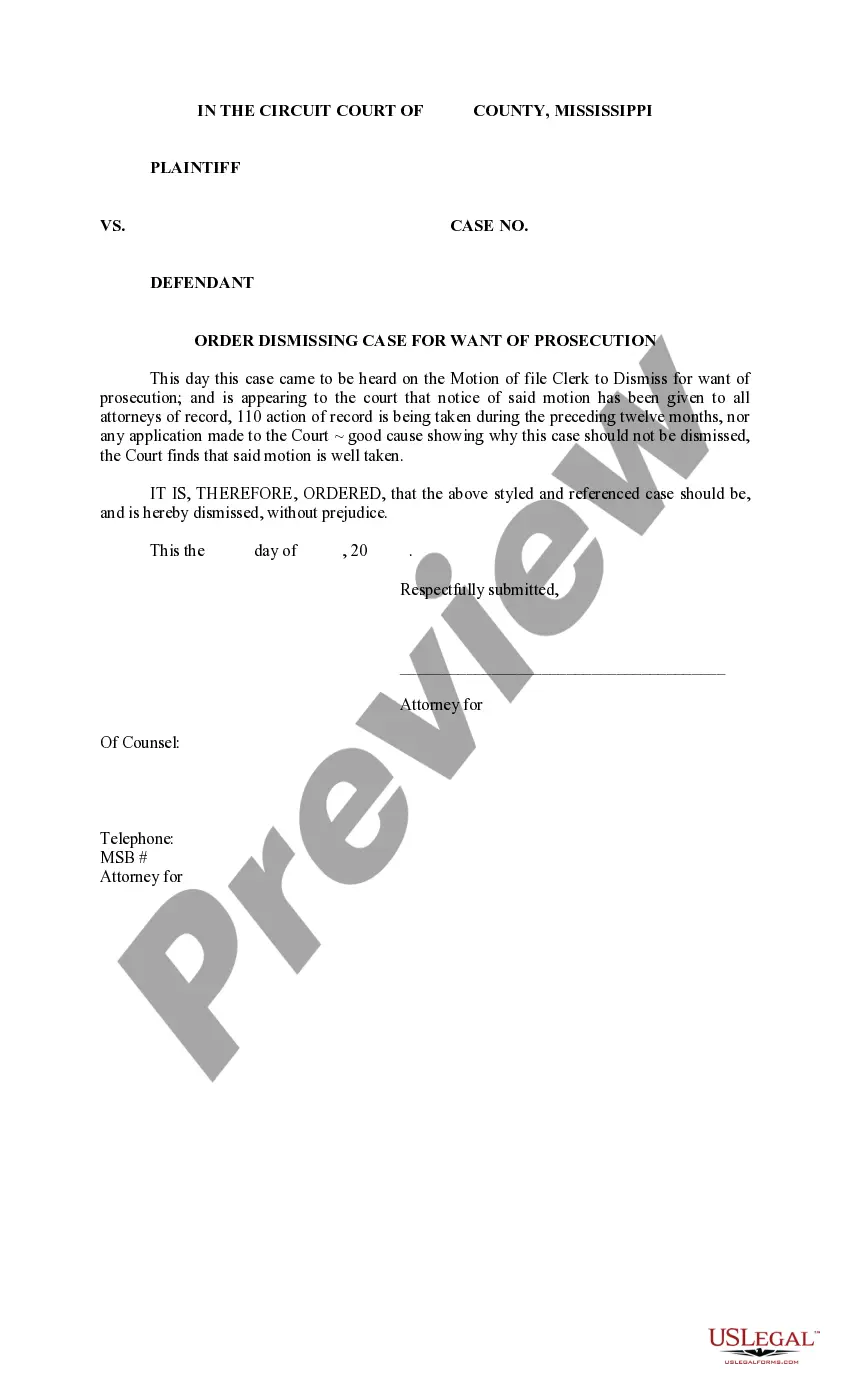
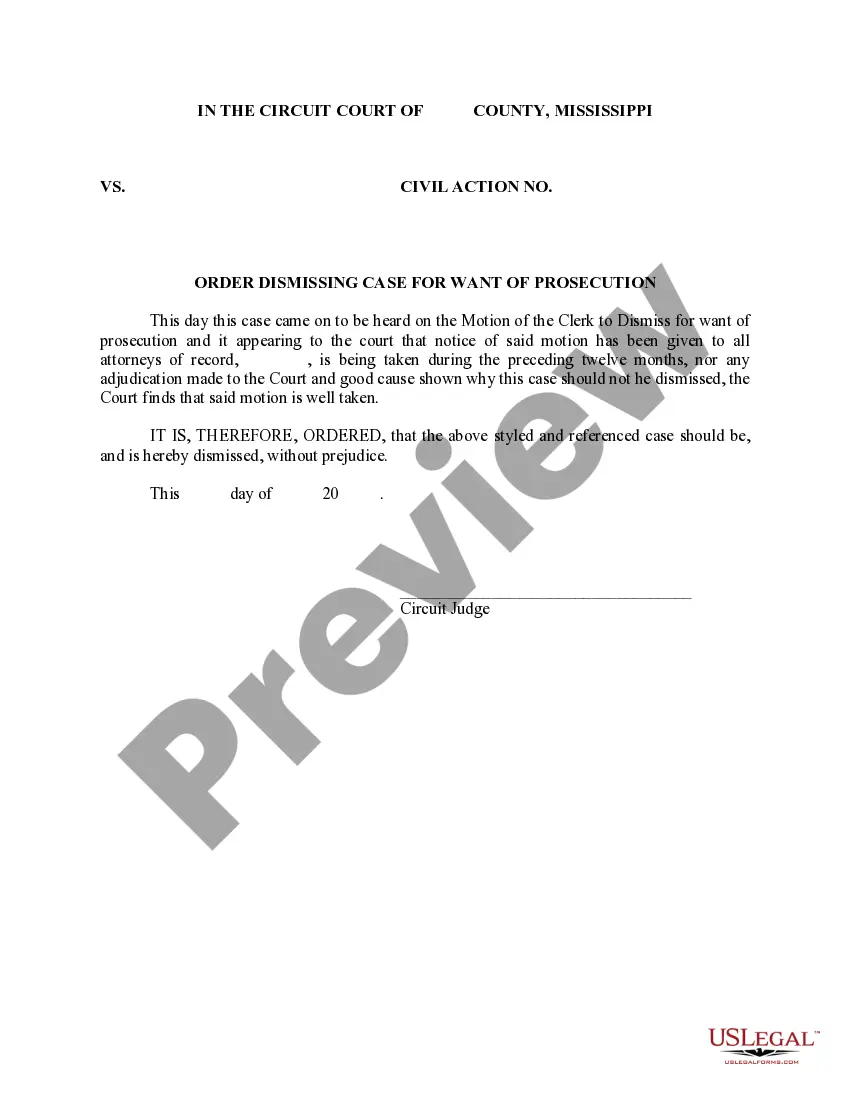
The Order Dismissing for Want of Prosecution is a legal document issued by a court to officially dismiss a case due to lack of action or prosecution. This order signifies that no progress has been made in the case over a specified period, typically 12 months, and it serves to close the matter without prejudice. Unlike other orders, this specific document is tailored for situations where the court must conclude a case that has stagnated, allowing for the possibility of future filing on the same issue.
What’s included in this form
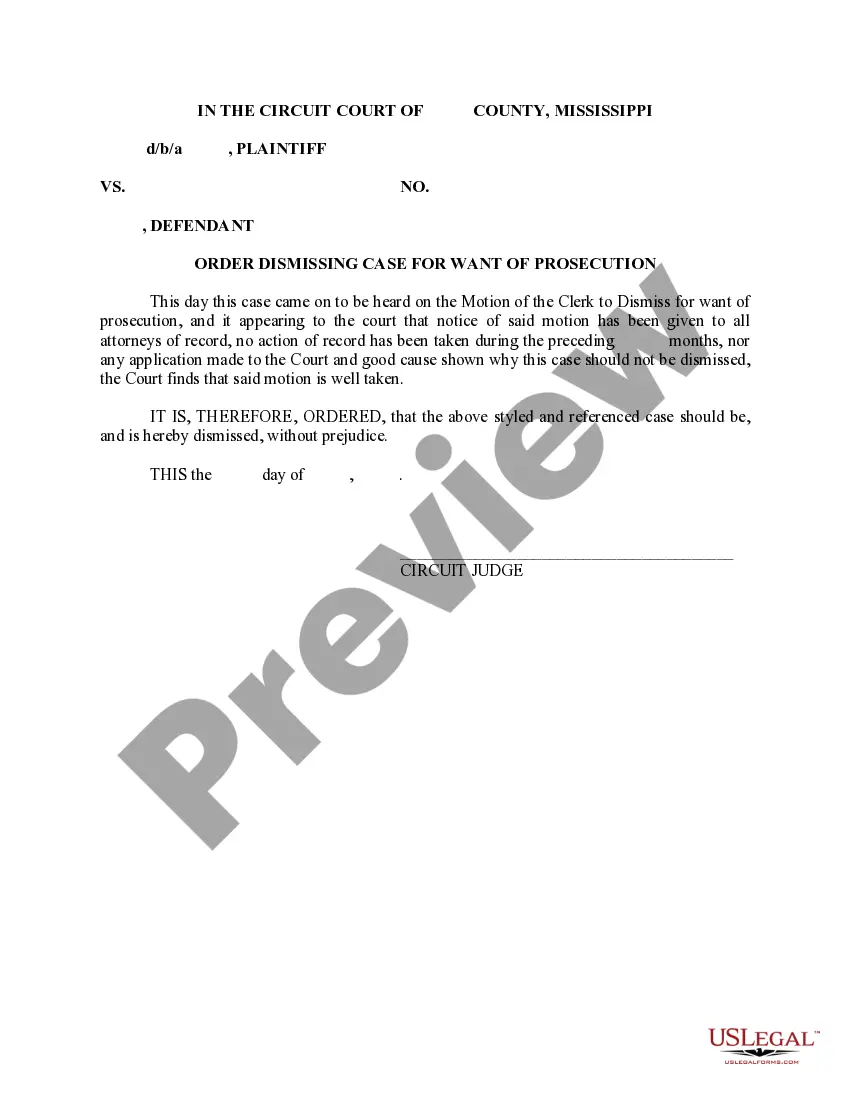
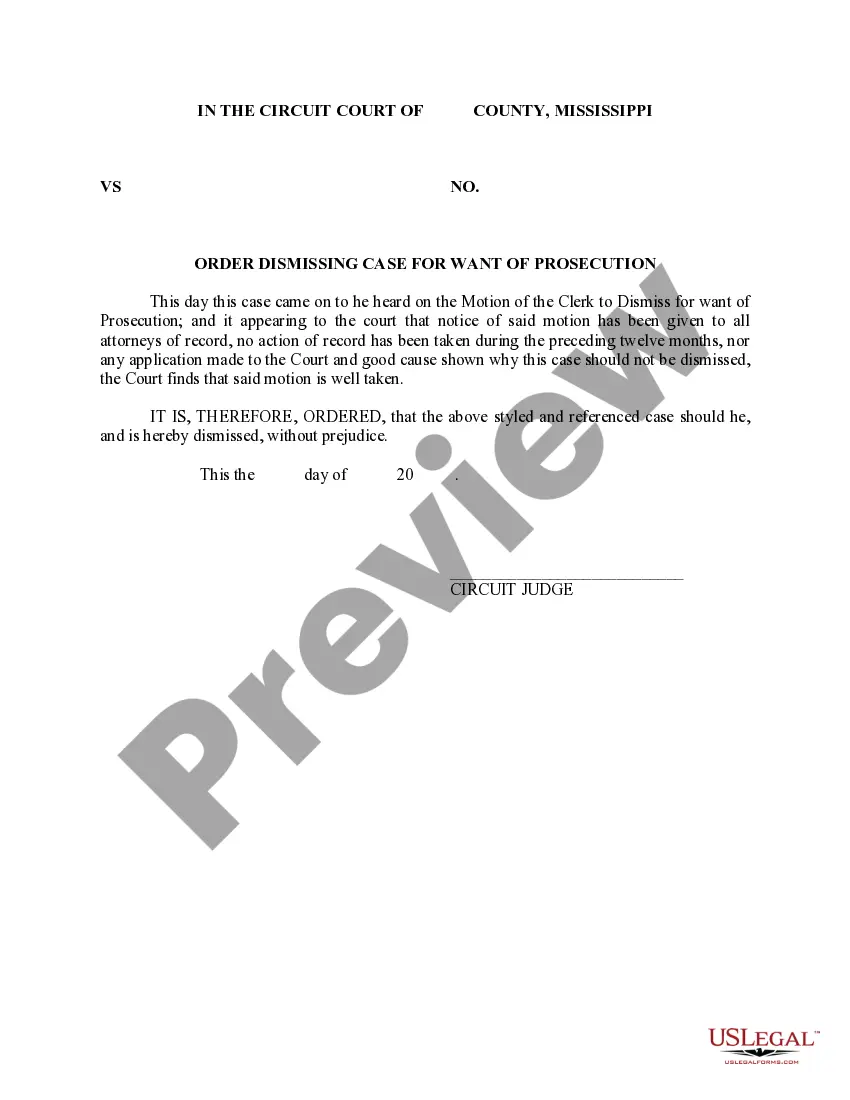
- Case title: Identifies the plaintiff and defendant.
- Cause number: A unique identifier for the case.
- Motion details: States who filed the motion to dismiss and the basis for the dismissal.
- Notice confirmation: Affirms that all parties have been notified of the motion.
- Court findings: Summarizes the court's conclusion about the inactivity in the case.
- Judge's signature: Official acknowledgment by the court judge.
When to use this document
This form is typically used when a party wants to request the dismissal of a case due to lack of prosecution. It is appropriate in instances where there has been no activity on the case for over a year, such as not filing any motions, or where the parties have failed to take the necessary steps to advance the case. If you are involved in a legal proceeding that has stalled and wish to formally close the matter, this order is essential.
Who this form is for
- Individuals or entities who are plaintiffs in a stalled lawsuit.
- Defense parties seeking to dismiss a case against them.
- Legal professionals drafting documents for clients experiencing delays in litigation.
- Anyone involved in a civil case that has not progressed within the last 12 months.
How to complete this form
- Identify the parties: Clearly state the names of the plaintiff and defendant at the top of the document.
- Fill in the cause number: Enter the unique identifier associated with your case.
- Detail the motion: Specify who is filing the motion to dismiss and the reason behind it.
- Verify notice: Confirm that all attorneys of record have been properly notified of the motion.
- Obtain the judge's signature: Present the completed order to the judge for their signature to finalize the dismissal.
Does this document require notarization?
This form usually doesn’t need to be notarized. However, local laws or specific transactions may require it. Our online notarization service, powered by Notarize, lets you complete it remotely through a secure video session, available 24/7.
Get your form ready online
Our built-in tools help you complete, sign, share, and store your documents in one place.
Make edits, fill in missing information, and update formatting in US Legal Forms—just like you would in MS Word.
Download a copy, print it, send it by email, or mail it via USPS—whatever works best for your next step.
Sign and collect signatures with our SignNow integration. Send to multiple recipients, set reminders, and more. Go Premium to unlock E-Sign.
If this form requires notarization, complete it online through a secure video call—no need to meet a notary in person or wait for an appointment.
We protect your documents and personal data by following strict security and privacy standards.

Make edits, fill in missing information, and update formatting in US Legal Forms—just like you would in MS Word.

Download a copy, print it, send it by email, or mail it via USPS—whatever works best for your next step.

Sign and collect signatures with our SignNow integration. Send to multiple recipients, set reminders, and more. Go Premium to unlock E-Sign.

If this form requires notarization, complete it online through a secure video call—no need to meet a notary in person or wait for an appointment.

We protect your documents and personal data by following strict security and privacy standards.
Mistakes to watch out for
- Failing to notify all parties involved in the case before submitting the order.
- Omitting the cause number, which is crucial for identifying the case.
- Not adhering to the required timeframe, typically 12 months of inactivity.
- Using incorrect terminology or language that does not comply with local court rules.
Benefits of using this form online
- Immediate access: Download the form instantly without waiting for physical delivery.
- Customizable: Easily update the form to reflect specific case details and legal requirements.
- Reliability: Ensure that your document is drafted by licensed attorneys to meet legal standards.
- Convenience: Complete the form at your own pace and on your own schedule.
Looking for another form?
Form popularity
FAQ
A dismissed case means that a lawsuit is closed with no finding of guilt and no conviction for the defendant in a criminal case by a court of law. Even though the defendant was not convicted, a dismissed case does not prove that the defendant is factually innocent for the crime for which he or she was arrested.
It means the case was dismissed, either because plaintiff dismissed it or plaintiff didn't show up for the trial.
Yes, it's great to have your case dismissed and you can truthfully claim you have never been convicted of a crime on job applications. However, it will still appear on your criminal record. You should consult with a local criminal attorney for advice on an expungement.
Dismissed for want of prosecution or DWOP means your case is dismissed by the judge because nothing has happened in your case for a while or you missed a hearing or trial (of which you had notice).
A case may be dismissed for want of prosecution (DWOP)on failure of any party seeking affirmative relief to appear for any hearing or trial, or failing to take certain specified actions of which the party had notice. Once signed, the DWOP dismissal order has the effect of closing the case.
Do dismissed charges show up on a background check? Cases resulting in dismissal may appear in some criminal background checks. Sometimes, even if the court has sealed case records, the arrest that led to the case may appear in a criminal background search.
Dismissed for want of prosecution or DWOP means your case is dismissed by the judge because nothing has happened in your case for a while or you missed a hearing or trial (of which you had notice).
An order to dismiss a case can occur when the appellate court, having reversed the conviction on the grounds of a bad search or arrest, examines what's left of the case and determines that there is not enough evidence to warrant another trial.
When a small claims case is dismissed, the court terminates the case without a trial and prior to the case's completion. A dismissal, in effect, denies the plaintiff's claim to the money requested in the Small Claims Complaint (or a counterclaim), even though the merits of the case have never been heard by the court.