Louisiana Judgment on Rule Community Property - Divorce
Understanding this form
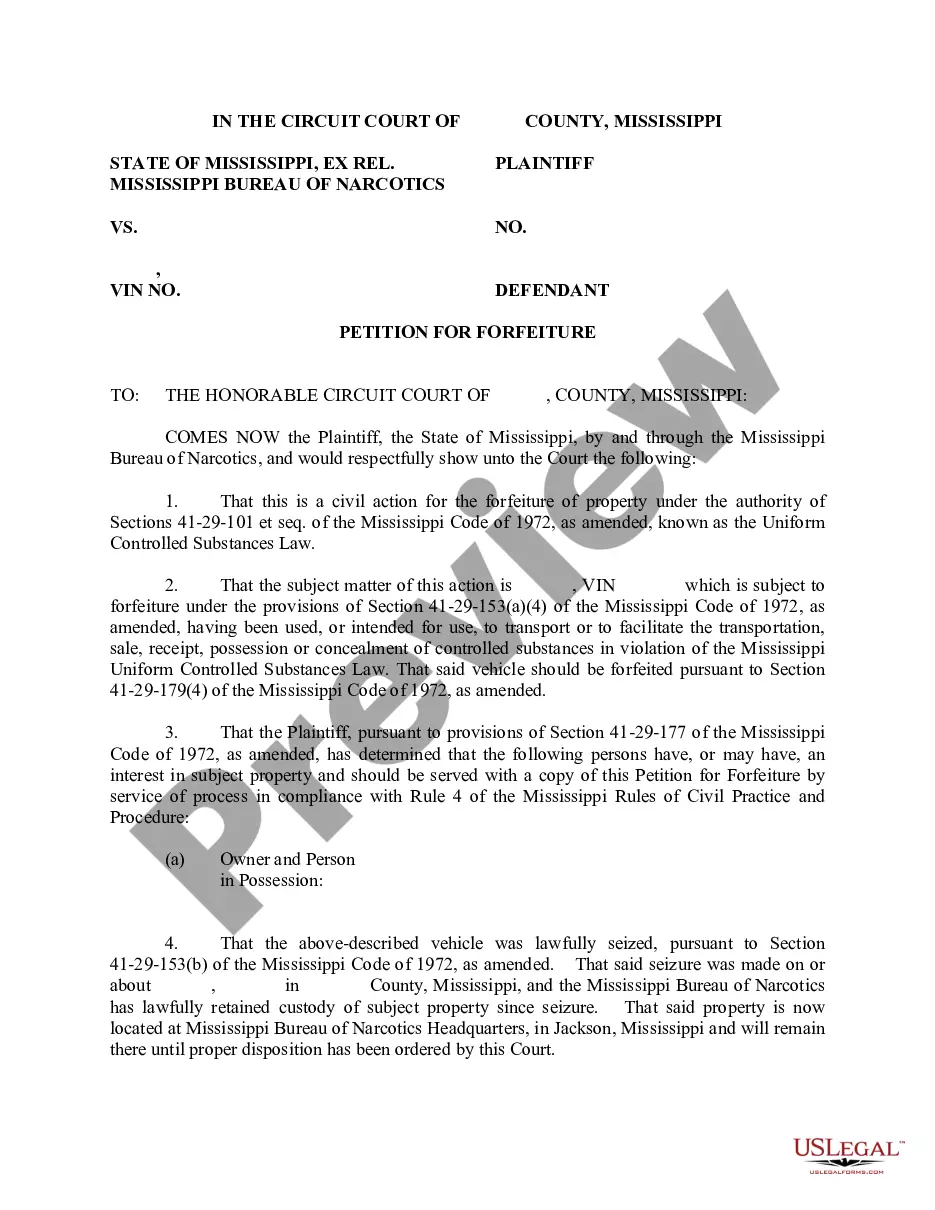
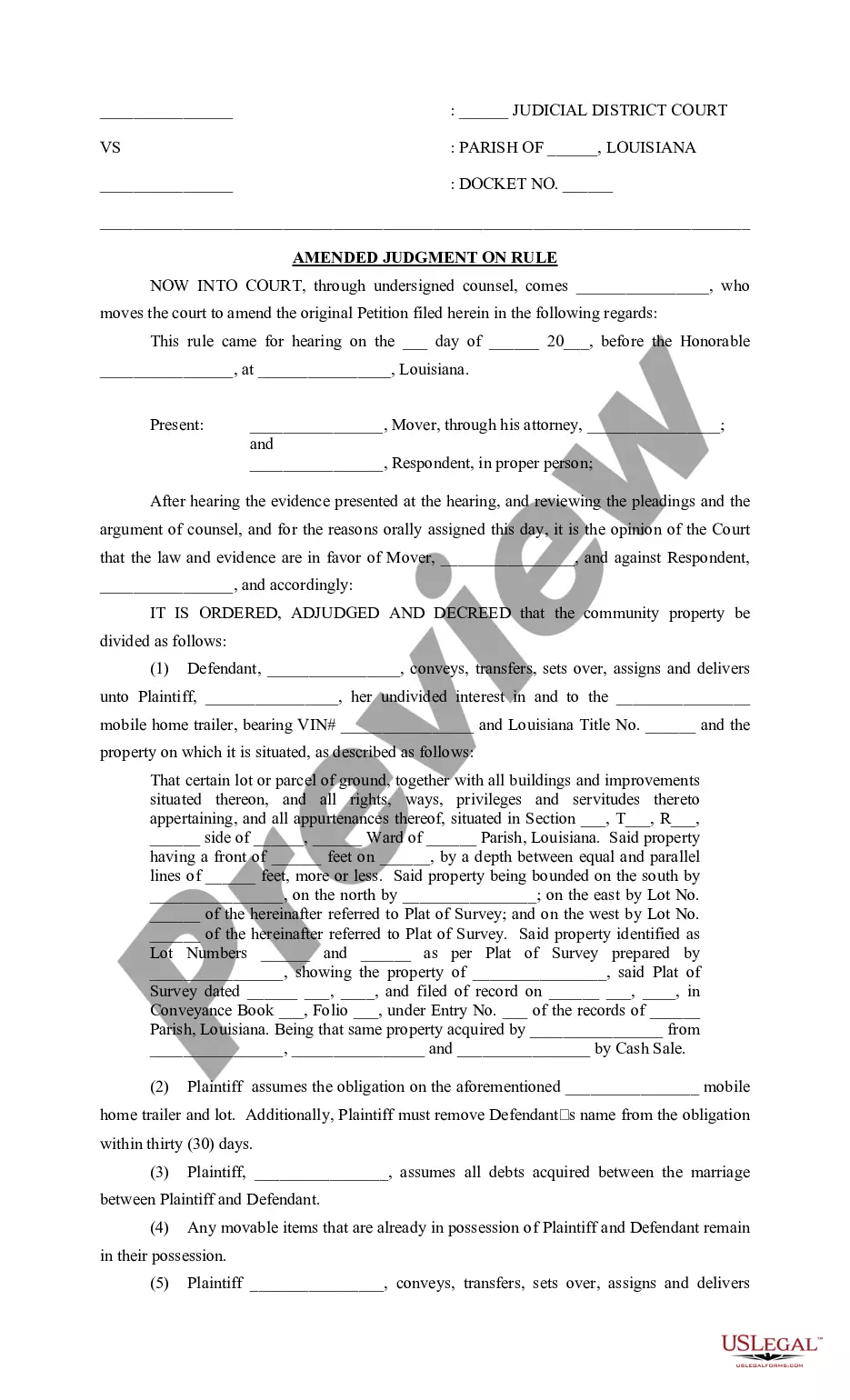
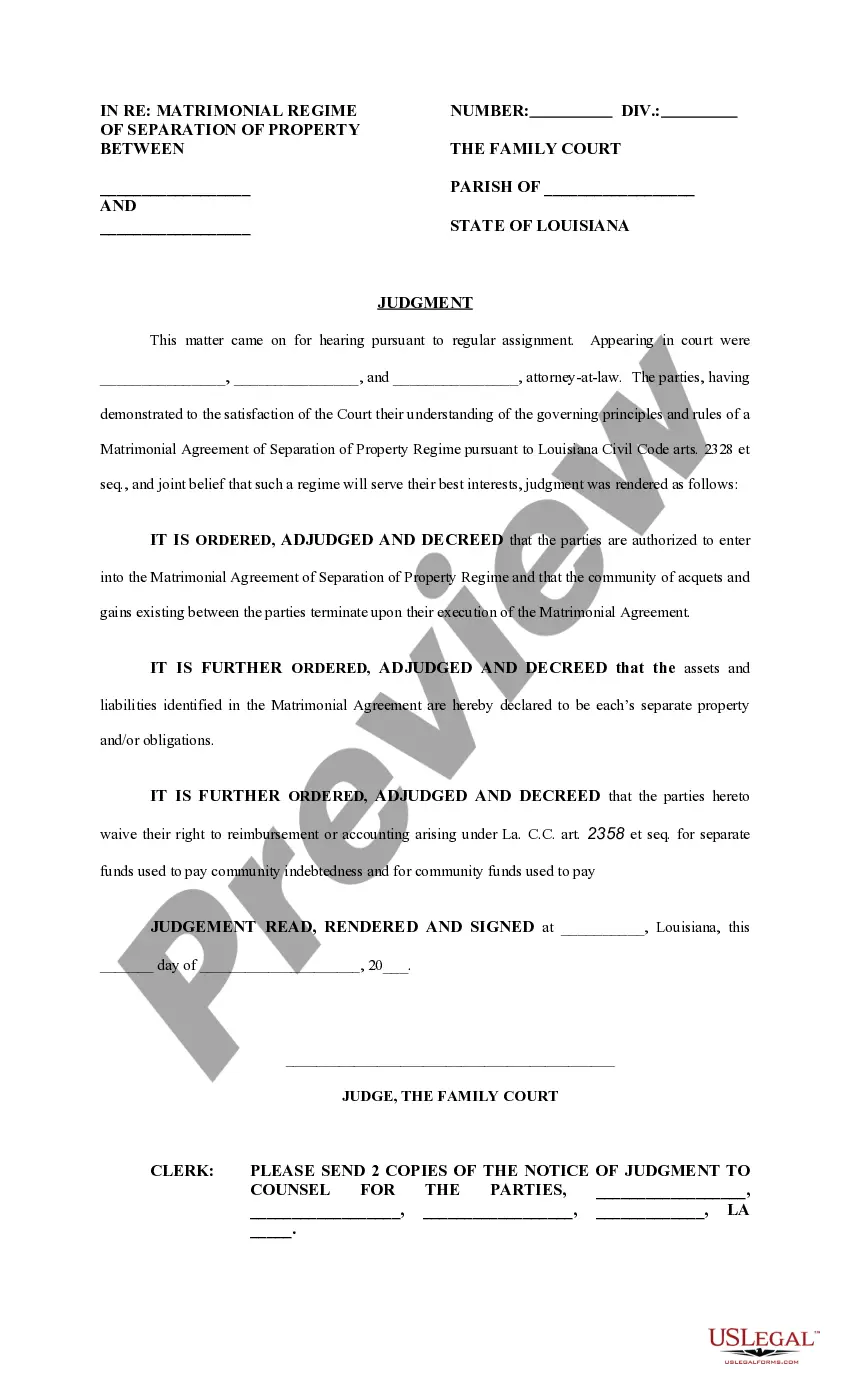
The Judgment on Rule Community Property - Divorce is a legal document issued by the court to resolve the division of community property between spouses during a divorce. This form specifically outlines the transfer of property and financial obligations, defining the rights and responsibilities of each party regarding their shared assets and debts. It differs from other divorce-related forms by focusing explicitly on community property issues, ensuring that both parties adhere to the court's orders regarding asset division and debt assumption.
Main sections of this form
- Court designation: Identifies the parish and case number.
- Parties involved: Names of the plaintiff and defendant, along with their representation.
- Asset division: Specifies which community property (e.g., mobile home, utility trailer) is assigned to each party.
- Debt responsibilities: Outlines which debts each party assumes, including obligations related to community property.
- Retirement benefits: Clearly states any relinquishment of rights to retirement plans, such as a 401(k).
- Court costs: Details how court costs are to be divided between the parties.

When to use this form
This form is used during divorce proceedings when spouses need to settle disputes related to community property and financial obligations. It is applicable when there are shared assets, such as real estate or personal property, and debts acquired during the marriage. This judgment is essential for defining the legal status of these assets and ensuring an equitable distribution, particularly when parties cannot reach an agreement independently.
Who can use this document
- Divorcing spouses in Louisiana seeking to divide community property.
- Individuals who require judicial intervention to resolve disputes over shared assets.
- Parties who need to document the outcome of hearings regarding asset division and obligations.
- Anyone looking to formalize agreements related to divorce settlements in a legally binding manner.
How to complete this form
- Identify the parties involved: Fill in the names of the plaintiff and defendant, including their respective attorneys if applicable.
- Specify the property: Clearly describe the community property being divided, including its nature and location.
- Outline debt responsibilities: Indicate which debts each party will be responsible for following the judgment.
- Enter relevant dates: Include the hearing date and any deadlines for compliance with the court's orders.
- Sign and date the document: Ensure that the judgment is signed by the judge and any necessary witnesses.
Notarization guidance
In most cases, this form does not require notarization. However, some jurisdictions or signing circumstances might. US Legal Forms offers online notarization powered by Notarize, accessible 24/7 for a quick, remote process.
Get your form ready online
Our built-in tools help you complete, sign, share, and store your documents in one place.
Make edits, fill in missing information, and update formatting in US Legal Forms—just like you would in MS Word.
Download a copy, print it, send it by email, or mail it via USPS—whatever works best for your next step.
Sign and collect signatures with our SignNow integration. Send to multiple recipients, set reminders, and more. Go Premium to unlock E-Sign.
If this form requires notarization, complete it online through a secure video call—no need to meet a notary in person or wait for an appointment.
We protect your documents and personal data by following strict security and privacy standards.

Make edits, fill in missing information, and update formatting in US Legal Forms—just like you would in MS Word.

Download a copy, print it, send it by email, or mail it via USPS—whatever works best for your next step.

Sign and collect signatures with our SignNow integration. Send to multiple recipients, set reminders, and more. Go Premium to unlock E-Sign.

If this form requires notarization, complete it online through a secure video call—no need to meet a notary in person or wait for an appointment.

We protect your documents and personal data by following strict security and privacy standards.
Avoid these common issues
- Failing to completely identify all community property in the judgment.
- Not specifying deadlines for transferring property or obligations.
- Omitting any debts incurred during the marriage that need to be addressed.
- Neglecting to include signatures from all parties involved.
Why use this form online
- Convenience: Download the form instantly, without the need for an in-person appointment.
- Editable: Customize the form to fit your specific circumstances easily.
- Reliable: Access forms drafted by licensed attorneys to ensure legal compliance.
- Time-saving: Complete your legal forms efficiently from the comfort of your home.
Looking for another form?
Form popularity
FAQ
Yes, Louisiana is a community property state, which means that assets acquired during the marriage are usually split equally upon divorce. This division is based on the principle that both spouses contribute to the marriage and thus share the ownership of property. Addressing the terms of a Louisiana Judgment on Rule Community Property - Divorce can clarify how these assets are allocated.
Yes, Louisiana is in the minority of states that follows community property laws. Most states adhere to equitable distribution principles, but Louisiana isn't one of them. Louisiana community property laws seek to divide a couple's property equally in a Louisiana divorce.
There's no restriction on being married and filing jointly with different state residences. As long as you and your spouse are married on the last day of the year, the IRS counts you as married for all 12 months. If, say, your divorce becomes final December 31, you file as single for the entire year.
At divorce, community property is generally divided equally between the spouses, while each spouse keeps his or her separate property. Equitable distribution. In all other states, assets and earnings accumulated during marriage are divided equitably (fairly), but not necessarily equally.
Separate property is property belongs exclusively to one of two spouses. Under Louisiana law, assets acquired by a deceased person while unmarried, or acquired during the marriage by gift, is considered to be separate property.
Community property states as of 2020 include Arizona, California, Idaho, Louisiana, Nevada, New Mexico, Texas, Washington and Wisconsin.That means spouses can divide their property by community property standards, but they don't have to.
Infidelity or other bad behaviors do not affect the amount of community property one is entitled to. Also, one is not entitled to more spousal support, child support, or custody rights even if they can prove their spouse had an affair. Today in Louisiana, adultery actually plays a very minor role in a divorce.
In most divorces, the marital home is a couple's biggest asset. It's also the center of family life and often serves as an anchor for families with minor children. If a judge determines that the marital home is one spouse's separate property, the solution is simple: the spouse who owns it, gets it.
Under Louisiana law, marital property, or property acquired during the marriage, is distributed equally (50-50) to each party unless the court finds such a division to be inequitable or parties agree to a different formula under which to divide property.
Louisiana is a community property state. This means that spouses generally share equally in the assets, income and debt acquired by either spouse during the marriage. However, some income and some property may be separate income or separate property.