Authorization for Lien and Sale for Nonpayment of Repair and / or Parts Charges
What this document covers
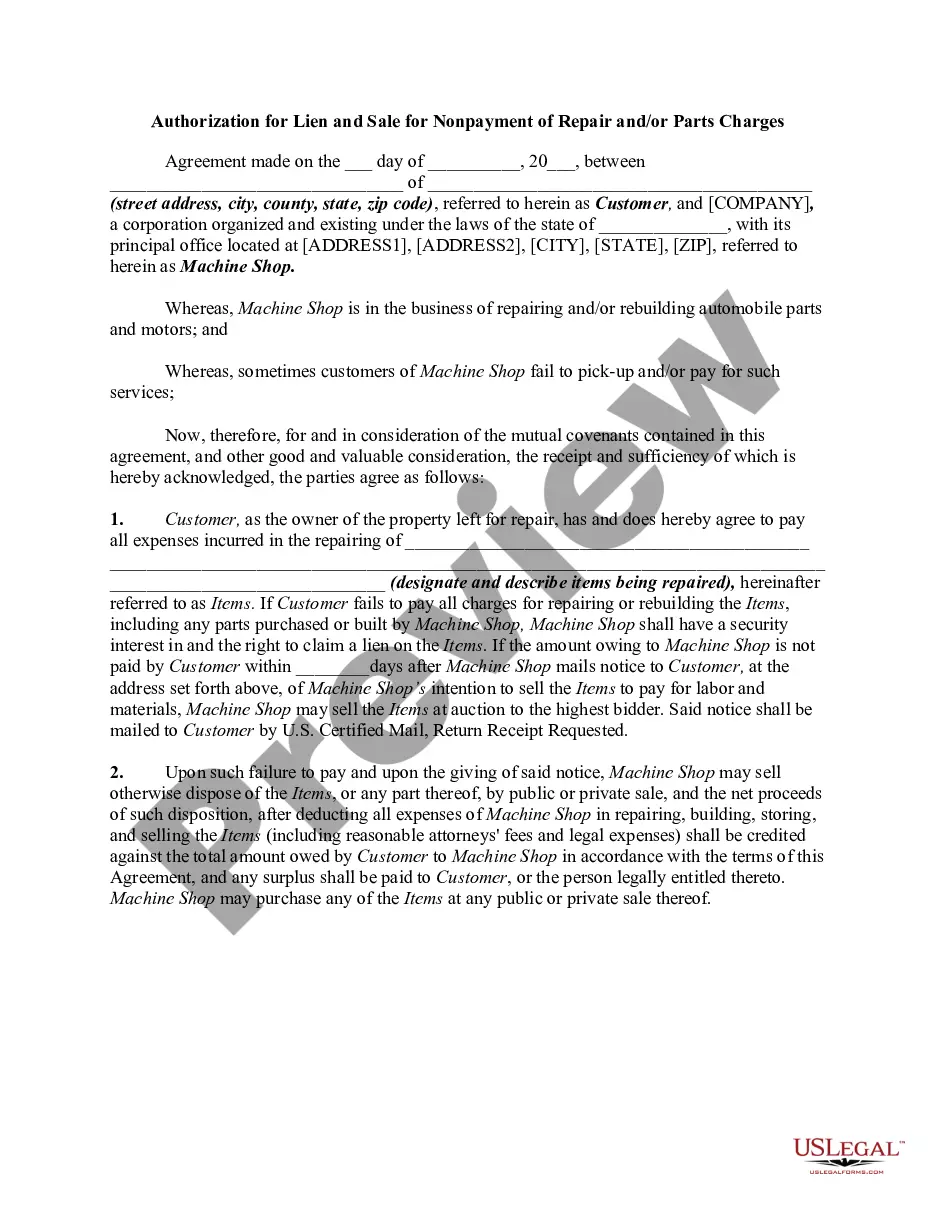
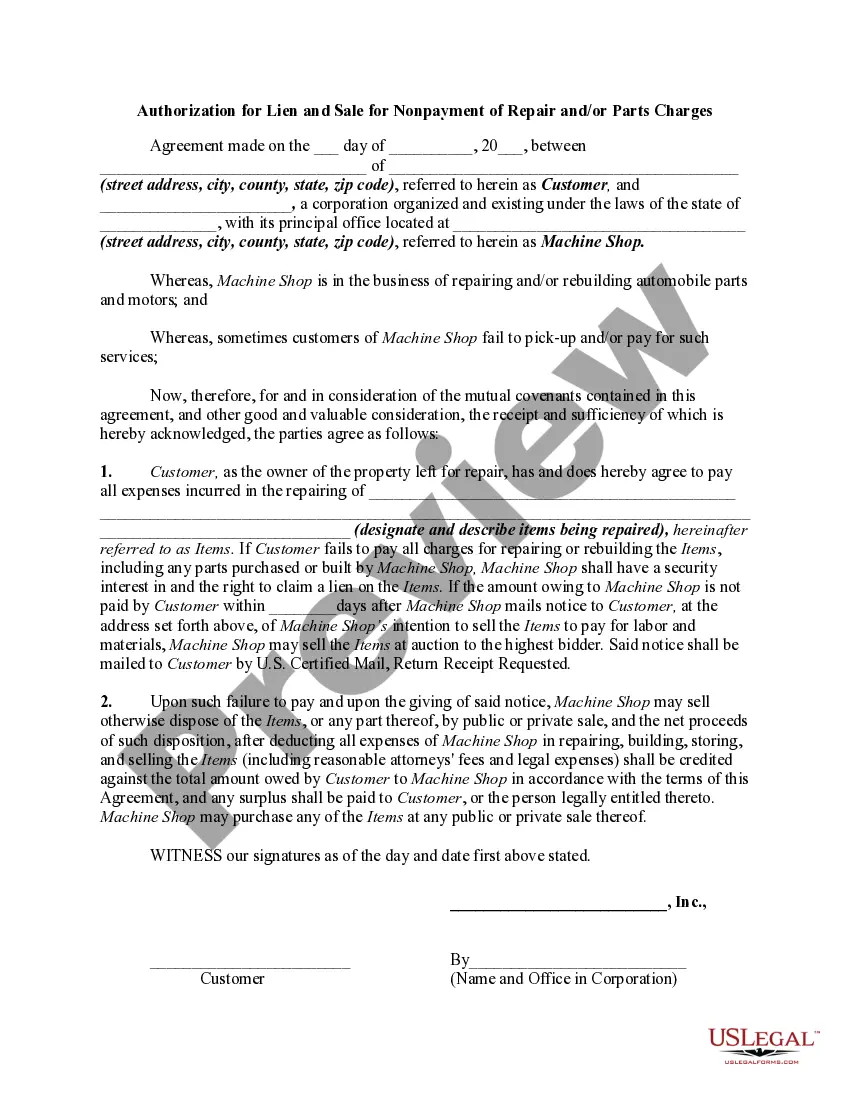
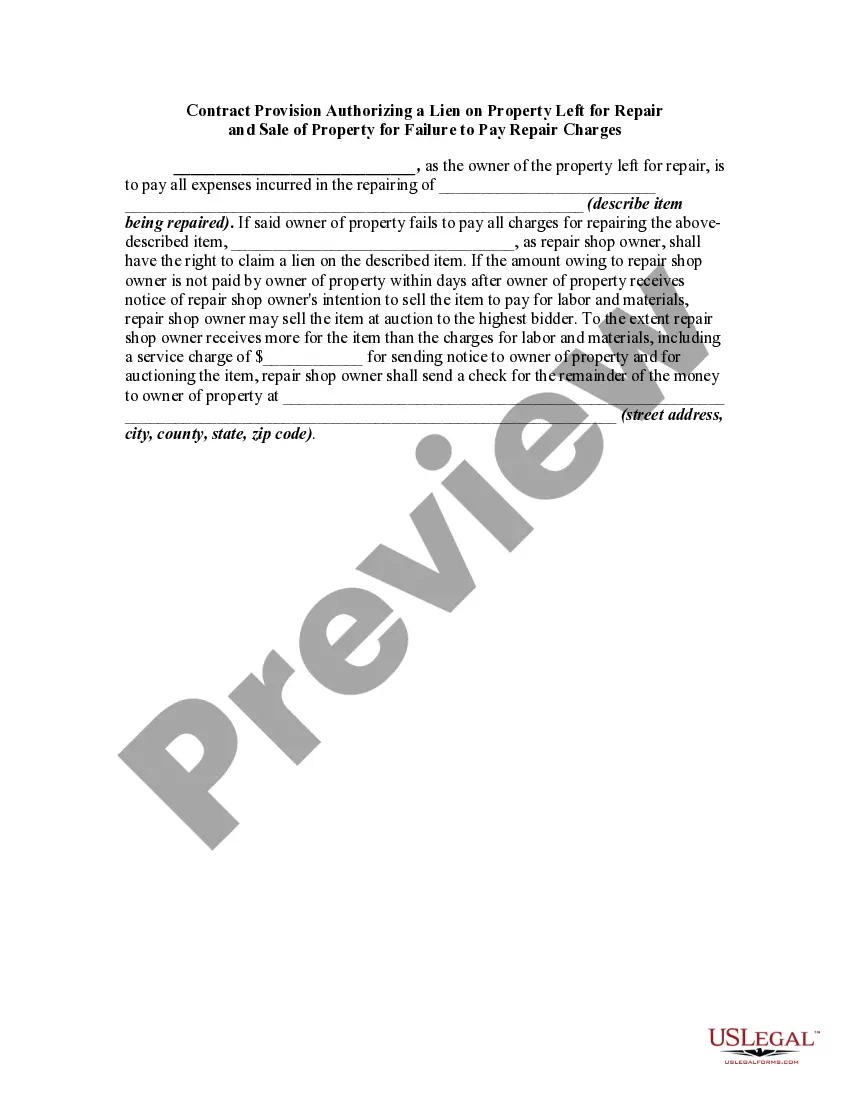
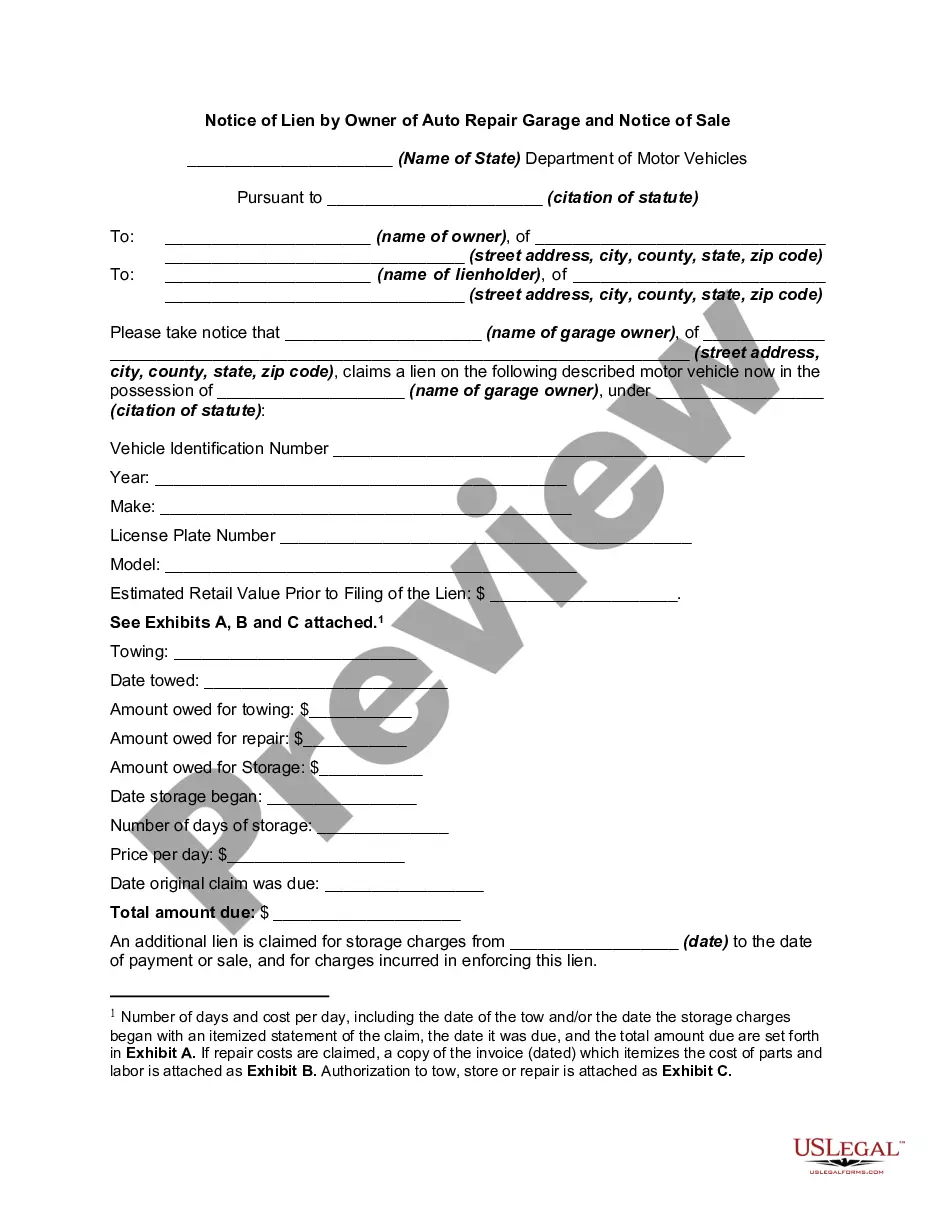
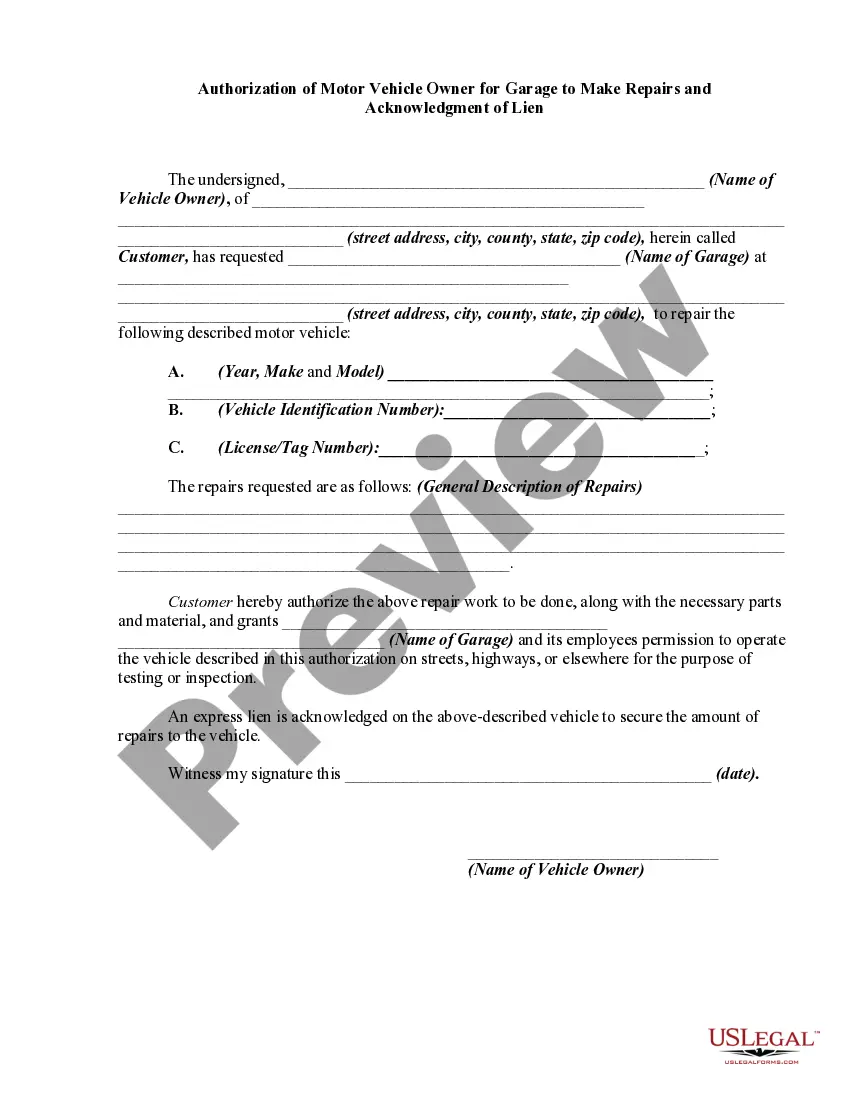
The Authorization for Lien and Sale for Nonpayment of Repair and/or Parts Charges is a legal document that allows a repair shop to place a lien on property for unpaid charges related to repairs. This form is critical for establishing the shop's right to claim a security interest and, ultimately, sell the property if payment is not received. Unlike standard contracts, this document specifically outlines the rights and responsibilities regarding unpaid repair bills.
What’s included in this form
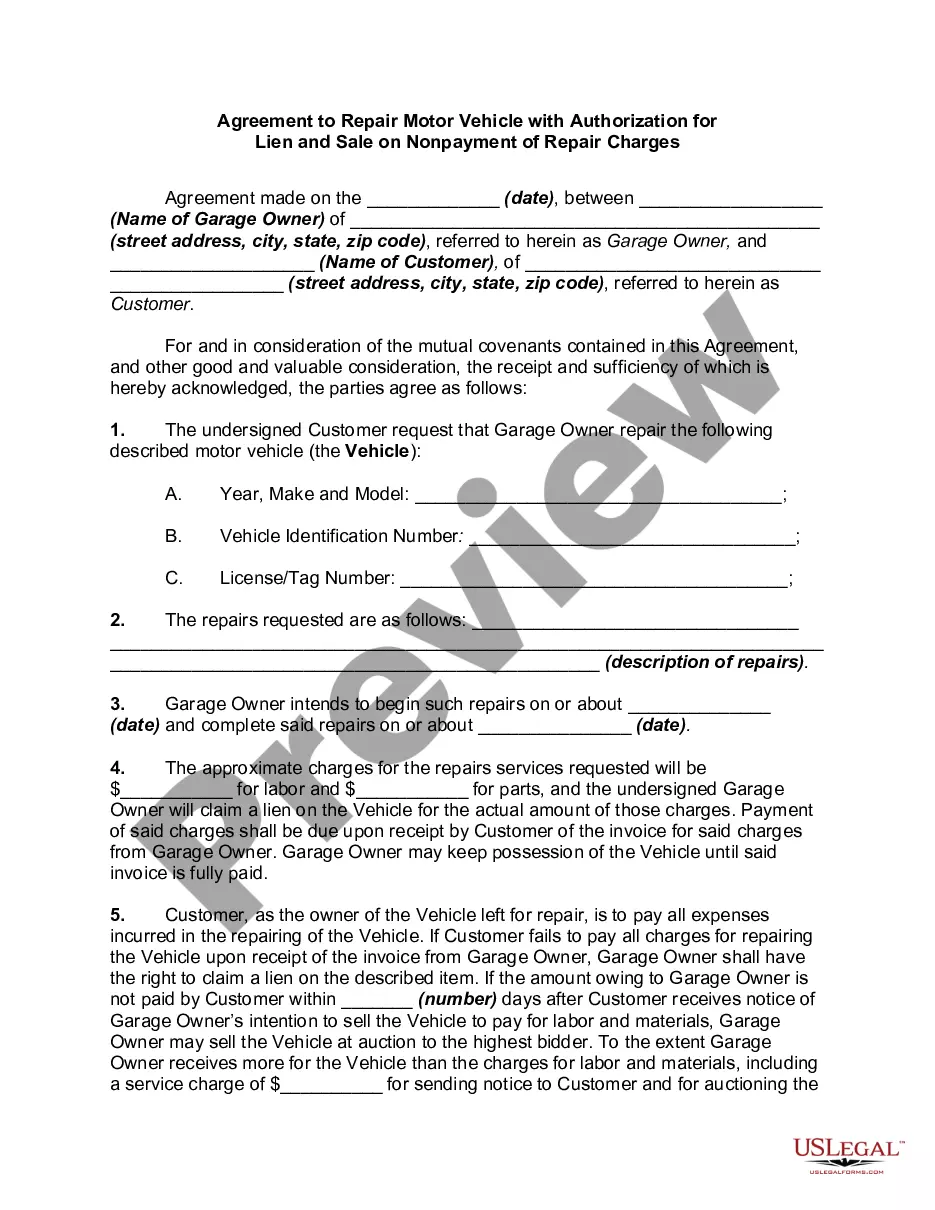
- Agreement initiation date and parties involved
- Description of the items being repaired
- Customer's agreement to pay all related expenses
- Details on the lien rights of the repair shop
- Procedure for notifying the customer and selling the items if payment is not made
Situations where this form applies
This form should be used by repair shops when a customer fails to pay for services rendered. It is especially relevant in scenarios where items have been left for repair and the costs associated with repairs, parts, or labor remain unpaid. The form establishes a clear process for the repair shop to reclaim its expenses through a lien and potential sale of the items.
Who can use this document
- Owners of repair shops and service providers
- Customers who are having their items repaired and need clarity on payment obligations
- Business owners who offer repair services and need legal protection for their property rights
How to prepare this document
- Identify the date of the agreement and enter the parties' names and addresses.
- Clearly designate and describe the items being repaired.
- Specify the payment terms and conditions related to the repair costs.
- Outline the consequences of non-payment, including lien rights and sale procedures.
- Ensure appropriate signatures from both the repair shop and the customer.
Does this form need to be notarized?
This form does not typically require notarization to be legally valid. However, some jurisdictions or document types may still require it. US Legal Forms provides secure online notarization powered by Notarize, available 24/7 for added convenience.
Get your form ready online
Our built-in tools help you complete, sign, share, and store your documents in one place.
Make edits, fill in missing information, and update formatting in US Legal Forms—just like you would in MS Word.
Download a copy, print it, send it by email, or mail it via USPS—whatever works best for your next step.
Sign and collect signatures with our SignNow integration. Send to multiple recipients, set reminders, and more. Go Premium to unlock E-Sign.
If this form requires notarization, complete it online through a secure video call—no need to meet a notary in person or wait for an appointment.
We protect your documents and personal data by following strict security and privacy standards.

Make edits, fill in missing information, and update formatting in US Legal Forms—just like you would in MS Word.

Download a copy, print it, send it by email, or mail it via USPS—whatever works best for your next step.

Sign and collect signatures with our SignNow integration. Send to multiple recipients, set reminders, and more. Go Premium to unlock E-Sign.

If this form requires notarization, complete it online through a secure video call—no need to meet a notary in person or wait for an appointment.

We protect your documents and personal data by following strict security and privacy standards.
Common mistakes to avoid
- Failing to describe the items being repaired adequately.
- Neglecting to specify the payment timeline leading to lien enforcement.
- Not obtaining signatures from both parties before proceeding.
Why complete this form online
- Convenient access to legally vetted templates drafted by licensed attorneys.
- Easy to customize the form to fit specific repair circumstances.
- Immediate availability for download and use without the need for in-person consultations.
Looking for another form?
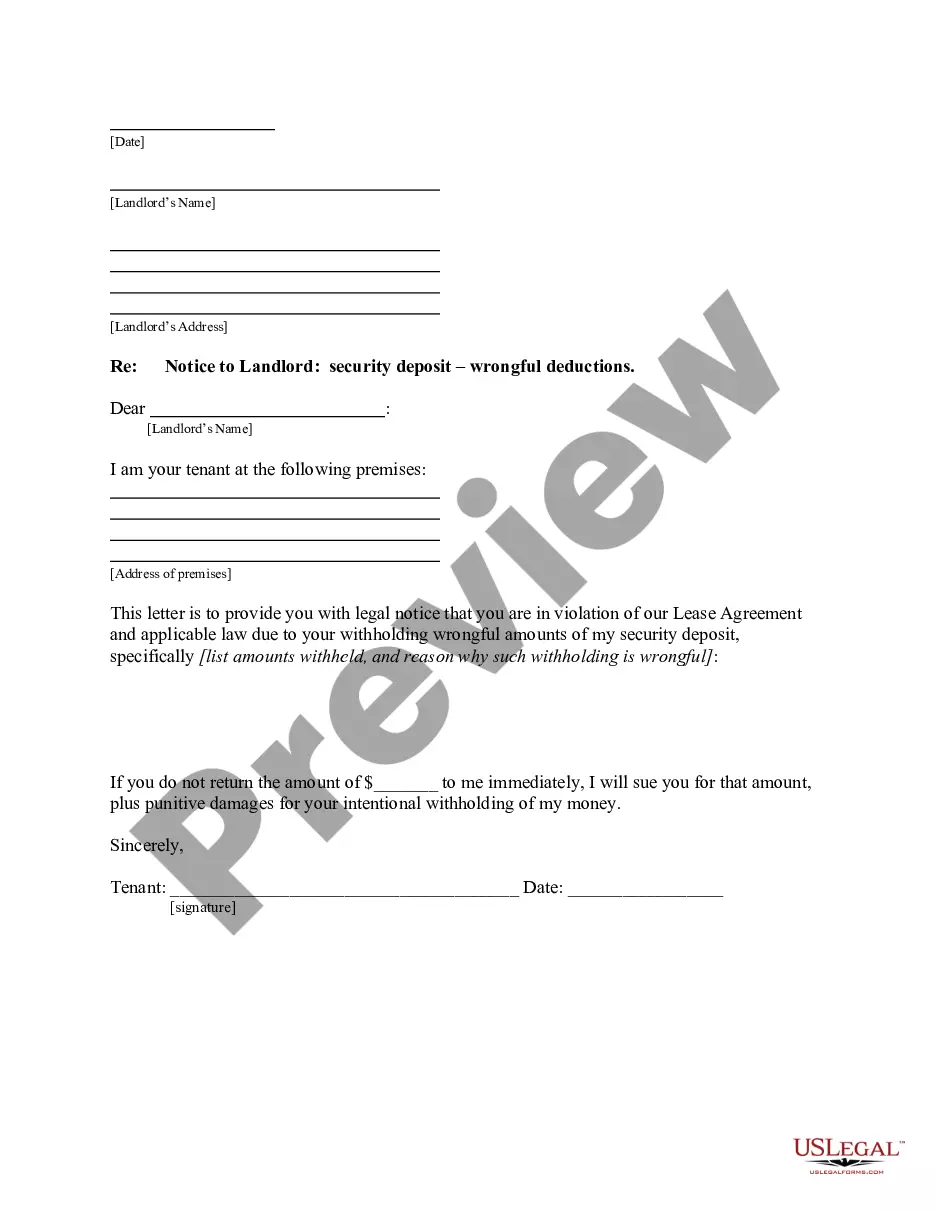
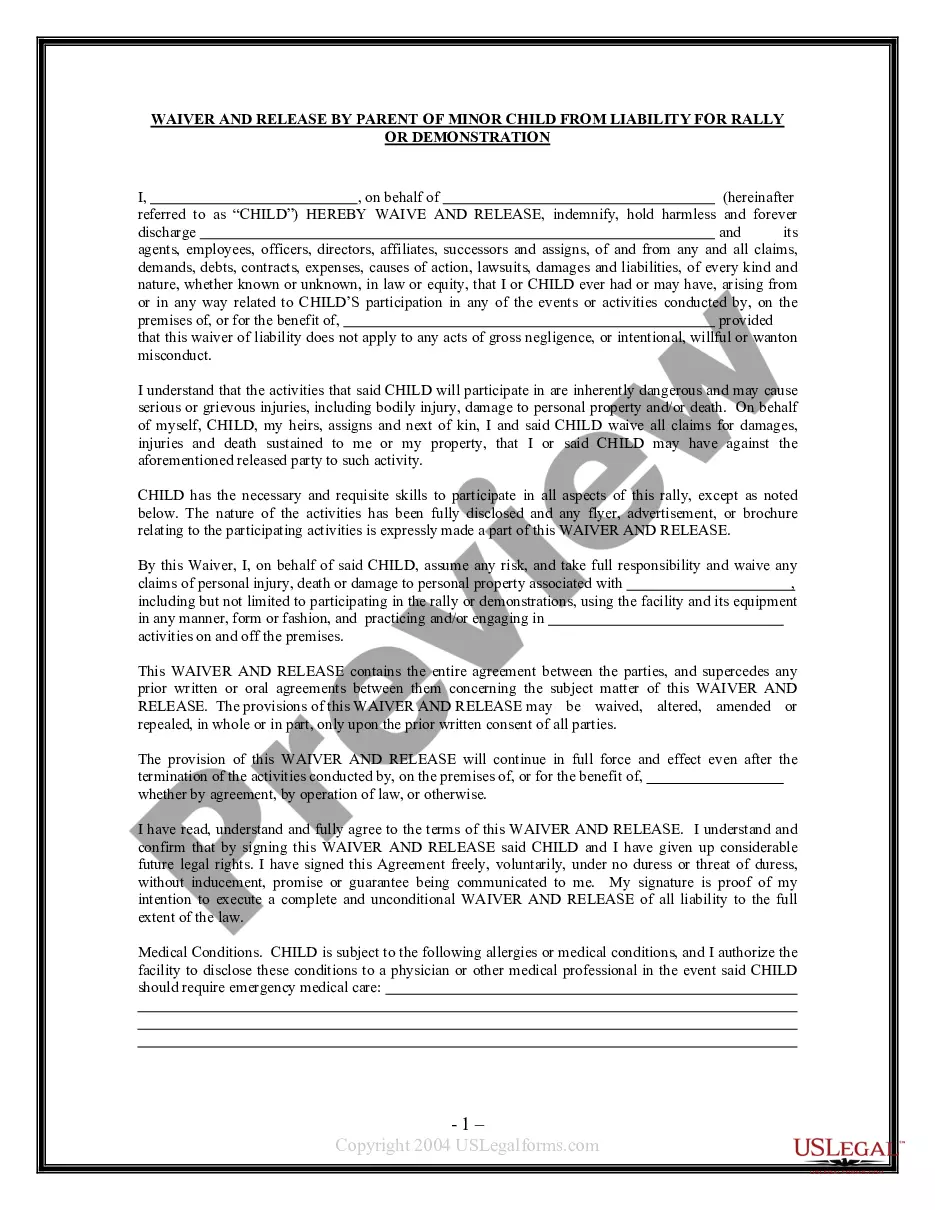
Form popularity
FAQ
Fill out your lien form with complete, accurate details. Bring your Affidavit of Lien to the county recorder's office in the county where the property is located, and pay the lien recording fee. After recording a Texas mechanics lien, claimants must provide notice to the property owner and GC within 5 days of filing.
(a) An original contractor who has a written contract with the owner may furnish at any time a bond for the benefit of claimants.
Under Section 53.171(c) of the Texas Property Code, a mechanic's lien can be discharged with a bond even after the dispute has arisen and the lien has been filed. The bond must be substantially higher than the lien amounts.
Section 53.101 - Funds Required To Be Reserved (a) During the progress of work under an original contract for which a mechanic's lien may be claimed and for 30 days after the work under the contract is completed, the owner shall reserve : (1) 10 percent of the contract price of the work to the owner; or (2) 10 percent
Notice Relating to Termination of Work or Abandonment of Performance by Original Contractor or Owner.
To place a lien, you must have a court judgment for the debt, so you must start by suing the business entity in a court of law. Once the judge rules that the debt is warranted, you take the court order to the county recorder's office of each county the business owns property within.
Before construction begins, Texas Property Code Section 53.256 requires that the builder provide the name, address, and telephone number of each subcontractor and supplier the builder intends to use on the project.
YES. To have Lien rights on a residential homestead Property, the Original Contractor must: (1) have a written contract signed by the Property Owner (if they are a married couple, then both 9 Page 10 must sign the contract); (2) before the work begins; and (3) the contract must be filed with the County Clerk.