Form - Large Quantity Sales Distribution Agreement
What this document covers
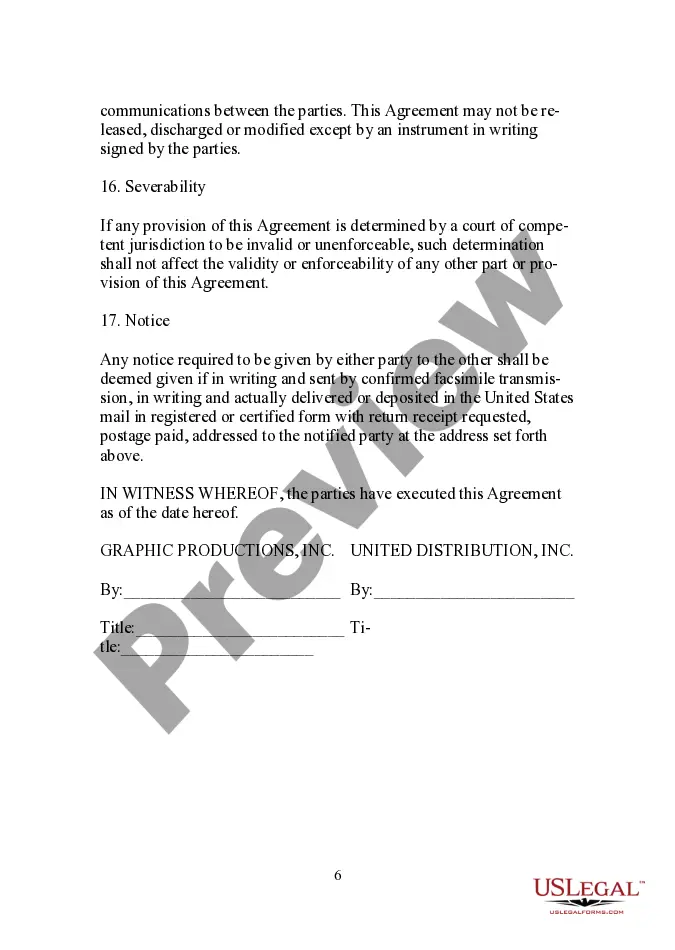
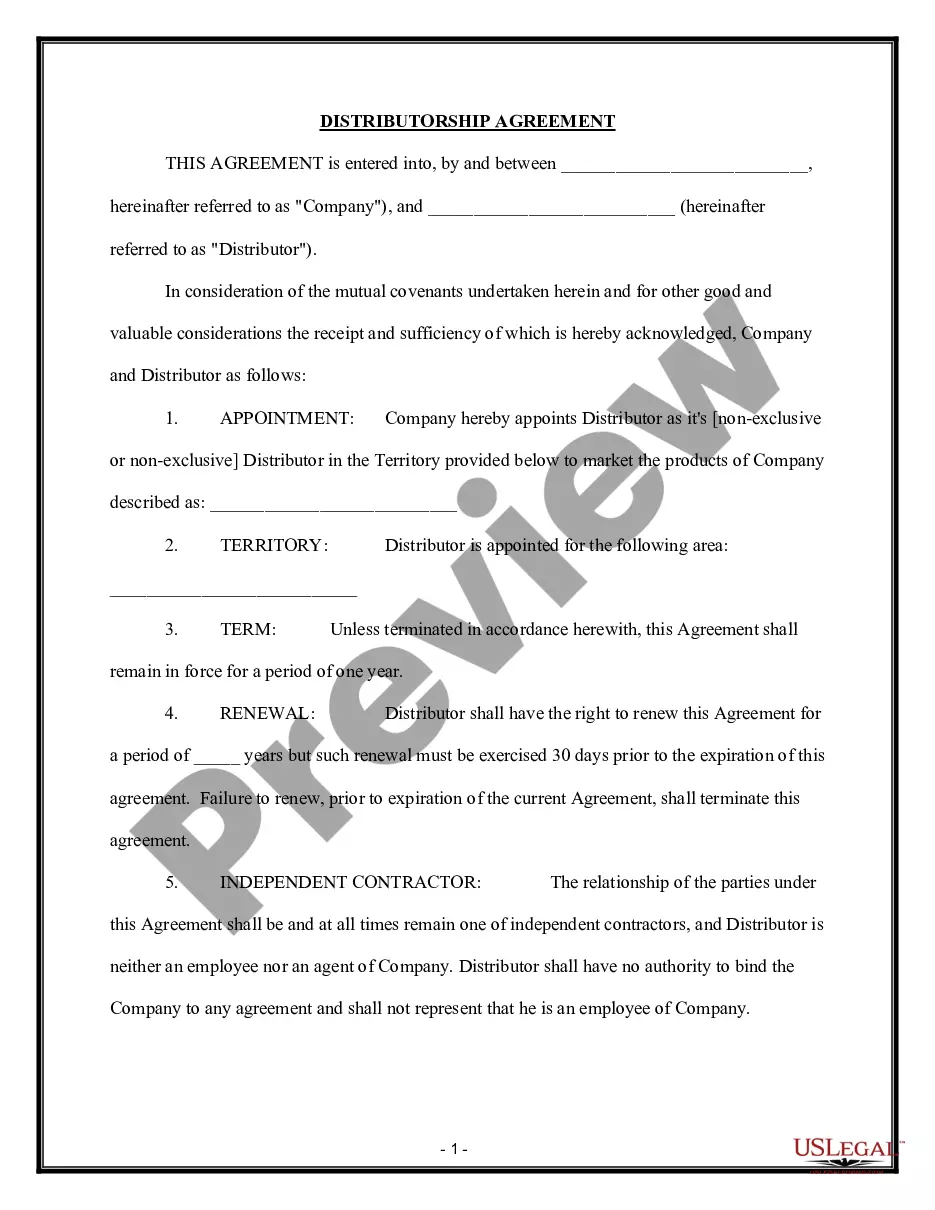
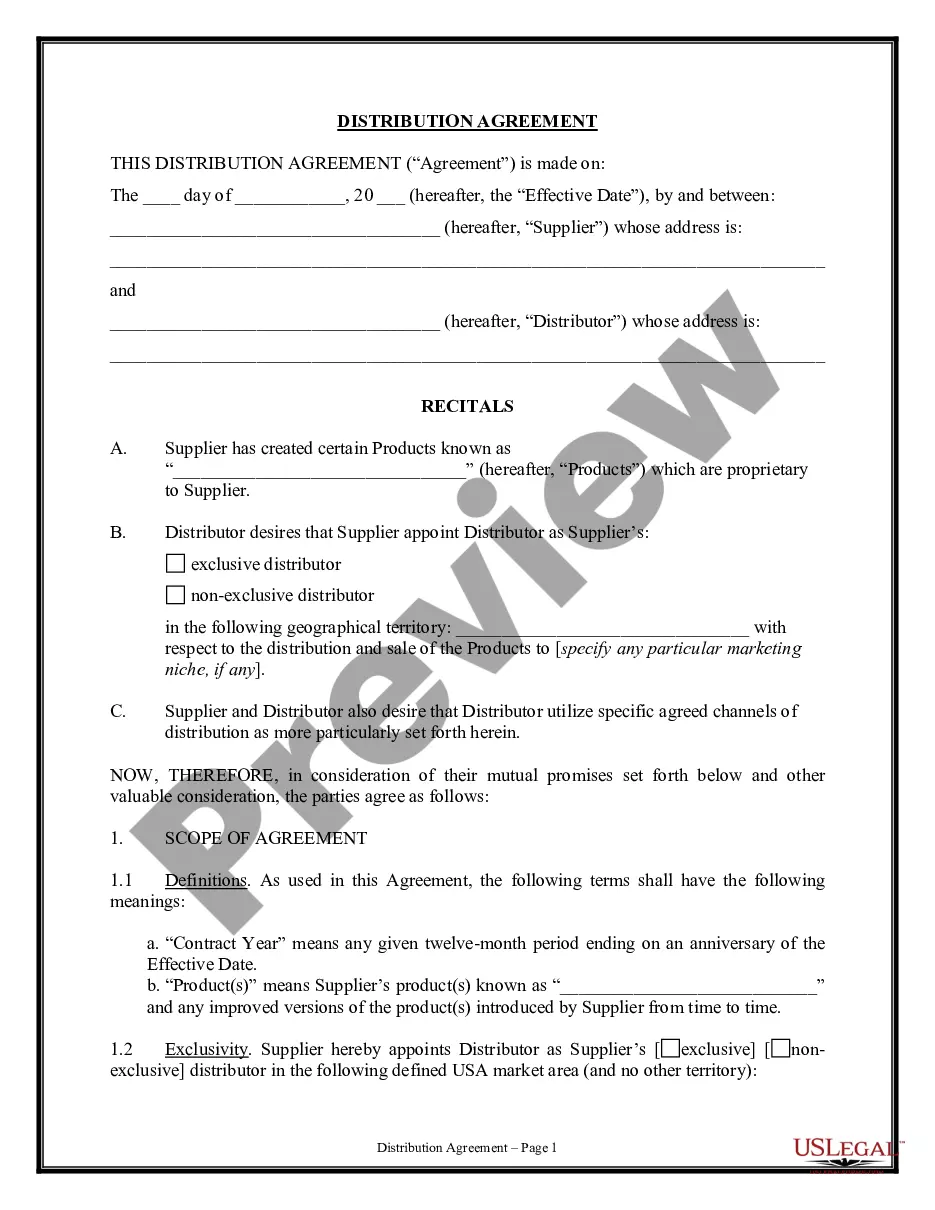
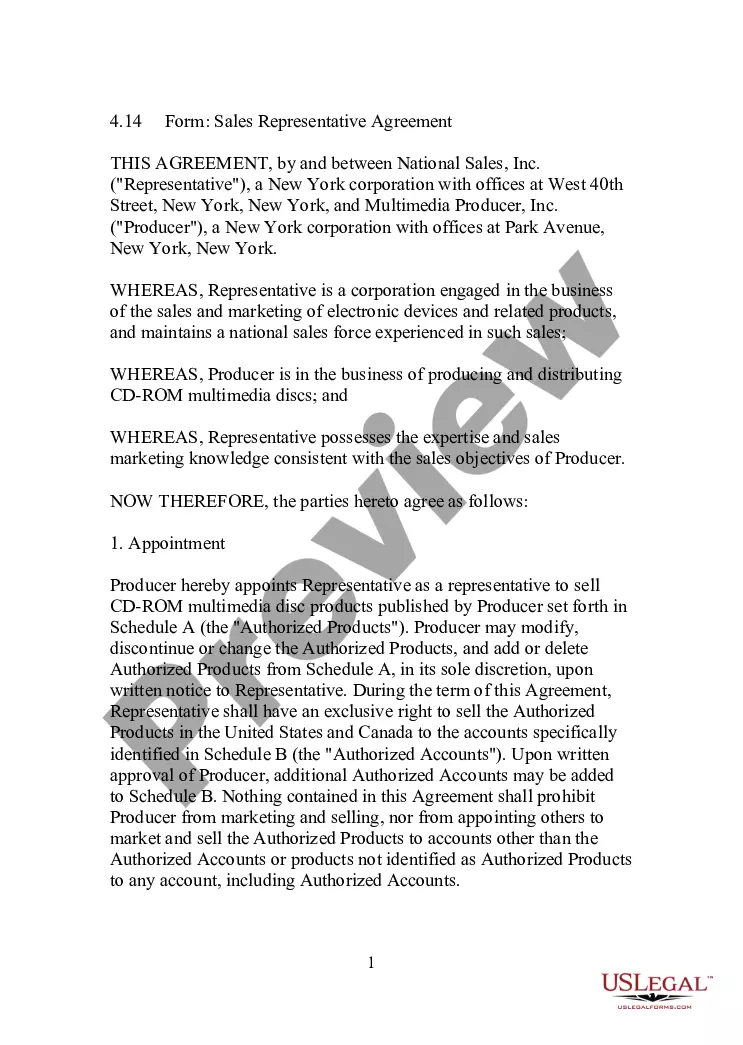
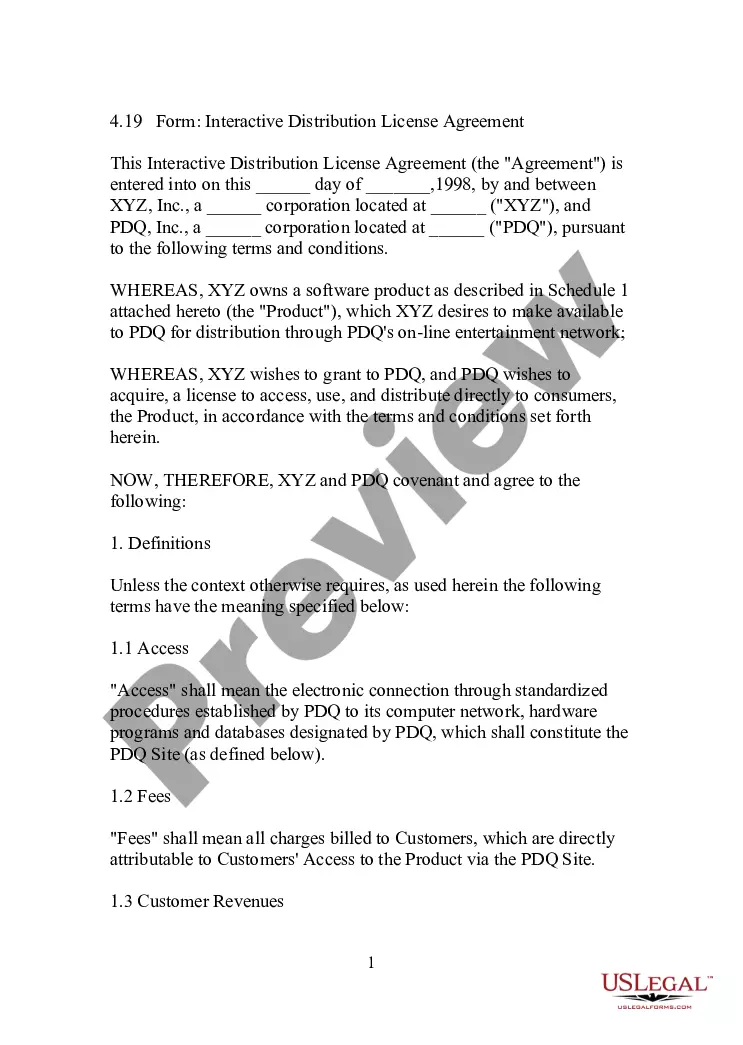
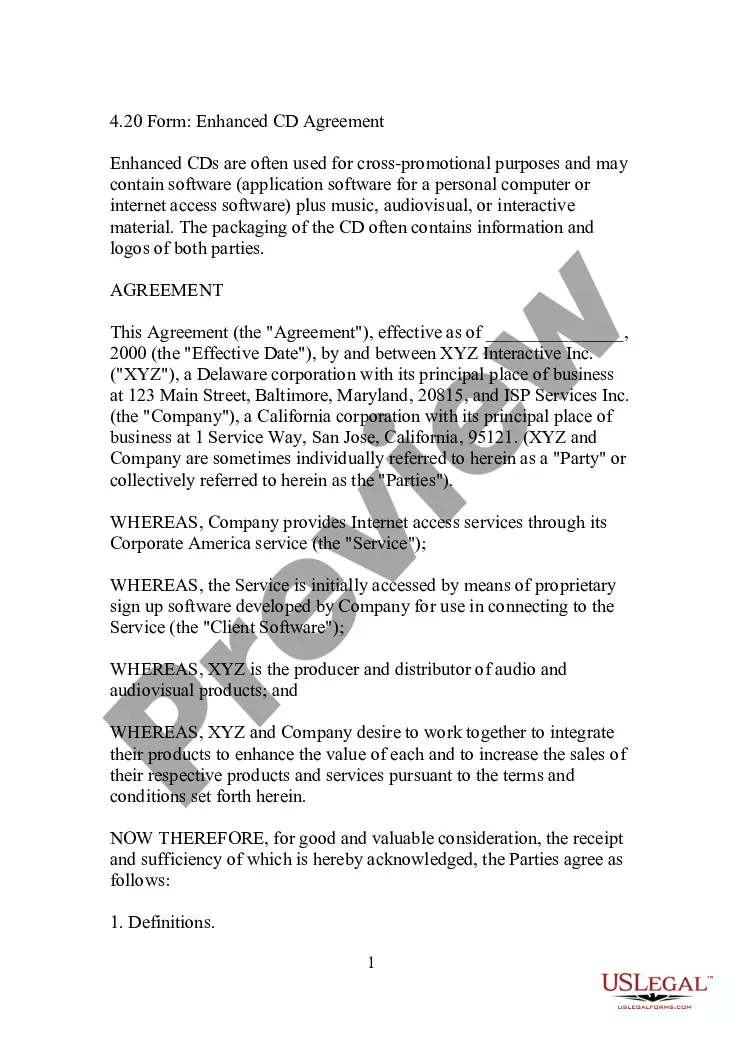
The Large Quantity Sales Distribution Agreement is a legally binding document used by businesses to outline the terms under which a distributor can purchase and distribute products from a producer. This agreement is crucial for establishing clear rights and responsibilities between these parties, mitigating potential disputes. Unlike standard sales contracts, this form specifically addresses multi-product agreements and includes provisions for pricing, distribution rights, and product returns, making it ideal for businesses engaged in large volume sales.
Form components explained
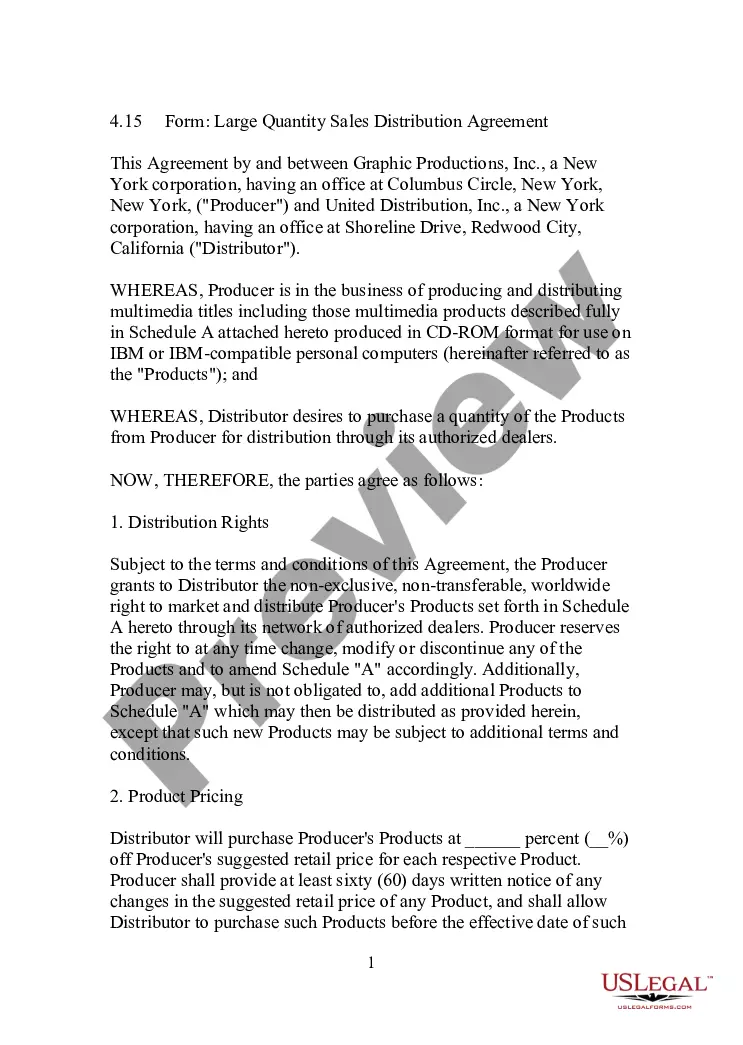
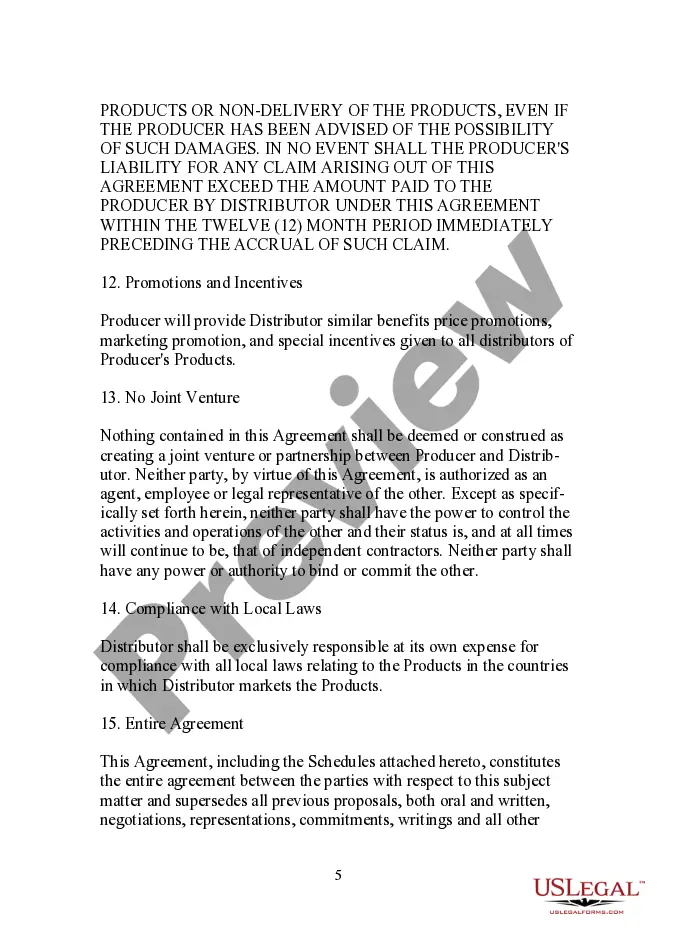
- Distribution rights: Specifies the non-exclusive, non-transferable rights granted to the distributor to market and distribute the producer's products.
- Product pricing: Outlines the discount structure off the suggested retail price, including invoicing terms.
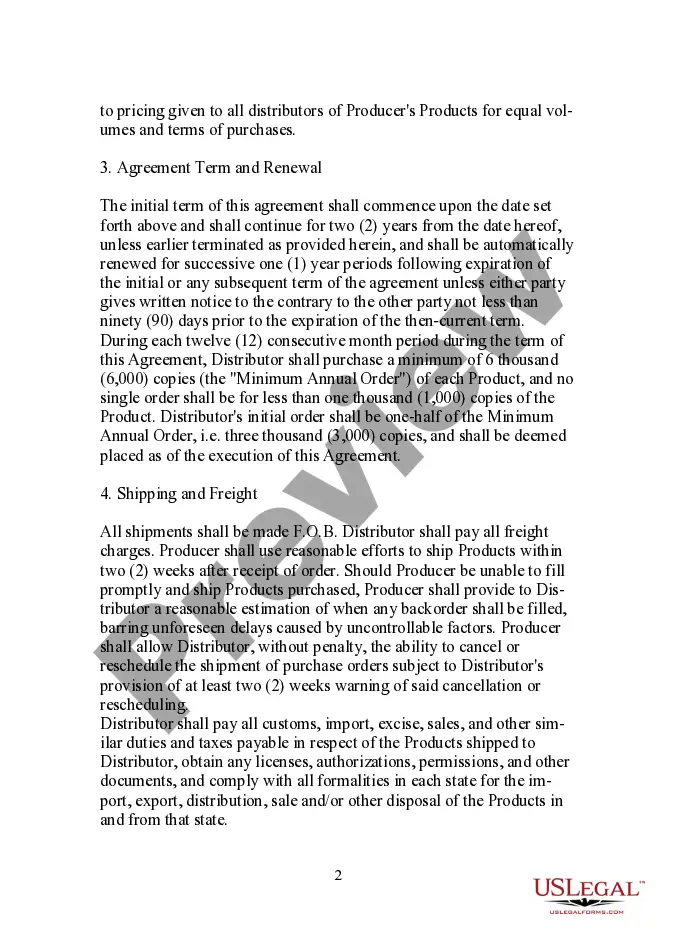
- Agreement term: Details the duration of the agreement and renewal conditions.
- Shipping and freight: Covers responsibilities for shipping costs and logistics.
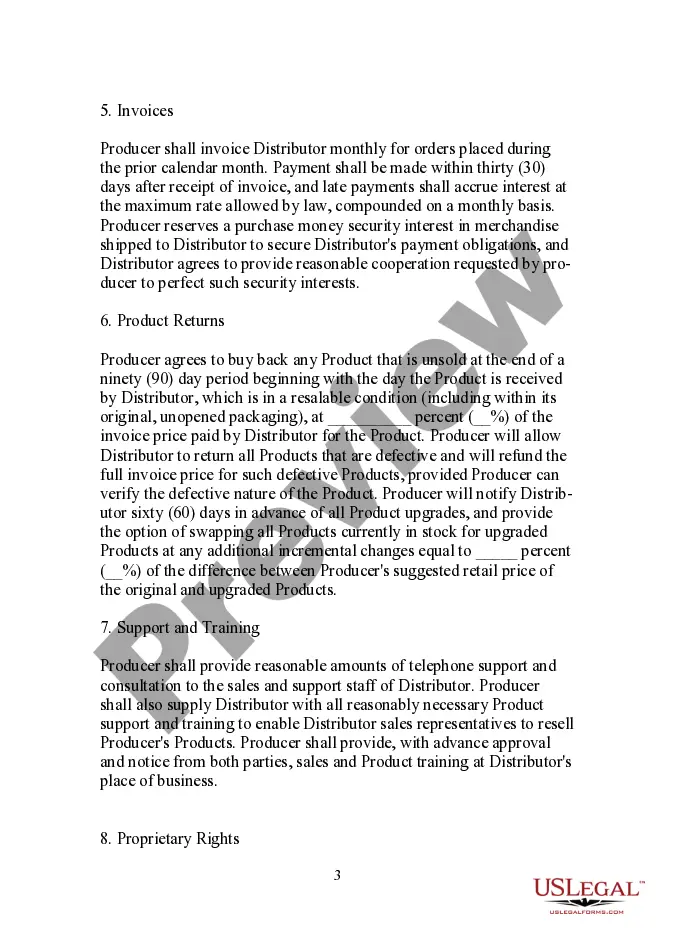
- Product returns: Explains the process for returning unsold or defective products.
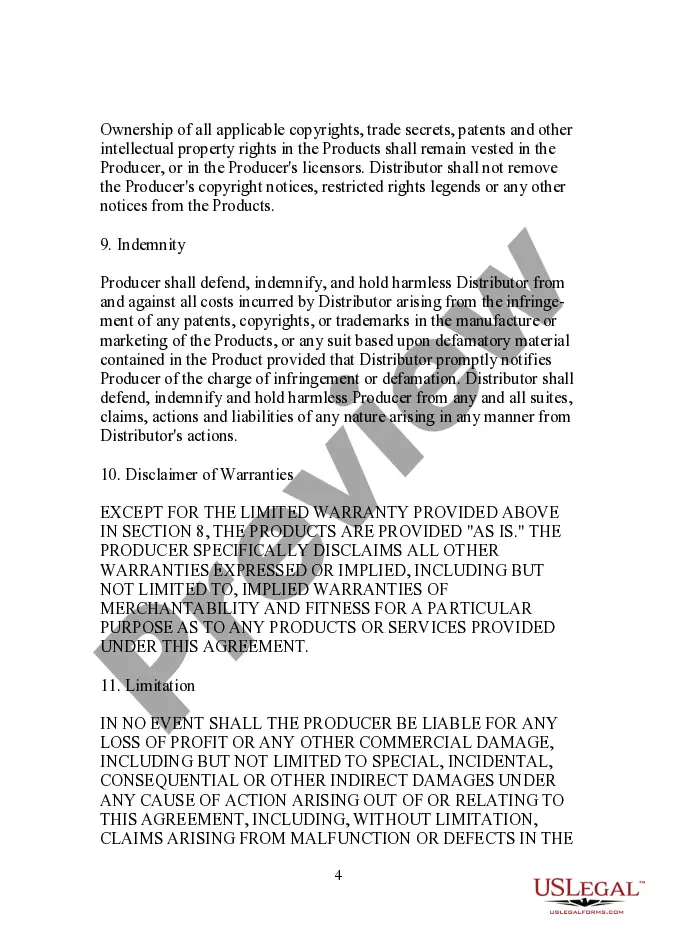
- Indemnity: Addresses liability and responsibilities related to patent or copyright infringements.
When to use this document
This form should be used when a producer seeks to establish a formal relationship with a distributor for the sale of large quantities of products. It is particularly applicable when the producer has multiple products to distribute and requires an agreement that details pricing, order minimums, and responsibilities regarding shipping and returns.
Who needs this form
- Producers looking to expand their market reach through distribution partners.
- Distributors who want to formalize agreements with producers for the sale of large volumes of products.
- Businesses engaged in the multimedia products sector, including software and content distribution.
How to prepare this document
- Identify the parties: Enter the full legal names and addresses of both the producer and the distributor.
- Specify distribution rights: Clearly outline the rights granted to the distributor, including any limitations.
- Detail product pricing: Fill in the percentage off the suggested retail price and outline any conditions for price changes.
- State the agreement term: Indicate the start date and duration of the agreement, along with renewal terms.
- Include shipping terms: Define responsibilities for shipping costs and logistics as well as the notice period required for cancellations.
Is notarization required?
In most cases, this form does not require notarization. However, some jurisdictions or signing circumstances might. US Legal Forms offers online notarization powered by Notarize, accessible 24/7 for a quick, remote process.
Get your form ready online
Our built-in tools help you complete, sign, share, and store your documents in one place.
Make edits, fill in missing information, and update formatting in US Legal Forms—just like you would in MS Word.
Download a copy, print it, send it by email, or mail it via USPS—whatever works best for your next step.
Sign and collect signatures with our SignNow integration. Send to multiple recipients, set reminders, and more. Go Premium to unlock E-Sign.
If this form requires notarization, complete it online through a secure video call—no need to meet a notary in person or wait for an appointment.
We protect your documents and personal data by following strict security and privacy standards.

Make edits, fill in missing information, and update formatting in US Legal Forms—just like you would in MS Word.

Download a copy, print it, send it by email, or mail it via USPS—whatever works best for your next step.

Sign and collect signatures with our SignNow integration. Send to multiple recipients, set reminders, and more. Go Premium to unlock E-Sign.

If this form requires notarization, complete it online through a secure video call—no need to meet a notary in person or wait for an appointment.

We protect your documents and personal data by following strict security and privacy standards.
Common mistakes
- Failing to specify the minimum order quantities required from the distributor.
- Not updating the agreement when new products are added or prices change.
- Overlooking necessary state-specific legal requirements if using the form in different jurisdictions.
Why use this form online
- Convenient access allows for immediate downloading and editing.
- Templates are drafted by licensed attorneys to ensure legal compliance.
- Ability to fill in the form digitally for clearer and more organized documentation.
Legal use & context
- The Large Quantity Sales Distribution Agreement is enforceable in a court of law when properly executed by both parties.
- It is essential for protecting the intellectual property rights of the producer while allowing the distributor to market the products.
- Parties should retain copies of the signed agreement for their records and future reference.
Quick recap
- This agreement clarifies the relationship between producers and distributors in large quantity sales.
- Filling out the form accurately is vital to avoid disputes and ensure compliance with legal requirements.
- Understand the obligations regarding shipping, pricing, and product returns before signing the agreement.
Looking for another form?


Form popularity
FAQ
An exclusive distribution contract means only one distributor is appointed in a specific marketplace by a supplier. As part of the agreement, the supplier promises not to allow the distribution of the products by any other party in the given market area.
A distribution agreement, also known as a distributor agreement, is a contract between a supplying company with products to sell and another company that markets and sells the products. The distributor agrees to buy products from the supplier company and sell them to clients within certain geographical areas.
A distribution agreement is a legal agreement between a supplier of goods and a distributor of goods. The supplier may be a manufacturer, or may itself be a distributor reselling another's goods.
Purpose of the Distribution Agreement. Businesses may use distribution agreements for a variety of purposes. Length of the Distribution Agreement. Exclusive or Non-Exclusive Appointment. Minimum Standards or Performance. Marketing and Promotion. Training and Support. Competition. Forecasts.
While brand-related intellectual property is typically held by the supplier, a thorough distribution agreement will always include an intellectual property clause that will give the distributor the legal right to use the supplier's intellectual property, including brand names and trademarks, for purposes of its sales
Exclusive Distributor. Terms And Conditions Of Sale. Pricing. Term Of The Agreement. Marketing rights. Trademark licensing. The geographical territory covered by the agreement. Performance.
Exclusive dealing or requirements contracts between manufacturers and retailers are common and are generally lawful.