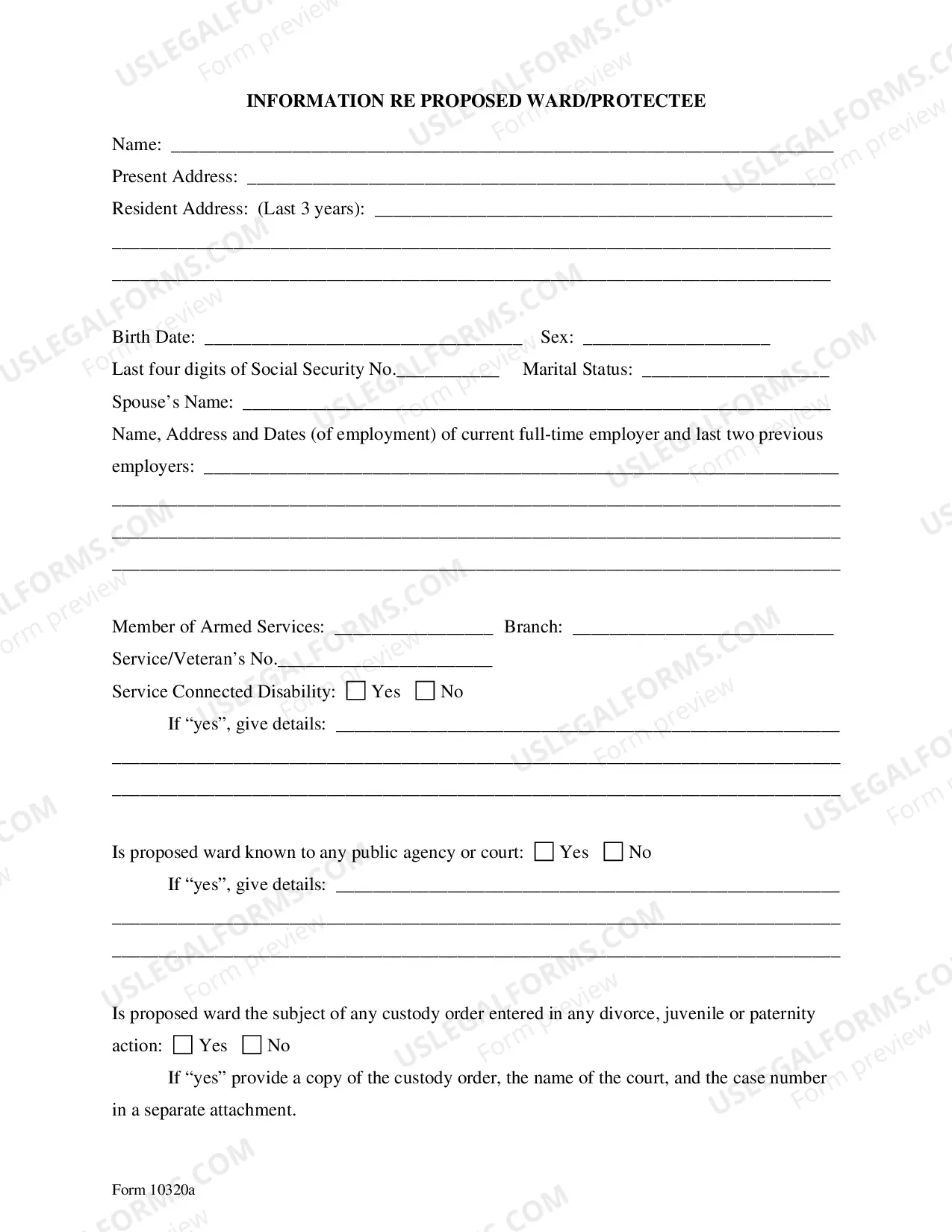
Louisiana Answer to 2nd Amending and Supplemental Petition for Divorce
Understanding this form
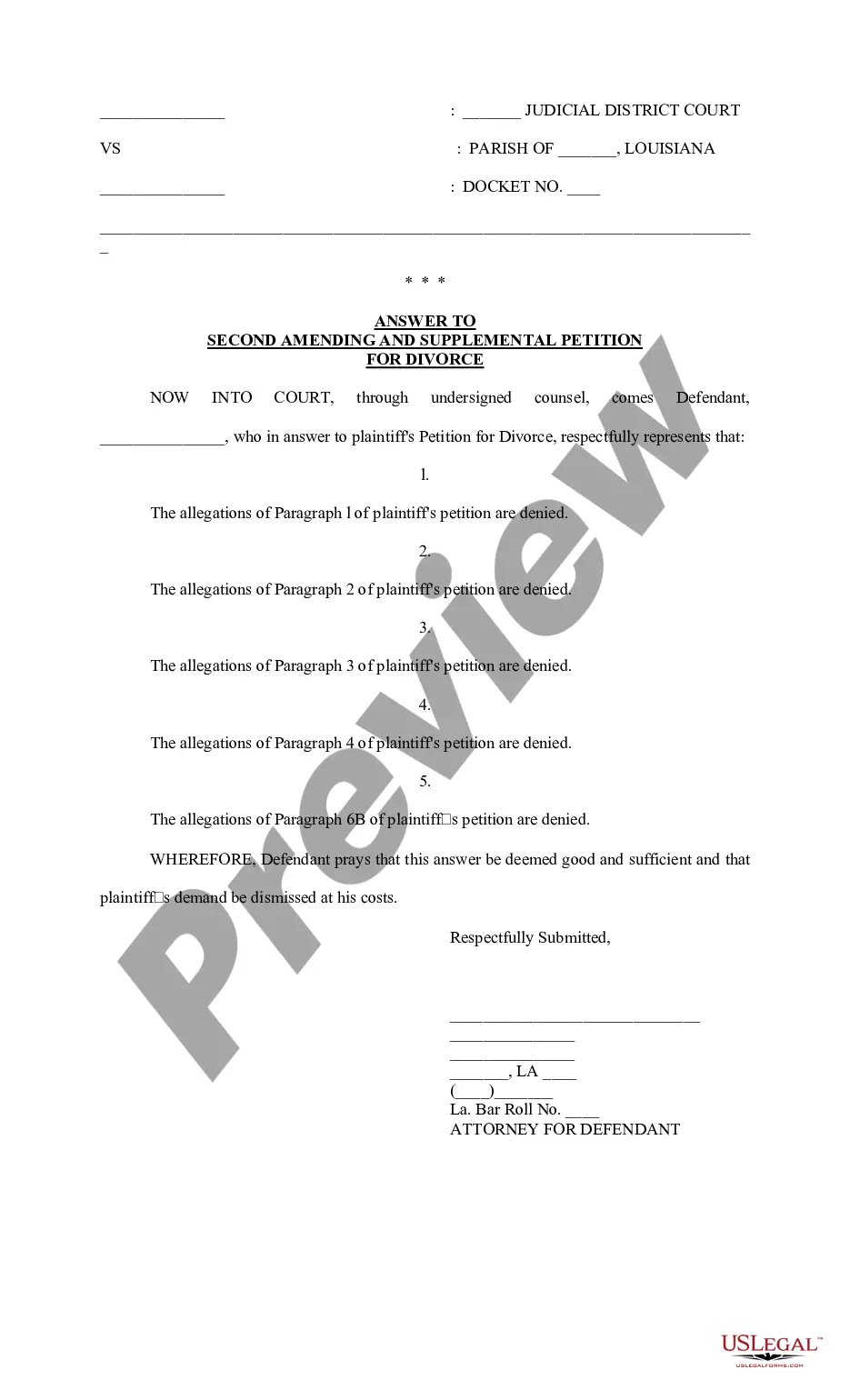
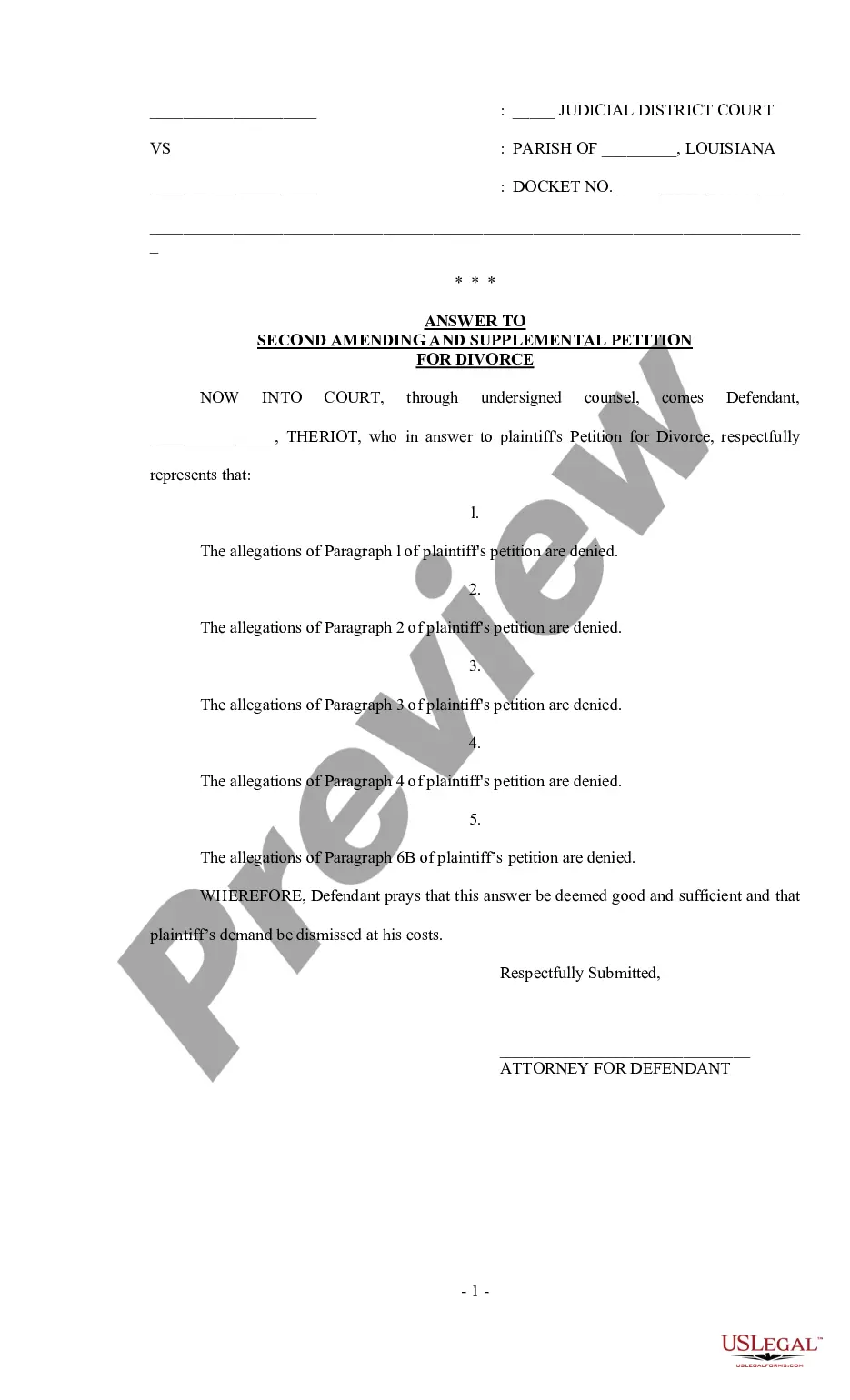
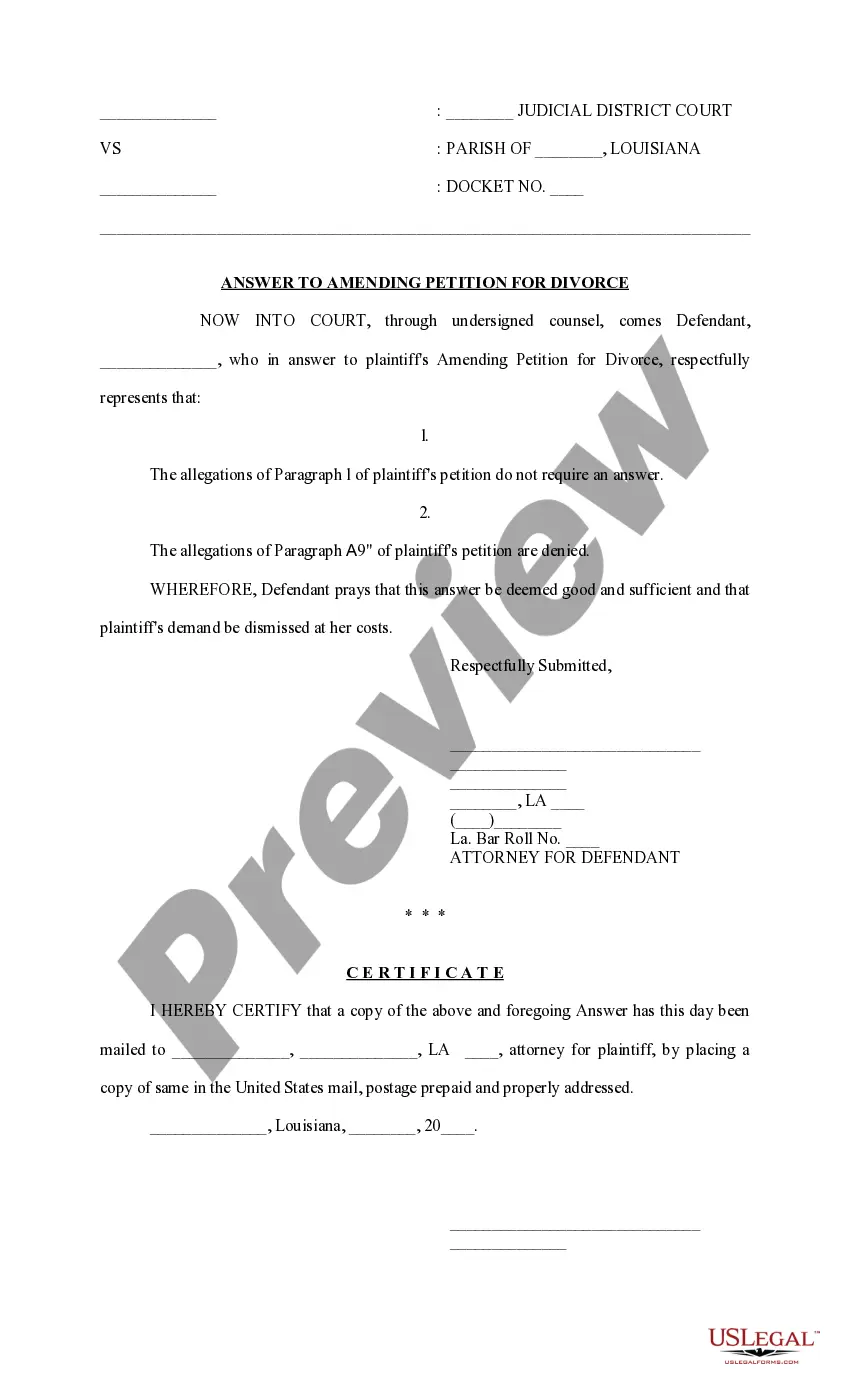
The Answer to 2nd Amending and Supplemental Petition for Divorce is a legal document used by defendants to formally respond to a plaintiff's divorce petition. This form outlines the defendant's position regarding the allegations made by the plaintiff and requests dismissals of their demands. Unlike initial answers, it specifically addresses amendments and supplemental claims in divorce cases, making it crucial for ensuring that the defendant's voice is heard in the proceedings.
Main sections of this form
- Identification of the court and parties involved
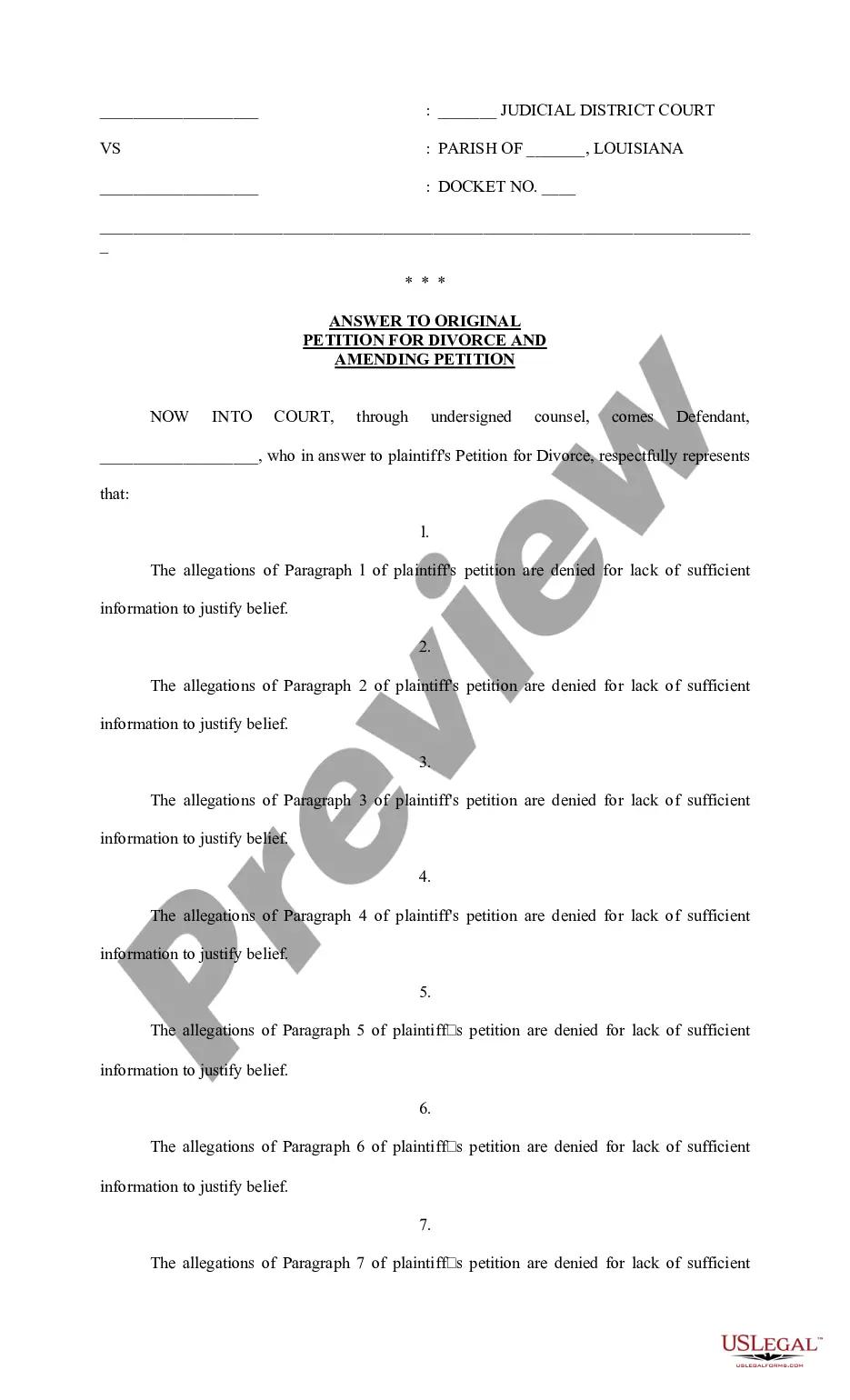
- Denial of each allegation made in the plaintiff's petition
- A request for dismissal of the plaintiff's demands
- Signature and contact information of the defendant's attorney
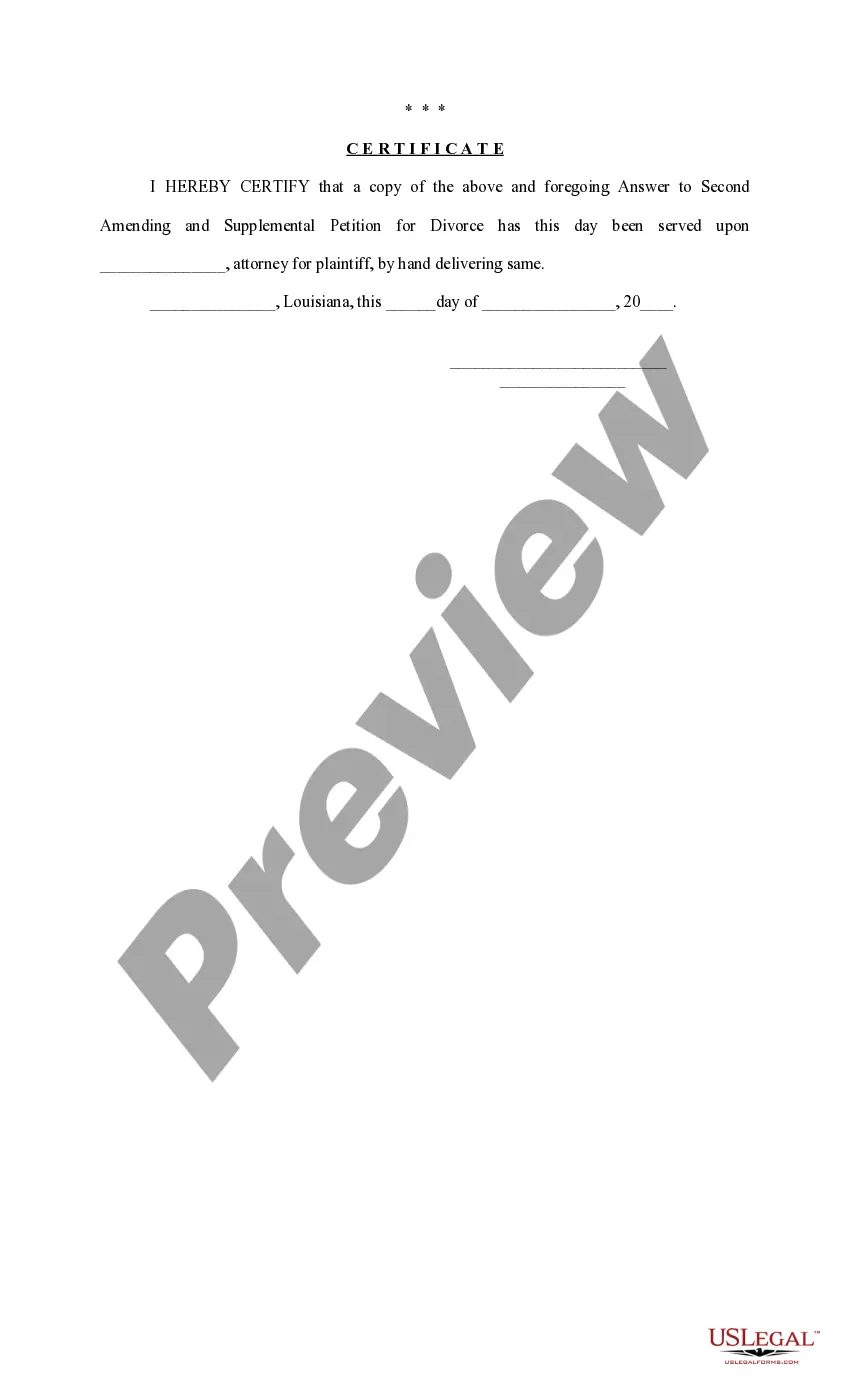
- Certification of service to the plaintiff's attorney
When to use this form
This form should be used when a defendant receives a Second Amending and Supplemental Petition for Divorce and wishes to formally respond to the allegations contained within the petition. It is essential in situations where the defendant disputes the claims made by the plaintiff and seeks to protect their rights during divorce proceedings.
Who this form is for
This form is intended for:
- Defendants in divorce proceedings in Louisiana
- Individuals who have received a Second Amending and Supplemental Petition for Divorce
- Those who wish to contest the claims made by the plaintiff
Instructions for completing this form
- Identify the court and the docket number at the top of the form.
- Fill in the names of the defendant and plaintiff as listed in the divorce petition.
- Clearly deny each allegation made in the plaintiff's petition, referencing the corresponding paragraph numbers.
- Incorporate a request for dismissal of the plaintiff's demands.
- Provide the attorney's contact information and sign the document.
- Ensure that a copy of the completed answer is served to the plaintiff's attorney, as indicated in the certification section.
Is notarization required?
This form does not typically require notarization unless specified by local law.
Get your form ready online
Our built-in tools help you complete, sign, share, and store your documents in one place.
Make edits, fill in missing information, and update formatting in US Legal Forms—just like you would in MS Word.
Download a copy, print it, send it by email, or mail it via USPS—whatever works best for your next step.
Sign and collect signatures with our SignNow integration. Send to multiple recipients, set reminders, and more. Go Premium to unlock E-Sign.
If this form requires notarization, complete it online through a secure video call—no need to meet a notary in person or wait for an appointment.
We protect your documents and personal data by following strict security and privacy standards.

Make edits, fill in missing information, and update formatting in US Legal Forms—just like you would in MS Word.

Download a copy, print it, send it by email, or mail it via USPS—whatever works best for your next step.

Sign and collect signatures with our SignNow integration. Send to multiple recipients, set reminders, and more. Go Premium to unlock E-Sign.

If this form requires notarization, complete it online through a secure video call—no need to meet a notary in person or wait for an appointment.

We protect your documents and personal data by following strict security and privacy standards.
Typical mistakes to avoid
- Failing to respond to every allegation made in the plaintiff's petition.
- Not providing the necessary identifying information, such as the court and docket number.
- Omitting the attorney's signature or contact details.
- Not serving a copy of the answer to the plaintiff's attorney.
Benefits of using this form online
- Convenience of downloading from your own device without needing to visit a legal office.
- Editability allows you to customize the form based on your specific circumstances.
- Reliability, as the templates are drafted by licensed attorneys to ensure legal accuracy.
Main things to remember
- The form is essential for defendants wishing to respond to a plaintiff's supplemental divorce petition.
- Accurate completion of this form can help protect the defendant's rights and interests in divorce proceedings.
- This form must be filed with the court and served to the opposing party's attorney.
Looking for another form?

Form popularity
FAQ
The only way to proceed with a divorce when one of the involved parties is refusing to sign papers is by applying for a court order. The court order asks that the petition for divorce be deemed to have been served.
When one spouse in California files a petition for divorce, the other spouse must be formally served with papers.When a spouse doesn't respond to a divorce petition, the person who failed to file the answer to the court will lose his or her rights to make arguments about property division, support, and child custody.
In 15 days (30 days if your spouse doesn't live in Louisiana), request that the Court Clerk set your case for a Preliminary Default. In a couple of days, the judge will finalize the divorce or may decide to first require a Confirmation of Default hearing before finalizing it.
If the divorce petition isn't returned then you need to apply to the court for the next stage of proceedings.
(3) A respondent who has not filed a reply is not entitled to receive notice of any part of the proceedings under these rules, including, without limitation, any court appearance, hearing, conference or trial.
When one spouse in California files a petition for divorce, the other spouse must be formally served with papers.When a spouse doesn't respond to a divorce petition, the person who failed to file the answer to the court will lose his or her rights to make arguments about property division, support, and child custody.
The fastest way to end a marriage is by seeking an uncontested divorce. However, this works best when both spouses are committed to the idea of getting out as quickly as possible. When there are no children and no property division conflicts, your divorce may proceed easily.
Typically, they will have at least 20 days to respond. States have different laws and requirements regarding what can and/or should be filed. In some states you may just need to file a piece of paper acknowledging receipt of the petition.
The spouse who has been served with the divorce/dissolution petition is called the "respondent" or "defendant" in the divorce/dissolution process. He or she must respond to ("answer") the petition within a certain time (usually about three weeks).