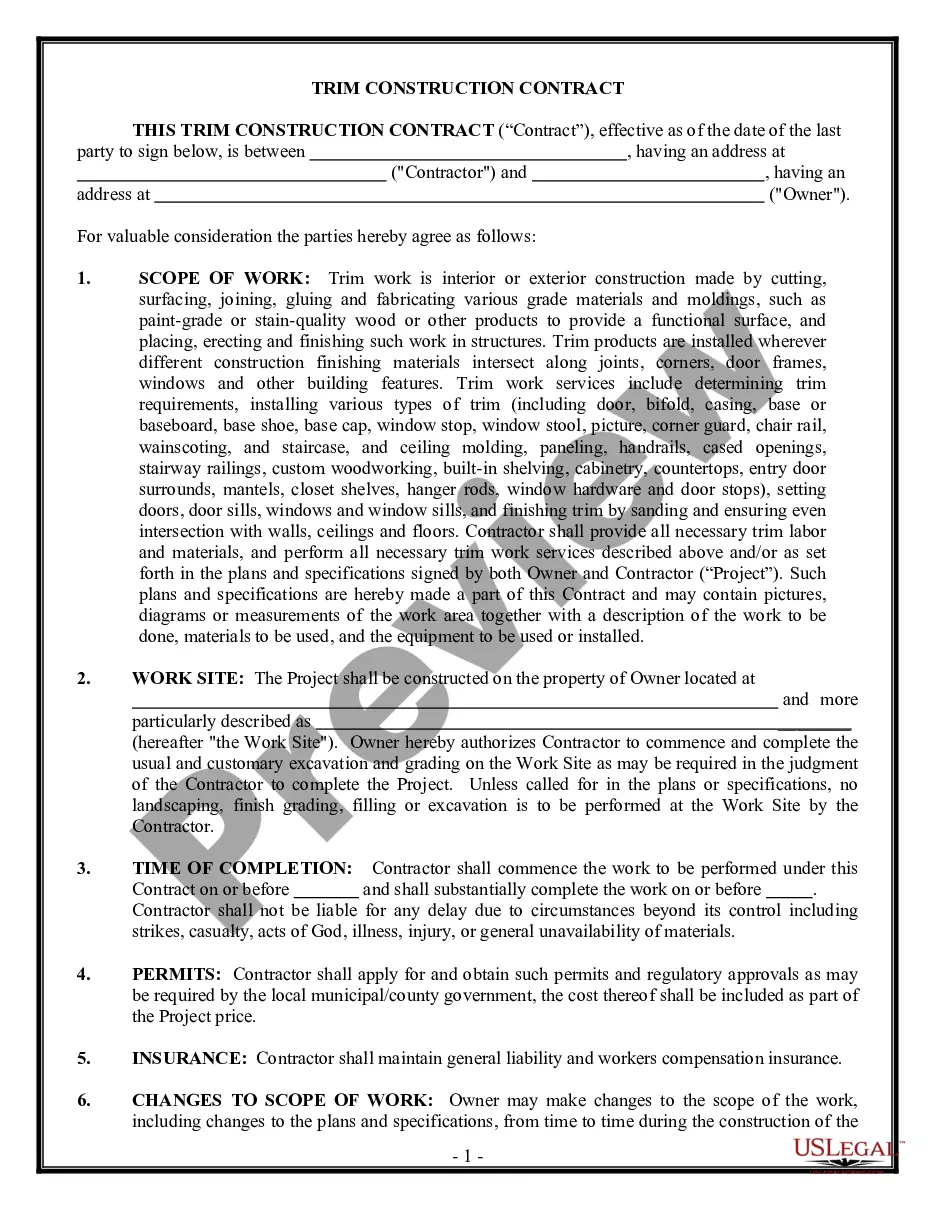
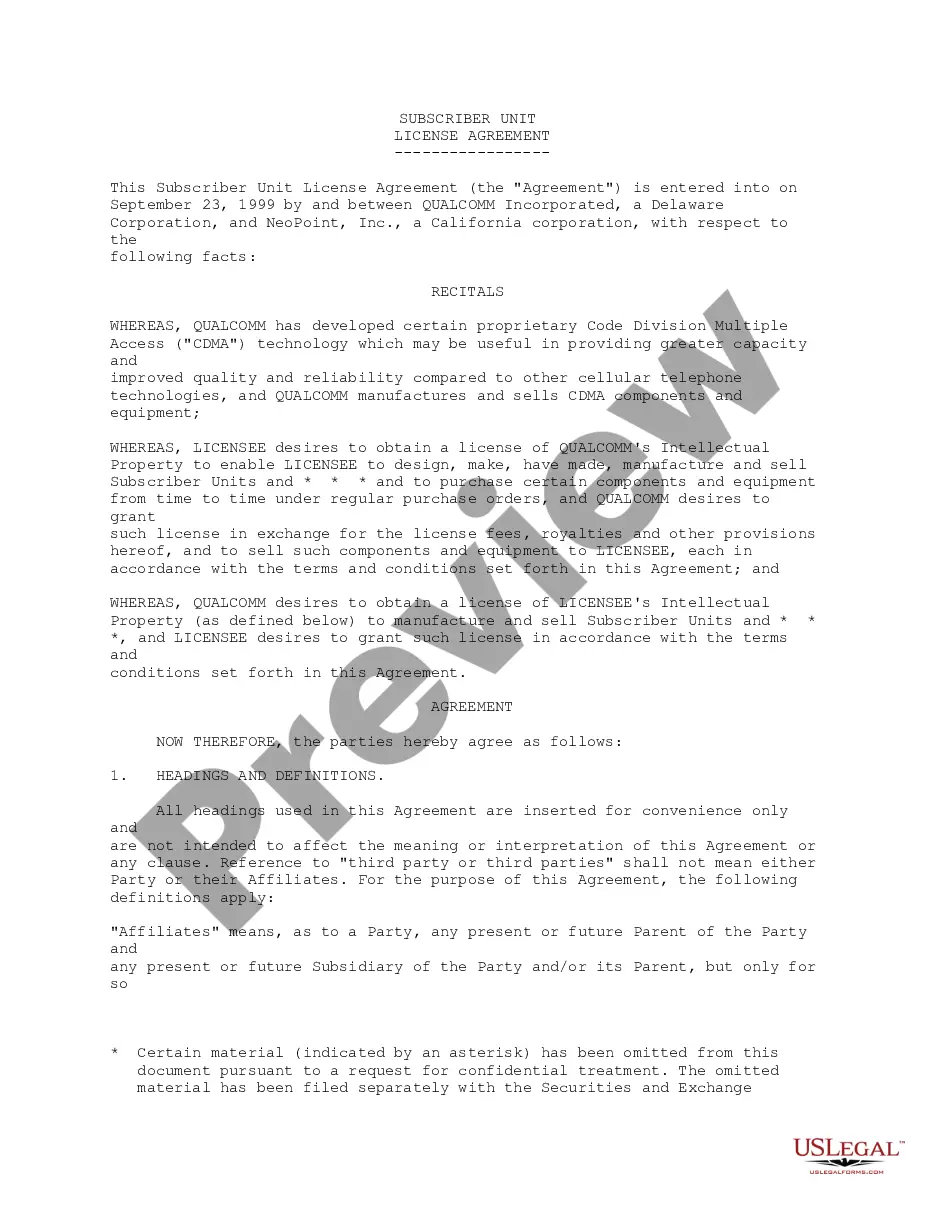
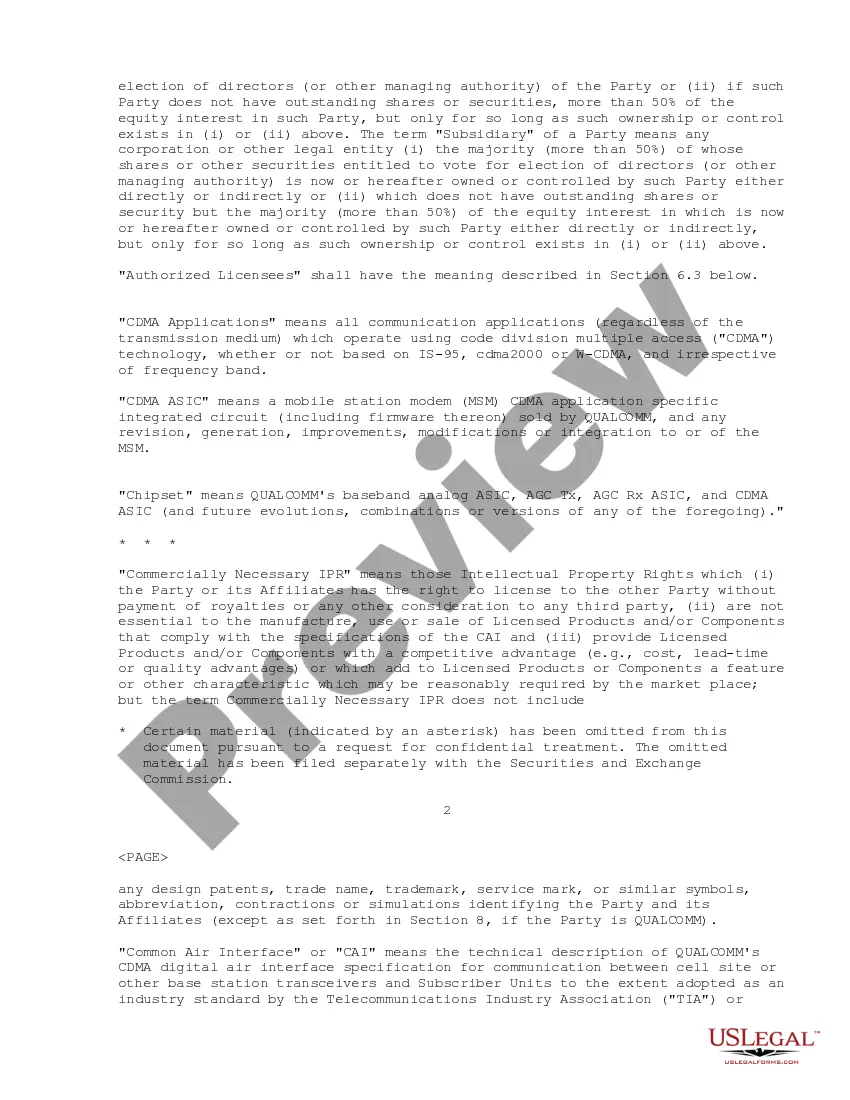
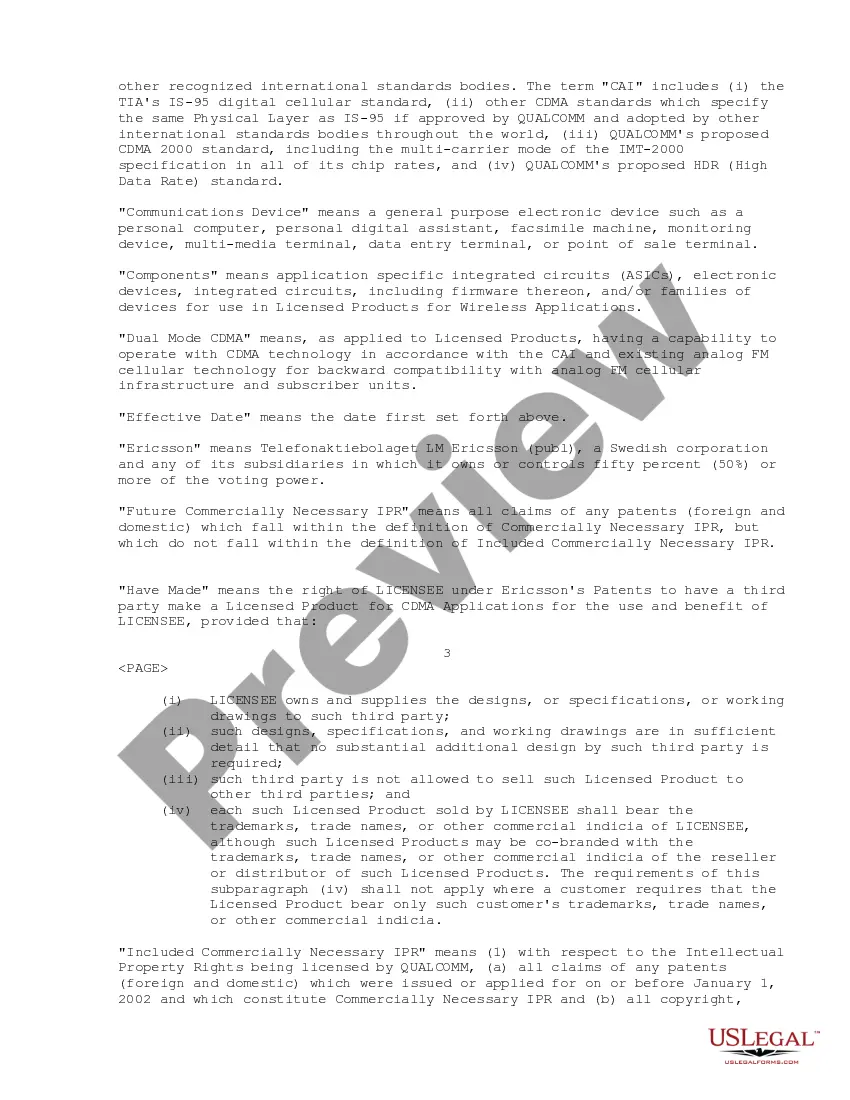
Subscriber Unit License Agreement between QUALCOMM, Inc. and NeoPoint, Inc. regarding obtaining a license to manufacture and sell Subscriber Units
What is this form?
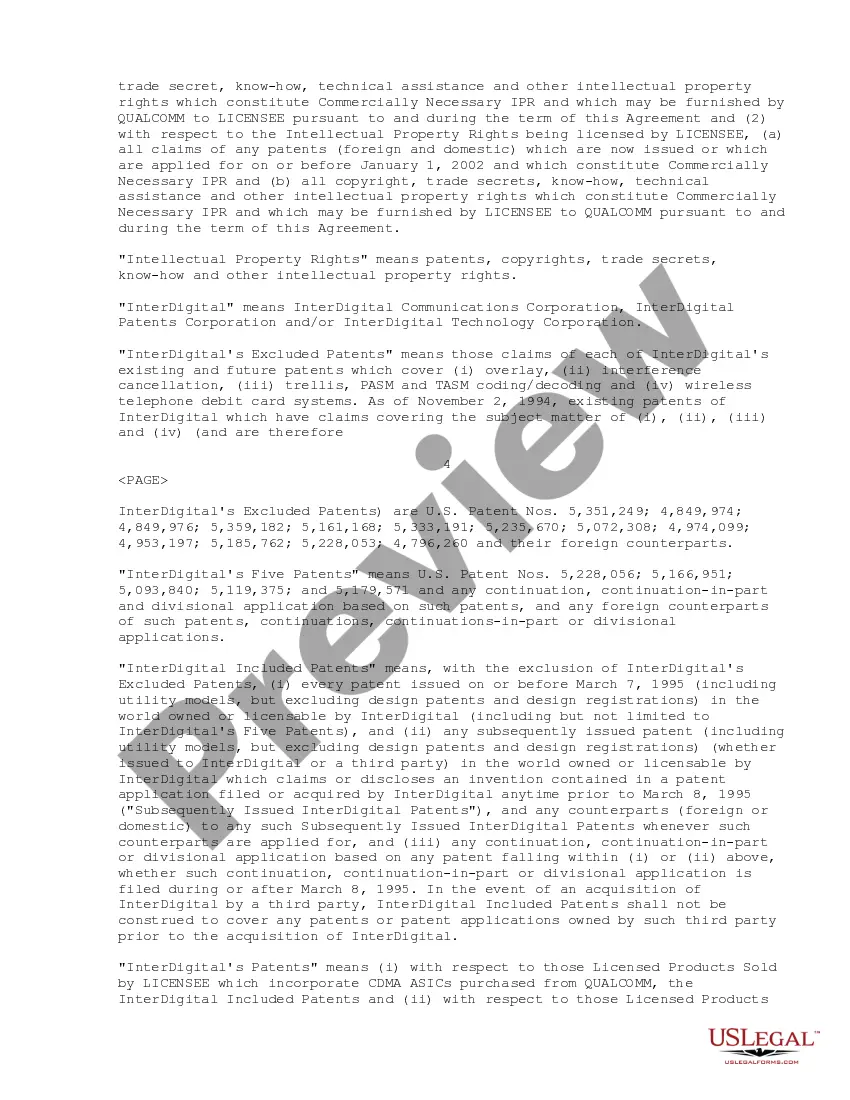
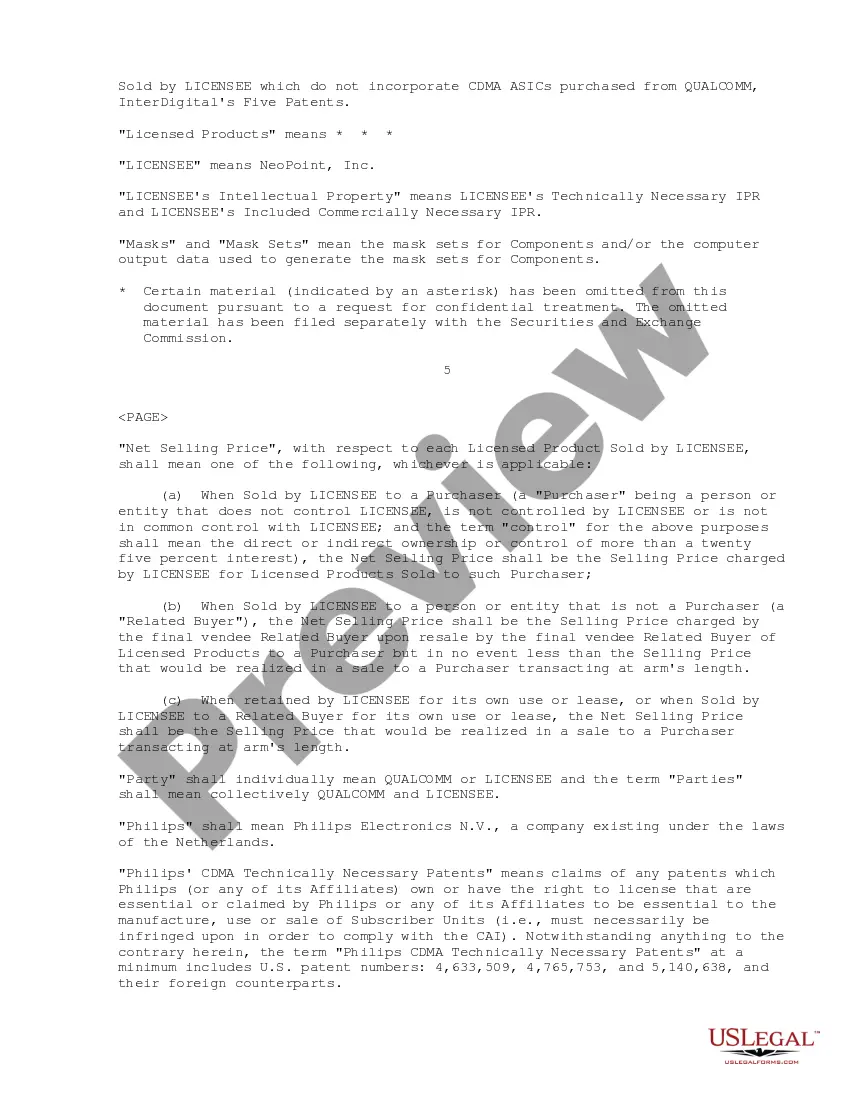
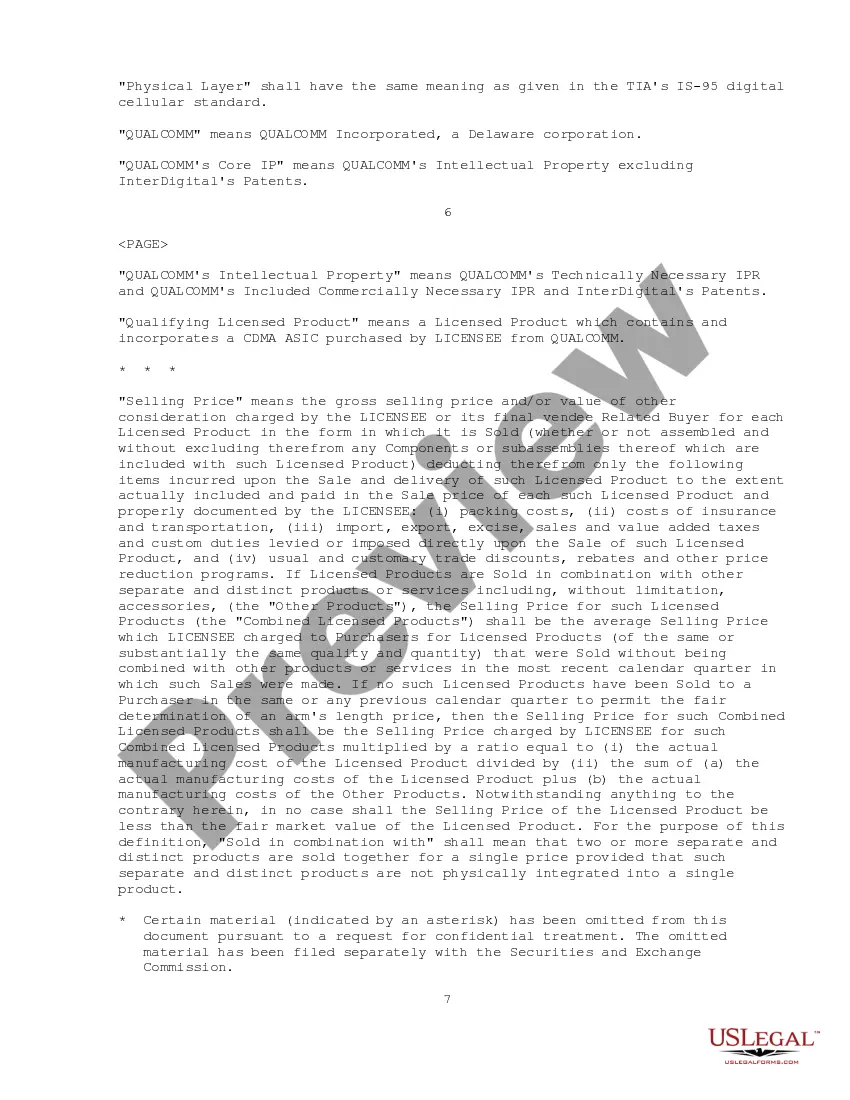
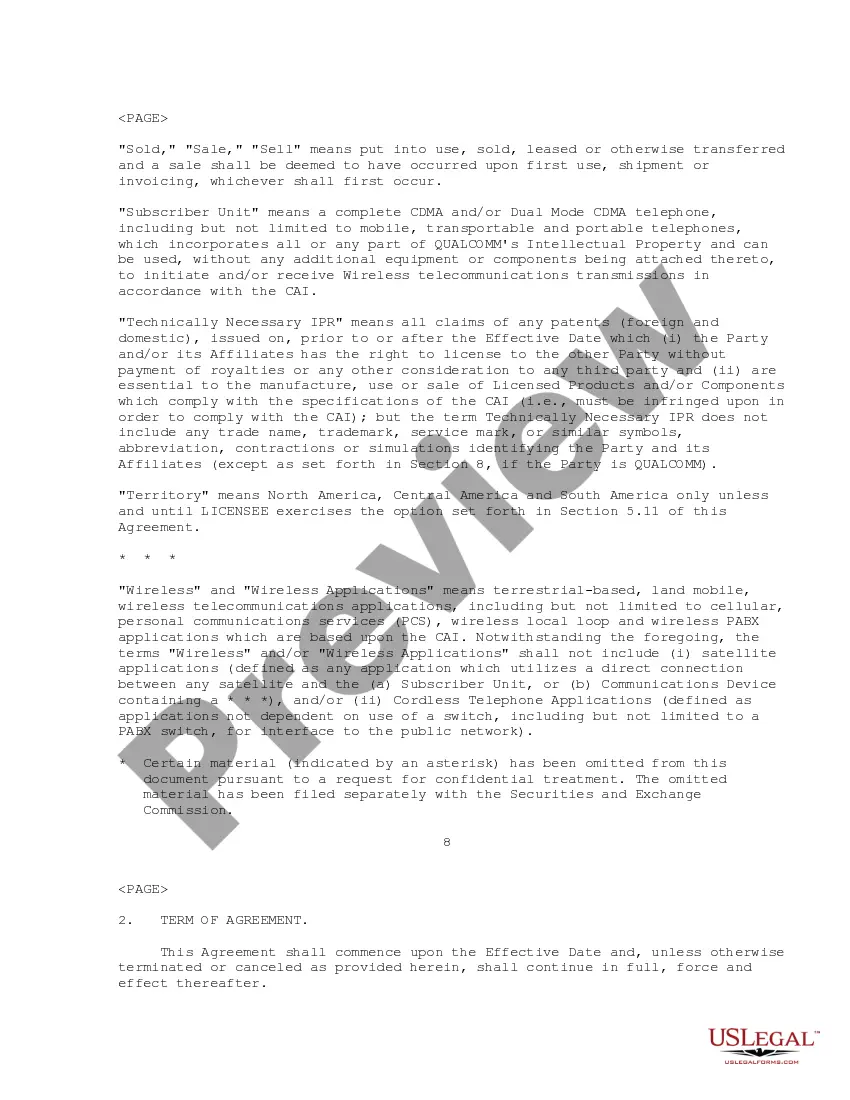
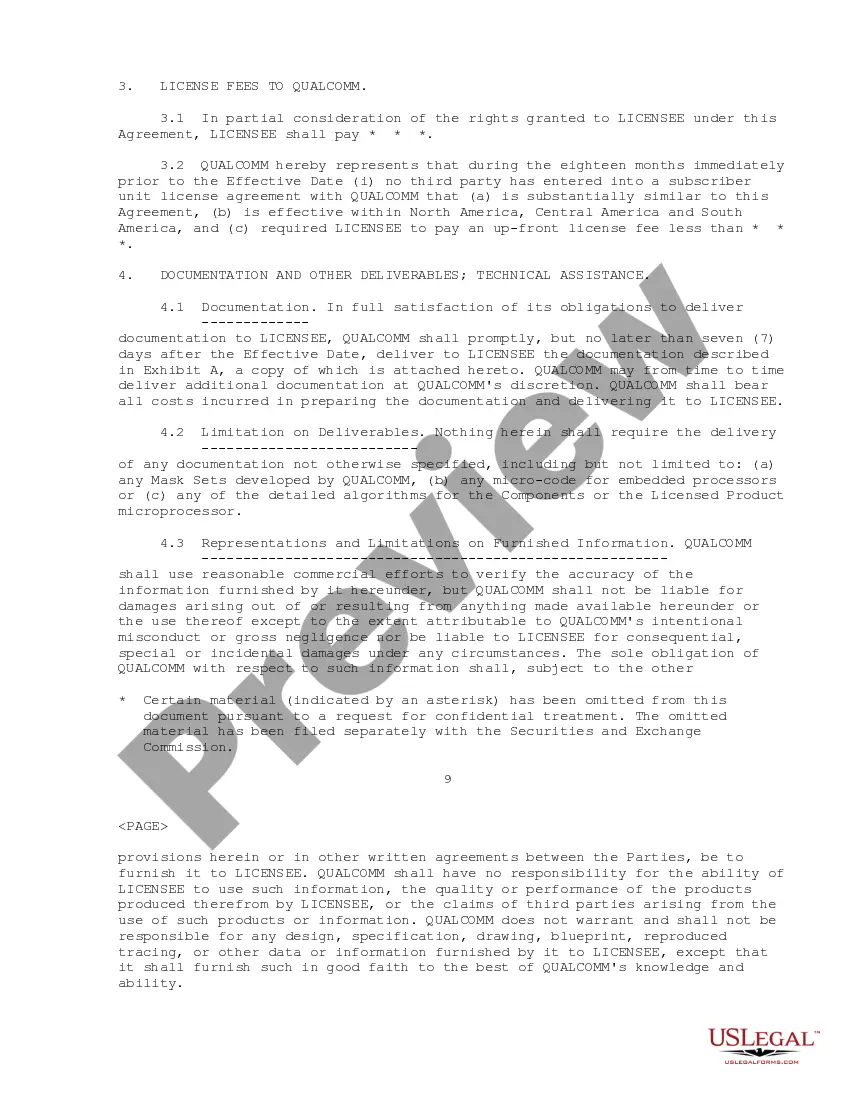
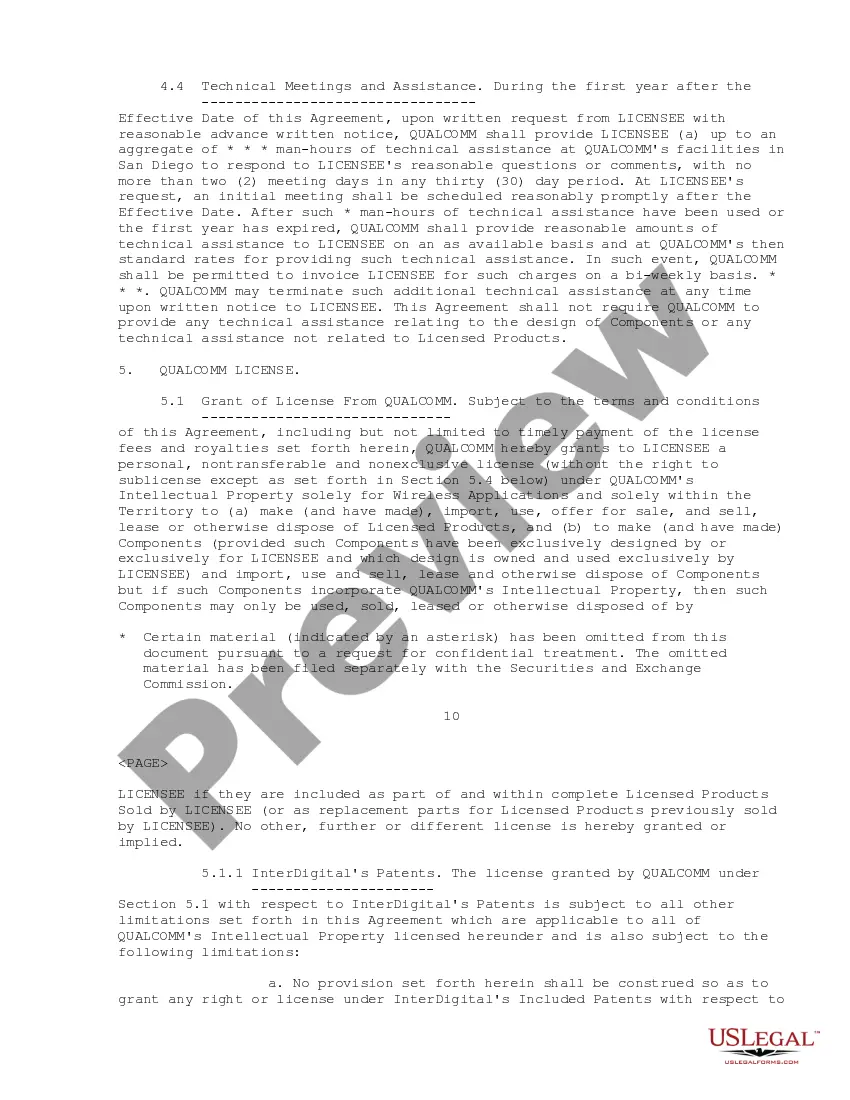
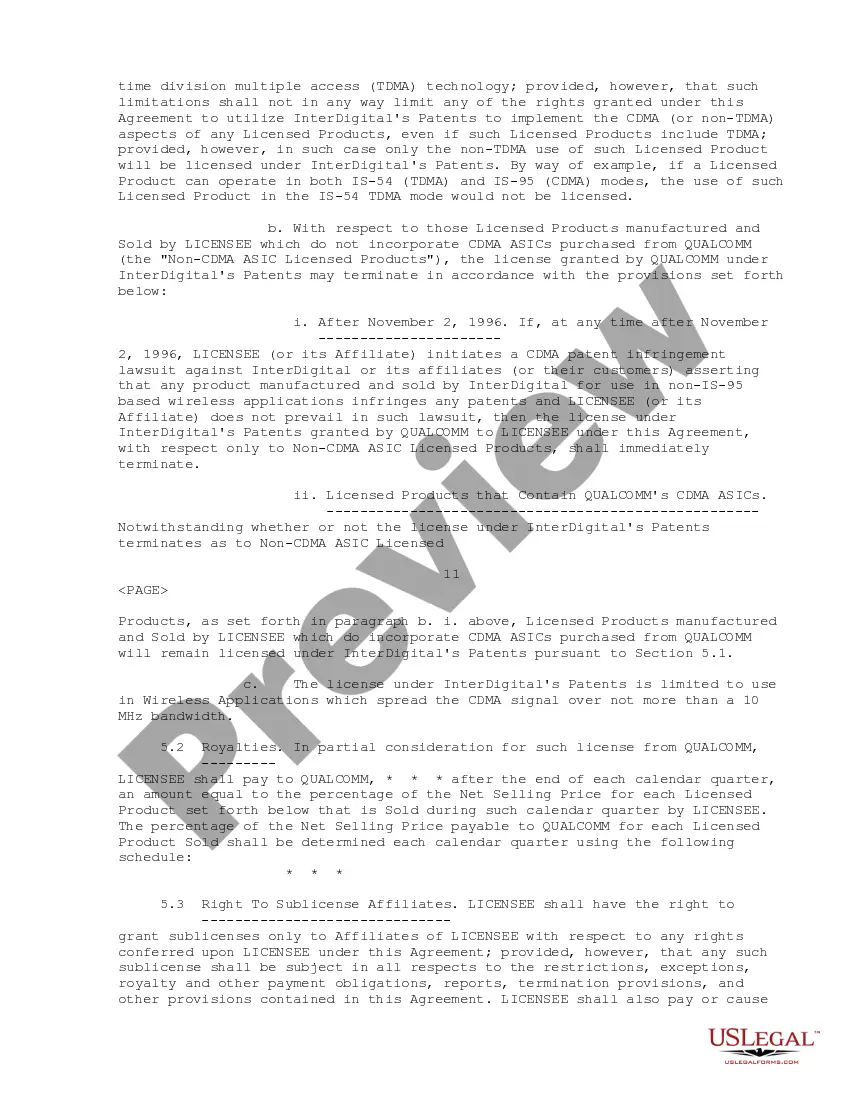
The Subscriber Unit License Agreement is a legal document created between QUALCOMM, Inc. and NeoPoint, Inc., allowing NeoPoint to manufacture and sell Subscriber Units utilizing QUALCOMM's proprietary technology. This agreement ensures that the parties can engage in commercial activities using specific licensed intellectual property rights related to wireless applications, differentiating it from other licensing agreements by its specific focus on Subscriber Units in the telecommunications sector.
What’s included in this form
- Grant of license for manufacturing and selling Subscriber Units.
- Definitions of key terms such as Licensed Products and Components.
- Payment terms including license fees and royalties.
- Obligations of both parties regarding reporting and auditing sales.
- Limitation of liability and indemnification clauses.

When to use this document
This Subscriber Unit License Agreement should be utilized when two parties intend to collaborate on the manufacture and sales of wireless communication devices. It is essential for companies looking to secure rights to use another company's technology, ensuring compliance with specified legal obligations and protecting intellectual property interests throughout the process.
Who can use this document
- Businesses involved in the telecommunications industry seeking to license proprietary technology.
- Manufacturers looking to produce and sell devices that rely on specific wireless communication technology.
- Legal professionals assisting clients with technology licensing agreements.
- Companies pursuing partnerships with technology providers like QUALCOMM.
Instructions for completing this form
- Identify and list the parties involved in the agreement, including QUALCOMM, Inc. and NeoPoint, Inc.
- Define the scope of the license, specifying what technology and products are being licensed.
- Outline the payment structure, including license fees and royalty percentages.
- Include detailed clauses on responsibilities, rights, and limitations for both parties.
- Obtain signatures from authorized representatives of both parties.
Does this document require notarization?
This form does not typically require notarization unless specified by local law. However, parties may choose to notarize it for added legal assurance and to avoid potential disputes regarding authenticity.
Get your form ready online
Our built-in tools help you complete, sign, share, and store your documents in one place.
Make edits, fill in missing information, and update formatting in US Legal Forms—just like you would in MS Word.
Download a copy, print it, send it by email, or mail it via USPS—whatever works best for your next step.
Sign and collect signatures with our SignNow integration. Send to multiple recipients, set reminders, and more. Go Premium to unlock E-Sign.
If this form requires notarization, complete it online through a secure video call—no need to meet a notary in person or wait for an appointment.
We protect your documents and personal data by following strict security and privacy standards.

Make edits, fill in missing information, and update formatting in US Legal Forms—just like you would in MS Word.

Download a copy, print it, send it by email, or mail it via USPS—whatever works best for your next step.

Sign and collect signatures with our SignNow integration. Send to multiple recipients, set reminders, and more. Go Premium to unlock E-Sign.

If this form requires notarization, complete it online through a secure video call—no need to meet a notary in person or wait for an appointment.

We protect your documents and personal data by following strict security and privacy standards.
Mistakes to watch out for
- Failing to clearly define the scope of the license can lead to disputes later.
- Not specifying the royalty rate or payment terms, resulting in a lack of clarity.
- Overlooking necessary legal language to protect intellectual property rights.
- Neglecting to include effective dates and termination clauses.
Advantages of online completion
- Easy access to updated legal templates that reflect current regulations.
- The ability to customize the agreement to fit specific business needs seamlessly.
- Rapid turnaround in creating legally binding documents without the need for extensive legal consultation.
- Convenience of signing the agreement online, saving time and improving efficiency.
Legal use & context
- This agreement provides a legal framework for the use of proprietary technology and ensures compliance with intellectual property laws.
- Violating terms can lead to legal action for breach of contract.
- Ensuring all clauses are clear and enforceable is crucial for protecting all parties' rights.
Quick recap
- The Subscriber Unit License Agreement facilitates cooperation in the telecommunications sector.
- It protects the intellectual property rights of both parties while allowing for the manufacturing and sale of licensed products.
- Completing the agreement correctly is essential for avoiding disputes and ensuring enforceability.
Looking for another form?

Form popularity
FAQ
Download a template for a licensing agreement. Choose your role as the licensor or licensee. Define the license(s) in the agreement. Decide whether the license is exclusive or not. Settle the matter of fees and payment schedule. Add a renewal date and rules.
The term licensing agreement refers to a legal, written contract between two parties wherein the property owner gives permission to another party to use their brand, patent, or trademark.
Industrial know-how When it is transferred by itself, know-how should be converted into a trade secret before transfer in a legal agreement.Know-how, in short, is "private intellectual property" which can be said to be a form of precursor to other intellectual property rights.
An example of a licensing agreement is a contract between the copyright holders of software and another company, allowing the latter to use the computer software for their daily business operations.
The 3 P's of collegiate licensing are protection, promotion, and profit.
What is an IP licensing agreement? An IP licensing agreement occurs between an IP rights owner (licensor) and someone who is authorised to use the rights (licensee) in exchange for monetary value in the form of a fee or a royalty.
A license agreement is a business contract between two parties. The licensor (the seller of the license) owns the asset being licensed and the licensee (the buyer) pays for the right to use the license. The licensee pays royalties to the owner in exchange for the right to sell the product or use the technology.
Exclusive or non-exclusive. In an exclusive license, the intellectual property holder is licensing the work only to one person, for that particular use/territory. Territory. Use. Attribution. Derivative works. Confidentiality. Time frame. Termination.
An agreement granting a company a license to commercialize products incorporating the licensor's patented and unpatented technology, including know-how and trade secrets.Each patent and know-how license agreement must be tailored to suit each transaction's particular circumstances.