Louisiana Answer to Second Amending and Supplemental Petition and Divorce
Understanding this form
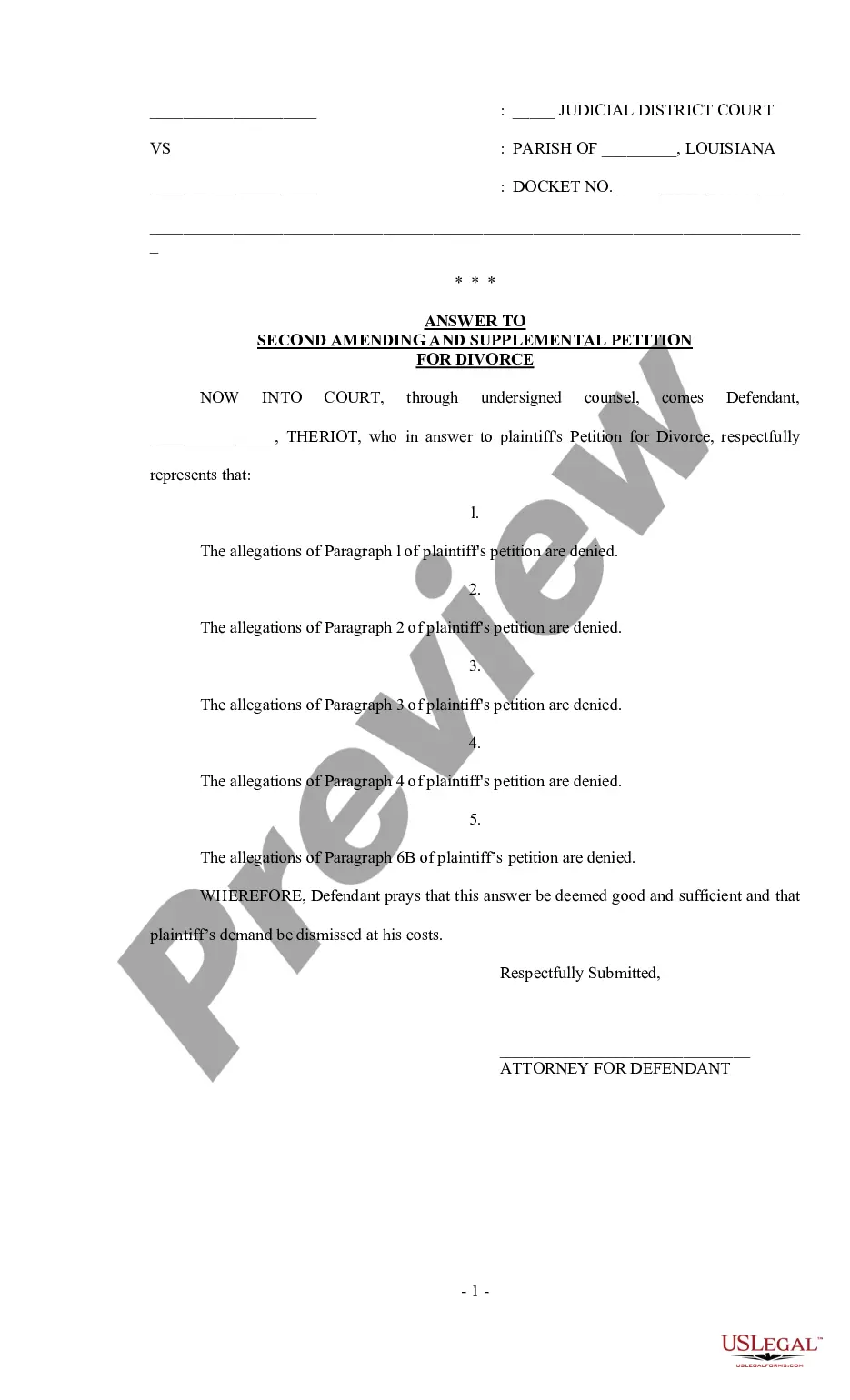
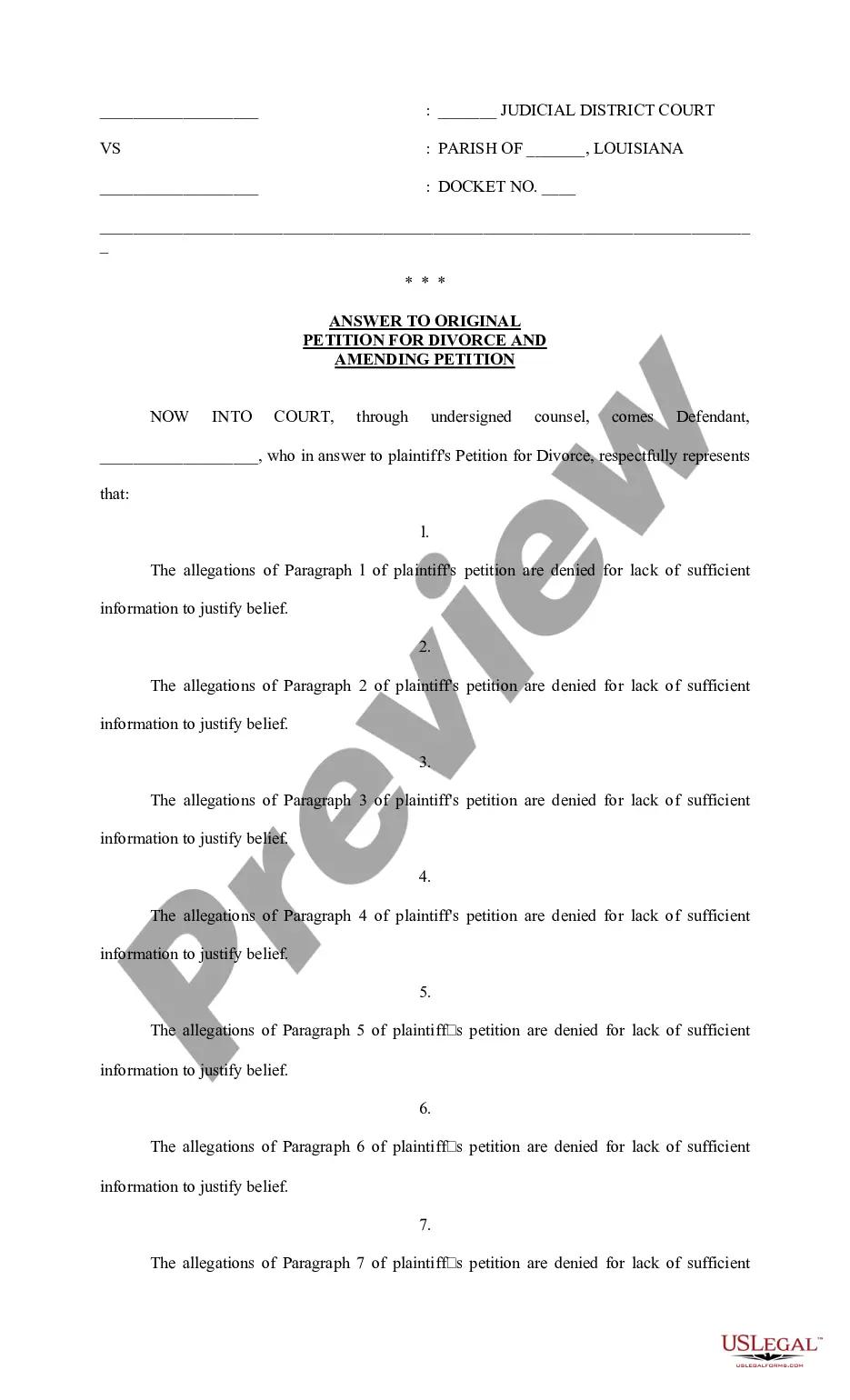
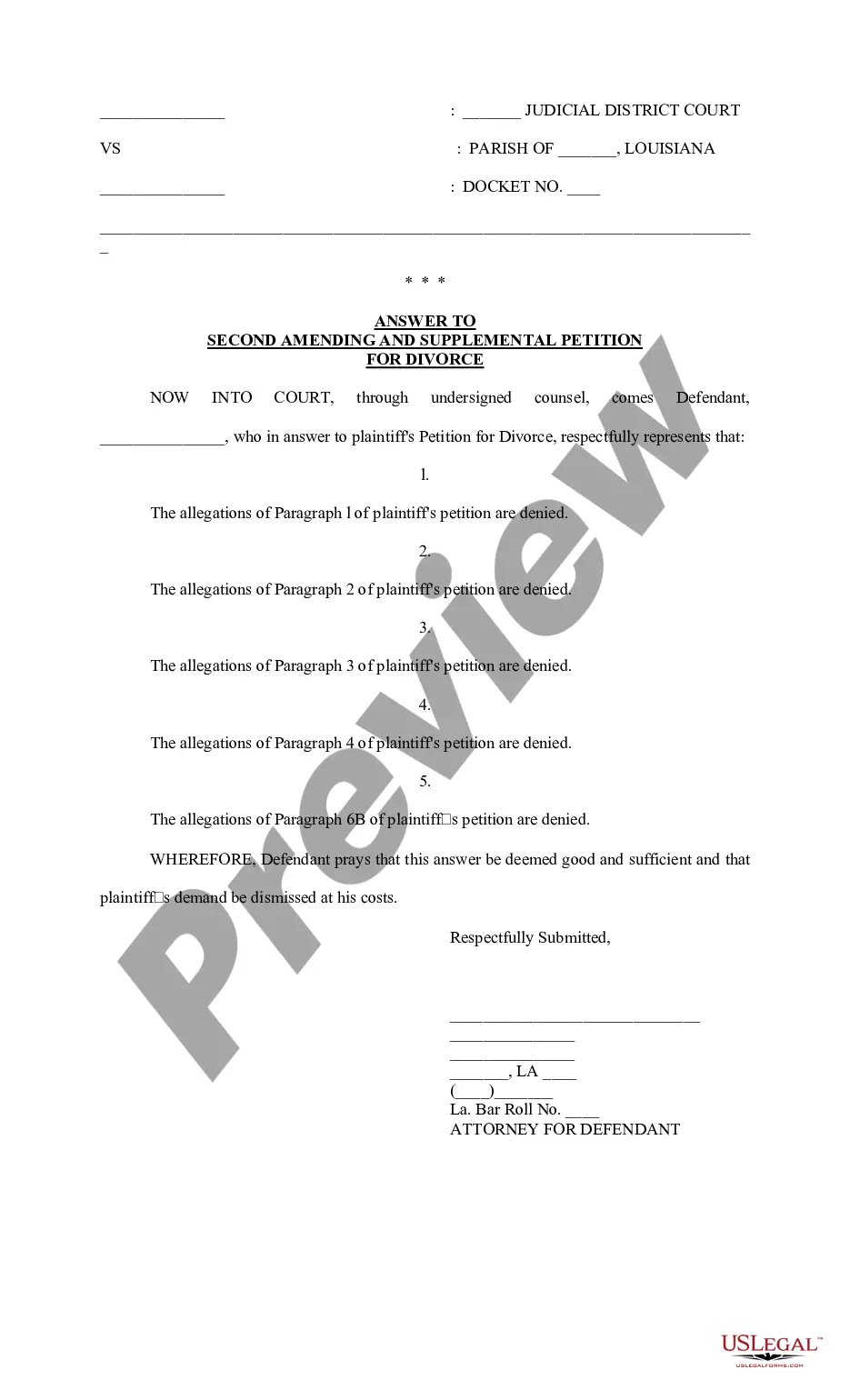
The Answer to Second Amending and Supplemental Petition and Divorce form is a legal document that allows a defendant to respond to an amended divorce petition filed by the plaintiff. This form provides a structure for the defendant to formally deny allegations made against them in the petition. It is important to understand that this document serves a distinct purpose compared to other divorce forms, as it specifically addresses amendments to earlier petitions and allows for a clear legal rebuttal from the defendant.
Main sections of this form
- Caption: Includes the names of the parties and the court information.
- Answer Section: Contains numbered paragraphs where the defendant denies specific allegations made in the plaintiff's petition.
- Prayer for Relief: A statement where the defendant requests dismissal of the plaintiffâs demands at their own cost.
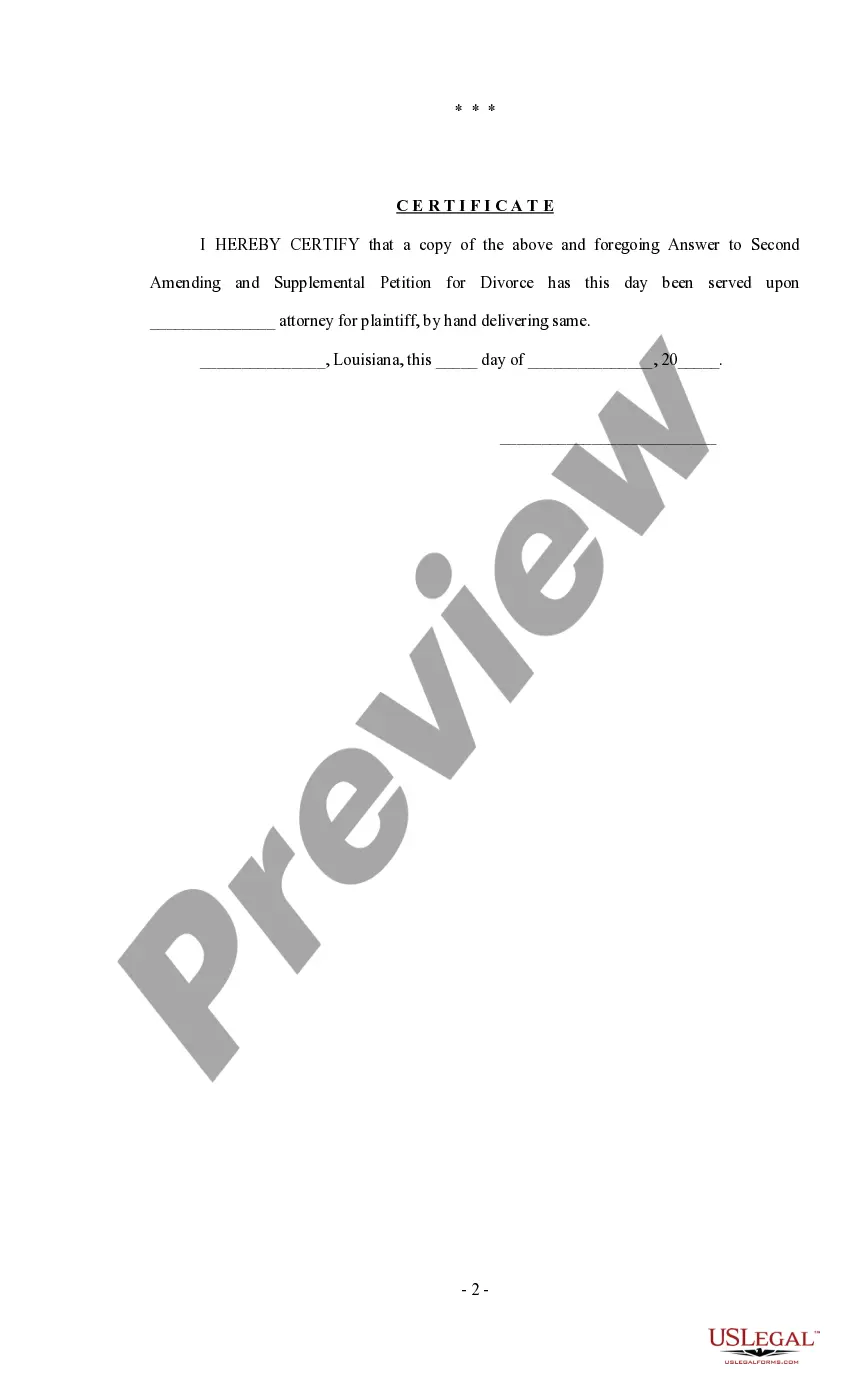
- Signature Block: Area for the defendant's attorney to sign and certify the service of the document.
Common use cases
This form should be used when you have received an amended divorce petition from the plaintiff and wish to respond formally. It is applicable in scenarios where the initial petition has been modified, and you need to outline your rebuttal of the changes made. Utilizing this form ensures that your response is organized and meets legal standards for filing in court.
Who this form is for
This form is intended for:
- Defendants in divorce proceedings who have been served with a second amending and supplemental petition.
- Parties who wish to formally deny allegations made by the plaintiff in a divorce case.
- Individuals working with an attorney to navigate the divorce process and ensure their legal rights are protected.
How to prepare this document
- Identify the parties: Fill in the names of the plaintiff and defendant at the top of the form.
- Provide docket number: Enter the court docket number associated with the divorce case.
- Enter denials: For each numbered allegation in the plaintiff's petition, clearly state "denied" in the answer section.
- Add a prayer for relief: Specify your request for dismissal of the plaintiff's demands at their cost.
- Sign and date: Have your attorney sign the document, certifying it was served to the plaintiffâs attorney.
Notarization requirements for this form
This form does not typically require notarization unless specified by local law. Ensure to check if there are any specific local requirements regarding notarization for submissions in your jurisdiction.
Get your form ready online
Our built-in tools help you complete, sign, share, and store your documents in one place.
Make edits, fill in missing information, and update formatting in US Legal Forms—just like you would in MS Word.
Download a copy, print it, send it by email, or mail it via USPS—whatever works best for your next step.
Sign and collect signatures with our SignNow integration. Send to multiple recipients, set reminders, and more. Go Premium to unlock E-Sign.
If this form requires notarization, complete it online through a secure video call—no need to meet a notary in person or wait for an appointment.
We protect your documents and personal data by following strict security and privacy standards.

Make edits, fill in missing information, and update formatting in US Legal Forms—just like you would in MS Word.

Download a copy, print it, send it by email, or mail it via USPS—whatever works best for your next step.

Sign and collect signatures with our SignNow integration. Send to multiple recipients, set reminders, and more. Go Premium to unlock E-Sign.

If this form requires notarization, complete it online through a secure video call—no need to meet a notary in person or wait for an appointment.

We protect your documents and personal data by following strict security and privacy standards.
Typical mistakes to avoid
- Failing to address each allegation individually, which can weaken your response.
- Missing the filing deadline, which may result in unfavorable legal consequences.
- Not including your signature or your attorney's signature, making the form invalid.
Benefits of using this form online
- Accessible editing: Download and modify the form to fit your specific needs easily.
- Convenient: Complete the form at your own pace from the comfort of your home.
- Accurate: Standardized format ensures all necessary legal components are included.
Summary of main points
- This form is essential for defendants responding to amended divorce petitions.
- It allows the defendant to formally deny allegations and contest the claims made by the plaintiff.
- Completing this form accurately is crucial to protect your rights in divorce proceedings.
Looking for another form?

Form popularity
FAQ
A written pleading in a lawsuit that is changed and refiled as an amended pleading by the party who initially filed it. Pleadings are amended for various reasons, including correcting facts, adding claims, adding affirmative defenses, or responding to a court's finding that a pleading is inadequate as a matter of law.
Complaint. A lawsuit begins when a plaintiff (the party suing) files a complaint against a defendant (the party being sued.) Answer. The answer is the defendant's written response to the plaintiff's complaint. Counterclaim. Cross-claim. Amended Pleadings.
Once a defendant has answered, a first amended complaint can only be filed and served with leave of court. If the plaintiff did not get the court's permission, it is not deemed a valid first amended complaint.
How to amend a divorce petition. If the judge has told you to file an amended petition, then you don't need permission to file one. If you want to amend the petition for any other reason then you will need to seek permission of the court to file an amended petition, this called asking for leave.
An amended pleading is a pleading that is entirely rewritten pertaining to matters of substance, and is used in place of, and supersedes the original pleading; an amended Complaint should be verified the same as the original Complaint and a Summons issued and served on un-served defendants, and time to answer or
Amend- ed pleadings allow the party to add claims, parties, or defenses based on facts that occurred before the original pleading was filed. Supplemental pleadings allow the party to add claims or defenses based on facts that occurred after the original plead- ing was filed.
A pleading that sets forth transactions or occurrences or events which happened since the date of the pleading, with the purpose of supplementing it. The court may permit these through motion. Even if the original pleading was defective, it may still be supplemented. legal practice/ethics.
The defendant shall answer the amendments, or the complaint as amended, within 30 days after service thereof, or such other time as the court may direct, and judgment by default may be entered upon failure to answer, as in other cases.