Louisiana Answer to Original Petition for Divorce and Amending Petition
Overview of this form
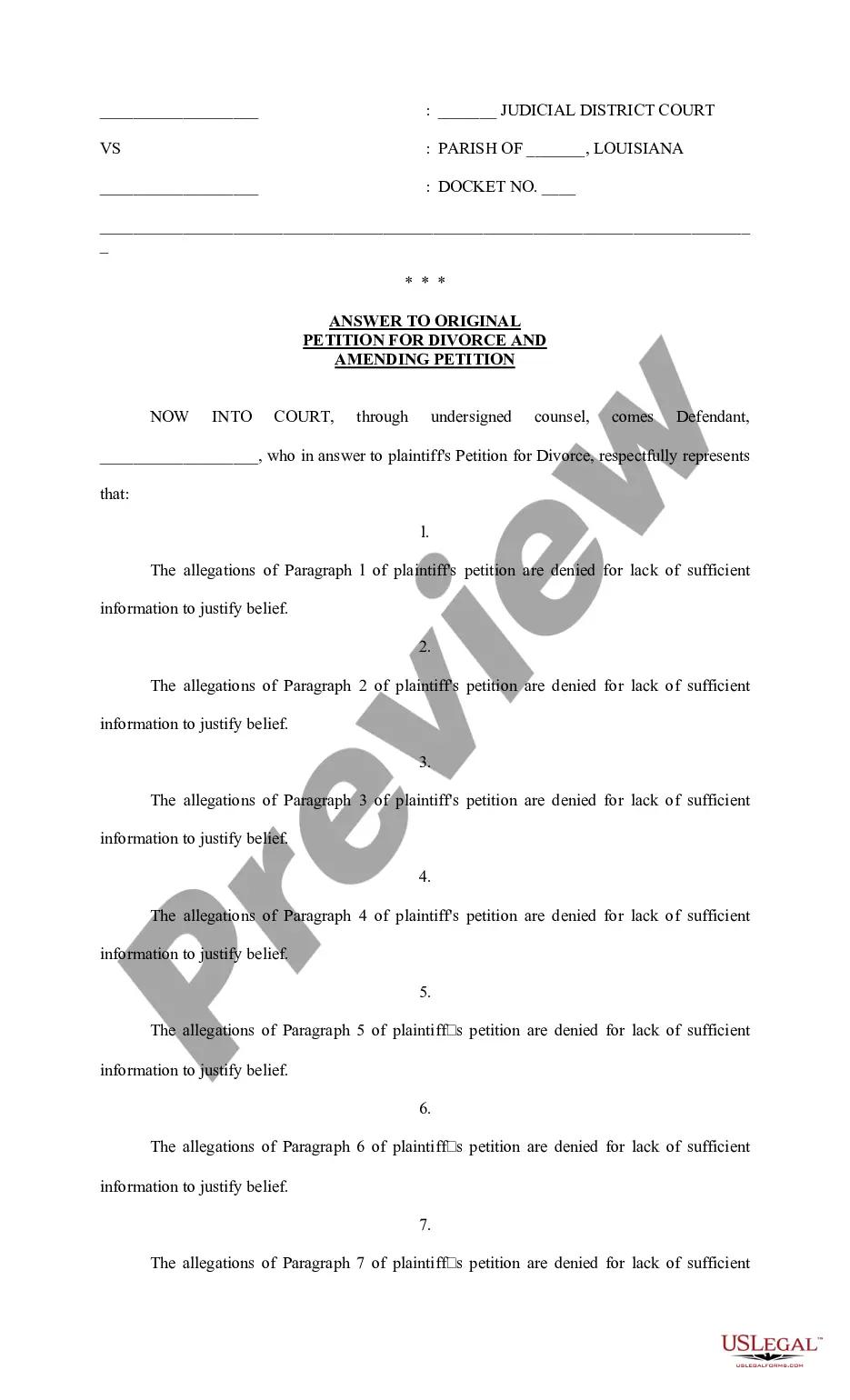
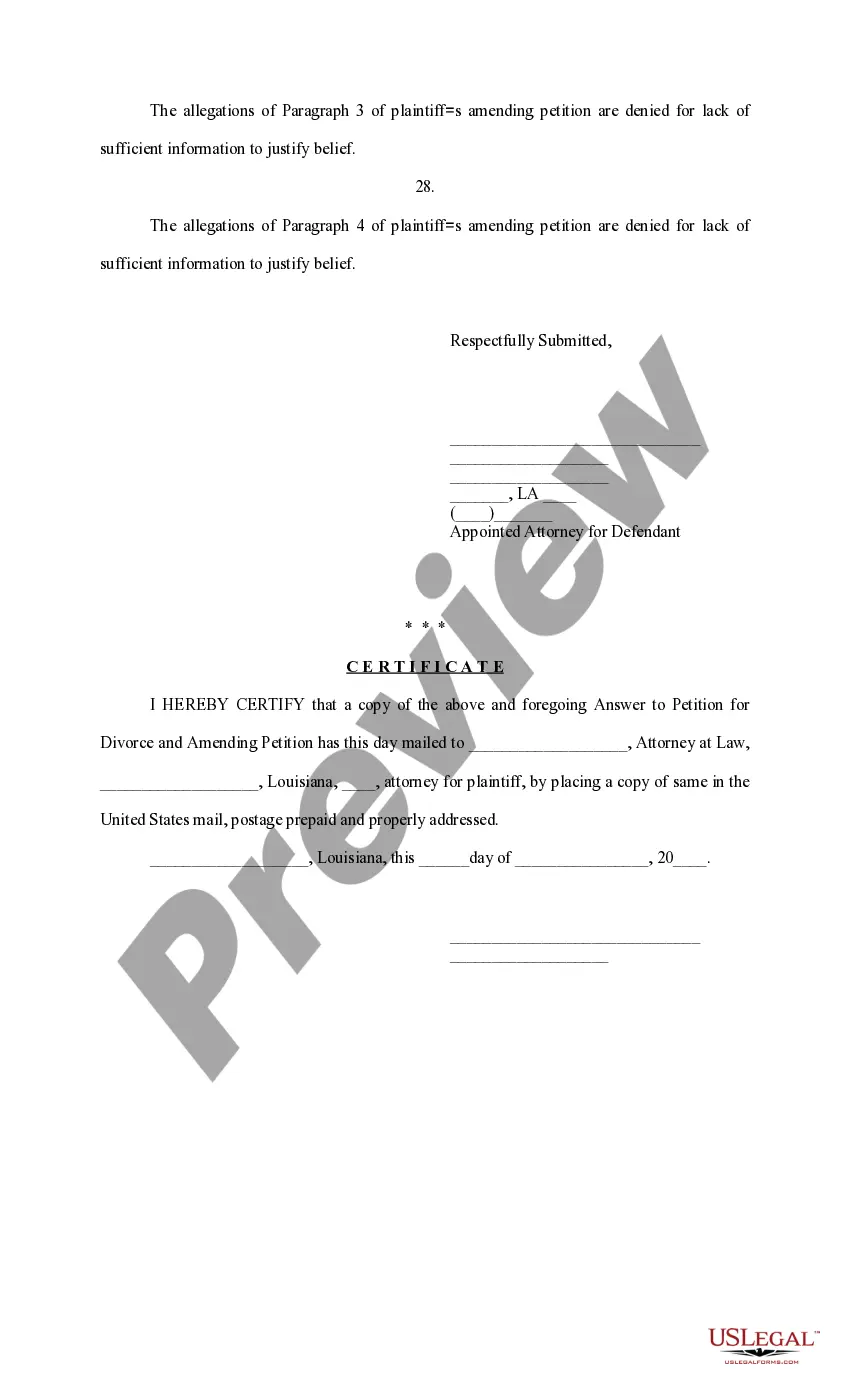
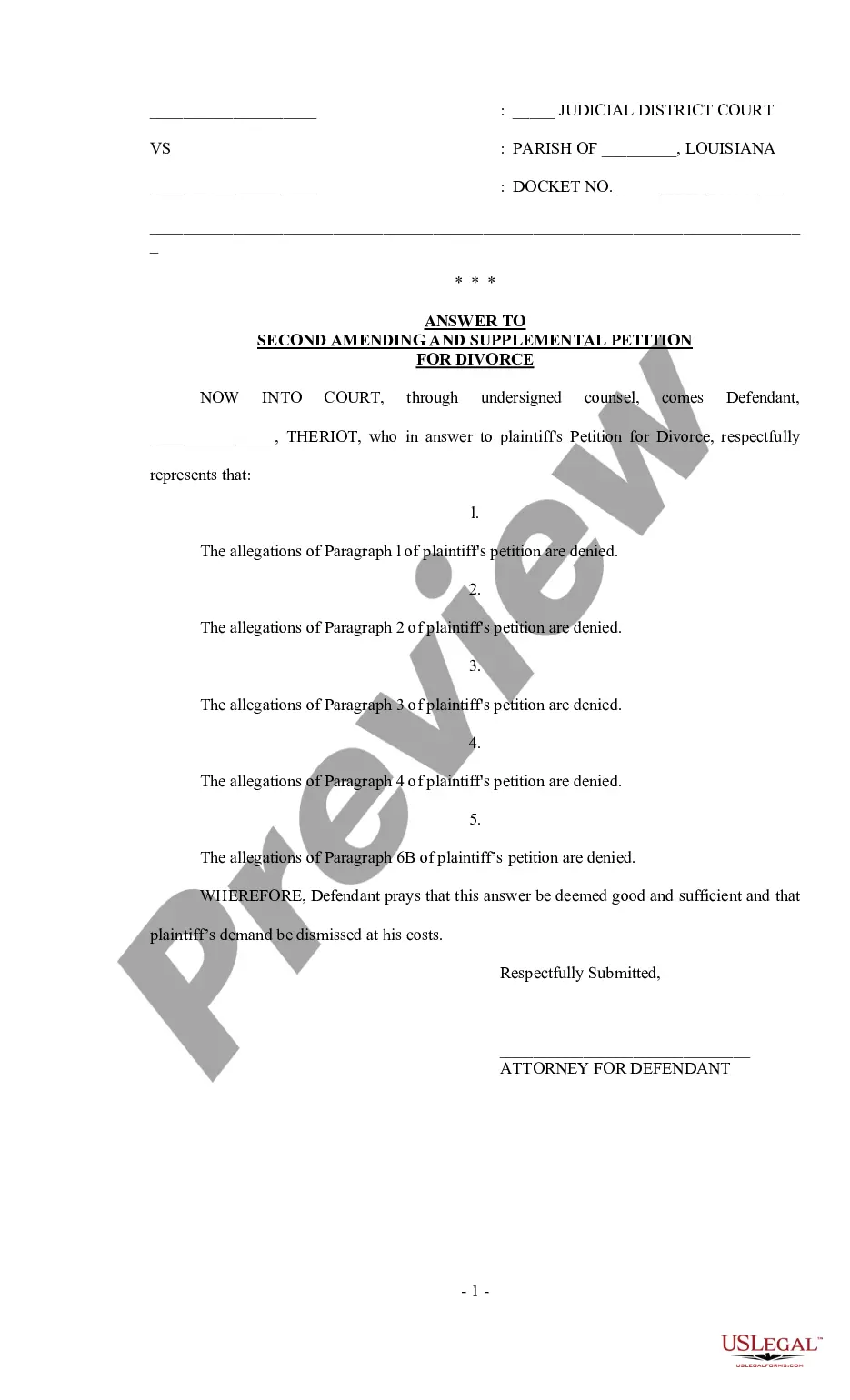
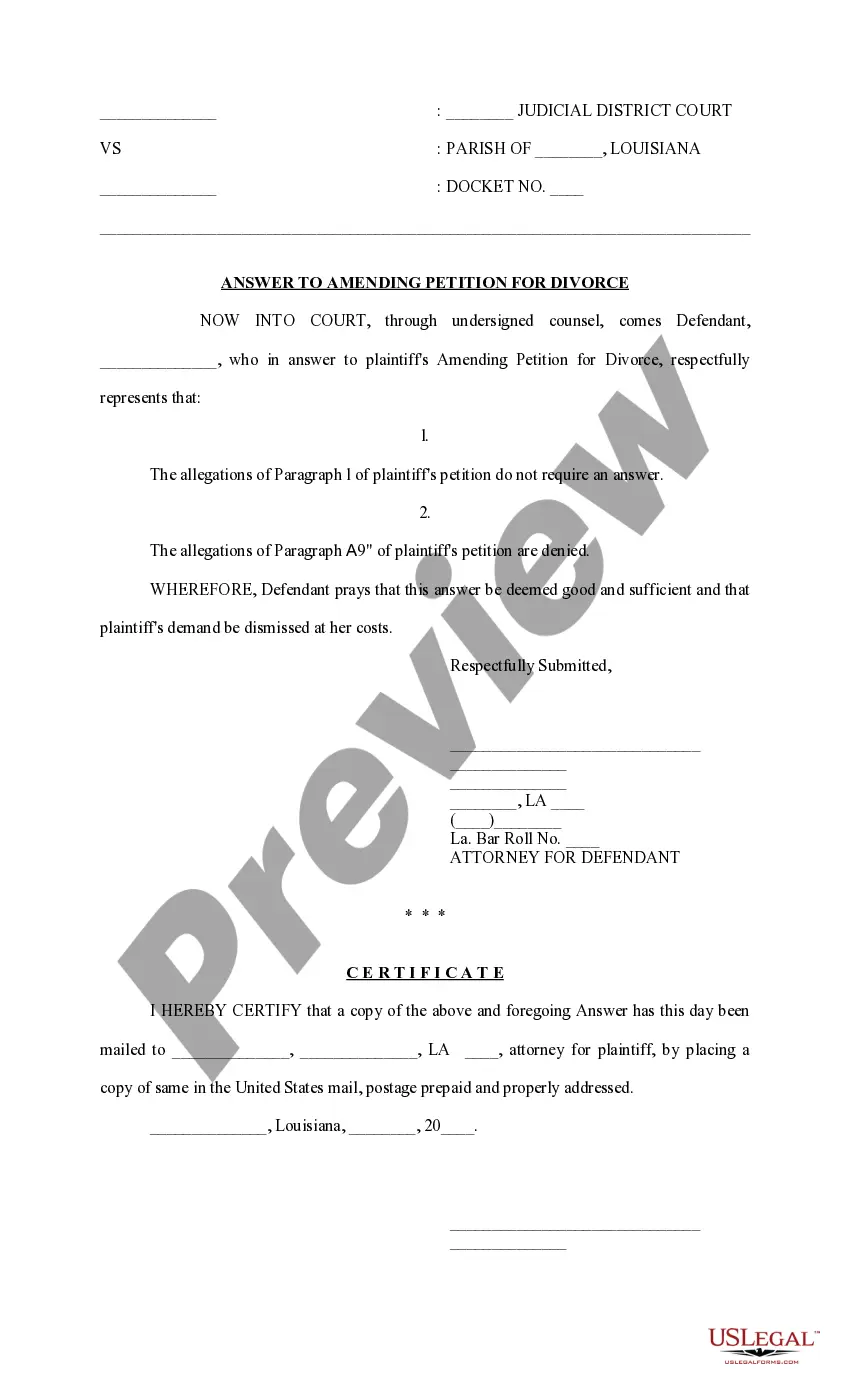
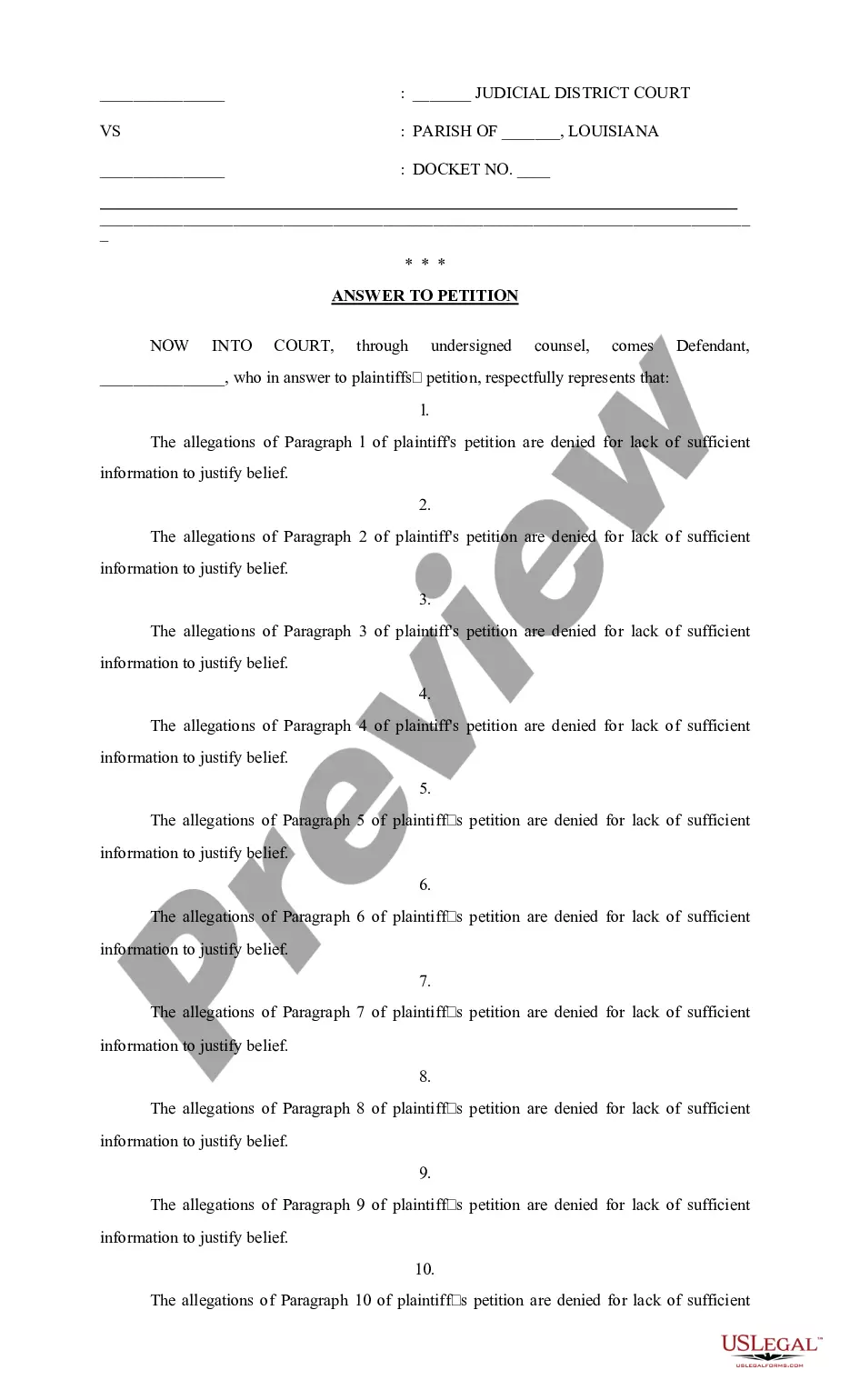
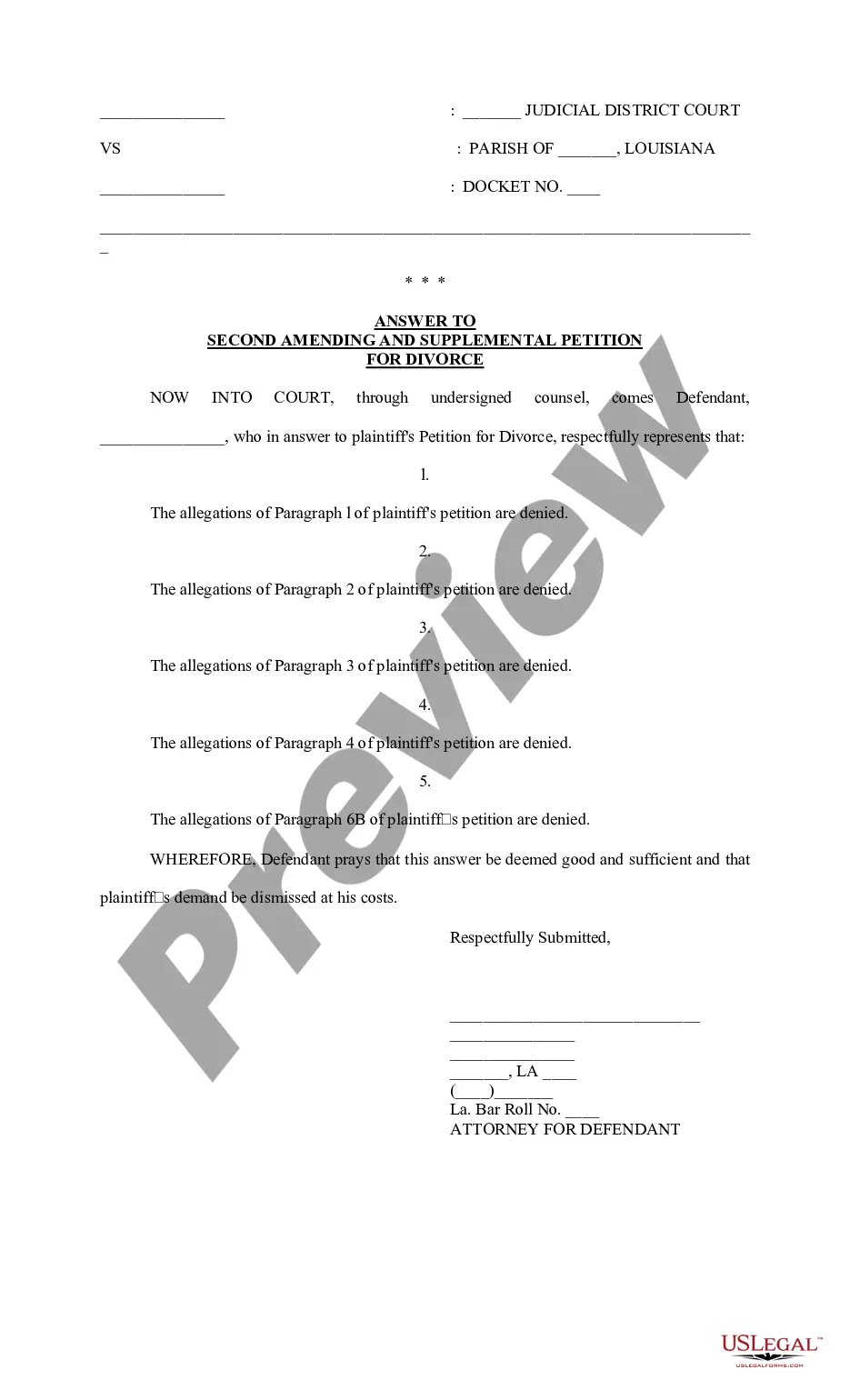
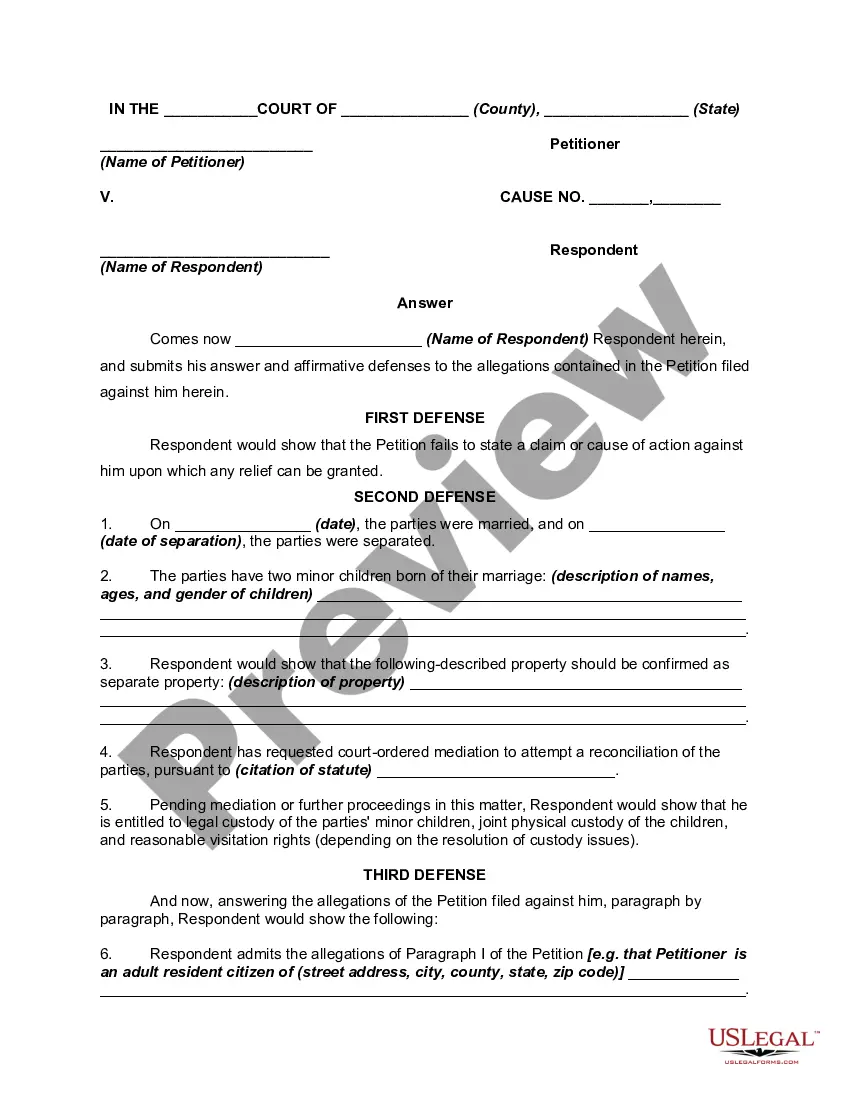
The Answer to Original Petition for Divorce and Amending Petition is a legal document utilized by the defendant in a divorce proceeding to formally respond to the allegations presented in the plaintiff's original petition and any subsequent amendments. This form allows the defendant to deny the claims made by the plaintiff, setting the stage for further legal proceedings. Unlike other divorce forms, this particular document focuses specifically on the defendant's responses to each of the plaintiff's allegations.
Key components of this form
- Identification of the parties involved in the divorce case.
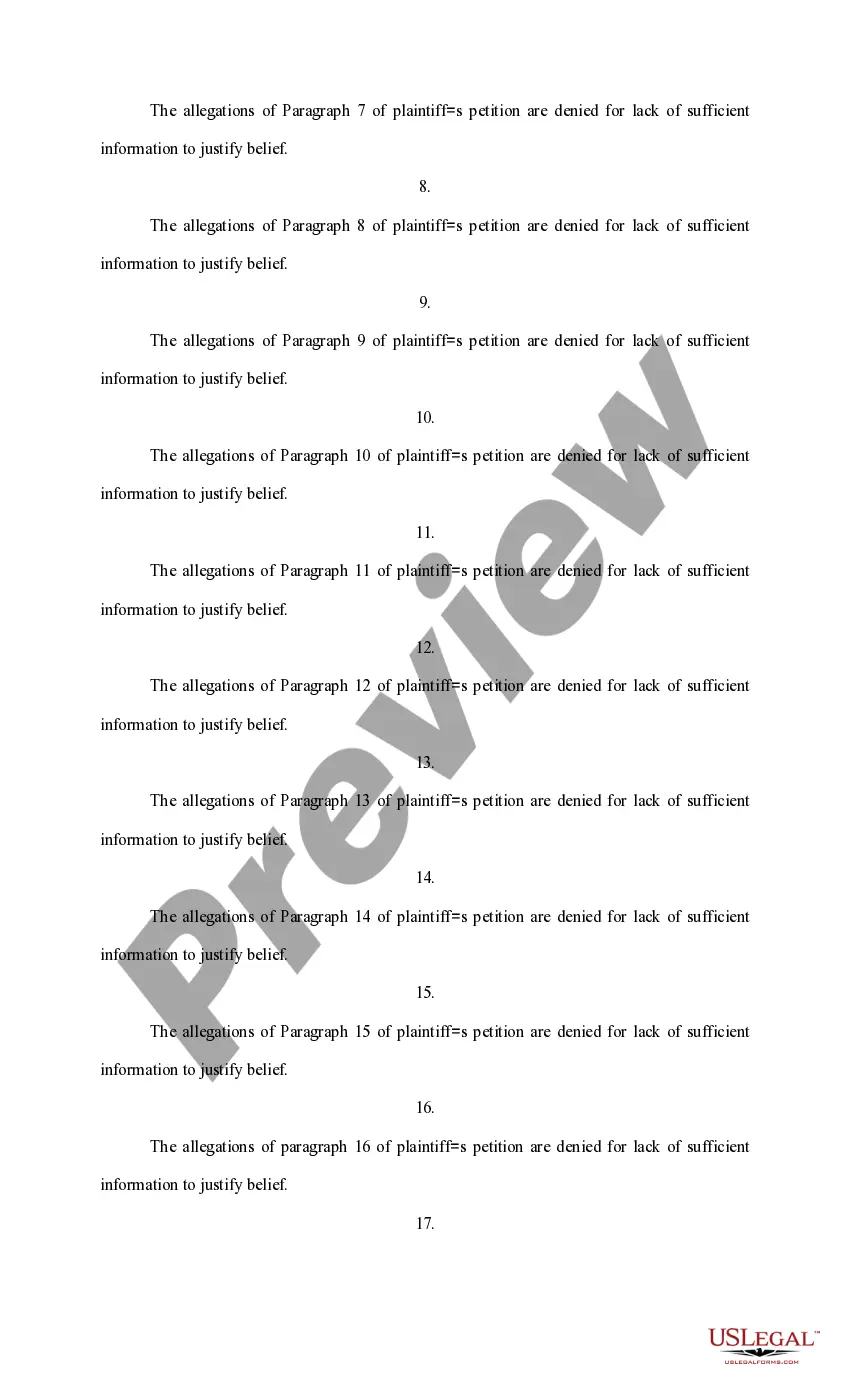
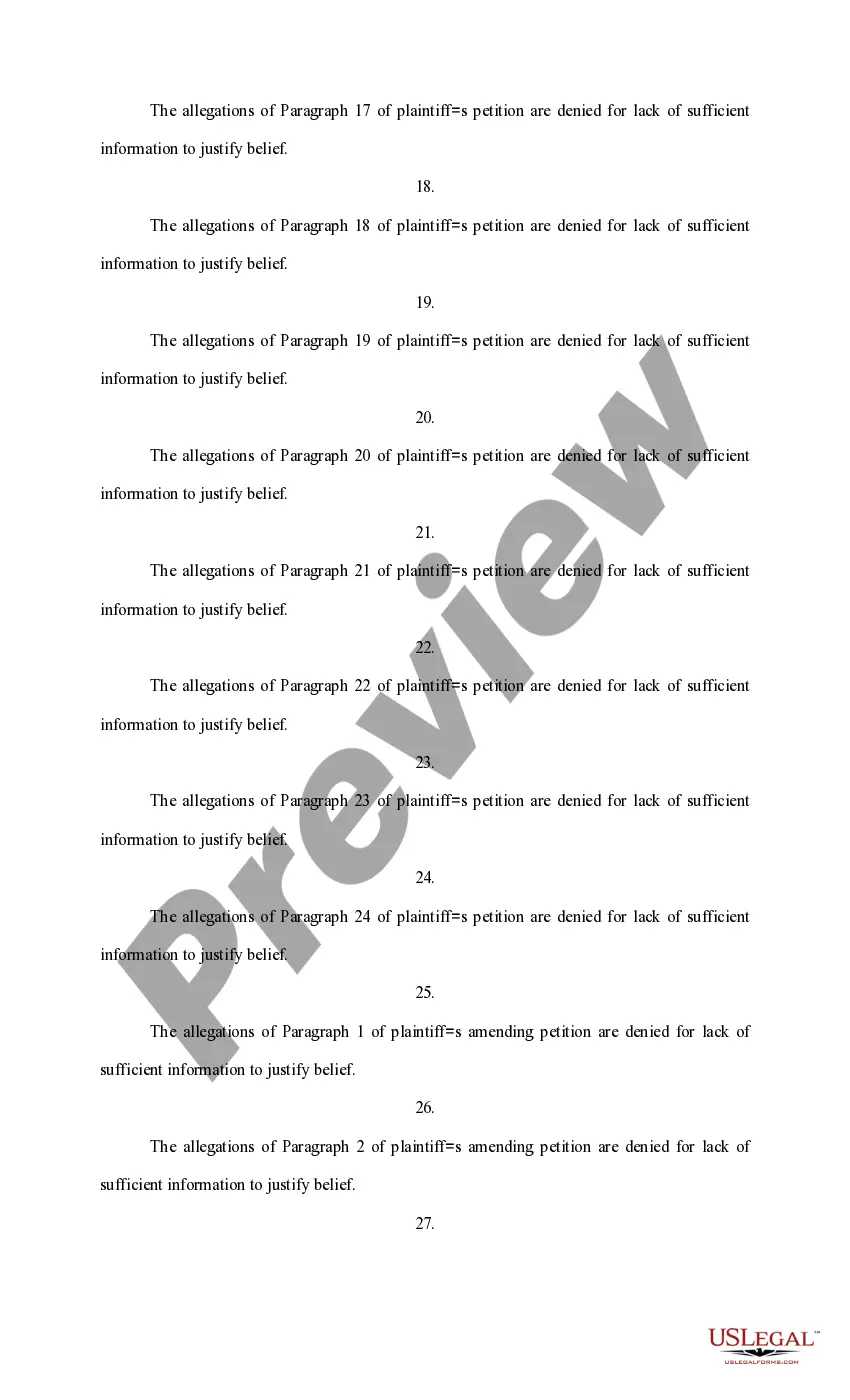
- A section for the defendantâs response to each allegation made by the plaintiff.
- Space for the attorneyâs signature and contact details.
- Certification that a copy of the document has been sent to the plaintiff's attorney.
Situations where this form applies
This form should be used immediately after receiving the original Petition for Divorce from the plaintiff. It is essential for the defendant to respond formally to avoid default judgments and to preserve their rights in the divorce proceedings. Use this form if you disagree with the claims made against you and wish to contest them in court.
Who can use this document
- Defendants in a divorce case who have received an original Petition for Divorce.
- Individuals seeking to contest specific allegations brought against them by a plaintiff.
- Anyone who has an attorney representing them in the divorce proceedings.
Completing this form step by step
- Identify the parties involved by entering the names of both the defendant and plaintiff at the top of the form.
- Carefully review the plaintiff's allegations and respond to each one specifically, using "denied" as applicable.
- Include any additional necessary information or defenses that may apply to your case.
- Sign the document in the designated area, ensuring your attorney also signs if applicable.
- Send a copy of the completed form to the plaintiff's attorney and keep a record of the submission.
Does this form need to be notarized?
This form does not typically require notarization unless specified by local law.
Get your form ready online
Our built-in tools help you complete, sign, share, and store your documents in one place.
Make edits, fill in missing information, and update formatting in US Legal Forms—just like you would in MS Word.
Download a copy, print it, send it by email, or mail it via USPS—whatever works best for your next step.
Sign and collect signatures with our SignNow integration. Send to multiple recipients, set reminders, and more. Go Premium to unlock E-Sign.
If this form requires notarization, complete it online through a secure video call—no need to meet a notary in person or wait for an appointment.
We protect your documents and personal data by following strict security and privacy standards.

Make edits, fill in missing information, and update formatting in US Legal Forms—just like you would in MS Word.

Download a copy, print it, send it by email, or mail it via USPS—whatever works best for your next step.

Sign and collect signatures with our SignNow integration. Send to multiple recipients, set reminders, and more. Go Premium to unlock E-Sign.

If this form requires notarization, complete it online through a secure video call—no need to meet a notary in person or wait for an appointment.

We protect your documents and personal data by following strict security and privacy standards.
Common mistakes
- Failing to thoroughly read and understand the allegations in the plaintiff's petition.
- Not responding to each allegation individually, which can weaken the defense.
- Missing the deadline for submitting the answer, which could lead to default judgments.
Benefits of completing this form online
- Convenient access to legal templates drafted by licensed attorneys.
- Editable fields that allow for customization to fit individual needs.
- Immediate download options to expedite the legal process.
Looking for another form?
Form popularity
FAQ
A motion to amend a judgment in Louisiana is a request made to the court to change or clarify a judgment that has been issued. This motion must demonstrate valid reasons for the change, which may include new evidence or corrections in the ruling. Understanding how this process works can help ensure your Louisiana Answer to Original Petition for Divorce and Amending Petition aligns with any new developments in your case. For comprehensive support, consider using uslegalforms to navigate this legal procedure.
Article 1434 discusses how a party can amend their petition under Louisiana law. It specifies the circumstances under which an amendment is permissible and the process to follow. Familiarity with this article helps you navigate the complexities of submitting a Louisiana Answer to Original Petition for Divorce and Amending Petition. Understanding these rules aids in protecting your interests throughout the legal process.
The divorce petition is a legal document filed in court by a spouse who seeks a divorce. Also called the "complaint" in some states, the petition informs the court of the filing spouse's (called the "petitioner") desire to end the marriage, and its filing with the court signifies the initiation of the divorce process.
You have until your spouse files an answer to your complaint to cancel the divorce. By filing first you are the plaintiff and she will be the defendant. At trial, if your divorce case goes that far, you would go first.This means the reason for the divorce doesn't matter.
Souse details: Spouses by name and address; Marriage details: Date and place of marriage; Child out of wedlock: Identification of children out of wedlock. Place of cohabitation: Acknowledgment that both the parties have lived in the state or county for a certain period of time prior to filing the petition;
After you file the petition for divorce and request for temporary orders, you need to provide a copy of the paperwork to your spouse and file proof of service with the court. Proof of service is a document that tells the court that you met the statutory requirements for giving a copy of the petition to your spouse.