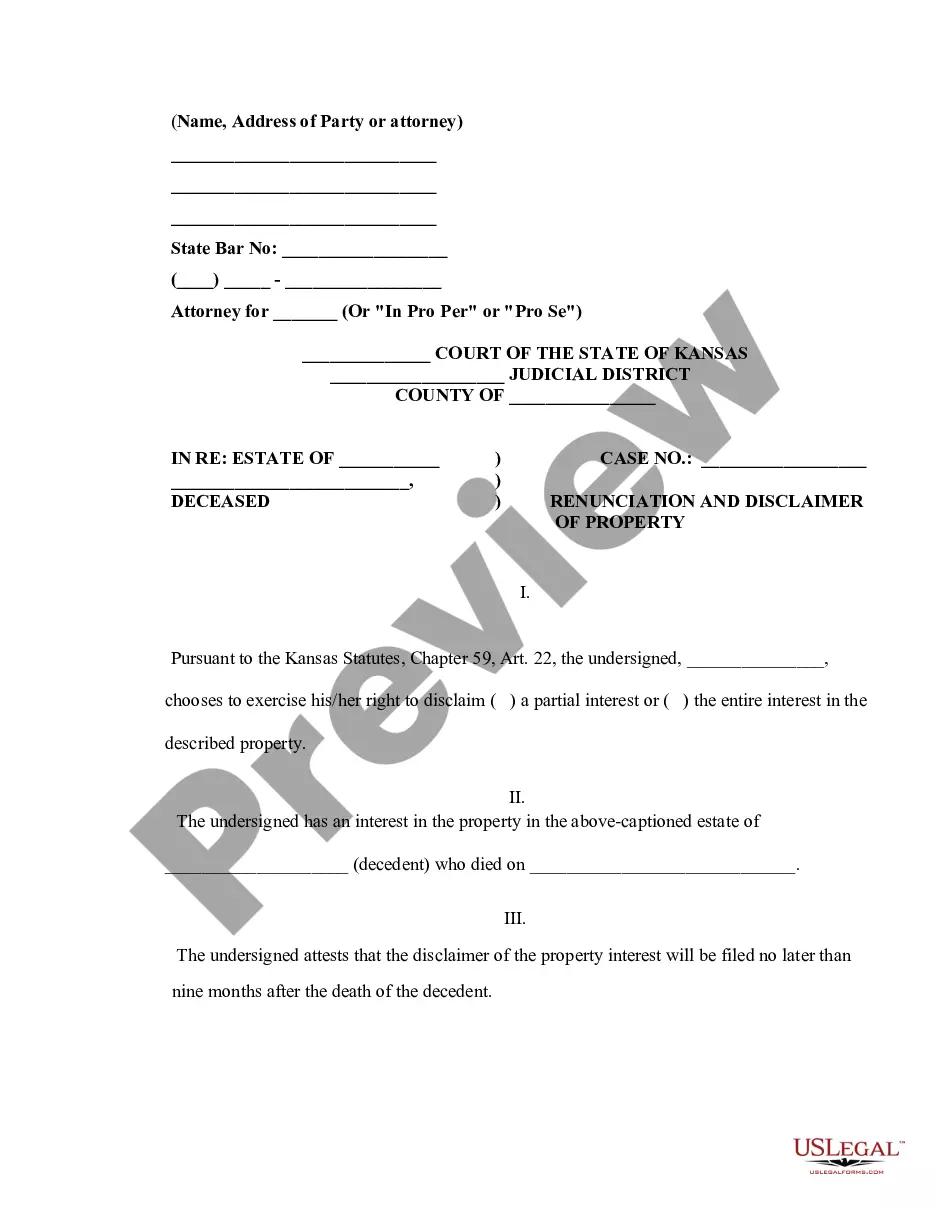
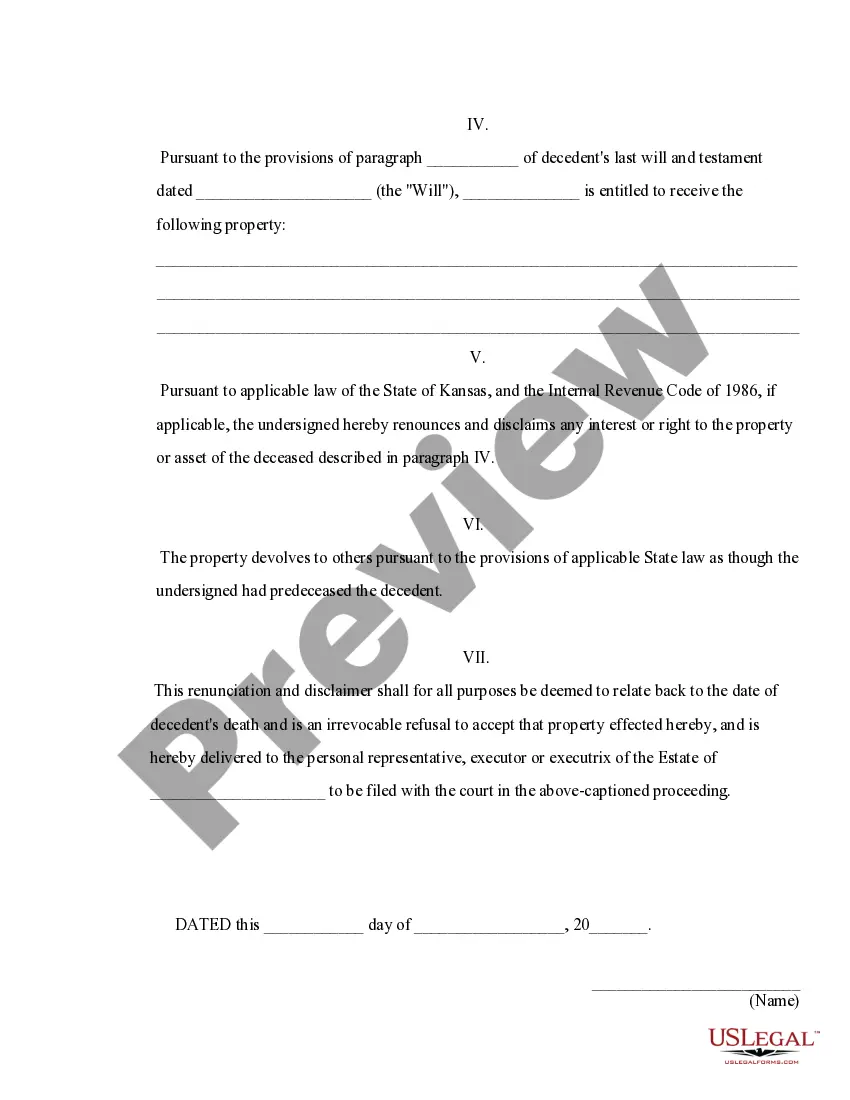
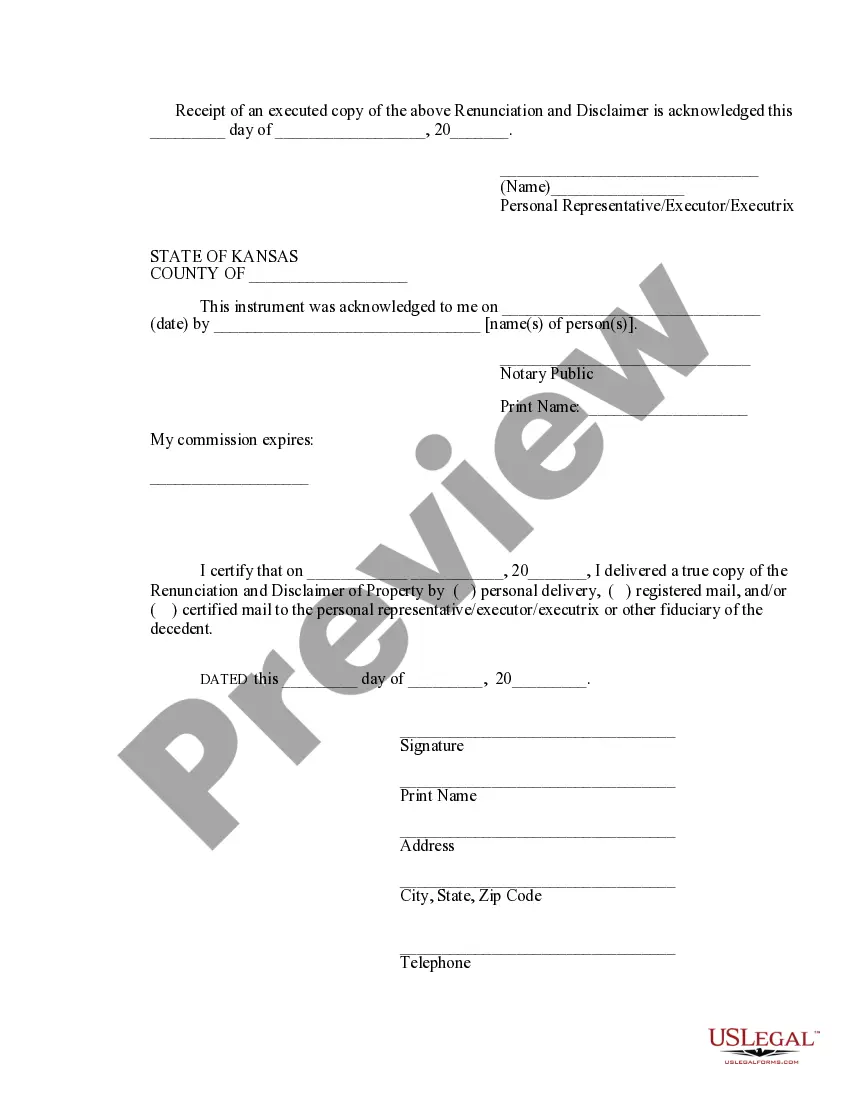
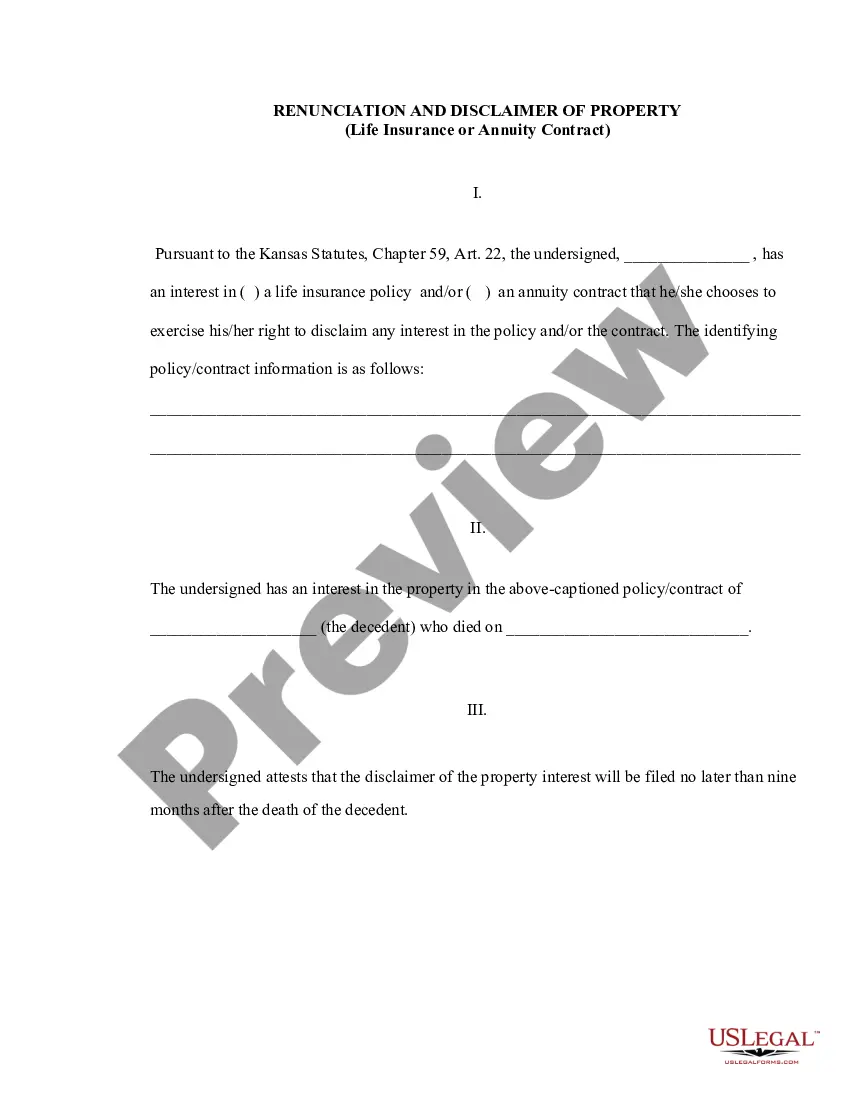
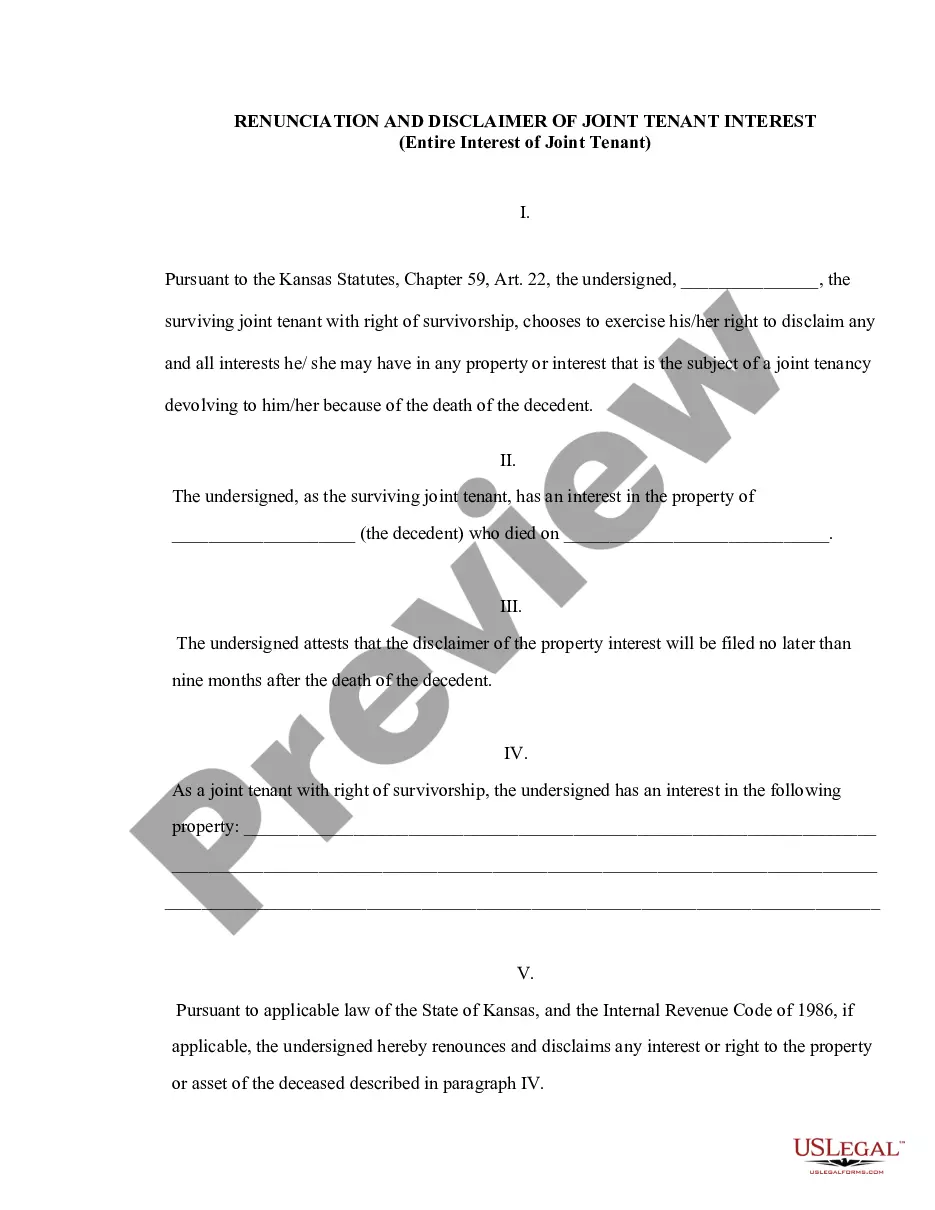
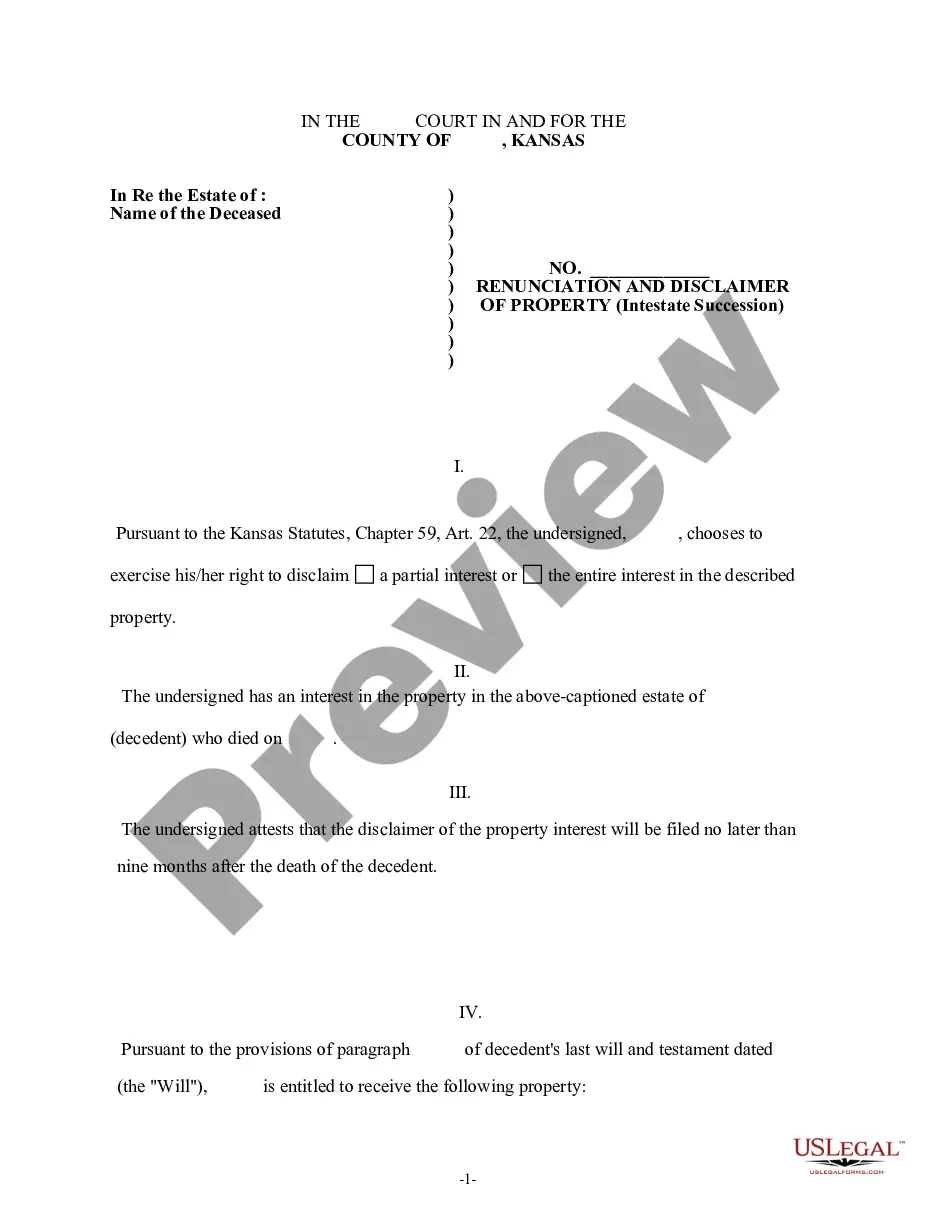
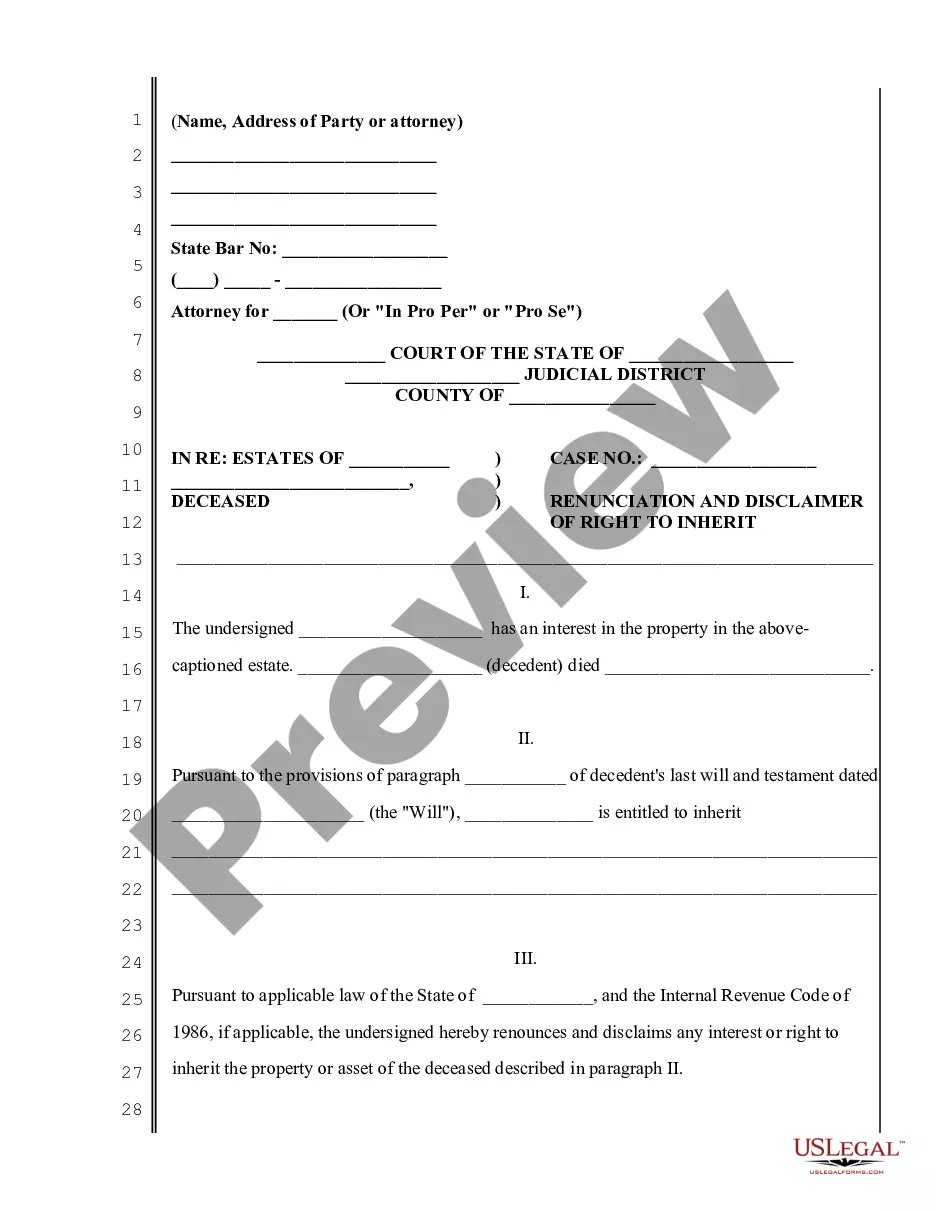
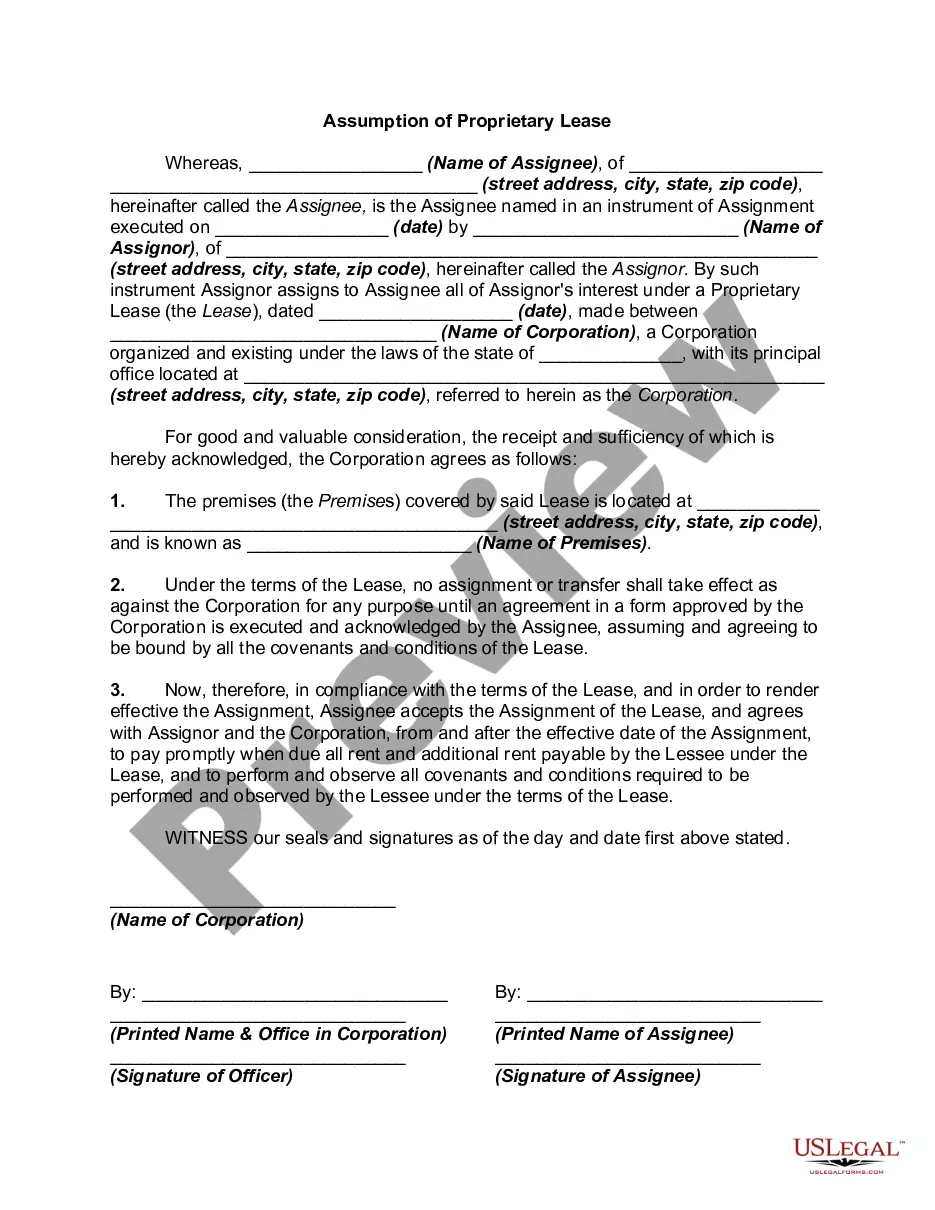
This form is a Renunciation and Disclaimer of Property acquired by the beneficiary through the last will and testament of the decedent. Pursuant to the Kansas Statutes, Chapter 59, Art. 22, the beneficiary has chosen to disclaim a portion of or the entire interest in the bequest. The beneficiary also attests to the fact that the disclaimer will be filed no later than nine months after the death of the decedent. The form also contains a state specific acknowledgment and a certificate to verify delivery.
Kansas Renunciation and Disclaimer of Property from Will by Testate
State:
Kansas
Control #:
KS-01-03
Format:
Word
Instant download
Description
Free preview

How to fill out Kansas Renunciation And Disclaimer Of Property From Will By Testate?
Searching for Kansas Renunciation and Disclaimer of Property from Will by Testate documents and filling them out could pose a challenge.
To conserve time, expenses, and effort, utilize US Legal Forms to locate the appropriate sample specifically for your state in just a few clicks.
Our attorneys prepare each document, meaning you only need to complete them.
Select your plan on the pricing page and create your account. Choose your payment method with a credit card or PayPal. Store the sample in your preferred format. You can print the Kansas Renunciation and Disclaimer of Property from Will by Testate form or complete it using any online editor. Don’t worry about making typos, as your sample can be utilized and submitted, and printed as often as you wish. Explore US Legal Forms and gain access to over 85,000 state-specific legal and tax documents.
- Log in to your account and navigate back to the form's webpage to save the sample.
- Your saved templates are stored in My documents and are always available for future use.
- If you haven't subscribed yet, you need to register.
- Follow our detailed guidelines on how to acquire the Kansas Renunciation and Disclaimer of Property from Will by Testate template in a few minutes.
- To obtain an entitled sample, verify its applicability for your state.
- Examine the sample using the Preview feature (if available).
- If there’s a description, read it for specifics.
- Click Buy Now if you found what you are looking for.
Form popularity
FAQ
When you relinquish property, you don't get any say in who inherits in your place. If you want to control who gets the inheritance, you must accept it and give it to that person. If you relinquish the property and the deceased didn't name a back-up heir, the court will apply state law to decide who inherits.
Disclaim Inheritance, DefinitionDisclaiming means that you give up your rights to receive the inheritance. If you choose to do so, whatever assets you were meant to receive would be passed along to the next beneficiary in line.
A "Disclaimer Will", sometimes referred to as a "Disclaimer Trust", is a flexible estate planning tool that can be implemented to benefit married couples whose combined estates are approaching or exceed the lifetime exemption amount for federal estate tax, resulting in substantial tax savings to the estate of the
Put the disclaimer in writing. Deliver the disclaimer to the person in control of the estate usually the executor or trustee. Complete the disclaimer within nine months of the death of the person leaving the property. Do not accept any benefit from the property you're disclaiming.
In your disclaimer, cover any and all liabilities for the product or service that you provide. You should warn consumers of any dangers or hazards posed by your product. You should list specific risks while at the same time acknowledging that the list is not exhaustive. For example, you could write, NOTICE OF RISK.
Disclaim Inheritance, DefinitionDisclaiming means that you give up your rights to receive the inheritance. If you choose to do so, whatever assets you were meant to receive would be passed along to the next beneficiary in line.
The disclaimer must be in writing: A signed letter by the person doing the disclaiming, identifying the decedent, describing the asset to be disclaimed, and the extent and amount, percentage or dollar amount, to be disclaimed, must be delivered to the person in control of the estate or asset, such as an executor,
These documents can include the will, death certificate, transfer of ownership forms and letters from the estate executor or probate court.If you received the inheritance in the form of cash, request a copy of the bank statement that reflects the deposit.
Disclaim the asset within nine months of the death of the assets' original owner (one exception: if a minor beneficiary wishes to disclaim, the disclaimer cannot take place until after the minor reaches the age of majority, at which time they will have nine months to disclaim the assets).