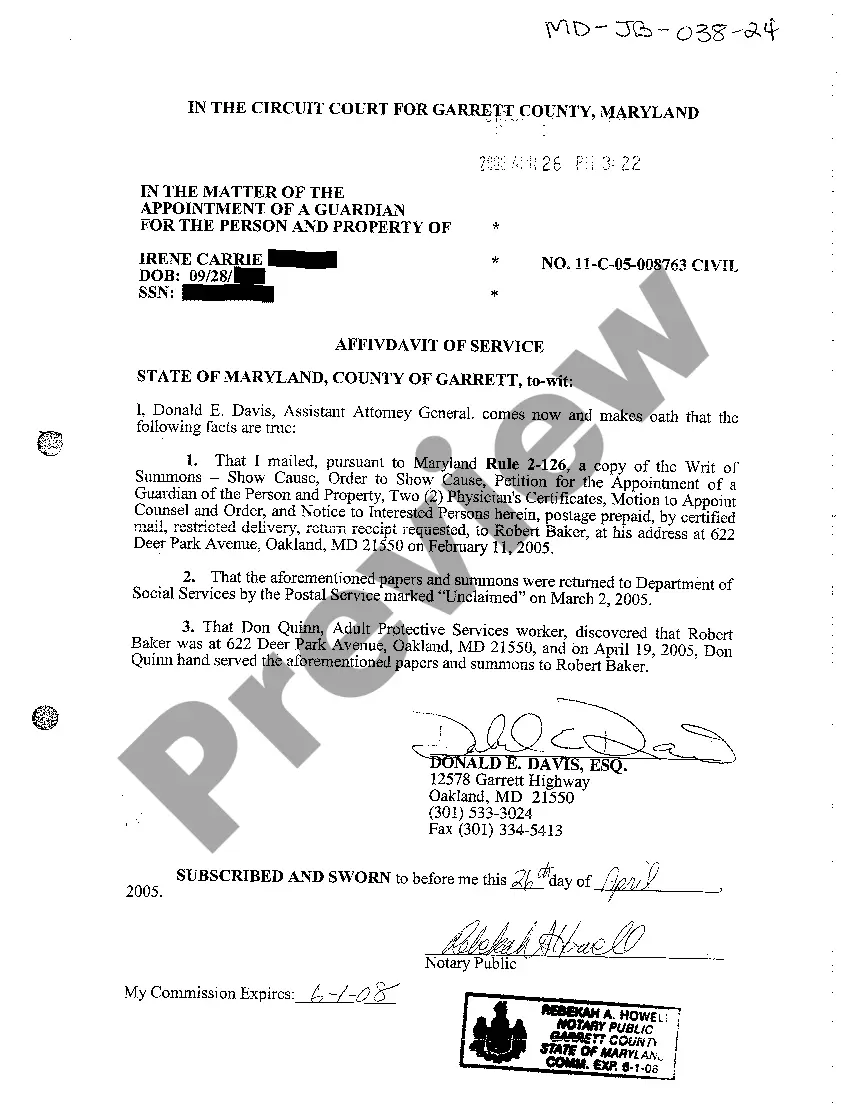
Kansas Renunciation and Disclaimer of Property from Life Insurance or Annuity Contract
About this form
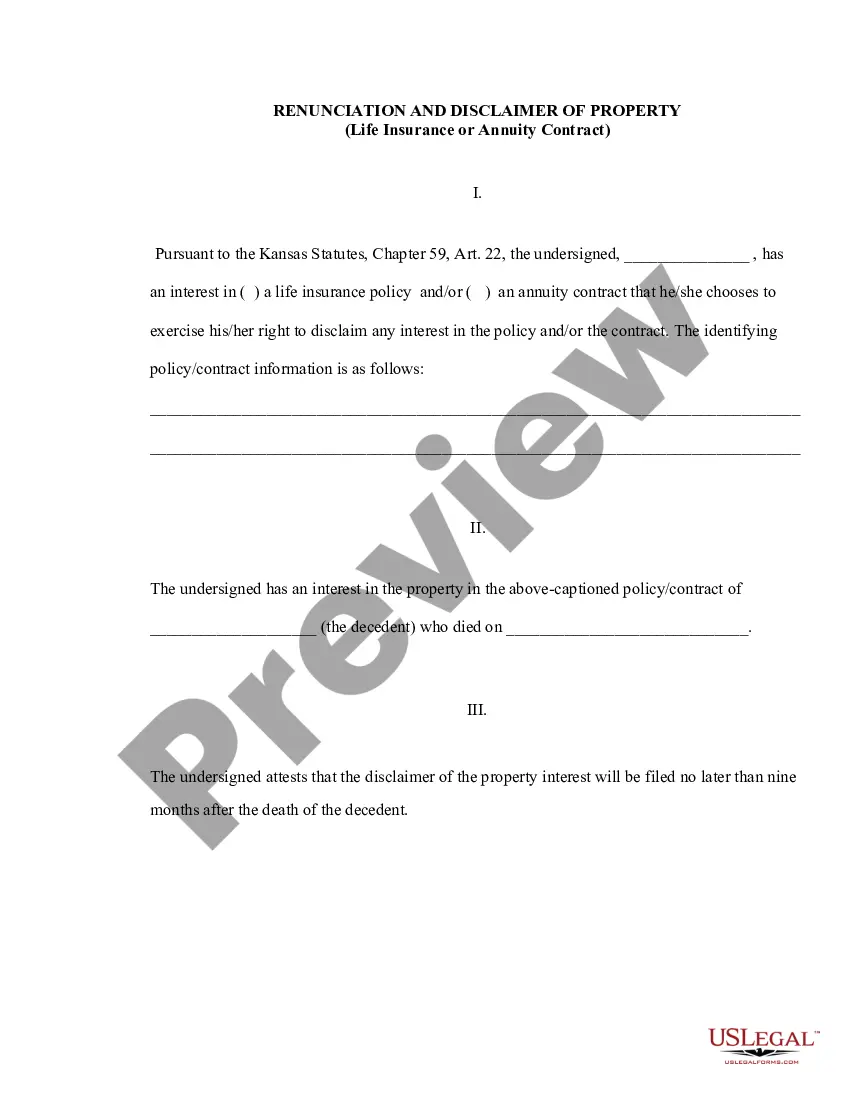
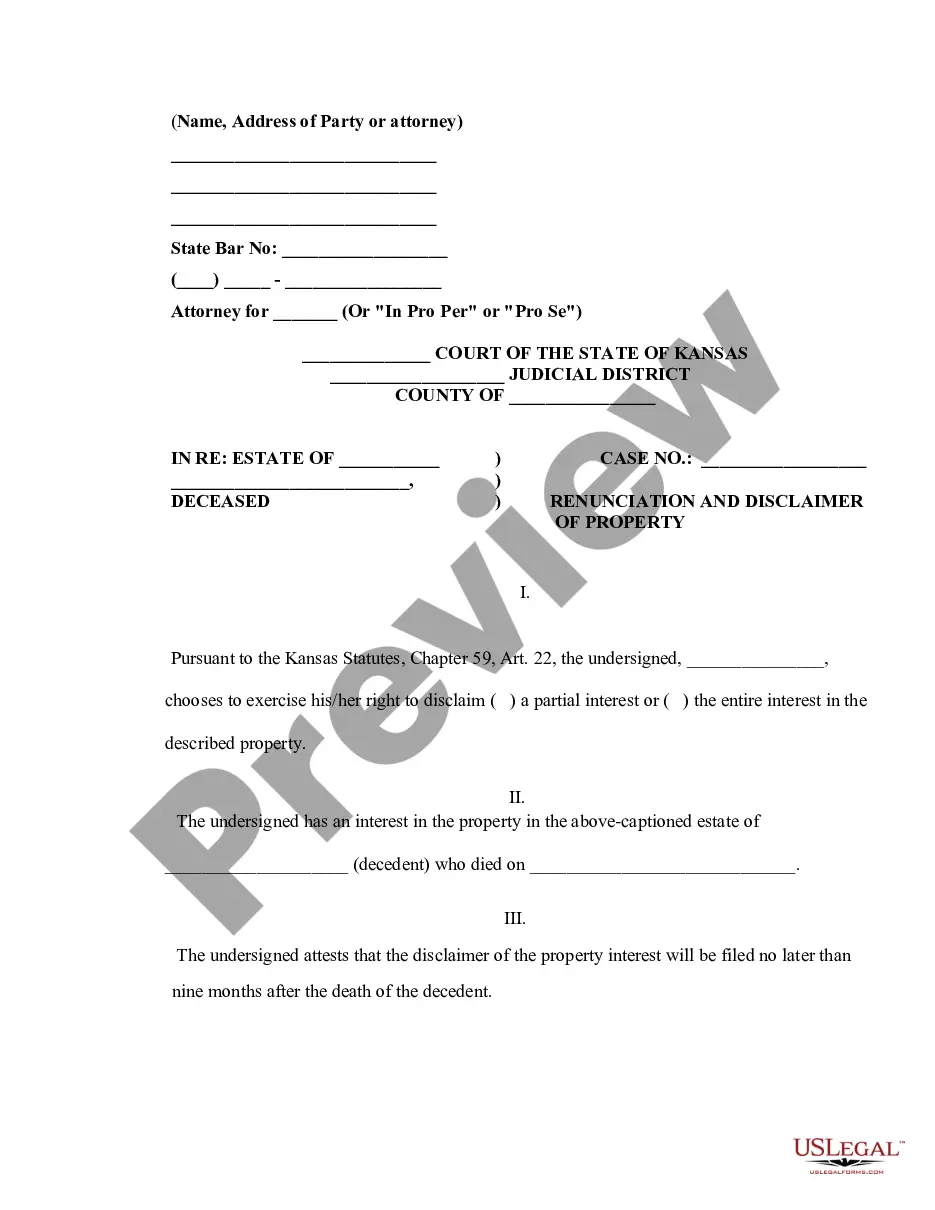
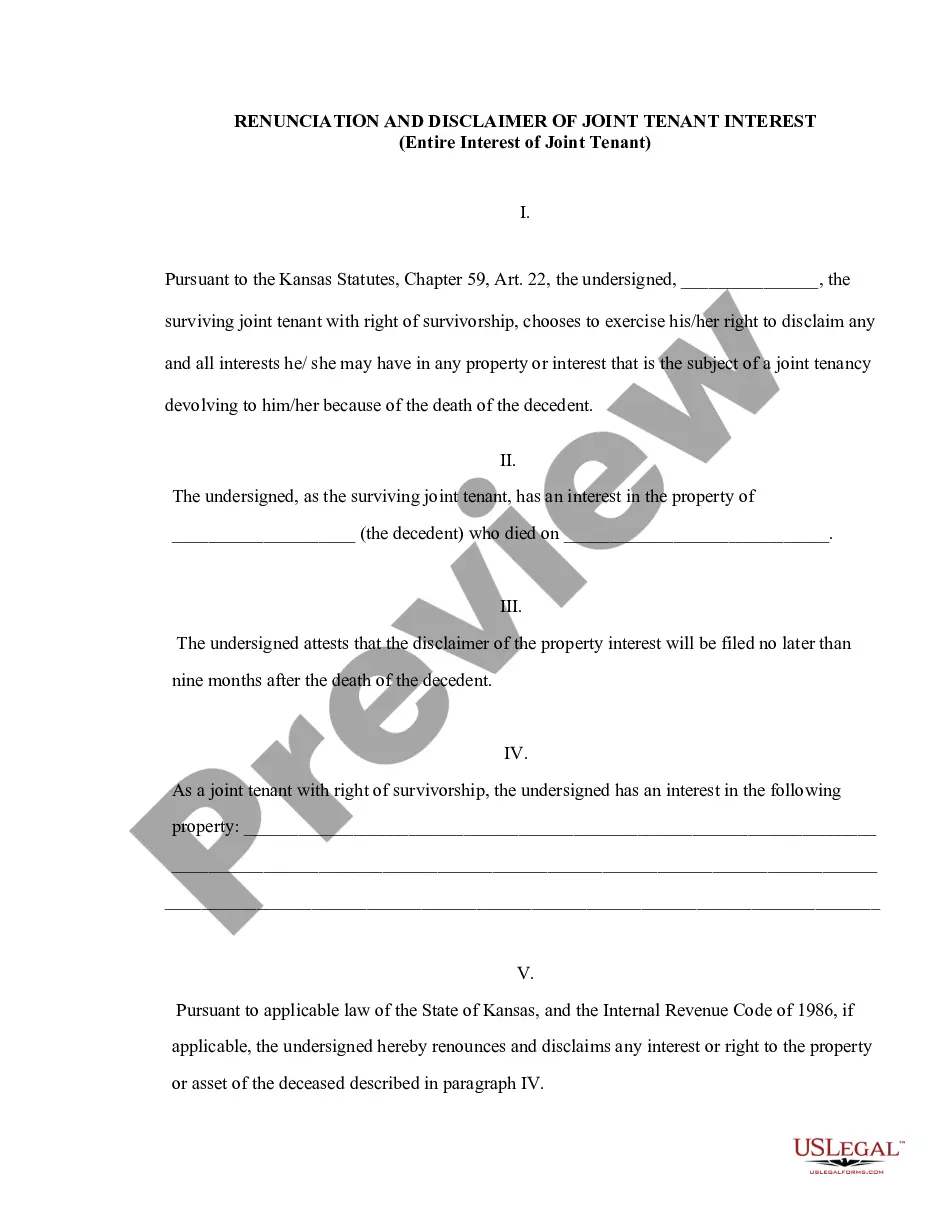
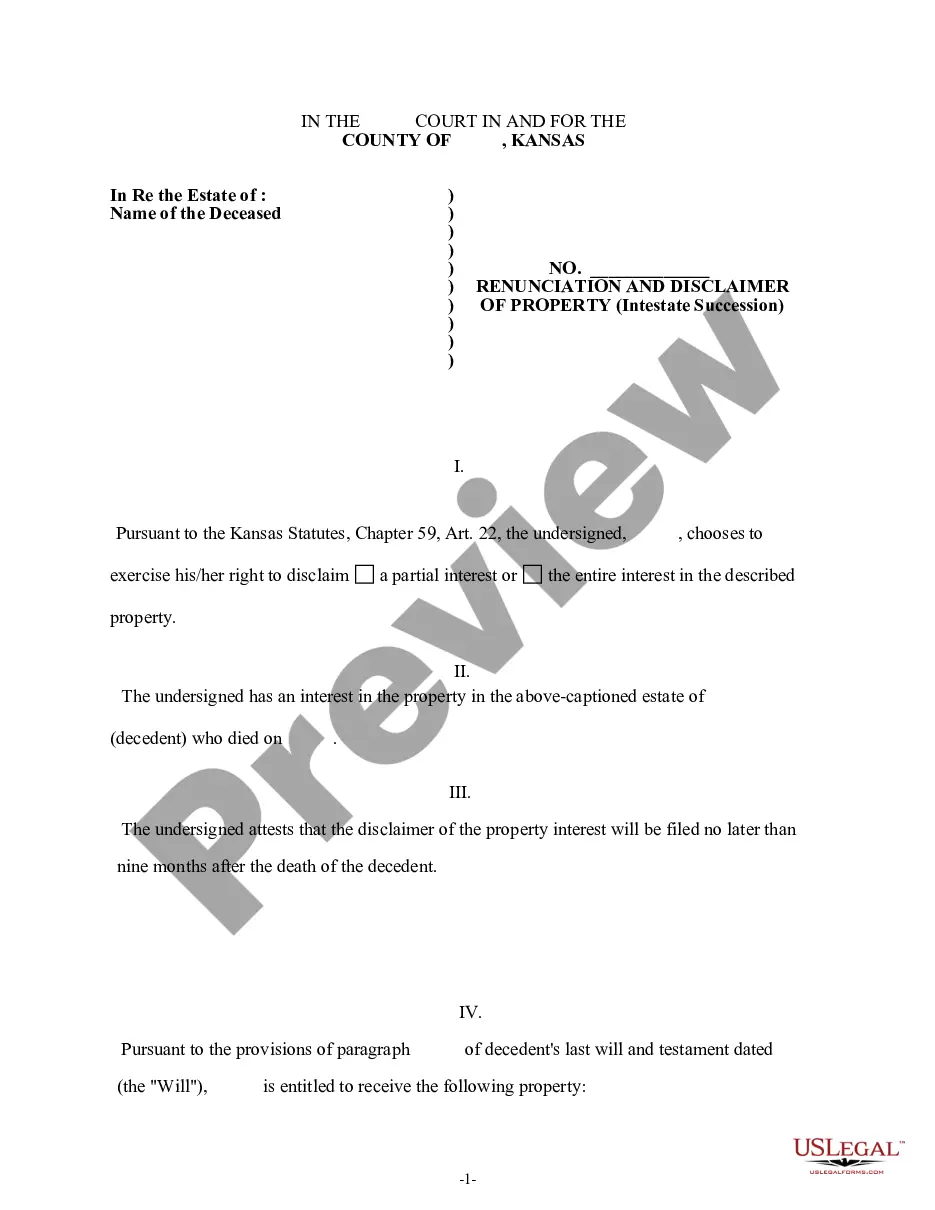
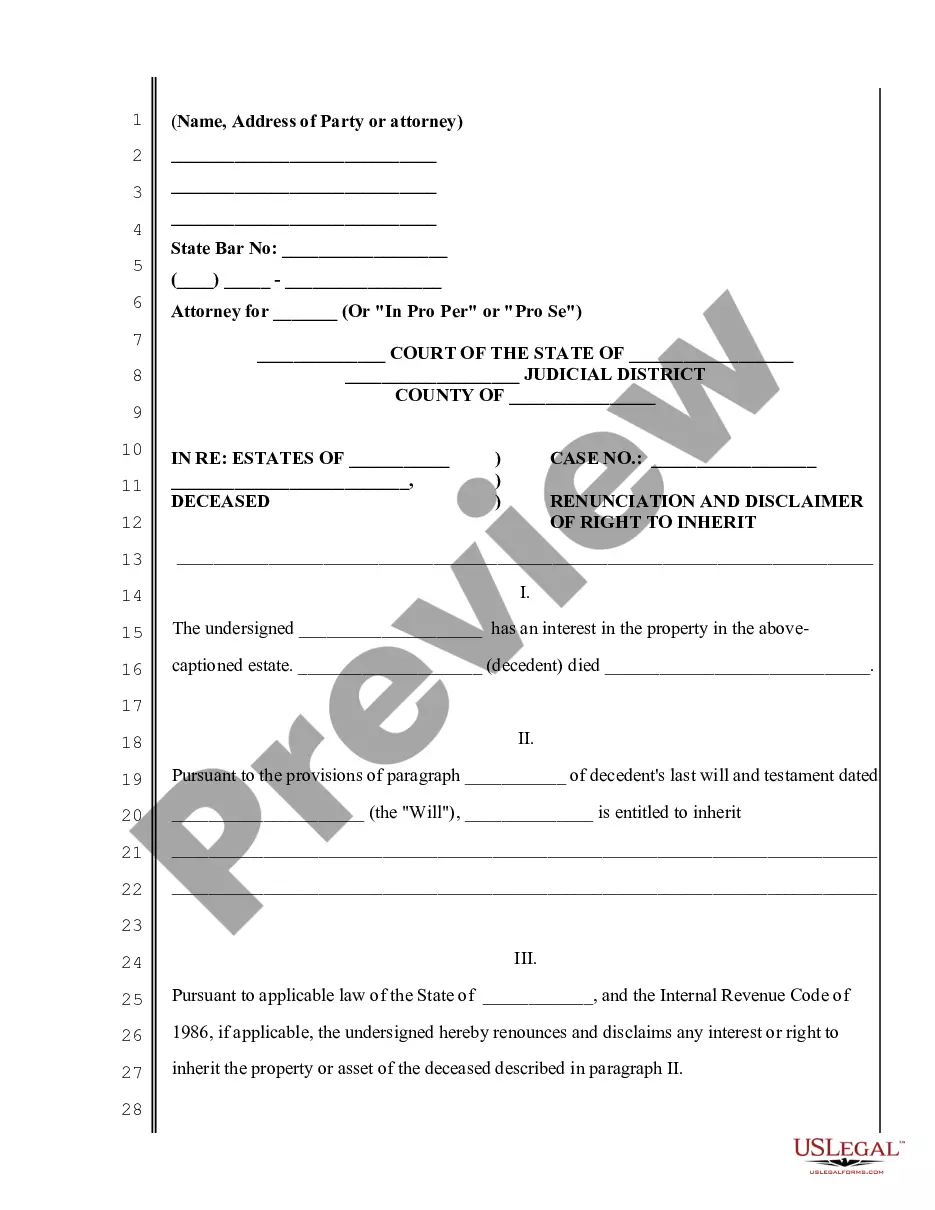
The Kansas Renunciation and Disclaimer of Property from Life Insurance or Annuity Contract is a legal document that allows a beneficiary to renounce their right to receive proceeds from a life insurance policy or annuity following the death of the insured. This form is specifically designed for beneficiaries who wish to completely disclaim their interest, as permissible under Kansas law, ensuring that the benefits are redirected according to state regulations. It differs from other legal forms by clearly addressing the process of renouncing rights to received benefits rather than transferring them.
Key parts of this document
- Holder's name and interest declaration related to the life insurance policy and/or annuity contract.
- Details of the deceased (decedent) and date of death.
- Attestation that the disclaimer will be filed within nine months of the decedent's death.
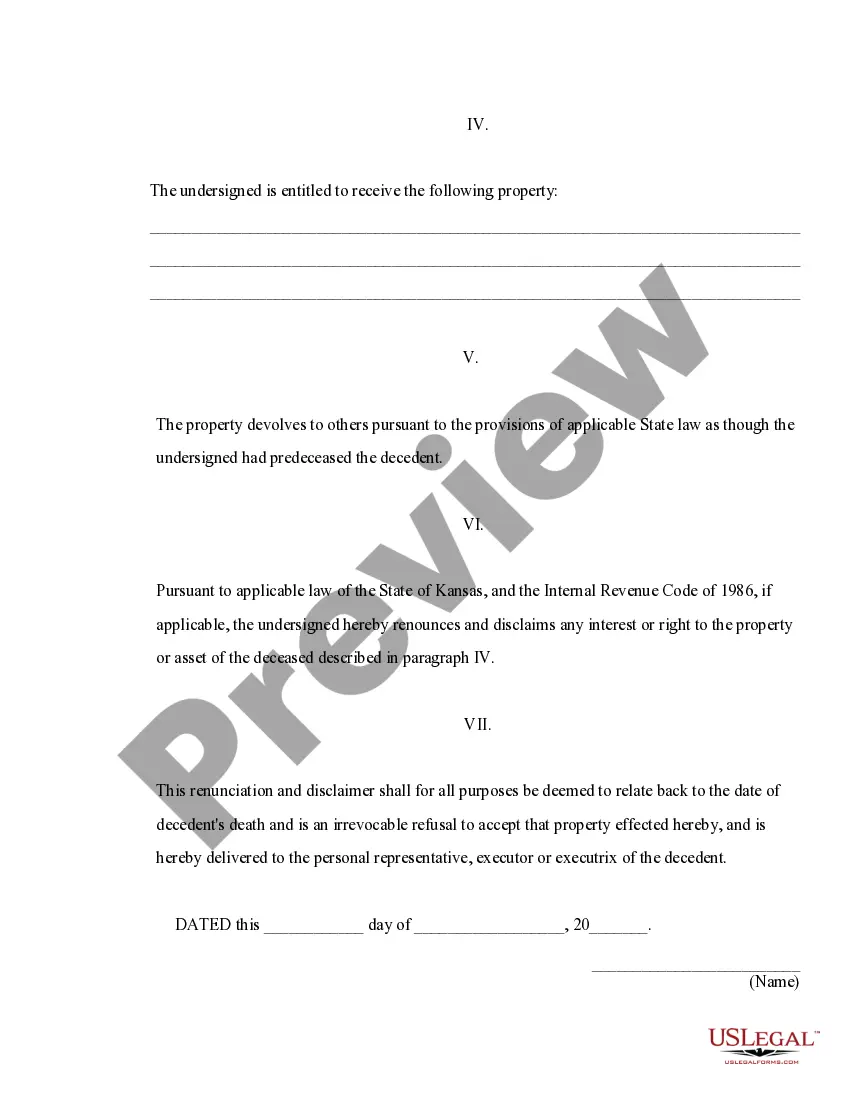
- Specification of the asset or property being disclaimed.
- Statement confirming property will devolve according to state law as if the disclaimant predeceased the decedent.
- Irrevocable declaration of refusal to accept the proceeded benefits.
When to use this form
This form should be used in scenarios where a beneficiary of a life insurance policy or annuity contract decides not to accept the proceeds due to personal reasons, tax implications, or to redirect the benefits to other beneficiaries. For instance, if a sibling is listed as a beneficiary but they prefer that the proceeds go to the decedent's children, this form facilitates that decision and complies with Kansas law.
Intended users of this form
This form is intended for:
- Beneficiaries of life insurance policies or annuity contracts in Kansas.
- Individuals seeking to formally renounce their interest in the benefits of such financial instruments.
- Those who need to comply with state law requirements for disclaiming property rights following a death.
Steps to complete this form
- Identify the beneficiary's name and specify the interest being renounced (life insurance or annuity).
- Fill in the decedent's information, including their name and date of death.
- Clearly state the property being disclaimed.
- Sign and date the document, ensuring all required sections are completed.
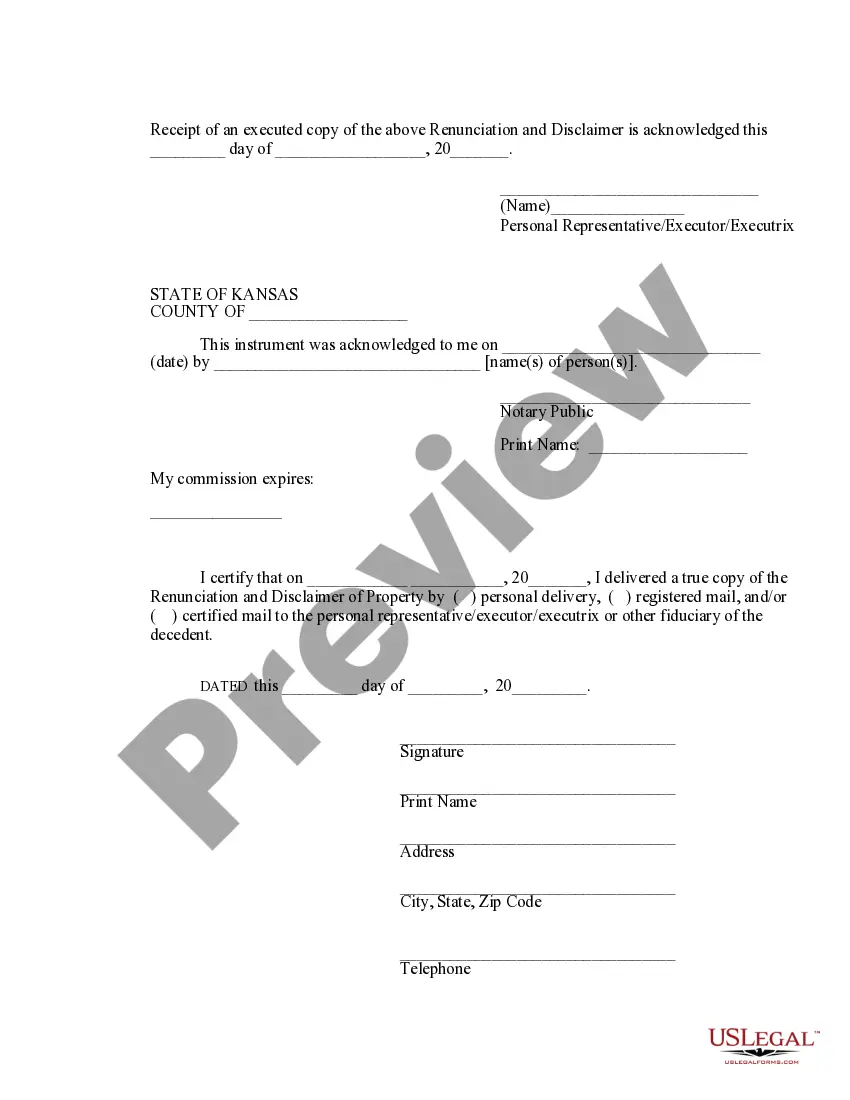
- Deliver a copy to the decedent's personal representative or executor.
Does this document require notarization?
Yes, this form must be notarized to be legally valid. The notarization provides an official acknowledgment of the signer's identity and intention. US Legal Forms offers integrated online notarization, ensuring a secure and convenient process through video calls with a licensed notary, available 24/7.
Get your form ready online
Our built-in tools help you complete, sign, share, and store your documents in one place.
Make edits, fill in missing information, and update formatting in US Legal Forms—just like you would in MS Word.
Download a copy, print it, send it by email, or mail it via USPS—whatever works best for your next step.
Sign and collect signatures with our SignNow integration. Send to multiple recipients, set reminders, and more. Go Premium to unlock E-Sign.
If this form requires notarization, complete it online through a secure video call—no need to meet a notary in person or wait for an appointment.
We protect your documents and personal data by following strict security and privacy standards.
Make edits, fill in missing information, and update formatting in US Legal Forms—just like you would in MS Word.
Download a copy, print it, send it by email, or mail it via USPS—whatever works best for your next step.
Sign and collect signatures with our SignNow integration. Send to multiple recipients, set reminders, and more. Go Premium to unlock E-Sign.

If this form requires notarization, complete it online through a secure video call—no need to meet a notary in person or wait for an appointment.
We protect your documents and personal data by following strict security and privacy standards.
Common mistakes
- Failing to file the disclaimer within the nine-month timeframe.
- Not providing complete information about the life insurance policy or annuity contract.
- Incorrectly stating the decedent's details.
- Neglecting to sign the form or have it acknowledged when necessary.
Benefits of using this form online
- Immediate access to legally drafted forms by licensed attorneys.
- Convenience of downloading and printing the form at any time.
- Editable templates that can be tailored to individual circumstances.
- Reliable, clear, and easy-to-understand formats reduce the likelihood of errors.
Quick recap
- The form allows beneficiaries to renounce their interest in life insurance or annuity proceeds.
- Timely filing is criticalâdisclaimers must be submitted within nine months of the decedent's death.
- Notarization is required to validate the disclaimer under Kansas law.
Looking for another form?
Form popularity
FAQ
Life insurance (or life assurance, especially in the Commonwealth of Nations) is a contract between an insurance policy holder and an insurer or assurer, where the insurer promises to pay a designated beneficiary a sum of money (the benefit) in exchange for a premium, upon the death of an insured person (often the
There are three types of property insurance coverage: replacement cost, actual cash value, and extended replacement costs.
An Insurance Contract may be defined as an agreement between two parties whereby one party is called an insurer and the other is called insured. The Insurer which is the Insurance Company undertakes, in exchange of fixed premium to pay the Insured fixed amount of money on the happening of a certain event.
There are three major types of whole life or permanent life insurancetraditional whole life, universal life, and variable universal life, and there are variations within each type.