Maryland Warranty Deed from Trust to Two (2) Individuals
Overview of this form
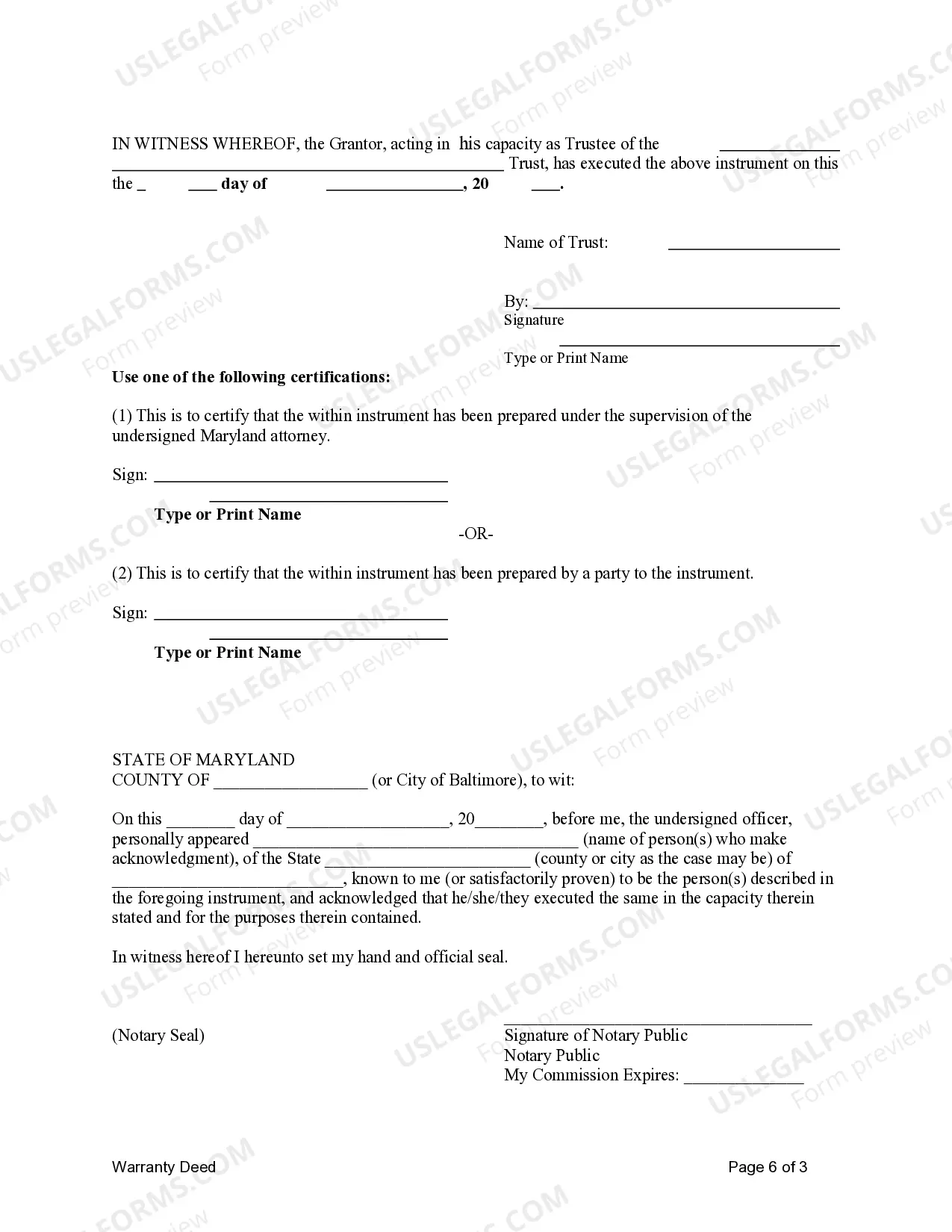
A warranty deed from trust to two individuals is a legal document in which a trust (the Grantor) conveys property to two individual Grantees. This form guarantees that the Grantor holds clear title to the property and has the authority to transfer it. Unlike other deeds, a warranty deed provides the Grantees with a higher level of protection, as it includes warranties against claims to the property. This form is essential for transferring property ownership while ensuring legal compliance with state laws.
Form components explained
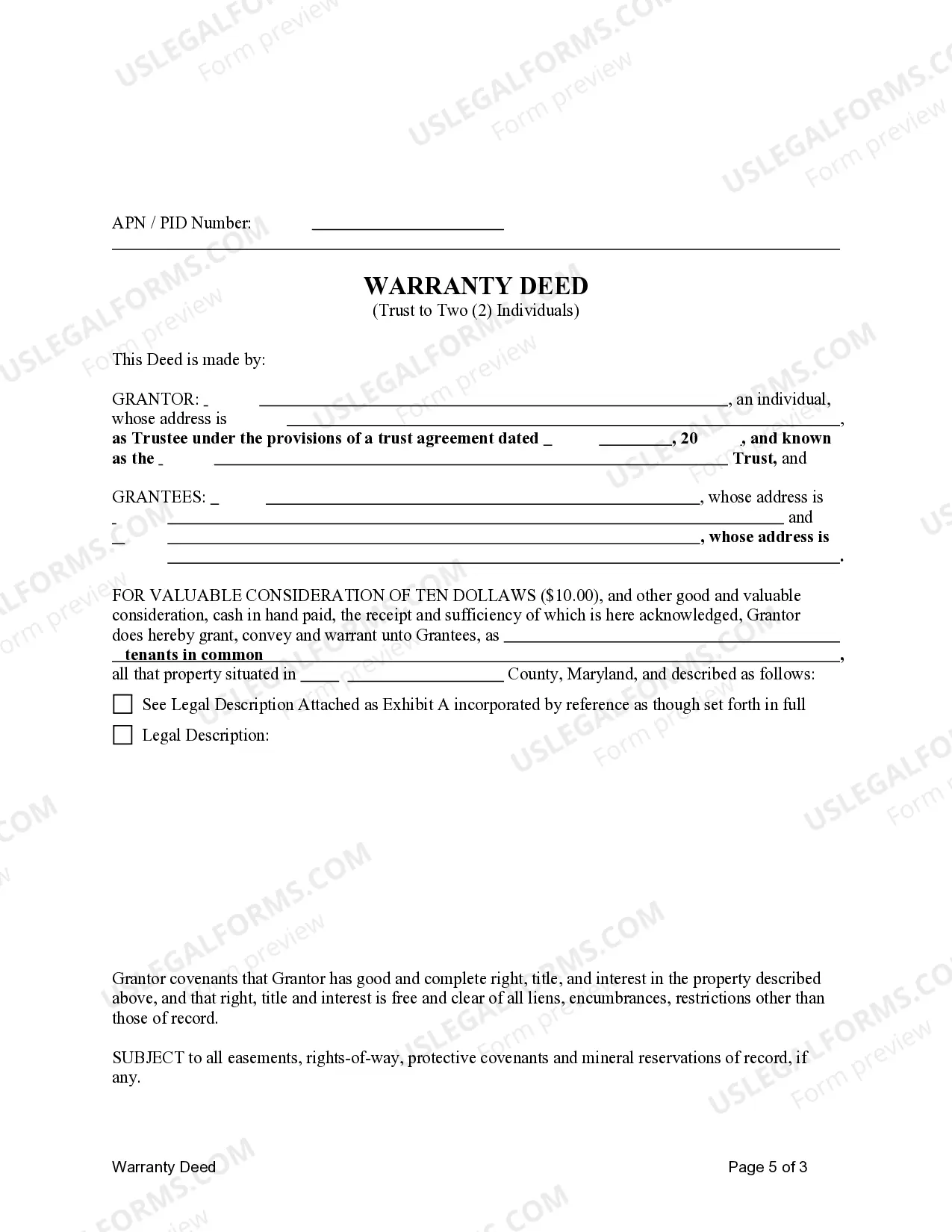
- Grantor information: Details of the trust granting the property.
- Grantee information: Names and information of the two recipients of the property.
- Property description: A clear description of the property being transferred.
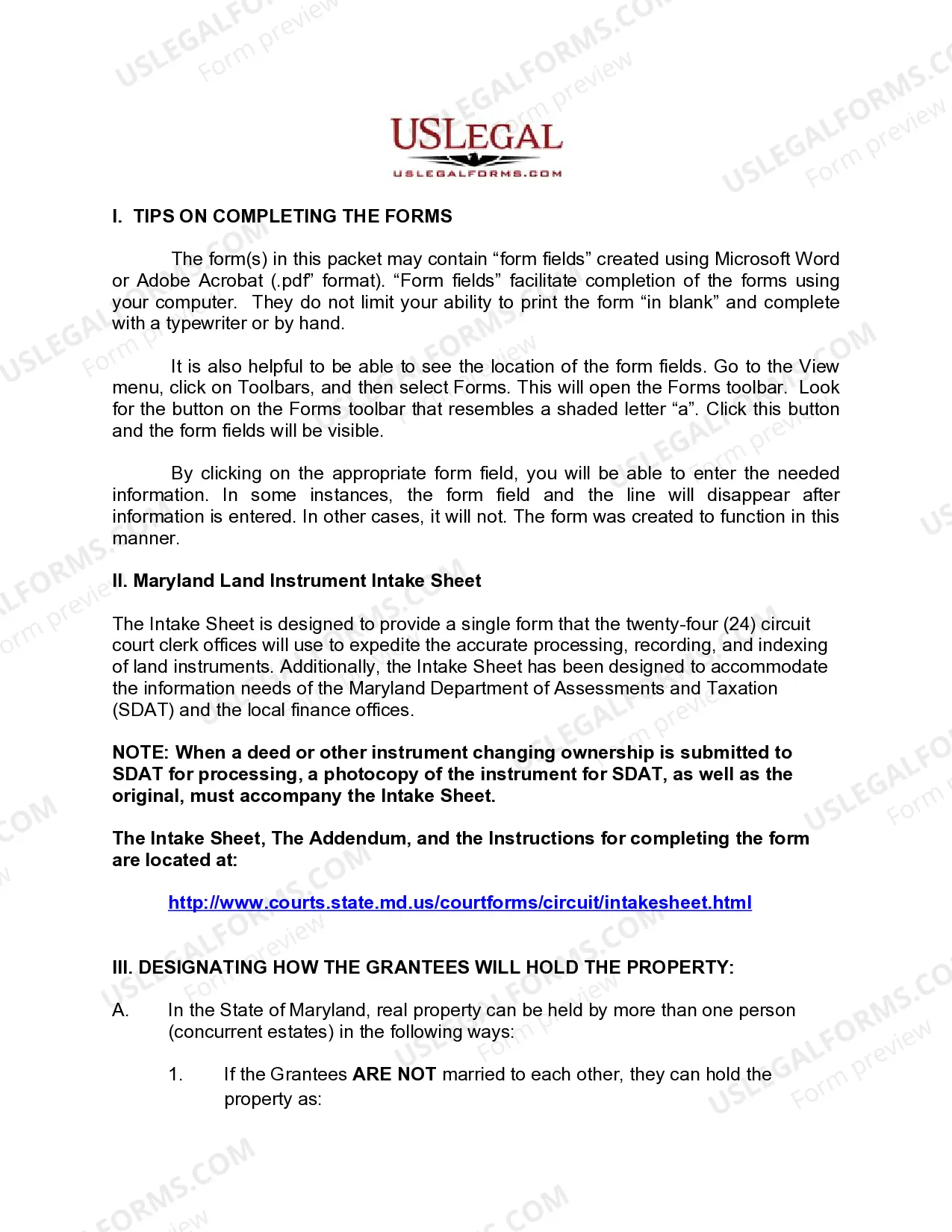
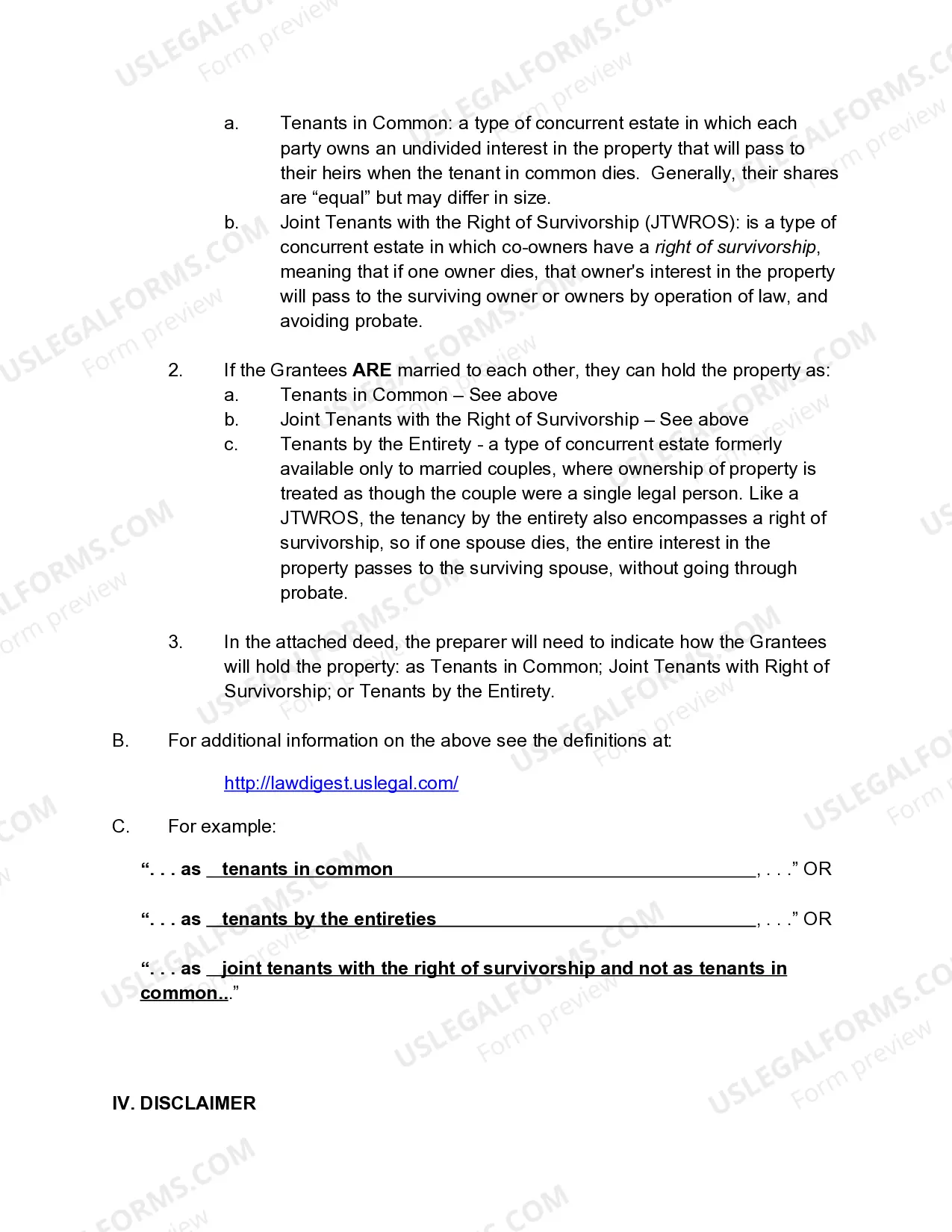
- How Grantees hold property: Options to designate ownership structure such as tenants in common or joint tenants with right of survivorship.
- Warranties: Clauses ensuring the title is free of liens or claims.




When this form is needed
This form should be used when a trust wishes to transfer property to two individuals. Situations include estate planning, family property transfers, or when the trust needs to disperse assets to beneficiaries as part of an estate settlement. It is especially applicable when ensuring that the Grantees receive full ownership rights and assurances against future claims.
Who this form is for
Ideal users of this form include:
- Trustees managing the transfer of property held in a trust.
- Beneficiaries of a trust receiving property as part of an estate plan.
- Individuals looking to formalize ownership of property transferred from a trust.
Completing this form step by step
Follow these steps to complete the warranty deed:
- Identify the parties involved: Enter the names and details of the Grantor (trust) and Grantees (individuals).
- Specify the property: Clearly describe the property being transferred, including any identifiers like parcel numbers or addresses.
- Choose how the Grantees will hold the property: Indicate whether they hold it as tenants in common, joint tenants with right of survivorship, or tenants by the entirety, if applicable.
- Complete the warranties section: Ensure the warranties clause is filled out to guarantee the title's validity.
- Sign and date the deed: All parties must sign the deed before it can be submitted for recording.
Does this form need to be notarized?
This form does not typically require notarization unless specified by local law. However, it is advisable to have the signatures notarized to add an additional layer of authenticity and prevent future disputes.
Get your form ready online
Our built-in tools help you complete, sign, share, and store your documents in one place.
Make edits, fill in missing information, and update formatting in US Legal Forms—just like you would in MS Word.
Download a copy, print it, send it by email, or mail it via USPS—whatever works best for your next step.
Sign and collect signatures with our SignNow integration. Send to multiple recipients, set reminders, and more. Go Premium to unlock E-Sign.
If this form requires notarization, complete it online through a secure video call—no need to meet a notary in person or wait for an appointment.
We protect your documents and personal data by following strict security and privacy standards.

Make edits, fill in missing information, and update formatting in US Legal Forms—just like you would in MS Word.

Download a copy, print it, send it by email, or mail it via USPS—whatever works best for your next step.

Sign and collect signatures with our SignNow integration. Send to multiple recipients, set reminders, and more. Go Premium to unlock E-Sign.

If this form requires notarization, complete it online through a secure video call—no need to meet a notary in person or wait for an appointment.

We protect your documents and personal data by following strict security and privacy standards.
Mistakes to watch out for
- Failing to accurately describe the property, which can lead to issues with ownership claims.
- Not designating how the Grantees will hold the property, resulting in confusion about ownership after a party's death.
- Omitting signatures or dates, which may render the deed invalid.
Why complete this form online
- Convenience: Easily download the form and complete it at your own pace.
- Editability: Fill out the form electronically before printing for final signatures.
- Legal reliability: The form is drafted based on state laws to ensure validity.
Looking for another form?

Form popularity
FAQ
When you're ready to transfer trust real estate to the beneficiary who is named in the trust document to receive it, you'll need to prepare, sign, and record a deed. That's the document that transfers title to the property from you, the trustee, to the new owner.
A trustee deed offers no such warranties about the title.
Locate the deed that's in trust. Use the proper deed. Check with your title insurance company and lender. Prepare a new deed. Sign in the presence of a notary. Record the deed in the county clerk's office.
In the context of a California mortgage transaction, a trust deed also transfer ownership. Only this time, the title is being placed in the hands of a third-party trustee, who holds the property on behalf of the lender and the homeowner-borrower until the mortgage is paid.
A warranty deed protects property owners from future claims that someone else actually owns a portion (or all) of their property, while trustee deeds protect lenders when borrowers default on their mortgage loans.
In the context of a California mortgage transaction, a trust deed also transfer ownership. Only this time, the title is being placed in the hands of a third-party trustee, who holds the property on behalf of the lender and the homeowner-borrower until the mortgage is paid.
California Property TaxesTransferring real property to yourself as trustee of your own revocable living trust -- or back to yourself -- does not trigger a reassessment for property tax purposes. (Cal. Rev. & Tax Code § 62(d).)
A quitclaim deed can be used to transfer property from a trust, but a Special Warranty Deed seems to be a more common way to do this.
No. And unless the deed identifies the trust as an owner, then father is the owner of an interest. It is a common mistake to set up a trust and then fail to deed property into the trust. However, you cannot force him to make the changes you are...