False Claims Against the Government
About this form
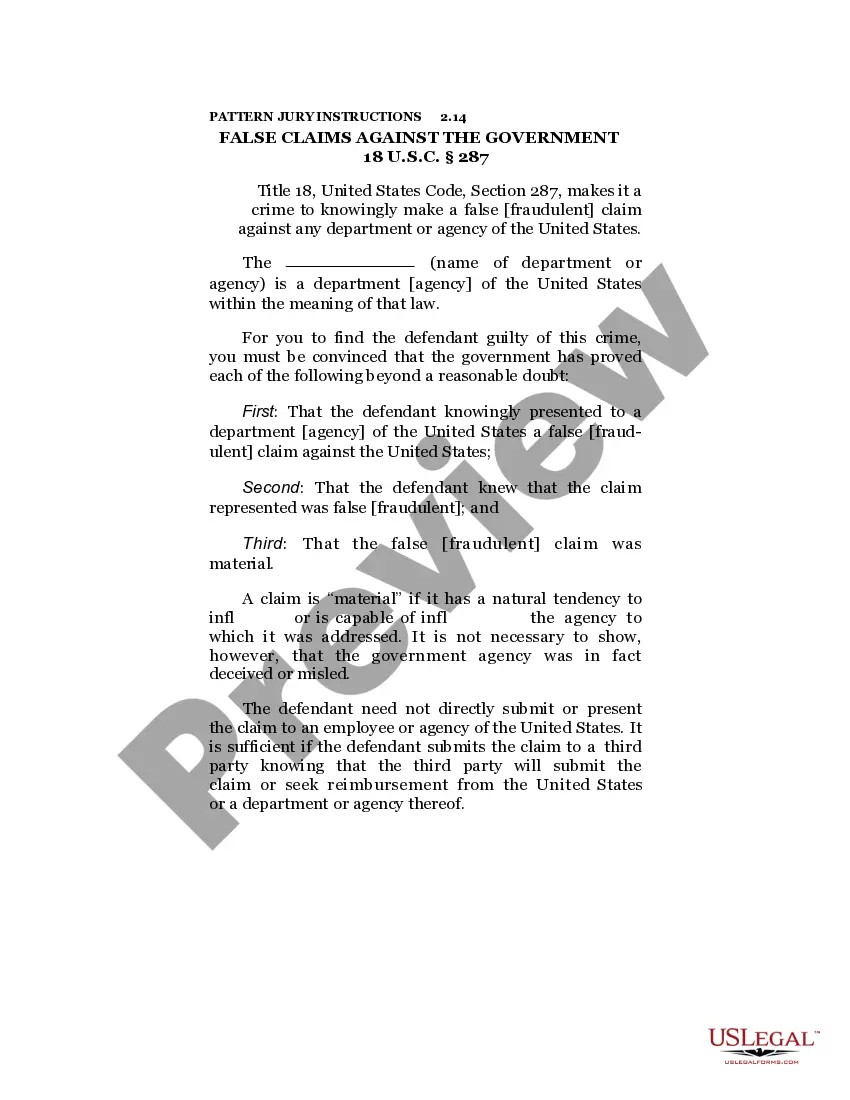
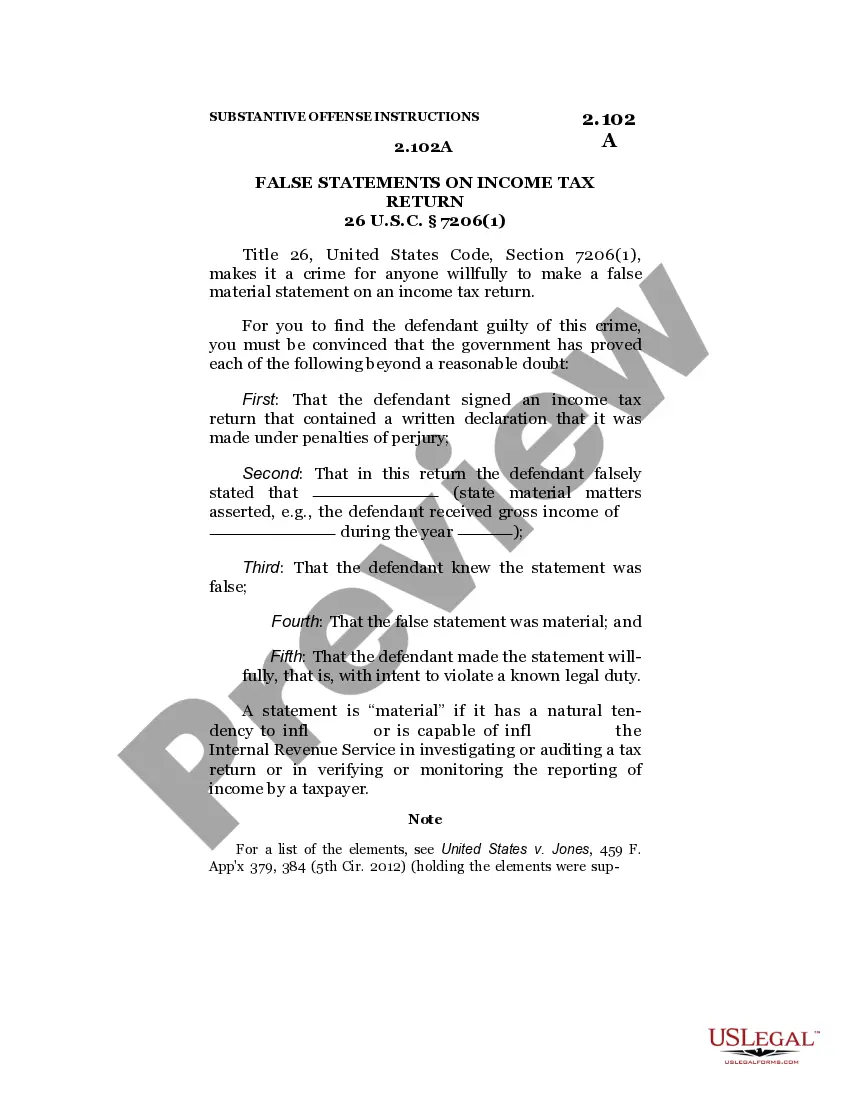
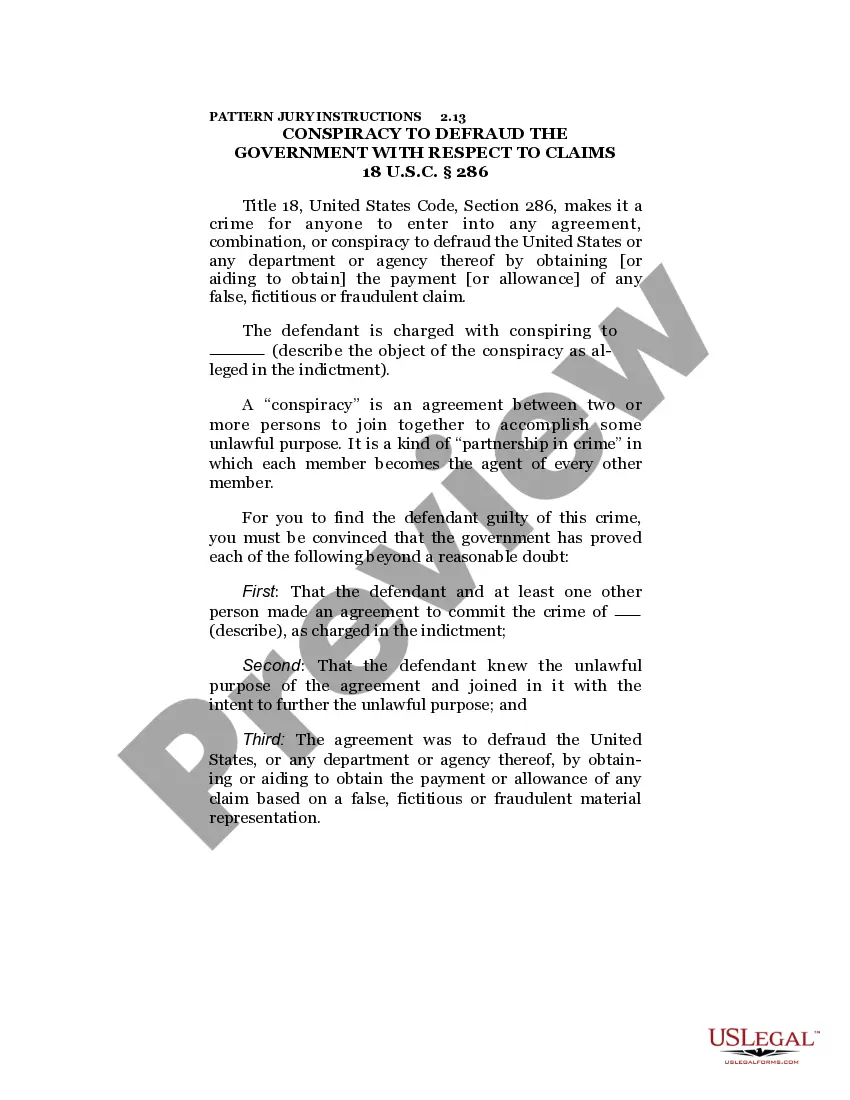
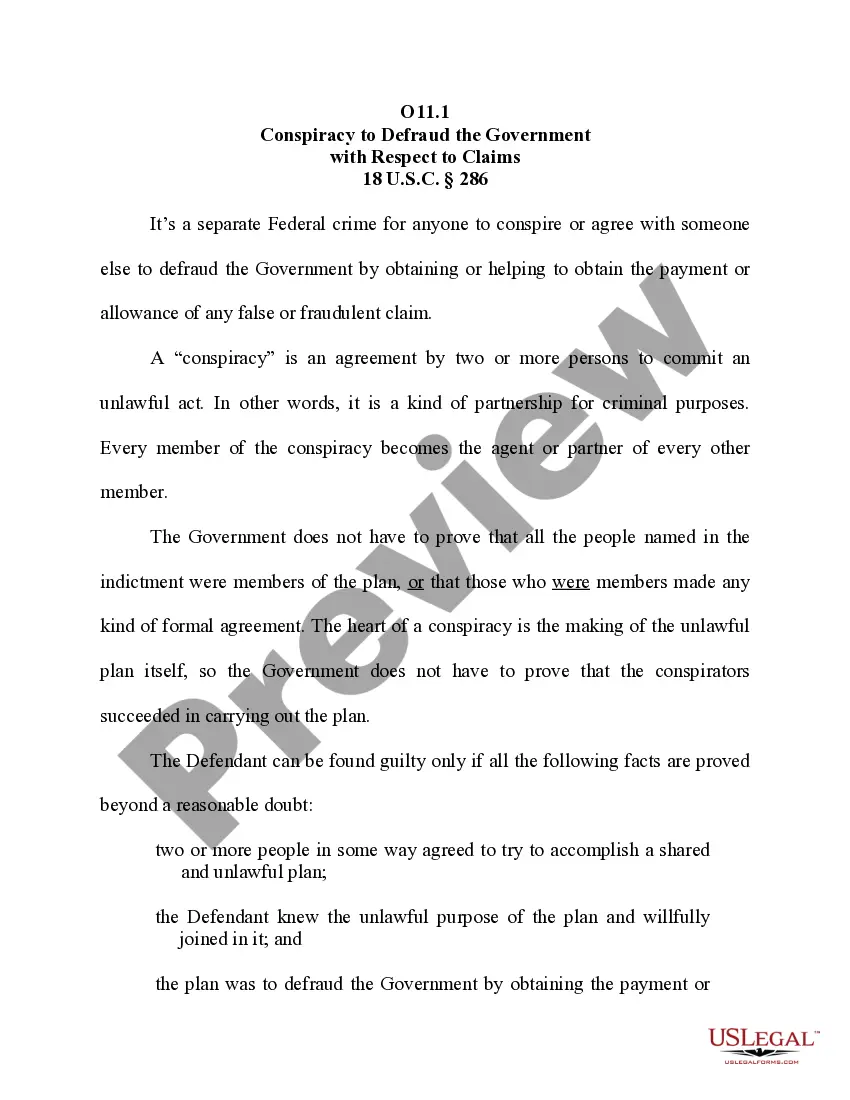
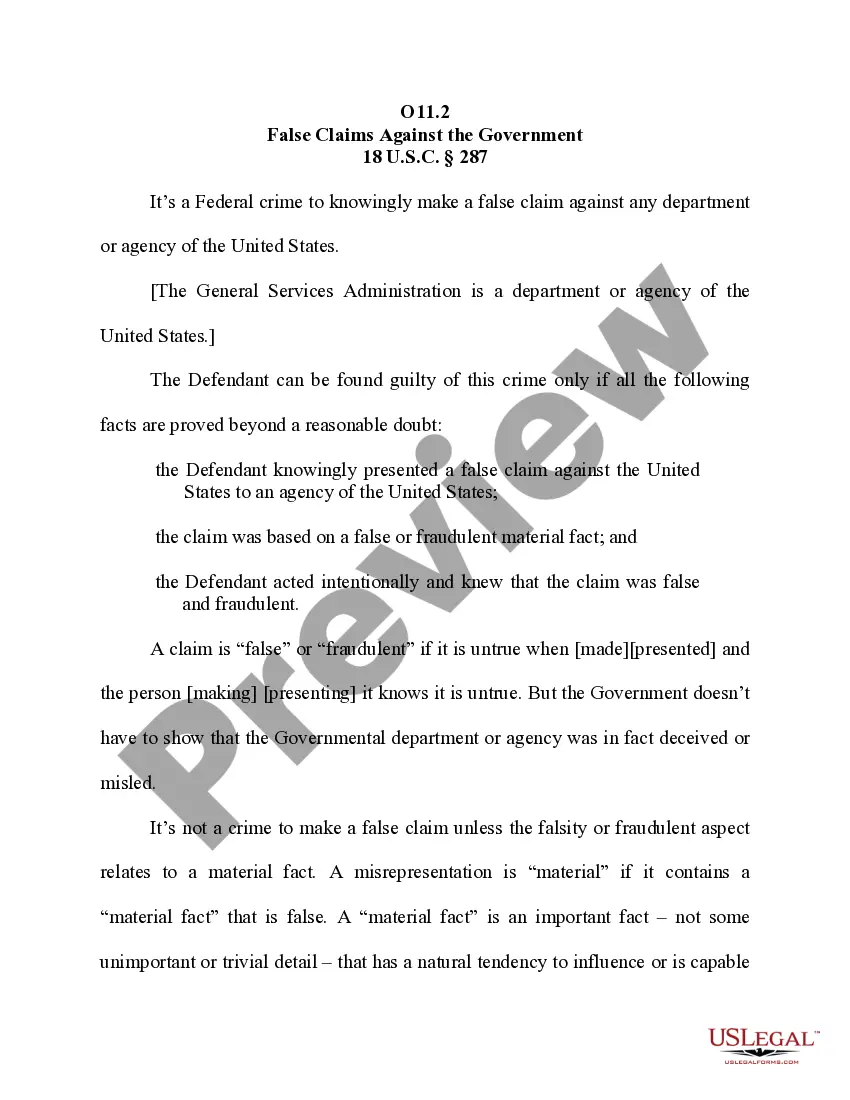
The False Claims Against the Government form is a legal document used to report fraudulent claims made against U.S. government agencies. Under Title 18, United States Code, Section 287, it is a criminal offense to knowingly present false claims to the government. This form is essential for individuals or entities that suspect fraudulent activity affecting federal funds and wish to report it securely and officially.
Form components explained
- Identification of the accused party or defendant.
- Description of the false claim and the agency involved.
- Affirmation of the materiality and knowledge of false representation.
- Details on the action taken regarding the fraudulent claim submitted.
When to use this document
This form should be used when an individual or organization has evidence of a false or fraudulent claim submitted to a federal agency. Common situations include reporting suspected fraud in government contracts, grant applications, or claims for reimbursement from government programs. It is a crucial step in ensuring accountability and transparency in the use of government funds.
Who should use this form
- Whistleblowers aware of false claims against the government.
- Individuals or organizations engaged in government contracting.
- Employees of government agencies who observe fraudulent practices.
- Legal representatives acting on behalf of affected parties.
Completing this form step by step
- Identify all parties involved, including the claimant and the agency.
- Clearly describe the fraudulent claim, including how it was made and the amount involved.
- State your knowledge of the representation's falsity and its significance to the agency's decisions.
- Complete any required signature fields to validate the claim.
Does this document require notarization?
This form does not typically require notarization unless specified by local law. It is advisable to check for any additional requirements in your jurisdiction to ensure compliance.
Get your form ready online
Our built-in tools help you complete, sign, share, and store your documents in one place.
Make edits, fill in missing information, and update formatting in US Legal Forms—just like you would in MS Word.
Download a copy, print it, send it by email, or mail it via USPS—whatever works best for your next step.
Sign and collect signatures with our SignNow integration. Send to multiple recipients, set reminders, and more. Go Premium to unlock E-Sign.
If this form requires notarization, complete it online through a secure video call—no need to meet a notary in person or wait for an appointment.
We protect your documents and personal data by following strict security and privacy standards.

Make edits, fill in missing information, and update formatting in US Legal Forms—just like you would in MS Word.

Download a copy, print it, send it by email, or mail it via USPS—whatever works best for your next step.

Sign and collect signatures with our SignNow integration. Send to multiple recipients, set reminders, and more. Go Premium to unlock E-Sign.

If this form requires notarization, complete it online through a secure video call—no need to meet a notary in person or wait for an appointment.

We protect your documents and personal data by following strict security and privacy standards.
Common mistakes
- Failing to provide detailed evidence of the false claim.
- Not including all relevant parties involved in the fraudulent activity.
- Missing signatures or necessary affirmations on the form.
- Assuming state-specific rules do not apply when reporting to federal agencies.
Why use this form online
- Convenient access to the form anytime, anywhere.
- Ability to download and edit the form as needed before submission.
- Secure platform ensuring the confidentiality of the report submitted.
- Guidance throughout the process to avoid common errors.
Legal use & context
- This form is part of federal law addressing fraudulent claims against government entities.
- Claims must meet specific legal thresholds to be actionable; failure to do so can result in penalties.
- Engaging with this form within a legal framework can help clarify responsibilities and liabilities.
What to keep in mind
- Understand the legal implications of submitting false claims to the government.
- Recognize the significance of materiality and intent in claims against government agencies.
- Seek legal advice when navigating complex issues related to government claims.
Looking for another form?


Form popularity
FAQ
The False Claims Act defines knowledge broadly to include the following: Actual knowledge. Deliberate ignorance of the truth or falsity of the information. Reckless disregard of the truth or falsity of the information.
Fraud against the government, like any fraud, is just theft by another name. The ultimate victim is not the government: it is the hardworking taxpayer. Government funds come from taxpayers, and so theft from the government is theft from taxpayers.
The Federal False Claims Act is the U.S. Government's primary weapon for combatting fraud. It allows whistleblowers to sue persons or entities that are defrauding the government and recover damages and penalties on the government's behalf.
Common Examples of False Claims Billing for goods/services never delivered. Double billing for the same good/service. Failing to report government overpayments. Misrepresenting costs or records related to performance or quality. Billing for non-FDA approved drugs or devices. Performing unnecessary medical procedures.
The whistleblower protection provision of the False Claims Act encourages private citizens to act as whistleblowers when they suspect fraud on the government. The False Claims Act anti-retaliation provision protects both whistleblowing to the government and internal whistleblowing.
The FCA provides that any person who knowingly submits, or causes to submit, false claims to the government is liable for three times the government's damages plus a penalty that is linked to inflation .
31 U.S.C. 3729(b). In sum, the False Claims Act imposes liability on any person who submits a claim to the federal government that he or she knows (or should know) is false. An example may be a physician who submits a bill to Medicare for medical services she knows she has not provided.
The False Claims Act (?FCA?) prohibits individuals and companies from defrauding the federal government. It rewards whistleblowers who provide information about fraud against the government (see False Claim Act Whistleblower Incentives) and protects whistleblowers from retaliation after they report their concerns.