Maryland Gift Deed
Understanding this form
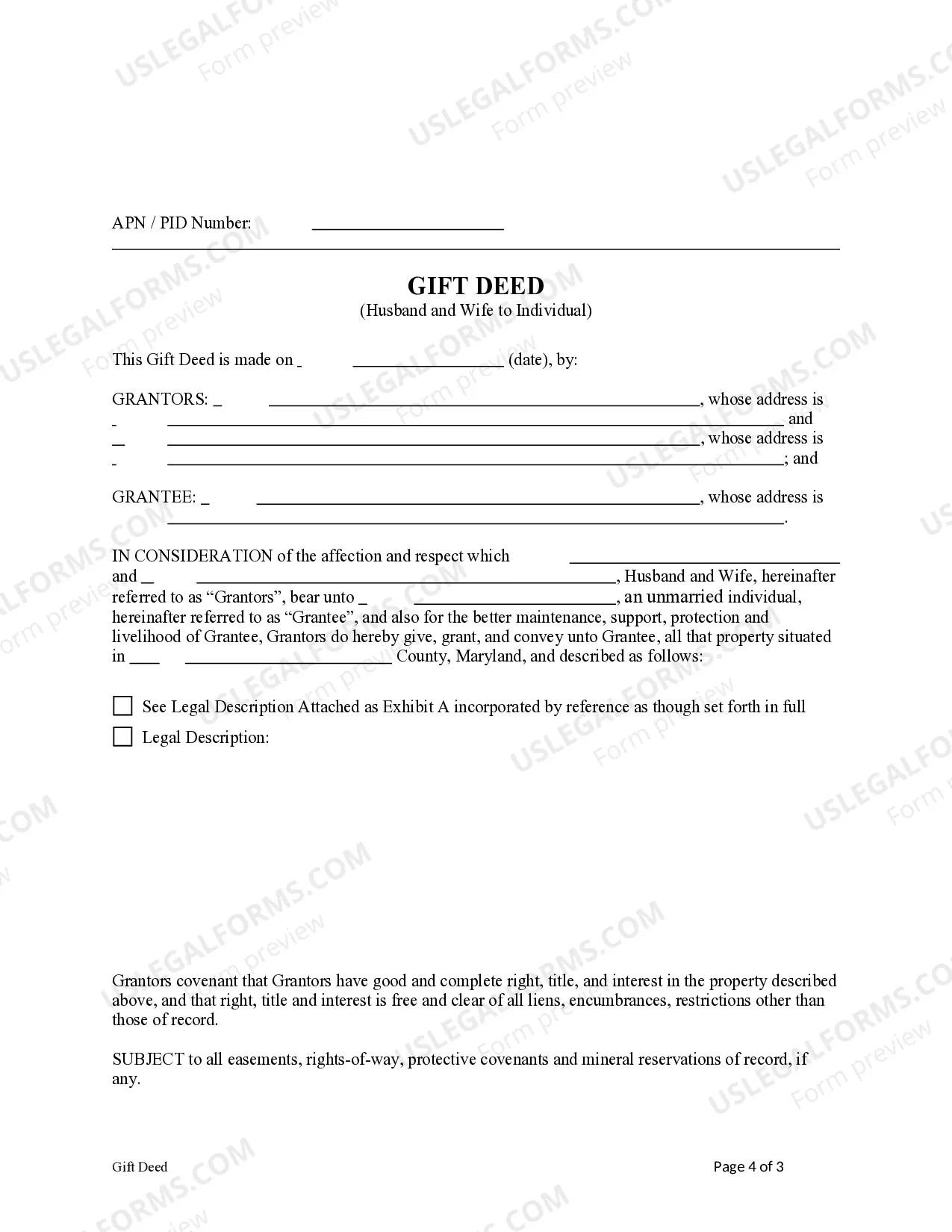
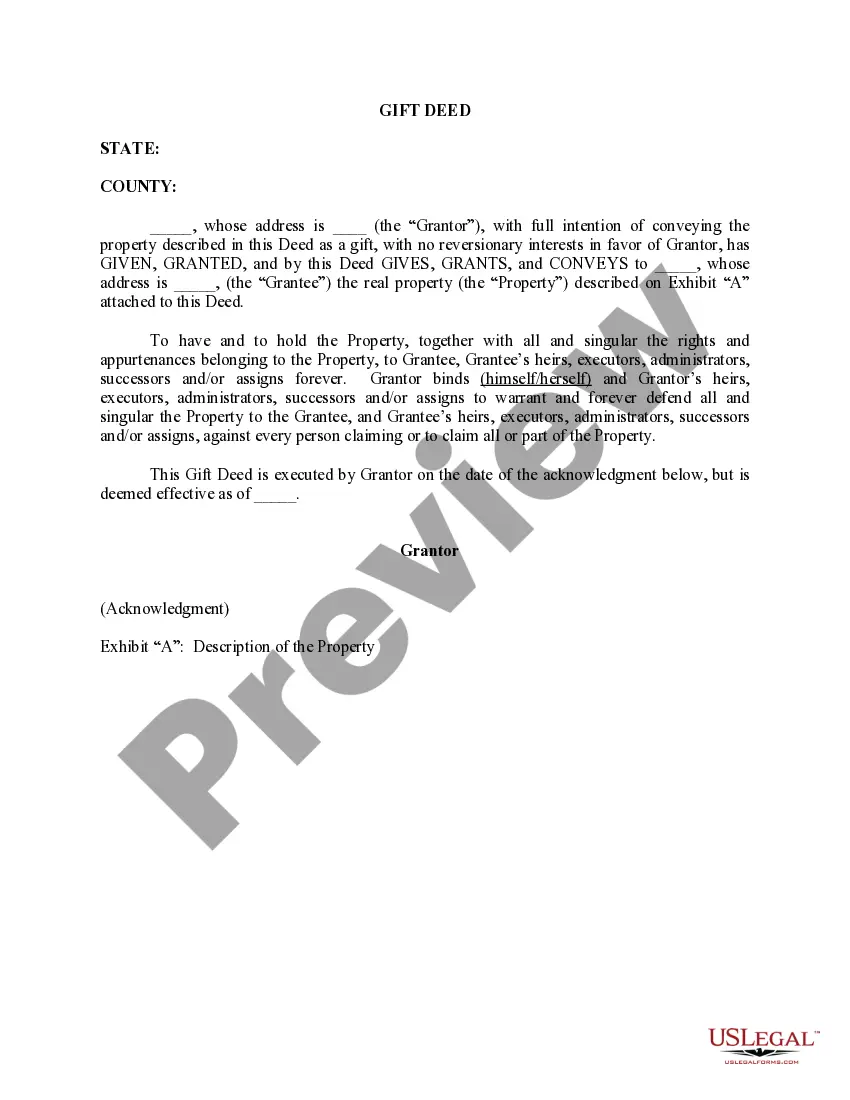
The Maryland Gift Deed is a legal document used to transfer ownership of property as a gift, specifically when the grantors are a husband and wife and the grantee is an individual. This form is designed to adhere to Maryland state statutory laws, differentiating it from other types of deeds by fulfilling specific legal requirements for gift transfers.
Main sections of this form
- Grantor and grantee details: Identify the individuals involved in the transfer.
- Property description: Clearly outline the property being gifted, including its address and boundaries.
- Consideration clause: Specifies that the transfer is a gift and not made in exchange for payment.
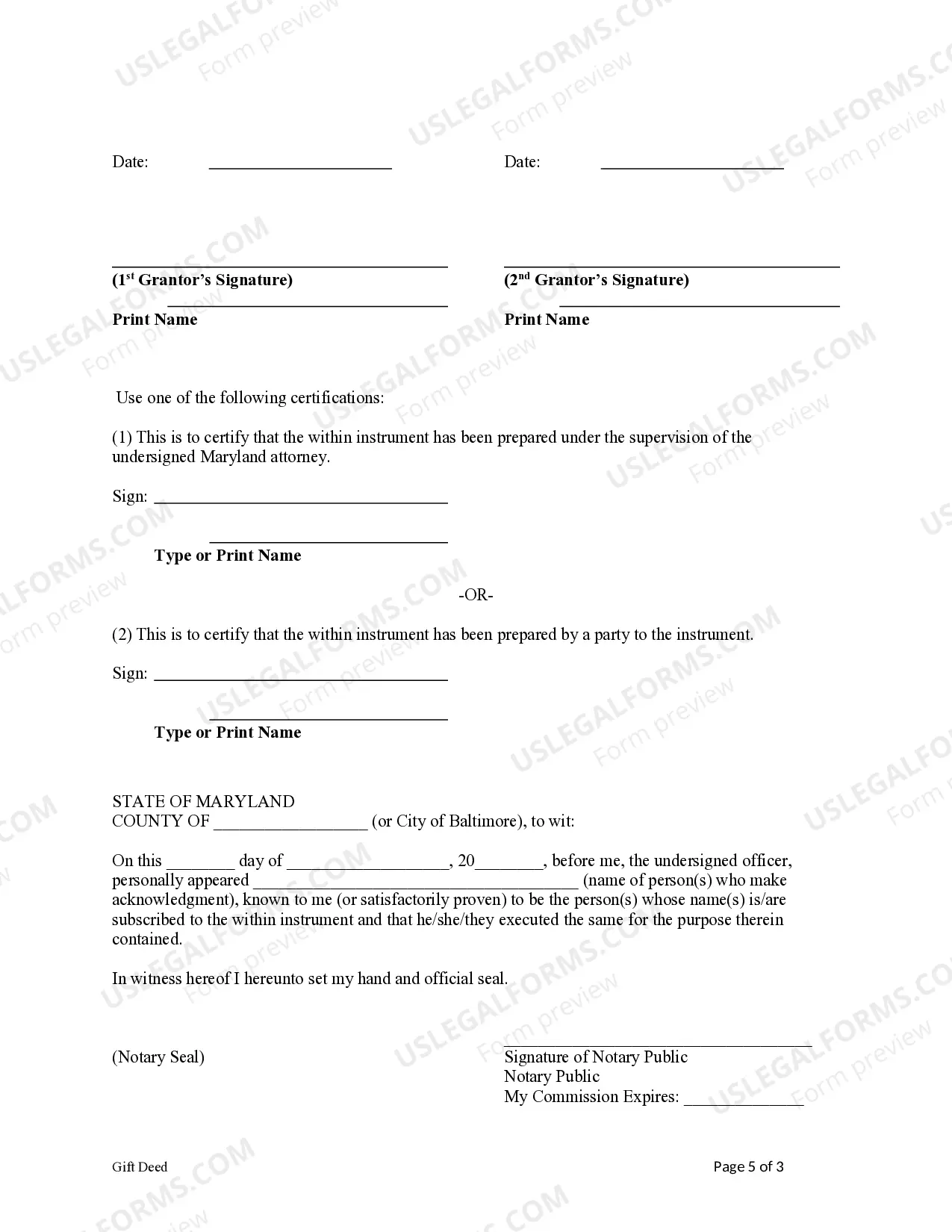
- Execution details: Signatures of the grantors and any required witnesses.
- Compliance statement: Ensures that the deed adheres to Maryland state legal standards.


When to use this document
You should use the Maryland Gift Deed when you want to freely transfer property ownership to another person without any monetary compensation. This form is particularly useful in family situations, such as transferring a home to a child or relative, or when making a charitable donation of real estate. It is important to ensure that the propertyâs current ownership is clearly established among the grantors before proceeding with the gift deed.
Who can use this document
- Married couples looking to give property to an individual.
- Individuals wanting to gift real estate to friends or family.
- Persons seeking to ensure a legal transfer of property without monetary exchange.
- Landowners in Maryland who wish to comply with state laws during the property transfer process.
How to prepare this document
- Identify the parties: Enter the names of the husband and wife as grantors and the individual as the grantee.
- Specify the property: Fill in detailed information about the property being transferred, including its legal description.
- Declare the transfer: Include a statement indicating the transfer is a gift and not made in exchange for payment.
- Sign the document: Have the grantors sign the deed in the designated spaces, usually in the presence of witnesses.
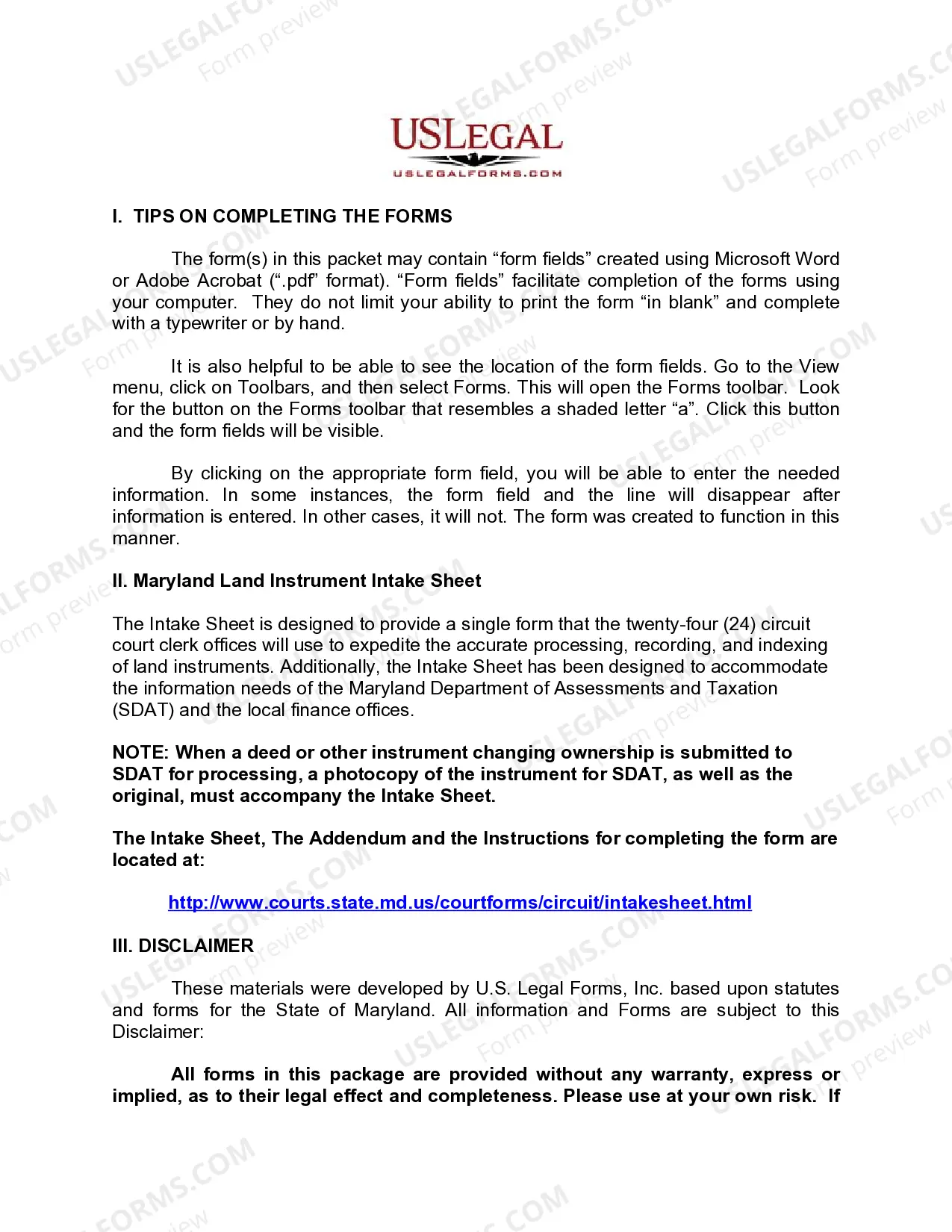
- Submit required forms: Attach the completed Intake Sheet and a photocopy of the deed when filing with the Maryland Department of Assessments and Taxation.
Is notarization required?
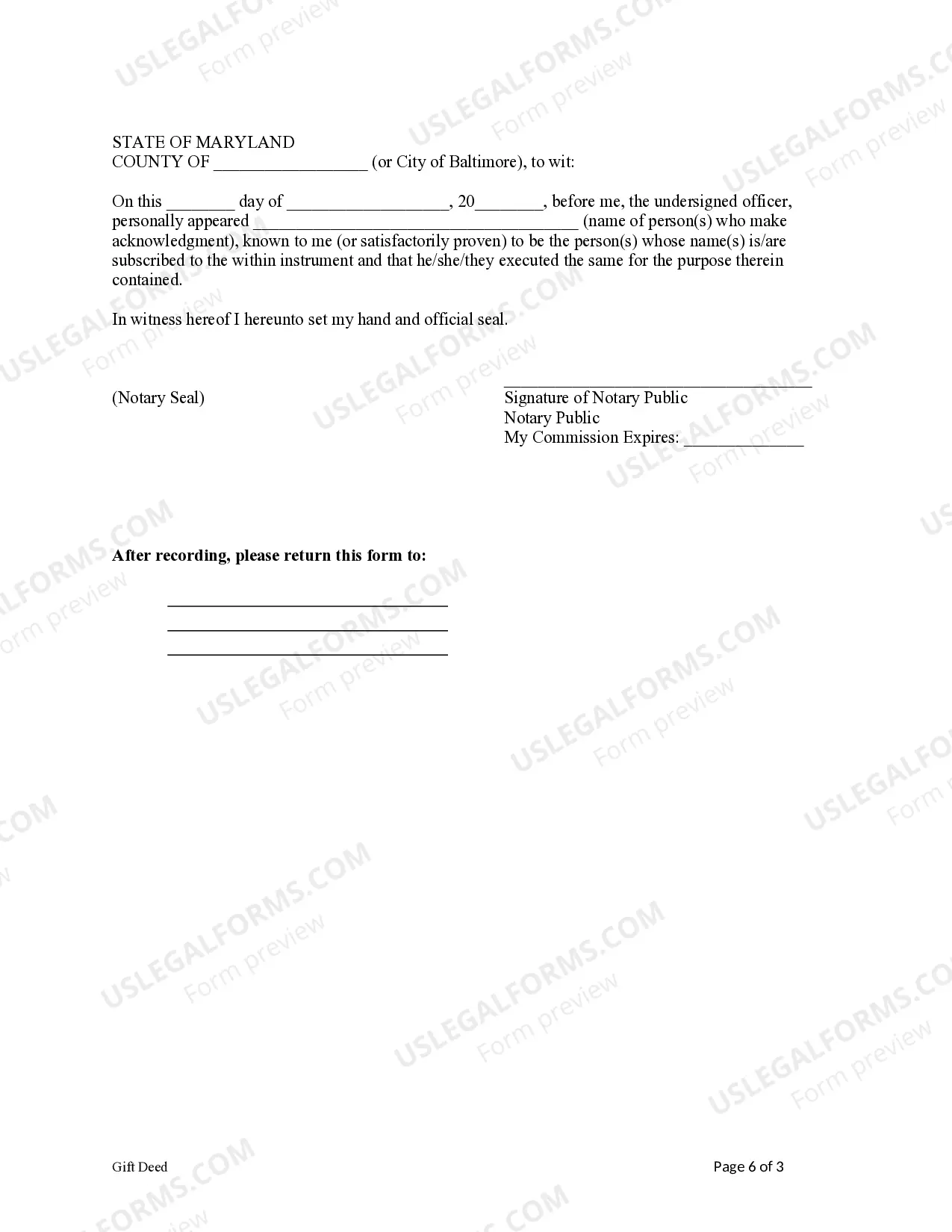
This form does not typically require notarization unless specified by local law, but having it notarized can help verify the identities of the signers and add an extra layer of security to the transaction.
Get your form ready online
Our built-in tools help you complete, sign, share, and store your documents in one place.
Make edits, fill in missing information, and update formatting in US Legal Forms—just like you would in MS Word.
Download a copy, print it, send it by email, or mail it via USPS—whatever works best for your next step.
Sign and collect signatures with our SignNow integration. Send to multiple recipients, set reminders, and more. Go Premium to unlock E-Sign.
If this form requires notarization, complete it online through a secure video call—no need to meet a notary in person or wait for an appointment.
We protect your documents and personal data by following strict security and privacy standards.

Make edits, fill in missing information, and update formatting in US Legal Forms—just like you would in MS Word.

Download a copy, print it, send it by email, or mail it via USPS—whatever works best for your next step.

Sign and collect signatures with our SignNow integration. Send to multiple recipients, set reminders, and more. Go Premium to unlock E-Sign.

If this form requires notarization, complete it online through a secure video call—no need to meet a notary in person or wait for an appointment.

We protect your documents and personal data by following strict security and privacy standards.
Avoid these common issues
- Failing to provide a complete property description.
- Omitting necessary signatures or witnesses.
- Not adhering to the format required by Maryland law.
- Neglecting to submit the Intake Sheet and necessary photocopies with the deed.
Benefits of using this form online
- Convenience: Easily download and complete the form at your own pace.
- Editability: Use digital tools to fill in the form, which ensures clarity and accuracy.
- Time-saving: Instant access to legal documents without the need for an in-person appointment.
- Guidance: Forms are prepared with attention to legal standards, reducing errors.
Looking for another form?



Form popularity
FAQ
Once a Maryland Gift Deed is properly executed and accepted, it generally cannot be revoked at will. This means that the transfer of property is final and binds both parties. However, there are some exceptions where a gift deed can be contested in court. It is important to understand the limitations and ensure that your intentions are clearly stated in the deed.
Maryland law allows vehicles to be gifted to family members without paying tax. However, you need to fill out the two sections on the back labeled Application for Title and Registration and Assignment of Ownership; the giver signs as seller, and the receiver as the buyer.
Maryland law allows vehicles to be gifted to family members without paying tax. However, you need to fill out the two sections on the back labeled Application for Title and Registration and Assignment of Ownership; the giver signs as seller, and the receiver as the buyer.
Yes you can. This is called a transfer of equity but you will need the permission of your lender. If you are not married or in a civil partnership you may wish to consider creating a deed of trust and a living together agreement which we can explain to you.
You both should execute the title and list you as the buyer. You will both also have to execute a gift affidavit. You will then need to take the documents to MVA and have the vehicle titled and registered in your name alone.
To transfer a property as a gift, you need to fill in a TR1 form and send it to the Land Registry, along with an AP1 form. If either side is not using a Solicitor or Conveyancer, an ID1 form will also be needed.
In most states you can file a disclaimer or deed of disclaimer that says specifically you were placed in title without your knowledge or consent and disclaim the deed.
Details of the donor and donee (name, date of birth, residence, relationship to each other, father's name, etc.) The amount of money being gifted, Reason for gifting, if any.
During the transfer of ownership process, you won't have to pay any capital gains tax since you're not likely selling the car for a profit at $1. However, your daughter will have to pay whatever rate of sales tax your state charges on used vehicles when she goes to transfer the title.
To change the names on a real estate deed, you will need to file a new deed with the Division of Land Records in the Circuit Court for the county where the property is located. The clerk will record the new deed.