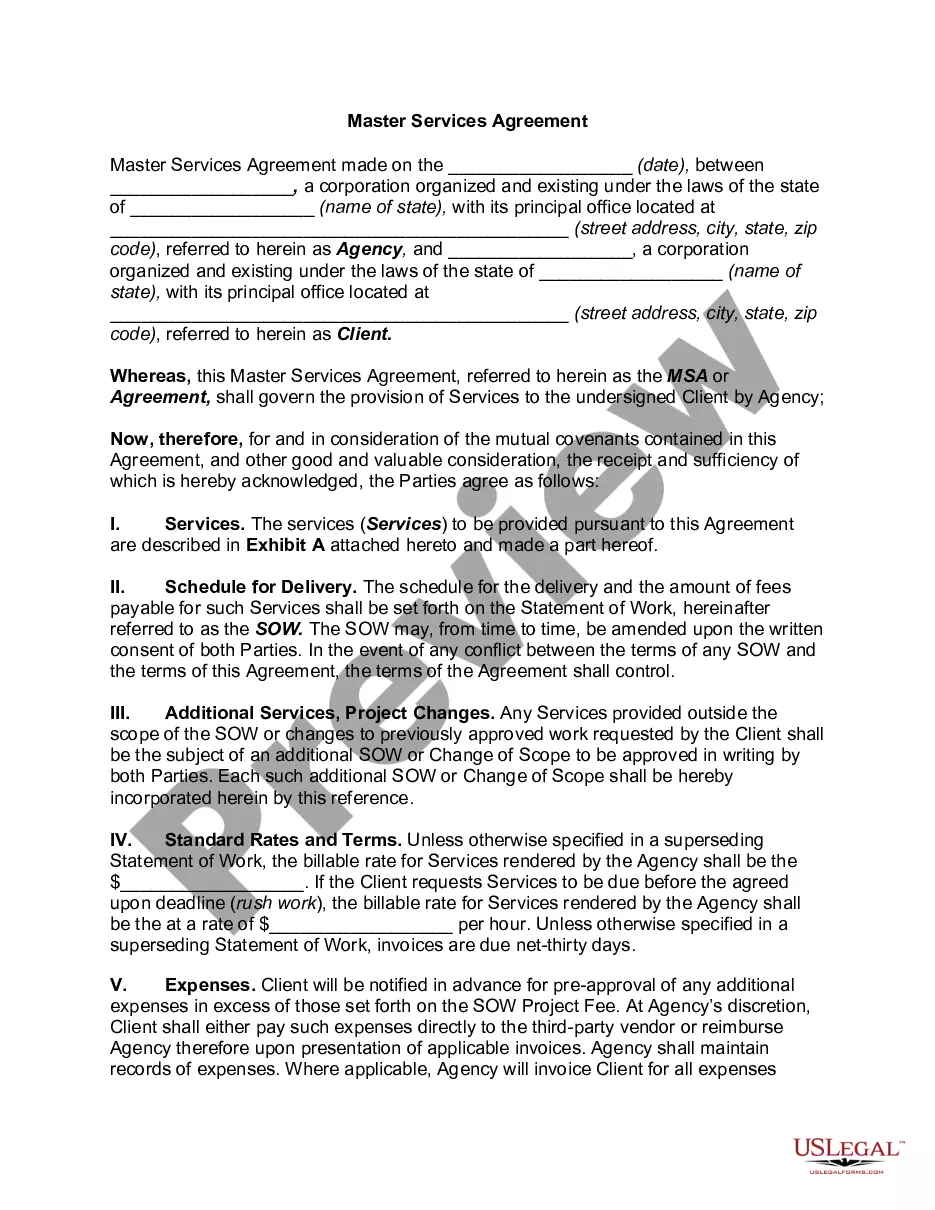
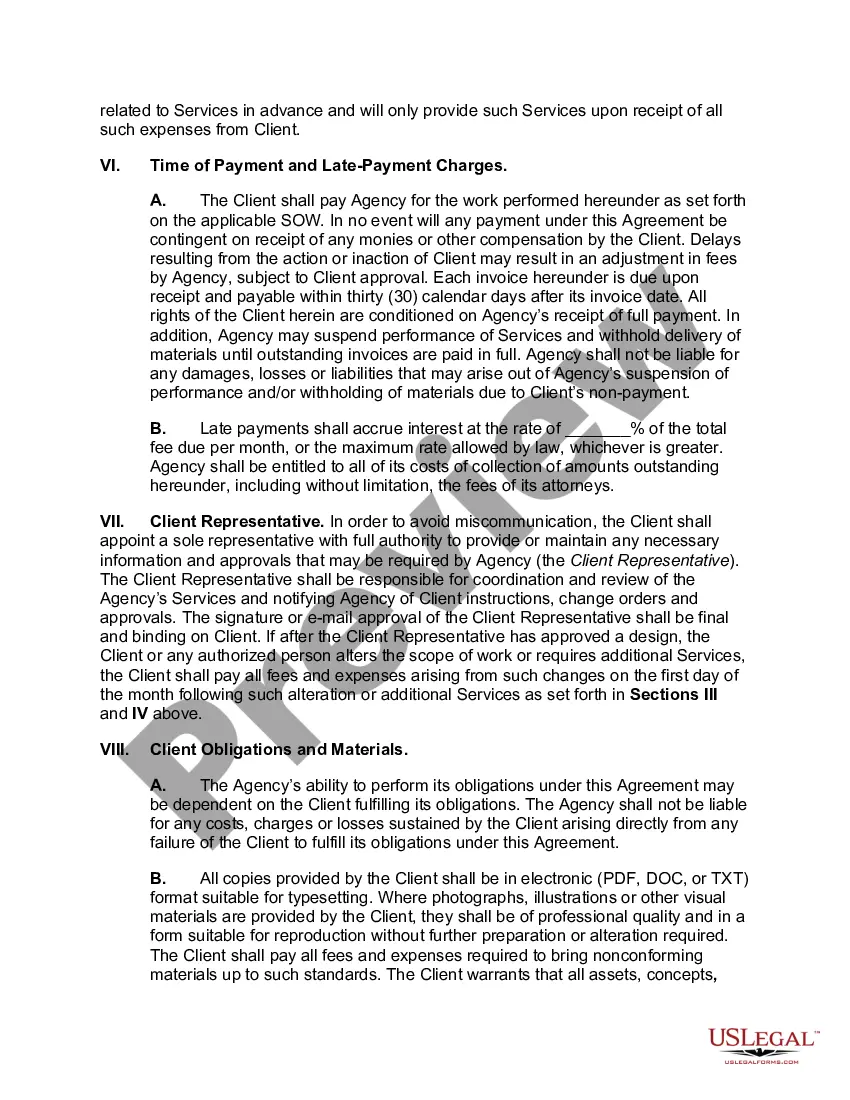
Indiana Master Services Agreement
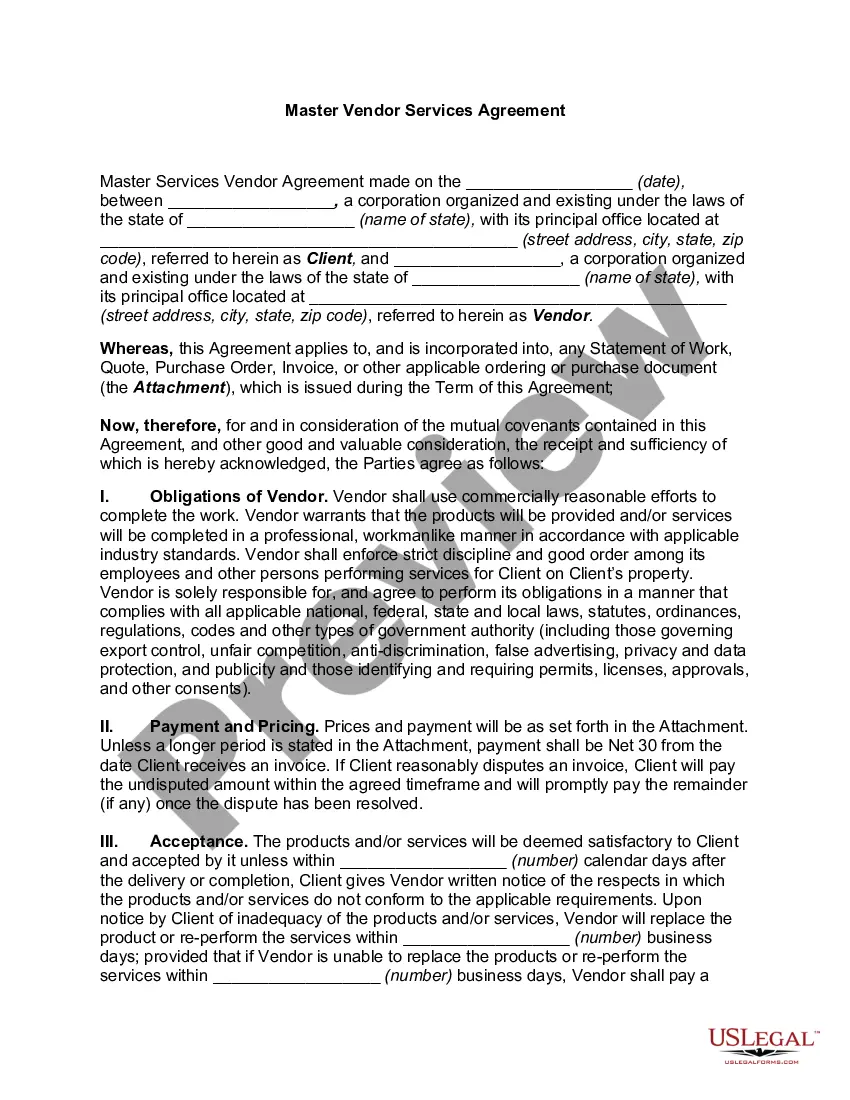
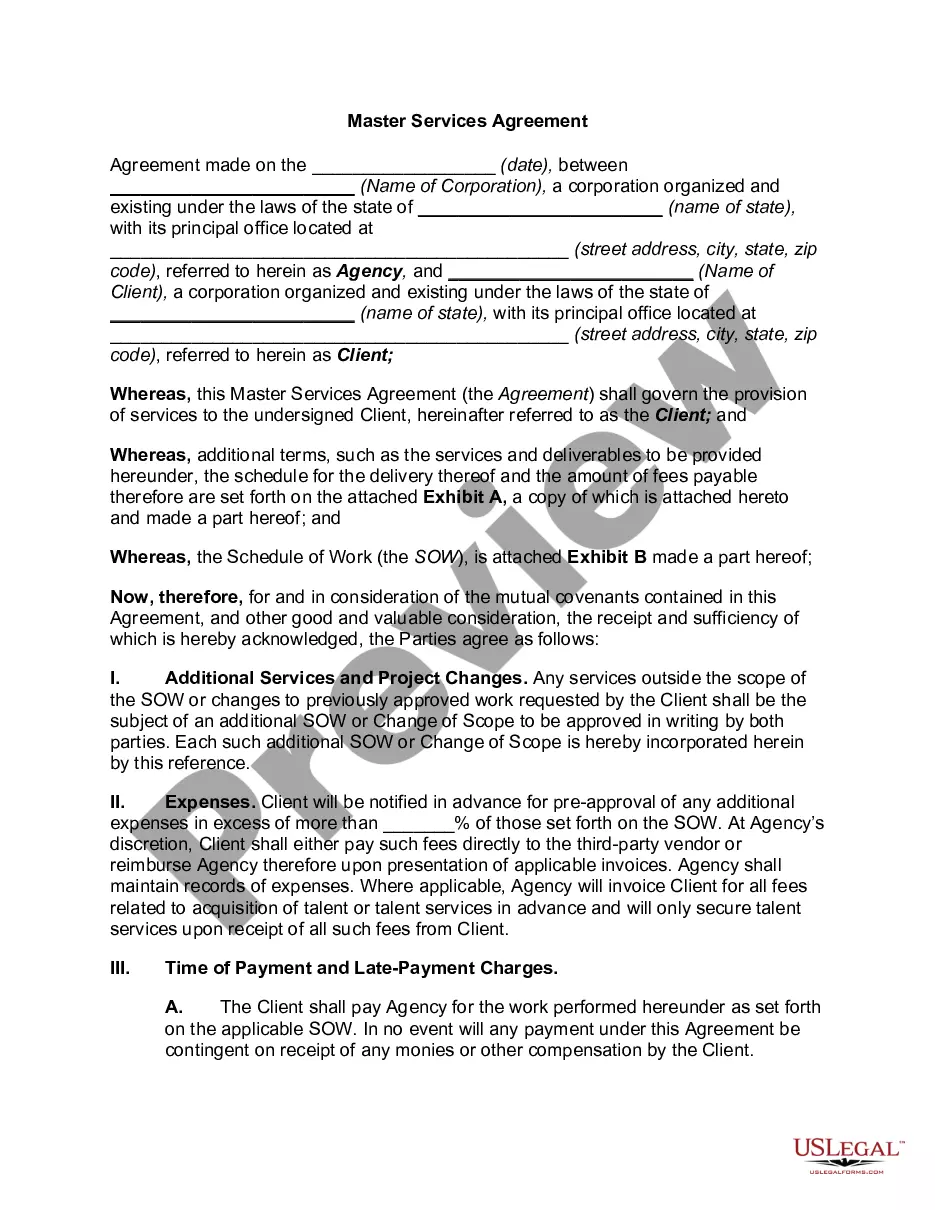
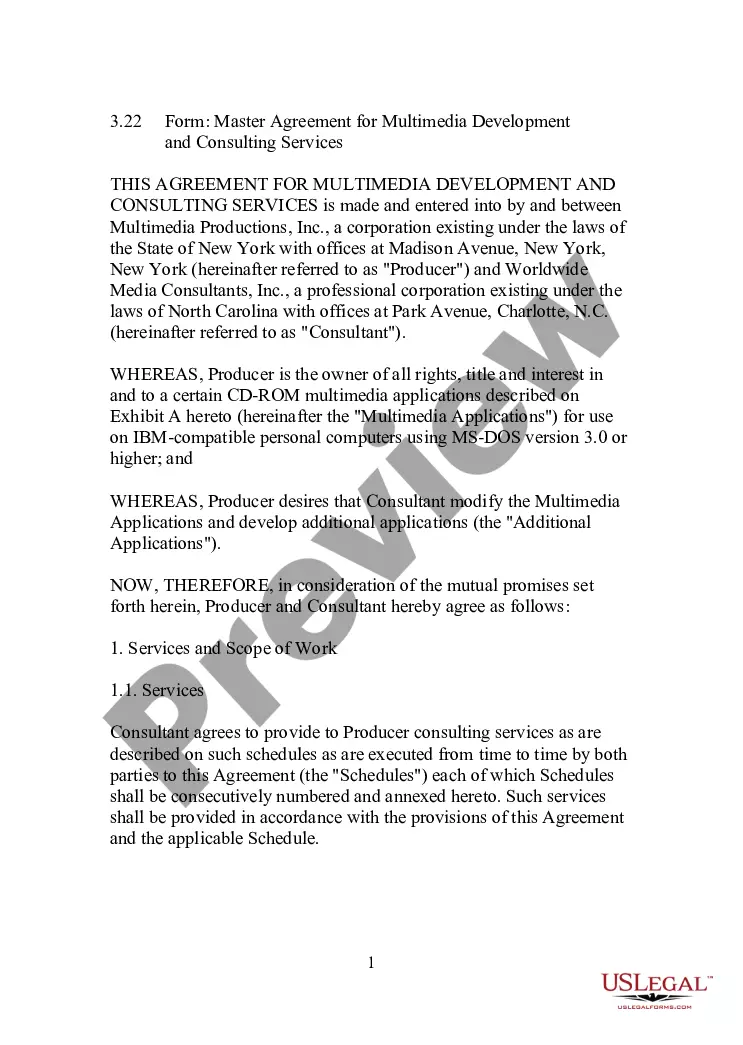
Description
Get your form ready online
Our built-in tools help you complete, sign, share, and store your documents in one place.
Make edits, fill in missing information, and update formatting in US Legal Forms—just like you would in MS Word.
Download a copy, print it, send it by email, or mail it via USPS—whatever works best for your next step.
Sign and collect signatures with our SignNow integration. Send to multiple recipients, set reminders, and more. Go Premium to unlock E-Sign.
If this form requires notarization, complete it online through a secure video call—no need to meet a notary in person or wait for an appointment.
We protect your documents and personal data by following strict security and privacy standards.

Make edits, fill in missing information, and update formatting in US Legal Forms—just like you would in MS Word.

Download a copy, print it, send it by email, or mail it via USPS—whatever works best for your next step.

Sign and collect signatures with our SignNow integration. Send to multiple recipients, set reminders, and more. Go Premium to unlock E-Sign.

If this form requires notarization, complete it online through a secure video call—no need to meet a notary in person or wait for an appointment.

We protect your documents and personal data by following strict security and privacy standards.
Looking for another form?





How to fill out Master Services Agreement?
Have you ever found yourself in a situation where you require documents for either business or personal reasons almost constantly.
There are numerous legal document templates available online, but locating reliable ones can be challenging.
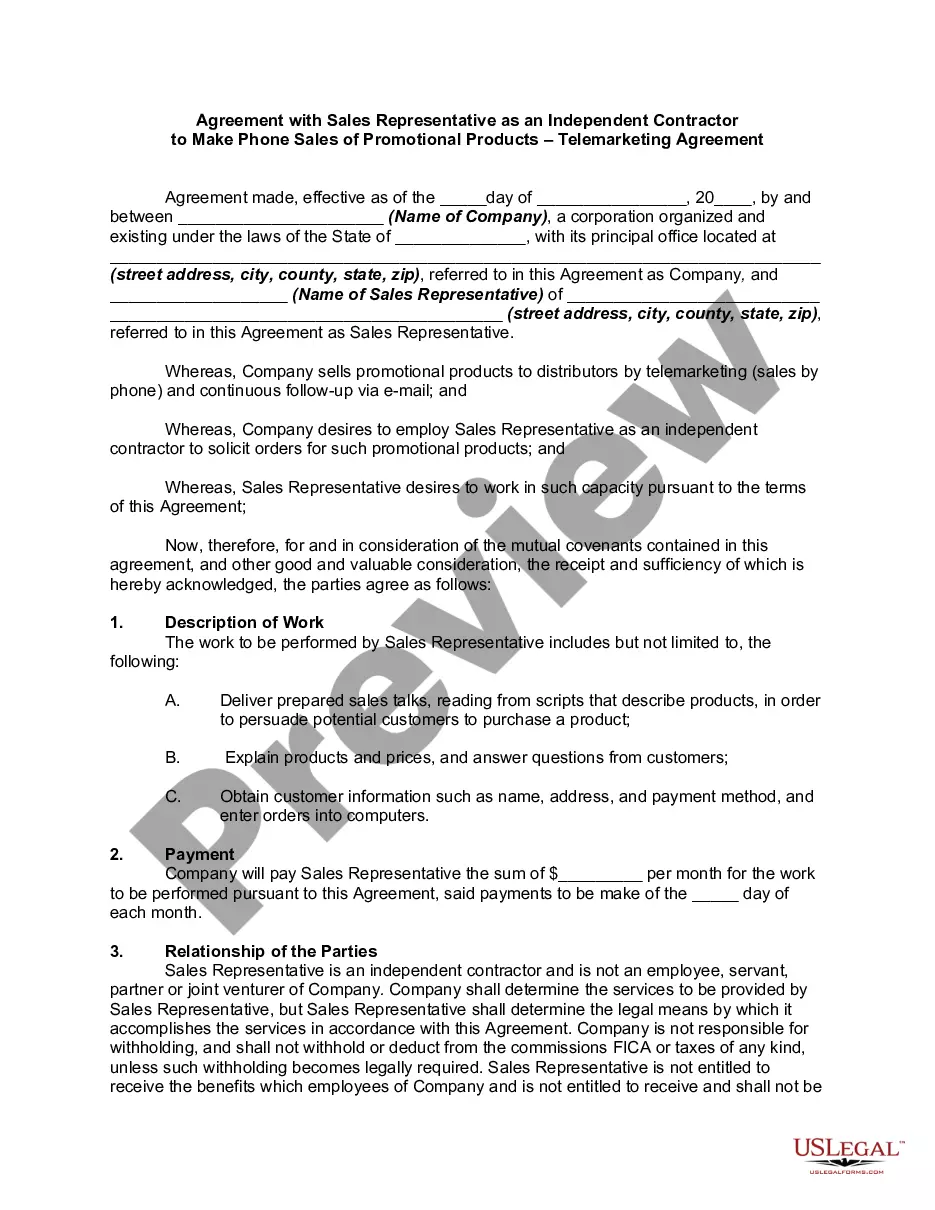
US Legal Forms offers a vast array of form templates, including the Indiana Master Services Agreement, designed to comply with both federal and state regulations.
When you locate the correct form, click on Buy now.
Choose your preferred pricing plan, fill in the necessary information to create your account, and complete the purchase using your PayPal or credit card.
- If you are already familiar with the US Legal Forms website and have an account, simply Log In.
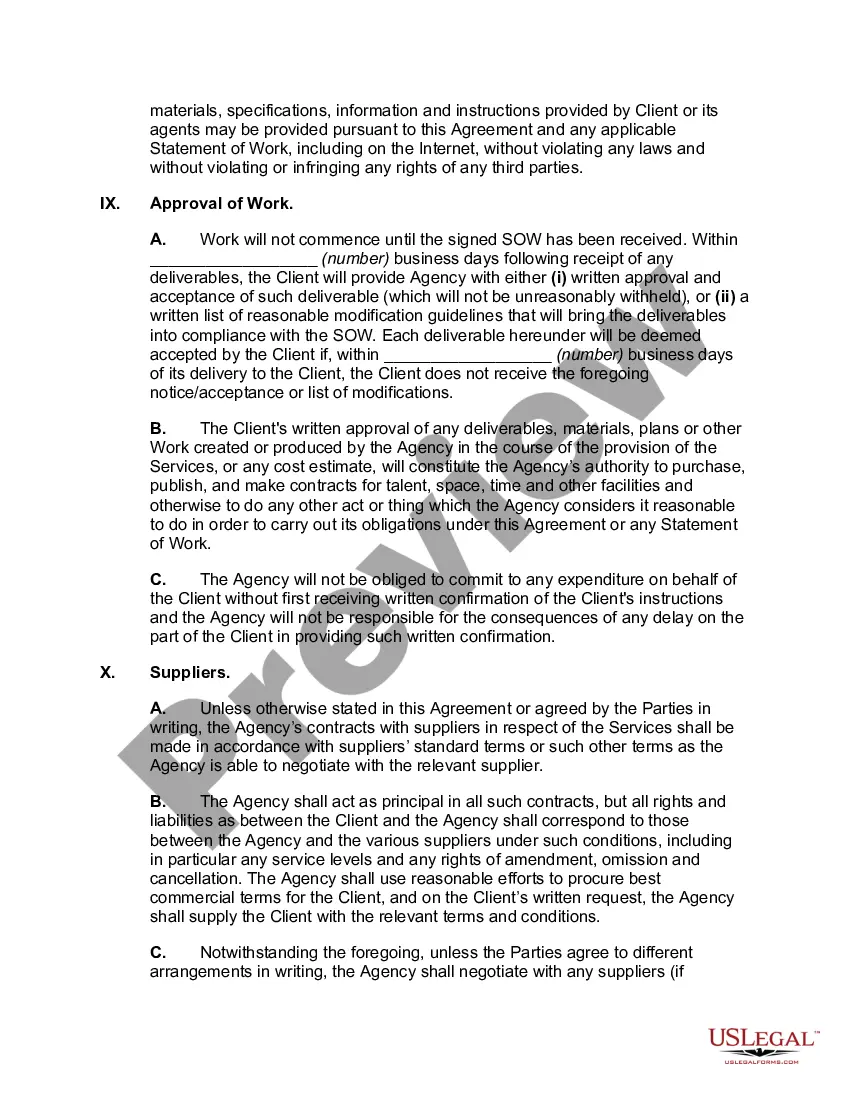
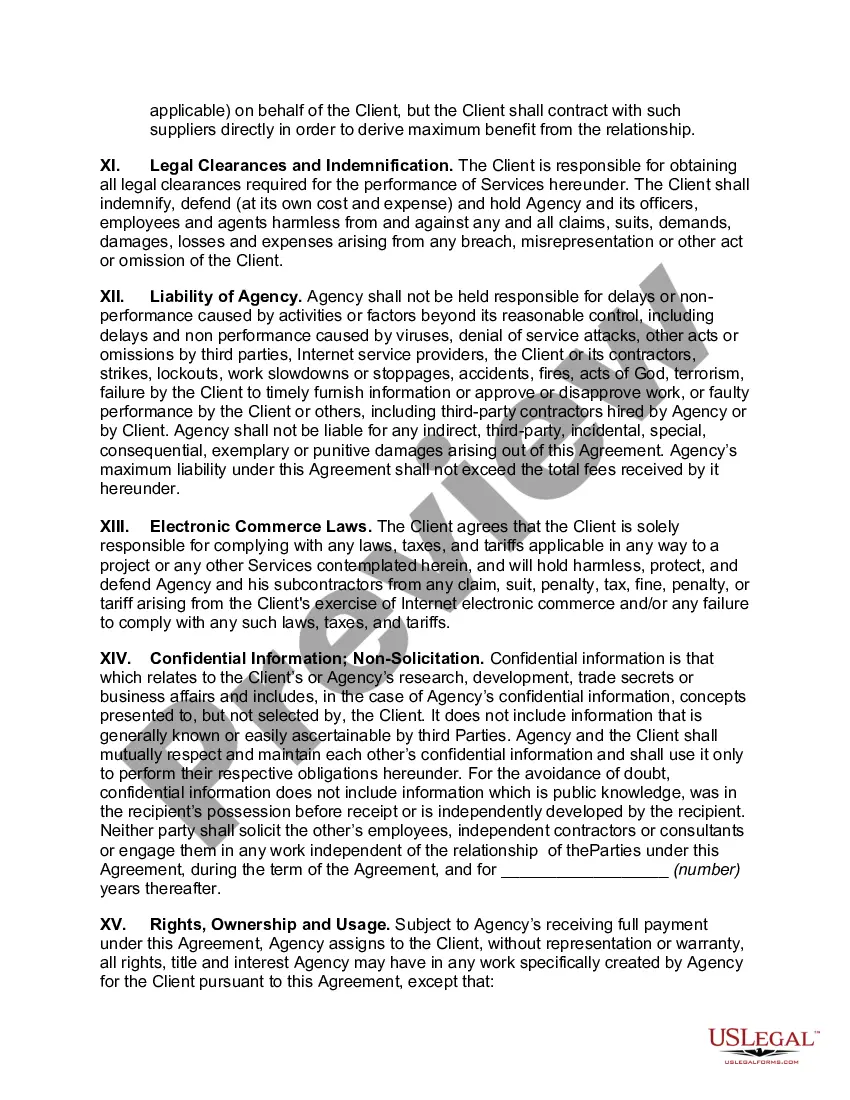
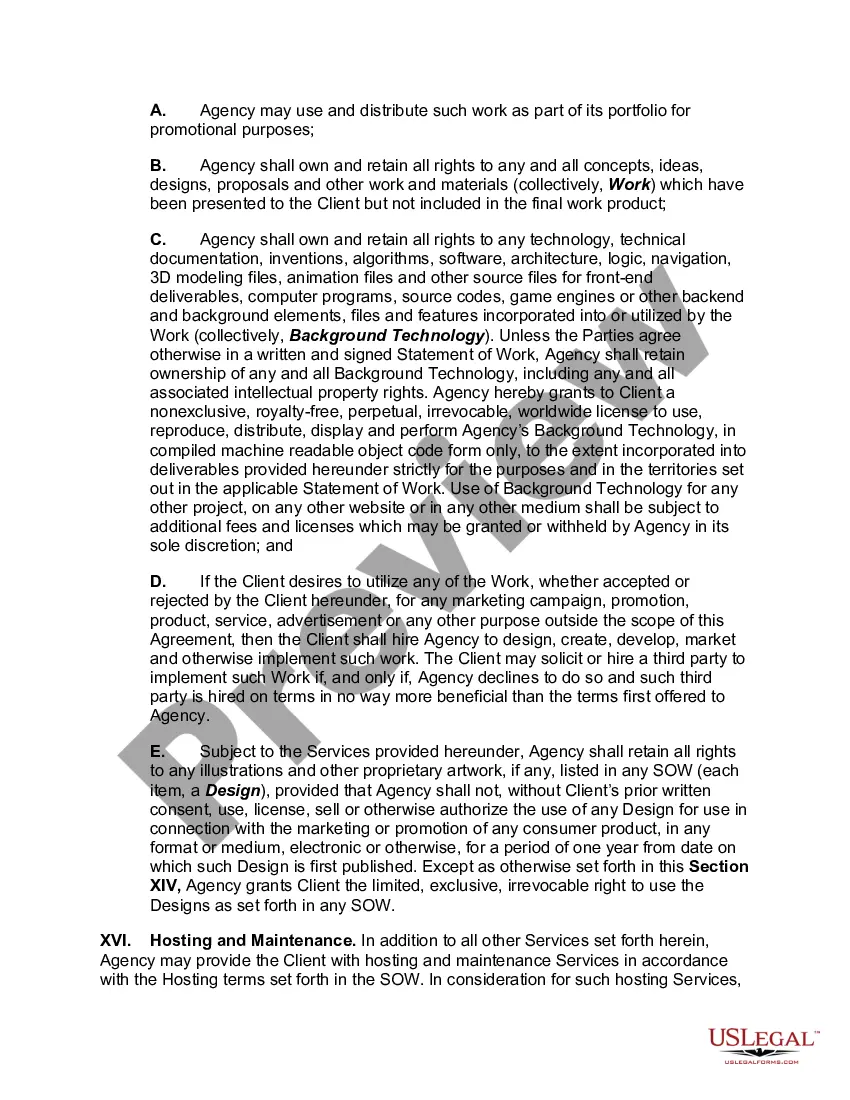
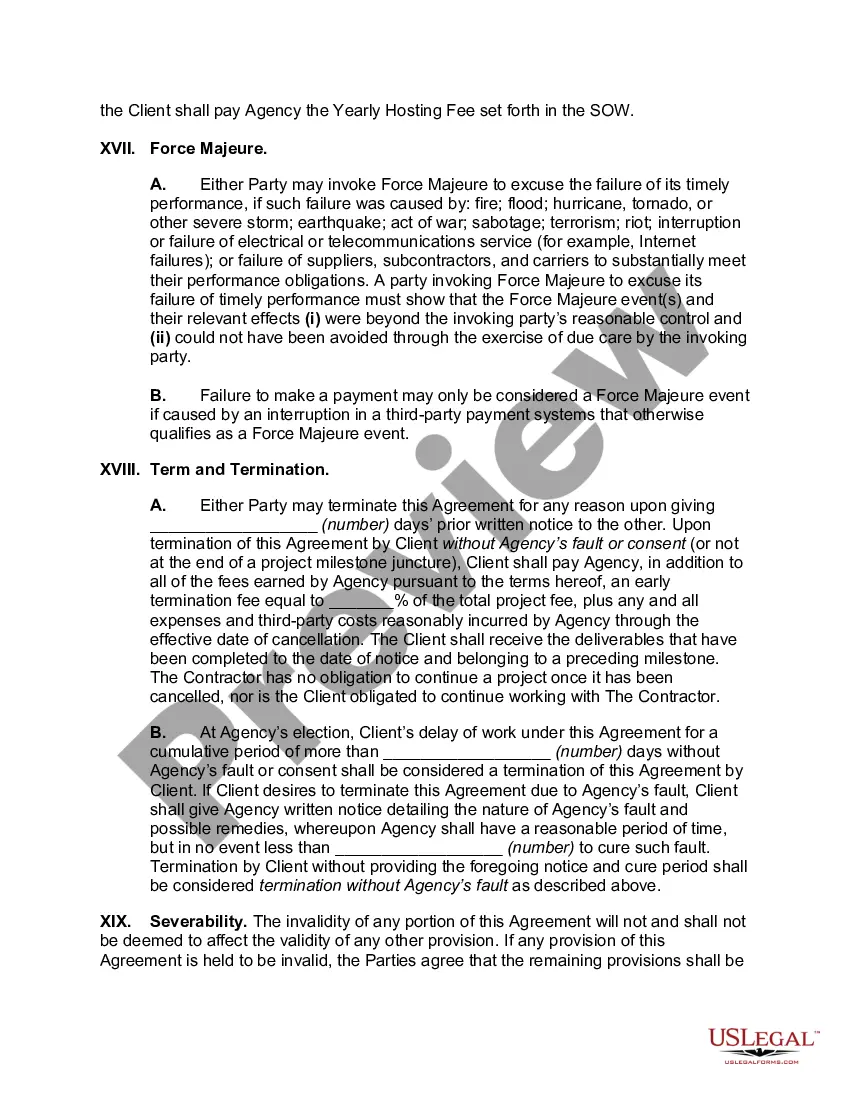
- Once logged in, you can download the Indiana Master Services Agreement template.
- If you do not have an account and wish to start using US Legal Forms, follow these steps.
- Find the form you need and ensure it's for the correct state/county.
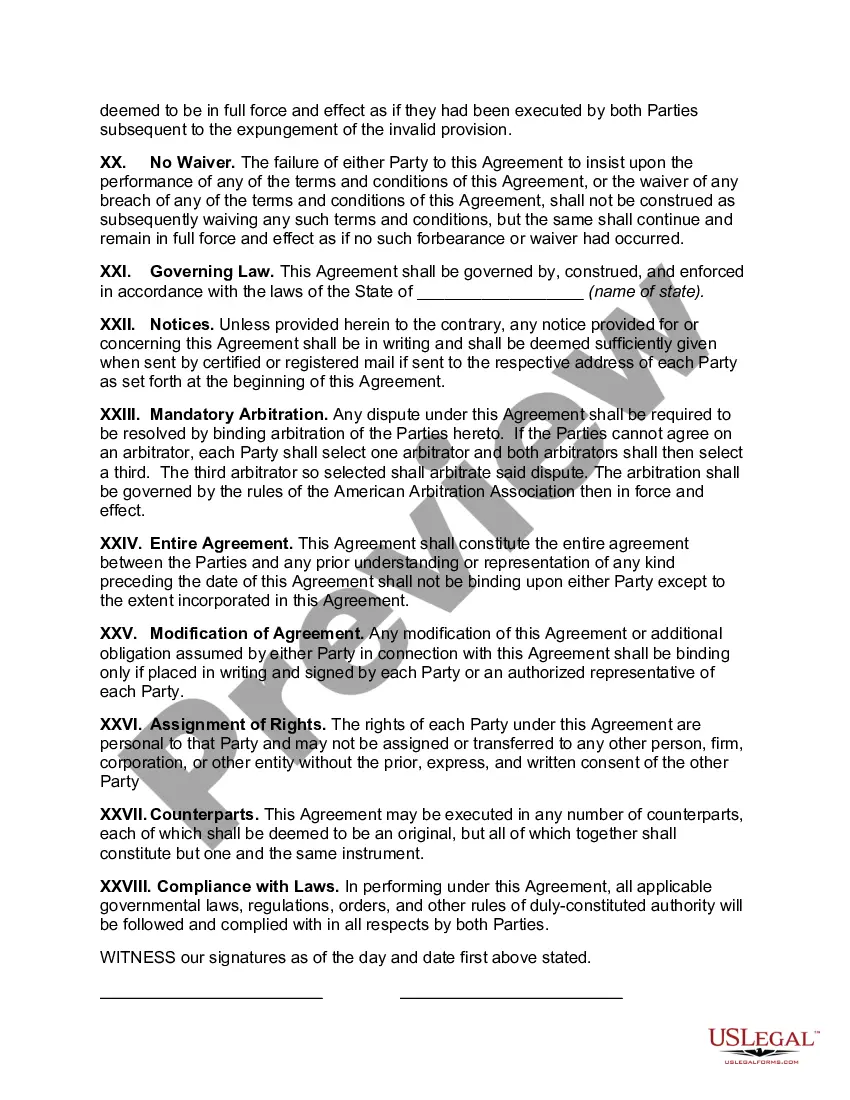
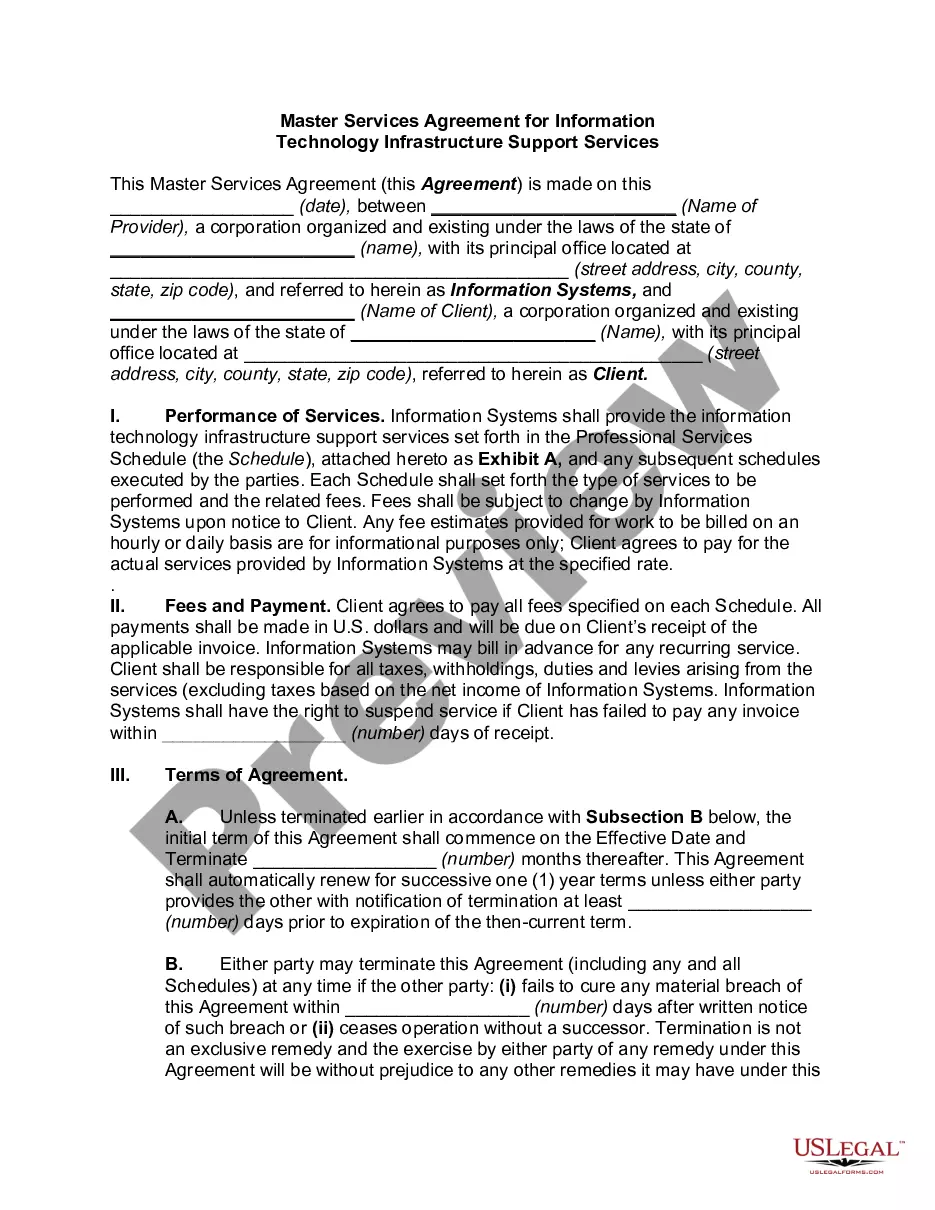
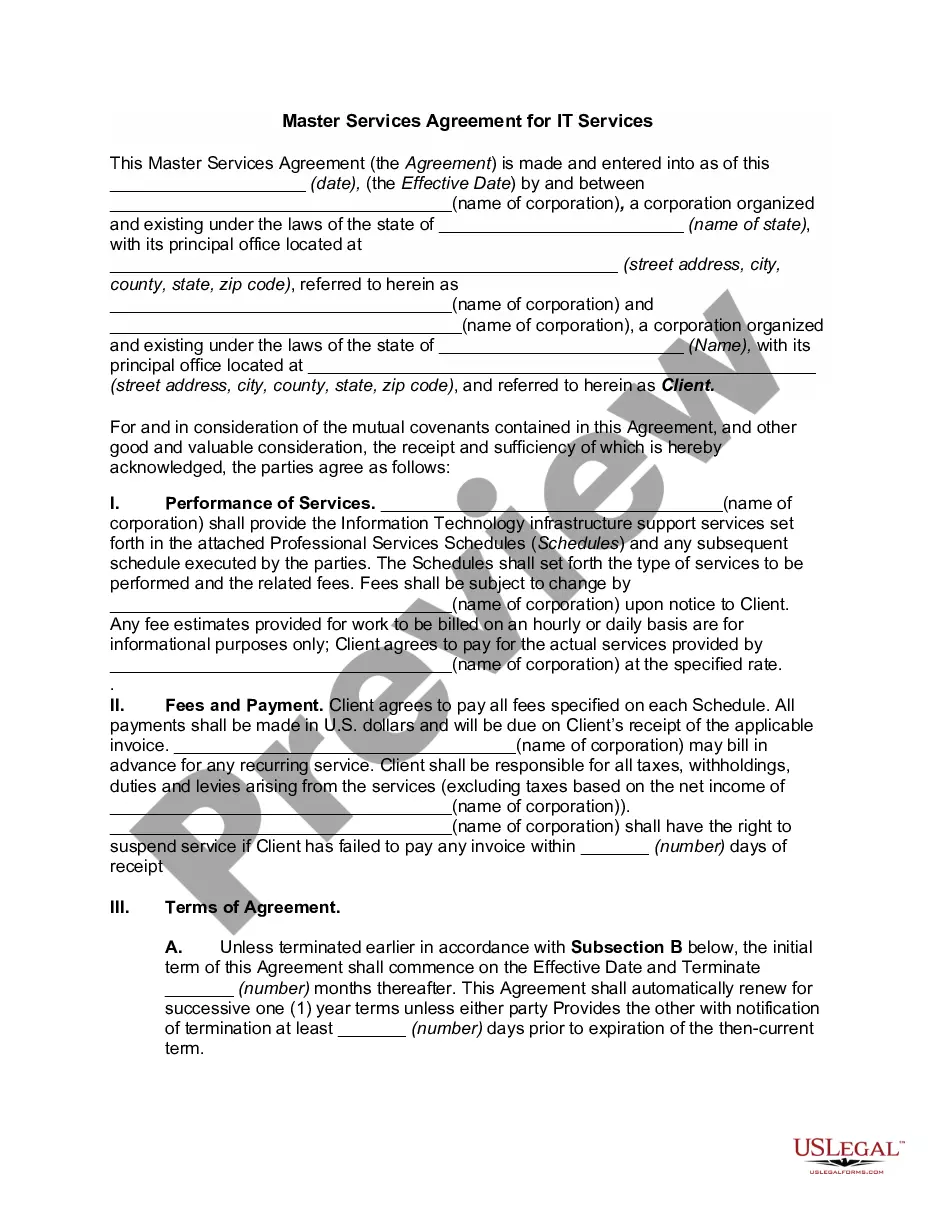
- Use the Preview button to examine the form.
- Review the outline to confirm that you have selected the correct form.
- If the form does not meet your needs, use the Search box to find a form that fits your requirements.
Form popularity
FAQ
The benefits of a Master Service Agreement are, Avoid Contractual Disputes, Reduces the Risk of Litigation, Speeds up the Process of Negotiation, Protects both the Parties, Acts as the Last Resort in the Event of Dispute, Works as a Template for Future Negotiations, Acts a Blueprint, Saves Money and Time.
Two Good Reasons You Need a Master Service AgreementAn MSA allocates risk, and it provides indemnification. Risk Allocation: Master Service Agreements let a business implement a comprehensive risk allocation strategy that takes business realities into consideration.
At its most basic, an MSA is a contract between two or more parties that establishes what terms and conditions will govern all current and future activities and responsibilities. MSAs are useful because they allow the parties to plan for the future while also speeding the ratification of future agreements.
Master Service Agreement (MSA) defines as a contract between IT-vendor and a client that outlines project expectations, responsibilities, roles, provided services, terms, and other essential agreements between parties.
Both MSAs and SOWs are used in service transaction contracts. The major difference between them is that, while an MSA sets the legal framework for the relationship between contracting parties, an SOW deals with specific projects or transactions.
A master service agreement is when two parties agree to a contract that will settle most details and expectations for both parties. It'll state what each group has to do to honor its end of the bargain. It'll also show which services apply in the master service agreement.
Common Terms. Master services agreements usually spell out payment terms, delivery requirements, intellectual property rights, warranties, limitations, dispute resolutions, confidentiality and work standards, according to Klemchuk.
An MSA has several must-have components like definitions, responsibilities, access and usage restrictions, fees, proprietary rights, confidentiality, representations, warranties, disclaimers, indemnification, terms and terminations, and general provisions.
An SOW, however, usually depends on a single MSA. In other words, an SOW is a child document to an MSA. If they conflict, the terms of an MSA will generally supersede that of an SOWunless the parties agree and state otherwise.
At its most basic, an MSA is a contract between two or more parties that establishes what terms and conditions will govern all current and future activities and responsibilities. MSAs are useful because they allow the parties to plan for the future while also speeding the ratification of future agreements.