Indiana Newly Divorced Individuals Package
What this form package covers
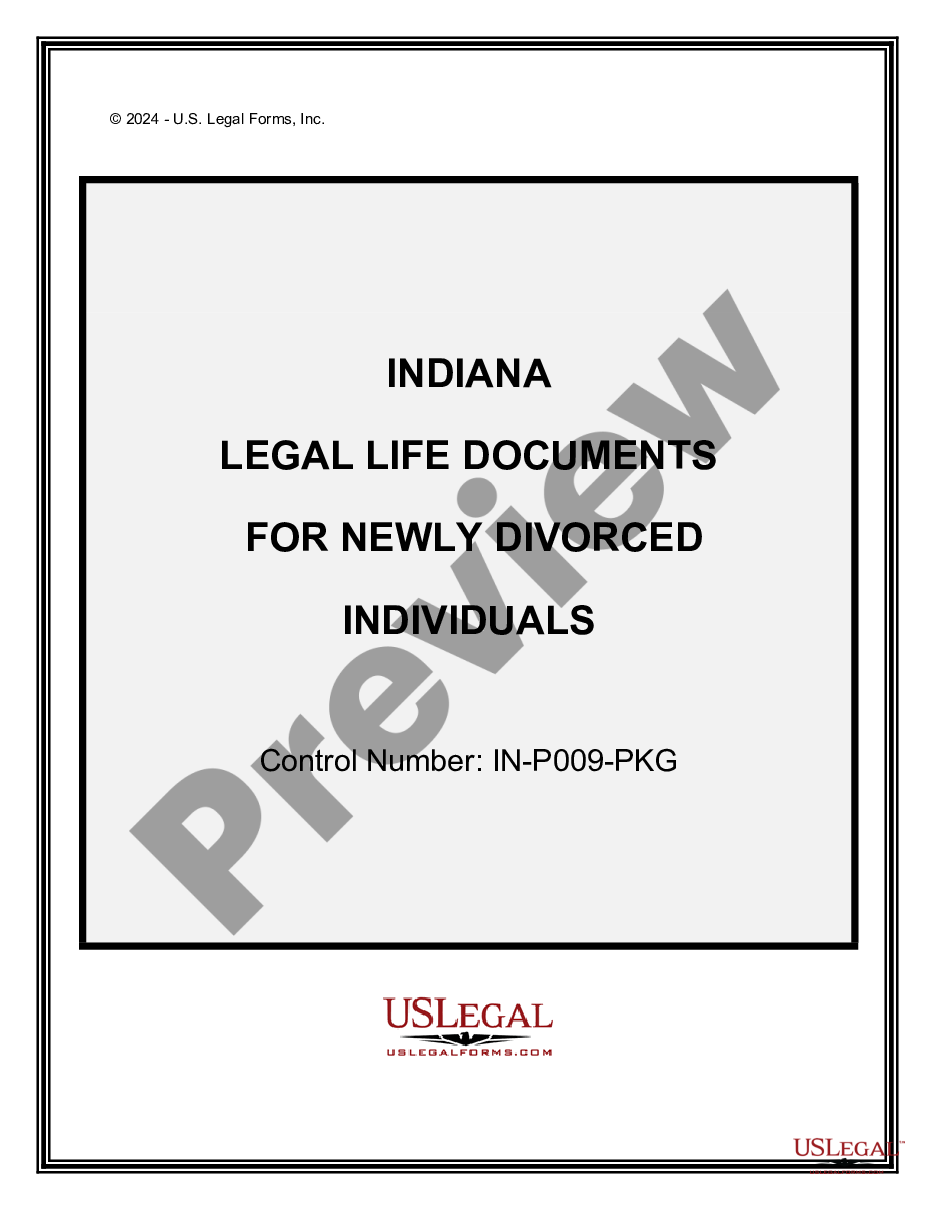
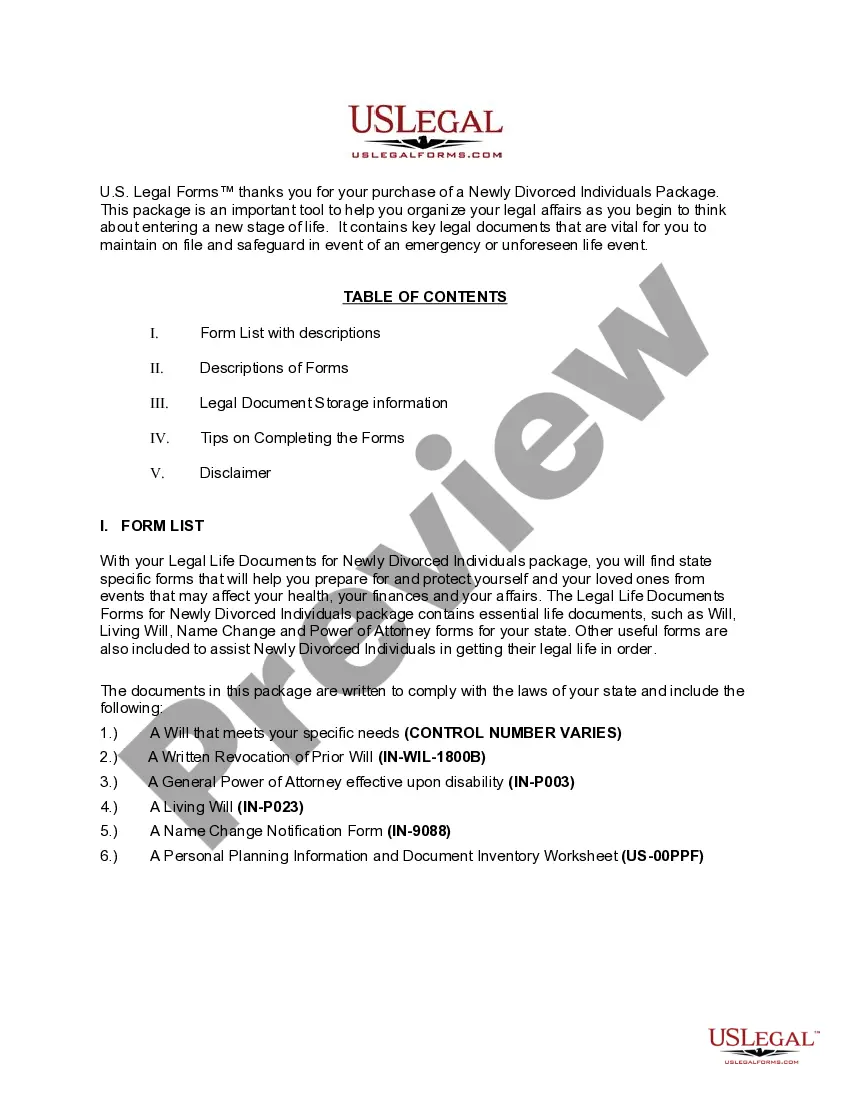
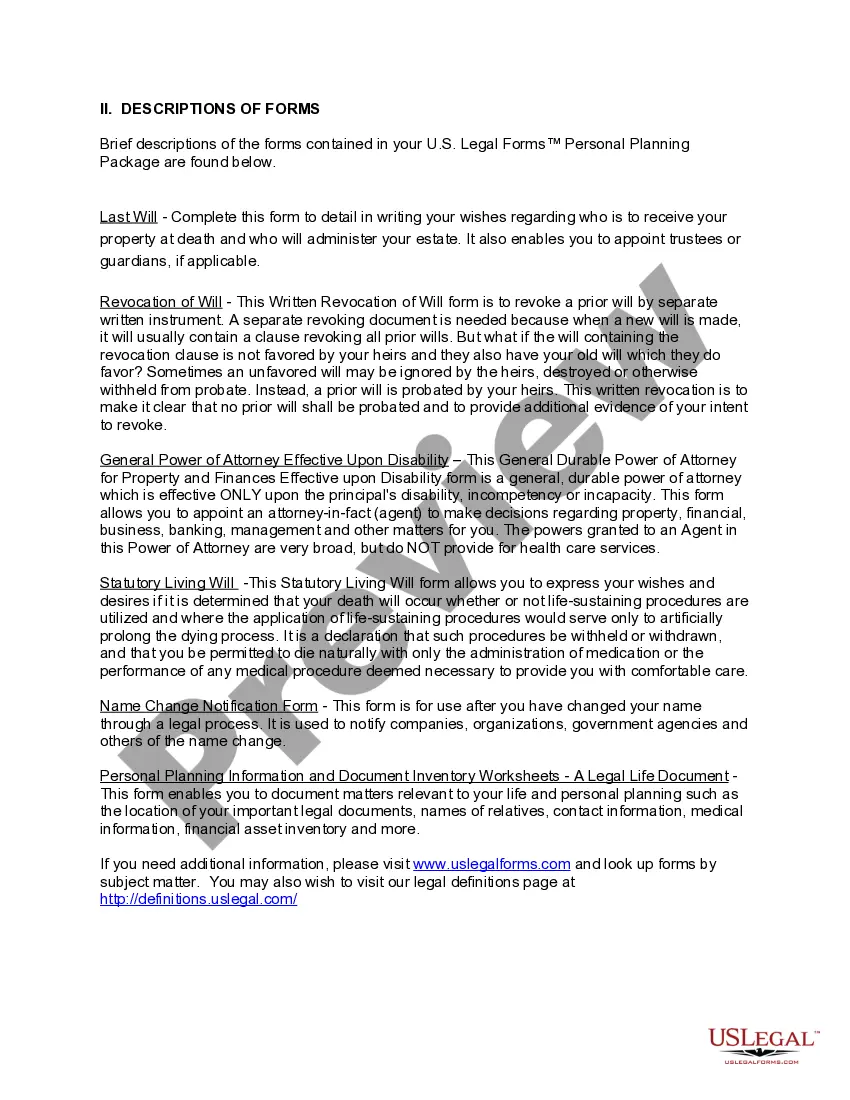
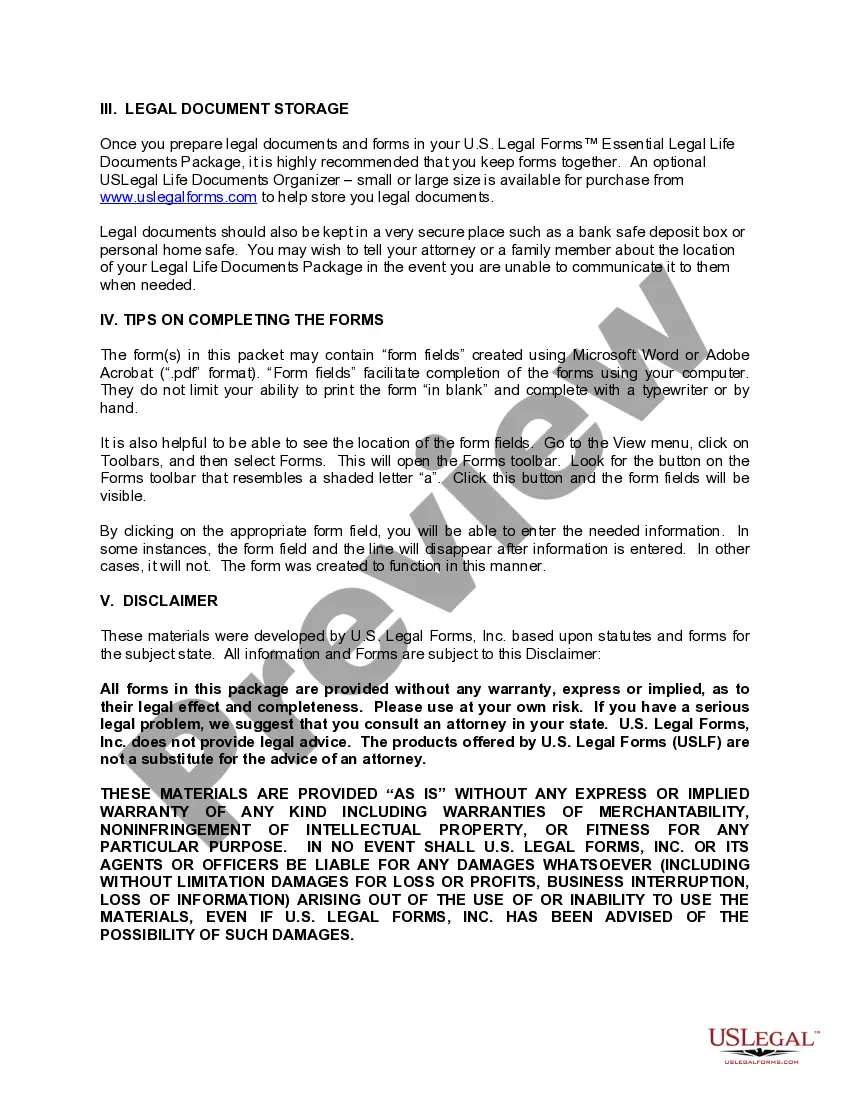
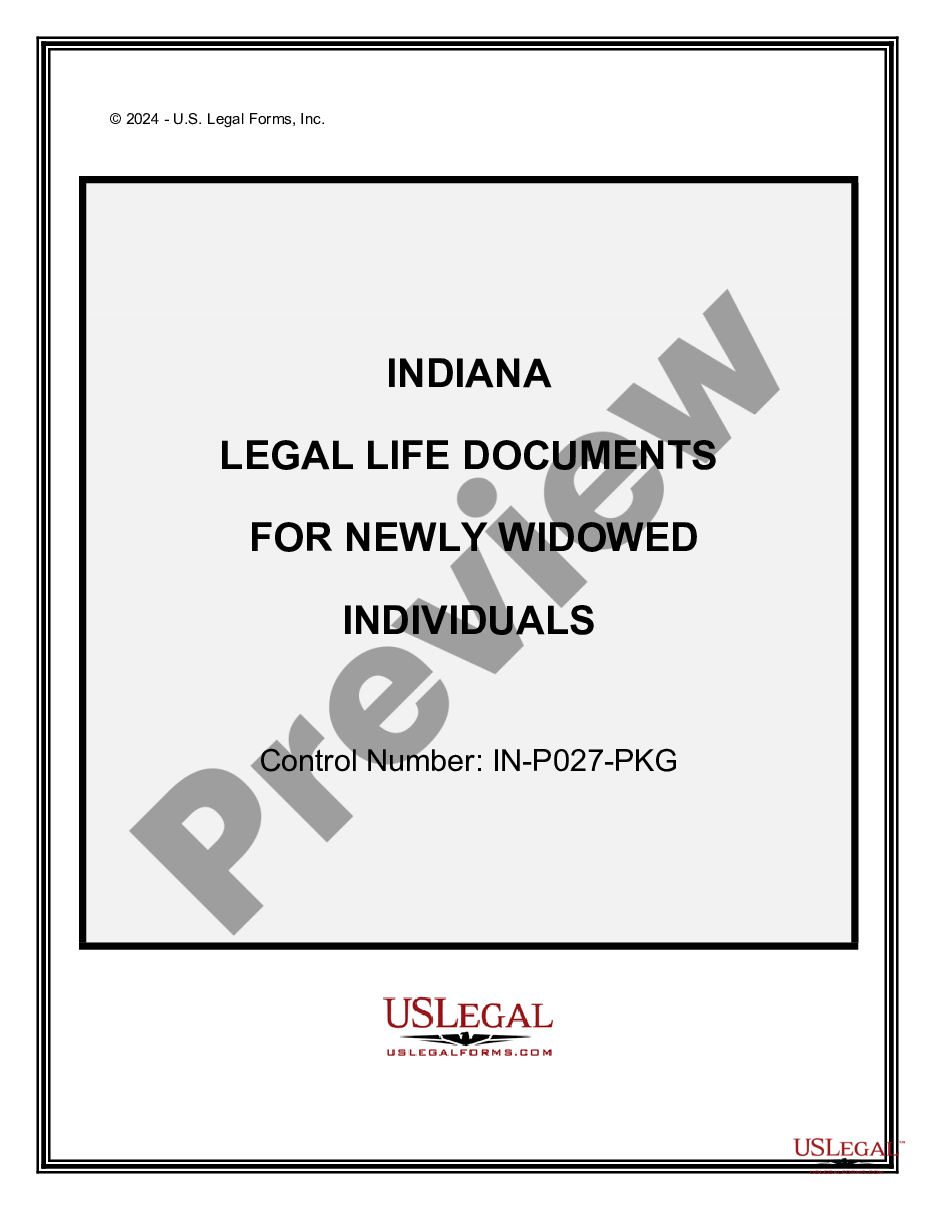
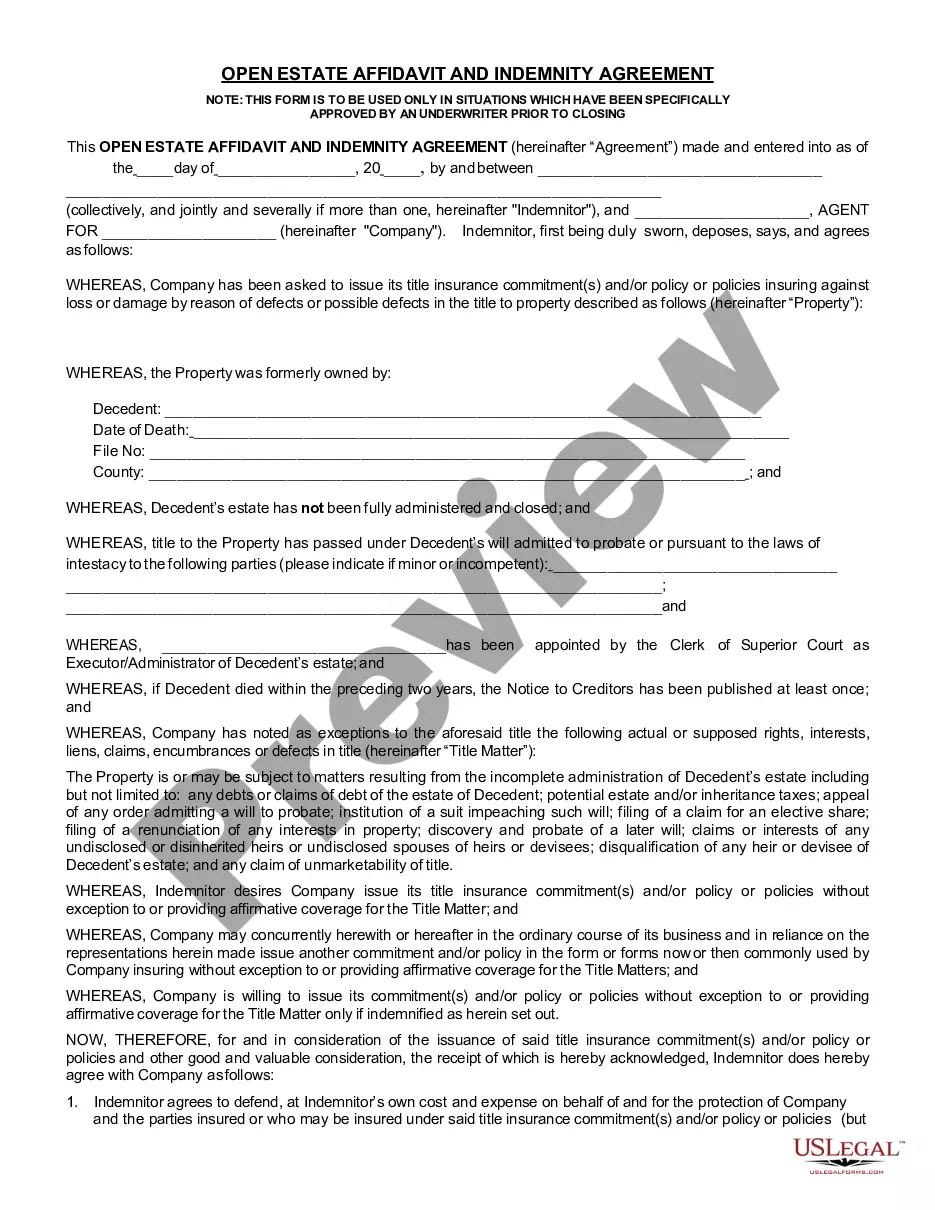
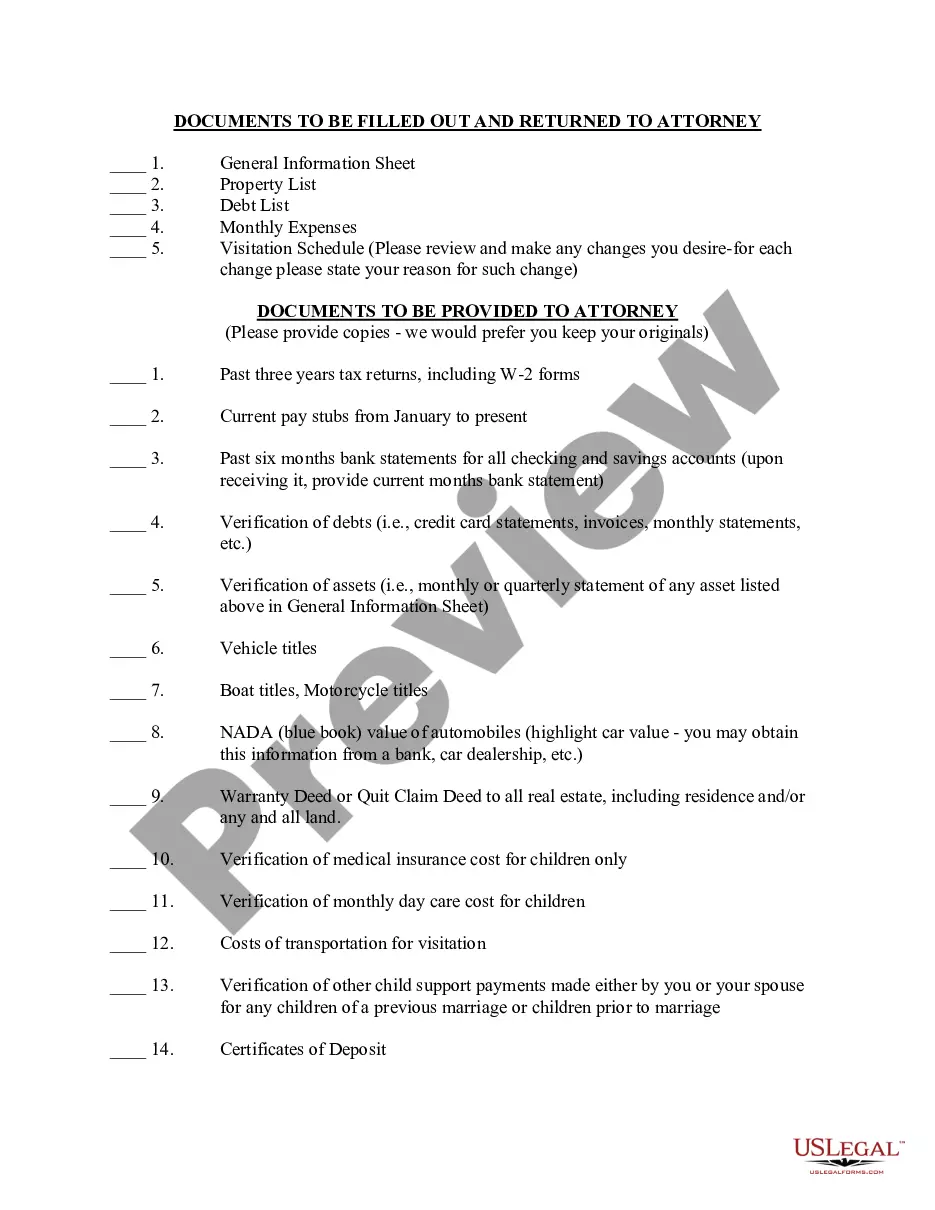
The Indiana Newly Divorced Individuals Package is designed to help individuals who have recently gone through a divorce organize essential legal documents. This package stands out by offering state-specific forms tailored to the unique needs of newly divorced individuals, providing tools for managing financial, health, and legal priorities. The package includes a Will, a Revocation of Prior Will, a General Power of Attorney effective upon disability, a Living Will, a Name Change Notification Form, and Personal Planning Information worksheets.
Forms provided in this package


Situations where these forms applies
This form package is particularly useful in the following scenarios:
- After your divorce is finalized and you need to update your legal documents.
- When you want to ensure your estate planning is up-to-date and reflects your current wishes.
- If you need to revoke an old will that no longer aligns with your situation.
- When planning for potential health emergencies and financial management after a divorce.
Who this form package is for
- Individuals who have recently obtained a divorce in Indiana.
- Those who are looking to organize their legal life post-divorce.
- Anyone needing to update their estate planning documents and legal representation.
- Individuals requiring a name change following their divorce.
Instructions for completing these forms
- Review the included forms to understand their purposes and requirements.
- Gather necessary personal information, including names, addresses, and relevant dates.
- Carefully complete each form, ensuring that all information is accurate and up-to-date.
- Sign and date the forms where required.
- Store completed documents in a secure location, such as a safe deposit box or a personal safe.
Do documents in this package require notarization?
Notarization is required for one or more forms in this package. US Legal Forms provides secure online notarization powered by Notarize, allowing you to complete the process through a verified video call.
Get your form ready online
Our built-in tools help you complete, sign, share, and store your documents in one place.
Make edits, fill in missing information, and update formatting in US Legal Forms—just like you would in MS Word.
Download a copy, print it, send it by email, or mail it via USPS—whatever works best for your next step.
Sign and collect signatures with our SignNow integration. Send to multiple recipients, set reminders, and more. Go Premium to unlock E-Sign.
If this form requires notarization, complete it online through a secure video call—no need to meet a notary in person or wait for an appointment.
We protect your documents and personal data by following strict security and privacy standards.

Make edits, fill in missing information, and update formatting in US Legal Forms—just like you would in MS Word.

Download a copy, print it, send it by email, or mail it via USPS—whatever works best for your next step.

Sign and collect signatures with our SignNow integration. Send to multiple recipients, set reminders, and more. Go Premium to unlock E-Sign.

If this form requires notarization, complete it online through a secure video call—no need to meet a notary in person or wait for an appointment.

We protect your documents and personal data by following strict security and privacy standards.
Common mistakes to avoid
- Failing to revoke an old will properly, leading to potential legal complications.
- Not completing the Name Change Notification Form, which can result in issues with identification and legal documents.
- Overlooking the need to keep documents updated after life changes.
- Signing forms without the presence of a witness or notary if required.
Why use this package online
- Convenience of accessing and completing forms from home at your own pace.
- Forms are editable, allowing you to customize each document to your specific situation.
- Reliable legal documents created by licensed attorneys, ensuring compliance with state laws.
- Cost savings of up to 40% compared to purchasing each form separately.
Looking for another form?


Form popularity
FAQ
How does your divorce affect that payment? The new law states that the child's stimulus payment will be paid to the parent that claimed the child as a dependent on his/her tax return last year.
The answer is that each spouse is entitled to his/her own stimulus money, though it may not be paid out individually by the government if you filed joint taxes in 2019. Payments for children will be remitted to whoever claimed them on their 2019 taxes.
Indiana is a one-pot property division state, so the court will begin with a presumption that all property is marital property and that it should be divided equally. But this can be overcome and will not necessarily mean that the final division will be equal.
If you filed a joint return in 2018 or 2019 but later got divorced, the money from the stimulus should ideally be split equallyeach individual should receive $1,200 of the total $2,400 payment. The CARES Act refers to the payment as an amount given to an individual.
The duration of payments is determined by a judge in Indiana family court. Alimony length is usually based on length of marriage - one commonly used standard for alimony duration is that 1 year of alimony is paid every three years of marriage (however, this is not always the case in every state or with every judge).
End the marriage. Divide the marital property and debts (usually on a 50-50% basis). Issue custody, visitation and child support orders for children of the marriage. The wife can get her maiden or former name back as part of the divorce.
5. Right To Divorce: Section 13 of HMA 1955 gives women the legal rights to file for a divorce without the consent of the husband. The divorce can be filed on the grounds of adultery, cruelty, desertion, thrown out of marital home, mental disorder etc.
House. Car. Furniture. Clothing. Bank accounts and cash. Pension plans and retirement accounts. Business. Patents.
Yes. It does not matter who files for divorce; the wife can get her maiden or former name back as part of the final divorce as long as she asks the court to do this. She does not have to get her maiden or former name back; she can keep her married name after the divorce if she wants to.