Indiana Brick Mason Contract for Contractor
What this document covers
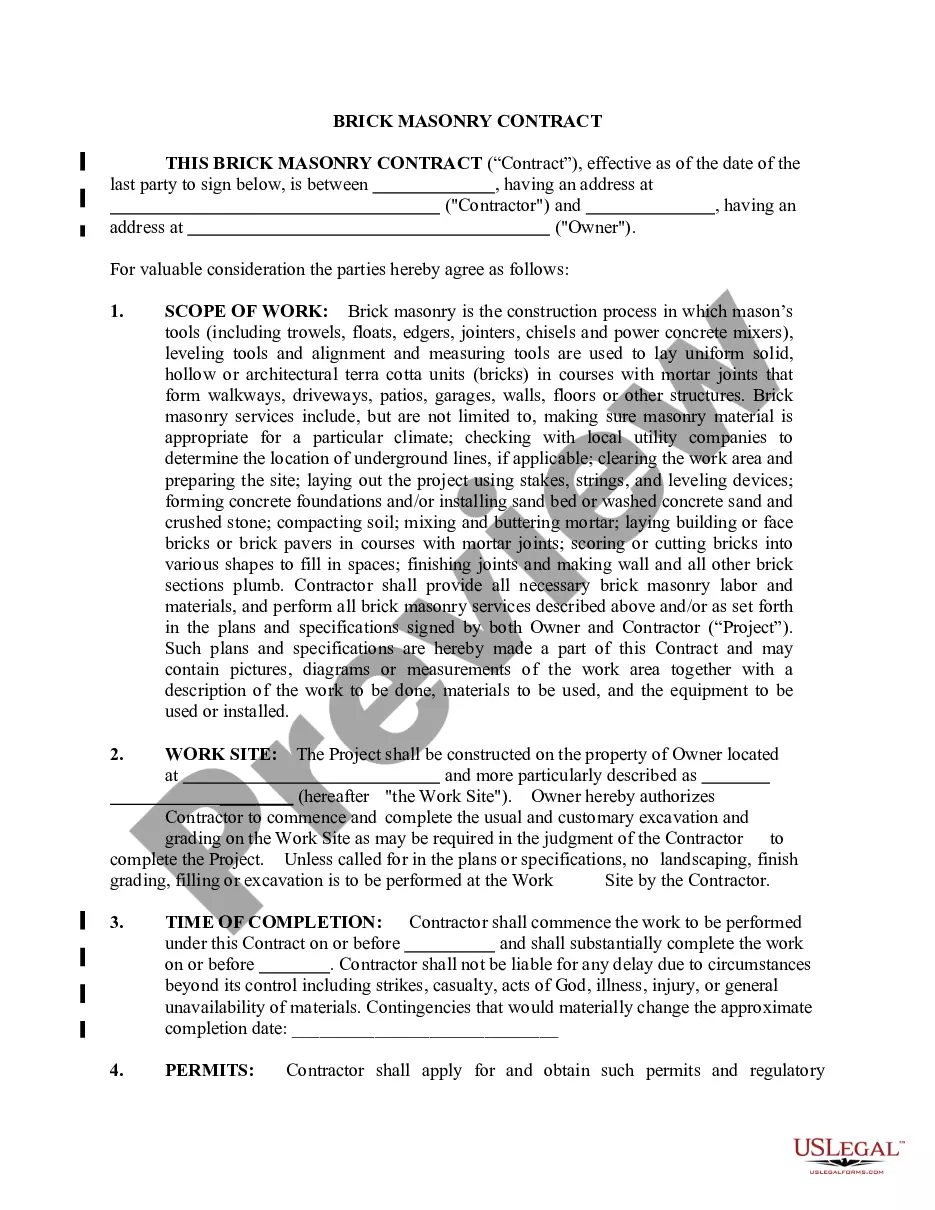
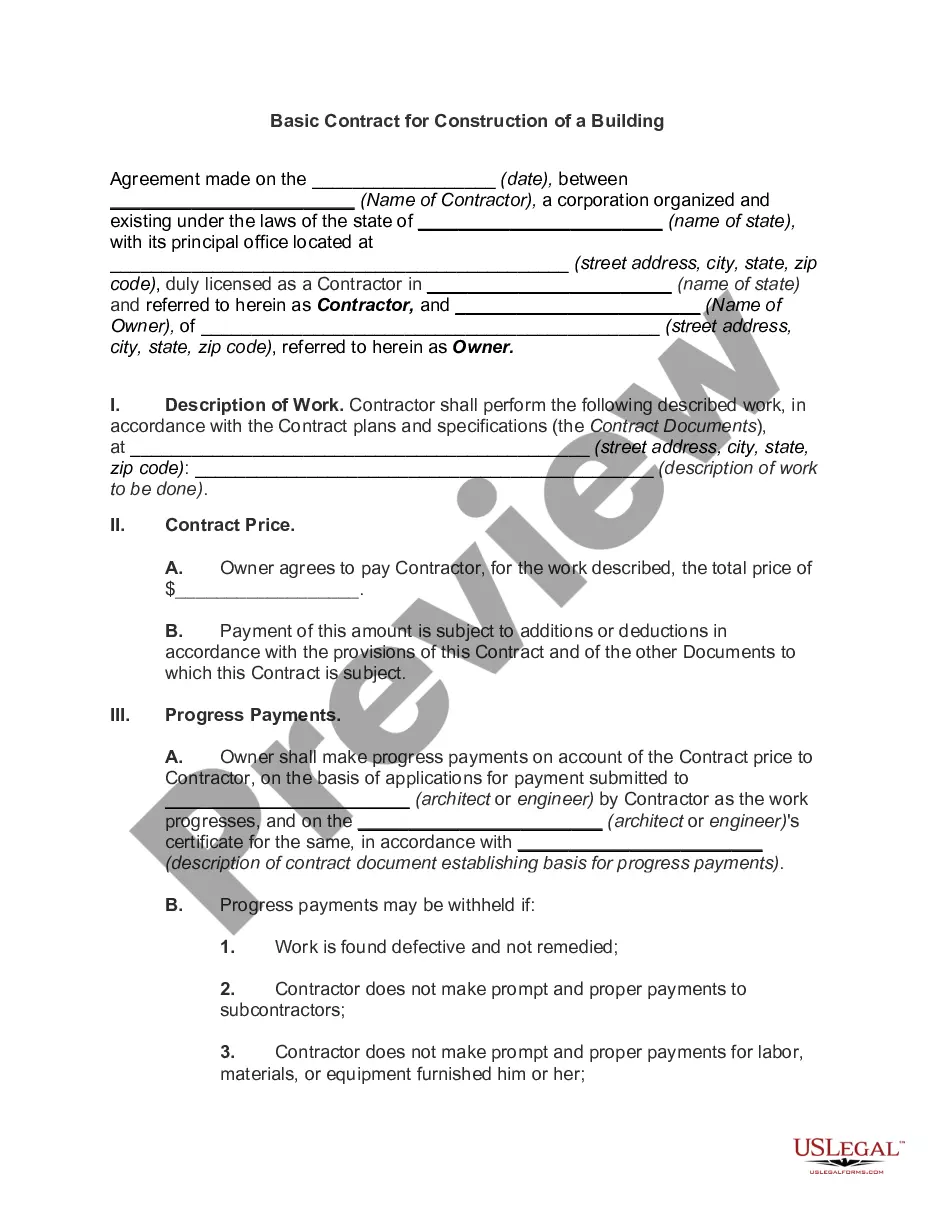
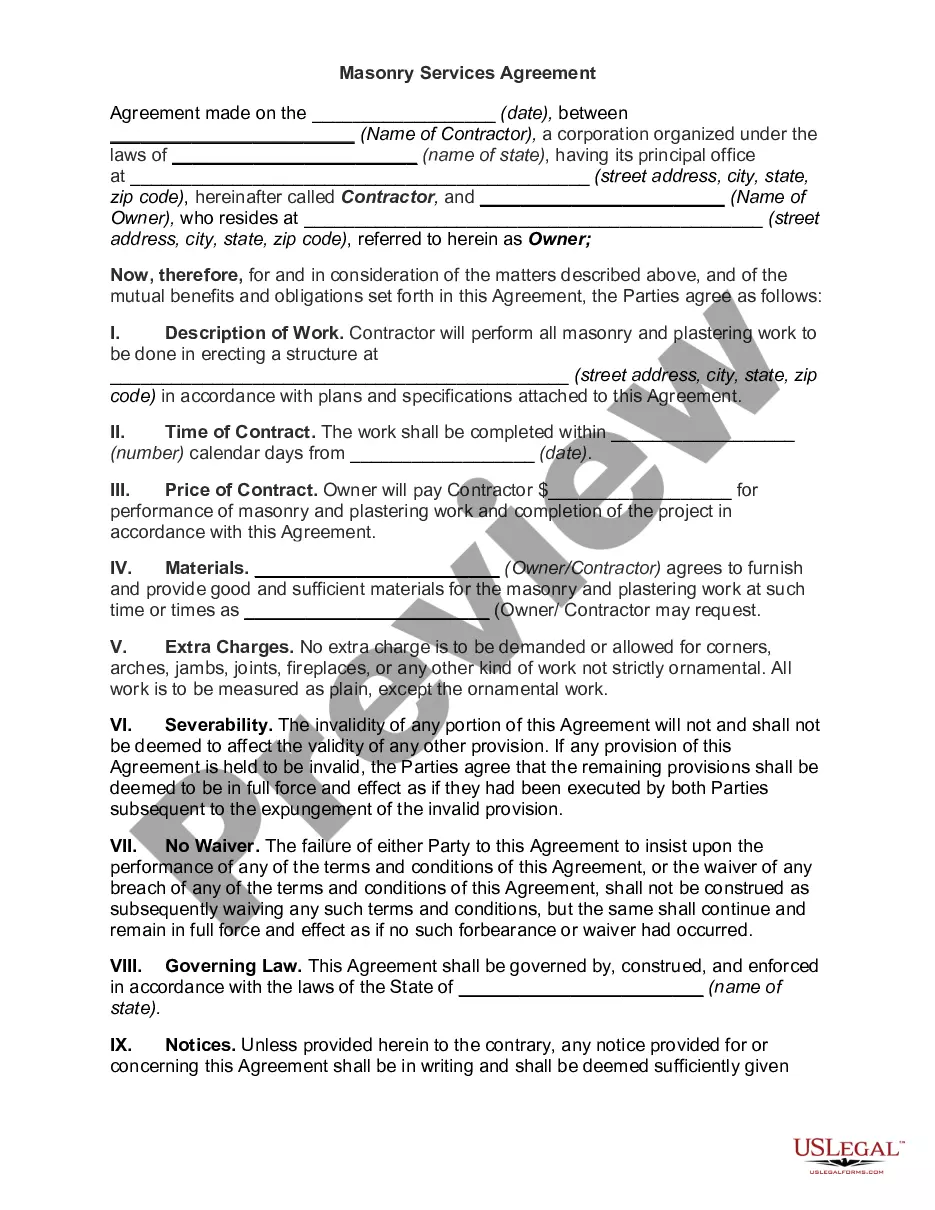
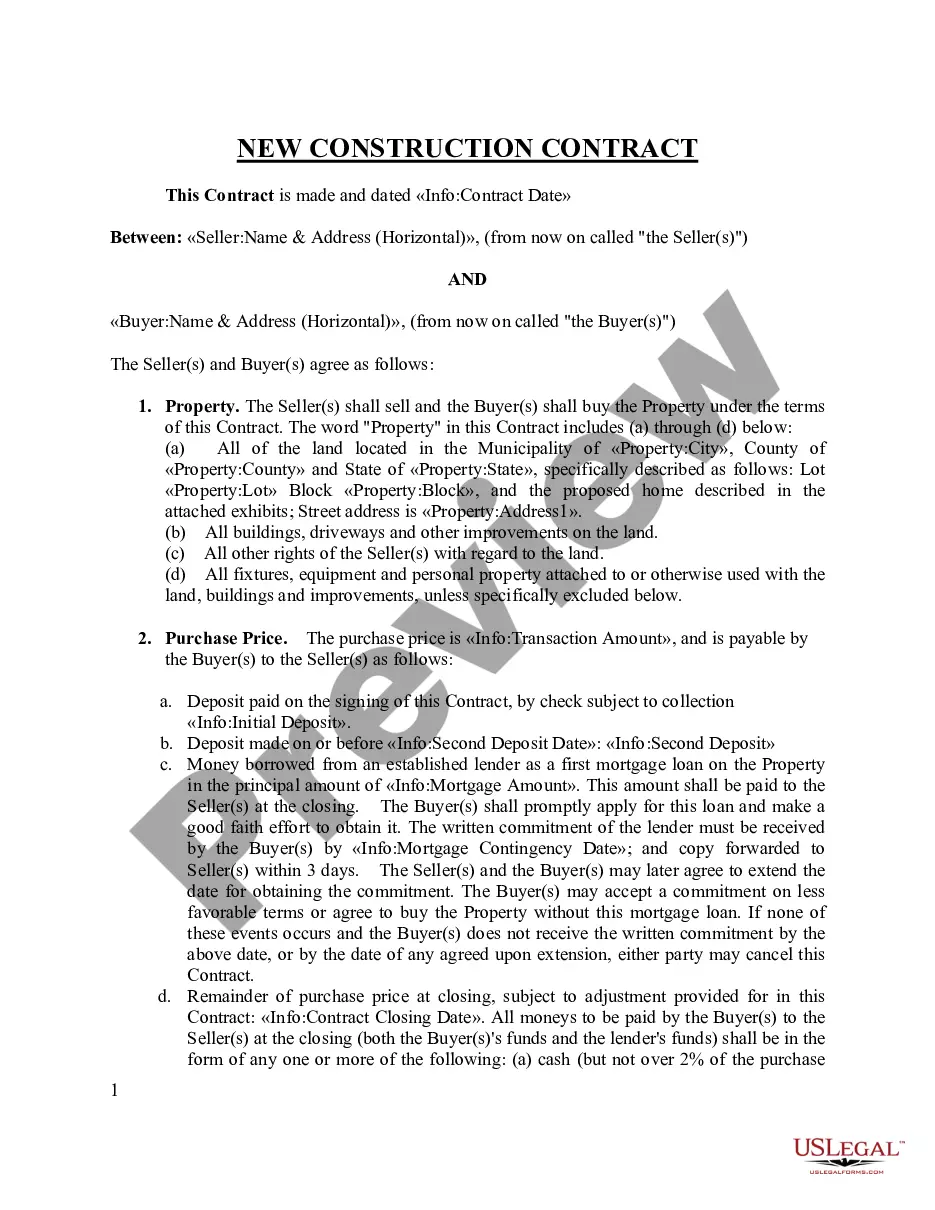
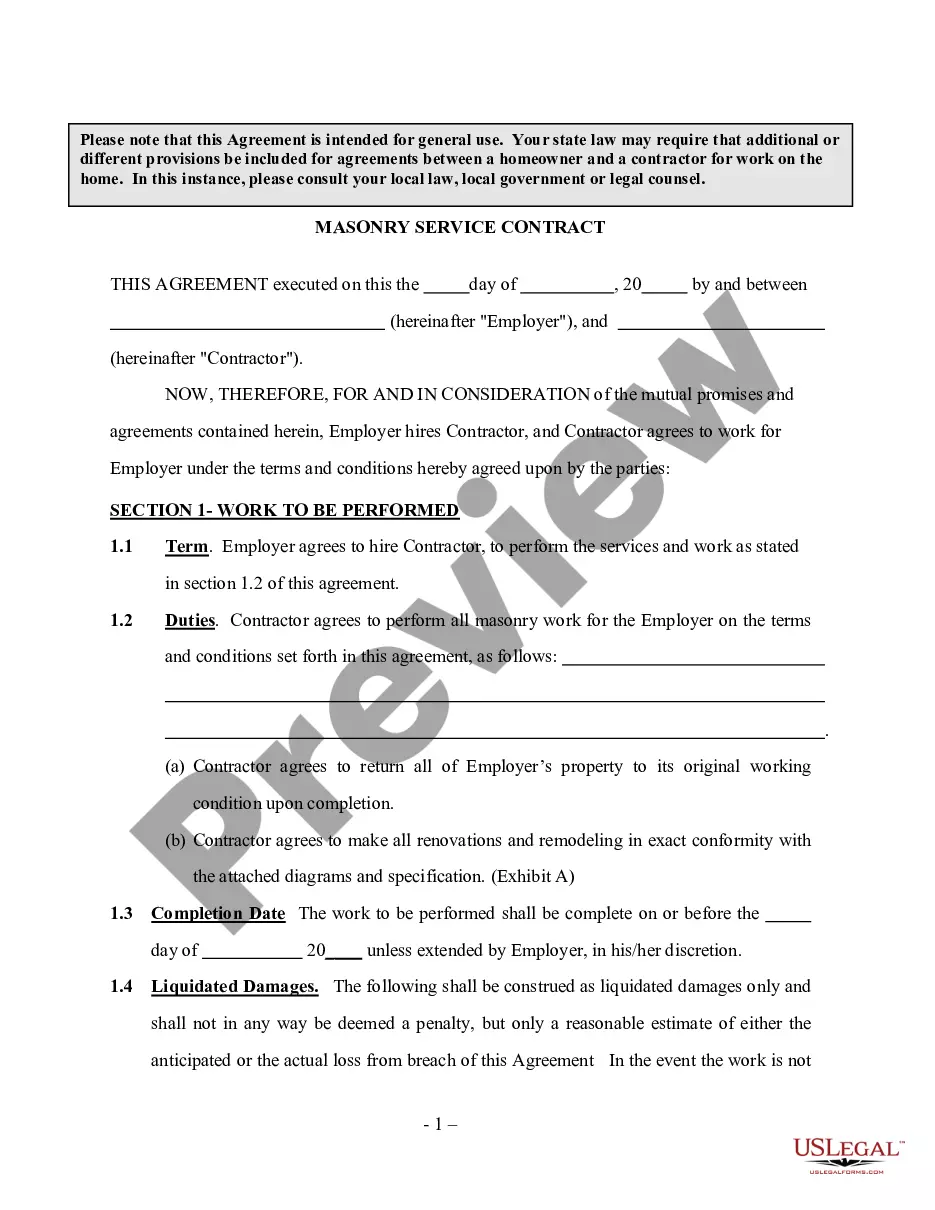
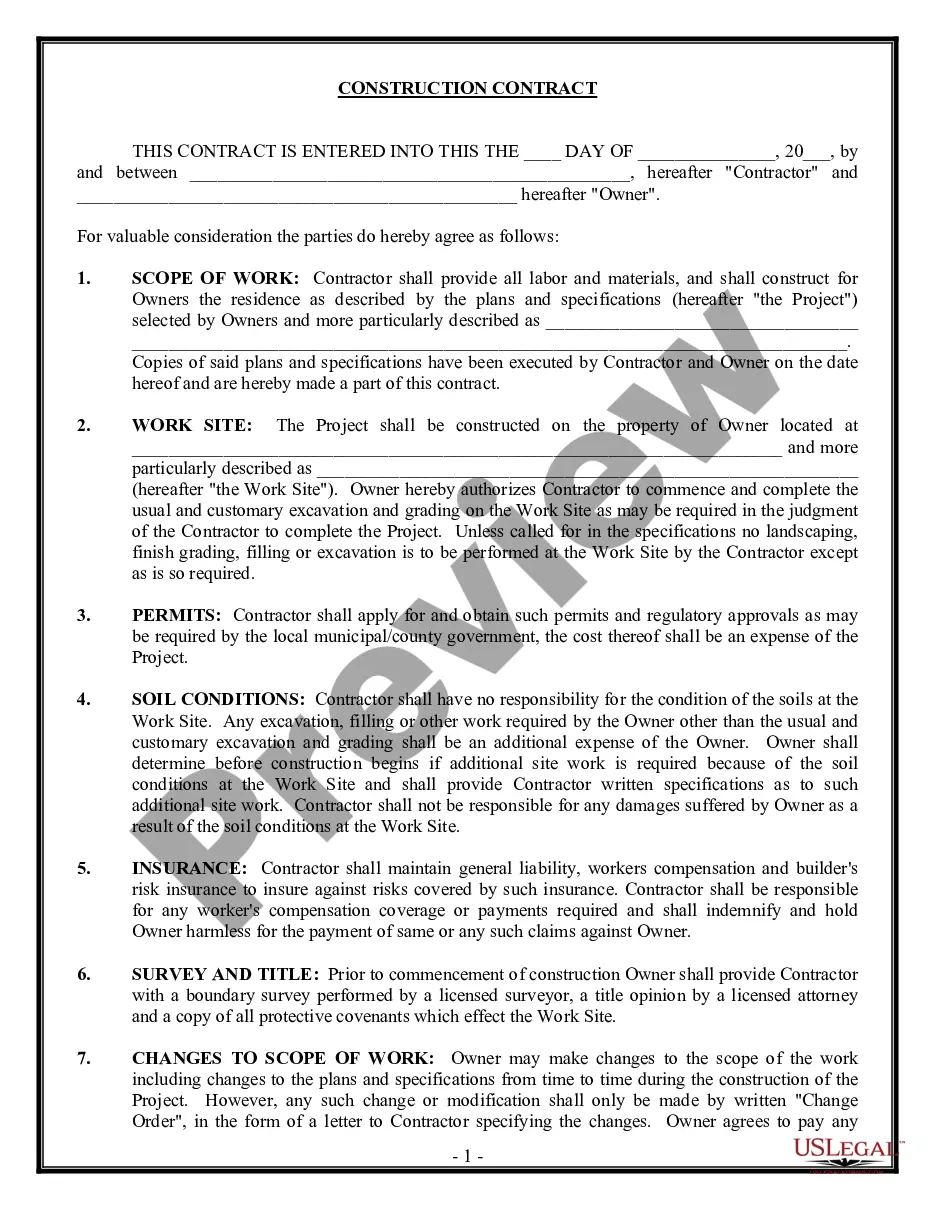
The Brick Mason Contract for Contractor is a legal document that outlines the terms and conditions agreed upon by a brick masonry contractor and a property owner. It facilitates clear communication regarding the scope of work, payment arrangements, and responsibilities regarding the project. This form stands out by specifically addressing topics like change orders, insurance, and soil conditions, and is compliant with the laws of the State of Indiana, making it a reliable choice for both contractors and property owners in that jurisdiction.
Key components of this form
- Work site details including project location.
- Requirements for obtaining necessary permits.
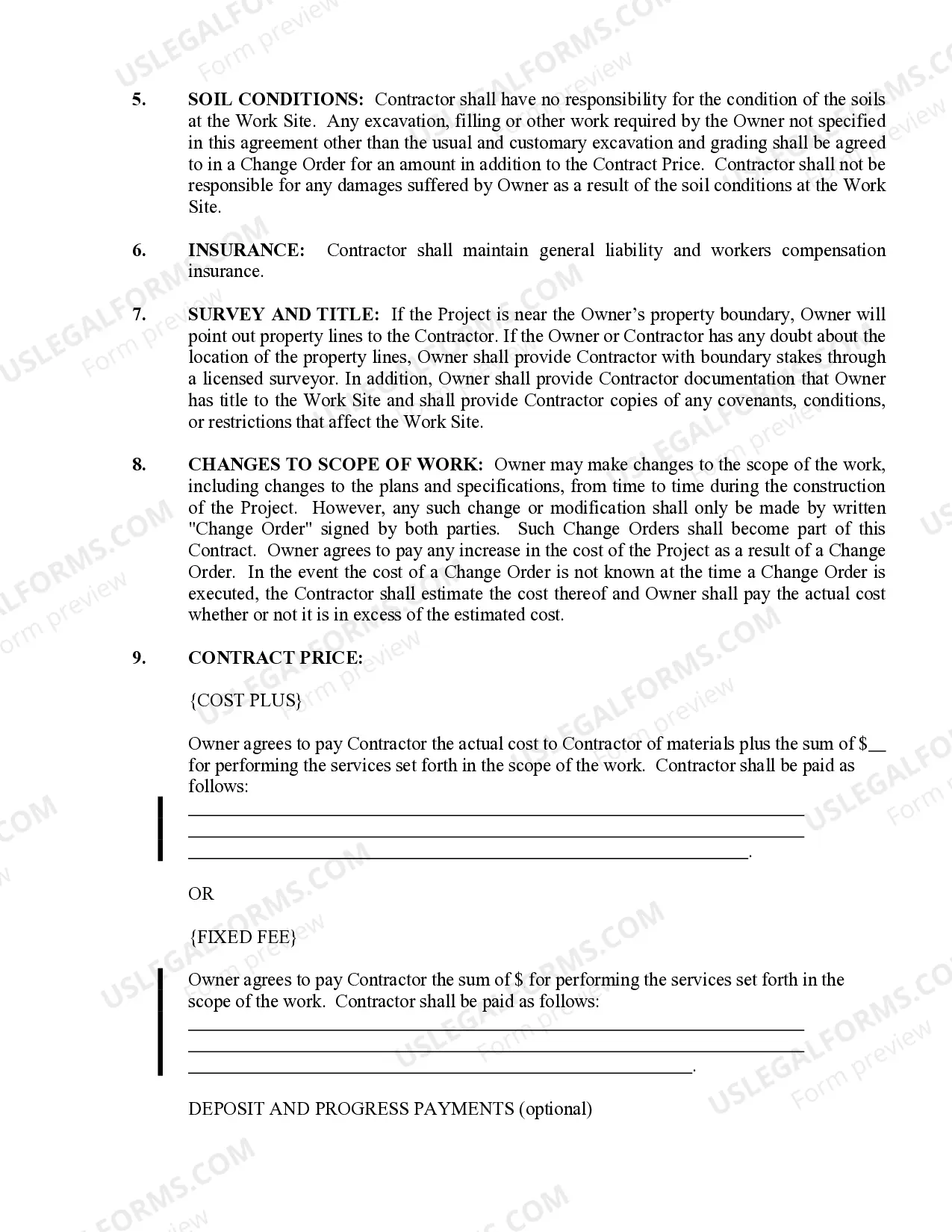
- Provisions regarding soil conditions and liability.
- Insurance obligations for the contractor.
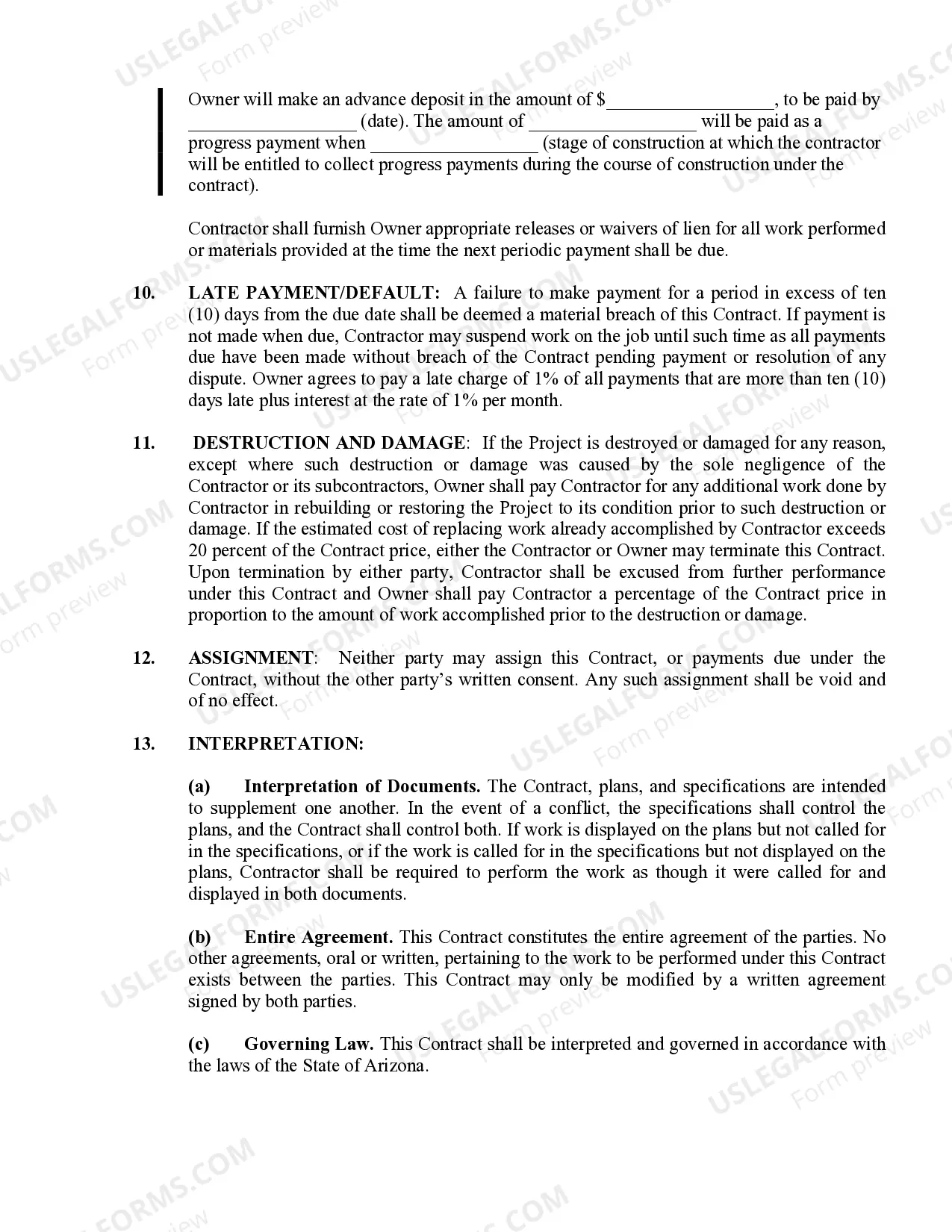
- Terms for change orders and late payments.
- Clauses about destruction and damage to the project.
When to use this form
This form should be used whenever a property owner hires a brick masonry contractor for construction projects, renovations, or repairs involving brickwork. It is particularly useful in situations where the payment structure is either fixed or based on costs incurred, and when the scope of work may need to be modified during the projectâs duration.
Who this form is for
- Brick masonry contractors who need to formalize agreements with clients.
- Property owners who are hiring a contractor for masonry work.
- Individuals or businesses involved in construction or property improvements requiring clarity in contractor responsibilities.
How to complete this form
- Identify and enter the names and contact information of both the contractor and the property owner.
- Specify the work site address where the masonry work will take place.
- Outline the scope of work and any specific details about the masonry services required.
- Discuss and agree upon the payment terms, including whether a fixed fee or cost-plus arrangement will be used.
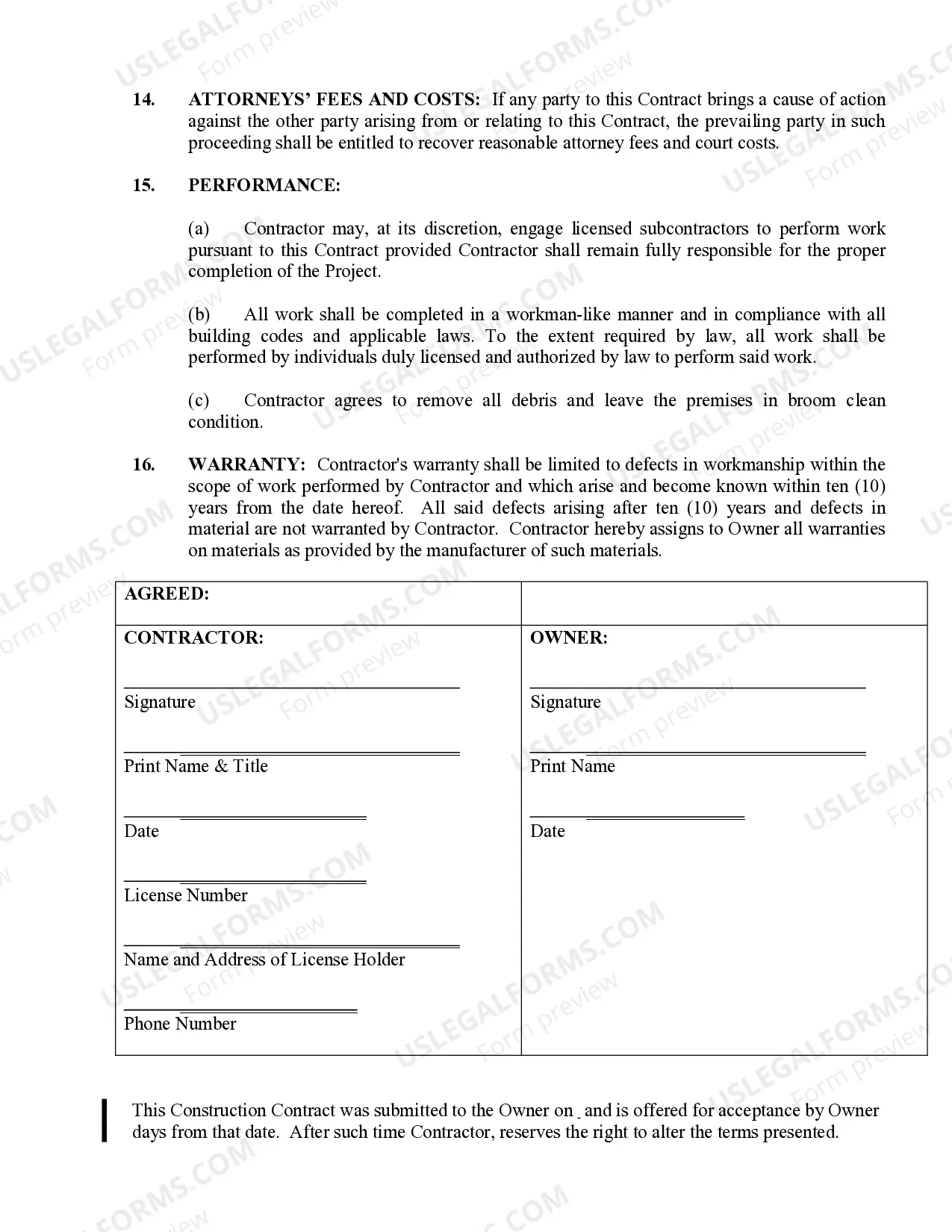
- Ensure both parties sign and date the contract to finalize the agreement.
Does this form need to be notarized?
This form does not typically require notarization unless specified by local law. It is important to check local regulations or consult with a legal professional if there are questions regarding notarization requirements for specific situations.
Get your form ready online
Our built-in tools help you complete, sign, share, and store your documents in one place.
Make edits, fill in missing information, and update formatting in US Legal Forms—just like you would in MS Word.
Download a copy, print it, send it by email, or mail it via USPS—whatever works best for your next step.
Sign and collect signatures with our SignNow integration. Send to multiple recipients, set reminders, and more. Go Premium to unlock E-Sign.
If this form requires notarization, complete it online through a secure video call—no need to meet a notary in person or wait for an appointment.
We protect your documents and personal data by following strict security and privacy standards.

Make edits, fill in missing information, and update formatting in US Legal Forms—just like you would in MS Word.

Download a copy, print it, send it by email, or mail it via USPS—whatever works best for your next step.

Sign and collect signatures with our SignNow integration. Send to multiple recipients, set reminders, and more. Go Premium to unlock E-Sign.

If this form requires notarization, complete it online through a secure video call—no need to meet a notary in person or wait for an appointment.

We protect your documents and personal data by following strict security and privacy standards.
Common mistakes
- Failing to specify the exact work to be performed, leading to misunderstandings.
- Not including changes to the scope of work in a change order.
- Ignoring the requirement for permits, which can lead to legal issues.
- Overlooking signature and date requirements, making the contract unenforceable.
Why use this form online
- Convenience of downloading and customizing the form to meet specific project needs.
- Access to a professionally drafted contract that ensures compliance with state laws.
- Easy to share electronically with clients for quick review and signatures.
Legal use & context
- This contract is legally binding upon signing by both parties.
- In the event of disputes, the terms outlined in this contract can be referenced for resolution.
- Contractors and property owners are encouraged to keep copies for their records.
Key takeaways
- The Brick Mason Contract for Contractor is essential for defining roles and responsibilities in masonry projects.
- Using this form helps protect both the contractor and property owner through clear communication of terms.
- Understanding Indiana-specific laws ensures the contractâs enforceability.
Definitions you should know
- Change Order: A document requesting a modification to the original contract terms.
- Contract Price: The final agreed amount that the property owner will pay the contractor.
- General Liability Insurance: Coverage that protects against claims of bodily injury or property damage.
- Subcontractor: A company or individual contracted to perform part of a project by the main contractor.
Looking for another form?

Form popularity
FAQ
Get it in writing. Keep it simple. Deal with the right person. Identify each party correctly. Spell out all of the details. Specify payment obligations. Agree on circumstances that terminate the contract. Agree on a way to resolve disputes.
Identifying/Contact Information. Title and Description of the Project. Projected Timeline and Completion Date. Cost Estimate and Payment Schedule. Stop Work Clause and Stop Payment Clause. Act of God Clause. Change Order Agreement. Warranty.
#1: Review Your Bid. #2: Review Complete Plans. #3: Review All Specifications. #4: Visit the Job Site. #5: Review the Job Schedule. #6: Complete a Project Checklist. #7: Verify Project Funding. #8: Read Complete Contract.
Begin with the Date and the Address of the Other Party. Start with the Basic Details of the Planned Work. Include Special Stipulations. State Whether There Will be a Further Agreement. Create an Area for Signatures. Sign and Date the Contract Letter.
The common materials of masonry construction are brick, building stone such as marble, granite, and limestone, cast stone, concrete block, glass block, and adobe. Masonry is generally a highly durable form of construction.
Name of contractor and contact information. Name of homeowner and contact information. Describe property in legal terms. List attachments to the contract. The cost. Failure of homeowner to obtain financing. Description of the work and the completion date. Right to stop the project.
Contract Types Overview. Express and Implied Contracts. Unilateral and Bilateral Contracts. Unconscionable Contracts. Adhesion Contracts. Aleatory Contracts. Option Contracts. Fixed Price Contracts.
A mason uses bricks, concrete blocks, or natural stones to build structures that include walls, walkways, fences, and chimneys. Depending on the building material in which they specialize, these workers might be called brick masons, block masons, or stonemasons. Brickmasons are sometimes referred to as bricklayers.
Required Education Formal education requirements for brick masons include a high school diploma; secondary school coursework in English, shop practices, technical drawing and math may be useful. The majority of brick masons complete an apprenticeship, which can take between three and four years to complete.