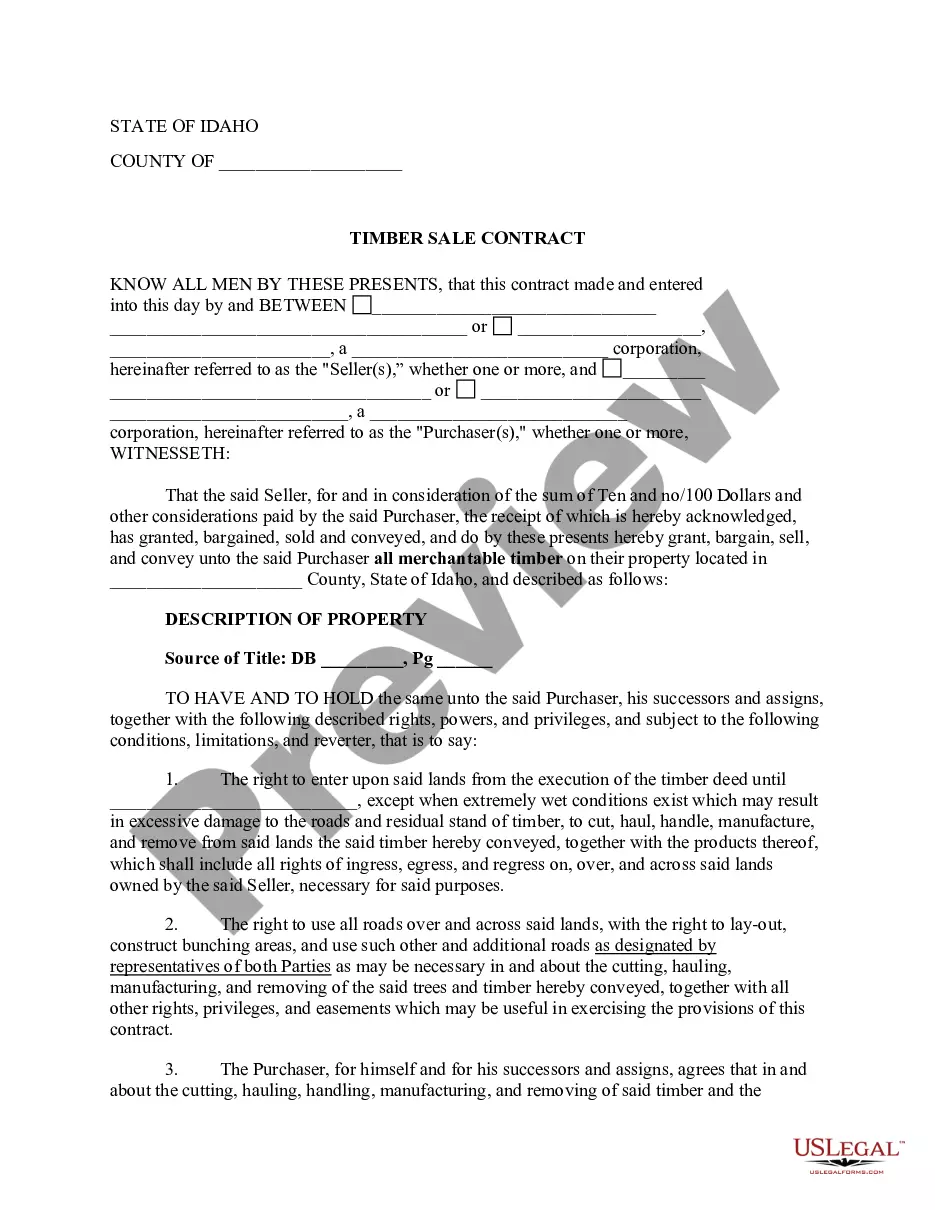
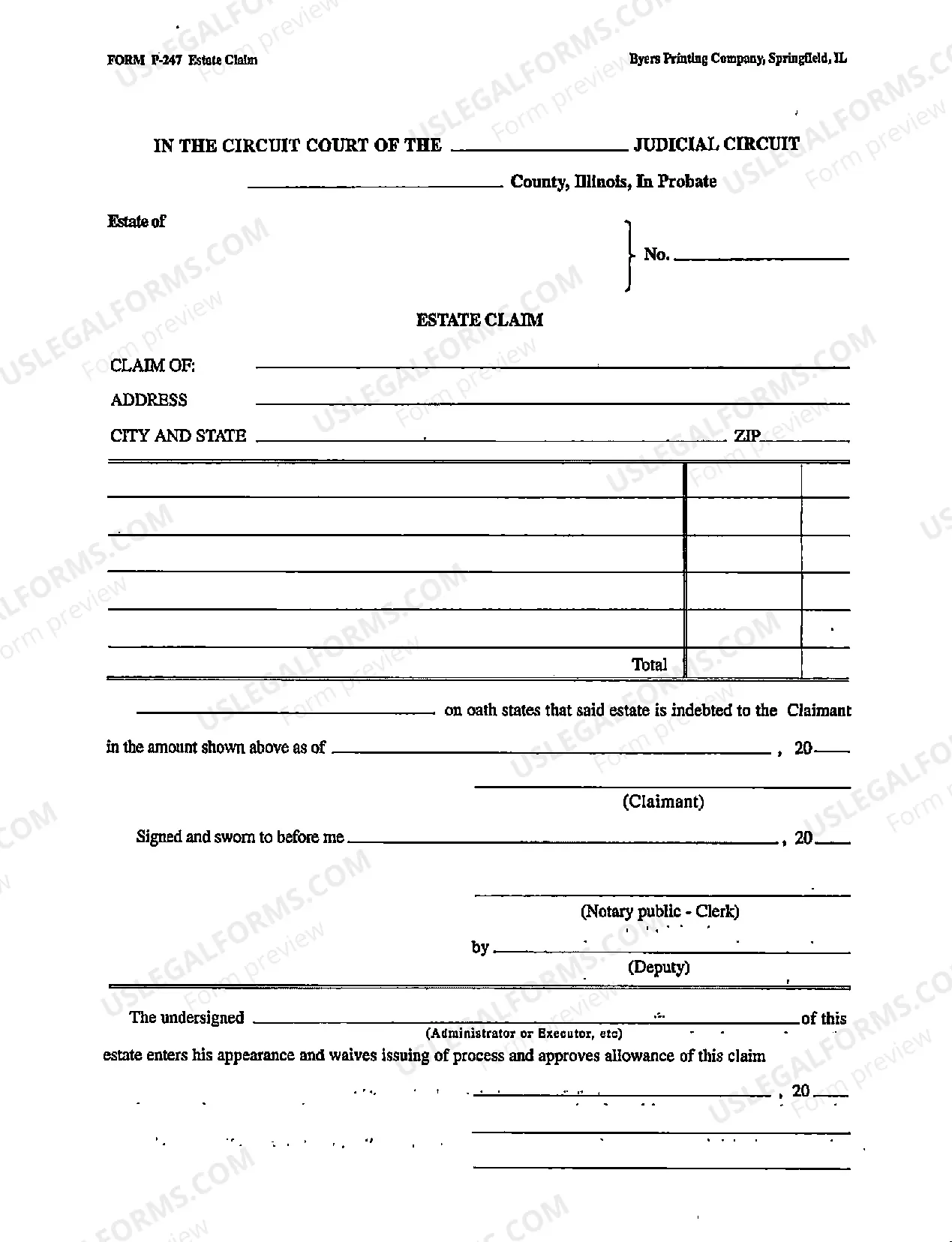
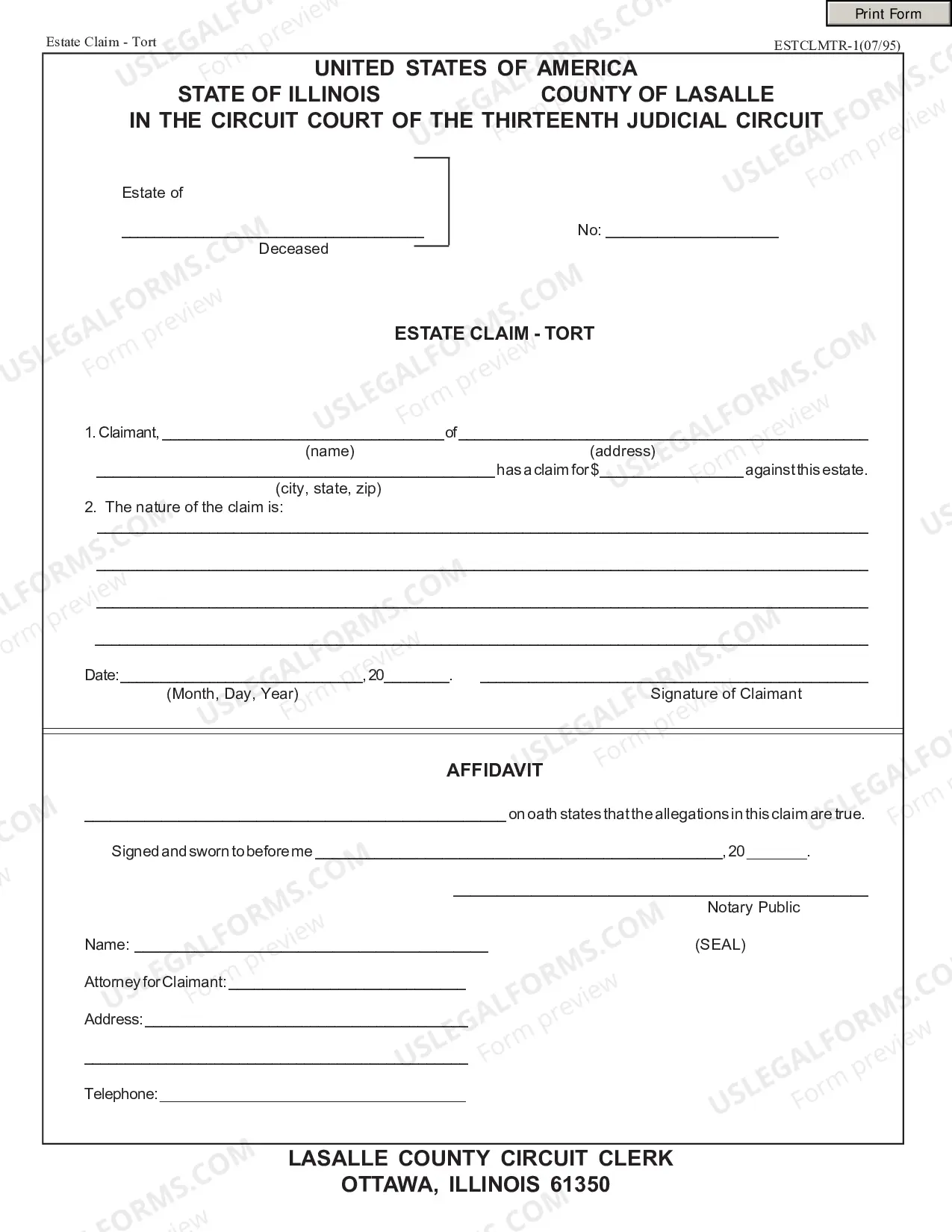
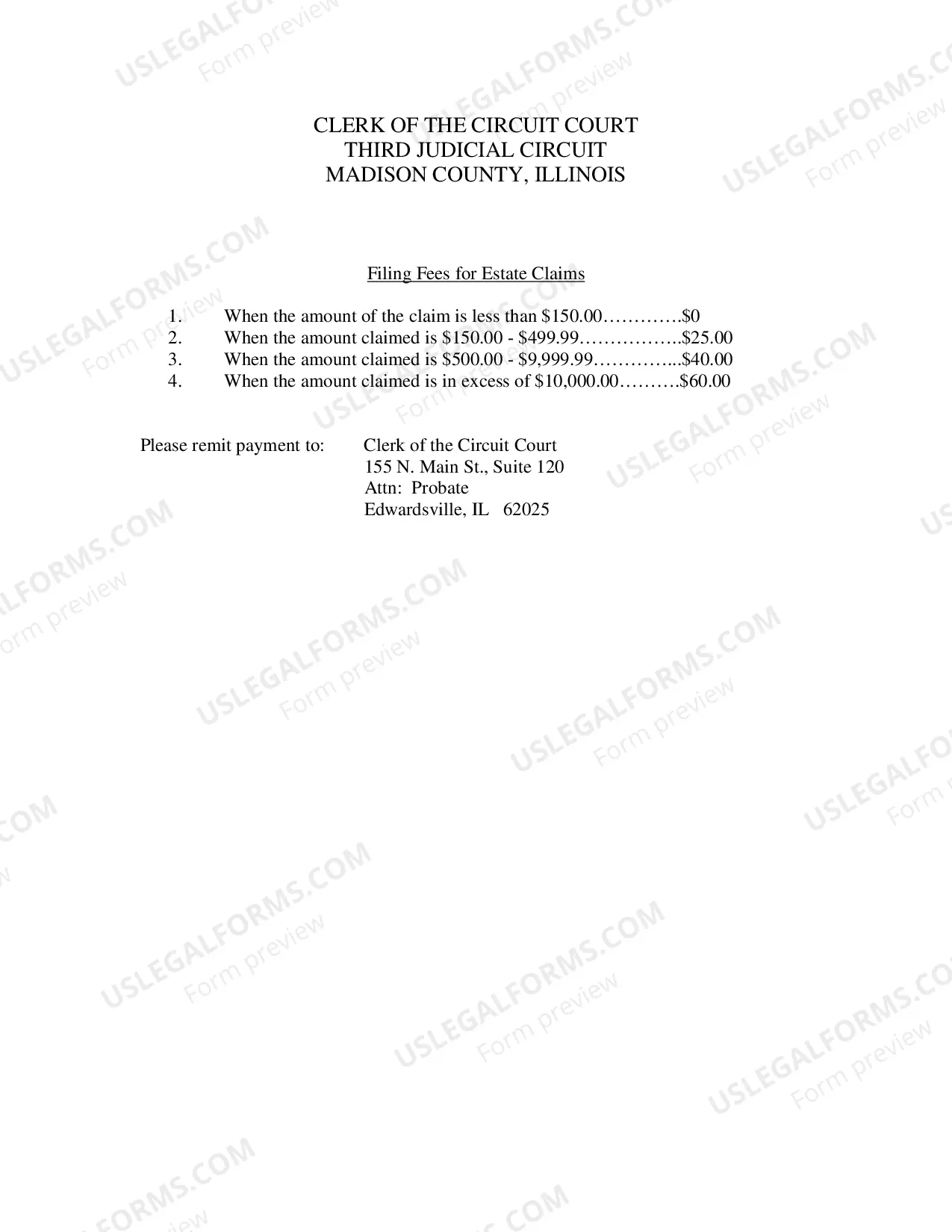
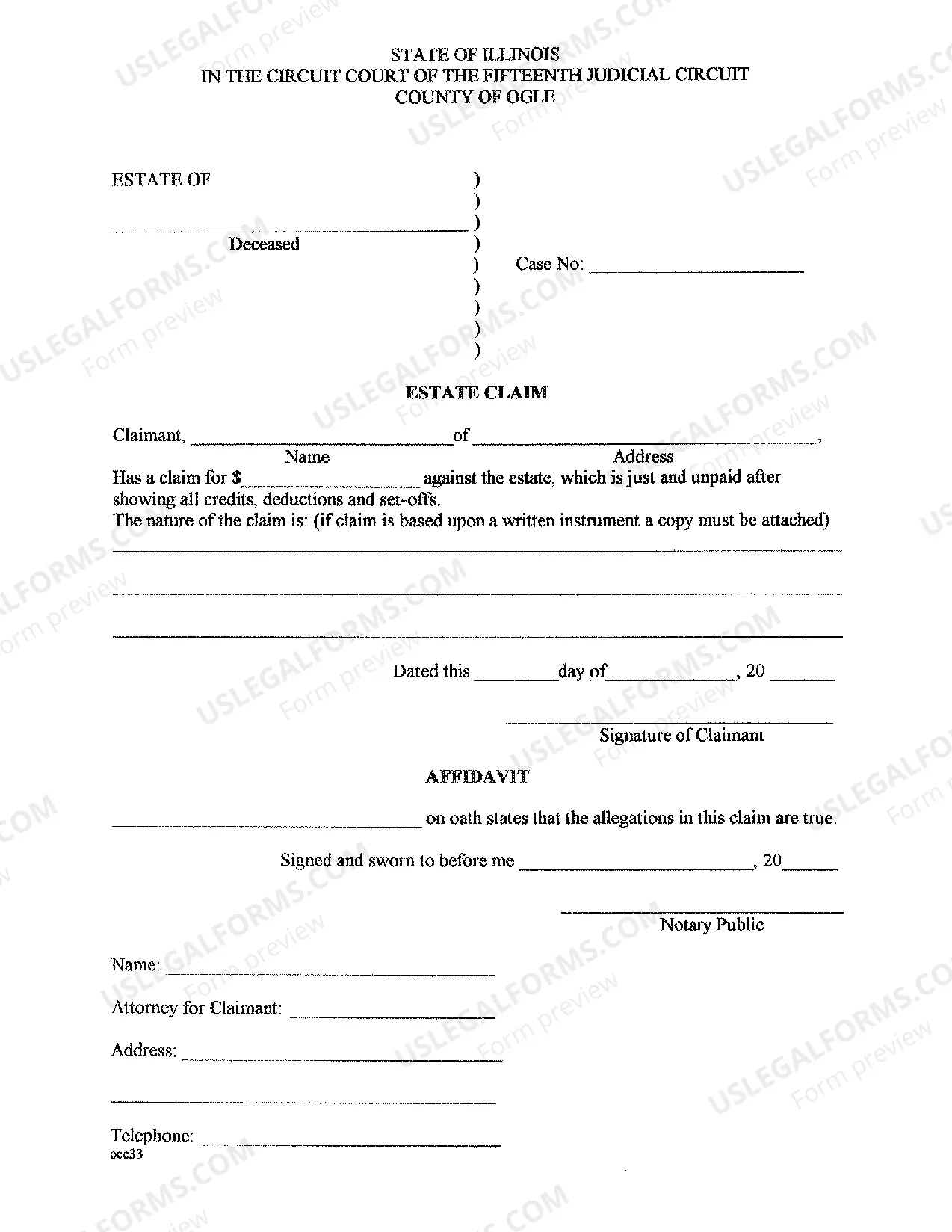
Illinois Estate Claim is a legal process in which a person or entity can file a claim against an estate of a deceased person. These claims can be based on a variety of different reasons, including unpaid debt, breach of contract, personal injury, or wrongful death. There are three main types of Illinois Estate Claims: Creditor Claims, Heir Claims, and Beneficiary Claims. Creditor Claims are claims made by creditors of the deceased for money owed. Heir Claims are claims made by the heirs of the deceased for a share of the estate. Beneficiary Claims are claims made by beneficiaries of the deceased for a share of the estate. All Illinois Estate Claims must be filed with the probate court in the county where the deceased lived at the time of their death.
Illinois Estate Claim
Description
Get your form ready online
Our built-in tools help you complete, sign, share, and store your documents in one place.
Make edits, fill in missing information, and update formatting in US Legal Forms—just like you would in MS Word.
Download a copy, print it, send it by email, or mail it via USPS—whatever works best for your next step.
Sign and collect signatures with our SignNow integration. Send to multiple recipients, set reminders, and more. Go Premium to unlock E-Sign.
If this form requires notarization, complete it online through a secure video call—no need to meet a notary in person or wait for an appointment.
We protect your documents and personal data by following strict security and privacy standards.

Make edits, fill in missing information, and update formatting in US Legal Forms—just like you would in MS Word.

Download a copy, print it, send it by email, or mail it via USPS—whatever works best for your next step.

Sign and collect signatures with our SignNow integration. Send to multiple recipients, set reminders, and more. Go Premium to unlock E-Sign.

If this form requires notarization, complete it online through a secure video call—no need to meet a notary in person or wait for an appointment.

We protect your documents and personal data by following strict security and privacy standards.
Looking for another form?


How to fill out Illinois Estate Claim?
Managing official documentation necessitates focus, accuracy, and utilizing correctly-prepared forms.
US Legal Forms has been assisting individuals nationwide in accomplishing just that for 25 years, so when you select your Illinois Estate Claim template from our collection, you can be assured it adheres to federal and state regulations.
All documents are drafted for multiple uses, including the Illinois Estate Claim you see here. If you require them again, you can complete them without additional payment - simply navigate to the <a href="https://www.uslegalforms.com/login/#my-forms">My documents</a> tab in your profile and finalize your document whenever necessary. Experience US Legal Forms and prepare your business and personal documentation swiftly and in complete legal compliance!
- Ensure to thoroughly verify the form's content and its alignment with general and legal stipulations by previewing it or reviewing its description.
- Look for an alternative official form if the previously accessed one does not align with your situation or state laws (the tab for this is located in the upper corner of the page).
- <a href="https://www.uslegalforms.com/login/">Log in</a> to your account and download the Illinois Estate Claim in your preferred format. If it’s your initial experience with our service, click <strong>Buy now</strong> to proceed.
- Create an account, select your subscription option, and pay via your credit card or PayPal account.
- Select the format in which you want to store your document and click <strong>Download</strong>. Print the form or incorporate it into a professional PDF editor for electronic preparation.
Form popularity
FAQ
Every estate does not have to go through probate. Probate is the legal process to make sure that a deceased person's debts and taxes are paid. In Illinois, a lawyer is required for probate unless the estate is valued at or less than $100,000 and does not have real estate.
A claim against the probate estate can either be filed with the court or mailed to the representative of the estate. Once the representative receives notice of the claim, he or she can either allow the claim or send a notice to the claimant informing them that they are ?disallowing? the claim.
No probate will be necessary to transfer the property, although of course it will take some paperwork to show that title to the property is held solely by the surviving owner.
Things that aren't part of the deceased person's estate don't have to be handled in settling their estate. Probate is just one way to settle an estate when someone dies. And it's not always required. Illinois law allows a different and simplified procedure for handling small estates.
Probate is typically necessary in Illinois when the decedent owns any real estate or more than $100,000.00 of non-real-estate assets outside of a trust.
The executor immediately must publish a written notice in a newspaper within the county of the Probate Court to notify potential creditors of the existence of the estate and the necessity for their filing of written claims against the estate. The law in Illinois provides such creditors six months to file those claims.
When is the Deadline to File a Probate Claim in Illinois? The statute of limitations for probate claims in Illinois provides that creditors have two years from the decedent's death to file a claim against the estate.
Three Tips to Avoid Probate in Illinois Create a Living Trust. The simplest way to avoid probate is to create a living trust instead of a last will.Hold Property Jointly. Another effective way to keep your real estate assets out of probate is to hold your property jointly.Name Beneficiaries on Your Accounts.