Illinois Rental Lease Pooling Provision
Understanding this form
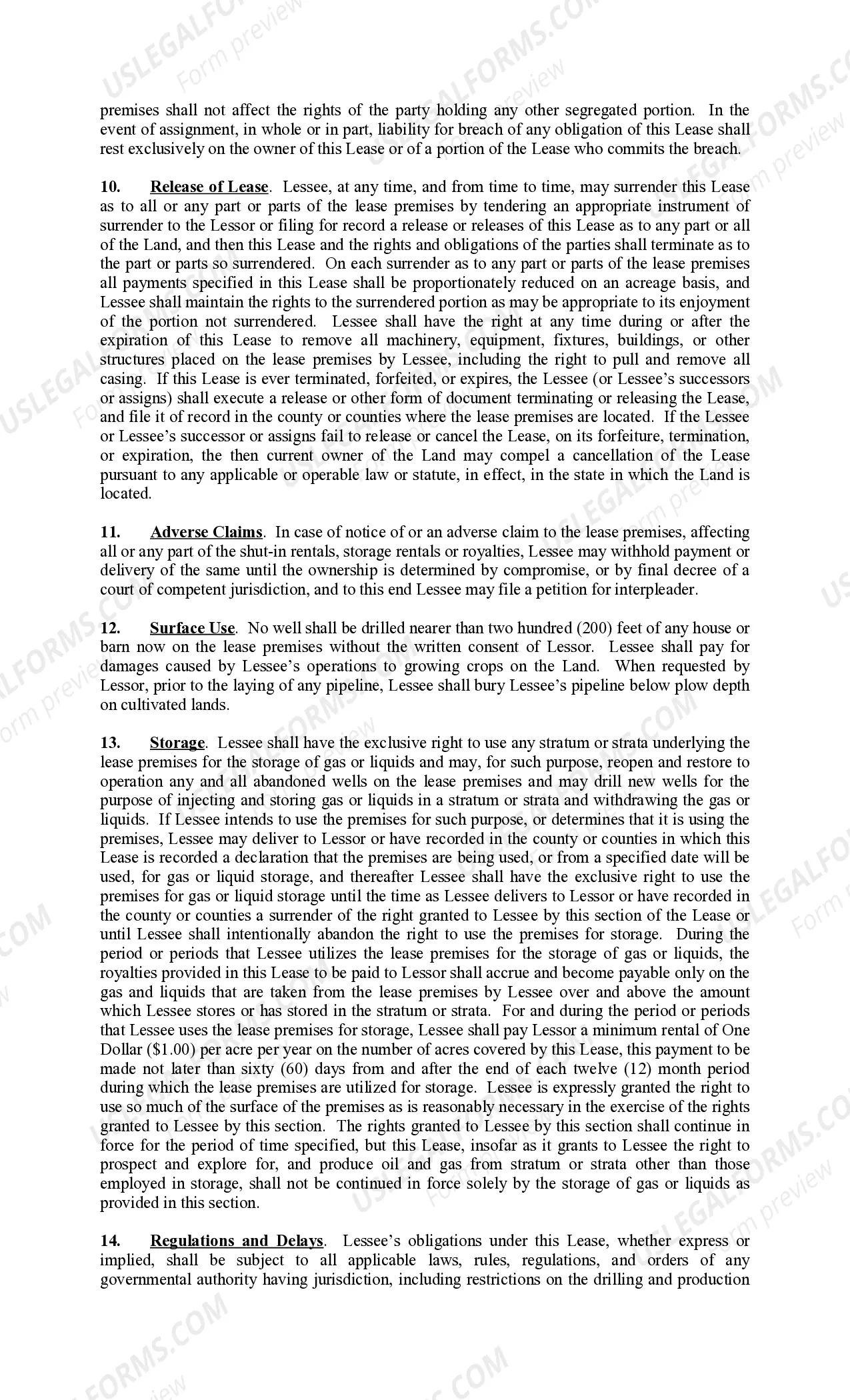
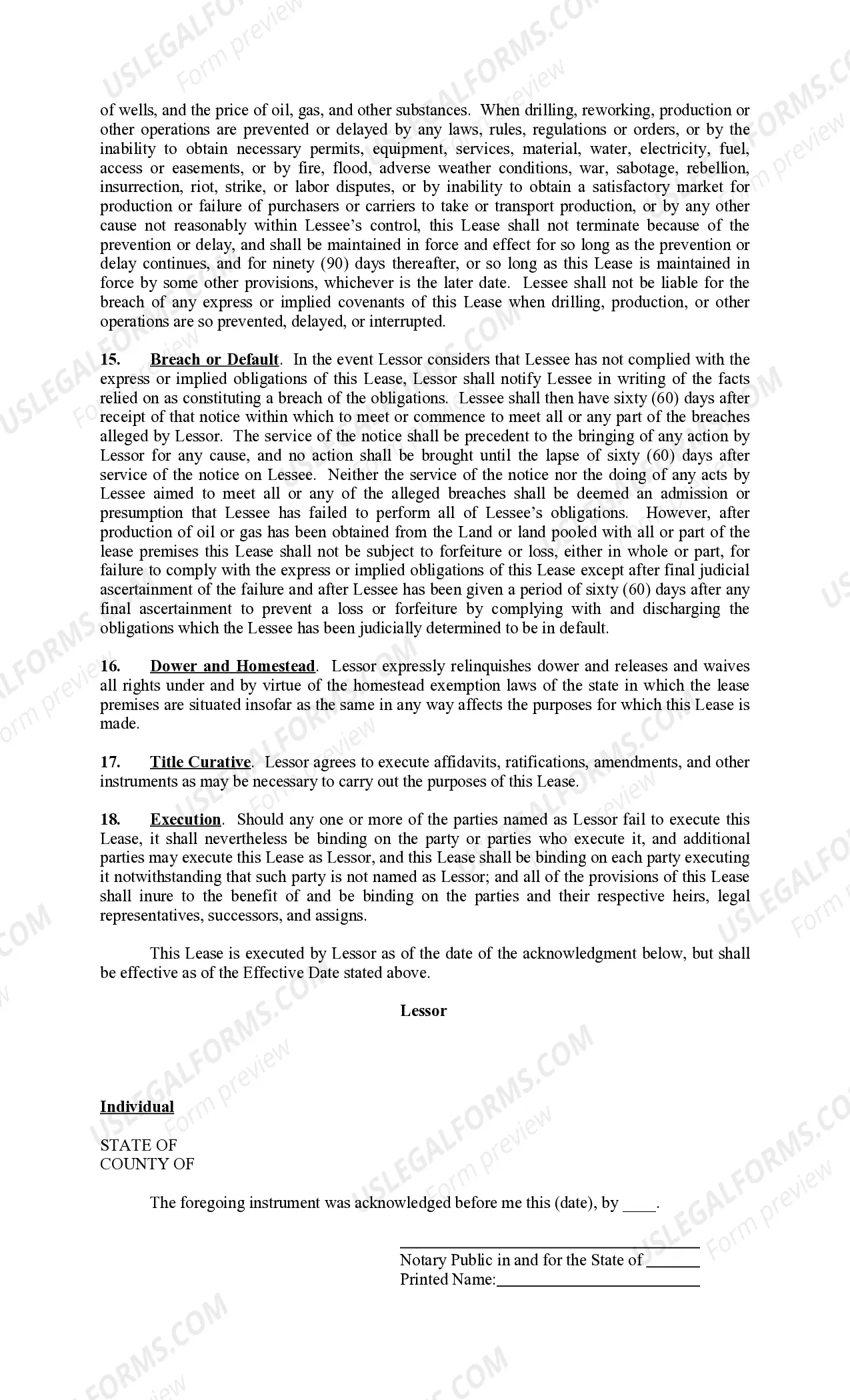
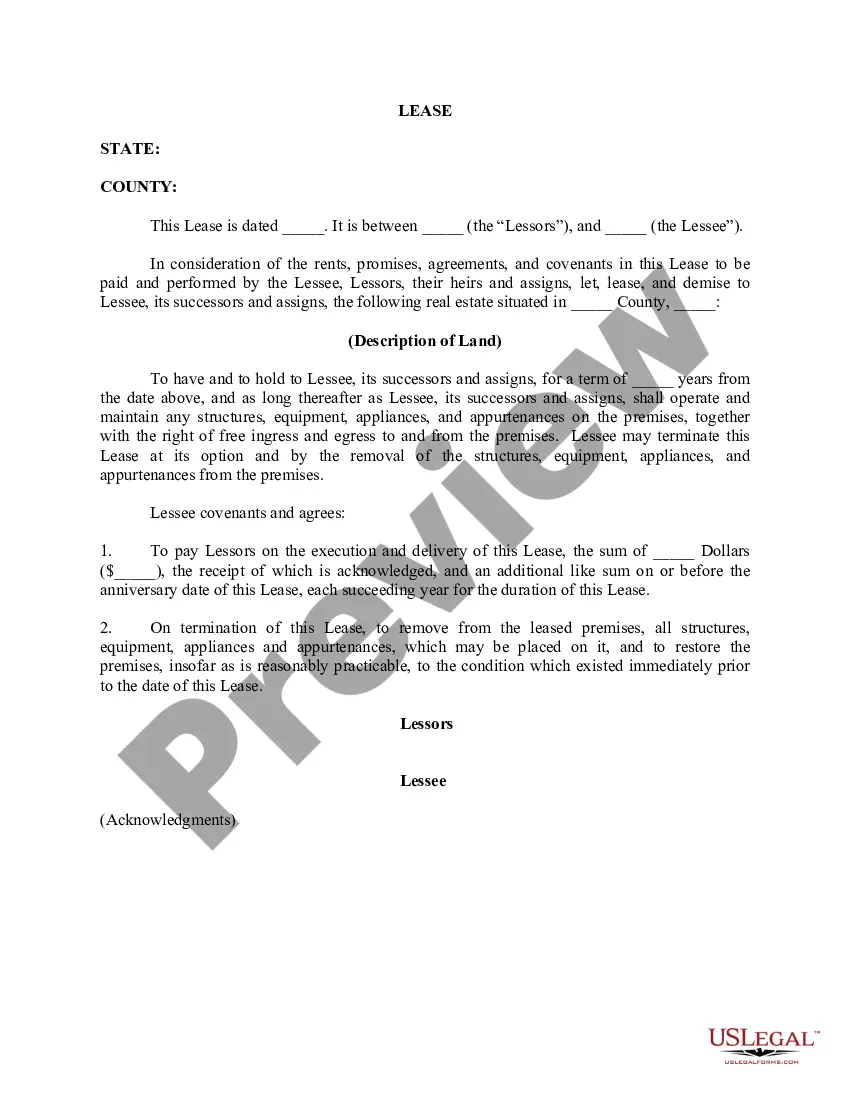
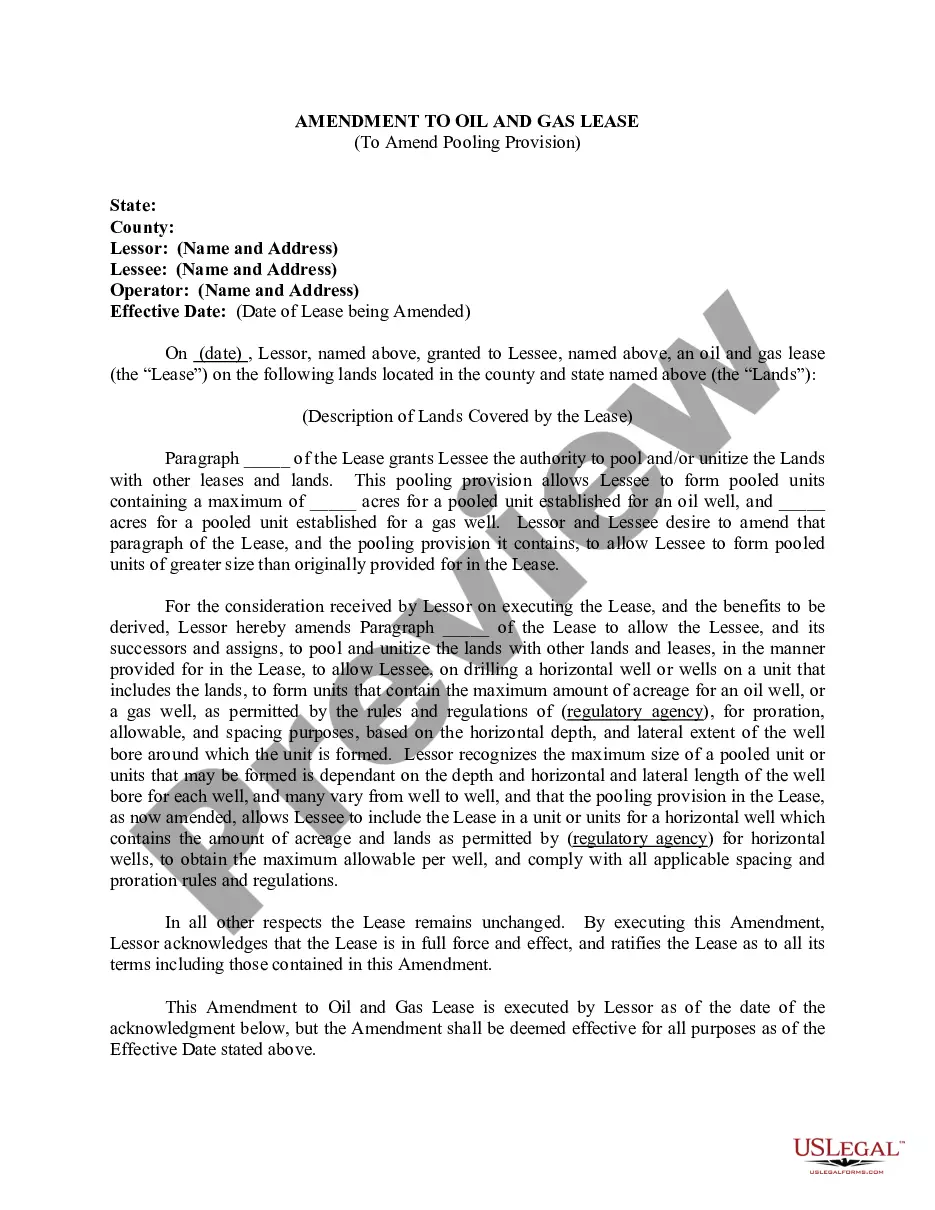
The Rental Lease Pooling Provision is a specialized lease agreement used in Illinois for the exploration and extraction of oil, gas, and other minerals. This legal document allows the lessor (property owner) to grant exclusive rights to the lessee (operator) for conducting various geological and drilling activities. This form differs from standard rental agreements by specifically addressing pooling provisions, enabling the combination of acreage for more efficient resource extraction.
What’s included in this form
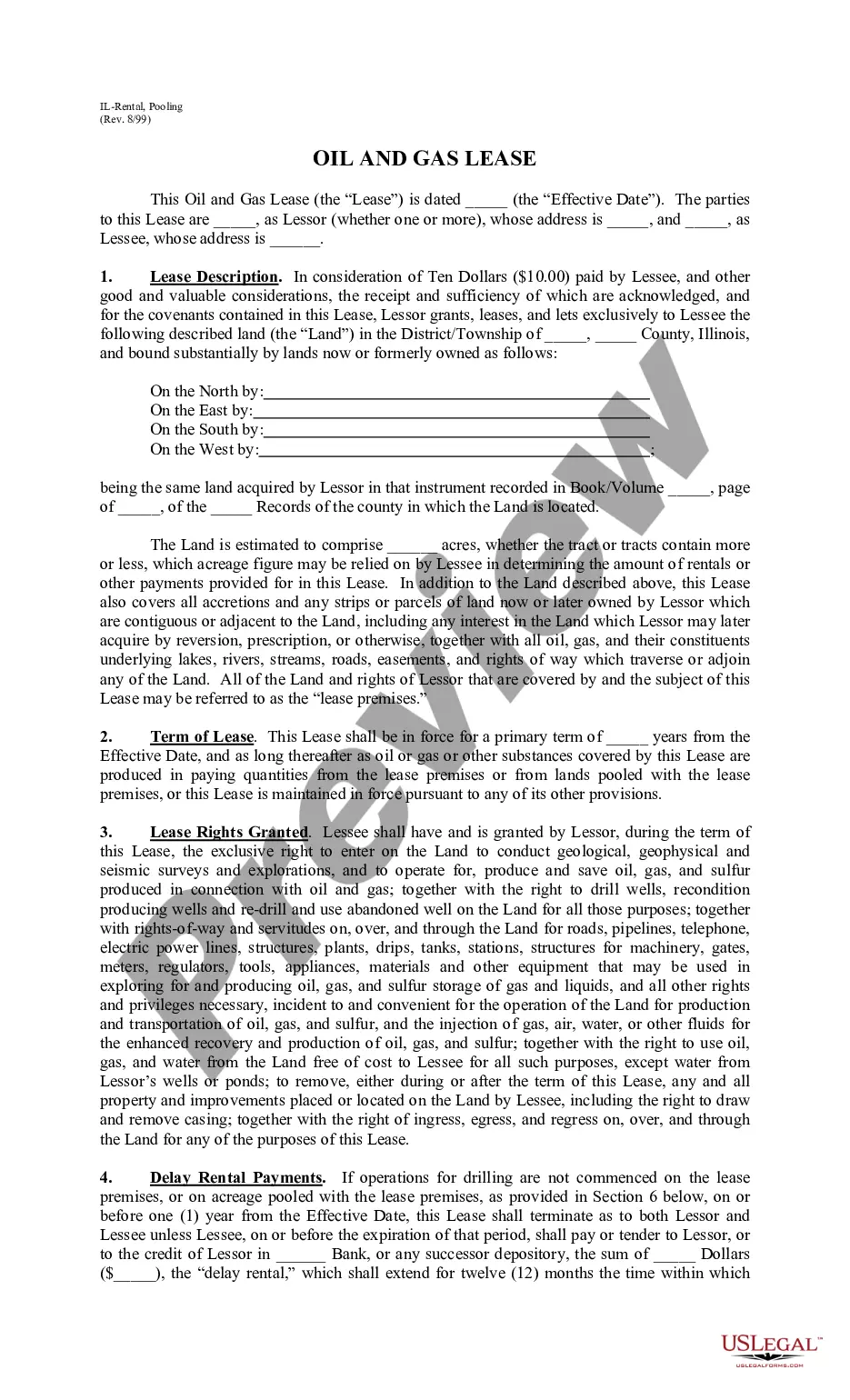
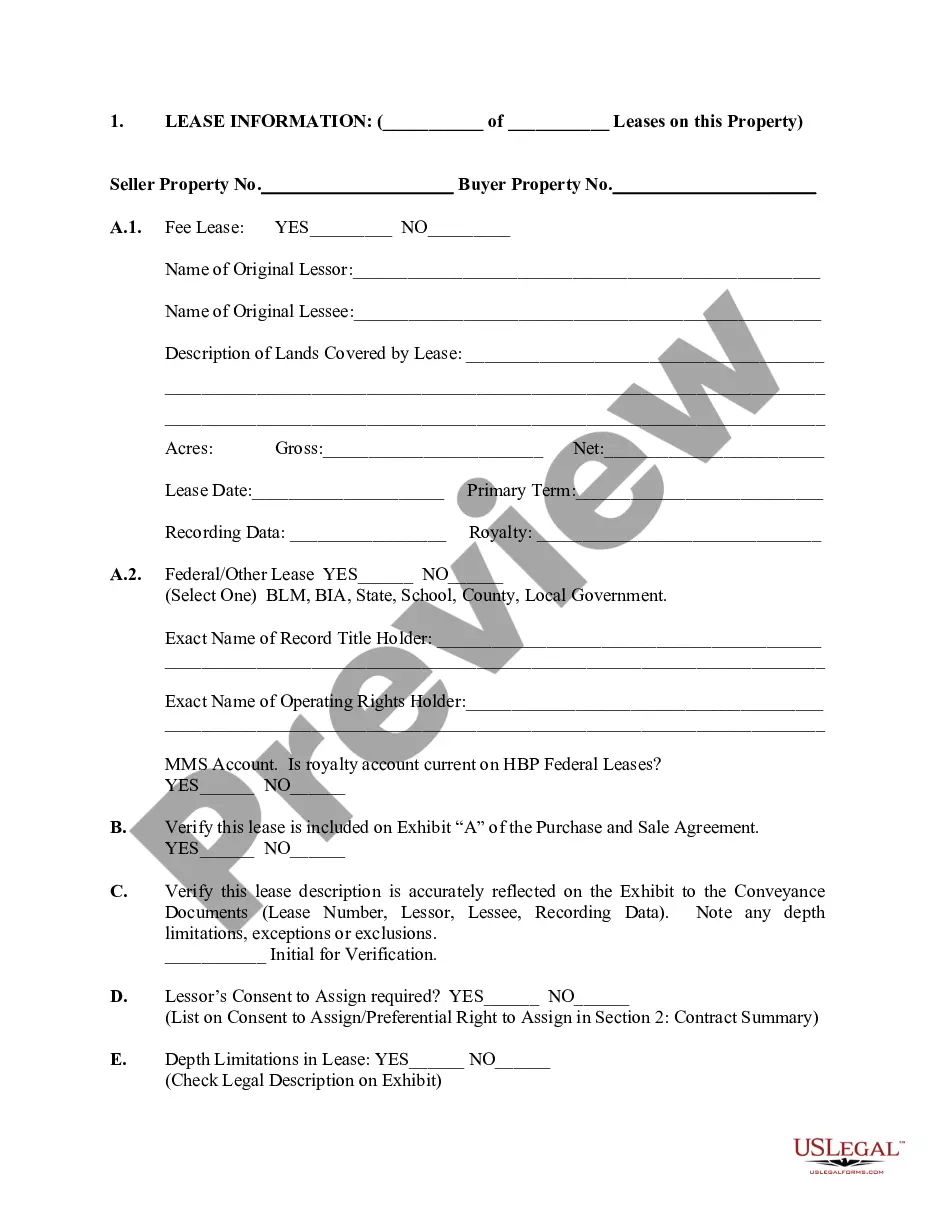
- Lease description: Specifies the land covered by the lease and its exact boundaries.
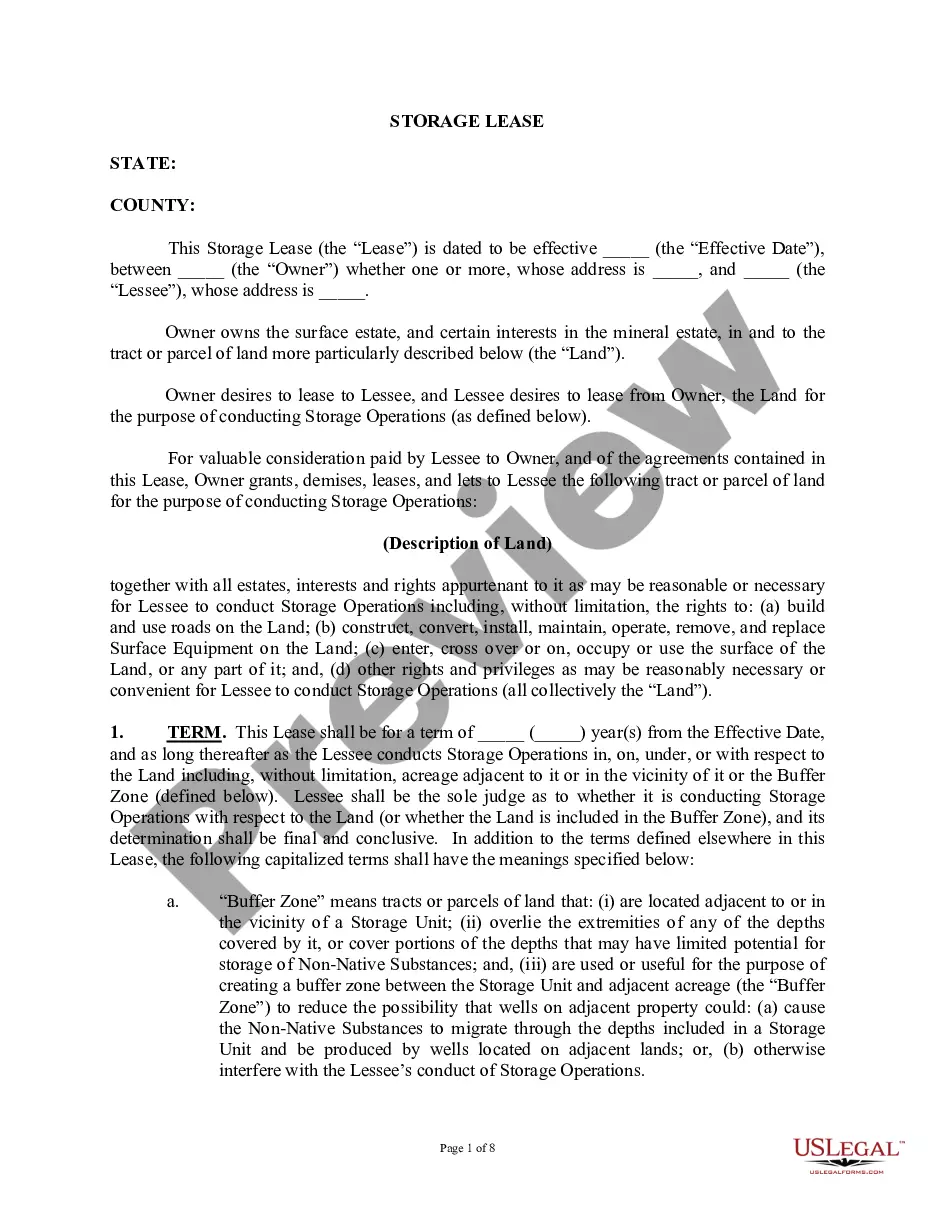
- Term of lease: Outlines the duration of the lease and conditions for extension.
- Lease rights granted: Defines the rights of the lessee to conduct operations on the land.
- Delay rental payments: Details the payments required to maintain the lease if operations do not commence within a specified time frame.
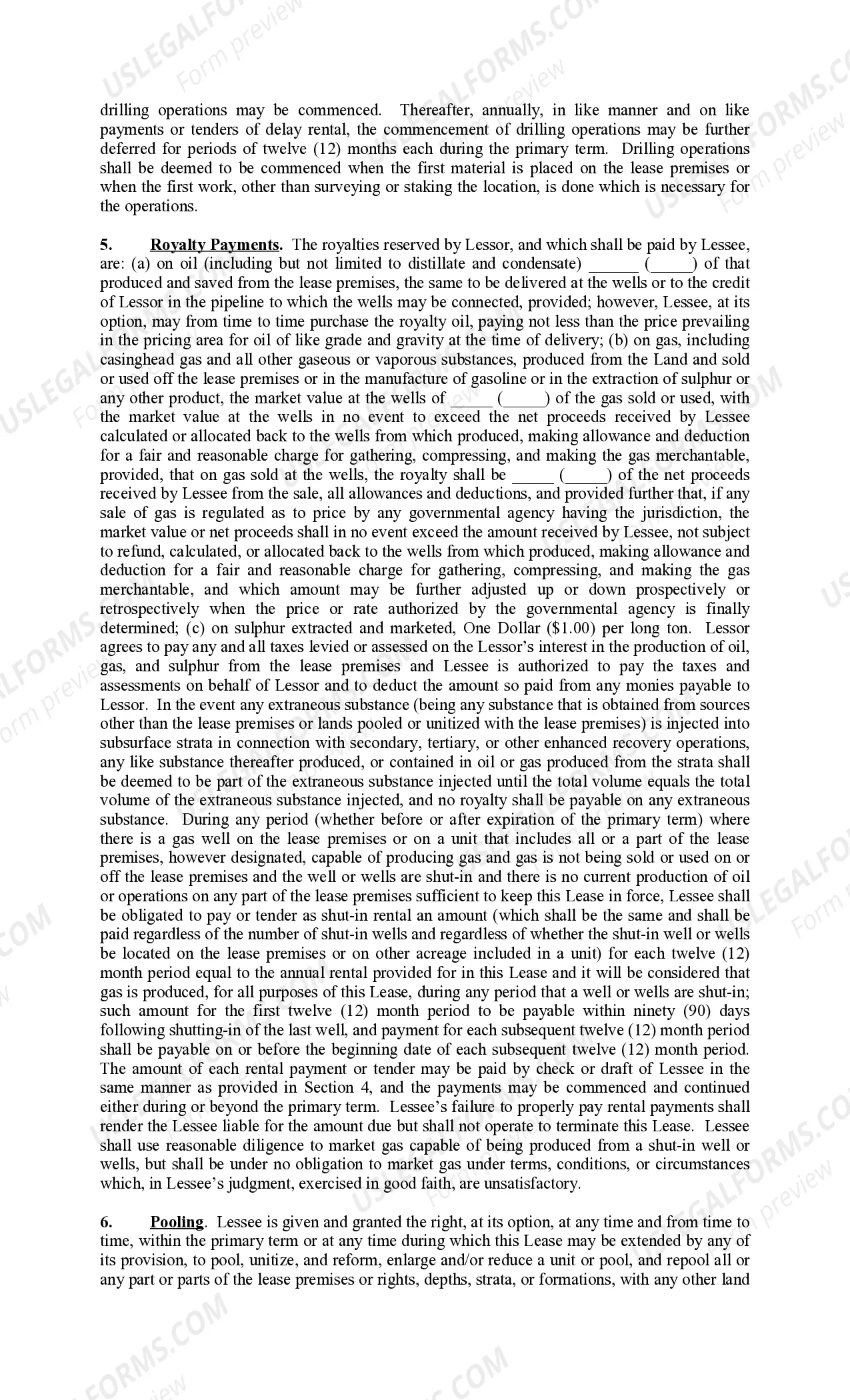
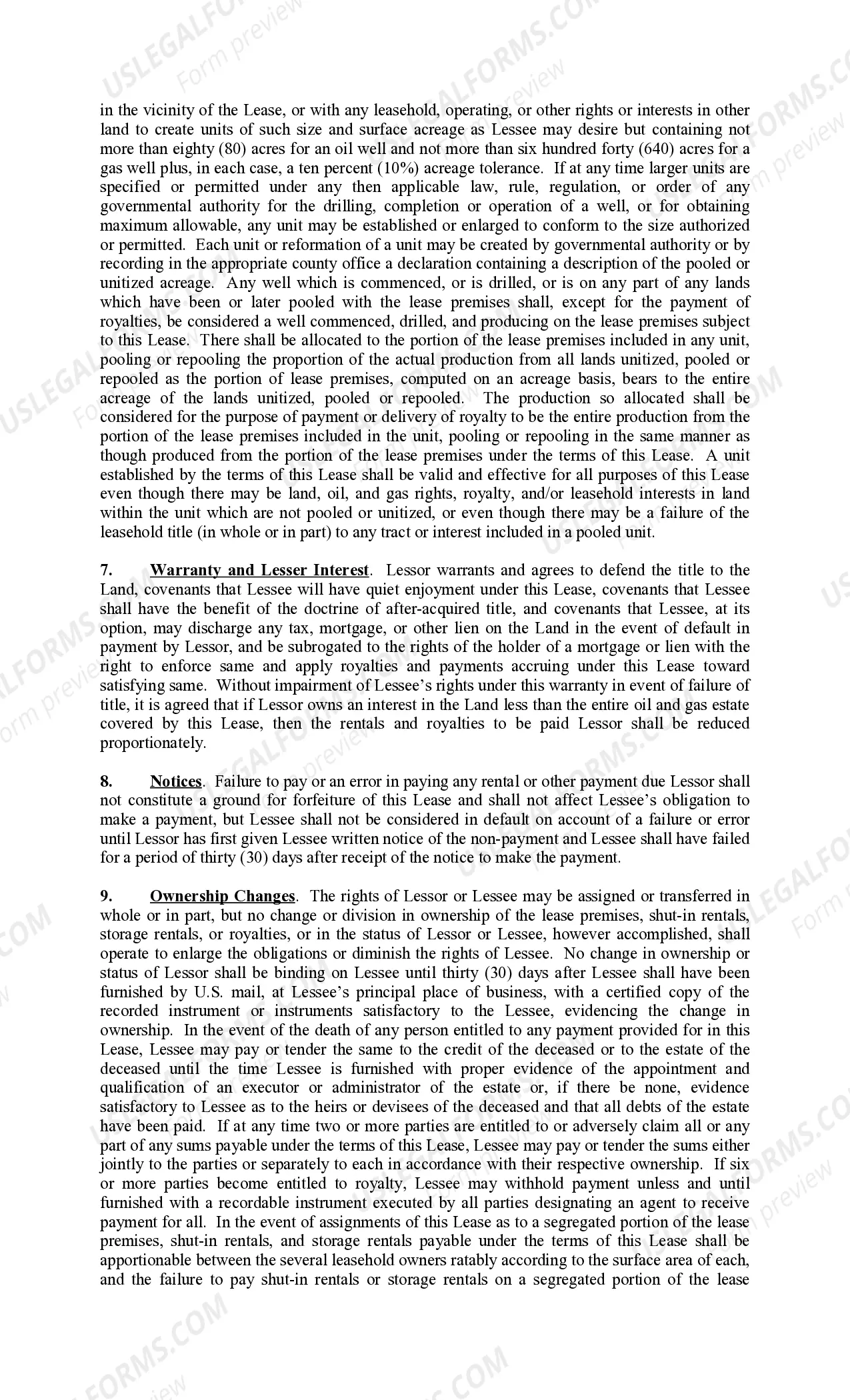
- Pooling provision: Provides the lessee the option to aggregate the lease with adjoining lands for production efficiency.
- Royalty payments: Describes how profits from mineral extraction will be shared between lessor and lessee.
When this form is needed
This form should be used when a property owner wishes to lease their land for the exploration and production of oil, gas, or other minerals in Illinois. It is especially relevant when multiple properties need to be consolidated for efficient drilling operations or when the lessor is looking to ensure pooling options are included in the lease agreement. Use this form to formalize the rights and responsibilities of parties involved in such arrangements.
Who this form is for
- Property owners (lessors) in Illinois who wish to lease their land for mineral extraction.
- Energy companies or individuals (lessees) engaged in oil and gas exploration.
- Investors interested in leasing land for the production of subsurface resources.
- Legal professionals drafting oil and gas lease agreements.
Instructions for completing this form
- Identify the parties: Clearly list the names and addresses of both the lessor and lessee.
- Specify the property: Enter the legal description of the land being leased, including acreage.
- Set the term: Fill in the start date and duration of the lease agreement.
- Detail rental payments: Indicate the delay rental payment amount and specify conditions for payment timing.
- Include pooling rights: Note any permutations for pooling agreements relevant to the lease.
- Sign and date: Ensure that all parties sign the document and include the date of signing.
Does this document require notarization?
This form does not typically require notarization unless specified by local law. However, it is advisable to have the document notarized to ensure its legal validity and strengthen enforceability in a court of law.
Get your form ready online
Our built-in tools help you complete, sign, share, and store your documents in one place.
Make edits, fill in missing information, and update formatting in US Legal Forms—just like you would in MS Word.
Download a copy, print it, send it by email, or mail it via USPS—whatever works best for your next step.
Sign and collect signatures with our SignNow integration. Send to multiple recipients, set reminders, and more. Go Premium to unlock E-Sign.
If this form requires notarization, complete it online through a secure video call—no need to meet a notary in person or wait for an appointment.
We protect your documents and personal data by following strict security and privacy standards.

Make edits, fill in missing information, and update formatting in US Legal Forms—just like you would in MS Word.

Download a copy, print it, send it by email, or mail it via USPS—whatever works best for your next step.

Sign and collect signatures with our SignNow integration. Send to multiple recipients, set reminders, and more. Go Premium to unlock E-Sign.

If this form requires notarization, complete it online through a secure video call—no need to meet a notary in person or wait for an appointment.

We protect your documents and personal data by following strict security and privacy standards.
Avoid these common issues
- Failing to accurately describe the leased property, leading to disputes over boundaries.
- Not specifying the lease term or conditions for extension and termination.
- Omitting essential details regarding delay rentals and deadlines for payment.
- Forgetting to include pooling provisions, which can impact drilling efficiency.
- Neglecting to obtain signatures from all required parties, affecting the lease's validity.
Why complete this form online
- Quick access to a professionally drafted legal document tailored to your needs.
- Edit and customize the form as needed from the comfort of your home or office.
- Secure storage of your forms for future reference and potential updates.
- Legal protection and clarity in lease agreements, reducing the risk of disputes.
Looking for another form?
Form popularity
FAQ
If an issue crops up after a lease has begun, you can still add a clause or addendum. You will just need to send your tenant written notice of the change, preferably with a lease amendment, and then get your tenant's signature on the new amendment.
A lease is automatically void when it is against the law, such as a lease for an illegal purpose. In other circumstances, like fraud or duress, a lease can be declared void at the request of one party but not the other.
Make good refers to the clause in a lease that set out how a tenant should leave a property when the lease comes to an end, whether by the expiry of the term or earlier termination. Make good is one of the most commonly disputed provisions of a lease.
An addendum must include the basic elements of any landlord/tenant agreement. You should include the date, the address of the rental property and the names of each party just as you would in the original lease.
Lease provisions are usually described as "boilerplate," since many leases use standard language. Boilerplate language in a lease may include the terms of the lease, payment dates, and late fees, among others.
What are Lease Clauses? Unlike lease rules that you decide, clauses are typically written specifically to comply with state and local landlord-tenant laws and are written in legal jargon.
10 Important Rental Lease Clauses. #1 Rent Liability. #2 Severability Clause. #3 Access to Premises. #4 Use of Premises. #5 Holding Over. #6 Sublet Rules. #7 Disturbance Clause.
Names of all tenants. Limits on occupancy. Term of the tenancy. Rent. Deposits and fees. Repairs and maintenance. Entry to rental property. Restrictions on tenant illegal activity.
Most leases and rental agreements include a clause in which the tenant agrees that the premises are in habitable (livable) condition and promises to alert the landlord to any defective or dangerous condition. Tenant's repair and maintenance responsibilities.