Illinois Revocation of Living Trust
Understanding this form
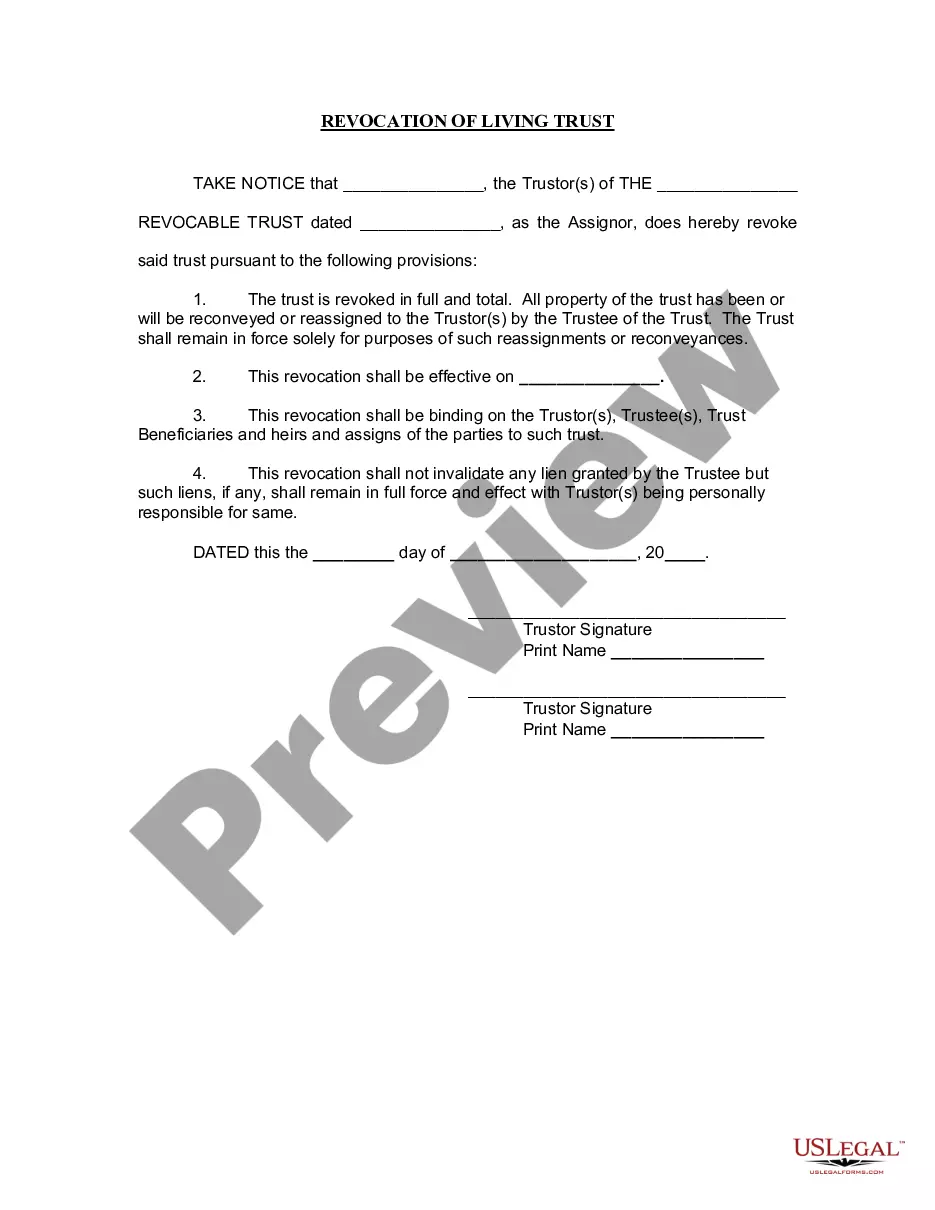
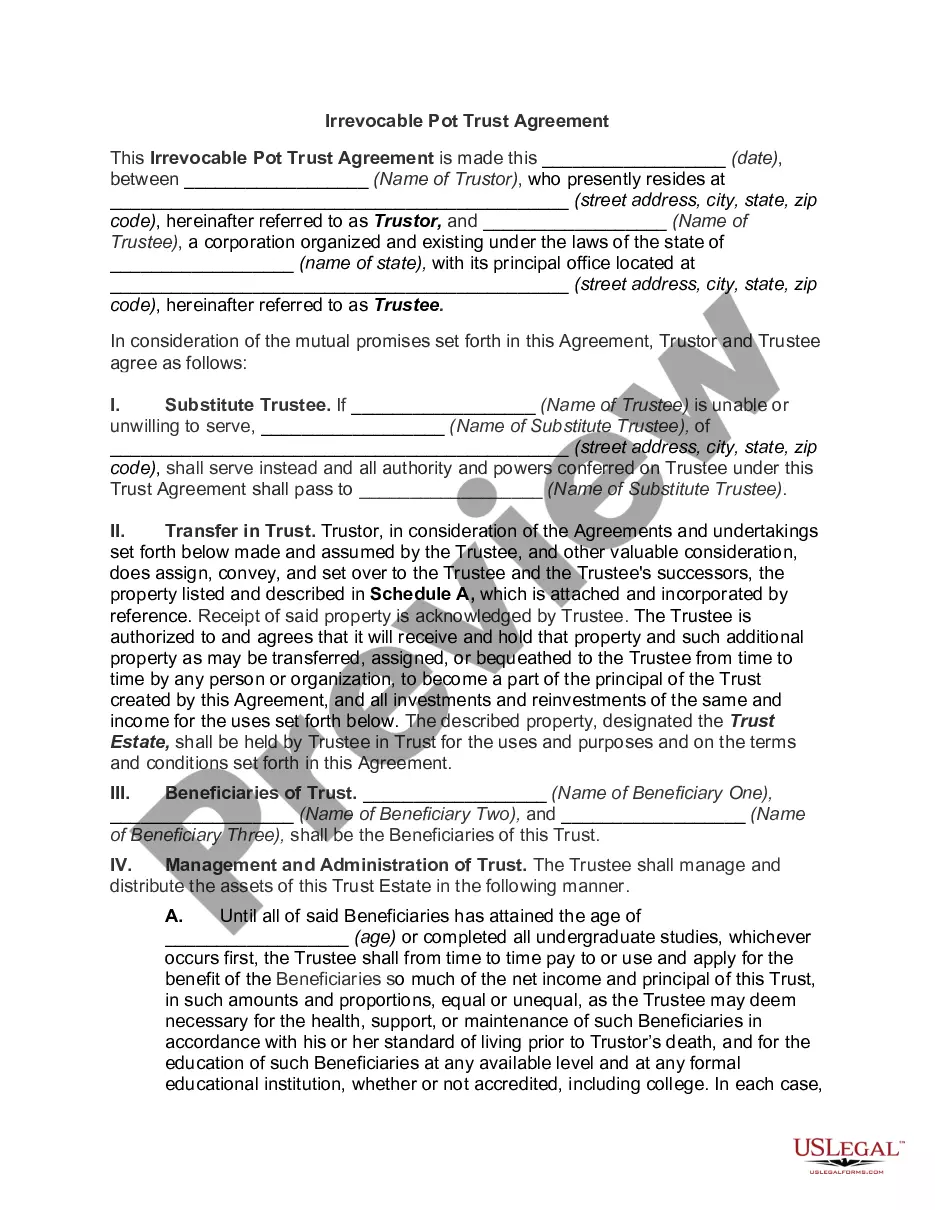
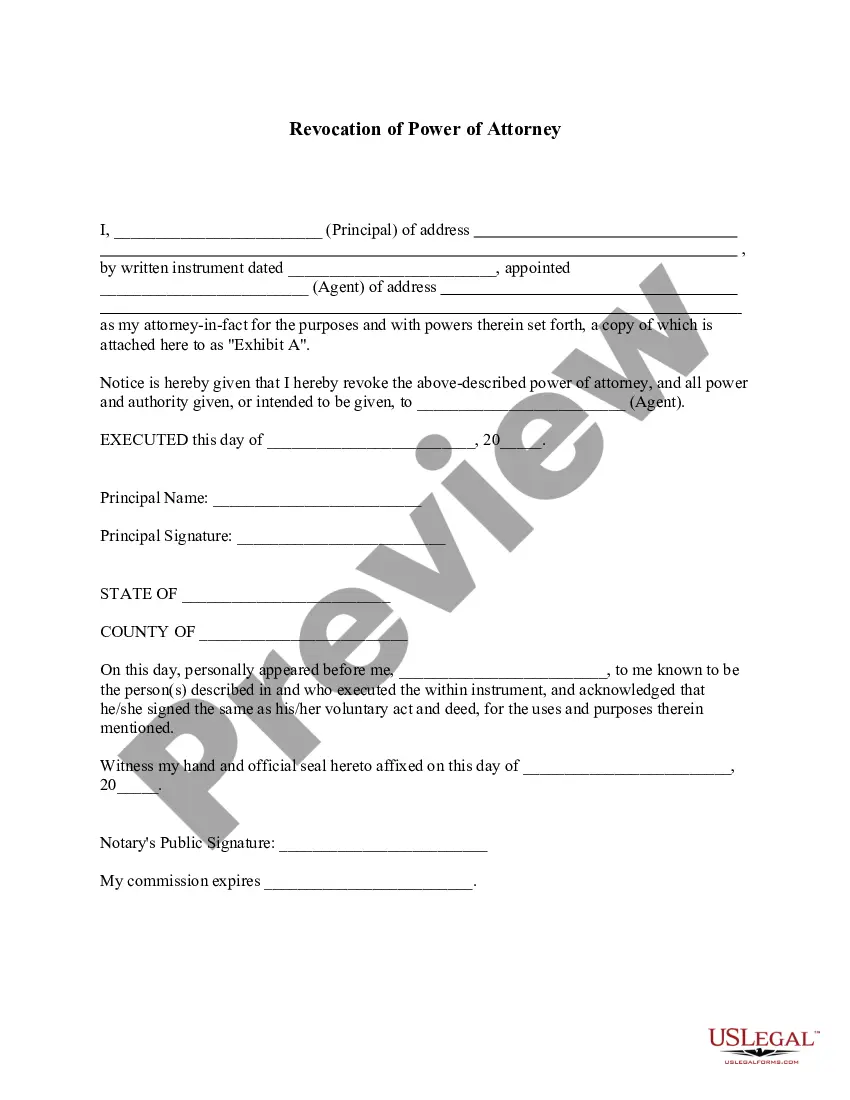
The Revocation of Living Trust form is a legal document used to formally cancel a living trust. A living trust is established during an individual's lifetime to manage their assets. This form specifies the full revocation of the designated trust and enables the return of any trust property to the original trustors. Unlike other trust-related documents, this form is aimed solely at terminating an existing trust and ensuring that all involved parties acknowledge this change.
Key components of this form
- Identification of the trustor(s) and the specific living trust being revoked.
- A declaration of the total revocation of the trust.
- Details about the return of trust property to the trustor(s).
- The effective date of the revocation.
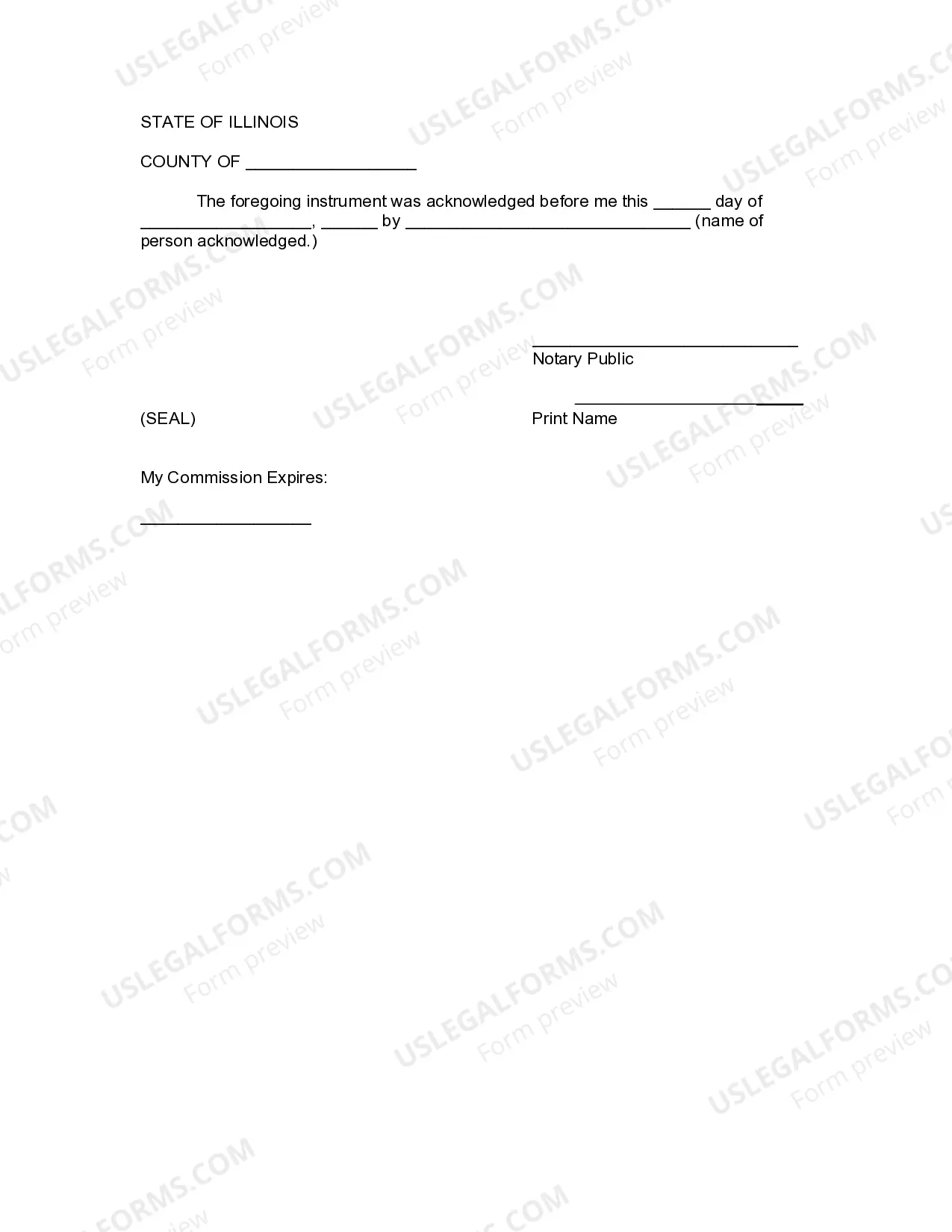
- Signatures of the trustor(s) and a notary public acknowledgment.

Situations where this form applies
You should use the Revocation of Living Trust form when you wish to terminate a living trust that you have established. This may be necessary if your circumstances change, such as a divorce, a change in your financial situation, or simply a decision to manage your assets in a different way. It is crucial to ensure that all trust property is returned to you and that all parties involved understand that the trust is no longer in effect.
Who needs this form
- Individuals who are the trustors of a living trust.
- Trustors wishing to revoke a living trust for personal or financial reasons.
- Those who need to legally document the termination of a trust.
- Anyone involved with the management or oversight of the trust's assets.
Completing this form step by step
- Identify and enter the names of the trustor(s) and the specific trust being revoked.
- Clearly state that the trust is being fully revoked.
- Provide details regarding the return of all trust property to the trustor(s).
- Specify the effective date of the revocation.
- Ensure all trustors sign the document in the presence of a notary public.
Does this document require notarization?
In most cases, this form does not require notarization. However, some jurisdictions or signing circumstances might. US Legal Forms offers online notarization powered by Notarize, accessible 24/7 for a quick, remote process.
Get your form ready online
Our built-in tools help you complete, sign, share, and store your documents in one place.
Make edits, fill in missing information, and update formatting in US Legal Forms—just like you would in MS Word.
Download a copy, print it, send it by email, or mail it via USPS—whatever works best for your next step.
Sign and collect signatures with our SignNow integration. Send to multiple recipients, set reminders, and more. Go Premium to unlock E-Sign.
If this form requires notarization, complete it online through a secure video call—no need to meet a notary in person or wait for an appointment.
We protect your documents and personal data by following strict security and privacy standards.

Make edits, fill in missing information, and update formatting in US Legal Forms—just like you would in MS Word.

Download a copy, print it, send it by email, or mail it via USPS—whatever works best for your next step.

Sign and collect signatures with our SignNow integration. Send to multiple recipients, set reminders, and more. Go Premium to unlock E-Sign.

If this form requires notarization, complete it online through a secure video call—no need to meet a notary in person or wait for an appointment.

We protect your documents and personal data by following strict security and privacy standards.
Common mistakes
- Not specifying the correct trust that is being revoked.
- Failing to include the effective date of revocation.
- Neglecting to have the form notarized, if required by state law.
- Omitting signatures from all trustors involved.
Why complete this form online
- Convenient access to legal documents from anywhere.
- Edit and tailor the form to your specific needs before downloading.
- Reliable templates created by licensed attorneys, ensuring legal compliance.
- Instant availability, saving time compared to traditional legal services.
Quick recap
- The Revocation of Living Trust form is essential for officially canceling a living trust.
- Proper notarization and completion of all sections are necessary for legal validity.
- This form is relevant when personal circumstances or estate planning needs change.
- Using the form online enhances convenience and ensures compliance with legal standards.
Looking for another form?
Form popularity
FAQ
A revocable trust, or living trust, is a legal entity to transfer assets to heirs without the expense and time of probate.A living trust also can be revoked or dissolved if there is a divorce or other major change that can't be accommodated by amending the trust.
How can I dissolve my trust? You can dissolve a trust by bringing forward its final distribution date. This can be done by the trustees or settlor if the trust deed says they can, or by the combined consent of the beneficiaries.
Modifying an Irrevocable Trust The easiest and most straightforward way to change or revoke a trust is for the grantor and all potential beneficiaries to agree to the change and sign a consent modification document. A grantor may also be able to petition the court to revoke a trust based on mistake.
Read the Documents Carefully. Some agreements contain language that allows a trustee to dissolve the trust if its purpose is no longer feasible. Petition the Court. In some cases, a court agrees to break an irrevocable trust if the trustee or beneficiaries petition for assistance. Dispose of the Trust's Assets.
EXAMPLE: Yvonne and Andre make a living trust together. Step 1: Transfer ownership of trust property from yourself as trustee back to yourself. Step 2: A revocation prints out with your trust document. Step 3: Complete the Revocation of Trust by filling in the date, and then sign it in front of a notary public.
The first step in dissolving a revocable trust is to remove all the assets that have been transferred into it. The second step is to fill out a formal revocation form, stating the grantor's desire to dissolve the trust.
If you want to revoke your trust, you must formally take all of the trust assets out of the living trust and transfer title back to you. Basically, you must reverse the process you followed when you transferred ownership of the property to yourself as trustee.
A revocable trust, or living trust, is a legal entity to transfer assets to heirs without the expense and time of probate.A living trust also can be revoked or dissolved if there is a divorce or other major change that can't be accommodated by amending the trust.
Key Takeaways. Revocable trusts, as their name implies, can be altered or completely revoked at any time by their grantorthe person who established them. The first step in dissolving a revocable trust is to remove all the assets that have been transferred into it.