Idaho Memorandum of Prenuptial Agreement
What this document covers
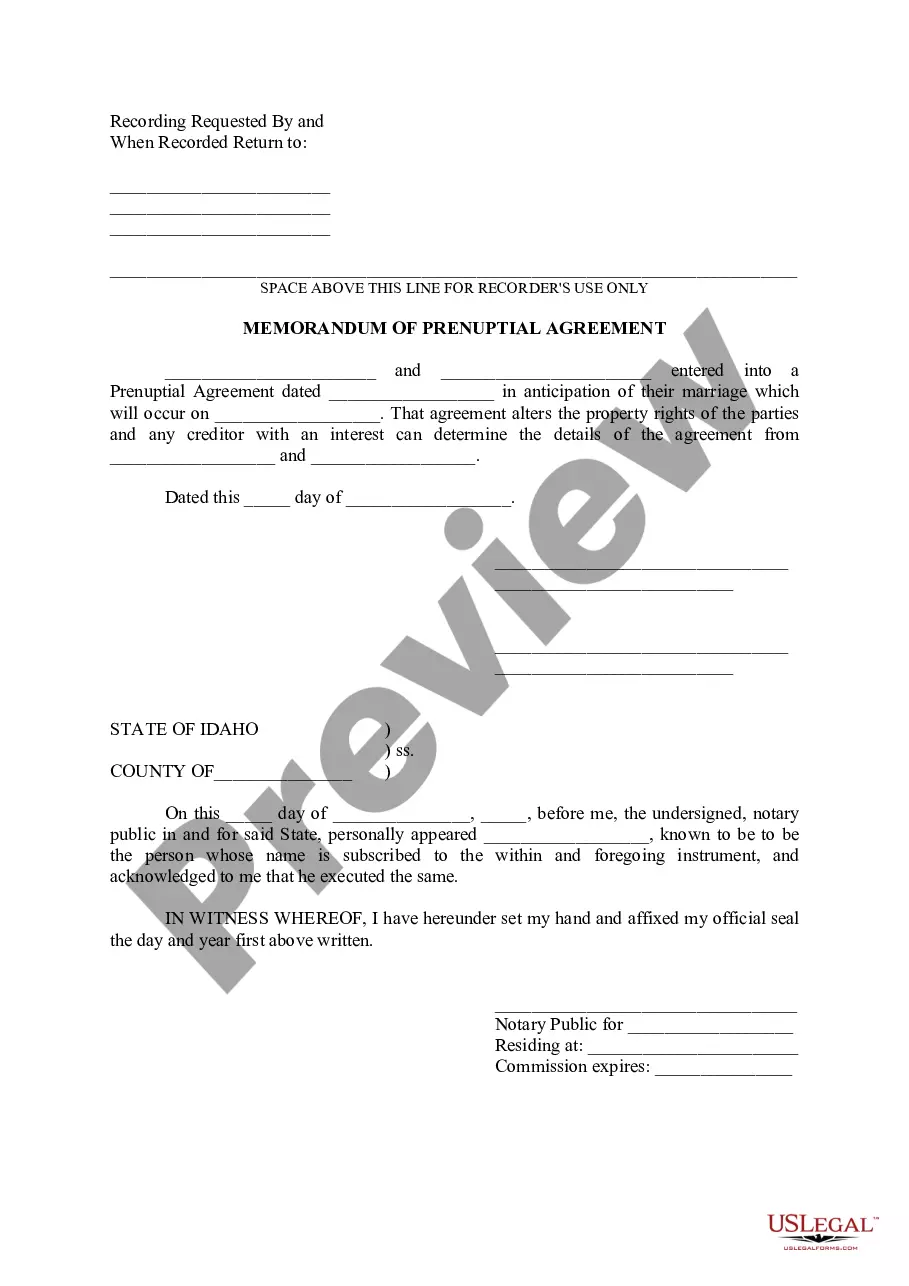
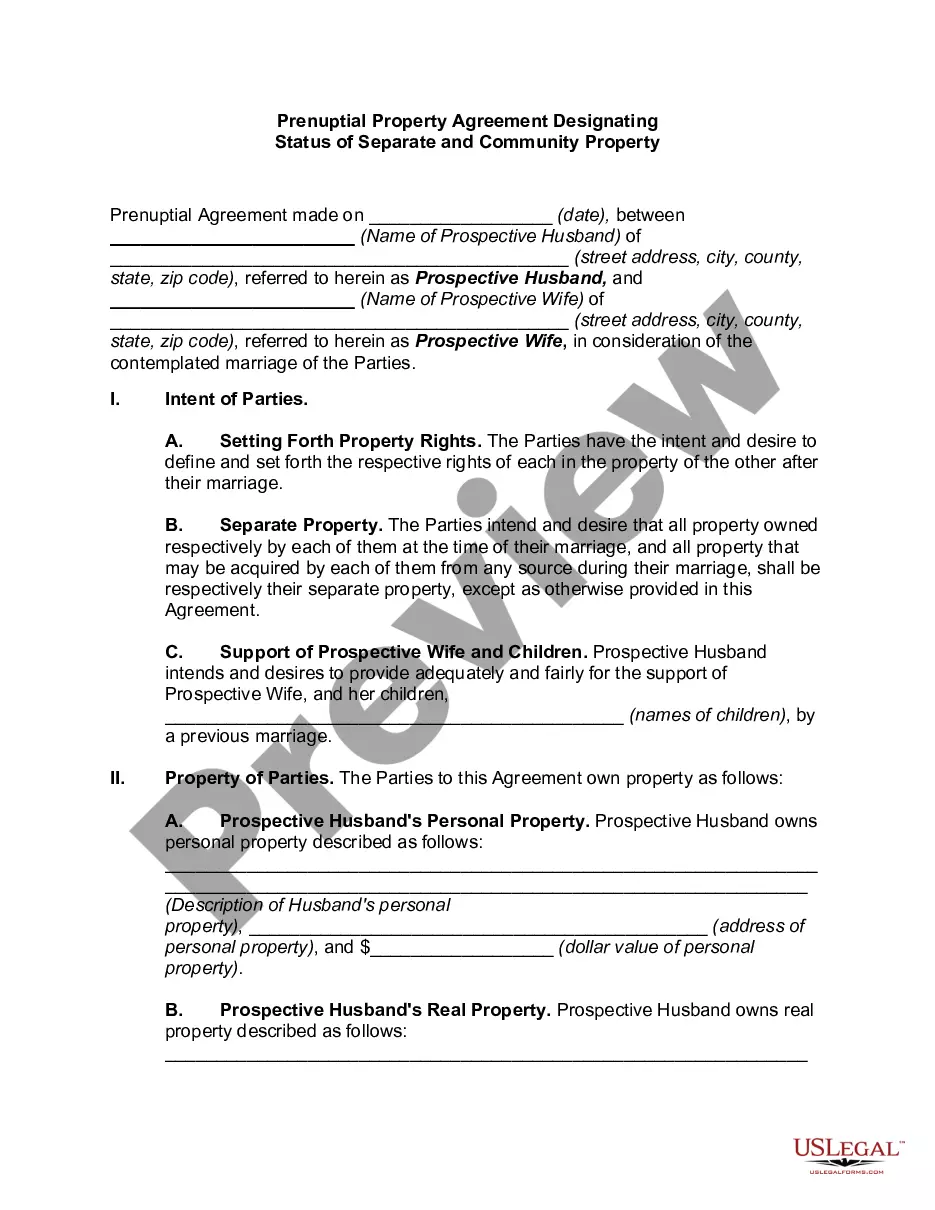
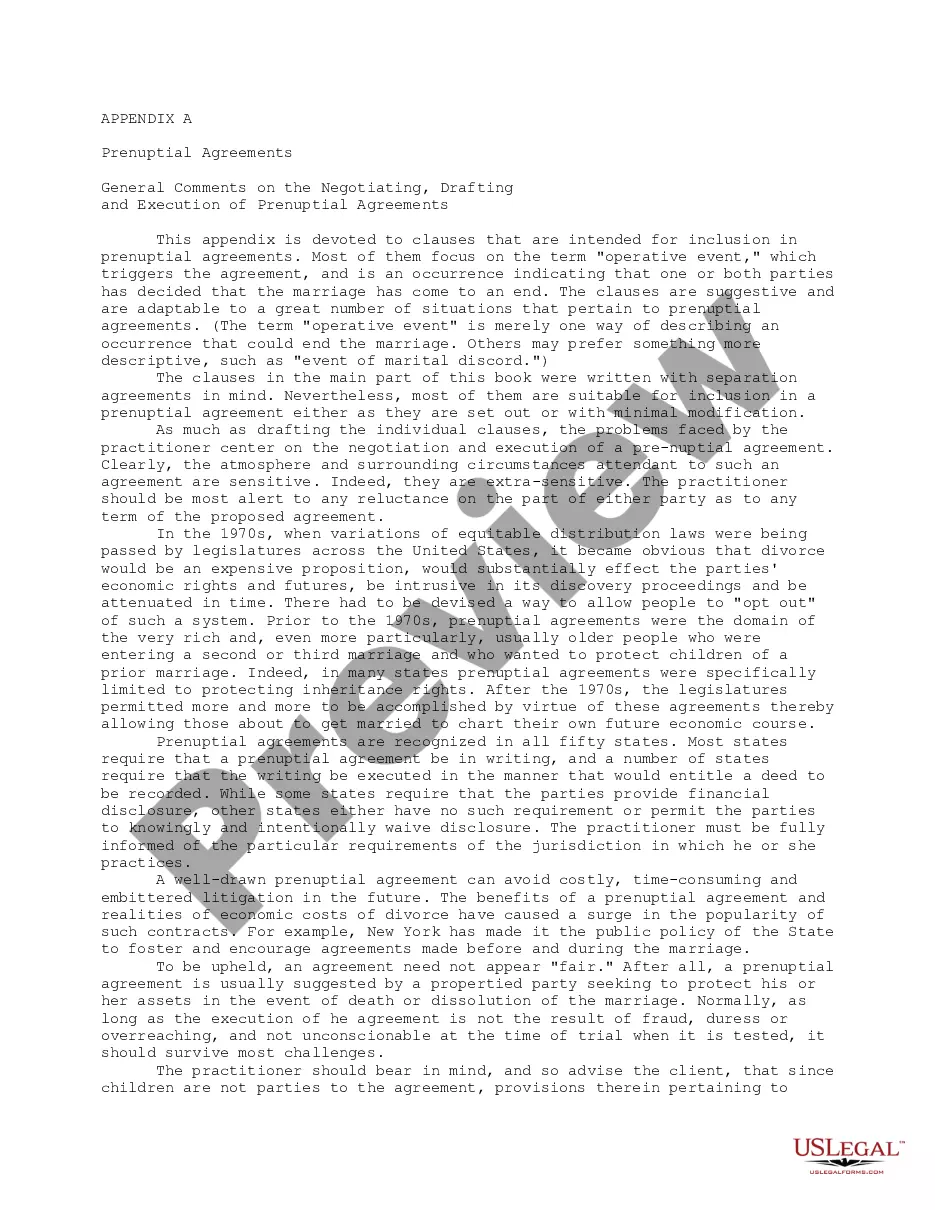
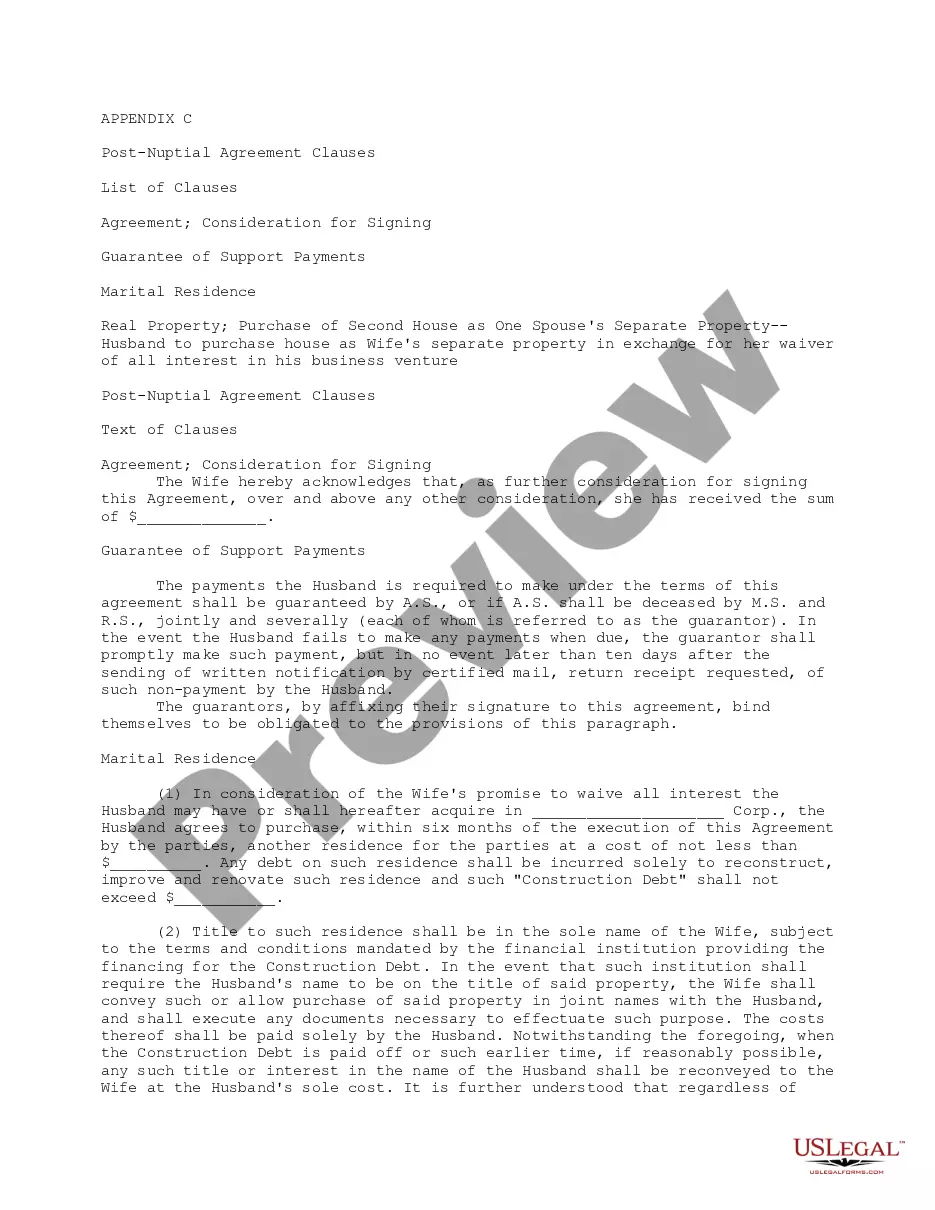
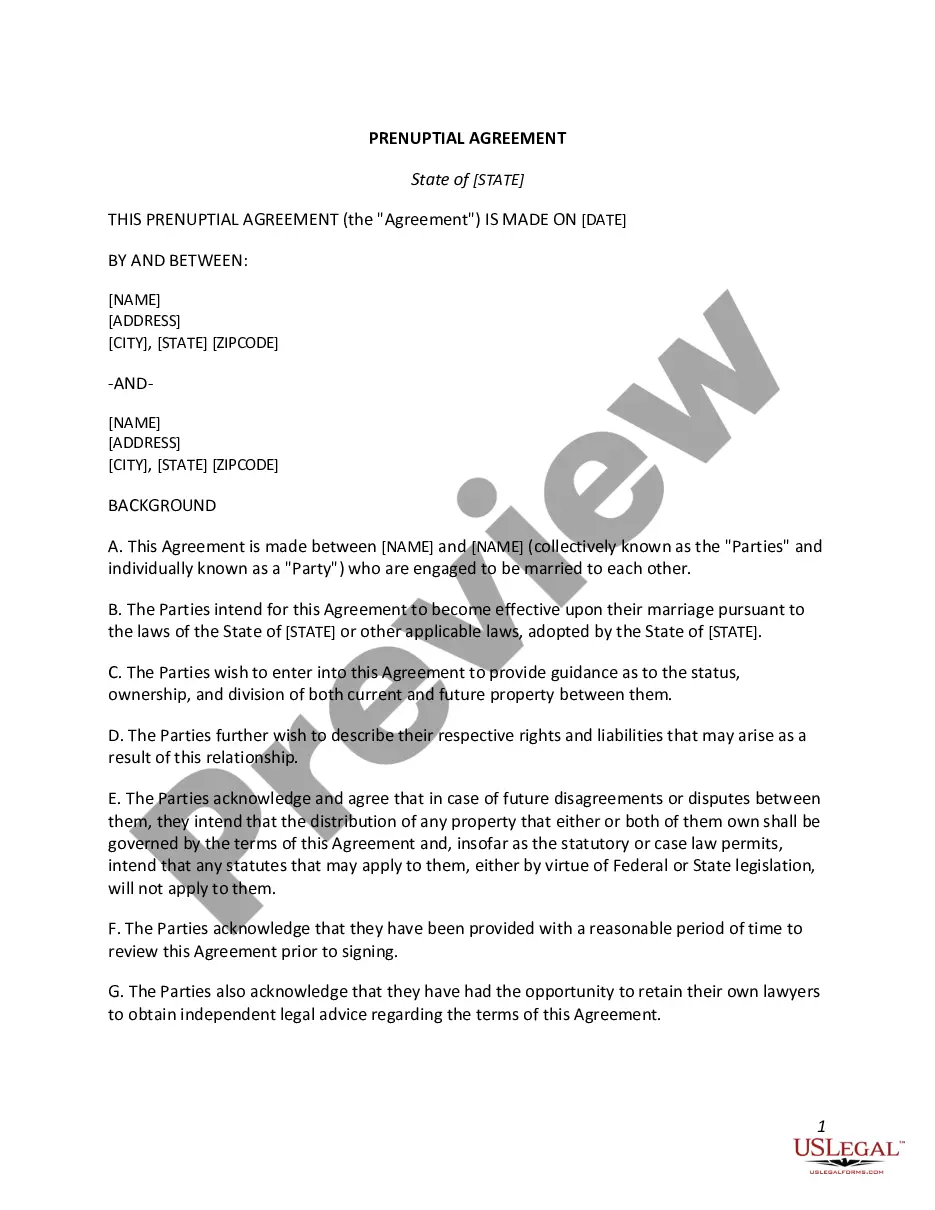
The Memorandum of Prenuptial Agreement is a legal document that outlines an agreement between two parties regarding property rights in anticipation of marriage. This document serves to inform creditors about the terms of the prenuptial agreement, ensuring that the rights and obligations defined within are acknowledged and enforceable. It differs from a full prenuptial agreement by summarizing its existence and essential details without restating the entire contract.
Main sections of this form
- Recording information section for documentation purposes.
- Identification of the parties involved and the date of the prenuptial agreement.
- Details about any property rights that have been altered by the prenuptial agreement.
- Signature and acknowledgement fields for notarization.
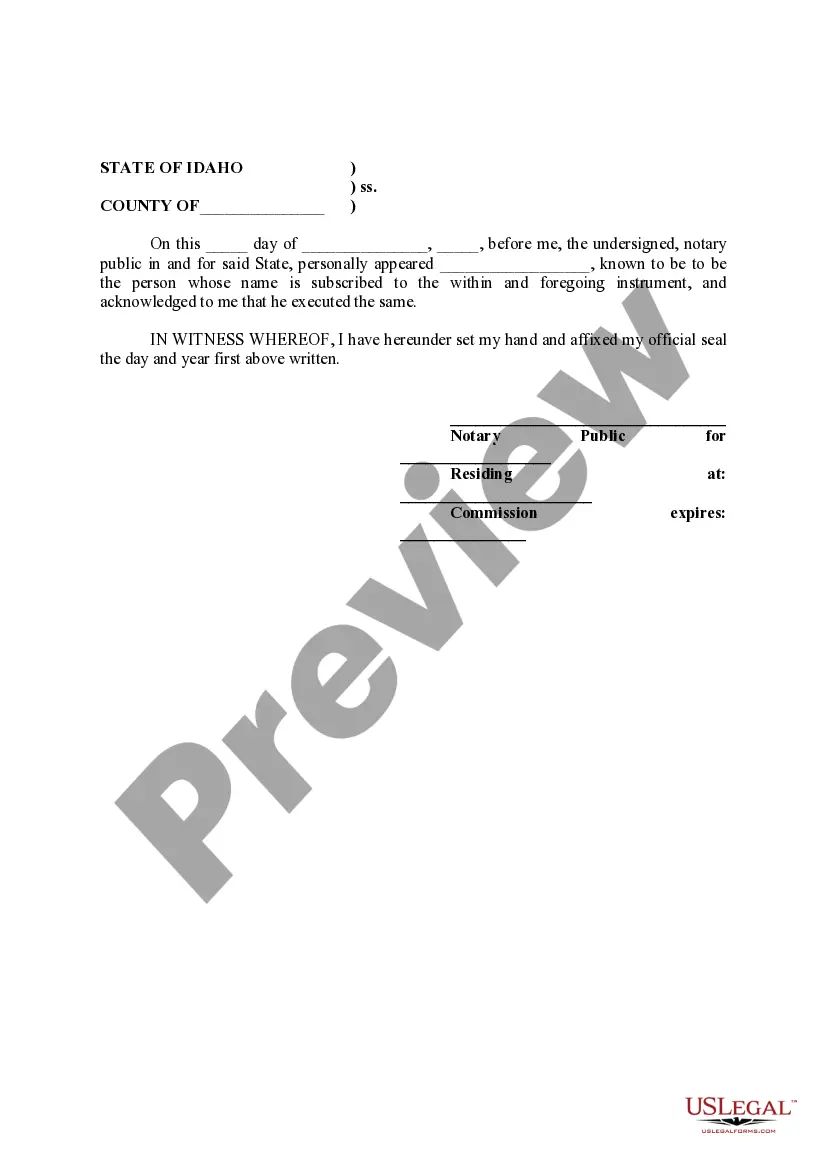
- Notary public certification to affirm the authenticity of the signatures.
When to use this document
This memorandum should be used when two individuals are entering into a prenuptial agreement prior to their marriage. It is essential for notifying interested parties, such as creditors, about the modifications to property rights and entitlements established in the prenuptial agreement. This form helps protect both parties and ensures clarity regarding asset division should the marriage end in divorce or separation.
Who can use this document
- Couples planning to marry who wish to clarify their property rights.
- Individuals seeking to protect their assets prior to marriage.
- Parties who have reached a mutual agreement regarding asset distribution before marriage.
- Legal representatives assisting clients with marital agreements.
Completing this form step by step
- Identify the full names of both parties entering into the prenuptial agreement.
- Enter the date of the prenuptial agreement and the anticipated marriage date.
- Specify the details or references to the property rights modified by the agreement.
- Provide the date of execution of the memorandum.
- Include signatures for both parties and have it notarized by a licensed notary public.
Notarization guidance
Yes, this form must be notarized to be legally valid. Having a notary public certify the signatures provides an additional layer of authenticity and helps protect against disputes about the agreement. US Legal Forms offers integrated online notarization for your convenience, allowing for secure video calls and legal equivalence without the need for travel.
Get your form ready online
Our built-in tools help you complete, sign, share, and store your documents in one place.
Make edits, fill in missing information, and update formatting in US Legal Forms—just like you would in MS Word.
Download a copy, print it, send it by email, or mail it via USPS—whatever works best for your next step.
Sign and collect signatures with our SignNow integration. Send to multiple recipients, set reminders, and more. Go Premium to unlock E-Sign.
If this form requires notarization, complete it online through a secure video call—no need to meet a notary in person or wait for an appointment.
We protect your documents and personal data by following strict security and privacy standards.

Make edits, fill in missing information, and update formatting in US Legal Forms—just like you would in MS Word.

Download a copy, print it, send it by email, or mail it via USPS—whatever works best for your next step.

Sign and collect signatures with our SignNow integration. Send to multiple recipients, set reminders, and more. Go Premium to unlock E-Sign.

If this form requires notarization, complete it online through a secure video call—no need to meet a notary in person or wait for an appointment.

We protect your documents and personal data by following strict security and privacy standards.
Common mistakes to avoid
- Failing to provide complete and accurate names of the parties involved.
- Not specifying the correct dates of the prenuptial agreement and anticipated marriage.
- Omitting signatures or neglecting to have the form notarized, if required.
- Not clearly outlining the property rights being altered.
Why use this form online
- Convenience of downloading and completing the form at your own pace.
- Editable options make it easy to adapt the form to your specific situation.
- Access to templates reviewed by licensed attorneys ensures reliability and compliance with legal standards.
Looking for another form?
Form popularity
FAQ
Prenuptial agreements do not expire, unless they have a specific clause in them stating the agreement expires after a certain length of marriage (very uncommon).
A prenup can also be overturned if one or both parties change their mind after initially signing the agreement. They may decide at that time to sign a new agreement suspending the prenup.
The agreement was signed under fraud or duress; The agreement is unconscionable; The circumstances of the parties have changed, making the agreement unenforceable at this time.
Typically, a couple's prenuptial agreement will last for the lifetime of the marriage.For example, you can set the prenuptial agreement to last for 5 years before it automatically expires. If there is no sunset clause or specific stipulation regarding how long a prenup should last, its lifespan is indefinite.
What Could Invalidate a Prenup? Failing to fulfill any of California's prenuptial agreement requirements could result in a prenup the courts will not enforce. Examples include having a verbal contract, forcing one spouse to sign involuntarily, skipping legal requirements and including unfair terms in the agreement.
Prenuptial agreements, if drawn up and executed correctly, are legally binding and are usually upheld in court.
Contesting a prenup To invalidate a prenup, parties need to successfully argue that it is invalid. There are numerous reasons an agreement may not be valid. Some of these reasons include: Evidence that one party was forced or coerced into signing it.
The agreement must be in writing, signed and witnessed. Both parties must have provided complete disclosure of all assets liabilities.