Idaho Waiver of Accounting
Understanding this form
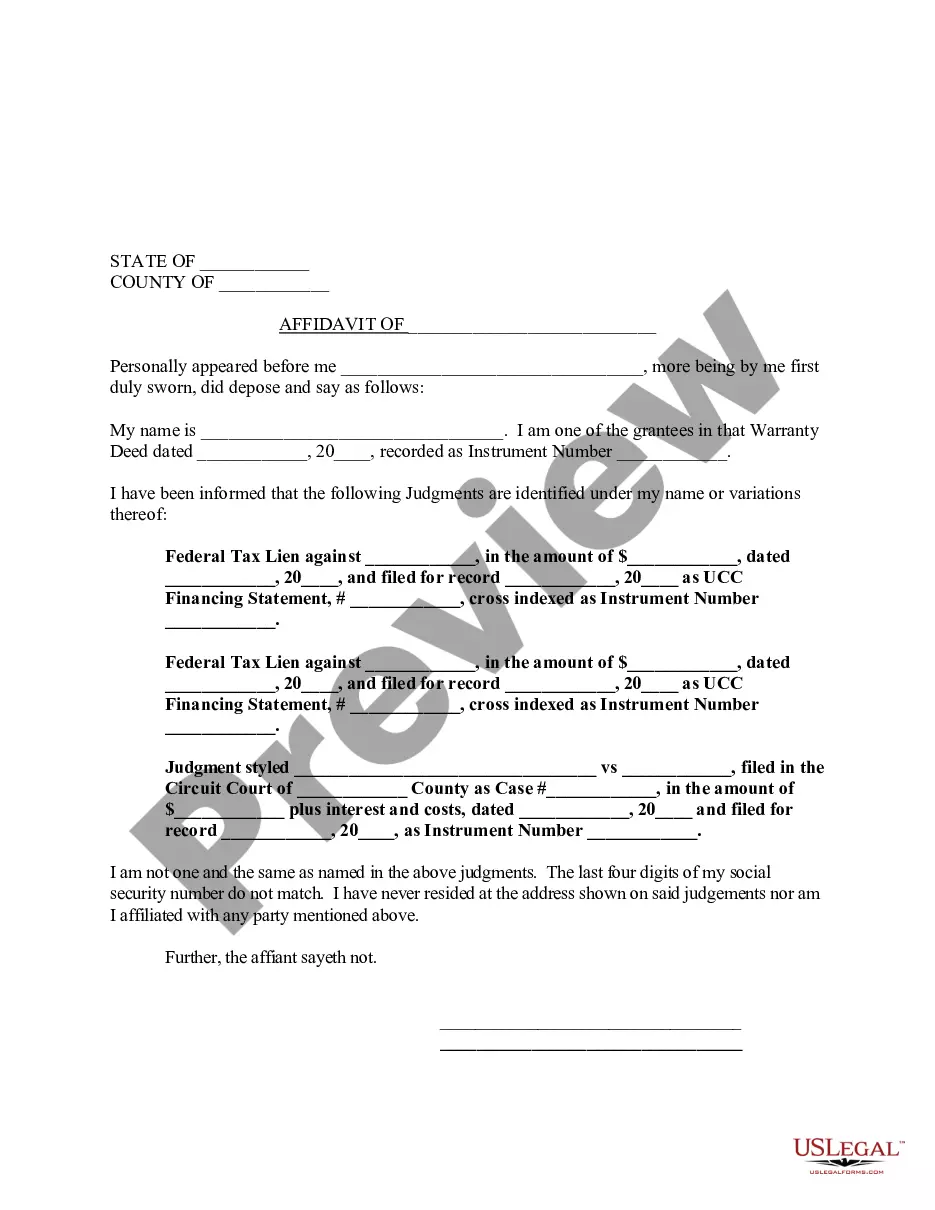
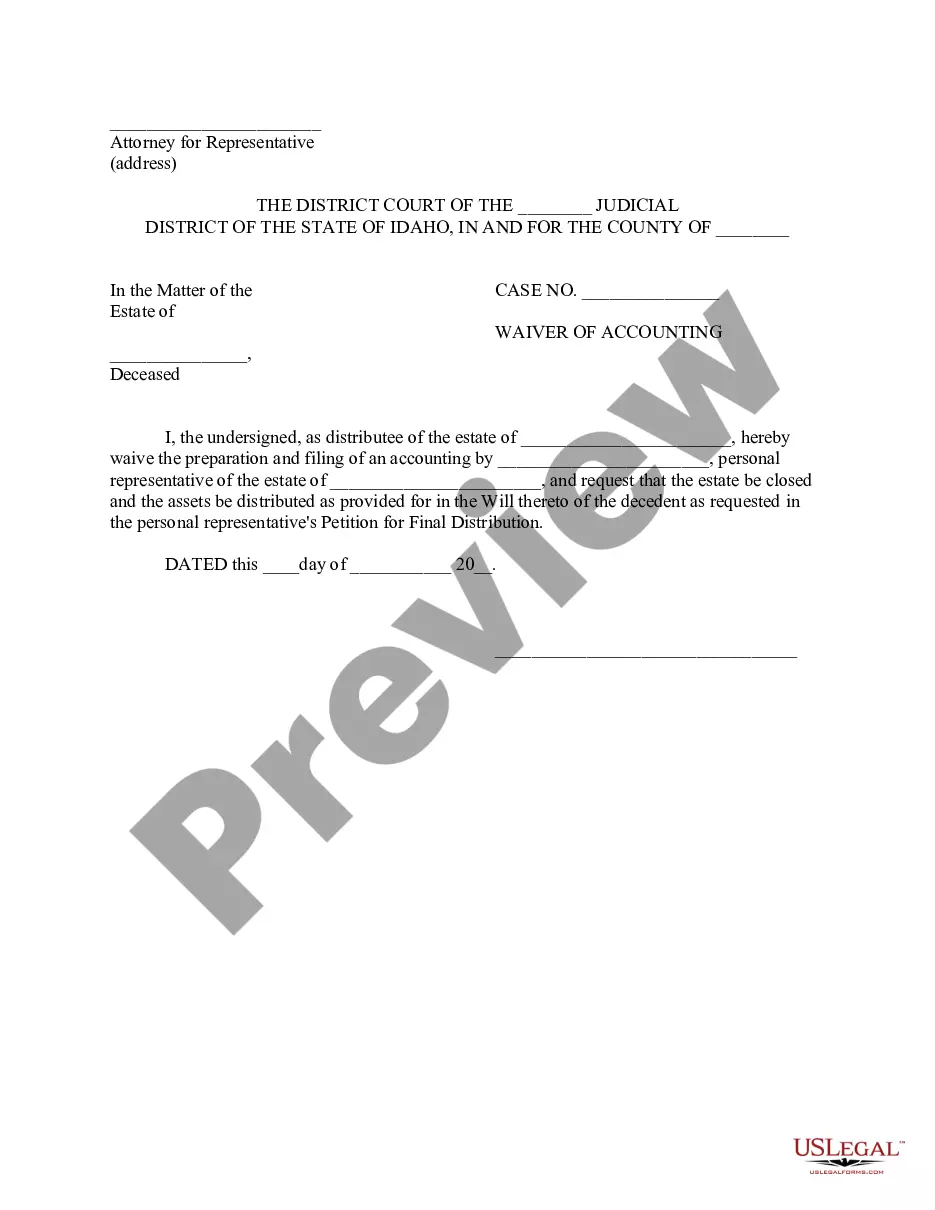
The Waiver of Accounting is a legal document used by heirs of an estate. This form allows an heir to waive the right to an accounting of the estate's assets and debts as prepared by the personal representative. Instead, the heir indicates their acceptance of the asset distribution outlined in the deceased's will. This differs from similar forms, as it specifically focuses on the final distribution of an estate without requiring a detailed accounting.
Main sections of this form
- Information on the personal representative, including their name and address.
- Details of the deceased, including the name and case number.
- Statement of waiver by the heir regarding the accounting of the estate.
- Signature line for the distributee (heir) to confirm the waiver.
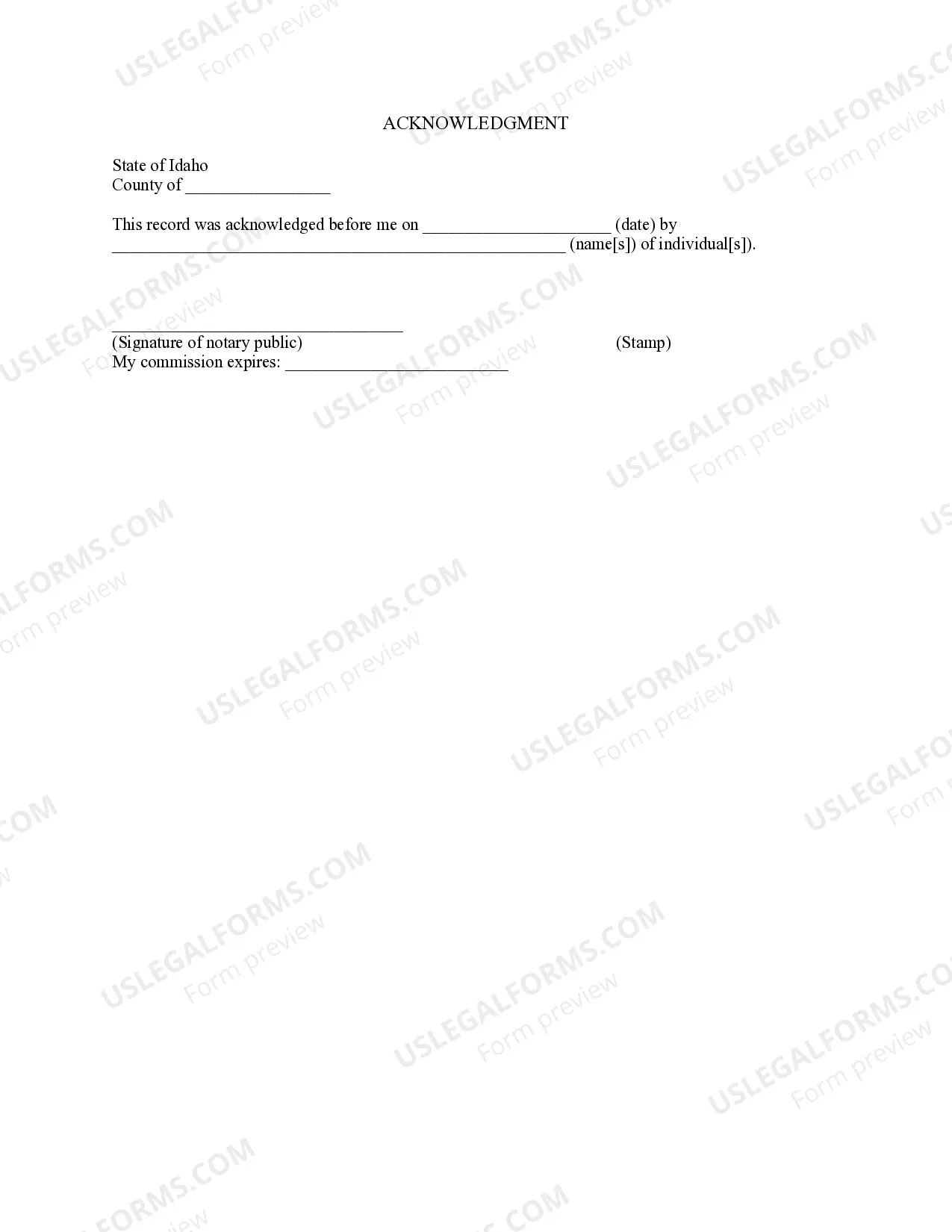
- Acknowledgment section for notarization to affirm the identity of the signing heir.
When to use this form
This form is needed when an heir agrees to accept the distribution of assets from an estate without requiring a detailed accounting of the estate's financial matters. It is typically used in situations where the heir trusts the personal representative's handling of the estate and wishes to expedite the closure of the estate process. This is especially common when the terms of the will are clear and undisputed among heirs.
Who this form is for
- Heirs or distributees of an estate who wish to forgo an accounting.
- Individuals managing an estate who need to streamline the closing process.
- Any authorized representative acting on behalf of an heir who agrees to the distribution outlined in the will.
How to complete this form
- Enter the name and address of the attorney representing the personal representative.
- Fill in the court details, including the judicial district and county.
- Provide the name of the deceased and the case number for the estate.
- Have the distributee sign the form, indicating their waiver of accounting.
- Complete the acknowledgment section with a notary public for verification.
Notarization requirements for this form
To make this form legally binding, it must be notarized. Our online notarization service, powered by Notarize, lets you verify and sign documents remotely through an encrypted video session.
Get your form ready online
Our built-in tools help you complete, sign, share, and store your documents in one place.
Make edits, fill in missing information, and update formatting in US Legal Forms—just like you would in MS Word.
Download a copy, print it, send it by email, or mail it via USPS—whatever works best for your next step.
Sign and collect signatures with our SignNow integration. Send to multiple recipients, set reminders, and more. Go Premium to unlock E-Sign.
If this form requires notarization, complete it online through a secure video call—no need to meet a notary in person or wait for an appointment.
We protect your documents and personal data by following strict security and privacy standards.

Make edits, fill in missing information, and update formatting in US Legal Forms—just like you would in MS Word.

Download a copy, print it, send it by email, or mail it via USPS—whatever works best for your next step.

Sign and collect signatures with our SignNow integration. Send to multiple recipients, set reminders, and more. Go Premium to unlock E-Sign.

If this form requires notarization, complete it online through a secure video call—no need to meet a notary in person or wait for an appointment.

We protect your documents and personal data by following strict security and privacy standards.
Mistakes to watch out for
- Failing to include the case number or details of the deceased.
- Not obtaining necessary notarization, if required by local laws.
- Forgetting to have all relevant parties sign the form.
- Using an outdated version of the form without checking state-specific updates.
Advantages of online completion
- Immediate access to downloadable templates drafted by licensed attorneys.
- Editable formats (Word and Rich Text) to suit personal preferences.
- Time-saving process compared to traditional legal drafting methods.
- Convenient storage and retrieval for future reference or modification.
Looking for another form?
Form popularity
FAQ
With Informal probate, an Application (along with the decedent's original will) and Acceptance are typically filed with the court by the person nominated as Personal Representative, and then the court signs and issues (without a formal hearing) a Statement and Letters Testamentary (if the decedent had a will) or
To get a contempt finding, you must usually file a court document called a "motion for an order to show cause." That puts the burden on the parent who isn't following the custody or visitation order to explain to the court the reasons why he or she should not be held in contempt.
Formal probate involves a petition , a hearing or trial before a Judge or Court Commissioner who resolves the issues with a final court order . Informal Probate only requires an application, no hearing or trial, and is administered by a court official known as the Probate Registrar .
First, a probate is required in Idaho anytime an estate has a value of $100,000 or more regardless of the property that is contained in the estate.Second, a probate is required in Idaho anytime an estate holds any real property, regardless of the value of the real property. (Idaho Code § 15-3-711.)
The lawyer who represents the Executor typically asks the beneficiaries to waive their right to an accounting to save the estate the cost of paying for an accounting and report by the Executor of what s/he did while in that position.
Contempt proceedings can be initiated either by filing an application or by the court itself suo moto. In both the cases, contempt proceedings must be initiated within one year from the date on which contempt is alleged to have been committed.
Write a Living Trust. The most straightforward way to avoid probate is simply to create a living trust. Name Beneficiaries on Your Retirement and Bank Accounts. For some, a last will is often a better fit than a trust because it is a more straightforward estate planning document. Hold Property Jointly.
In order to close an estate a petition for final distribution should be filed before the court showing that the estate can be closed and requesting distribution to be made to the beneficiaries. Waiver simplifies the closing of the estate.
In Idaho, you can make a living trust to avoid probate for virtually any asset you ownreal estate, bank accounts, vehicles, and so on. You need to create a trust document (it's similar to a will), naming someone to take over as trustee after your death (called a successor trustee).