Alabama Boundary Line Agreement
Understanding this form
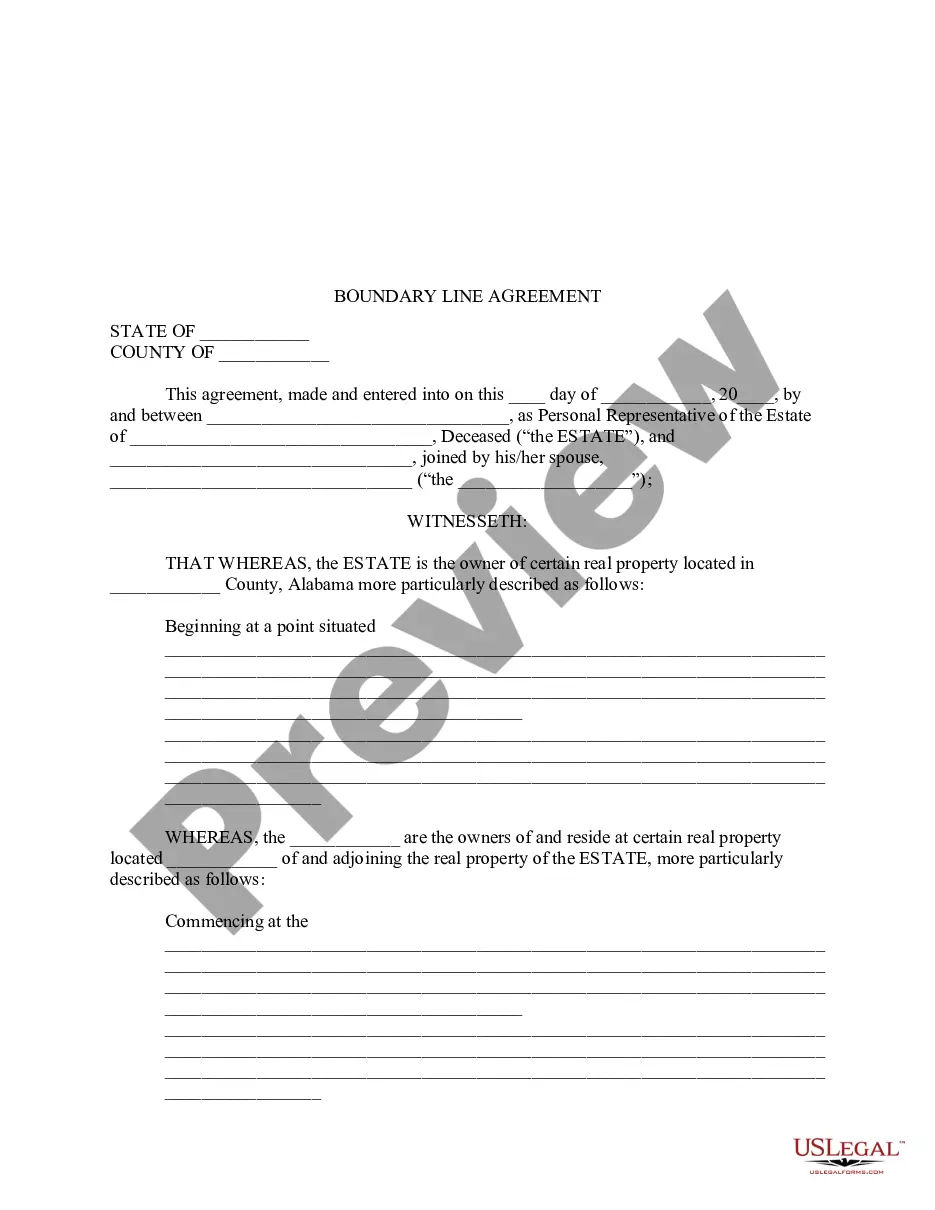
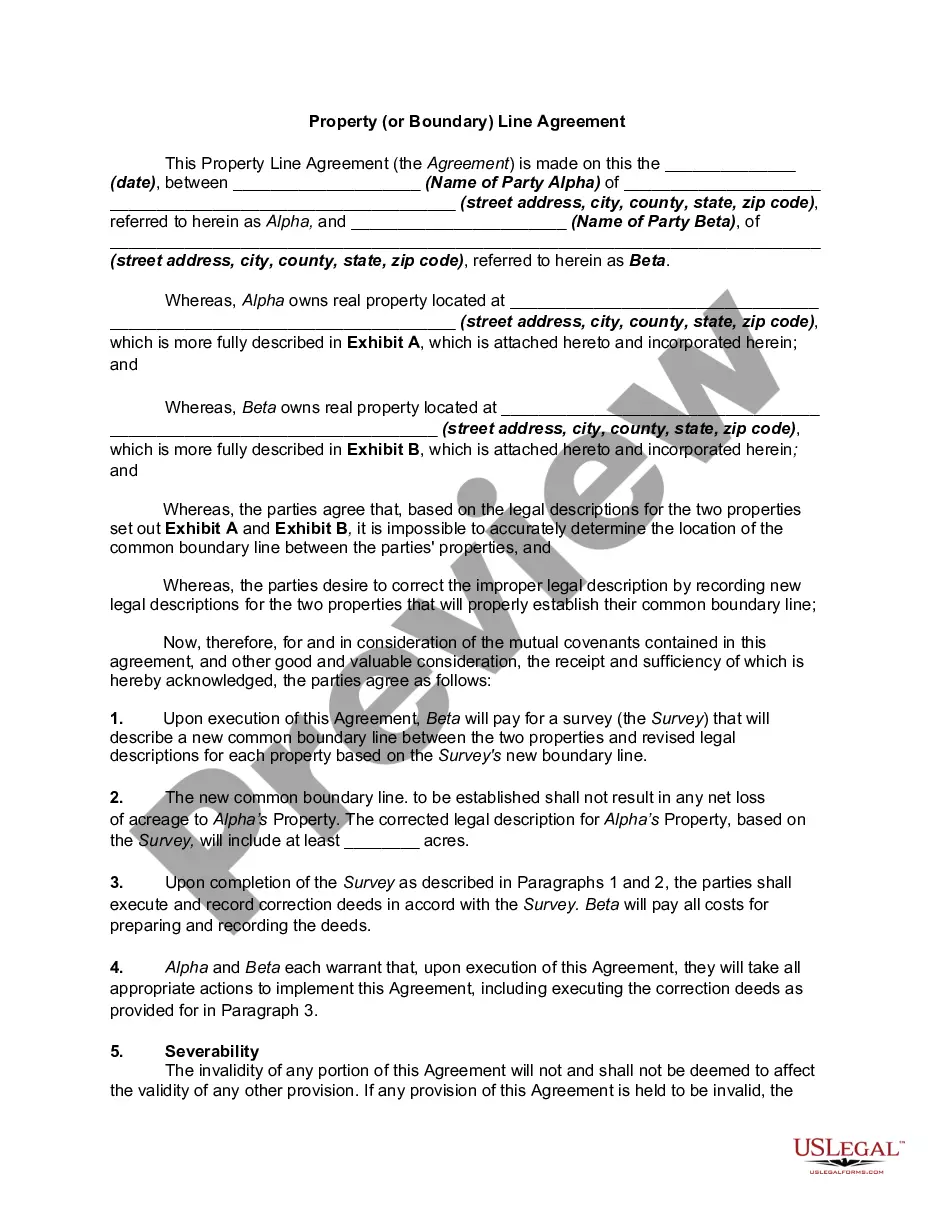
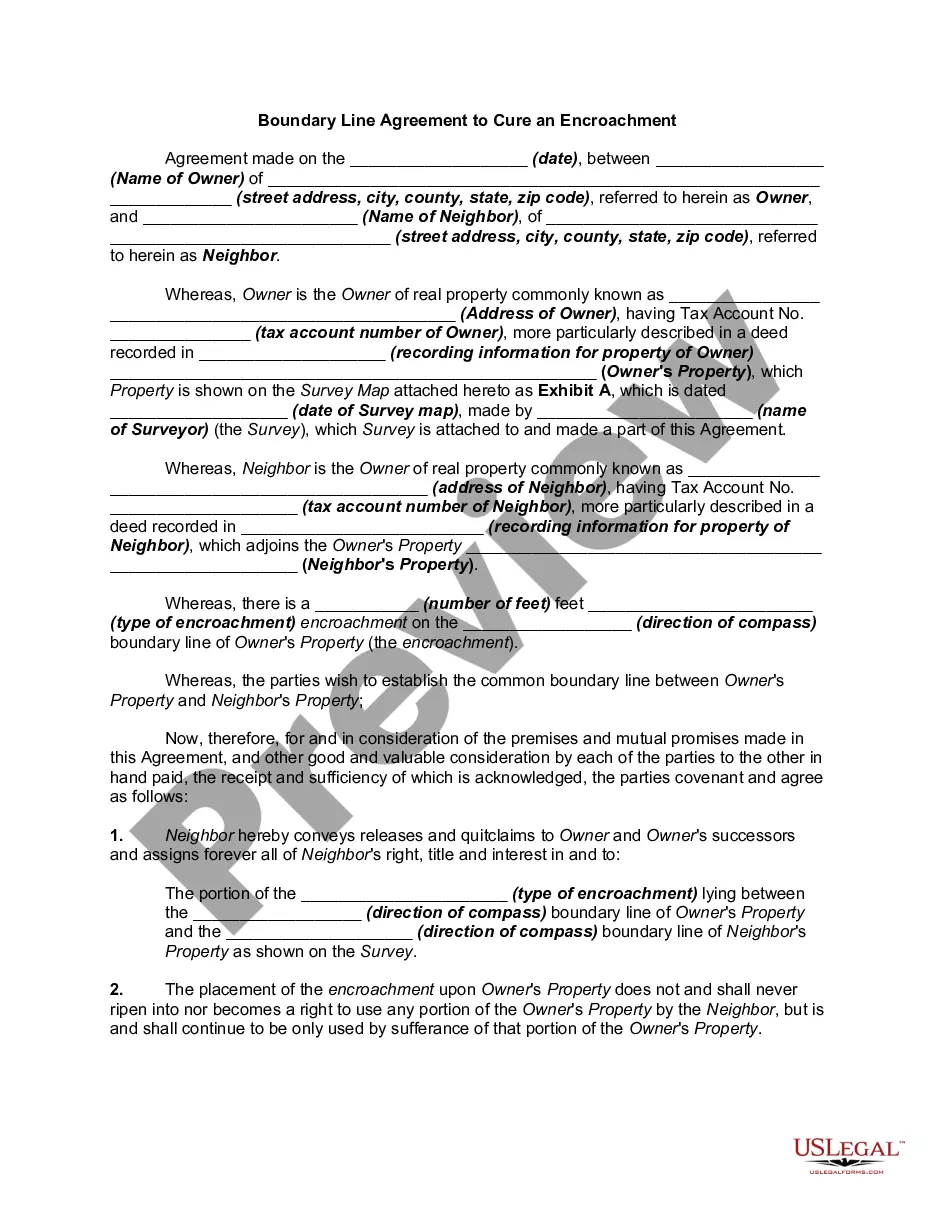
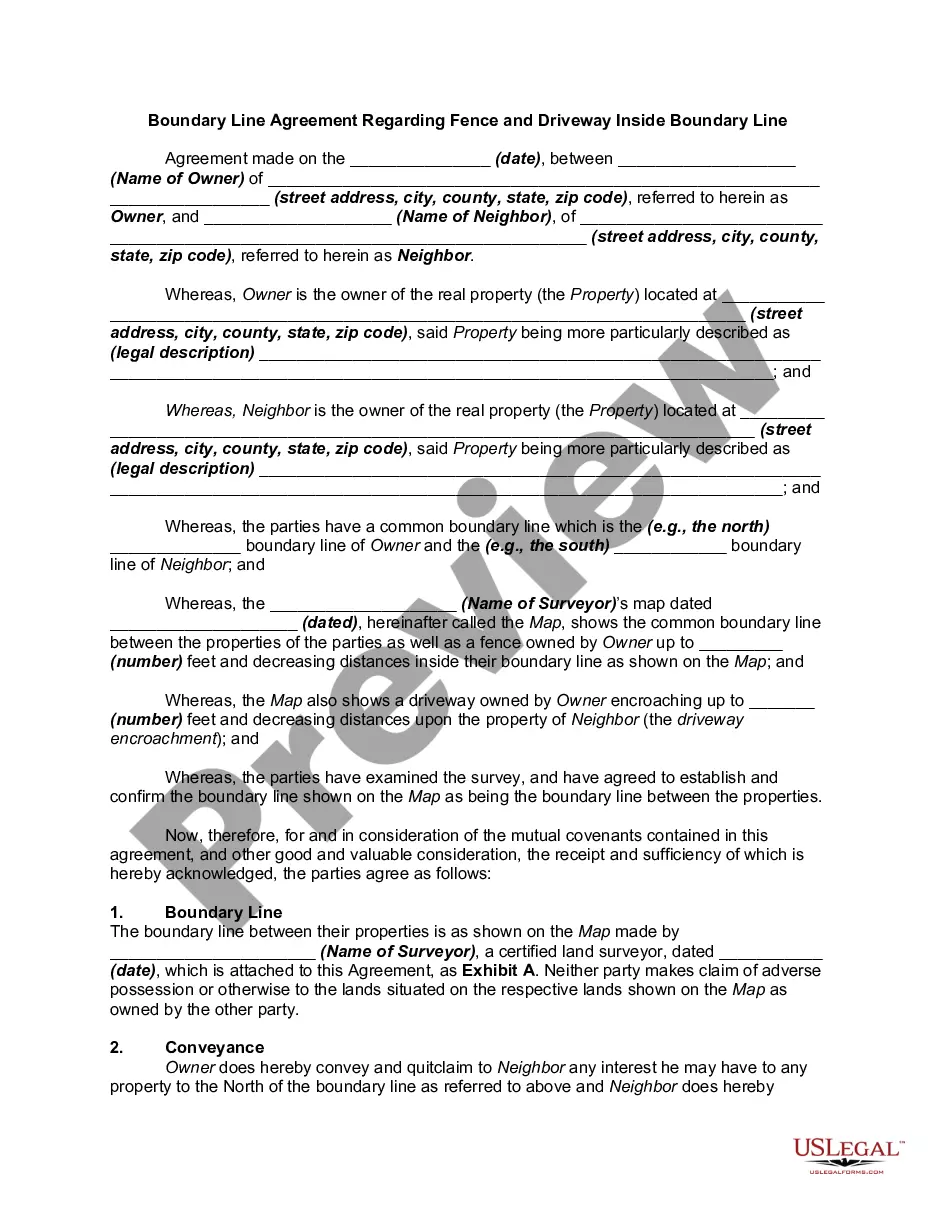
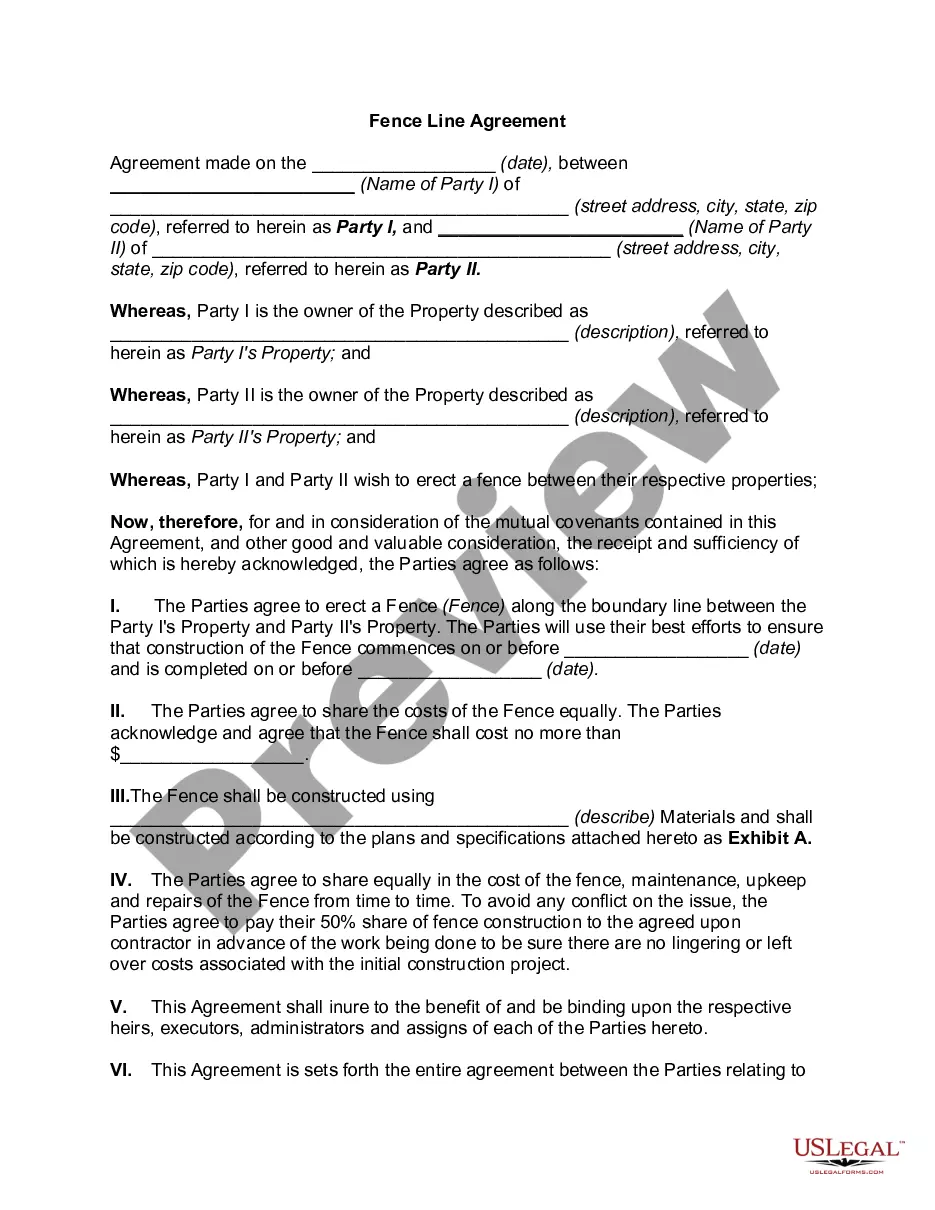
A boundary line agreement is a legal document used by two adjacent landowners to confirm the precise location of a common property boundary. This form helps prevent future disputes by outlining an agreed-upon boundary line. Unlike other property agreements, this specific form is tailored to clarify situations where boundary lines are unclear or contested.
Key components of this form
- Identification of parties involved, including the estate and adjoining landowner.
- Descriptions of each property's legal boundaries.
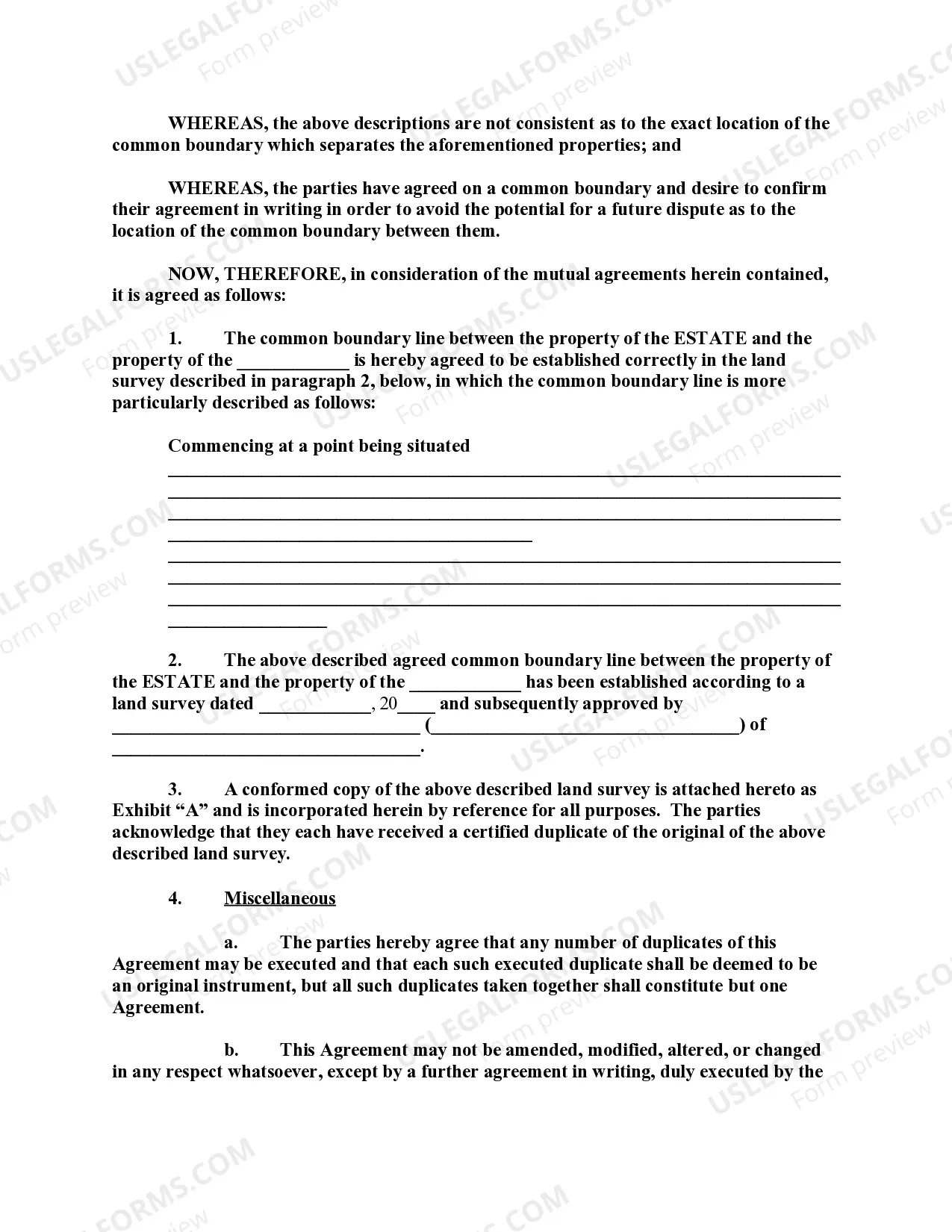
- Agreement on the established boundary line based on a land survey.
- Provision for duplicates of the agreement being treated as originals.
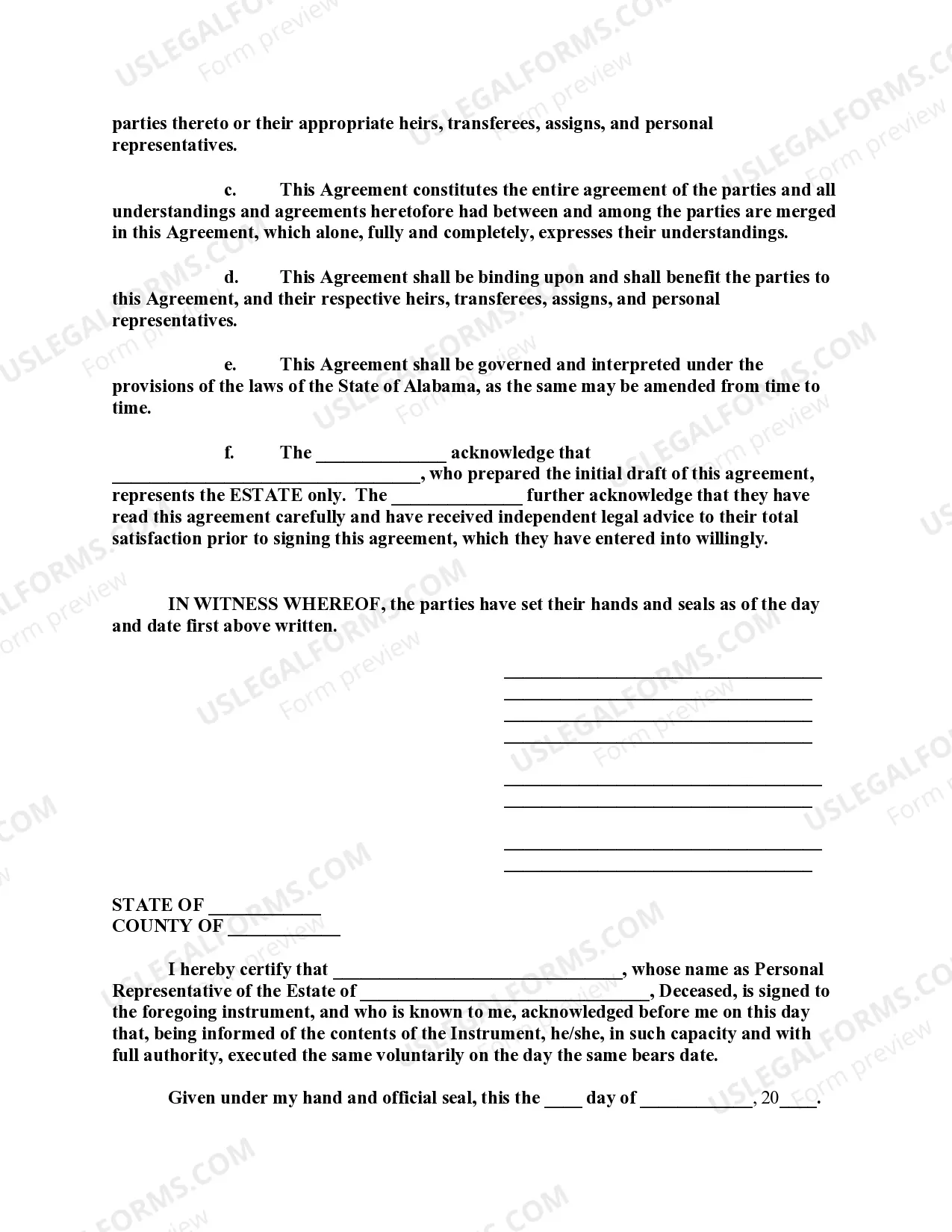
- Governing law clause confirming the agreement's jurisdiction.
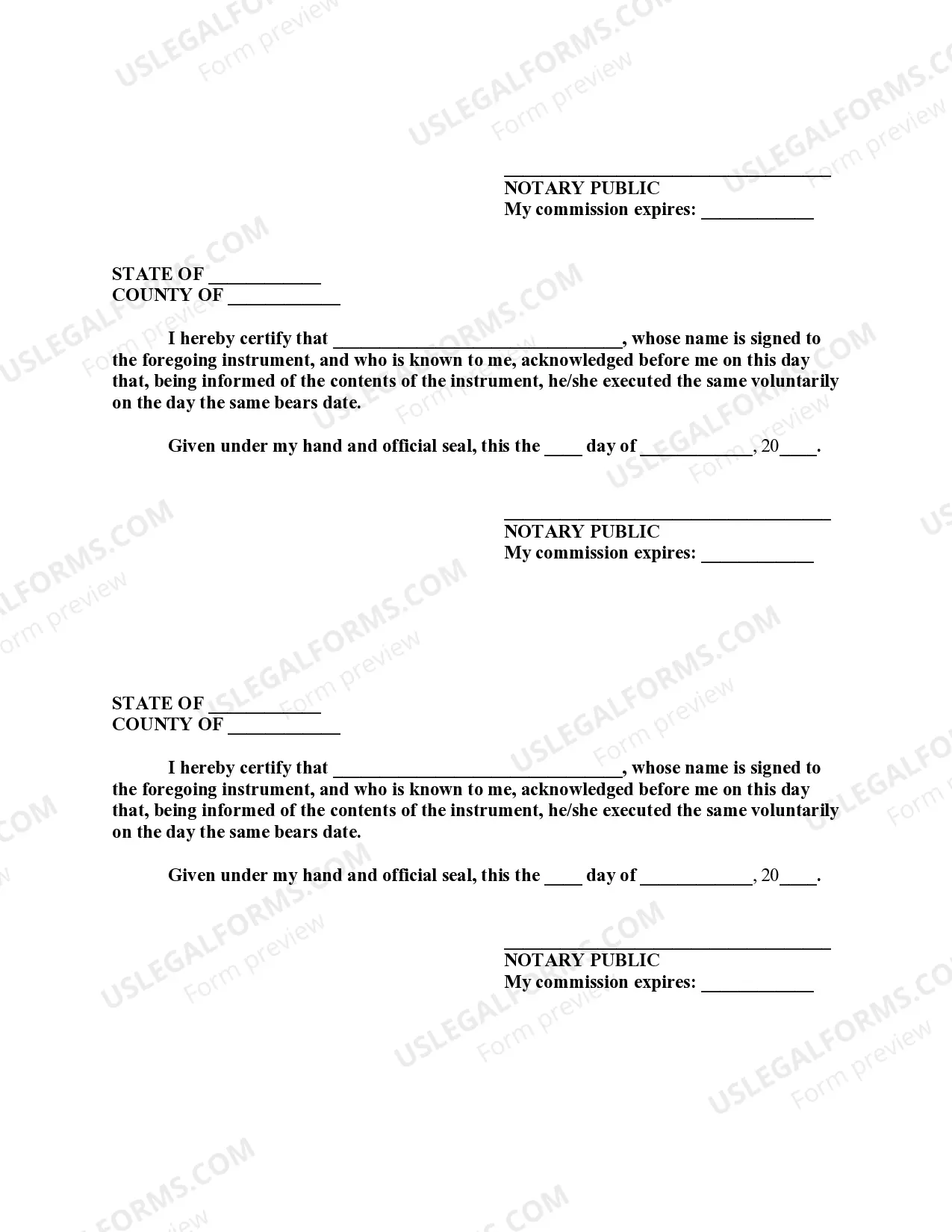
- Notarization section for official acknowledgment of signatures.

Situations where this form applies
This form is necessary when neighboring landowners need to confirm and document the exact location of their property lines. Use this agreement when there is ambiguity or disagreement about where one property ends and another begins, or when improvements or developments may impact the shared boundary. It is beneficial as a preventative measure to avoid potential disputes over land ownership or use in the future.
Who needs this form
- Property owners engaged in boundary disputes.
- Personal representatives of deceased estates involved in property agreements.
- Spouses of property owners wishing to secure boundary definitions.
- Landowners seeking legal clarification of property boundaries prior to selling or developing land.
Completing this form step by step
- Identify and provide the names of the parties involved in the agreement.
- Accurately describe both properties, including their legal descriptions and current boundary ambiguities.
- Detail the agreed-upon boundary line according to the referenced land survey.
- Include the date of the agreement and the approval information for the land survey.
- Each party should sign the agreement in the presence of a notary public to ensure it is legally binding.
Is notarization required?
Yes, this form must be notarized to be legally valid. Notarization ensures that the signatures are verified and that the agreement is recognized legally. US Legal Forms offers integrated online notarization services, allowing users to easily complete this step via secure video calls with 24/7 availability, making the process both safe and convenient.
Get your form ready online
Our built-in tools help you complete, sign, share, and store your documents in one place.
Make edits, fill in missing information, and update formatting in US Legal Forms—just like you would in MS Word.
Download a copy, print it, send it by email, or mail it via USPS—whatever works best for your next step.
Sign and collect signatures with our SignNow integration. Send to multiple recipients, set reminders, and more. Go Premium to unlock E-Sign.
If this form requires notarization, complete it online through a secure video call—no need to meet a notary in person or wait for an appointment.
We protect your documents and personal data by following strict security and privacy standards.

Make edits, fill in missing information, and update formatting in US Legal Forms—just like you would in MS Word.

Download a copy, print it, send it by email, or mail it via USPS—whatever works best for your next step.

Sign and collect signatures with our SignNow integration. Send to multiple recipients, set reminders, and more. Go Premium to unlock E-Sign.

If this form requires notarization, complete it online through a secure video call—no need to meet a notary in person or wait for an appointment.

We protect your documents and personal data by following strict security and privacy standards.
Common mistakes
- Failing to include accurate legal descriptions of both properties.
- Not obtaining the necessary signatures from both parties and witnesses.
- Neglecting to notarize the document, which can affect its enforceability.
- Using vague or ambiguous language when describing the boundary.
Why complete this form online
- Convenient access to customizable legal templates drafted by licensed attorneys.
- Easy download options for immediate use and processing.
- The ability to edit the form to match specific situations and needs.
- Access to legal advice and customer support if needed.
Looking for another form?

Form popularity
FAQ
A property line specifically refers to the legal demarcation that determines the limits of your property as per the title deed. In contrast, a boundary line may refer to the perceived or historical lines understood by neighbors but is not necessarily legally defined. Knowing the difference is crucial when navigating disputes or making agreements. An Alabama Boundary Line Agreement can help clarify these distinctions and protect your property rights.
To start marking property lines from a survey, first locate the survey stakes that indicate the corners of your property. You can use a string line or survey flags to connect the stakes and outline the boundary. Make sure to check local regulations regarding property line markings. For a clear understanding of your rights concerning boundaries, consider utilizing an Alabama Boundary Line Agreement to formalize your property's limits.
While this question focuses on Texas, understanding encroachment laws can help you in Alabama as well. Generally, encroachment occurs when a property owner builds or extends onto a neighboring property without permission. To address encroachments, it's advisable to seek legal counsel and potentially create an Alabama Boundary Line Agreement with your neighbor to resolve the issue peacefully. This proactive approach can prevent further disputes and misunderstandings regarding property boundaries.
To file a property line dispute, you should first gather documentation that supports your claim, such as surveys and property deeds. Next, engage in discussions with your neighbor to seek a mutual understanding. If discussions fail, you might need to file a complaint in your local court. Establishing an Alabama Boundary Line Agreement during this process can help clarify the situation and prevent future issues.
Yes, you can dispute a property survey if you believe inaccuracies exist. Start by reviewing the survey documents thoroughly and comparing them to existing records. If discrepancies arise, it may be beneficial to consult a professional surveyor and consider negotiating an Alabama Boundary Line Agreement to address the issues with your neighbor. This step can clarify boundaries and help resolve disputes amicably.
When neighbors do not respect property boundaries, it's essential to communicate openly and calmly. Start by discussing the issue with them directly, ensuring both parties understand the property lines. If a resolution is not reached, consider creating an Alabama Boundary Line Agreement to formalize the boundaries and prevent future disputes. This agreement provides a clear reference and can protect your rights.
In Alabama, the period for adverse possession is typically 10 years, during which a person must openly occupy land without the permission of the owner. To successfully claim adverse possession, the claimant must demonstrate continuous and exclusive use of the property. Having an Alabama boundary line agreement can clarify ownership rights and possibly prevent the need for adverse possession claims.
Alabama law regarding fences includes various guidelines about height, materials, and placement. Property owners must adhere to local zoning laws and agreements with neighbors, such as an Alabama boundary line agreement, to avoid conflicts. Additionally, owners should be aware that any disputes may require legal mediation to resolve if there is uncertainty about boundary lines.
A spite fence refers to a fence erected primarily to irritate or annoy a neighbor rather than to serve a practical purpose. For instance, if a property owner builds a tall fence solely to obstruct their neighbor’s view or to block sunlight, that could be deemed a spite fence. Understanding the concept of boundary line agreements in Alabama can help avoid disputes that may arise from such actions.
In Alabama, the distance a neighbor can build a fence from a property line often depends on local regulations and city ordinances. Typically, Alabama boundary line agreements dictate that fences should be constructed no closer than two feet from the property line. It is advisable to check with your local zoning office to ensure compliance with any specific requirements that may apply in your area.