Alabama Judgment Affidavit
What is this form?
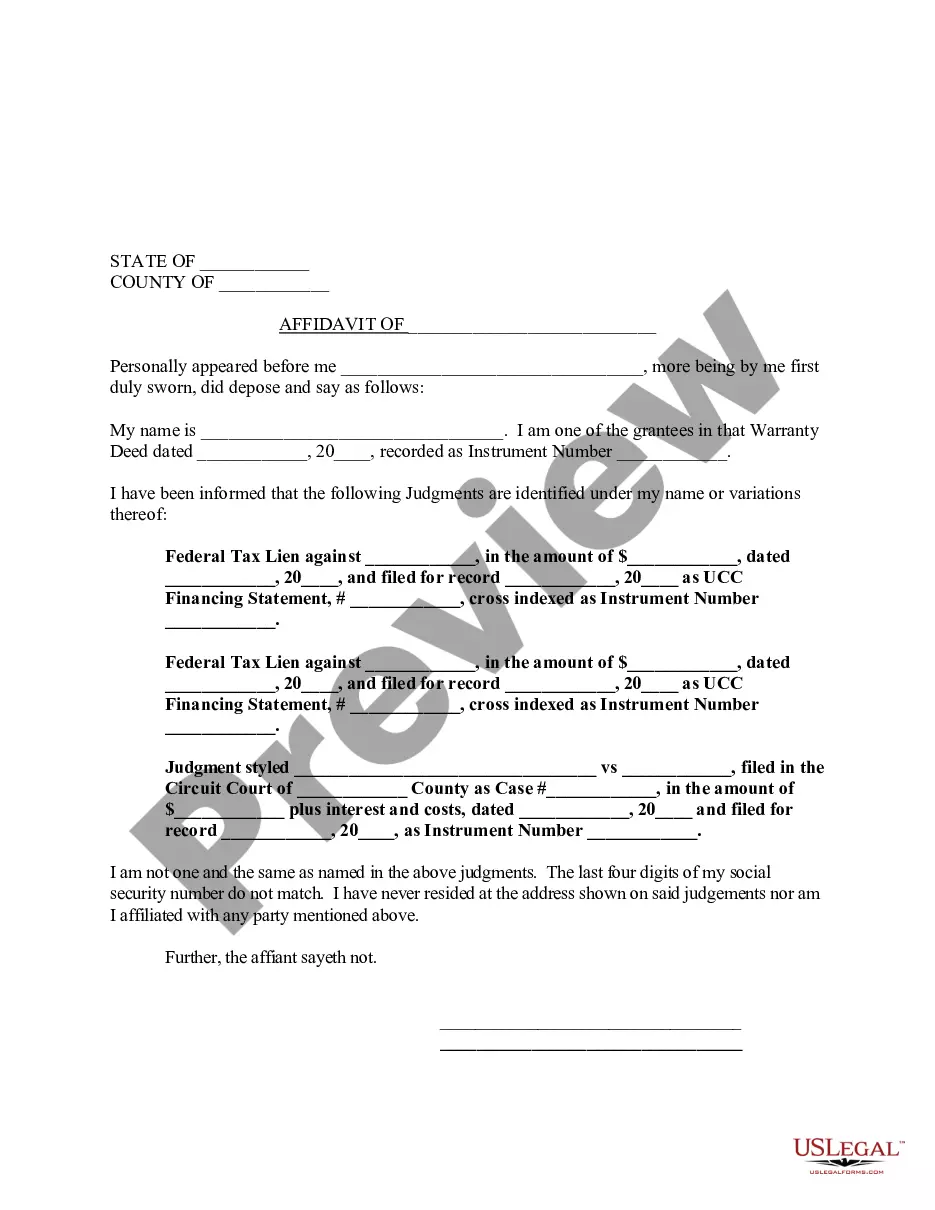
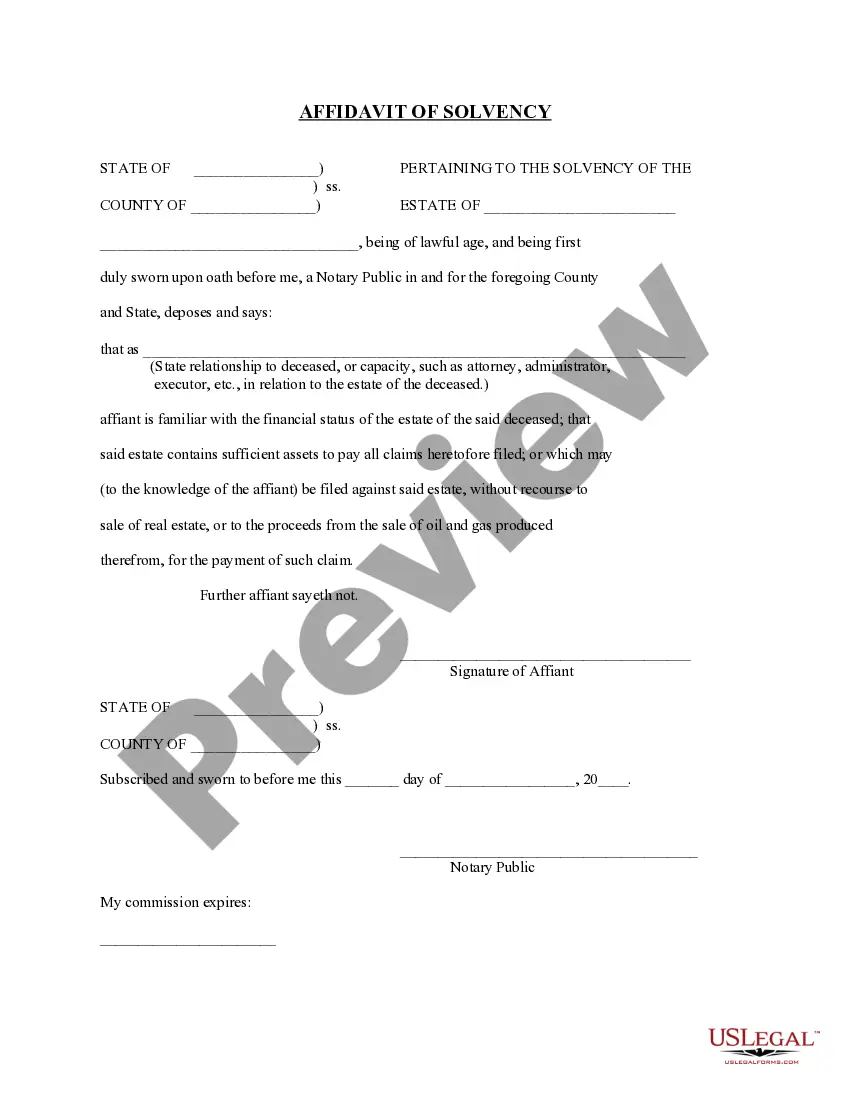
The Judgment Affidavit is a legal document in which a grantee declares that they are not the person named in certain judgments. This form serves to clarify identity and prevent wrongful association with debts or judgments that could harm a person's financial reputation. By providing a sworn statement, the grantee can officially assert their innocence regarding these legal claims.
Form components explained
- The state and county in which the affidavit is executed.
- The name and identifying details of the affiant, including social security number confirmation.
- Details of judgments or liens that mention the affiant, including case numbers and amounts.
- A declaration that the affiant is not the person referenced in the judgments.
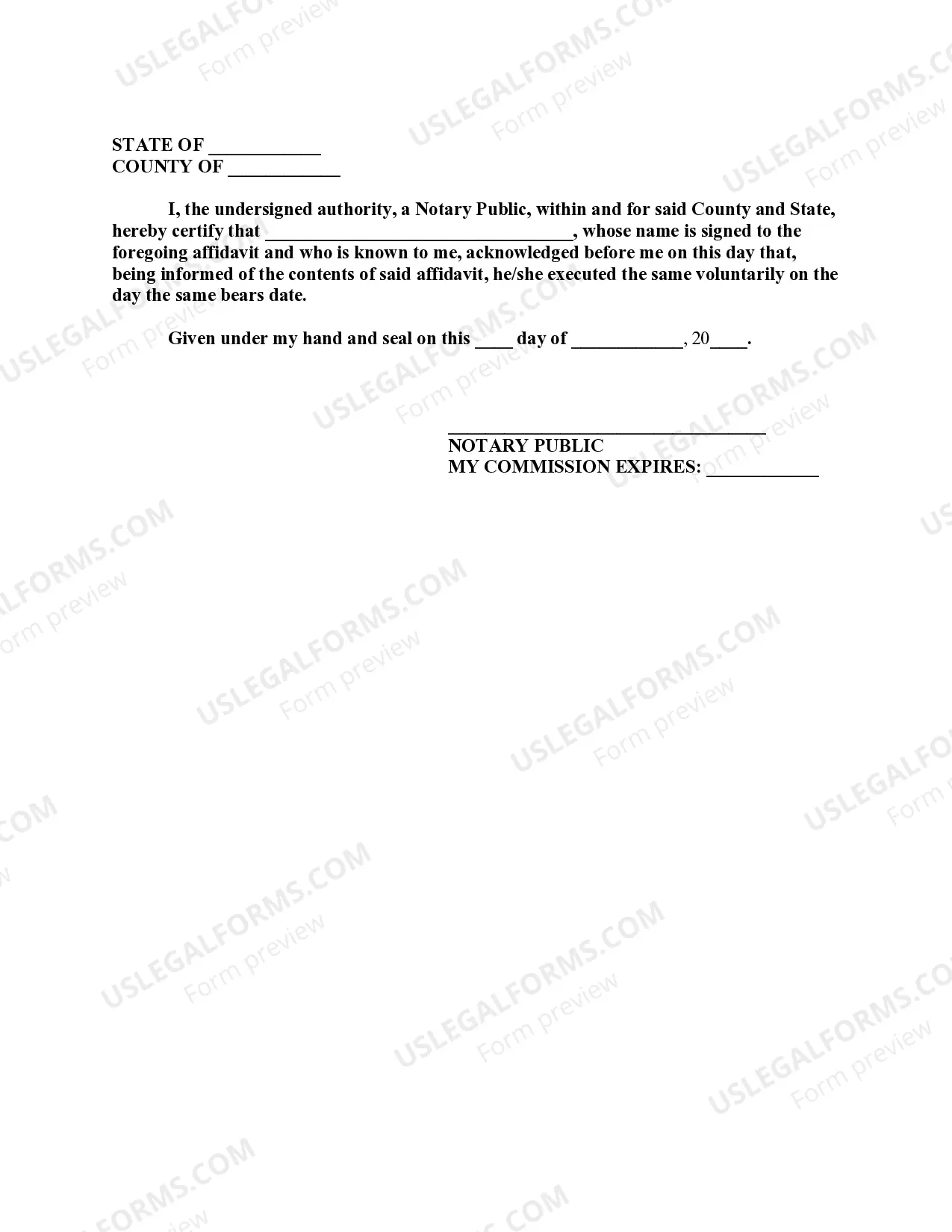
- Certification by a notary public confirming the affiant's identity and the voluntary nature of the affidavit.
When this form is needed
This form is utilized when an individual is incorrectly associated with a judgment or lien. It is particularly necessary if someoneâs name has been misfiled in legal documents, potentially affecting their credit score or other financial aspects. By using this affidavit, the grantee protects themselves against any legal repercussions from these inaccuracies.
Who this form is for
- Individuals named in judgments or liens that do not pertain to them.
- Grantees of property who need to clarify their identity in legal matters.
- Anyone wishing to dispute erroneous claims that may impact their financial status.
Instructions for completing this form
- Fill in the state and county where the affidavit is being executed.
- Enter the name and details of the affiant, including their social security number's last four digits.
- List all judgments that inaccurately associate the affiant, including dates and amounts.
- Confirm the affiant's identity and their lack of affiliation with the mentioned judgments.
- Sign the affidavit in front of a notary public, who will provide certification of the signing.
Is notarization required?
Yes, this form must be notarized to be legally valid. The notarization process verifies the identity of the affiant and ensures that the affidavit is executed voluntarily. US Legal Forms offers integrated online notarization services for your convenience, available 24/7 through secure video calls.
Get your form ready online
Our built-in tools help you complete, sign, share, and store your documents in one place.
Make edits, fill in missing information, and update formatting in US Legal Forms—just like you would in MS Word.
Download a copy, print it, send it by email, or mail it via USPS—whatever works best for your next step.
Sign and collect signatures with our SignNow integration. Send to multiple recipients, set reminders, and more. Go Premium to unlock E-Sign.
If this form requires notarization, complete it online through a secure video call—no need to meet a notary in person or wait for an appointment.
We protect your documents and personal data by following strict security and privacy standards.

Make edits, fill in missing information, and update formatting in US Legal Forms—just like you would in MS Word.

Download a copy, print it, send it by email, or mail it via USPS—whatever works best for your next step.

Sign and collect signatures with our SignNow integration. Send to multiple recipients, set reminders, and more. Go Premium to unlock E-Sign.

If this form requires notarization, complete it online through a secure video call—no need to meet a notary in person or wait for an appointment.

We protect your documents and personal data by following strict security and privacy standards.
Typical mistakes to avoid
- Failing to provide accurate personal information, which may lead to further confusion.
- Not including all relevant judgments or liens that need to be contested.
- Forgetting to sign the affidavit or neglecting to have it notarized.
Benefits of using this form online
- Convenience of filling out the form from home without needing to visit a lawyer.
- Ability to easily edit and update the document as needed.
- Access to reliable legal templates drafted by licensed attorneys.
Looking for another form?
Form popularity
FAQ
The Alabama Judgment Affidavit is a sworn statement used to document a money judgment for enforcement actions in Alabama. It helps court staff and enforcement personnel identify the judgment, the parties involved, and the amount to be collected, enabling enforcement consistent with Alabama practice.
Do not include opinions, speculative statements, or information not tied to the actual judgment. Avoid misstatements about who owes what, dates, or party names. The form should contain only factual, sworn statements about the judgment and its enforceability, with any supporting documents properly referenced.
Common mistakes include missing or incorrect judgment dates and amounts, misidentifying the debtor or creditor, leaving fields blank, or failing to reference attached documents. To reduce risk, ensure the statement matches the court record, is sworn, and that any supporting documents are clearly referenced.
An Alabama Judgment Affidavit may be invalid if statements are false or unverified, the signature isn’t sworn, essential judgment details are missing, or there are discrepancies that do not align with the court record. Accuracy and honesty are essential for enforceability.
A strong Alabama Judgment Affidavit is accurate, complete, and consistent with the court record. It clearly identifies the judgment, parties, and amount, and includes any referenced attachments. It is sworn under oath and prepared to facilitate enforcement actions by the clerk or other enforcement officers.
The Alabama Judgment Affidavit specifically documents a court‑entered monetary judgment and its enforceability, rather than broader factual statements. It emphasizes matching the court record and may reference attachments or exhibits tied to the judgment, aligning with enforcement procedures rather than general affidavits.