Hawaii Lease Subordination Agreement
What this document covers
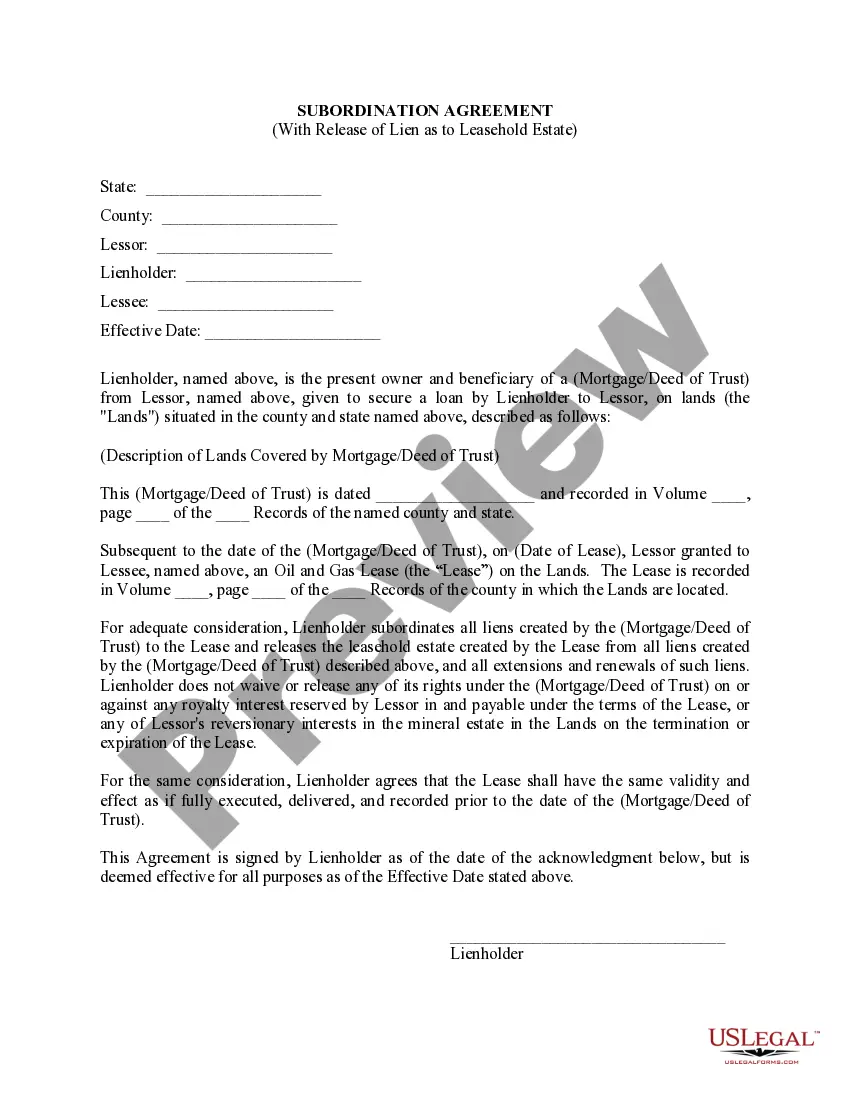
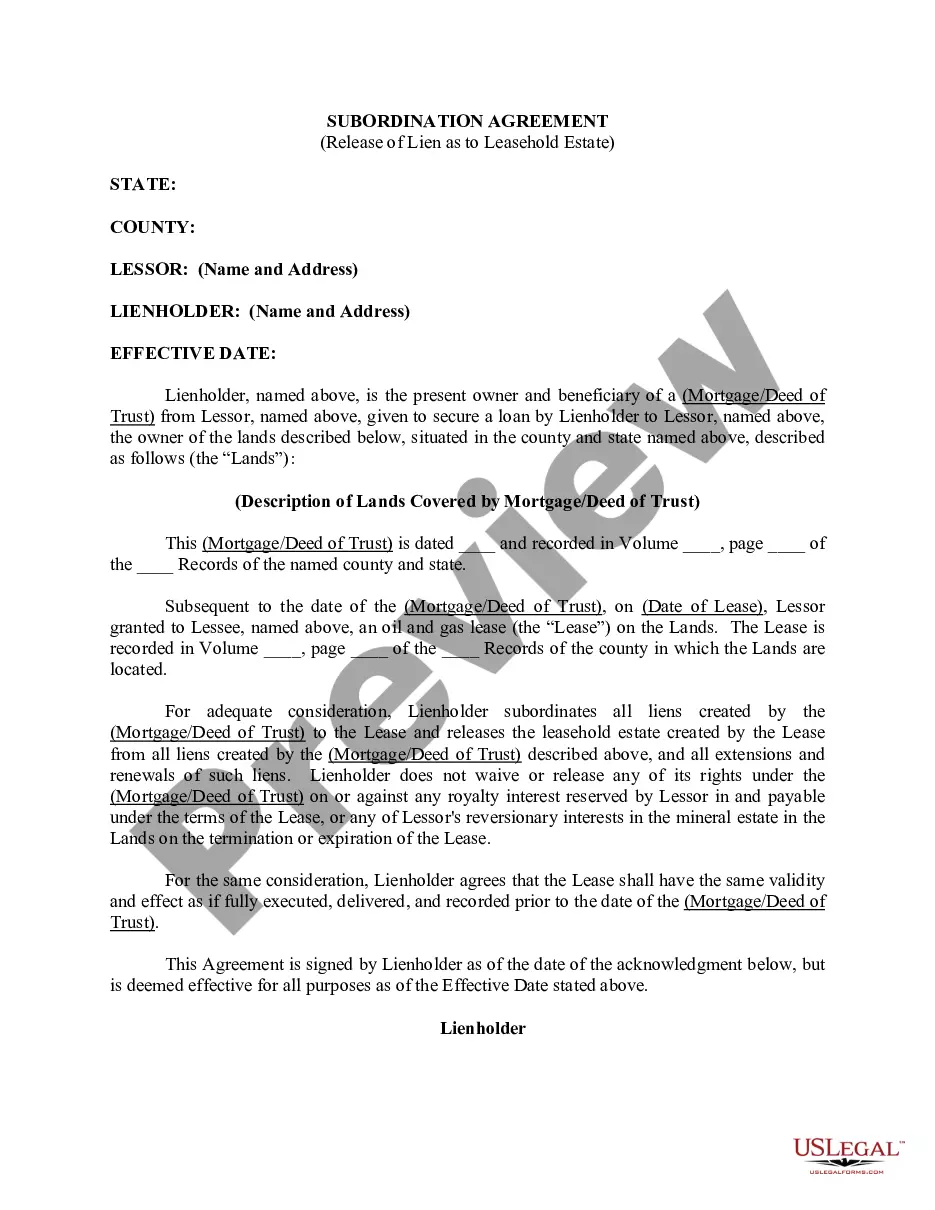
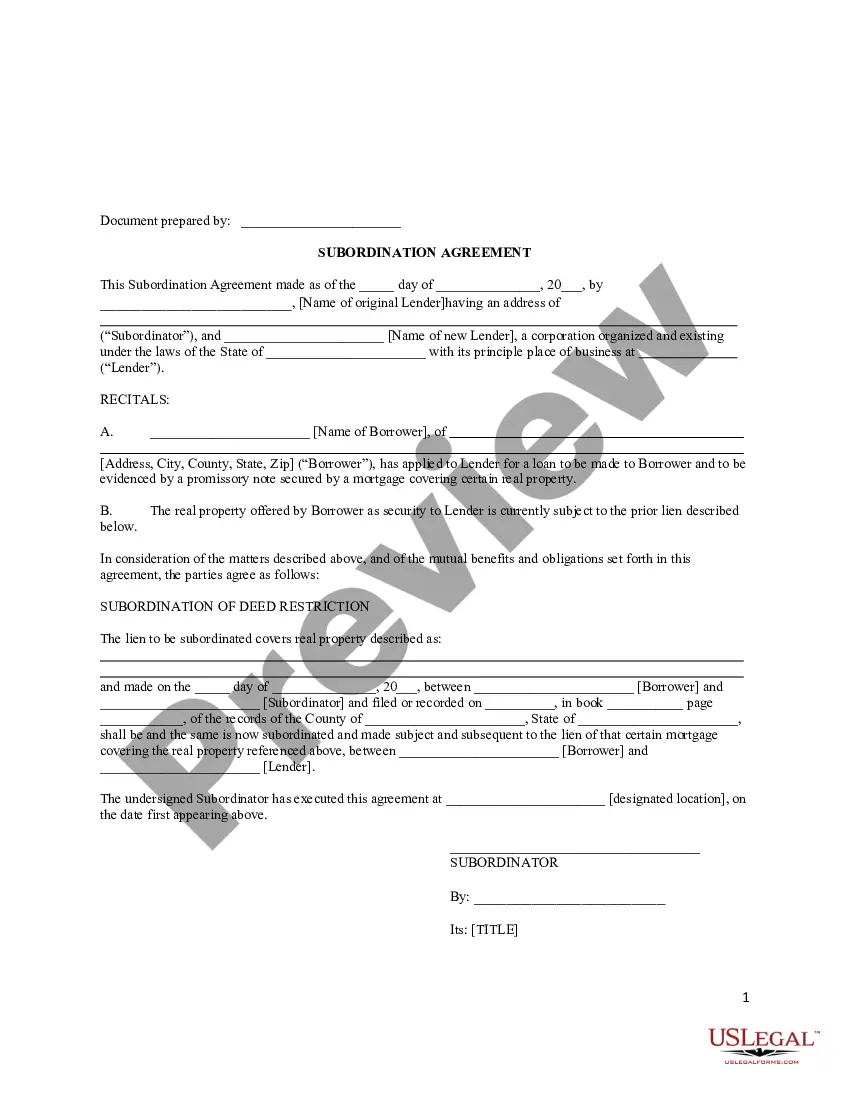
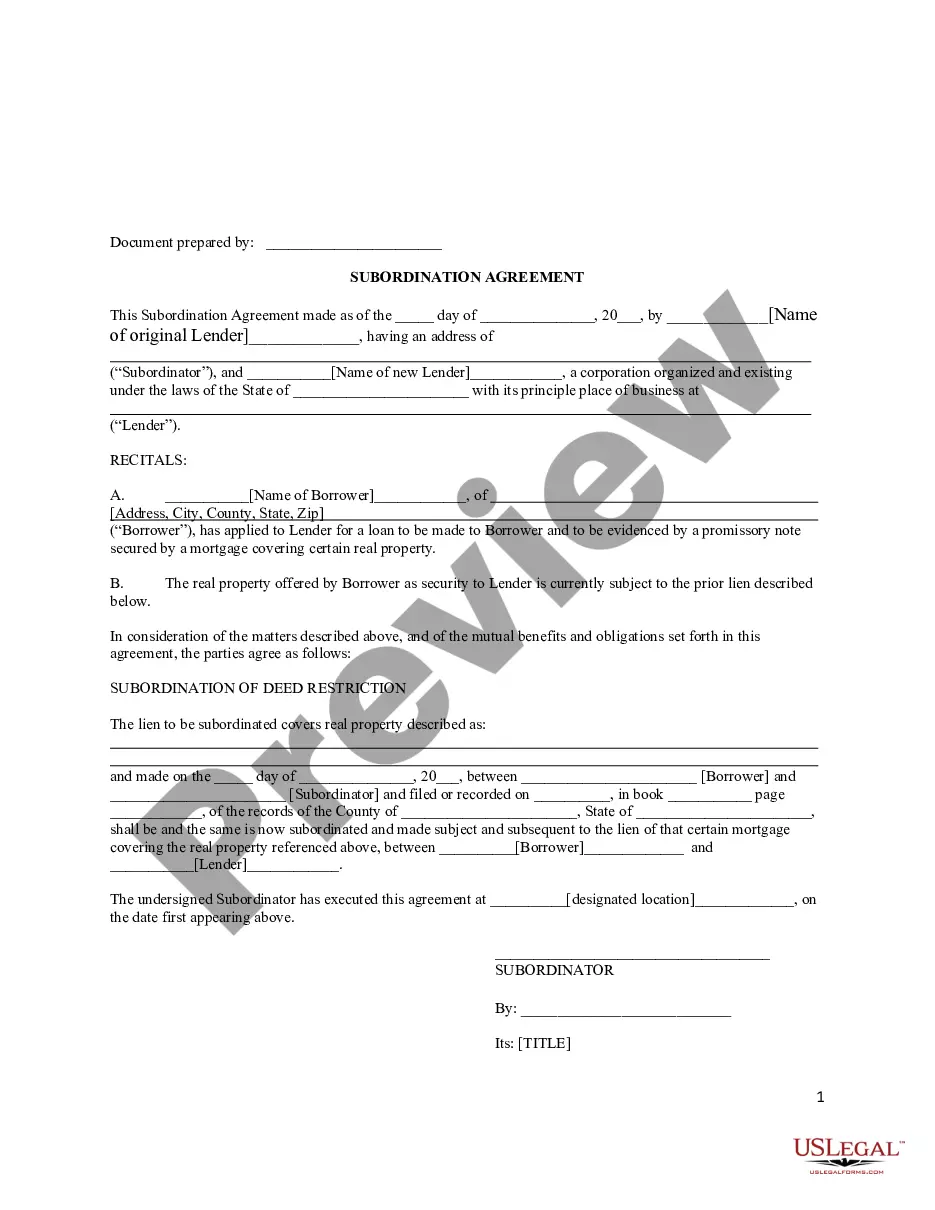
A Lease Subordination Agreement is a legal document used to modify the priority of a lienholder's claim on a property that is subject to an oil, gas, or mineral lease. This agreement allows certain debt claims to take precedence over the mortgage or deed of trust, specifically in relation to the leasehold estate. It ensures that the lease retains its validity and legal standing, even when there are existing debts secured against the property, setting it apart from straight lien agreements or other subordination documents.
Form components explained
- Identification of parties: Includes the lessor, lienholder, and lessee.
- Description of property: Details about the lands affected by the mortgage or deed of trust.
- Release of liens: A statement confirming the release of the leasehold from existing liens.
- Prioritization clause: Affirms that the lease shall have validity over previously established debts.
- Effective date: Specifies when the agreement takes effect.
When this form is needed
This form is needed when a property owner who has a mortgage or deed of trust wants to enter into or maintain an oil, gas, or mineral lease on their property. If the property owner seeks to secure a new loan or make improvements on the property using the lease as collateral, a subordination agreement is often required to ensure that the new loan takes priority over the existing mortgage.
Who can use this document
- Property owners or lessors seeking to enter a mineral lease.
- Lenders or lienholders looking to maintain their rights while allowing for a new lease.
- Individuals or entities engaged in the oil and gas industry requiring legal assurance on lease terms.
Steps to complete this form
- Identify all parties involved: the lessor, lienholder, and lessee.
- Specify the property: Provide a complete description of the lands affected.
- Enter the effective date: State when the agreement will commence.
- Fill in the details of the existing mortgage or deed of trust, including recording information.
- Have all parties sign the form, ensuring proper acknowledgment.
Does this document require notarization?
Notarization is required for this form to take effect. Our online notarization service, powered by Notarize, lets you verify and sign documents remotely through an encrypted video session, available 24/7.
Get your form ready online
Our built-in tools help you complete, sign, share, and store your documents in one place.
Make edits, fill in missing information, and update formatting in US Legal Forms—just like you would in MS Word.
Download a copy, print it, send it by email, or mail it via USPS—whatever works best for your next step.
Sign and collect signatures with our SignNow integration. Send to multiple recipients, set reminders, and more. Go Premium to unlock E-Sign.
If this form requires notarization, complete it online through a secure video call—no need to meet a notary in person or wait for an appointment.
We protect your documents and personal data by following strict security and privacy standards.

Make edits, fill in missing information, and update formatting in US Legal Forms—just like you would in MS Word.

Download a copy, print it, send it by email, or mail it via USPS—whatever works best for your next step.

Sign and collect signatures with our SignNow integration. Send to multiple recipients, set reminders, and more. Go Premium to unlock E-Sign.

If this form requires notarization, complete it online through a secure video call—no need to meet a notary in person or wait for an appointment.

We protect your documents and personal data by following strict security and privacy standards.
Common mistakes
- Not properly identifying all parties involved in the agreement.
- Failing to include a complete and accurate property description.
- Omitting the effective date, which could cause confusion about when the agreement takes effect.
- Not having the agreement reviewed by a legal professional before signing.
Benefits of using this form online
- Convenient access: Easily download and fill out the form from the comfort of your home.
- Editability: Customize the document to suit your specific needs with ease.
- Reliability: Receive forms drafted by licensed attorneys, ensuring legal accuracy.
Legal use & context
- Subordination agreements are legally recognized tools for managing property rights.
- Failure to properly execute this form may lead to disputes about priority in claims against the property.
- Consulting legal counsel can provide additional assurance of compliance with state laws.
What to keep in mind
- A Lease Subordination Agreement is essential for managing property and leasing rights when mortgages are involved.
- Accurate completion of the form is crucial for its legal effectiveness.
- Understanding state-specific requirements will ensure compliance and streamline the process.
Looking for another form?
Form popularity
FAQ
A subordination of lease agreement refers to the process of a tenant agreeing to place their lease rights behind those of a lender. This agreement is key in commercial real estate transactions, as it facilitates property financing. By utilizing a Hawaii Lease Subordination Agreement, both property owners and tenants can develop a clear understanding of their rights and responsibilities, ultimately protecting their interests.
The purpose of a subordination agreement is to establish the priority of claims on a property. In the context of real estate, it ensures that lenders have priority over leasehold interests in case of default or foreclosure. With a Hawaii Lease Subordination Agreement, you can secure financing for property improvements while offering tenants clear expectations about their rights in relation to lender interests.
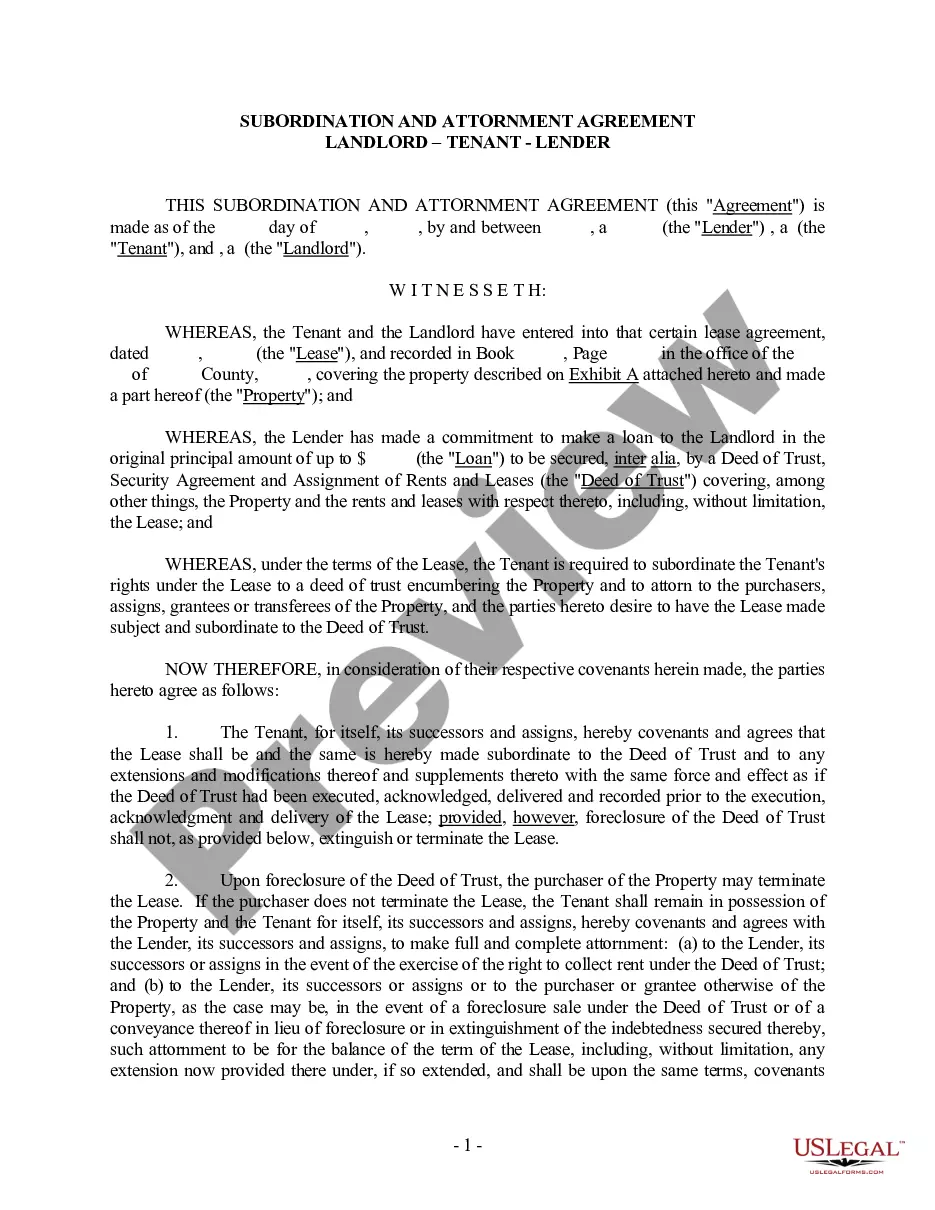
A lease subordination agreement is a legal document in which a tenant agrees to subordinate their lease rights to a lender's interest in the property. This means that if the property goes into foreclosure, the lender's rights take priority over the tenant's lease rights. Understanding the Hawaii Lease Subordination Agreement is crucial for both property owners and tenants, as it clarifies the relationship between leases and financing.
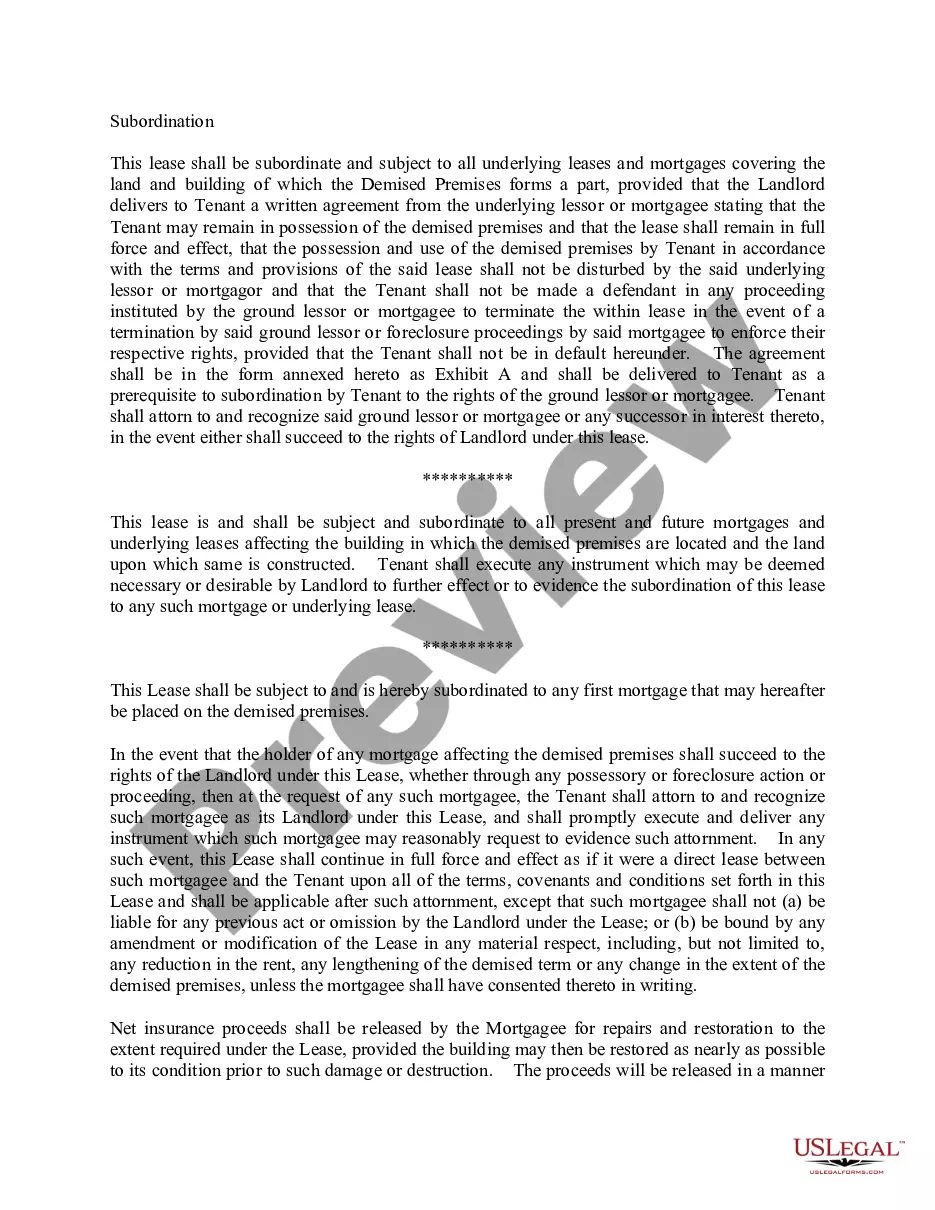
A subordinate clause in a lease refers to a provision that establishes the relationship between a tenant's lease and a mortgage. Specifically, the clause states that the lease will be secondary to the lender's rights under a Hawaii Lease Subordination Agreement. This means that should the property go into foreclosure, the lender's claim will take priority. Understanding this clause is important for tenants to ensure that they are aware of their position relative to the property financing.
A tenant subordination agreement is a legal document where a tenant agrees that their lease will be subordinate to the rights of a lender. This is often implemented with a Hawaii Lease Subordination Agreement to ensure that in case of a default, lenders can reclaim their property with clarity. By signing this agreement, you help secure financing for property owners while protecting your leasing position in the process. Thus, it provides a clear framework for both parties involved.
A subordination clause lease grants priority to a lender over a tenant's lease in the event of foreclosure. For instance, if a property owner takes out a mortgage, the Hawaii Lease Subordination Agreement allows the lender's rights to supersede the tenant's rights. This means that if the property is sold due to non-payment, the lender's interests will take precedence. Understanding this clause is crucial for both landlords and tenants to navigate property rights.
The requirements for a subordination agreement in Hawaii typically include clear identification of the parties involved, detailed terms that outline the subordination process, and compliance with local laws. The agreement must be signed by all parties to ensure its enforceability. Additionally, it is advisable to incorporate legal advice to avoid any misunderstandings in the future. Platforms like USLegalForms provide the necessary resources to create tailored agreements that meet these requirements.
A subordination agreement, such as a Hawaii Lease Subordination Agreement, is usually prepared by a legal professional experienced in real estate law. This ensures that the document is comprehensive and compliant with local laws. Both the landlord and the tenant may also contribute to the document's terms to ensure mutual understanding. Utilizing reliable services like USLegalForms can simplify the process, providing templates and guidance to draft these agreements effectively.
Subordination in a lease agreement refers to the process where a tenant agrees to allow their lease to be secondary to another claim, such as a mortgage. In a Hawaii Lease Subordination Agreement, this means that in the event of foreclosure, the interests of the lender take precedence over the tenant's rights. This concept is vital for landlords seeking financing while providing tenants some level of security, especially when properly documented. Always seek legal guidance to ensure clarity in these agreements.
Subordinate financing in a Hawaii Lease Subordination Agreement typically requires explicit documentation detailing the terms and conditions of the arrangement. Lenders often need to ensure that their claims will not be adversely affected by existing agreements. Additionally, it is crucial that the subordinate financing is legally grounded and complies with local regulations. Engaging a knowledgeable attorney or using platforms like USLegalForms can guide you through the necessary requirements.