Georgia Commercial Contract for Contractor

About this form
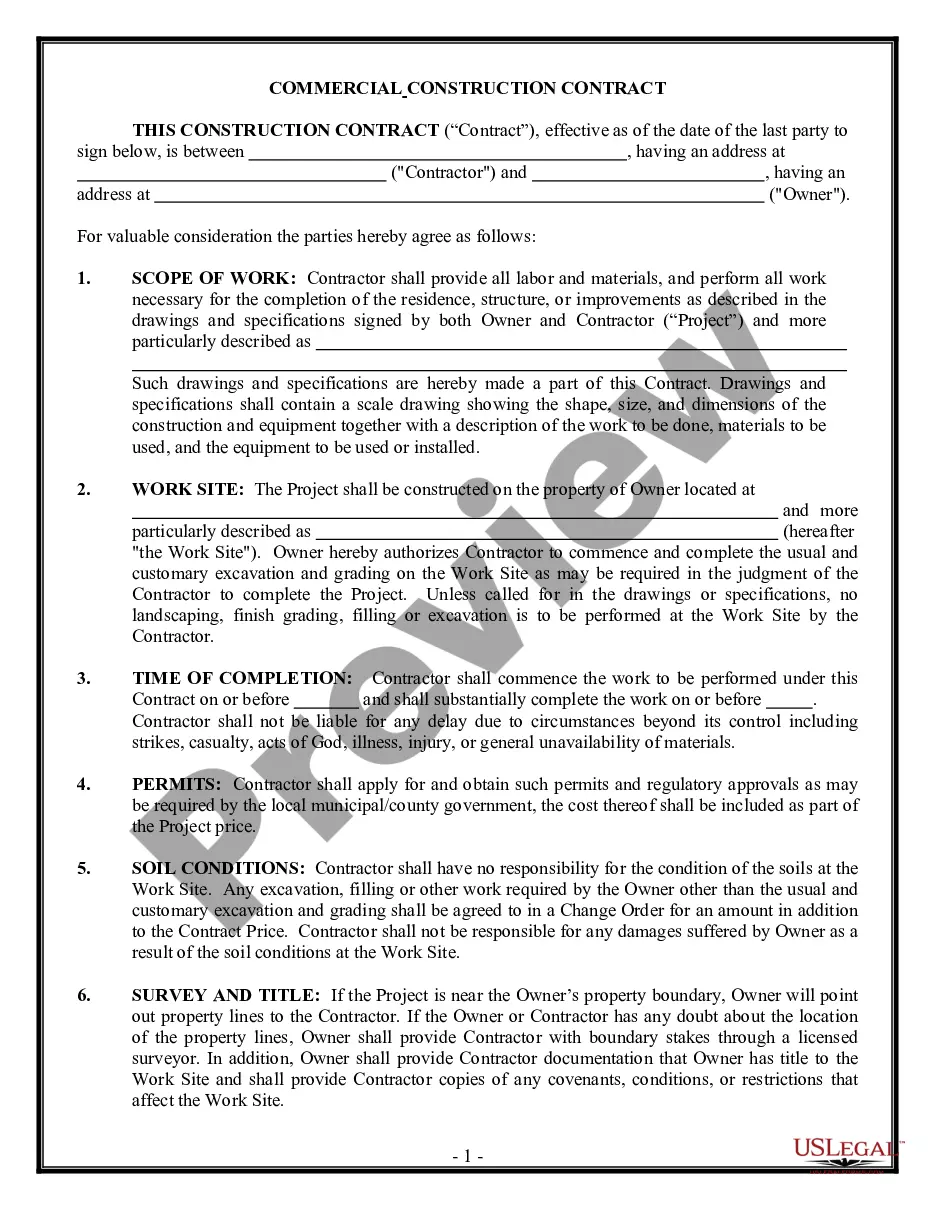
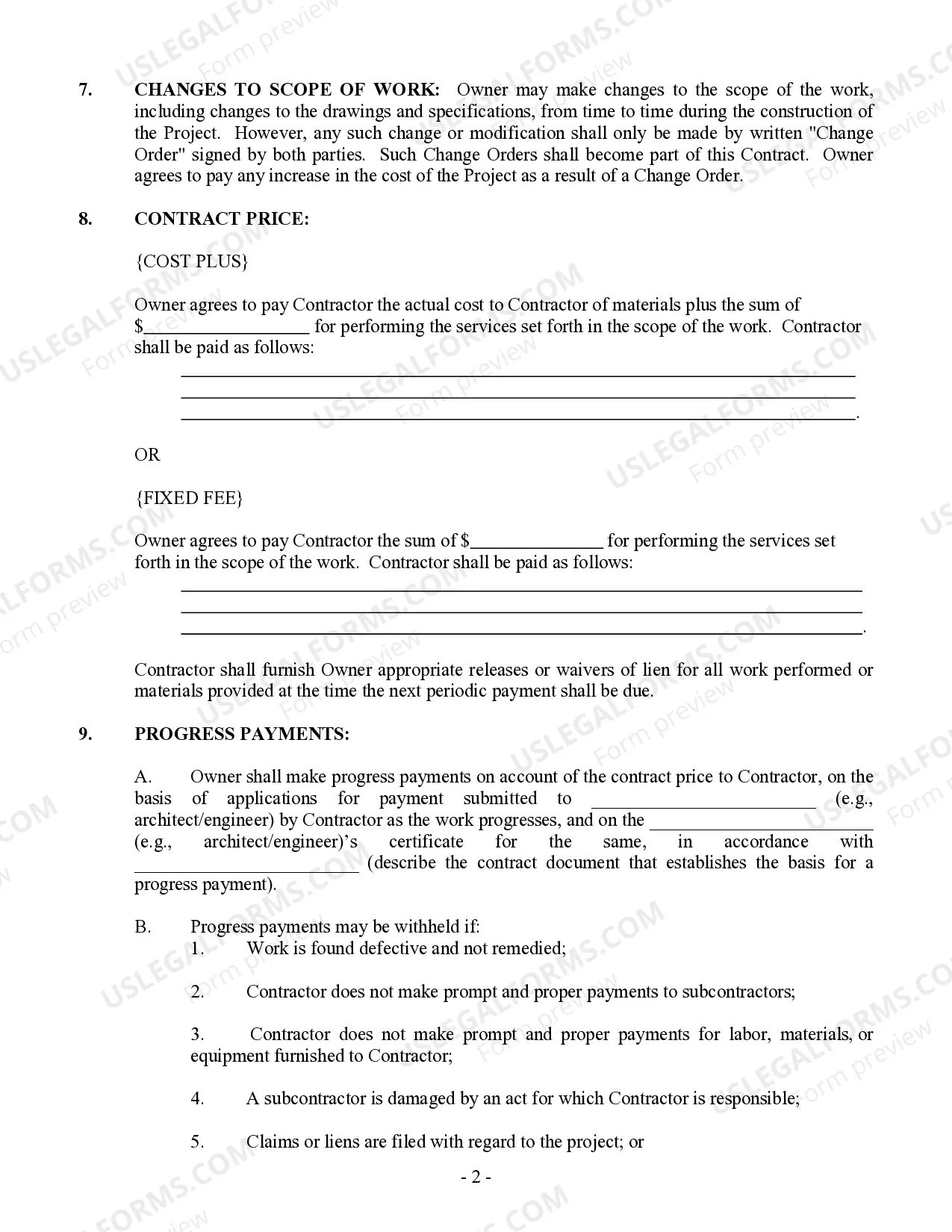
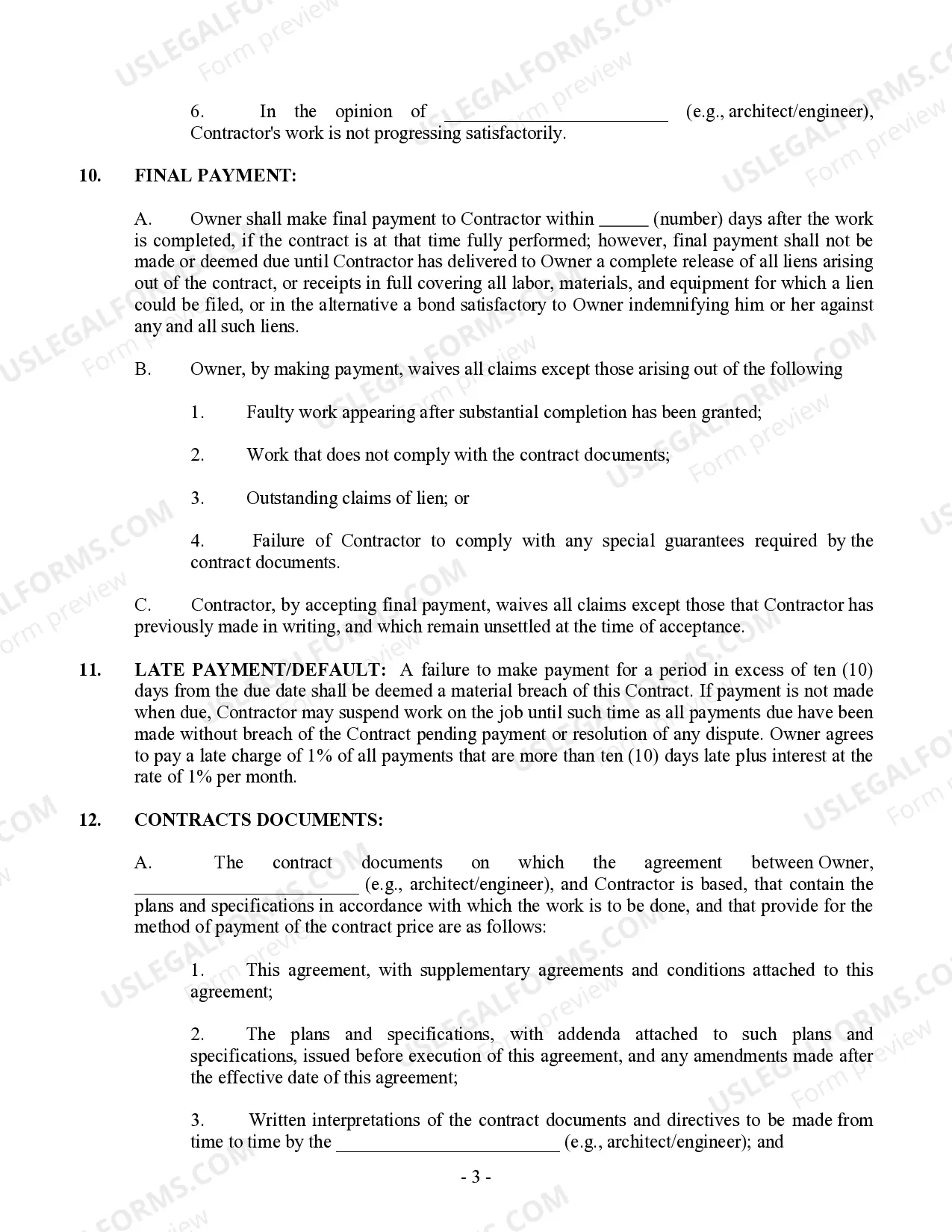
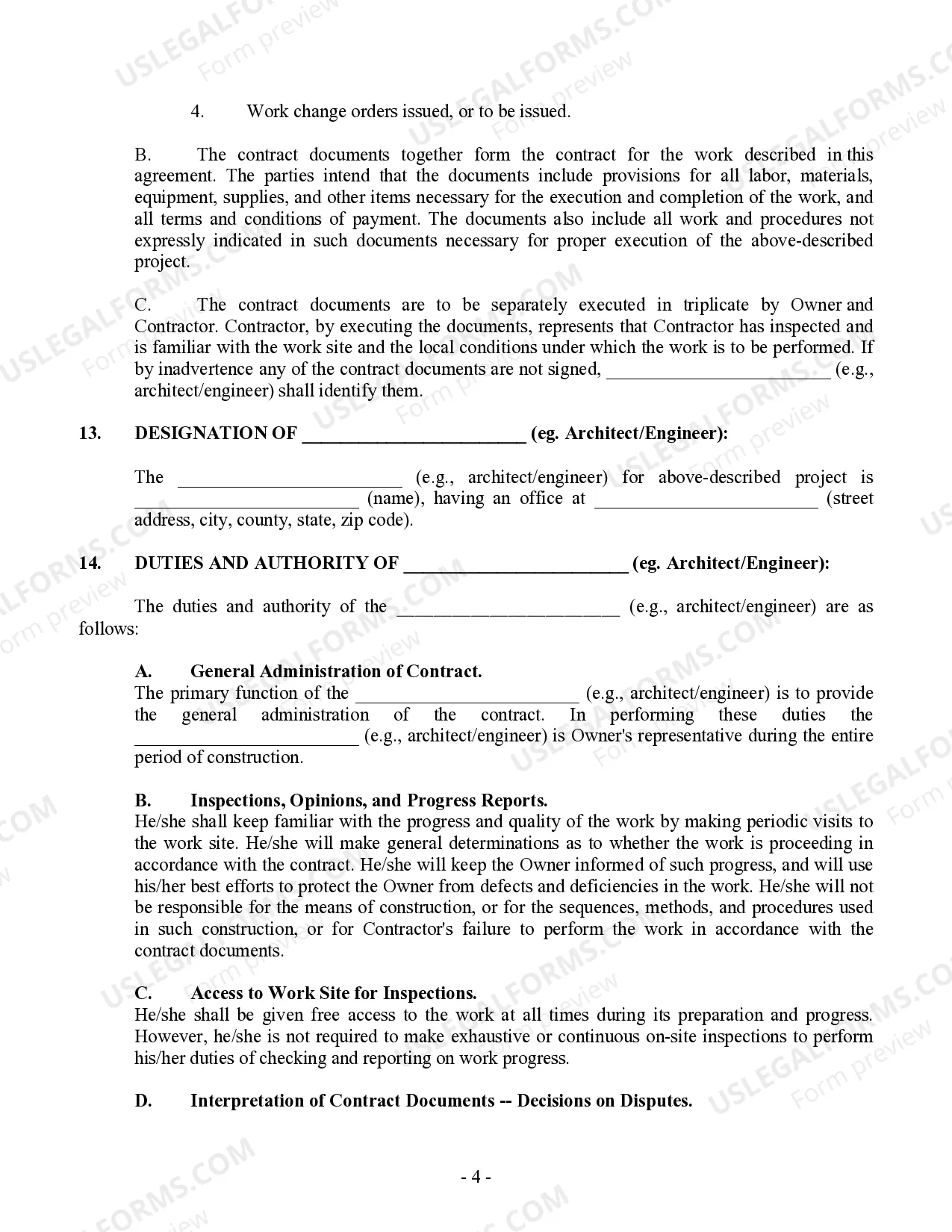
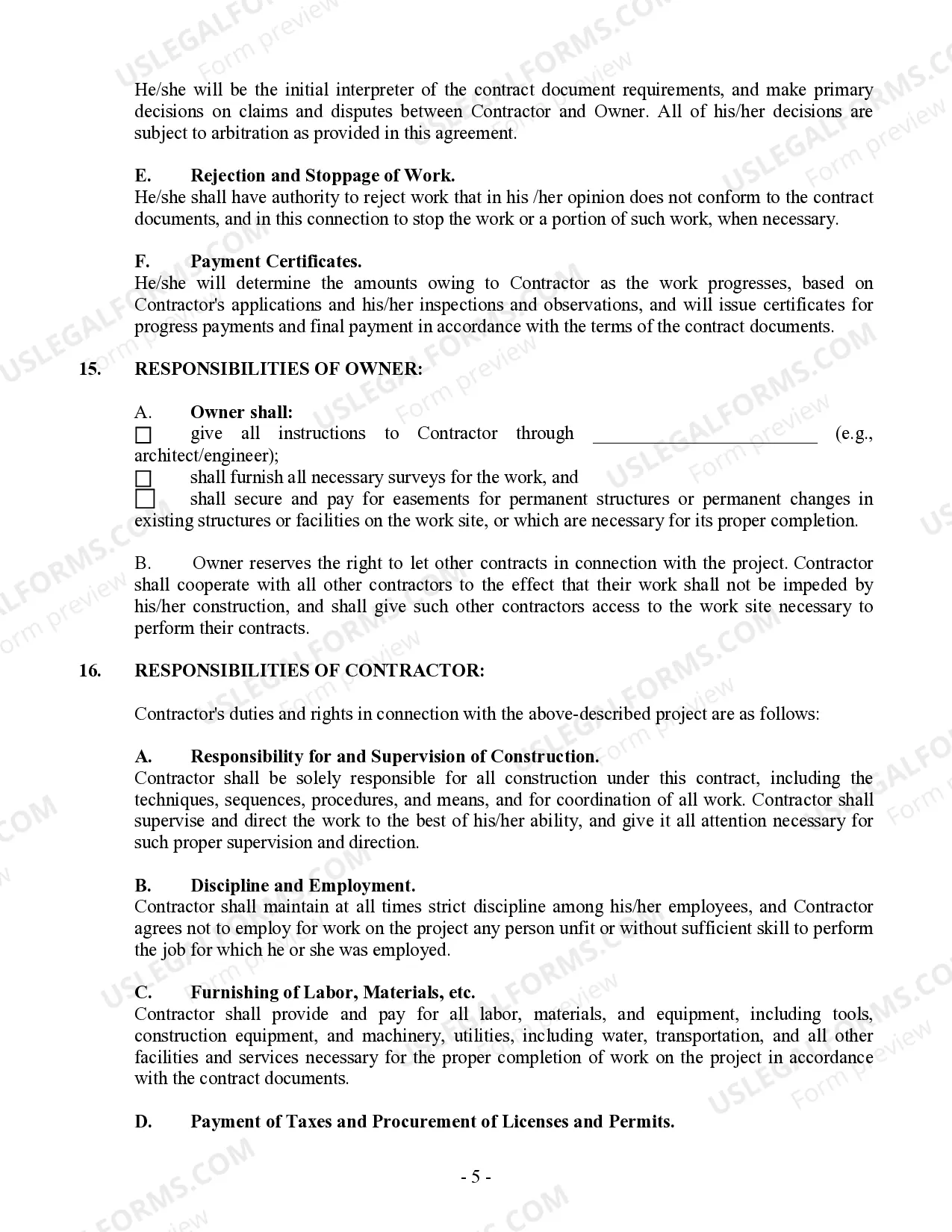
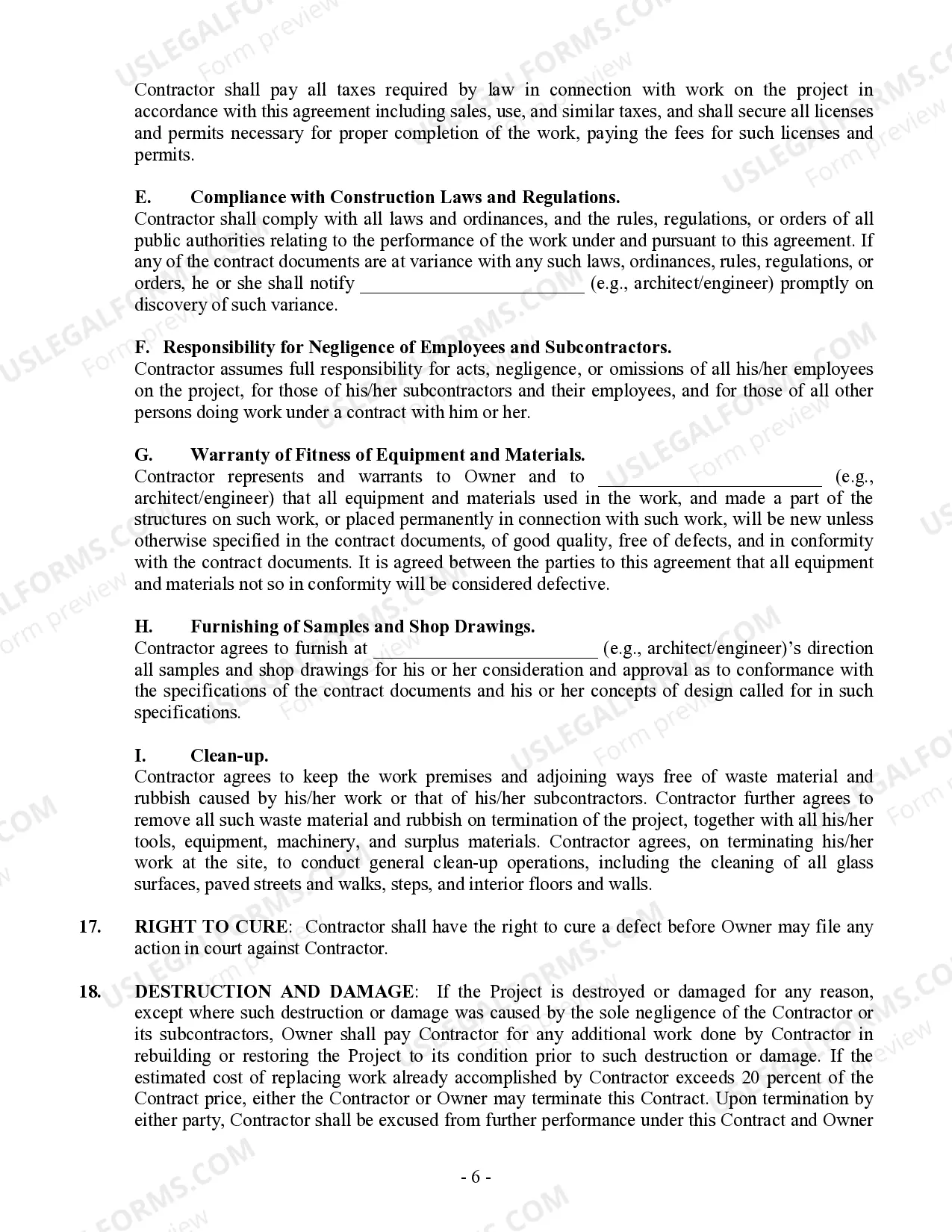
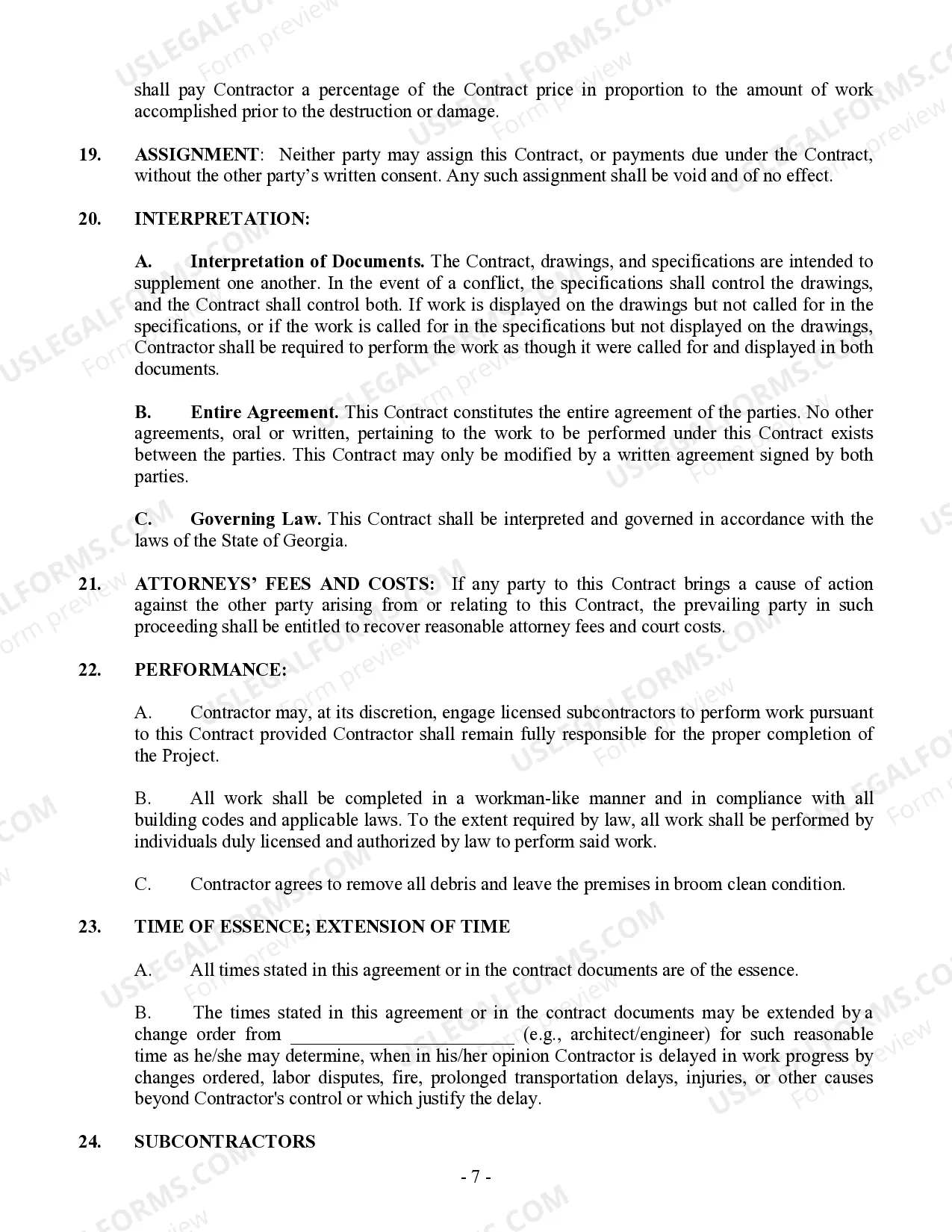
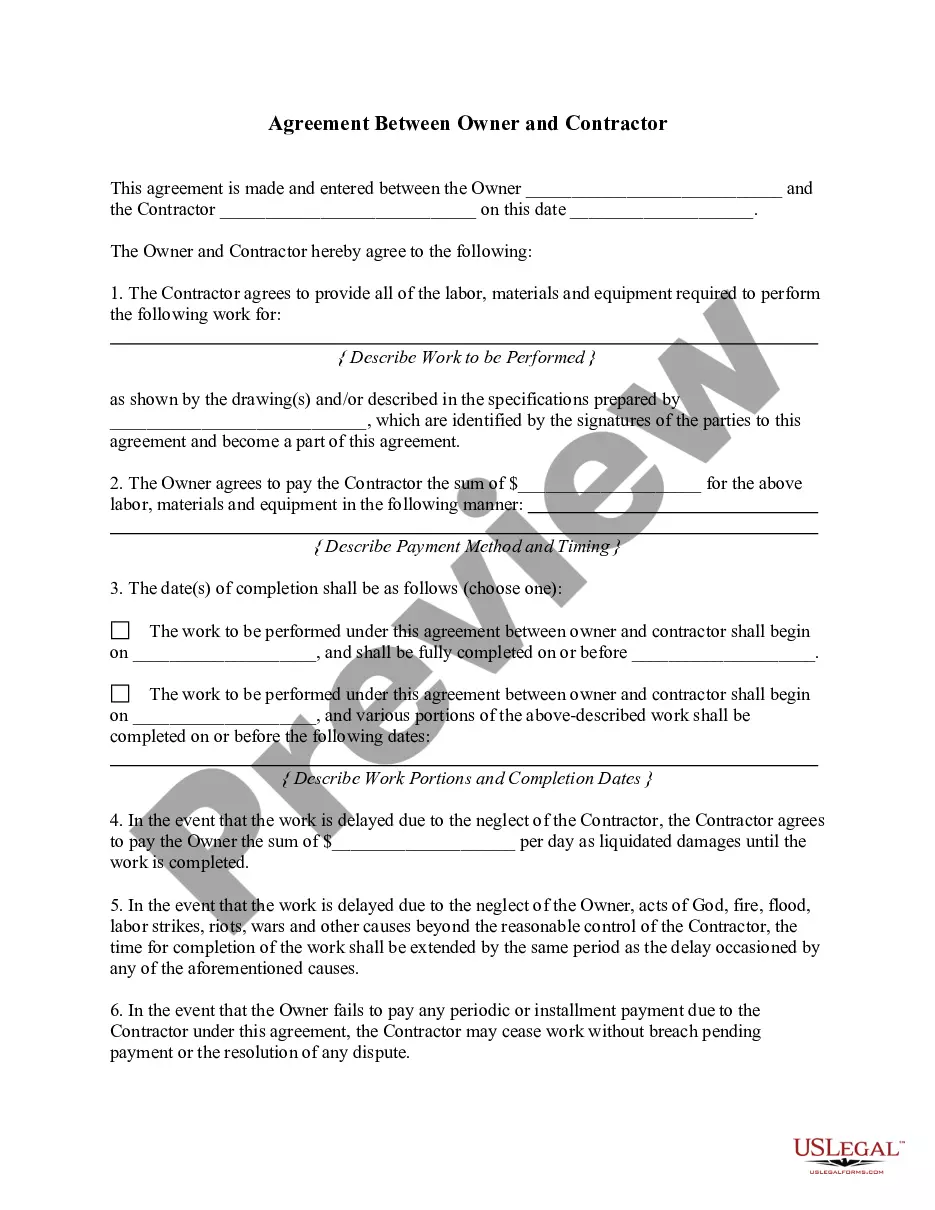
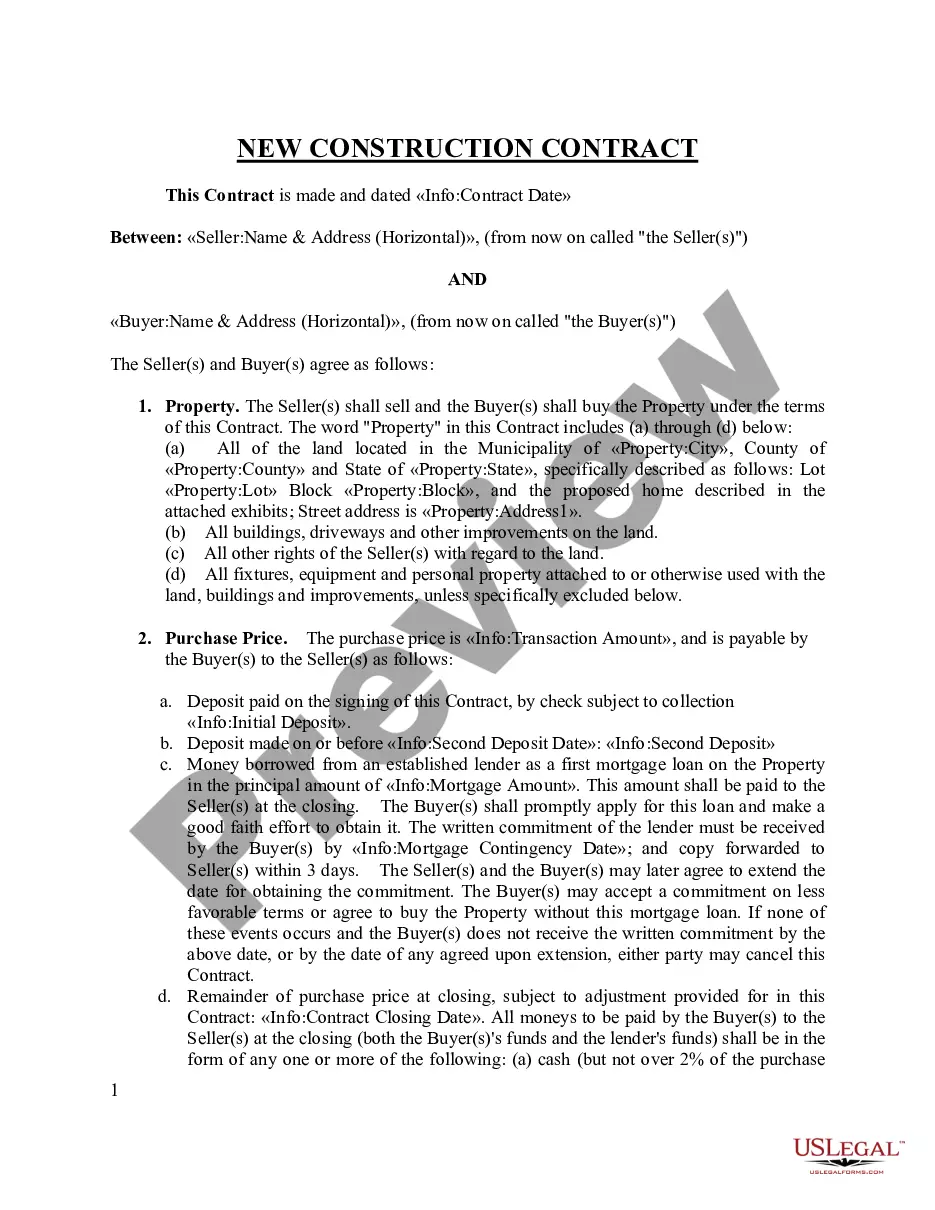
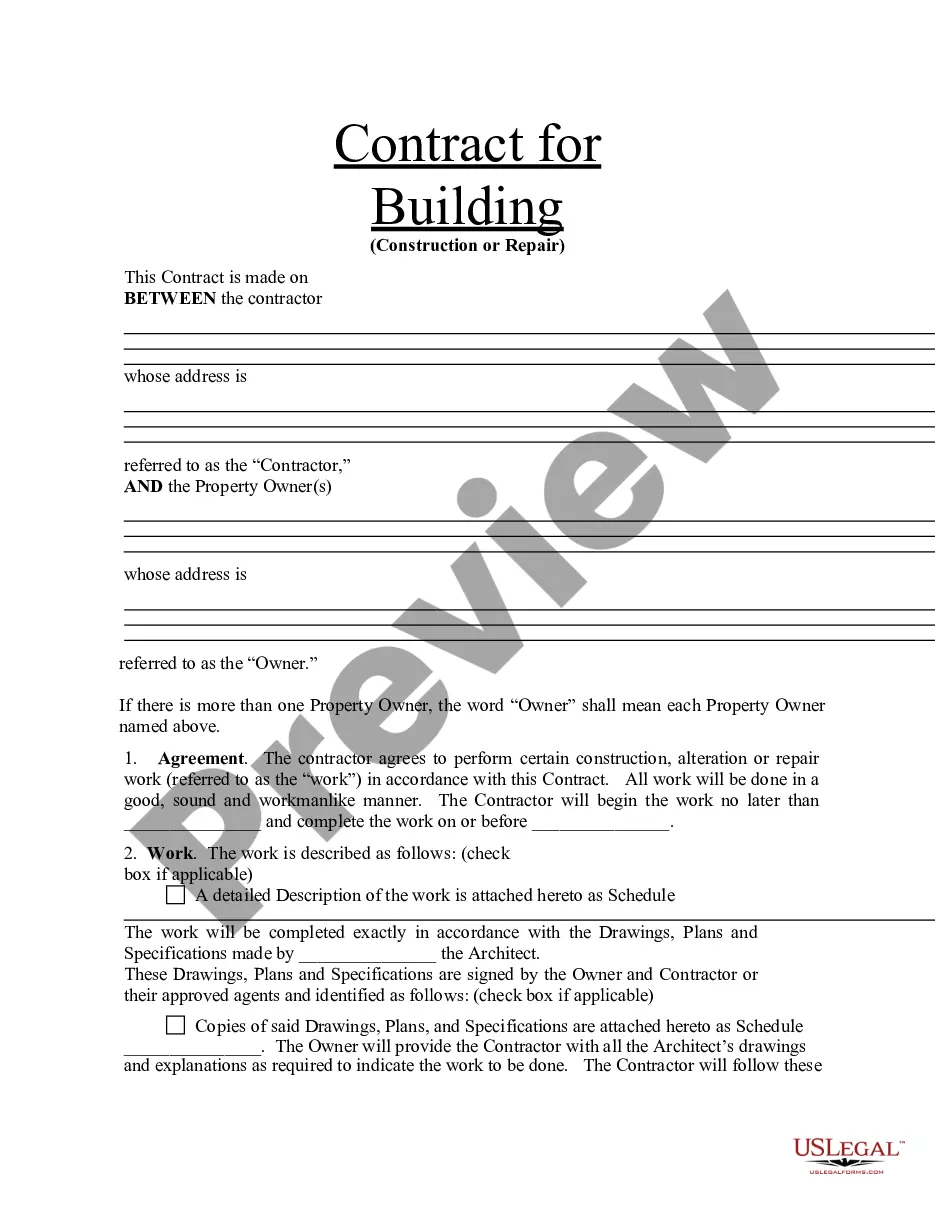
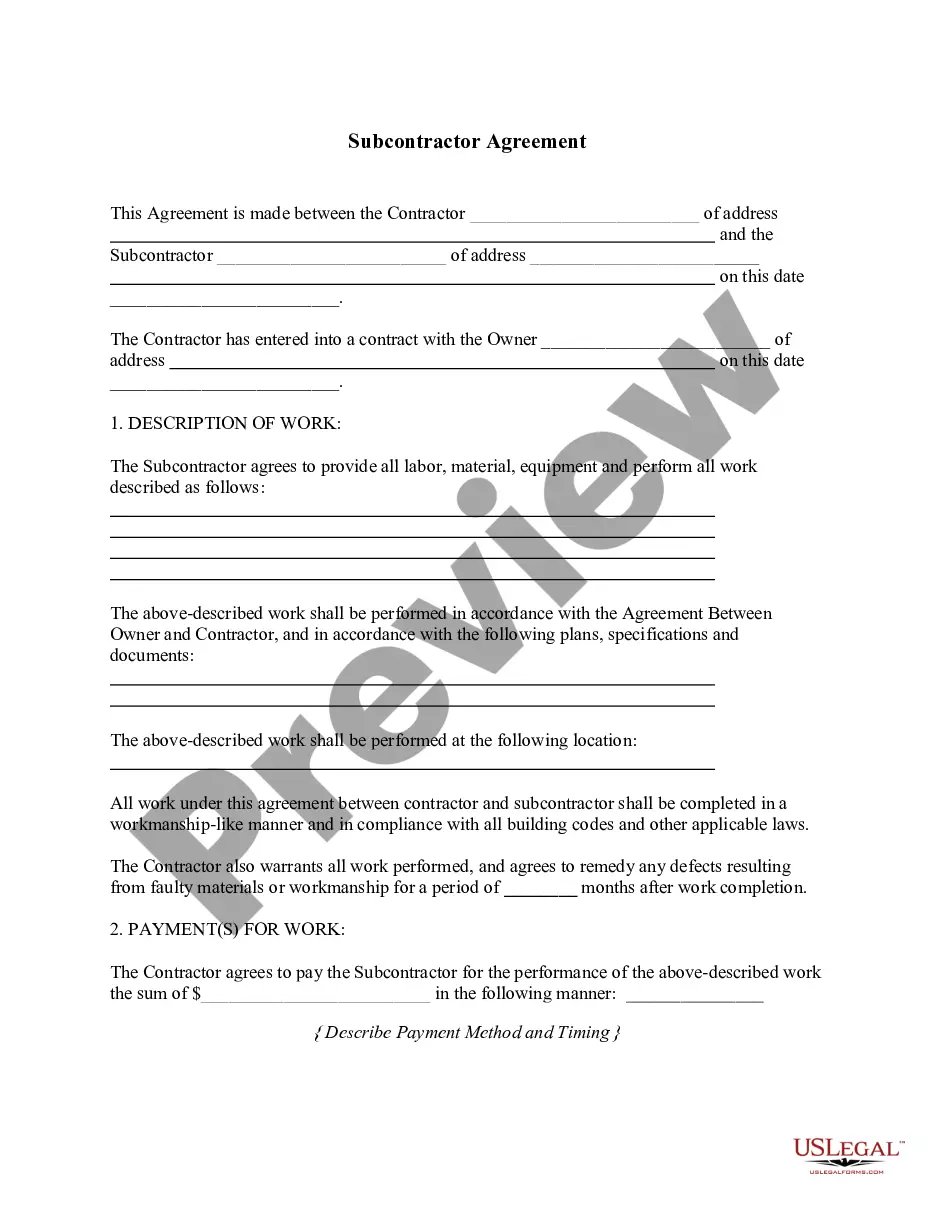
The Commercial Contract for Contractor is a legally binding agreement between a commercial contractor and a property owner. This form outlines the terms of a construction project, including payment arrangements, project specifications, and responsibilities of both parties. Unlike other construction contracts, this form accommodates both cost-plus and fixed-fee payment structures, making it adaptable for various project needs. It has been specifically drafted to comply with Georgia state laws, ensuring its legality and enforceability within that jurisdiction.
What’s included in this form
- Work site information, specifying the property location.
- Permit obligations for the contractor, including costs associated with obtaining them.
- Soil conditions, detailing the contractorâs lack of responsibility for soil-related issues.
- Progress payments structure, outlining conditions for payments and potential withholding.
- Responsibilities of both the owner and contractor regarding compliance and supervision.
- Provisions for warranty and insurance coverage related to the construction work.
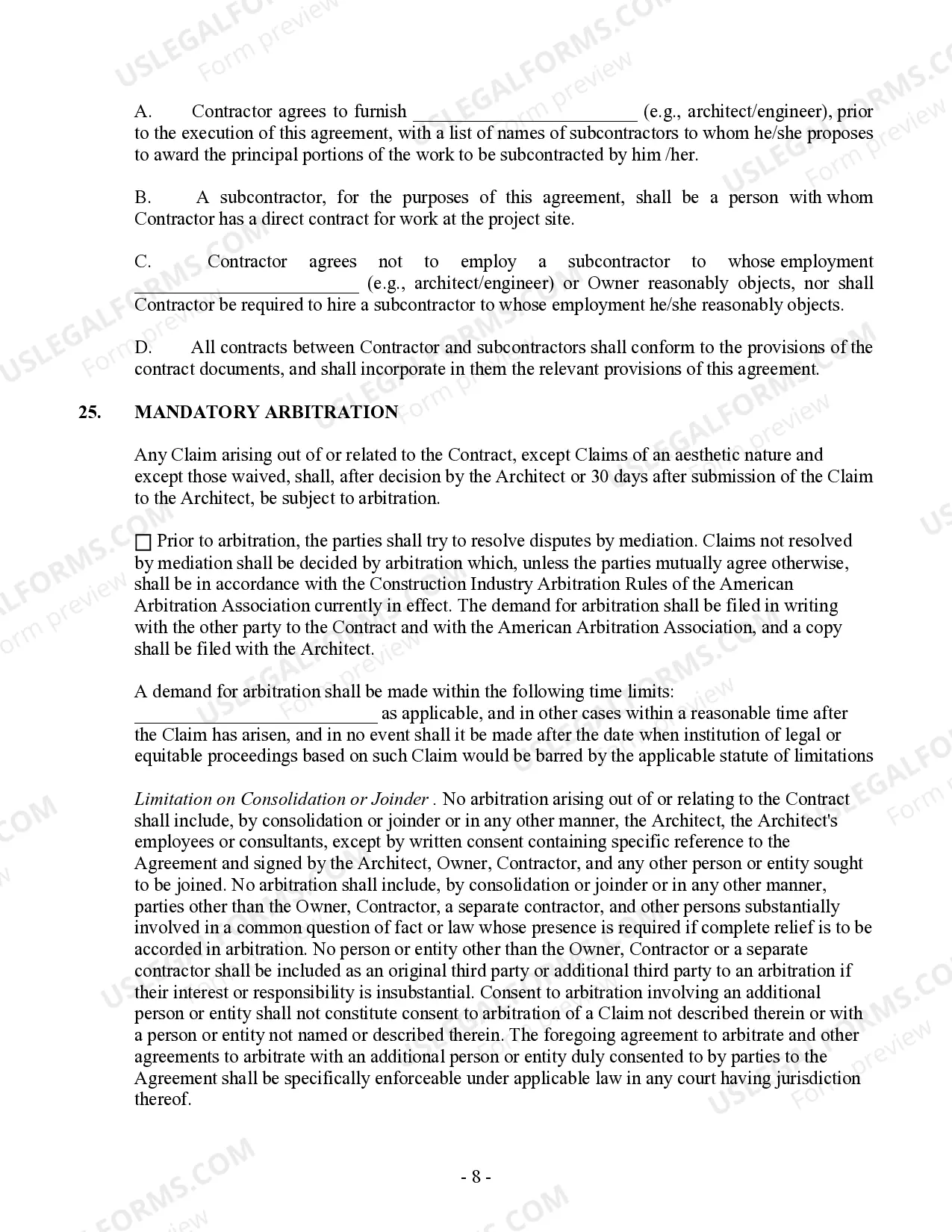
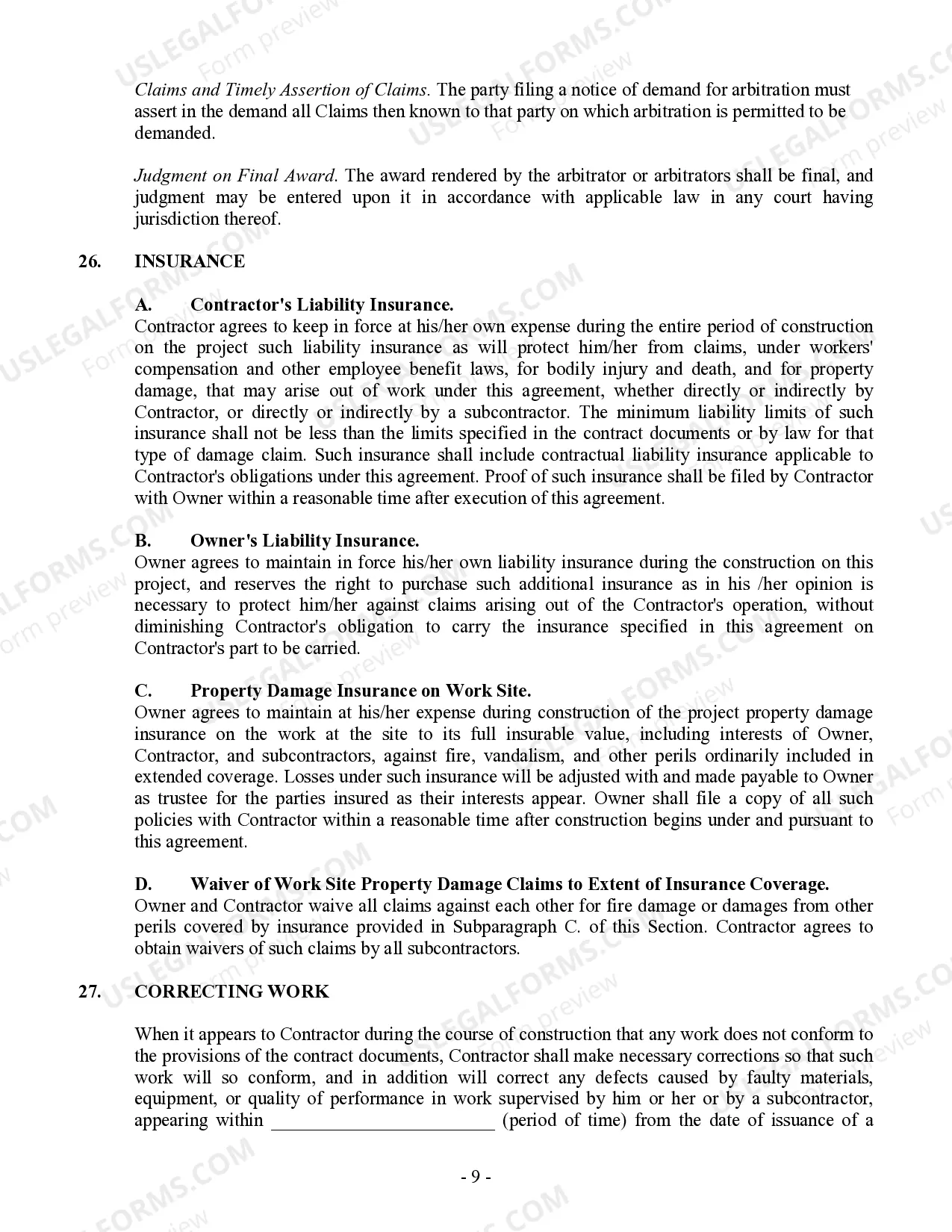
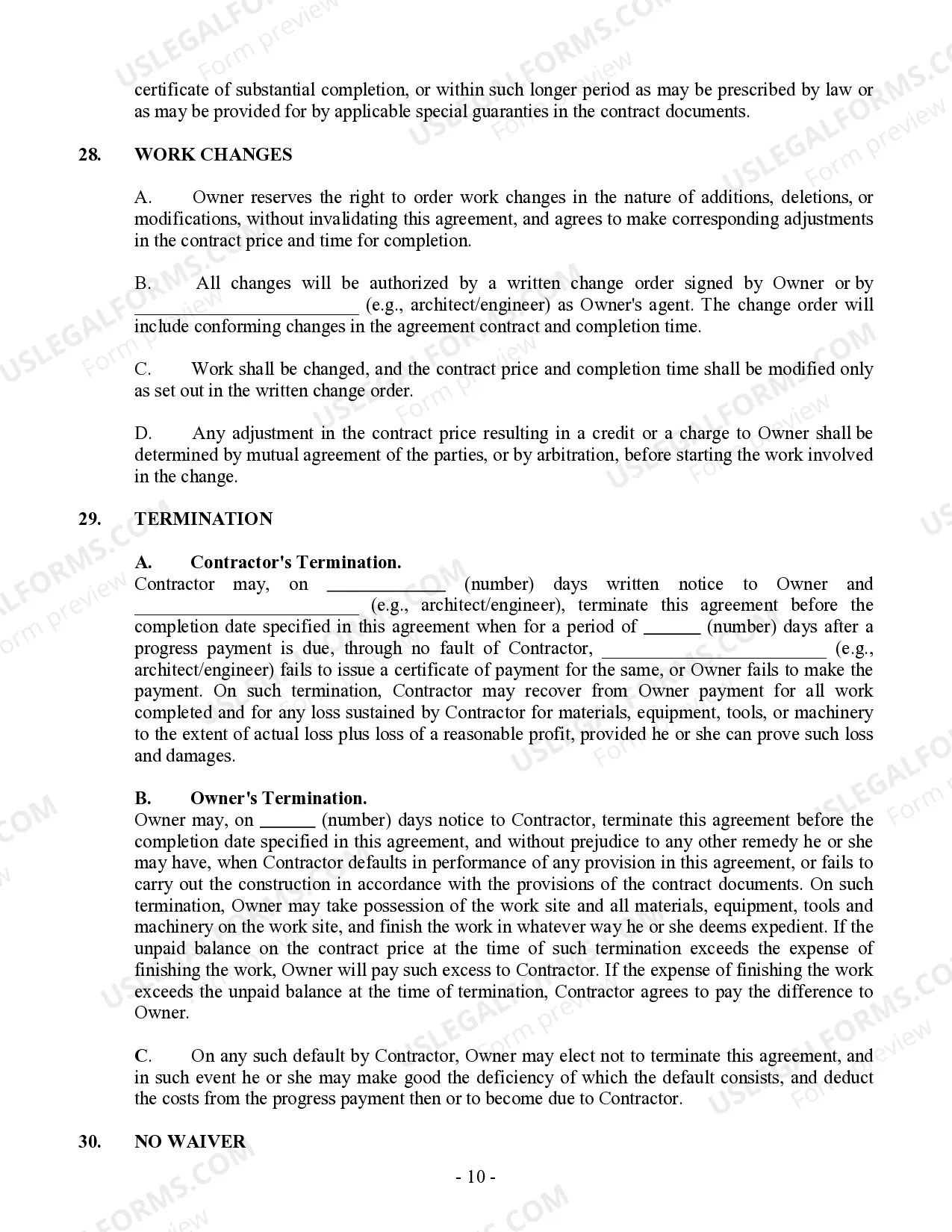

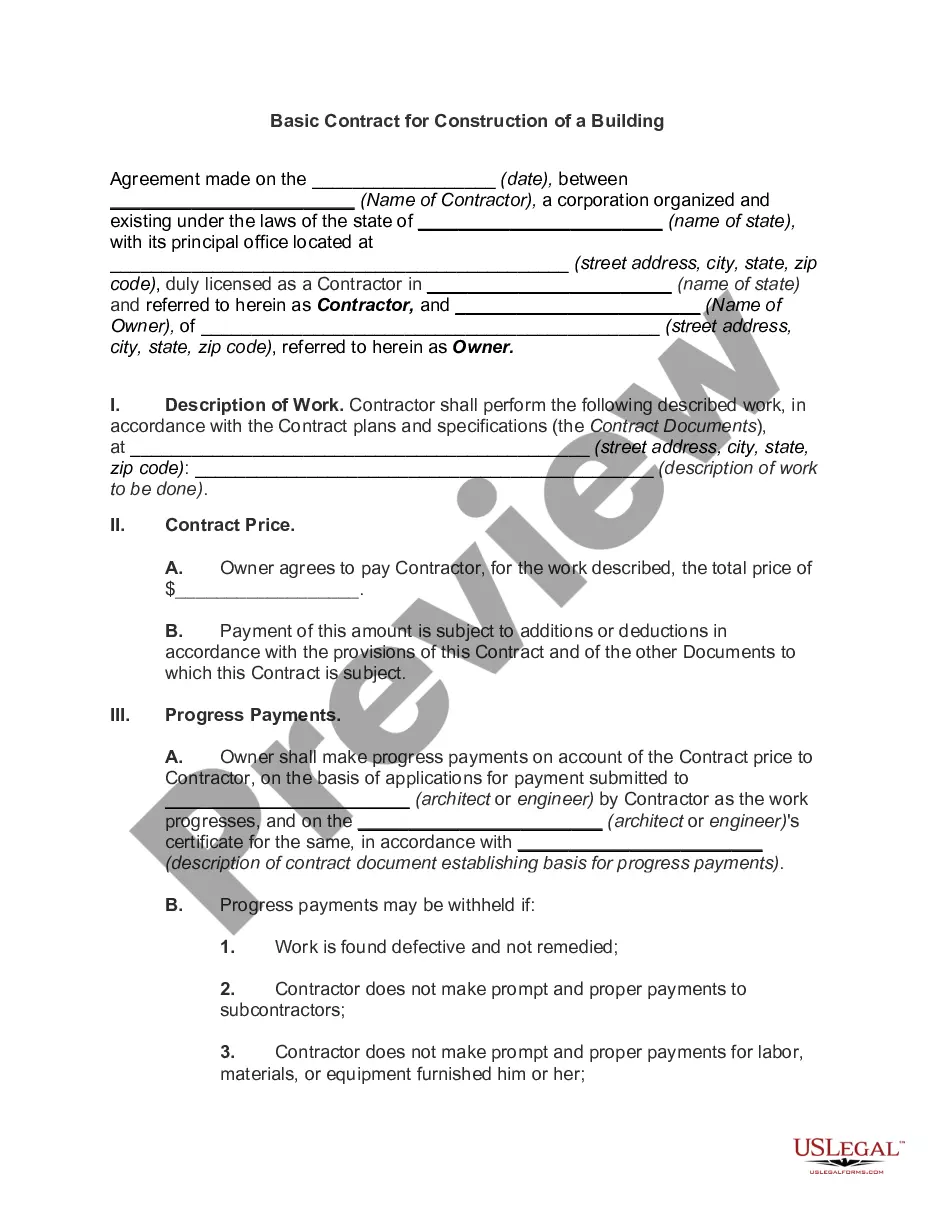
When to use this form
This form should be used when a property owner engages a contractor for commercial construction projects. It is appropriate for situations involving new construction, renovations, or remodeling where specific terms of payment and responsibilities need to be clearly outlined. Use this form if you want to ensure legal compliance in Georgia and establish a mutual understanding of obligations and rights related to the construction work.
Who can use this document
This form is suitable for:
- Commercial contractors visiting or working in Georgia.
- Property owners looking to hire contractors for construction projects.
- Businesses needing a clear and comprehensive contract for construction services.
How to prepare this document
- Identify the parties involved by entering the names and addresses of the contractor and property owner.
- Specify the work site location to clearly define where the project will take place.
- Detail the payment structure by indicating whether it is cost-plus or fixed fee.
- Fill in the provisions related to permits and any additional conditions required for the specific project.
- Both parties should sign and date the contract to formalize the agreement.
Does this form need to be notarized?
This form does not typically require notarization unless specified by local law. However, having a notarized agreement may add an extra layer of legal protection.
Get your form ready online
Our built-in tools help you complete, sign, share, and store your documents in one place.
Make edits, fill in missing information, and update formatting in US Legal Forms—just like you would in MS Word.
Download a copy, print it, send it by email, or mail it via USPS—whatever works best for your next step.
Sign and collect signatures with our SignNow integration. Send to multiple recipients, set reminders, and more. Go Premium to unlock E-Sign.
If this form requires notarization, complete it online through a secure video call—no need to meet a notary in person or wait for an appointment.
We protect your documents and personal data by following strict security and privacy standards.

Make edits, fill in missing information, and update formatting in US Legal Forms—just like you would in MS Word.

Download a copy, print it, send it by email, or mail it via USPS—whatever works best for your next step.

Sign and collect signatures with our SignNow integration. Send to multiple recipients, set reminders, and more. Go Premium to unlock E-Sign.

If this form requires notarization, complete it online through a secure video call—no need to meet a notary in person or wait for an appointment.

We protect your documents and personal data by following strict security and privacy standards.
Avoid these common issues
- Failing to clearly specify all project details and expectations within the contract.
- Not including necessary permits and regulatory approvals for construction.
- Omitting the payment schedule, including progress payment details.
- Not reviewing the contract for compliance with Georgia laws before signing.
Advantages of online completion
- Convenient download process, allowing quick access to essential legal documents.
- Editable formats to tailor the contract to specific project needs without needing legal expertise.
- Reliability of documents drafted by licensed attorneys, ensuring compliance with legal standards.
Legal use & context
- This form is legally binding when signed by both parties and should be executed according to Georgia law.
- Proper use of this contract helps prevent legal disputes between contractors and property owners.
- Both parties should maintain a copy of the signed contract for future reference and legal protection.
Main things to remember
- The Commercial Contract for Contractor is essential for clear communication between contractors and property owners.
- Properly completing this form minimizes risks associated with misunderstandings about project scope and payment.
- Understanding and adhering to state-specific requirements is crucial for legal validity and enforceability.
Looking for another form?
Form popularity
FAQ
Filling out a contractor agreement involves understanding your project details and deadlines clearly. Start by outlining the scope of work, payment terms, and any relevant timelines. Using a Georgia Commercial Contract for Contractor template can simplify this process, providing you with structured guidelines to ensure all necessary information is included. By being thorough, you protect both yourself and your client.
Setting up a business can be beneficial for independent contractors, but it is not always necessary. You may operate as a sole proprietor without formal registration in many cases. However, having a business entity, like an LLC, can provide you with liability protection and other benefits. Utilizing a Georgia Commercial Contract for Contractor can help define your services and terms, regardless of your business structure.
To increase your commercial work, focus on marketing strategies that highlight your strengths and successful projects. Engage in community projects to raise awareness and build a positive reputation. Additionally, networking and forming partnerships can lead to valuable referrals. Incorporating a Georgia Commercial Contract for Contractor into your operations enhances professionalism and trust with potential clients.
General contractors can find commercial work by tapping into various resources like construction lead services, public bids, and industry contacts. Building relationships with architects, developers, and property managers will open doors to new projects. Consistently updating your portfolio and showcasing client testimonials further enhances your visibility. Utilizing a Georgia Commercial Contract for Contractor ensures your agreements are professional and secure.
In Georgia, you can perform limited work without a contractor license, generally up to $2,500 in total costs for residential projects. However, for any commercial work, a license is typically required. Not obtaining a proper license can lead to legal complications and potential project delays. Always consider using a Georgia Commercial Contract for Contractor to protect your interests in all construction projects.
General contractors often find subcontractors through referrals, industry connections, and online job boards. Build relationships with other contractors and attend networking events to meet potential subcontractors. When hiring, always check references and previous work history. A Georgia Commercial Contract for Contractor can help outline the responsibilities and expectations between you and your subcontractors.
To secure commercial jobs as a general contractor, you need to build a strong portfolio showcasing your work. Utilize social media and contractor websites to promote your services. Reach out to local businesses and government agencies that may require construction services. Having a Georgia Commercial Contract for Contractor can streamline the bidding process and ensure clarity in project expectations.
Finding commercial construction work begins with networking within the industry. Attend local trade shows and join construction associations to meet potential clients. Additionally, leveraging online platforms can help you connect with companies looking for skilled contractors. Consider using a Georgia Commercial Contract for Contractor to formalize agreements as you secure projects.
Becoming a commercial contractor in Georgia requires obtaining the necessary licenses, gaining relevant experience, and understanding the construction industry. You may need to complete required training programs and pass exams. Networking with other professionals and having a valid Georgia Commercial Contract for Contractor can help you establish a solid foundation for your business.
Yes, you can file a 1099 without a business license in many cases. However, having a business license can help solidify your legitimacy as a contractor. It also ensures that you meet local regulatory standards. Structuring your contracts, using a Georgia Commercial Contract for Contractor, can help establish your business in the eyes of clients and authorities.