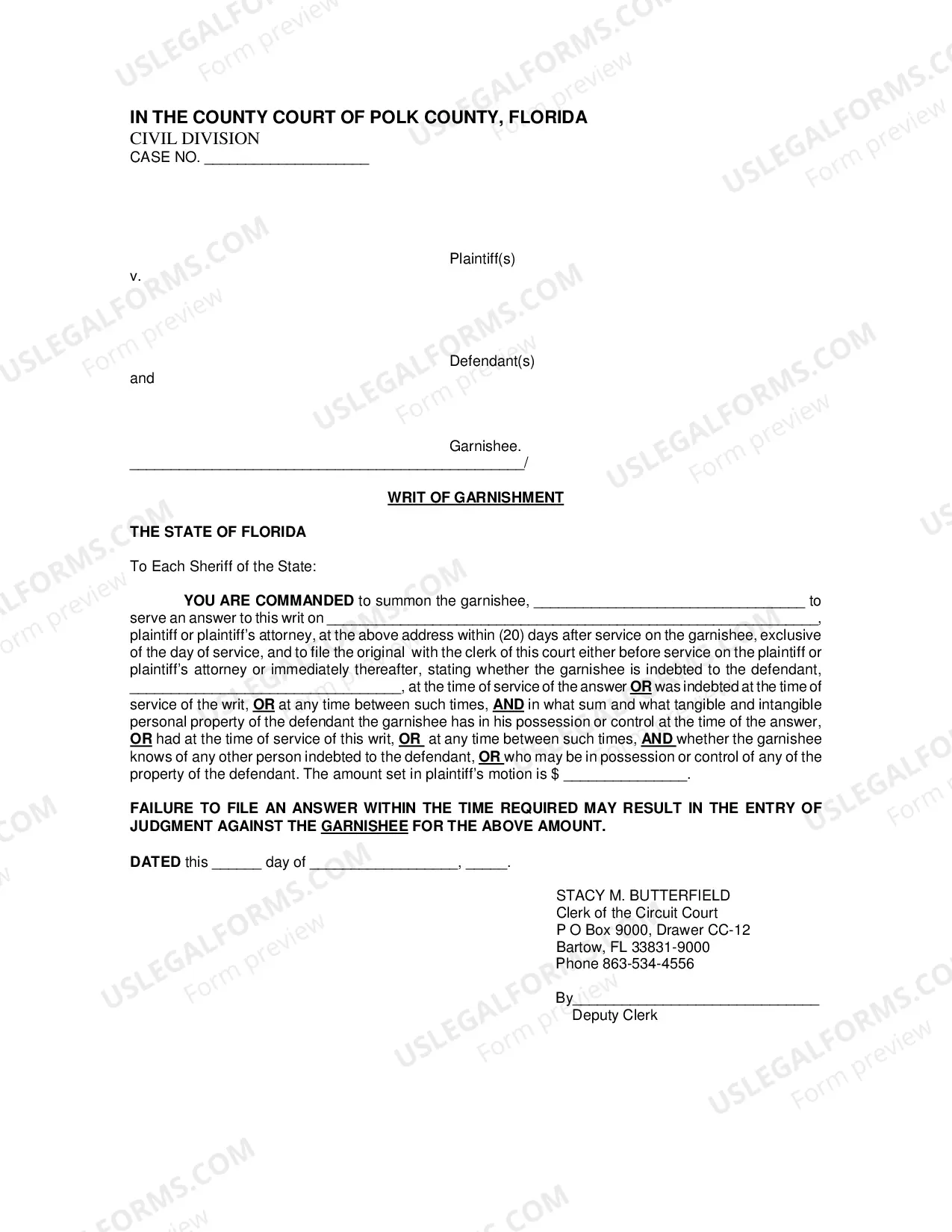
Florida Writ of Garnishment
What is this form?
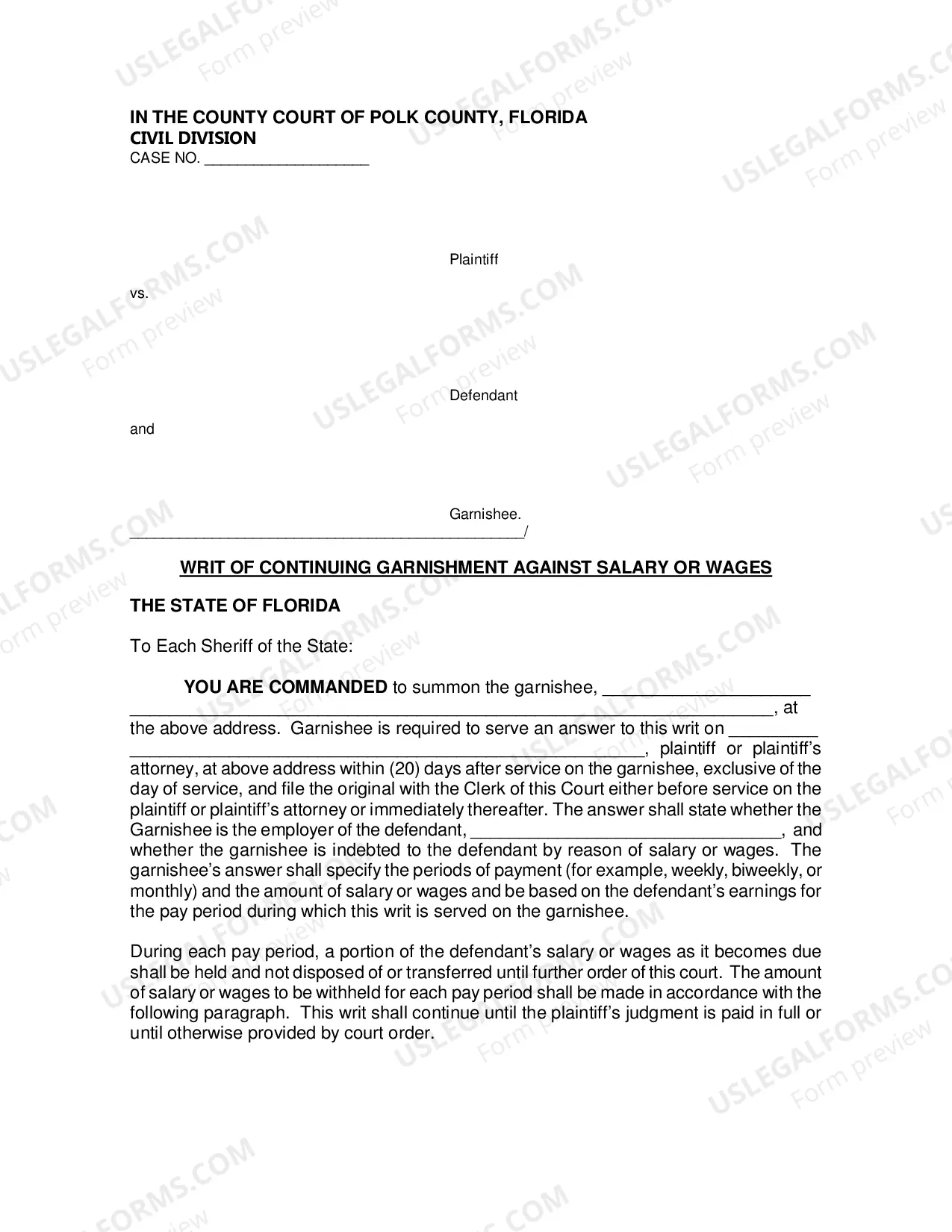
The writ of garnishment is a legal document that enables a creditor to collect debts by directing a third party, known as the garnishee, to withhold money or property owed to the debtor. Unlike other debt collection methods, a writ of garnishment specifically targets funds or assets in the possession of the garnishee, allowing for a more direct approach to satisfying a judgment. This form is essential in legal proceedings where a creditor seeks to recover owed amounts from a debtor's wages or bank accounts.
Main sections of this form
- Case information: includes the court name and case number.
- Plaintiff and defendant details: identifies the parties involved in the case.
- Garnishee information: specifies the third party from whom funds are being collected.
- Response timeframe: details the period within which the garnishee must respond.
- Consequences of non-compliance: outlines the risks of failing to answer the writ.
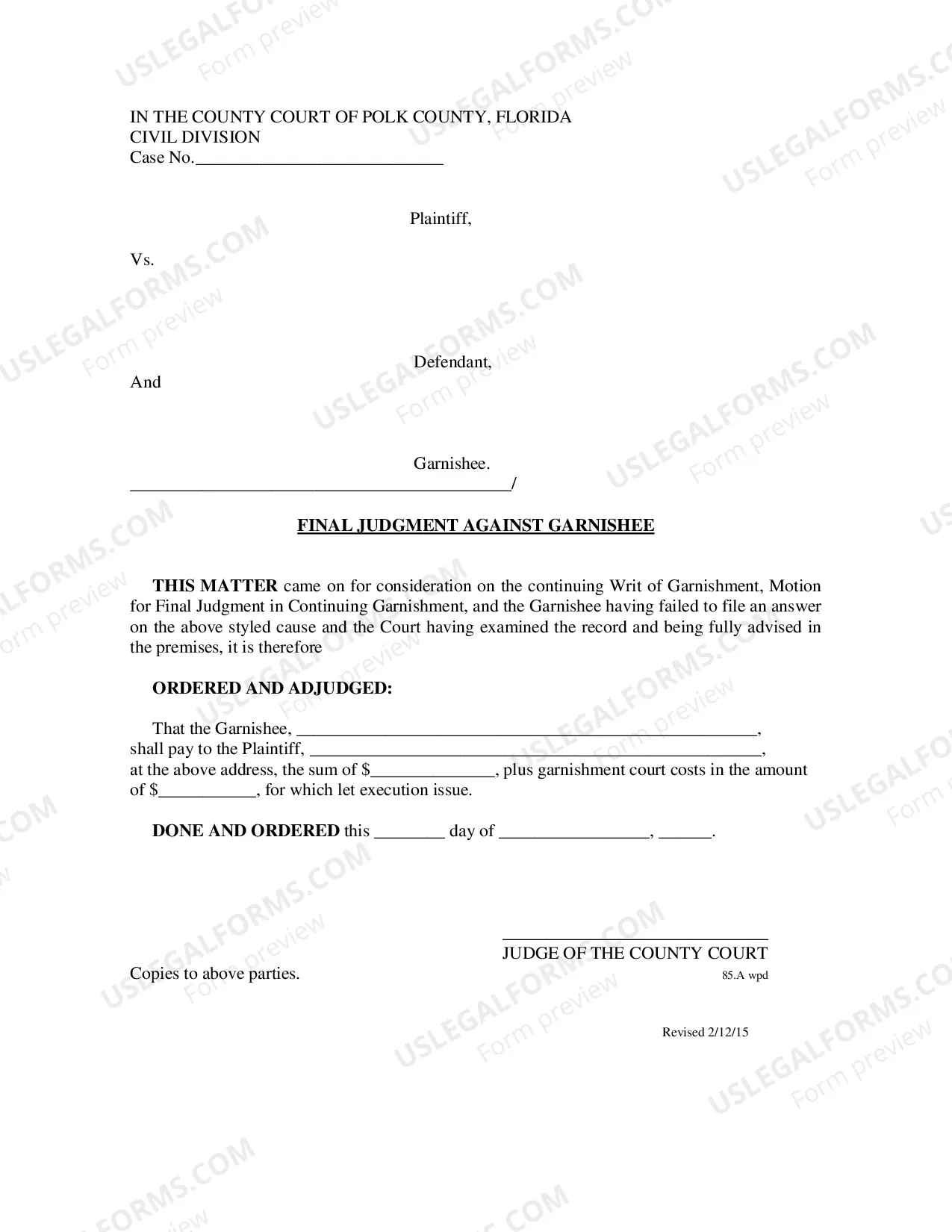
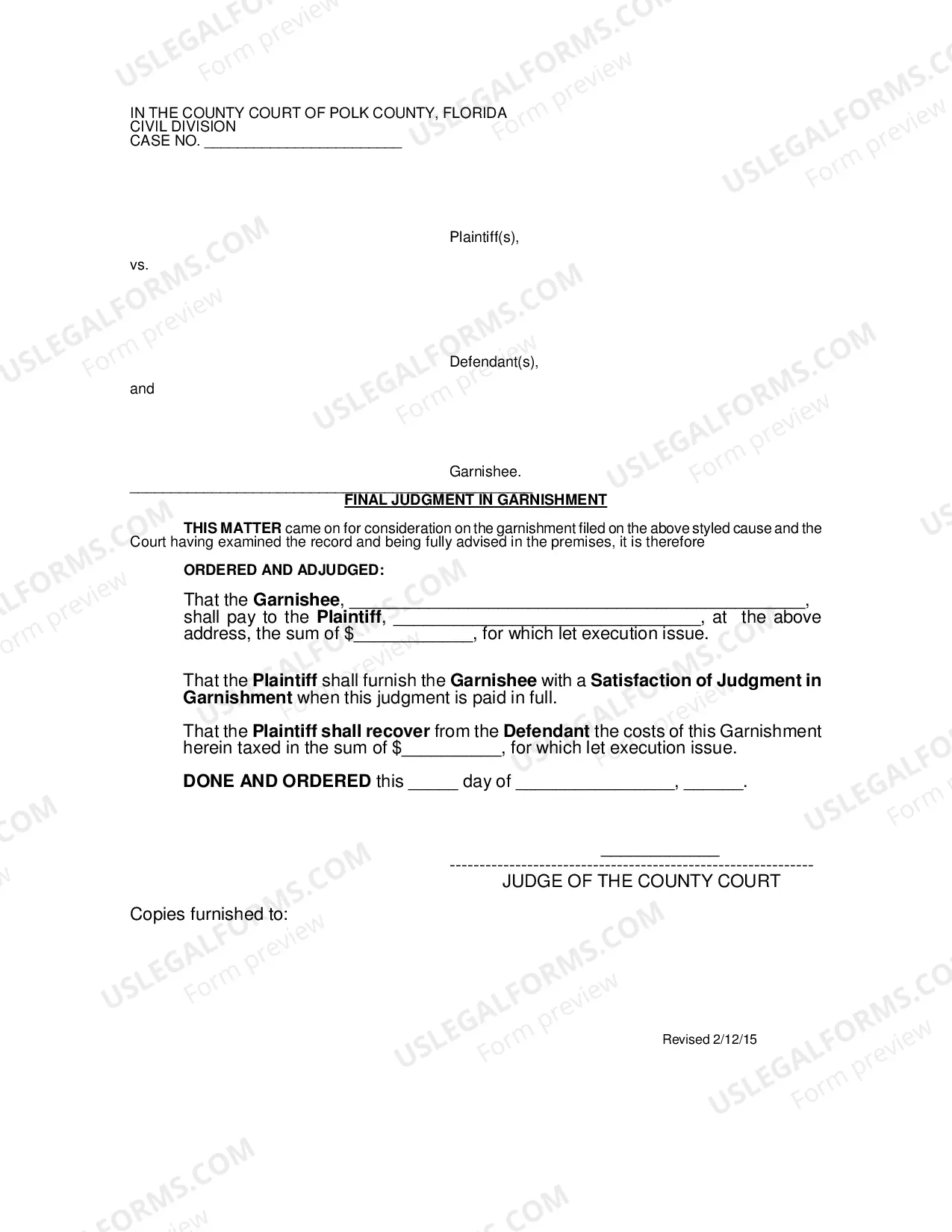
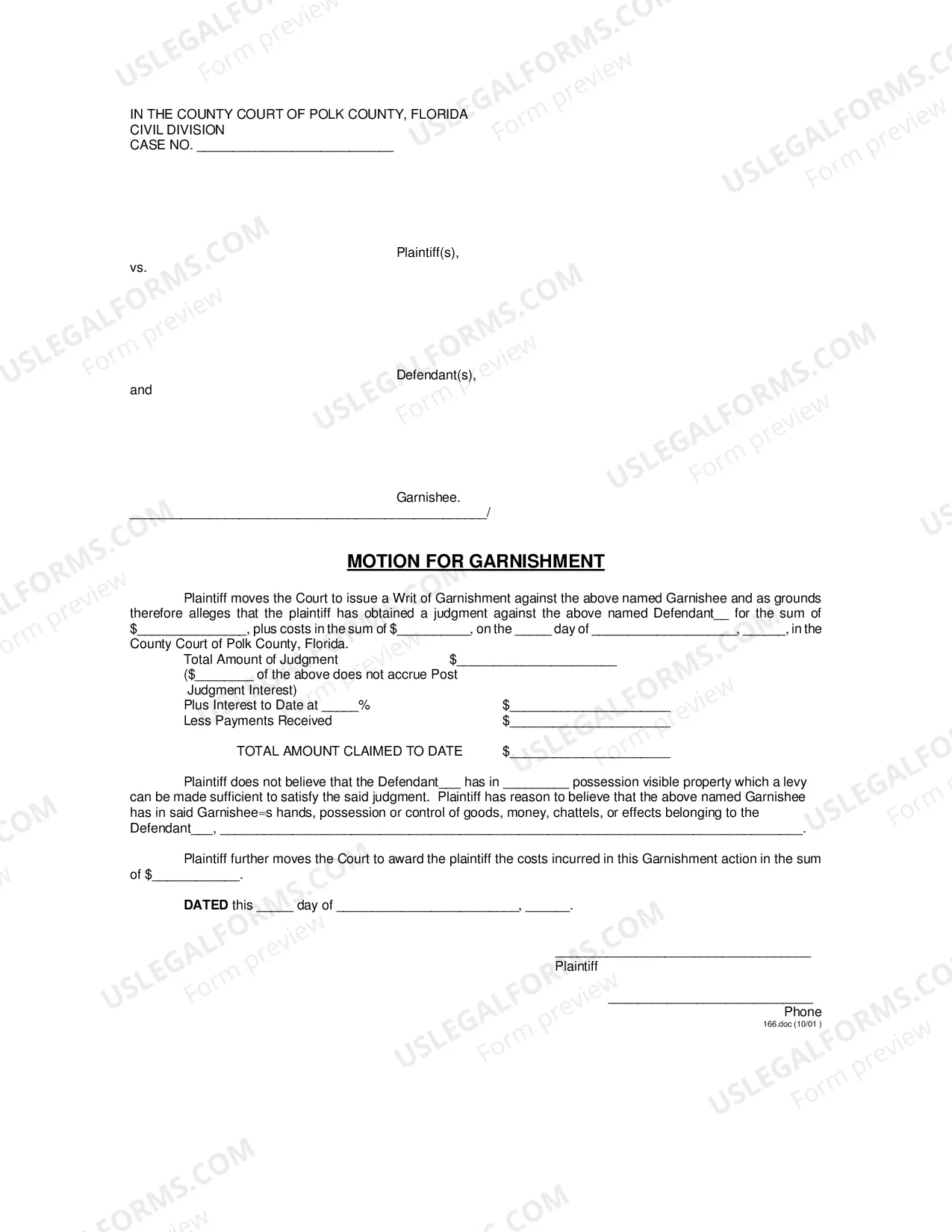
When to use this form
You should use a writ of garnishment when you have obtained a legal judgment against a debtor and need to collect owed amounts directly from a third party, such as an employer or bank. This form is applicable in situations where other debt recovery methods have been unsuccessful or when immediate action is necessary to secure payment.
Who needs this form
- Creditors seeking to collect debts from a debtor.
- Individuals or businesses that have received a judgment in their favor.
- Attorneys representing creditors in collection cases.
Steps to complete this form
- Identify the case information: enter the court name and case number at the top of the form.
- Fill in the plaintiff and defendant fields with the correct names.
- Specify the garnishee's name and address to ensure they receive the writ.
- Clearly state the amount owed by the debtor in the designated section.
- Include the date and sign as required before submitting the form to the court.
Does this document require notarization?
This form does not typically require notarization unless specified by local law. However, it is advisable to check specific local requirements to ensure compliance.
Get your form ready online
Our built-in tools help you complete, sign, share, and store your documents in one place.
Make edits, fill in missing information, and update formatting in US Legal Forms—just like you would in MS Word.
Download a copy, print it, send it by email, or mail it via USPS—whatever works best for your next step.
Sign and collect signatures with our SignNow integration. Send to multiple recipients, set reminders, and more. Go Premium to unlock E-Sign.
If this form requires notarization, complete it online through a secure video call—no need to meet a notary in person or wait for an appointment.
We protect your documents and personal data by following strict security and privacy standards.

Make edits, fill in missing information, and update formatting in US Legal Forms—just like you would in MS Word.

Download a copy, print it, send it by email, or mail it via USPS—whatever works best for your next step.

Sign and collect signatures with our SignNow integration. Send to multiple recipients, set reminders, and more. Go Premium to unlock E-Sign.

If this form requires notarization, complete it online through a secure video call—no need to meet a notary in person or wait for an appointment.

We protect your documents and personal data by following strict security and privacy standards.
Common mistakes to avoid
- Failing to include all necessary parties' names and addresses.
- Not specifying the correct amount owed, which can lead to legal issues.
- Missing the deadline for the garnishee to respond to the writ.
Benefits of using this form online
- Convenience of filling out and downloading the form from anywhere.
- Editability allows you to make necessary changes before finalizing.
- Access to attorney-drafted, reliable forms that meet legal standards.
Looking for another form?
Form popularity
FAQ
There are indeed time limits associated with garnishments in Florida. Creditors must comply with specific timelines to enforce a writ of garnishment, typically ensuring that all actions are taken within one year of judgment. Understanding these timelines is crucial to responding appropriately and protecting your rights. Resources like US Legal Forms can help clarify these timelines and assist you in managing your situation effectively.
Yes, a writ of garnishment in Florida does have a lifespan and can expire if unused. Generally, a garnishment may remain valid for up to one year from the date it is issued, unless renewed by the creditor. Staying informed about the status of the writ can help you manage your financial responsibilities effectively. Legal resources can guide you through the intricacies of a Florida writ of garnishment and its expiration.
In Florida, a writ of garnishment allows creditors to intercept funds owed to you directly from your employer or bank. The process begins when a creditor obtains a judgment and files for a writ, which then is served to the garnishee. Understanding how this legal mechanism works can help you react promptly and possibly mitigate the financial impact. Researching the Florida writ of garnishment process can provide you with necessary insights and tools.
To claim an exemption from a writ of garnishment in Florida, you must file a claim with the court within a specified timeframe. This claim should outline the reasons for your exemption, usually based on certain income thresholds or necessary expenses. Legal counsel can assist you in preparing a strong claim to ensure your rights are protected. Utilizing resources like US Legal Forms can help simplify this process.
The duration to release a garnishment in Florida can vary based on the specifics of your case. Generally, it can take anywhere from a few weeks to several months to finalize the release, depending on whether all parties comply with legal requirements. It's essential to ensure all necessary documentation is filed correctly to expedite the process. Understanding the timeline of a Florida writ of garnishment can help you plan your next steps.
After receiving a writ of garnishment, you should carefully review the document and gather any necessary information. It's advisable to consult with a legal expert to discuss your options, which might include challenging the garnishment or filing for exemptions. Prompt action can prevent further complications and help you manage your financial obligations effectively. The US Legal Forms platform can provide valuable resources and templates to assist you.
Once a writ of garnishment is served, the garnishee, such as your employer or bank, must comply by withholding funds. The creditor will receive these funds until the debt is satisfied or further legal actions are taken. During this time, it's vital to stay informed about your rights and options. A Florida writ of garnishment is a serious matter, and finding the right resources can help you respond appropriately.
Ignoring a garnishee order can lead to serious consequences. If you fail to respond, the court may automatically rule against you, allowing the creditor to proceed with garnishment. It's important to address the garnishee order promptly, as inaction typically complicates the situation. Consulting with legal professionals can provide clarity and actionable steps regarding a Florida writ of garnishment.
When responding to a writ of garnishment in Florida, ensure you file your response within the specified timeframe. Your response should indicate whether you agree to the garnishment and include any defenses or objections. Being proactive in your response can help you protect your rights concerning the Florida Writ of Garnishment.
A motion for writ of garnishment is a legal request submitted to a court to authorize the garnishment of a debtor's earnings or bank accounts. This motion outlines why garnishment is necessary and the amount being sought. Understanding this motion can help you navigate financial collections more effectively.