Partnership Agreement between Inventor and Promoter
What is this form?
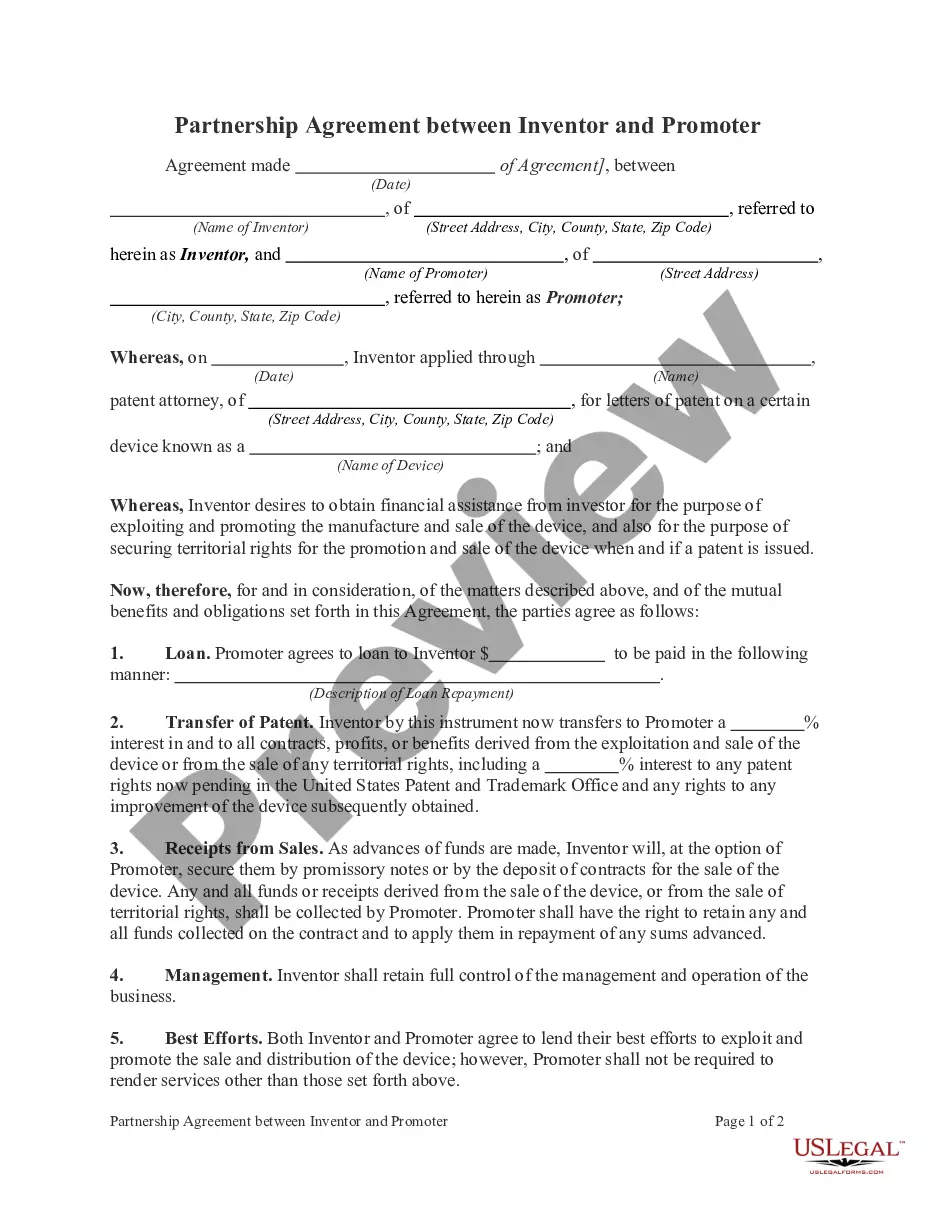
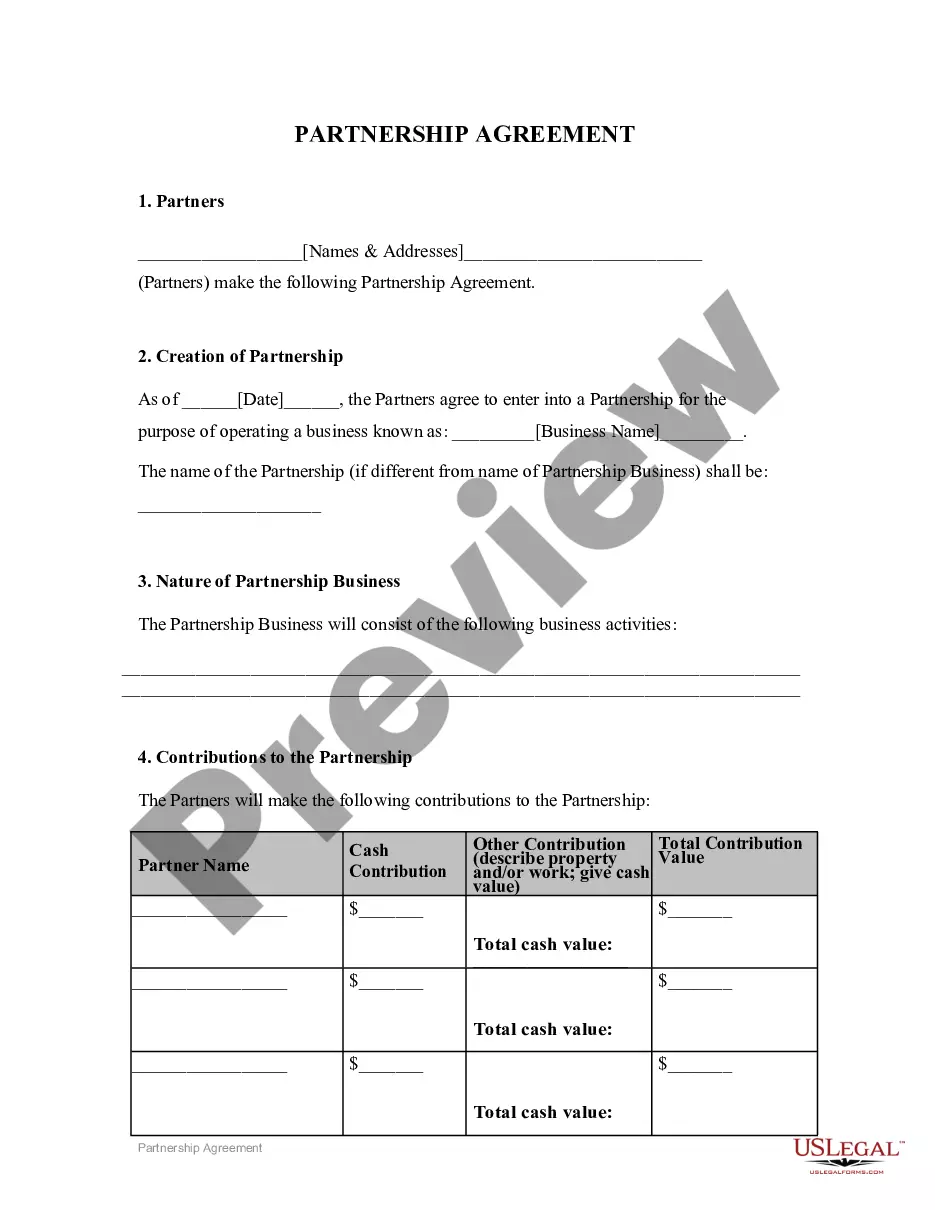
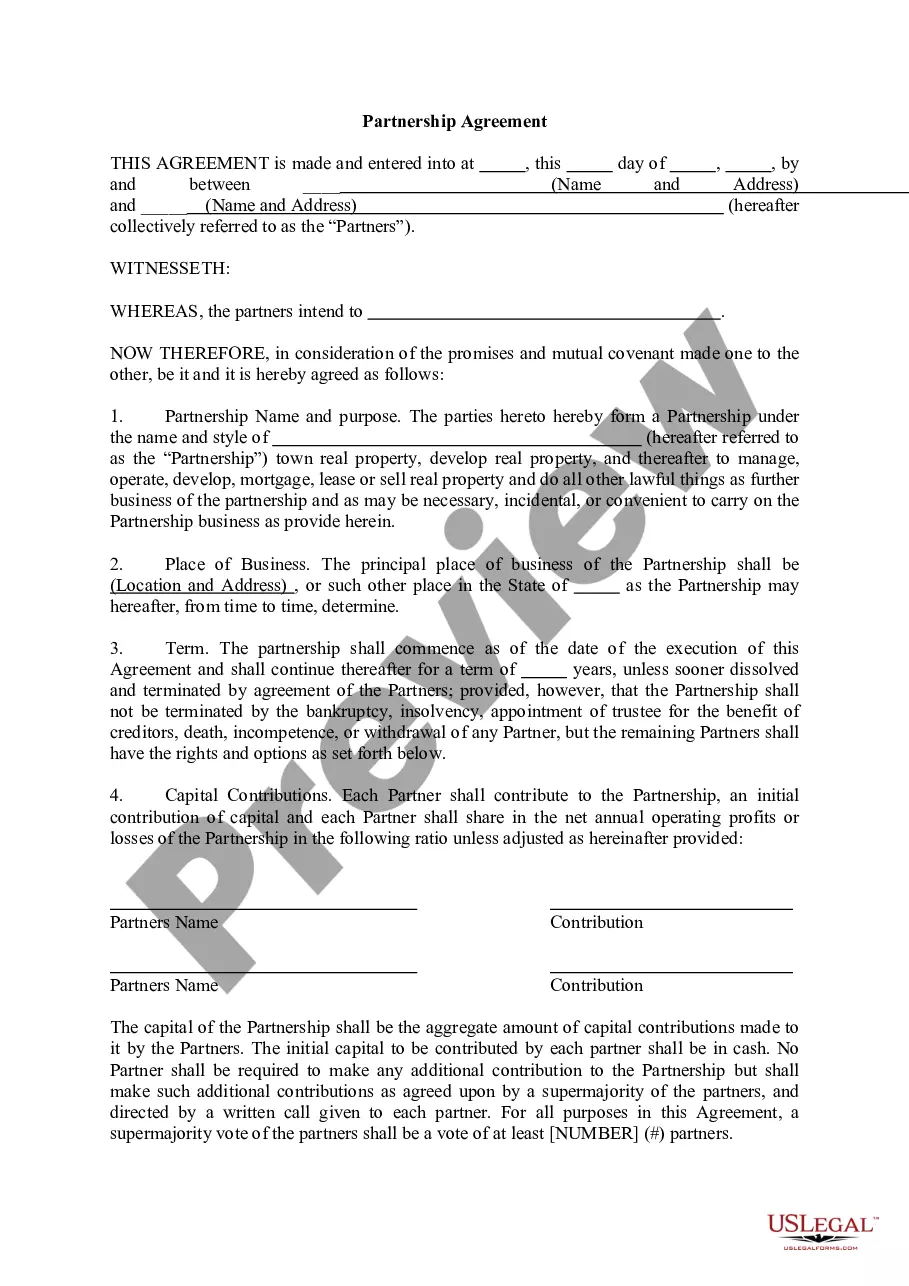
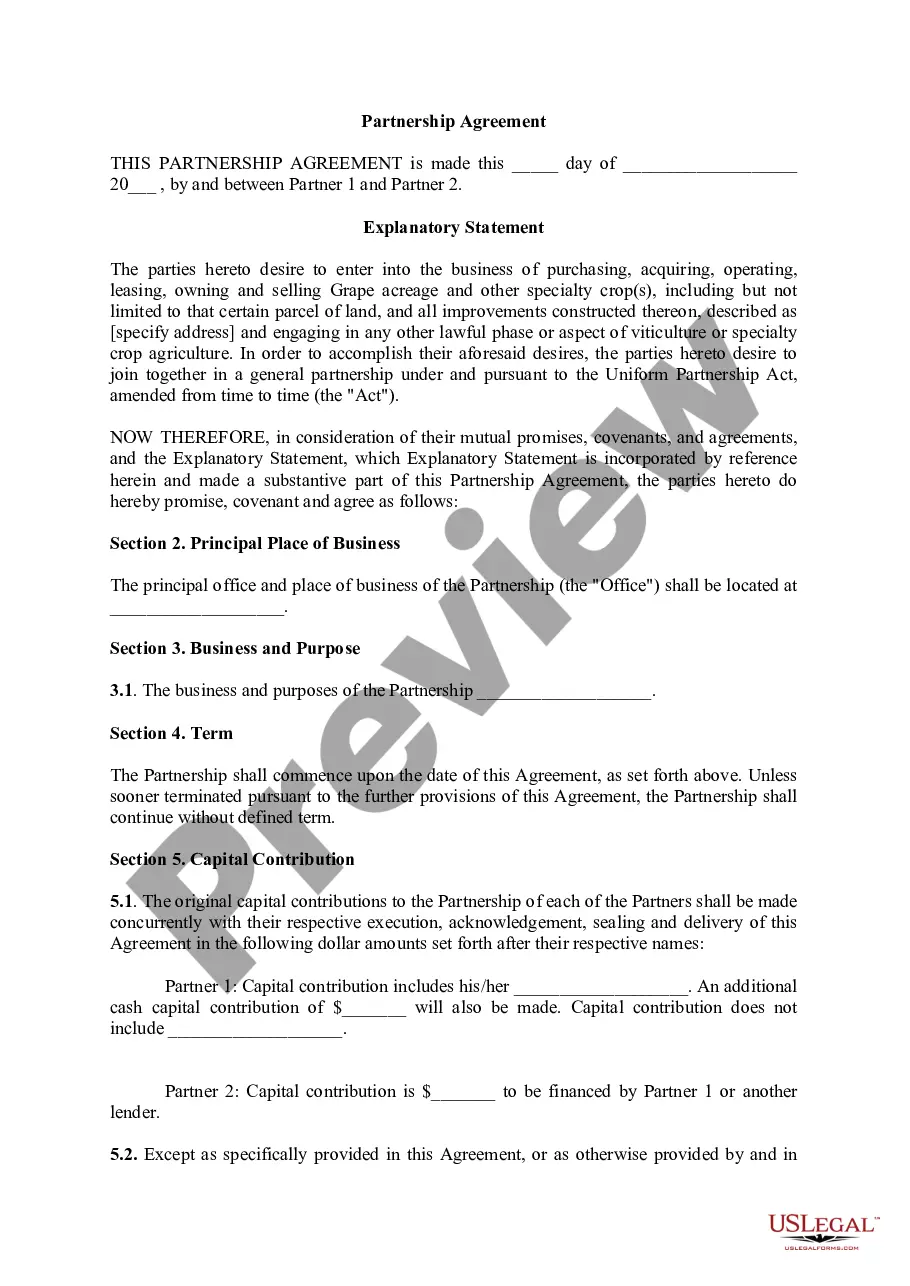
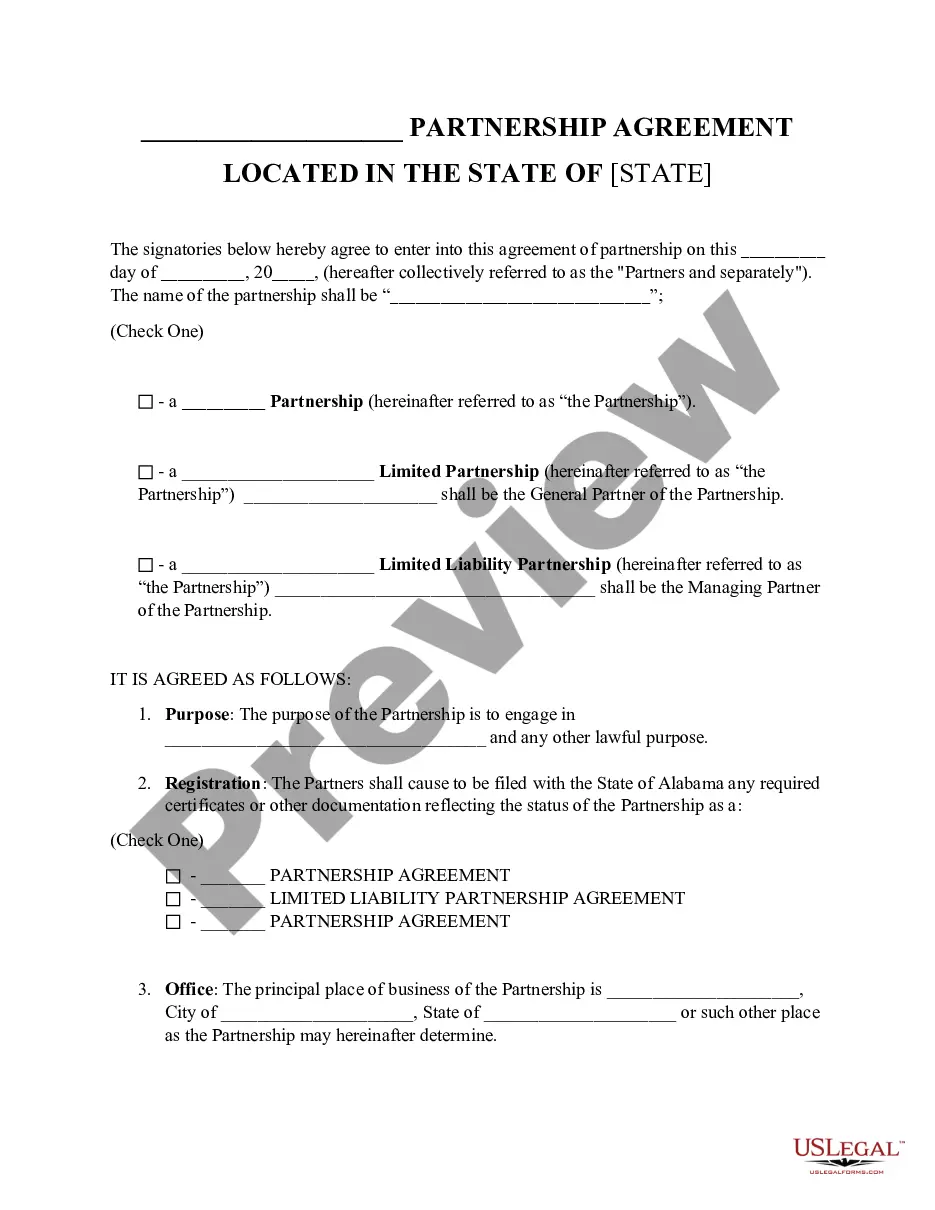
The Partnership Agreement between Inventor and Promoter is a legal document designed to outline the terms and conditions of the partnership between an inventor who creates a product or idea and a promoter who assists in bringing that invention to market. This form clarifies the roles, responsibilities, and profit-sharing arrangements, distinguishing it from other partnership agreements that might not specifically address the unique nature of inventor-promoter relationships.
Form components explained
- Definition of the parties involved (Inventor and Promoter)
- Purpose of the partnership
- Roles and responsibilities of each partner
- Profit-sharing arrangement
- Duration of the partnership
- Dispute resolution procedures
Common use cases
This agreement is essential when an inventor seeks to collaborate with a promoter to commercialize a product or idea. It should be used when the parties need to formalize their relationship, define their respective roles, establish how profits will be shared, and outline how decisions will be made. This form is particularly useful in startup scenarios where clarity and legal protection are vital for success.
Who can use this document
- Inventors looking to partner with a promoter for product development and marketing
- Promoters seeking to establish a formal agreement with inventors
- Individuals or businesses interested in clear legal guidelines for partnership arrangements
- Startups aiming to outline their operational framework and profit distribution
Steps to complete this form
- Identify and list the full names and addresses of both the inventor and the promoter.
- Clearly define the purpose of the partnership in the agreement.
- Outline and agree on the roles and responsibilities of each party.
- Specify the profit-sharing percentages and any potential expenses.
- Include the duration of the partnership and conditions for renewal or termination.
- Discuss and document the procedure for resolving disputes.
Notarization requirements for this form
This form usually doesn’t need to be notarized. However, local laws or specific transactions may require it. Our online notarization service, powered by Notarize, lets you complete it remotely through a secure video session, available 24/7.
Get your form ready online
Our built-in tools help you complete, sign, share, and store your documents in one place.
Make edits, fill in missing information, and update formatting in US Legal Forms—just like you would in MS Word.
Download a copy, print it, send it by email, or mail it via USPS—whatever works best for your next step.
Sign and collect signatures with our SignNow integration. Send to multiple recipients, set reminders, and more. Go Premium to unlock E-Sign.
If this form requires notarization, complete it online through a secure video call—no need to meet a notary in person or wait for an appointment.
We protect your documents and personal data by following strict security and privacy standards.

Make edits, fill in missing information, and update formatting in US Legal Forms—just like you would in MS Word.

Download a copy, print it, send it by email, or mail it via USPS—whatever works best for your next step.

Sign and collect signatures with our SignNow integration. Send to multiple recipients, set reminders, and more. Go Premium to unlock E-Sign.

If this form requires notarization, complete it online through a secure video call—no need to meet a notary in person or wait for an appointment.

We protect your documents and personal data by following strict security and privacy standards.
Mistakes to watch out for
- Not clearly defining each partner's responsibilities.
- Failing to specify profit-sharing ratios.
- Omitting terms related to dispute resolution.
- Not including a duration for the partnership agreement.
Benefits of completing this form online
- Convenient access to professionally drafted legal documents.
- Edit and customize the form to meet specific needs easily.
- Secure and reliable process for creating legal agreements.
Legal use & context
- Creating a legally binding agreement helps protect the interests of both the inventor and promoter.
- This form is designed to reduce ambiguity and misunderstandings in partnership dynamics.
Quick recap
- The Partnership Agreement clarifies roles and responsibilities between inventors and promoters.
- It is essential for anyone starting a partnership around inventions.
- Ensure that all terms are clear and agreed upon by both parties to avoid future disputes.
Looking for another form?

Form popularity
FAQ
Name of your partnership. Contributions to the partnership and percentage of ownership. Division of profits, losses and draws. Partners' authority. Withdrawal or death of a partner.
Although there's no requirement for a written partnership agreement, often it's a very good idea to have such a document to prevent internal squabbling (about profits, direction of the company, etc.) and give the partnership solid direction. Limited liability partnerships do have a writing requirement.
Like any contractual agreement, partnership agreements do not have to be in writing, as verbal agreements are also legally binding.In a partnership, each person is liable for the debts and actions of the other partners, so the contractual relationship and obligations need to be completely transparent.
Name of the partnership. Contributions to the partnership. Allocation of profits, losses, and draws. Partners' authority. Partnership decision-making. Management duties. Admitting new partners. Withdrawal or death of a partner.
Forming a PartnershipPartnerships exist between two or more people who want to go into business together. In most states, creating a legally binding partnership requires nothing more than a verbal agreement and a handshake.
Although there's no requirement for a written partnership agreement, often it's a very good idea to have such a document to prevent internal squabbling (about profits, direction of the company, etc.) and give the partnership solid direction. Limited liability partnerships do have a writing requirement.
Although each partnership agreement differs based on business objectives, certain terms should be detailed in the document, including percentage of ownership, division of profit and loss, length of the partnership, decision making and resolving disputes, partner authority, and withdrawal or death of a partner.